Fishing Deadwood Reservoir
You spend two hours bouncing up a dusty Forest Service road, launch at a quiet ramp surrounded by ponderosa pine, and then stare at a deep, clear mountain reservoir with no idea where the kokanee are hiding. Deadwood Reservoir rewards anglers who show up prepared and quietly punishes those who do not. This guide covers access, seasons, species, tactics and camping so your trip pays off.
Getting to Know Deadwood Reservoir
Deadwood Reservoir sits high in the Boise National Forest in Valley County, tucked into the mountains between the Highway 21 corridor near Lowman and the Cascade and Warm Lake country to the north. It was created by a Bureau of Reclamation dam on the Deadwood River in the early 1930s, and today it is one of central Idaho’s favorite out-of-the-way fisheries, especially for kokanee.
Why Anglers Love It
The appeal of Deadwood comes down to three things. First, it is beautiful: clear, cold water at around five thousand feet of elevation, ringed by timbered slopes and granite. Second, it is remote enough that it never feels like a city lake, even on a summer weekend. Third, it has a reputation for kokanee that are often larger than the average fish in many other Idaho waters, plus trout that add variety to the day.
The flip side is the effort it takes to get there. There is no paved highway to the shoreline, no marina, and very little in the way of services. That isolation is exactly why so many regulars love it, and it is the subject of our piece on Why Deadwood Reservoir Stays Quiet Even in Summer.
The Lay of the Water
Deadwood is a long, narrow mountain reservoir that follows the old river valley. The dam sits at the southern end, and the Deadwood River and several smaller creeks feed it from the north and the sides. Much of the shoreline drops off steeply, with relatively little shallow flat water compared with lowland reservoirs. That steep, deep profile is part of why kokanee do so well here: there is plenty of cold, open water for them to roam.
When the reservoir is full in early summer, coves at creek mouths and the upper end can hold trout feeding on insects and small fish. As water levels drop through late summer and fall, exposed banks and stumps appear, ramps can become harder to use, and fish concentrate in the main basin and the deeper channel.
Who Manages What
The reservoir and its surrounding land fall under several agencies. The dam and water operations are tied to the Bureau of Reclamation. The surrounding land and campgrounds are managed by the Boise National Forest. Fishing regulations, stocking and licensing come from Idaho Fish and Game. You need a valid Idaho fishing license, and the general rules of the Southwest region apply, along with any special regulations for the reservoir and its tributaries. Start with our Idaho Fishing License Guide if you have not fished the state before.
Access, Roads and Camping
Getting to Deadwood is part of the adventure. Plan for slow, rough driving, and do not trust a phone map blindly.
Main Routes In
There are two common ways to reach the reservoir. From the south, many anglers drive Highway 21 toward Lowman and then follow Forest Service roads north through the mountains. From the north, others come from Cascade, head east toward Warm Lake, and take forest roads south to the reservoir. Both routes involve long stretches of gravel and dirt with grades, washboard, dust and occasional rocks in the road.
| Route | General Path | Road Character | Best For |
|---|---|---|---|
| Southern approach | Highway 21 near Lowman, then forest roads north | Long, winding gravel, some steep grades | Anglers coming from Boise and Idaho City |
| Northern approach | Cascade toward Warm Lake, then forest roads south | Gravel with rough sections | Anglers combining a trip with Cascade or Warm Lake |
Travel times are longer than mileage suggests. A high-clearance vehicle is recommended, and while many people tow small boats in, you will want to take it slow and check your trailer bearings and tires before the trip. Fuel up before you leave pavement; there are no gas stations at the reservoir.
Seasonal Road Conditions
Snow is the big factor. The roads to Deadwood usually stay closed or impassable through winter and into spring, and the exact opening date depends on how much snow fell and how fast it melts. In some years the reservoir is reachable by late spring; in heavy snow years it can be well into early summer before roads are clear.
Before any early-season trip, check with the Boise National Forest for road status and closures. Logging, road work, fire activity and storm damage can also close or slow routes in summer and fall. Wildfire season in central Idaho can bring smoke and temporary area closures, so check fire information before you go.
Campgrounds and Facilities
Several Forest Service campgrounds sit along the shoreline and near the dam, offering a mix of tent and small trailer sites, vault toilets and, at some, boat launches. Facilities are basic. Expect no hookups, limited or no potable water at some sites, and no garbage service. Bring everything you need, including water and a way to pack out trash.
Summer weekends, especially holiday weekends, can fill the most popular campgrounds. Midweek trips are quieter. Dispersed camping may be possible in some areas of the surrounding national forest if you follow forest rules and fire restrictions. If you like the idea of combining a camp with a fishing trip, our guide to Idaho Fishing Spots Worth a Camping Trip lists other destinations in a similar spirit, and nearby options such as Camping and Fishing Together at Warm Lake make a good second stop.
Fish Species at Deadwood
Deadwood is best known for kokanee, but it also offers trout and occasional surprises. Knowing what is in the water helps you decide what to target and how to rig.
Kokanee
Kokanee are landlocked sockeye salmon, and they are the main draw at Deadwood. They feed primarily on zooplankton, roam open water in schools, and are prized for their firm, red-orange flesh. Deadwood’s kokanee have a reputation for reaching good size compared with many Idaho waters, though average size varies from year to year depending on fish density, food supply and water conditions.
Kokanee are a fall spawning fish. As they mature in late summer, they change color and shape, turning red with hooked jaws in males, and they begin moving toward tributaries to spawn. Once that happens, their flesh quality declines, and special rules may apply to protect spawning fish in streams. Our Idaho Kokanee Fishing Guide covers their life cycle and statewide patterns in more detail.
Trout
Rainbow trout are common in Deadwood and can be caught by trolling, casting from shore and fly fishing near inlets. Cutthroat trout are also present in the drainage, and anglers should be ready to identify them and follow any special rules that apply. Westslope cutthroat in particular are a native Idaho fish with special conservation value. Our page on Westslope Cutthroat Trout in Idaho can help you identify them.
Trout tend to be more active in the shallower water near shorelines and inlets early and late in the season, and they can rise to insect hatches on calm evenings. In midsummer, they often move deeper, sometimes mixing with kokanee in the cooler layers of the reservoir.
Other Species and What to Expect
Depending on past stocking and natural movement, you may encounter other fish occasionally, but most anglers at Deadwood focus on kokanee and trout. Expect most fish to be in the small to medium range, with occasional larger kokanee or trout that make the trip memorable.
| Species | Peak Season | Typical Location | Common Methods |
|---|---|---|---|
| Kokanee | Early to late summer | Open water, mid-depths | Trolling with dodgers and small lures, jigging |
| Rainbow trout | Ice-out through fall | Shorelines, inlets, mid-depths in summer | Trolling, casting spinners, flies |
| Cutthroat trout | Early summer and fall | Inlets and tributaries | Flies, small spinners, careful catch and release where required |
Kokanee Tactics That Work at Deadwood
Kokanee fishing is all about finding the right depth and presenting a small lure at the right speed. Deadwood’s clear, deep water and steep shoreline make that especially true.
Finding the Fish
Early in the season, shortly after the reservoir becomes accessible, kokanee may be relatively shallow, sometimes within the top twenty feet of water. As summer progresses and the surface warms, they usually move deeper, following cooler temperatures and their food. By midsummer, they can be in the thirty to sixty foot range or deeper, depending on conditions.
A good fish finder is extremely helpful. Look for schools or layers of fish at specific depths, and pay attention to where most marks show up. Our guide to What Depth Kokanee Hold at in Summer on Idaho Lakes explains how depth shifts through the season.
Trolling Setup and Speed
Trolling is the most popular method for Deadwood kokanee. A typical setup includes a light to medium trolling rod, a reel with line counter or a downrigger, and a small dodger followed by a short leader and a small lure such as a hoochie, spinner or wedding-ring style rig. Many anglers tip hooks with scented corn or other bait.
Speed is critical. Kokanee often prefer slow trolling speeds compared with trout, and small changes can make a big difference. Experiment with speed, turns and S-curves to vary lure action. Our Best Trolling Speed for Kokanee article goes into more detail on finding the sweet spot.
- Use your fish finder to locate the depth where kokanee are holding.
- Set a downrigger or use a line counter reel with weights to reach that depth.
- Run a small dodger with a short leader to a pink, orange or similar colored lure.
- Tip hooks with corn or scent if regulations allow.
- Troll slowly, adjusting speed until you find a pattern that produces bites.
- Use soft rod tips or rubber snubbers; kokanee have soft mouths and can tear off easily.
Jigging and Other Approaches
When kokanee are concentrated in schools, vertical jigging can be effective. Drop small jigs or spoons to the depth where you see fish, then work them with gentle lifts and drops. This approach can also be productive from a drifting boat when the wind is light.
Some anglers fish from float tubes or small boats, especially near inlets or in the evening. If you plan to fish from a float tube, check wind and weather carefully; mountain reservoirs can turn rough quickly when afternoon wind comes up. Our guide to How to Fish from a Float Tube on Mountain Lakes offers safety and technique tips.
Trout Fishing and Shore Options
Not everyone brings a boat to Deadwood, and you do not need one to catch fish. Shore and inlet fishing for trout can be productive, especially early and late in the season.
Fishing From Shore
Look for points, coves and creek mouths where trout can find food and cooler water. Early morning and evening are usually best. Small spinners, spoons and bait setups work well, and casting along drop-offs can produce fish that cruise the edges.
As the reservoir drops in late summer, shoreline access changes. Some areas become long walks over exposed mud and gravel, while others reveal new points and drop-offs. Take care when walking on exposed banks, as they can be soft or unstable.
Fly Fishing Inlets and Tributaries
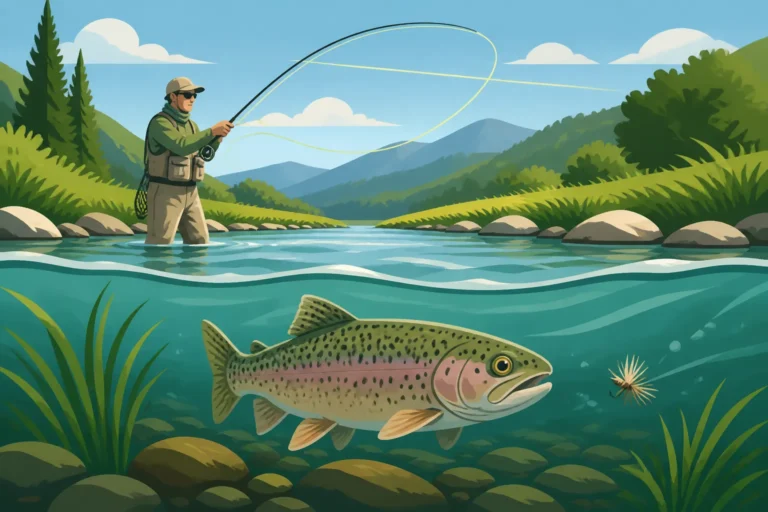
Fly anglers can find good trout fishing around the mouths of tributaries and on calm evenings when insects hatch. Small nymphs, dry flies and streamers can all produce. In the tributaries themselves, follow any special rules for cutthroat trout and kokanee spawning areas, and be careful not to disturb spawning fish.
The Deadwood River Below the Dam
Below the dam, the Deadwood River flows south toward the South Fork Payette. This river section offers trout fishing in a rugged canyon setting, with access varying by road and trail. Flows can change with dam releases, so pay attention to water levels and conditions.
Caring for Your Catch on a Long Drive
Kokanee flesh is delicate, and the drive out of Deadwood is long and dusty. Bleed fish soon after landing by cutting the gills, then put them straight onto ice in a cooler kept in the shade. Many anglers bring a second cooler just for fish, so it is not opened every time someone wants a drink. Clean fish at camp if campground rules allow, or keep them whole and very cold until you get home. Kokanee are excellent smoked, grilled or baked, and the deep red color of a well-handled Deadwood fish is a big part of the reward.
A Sample Two-Day Trip
A typical weekend might look like this: leave town early Friday afternoon, reach camp before dark, and set up quietly. Saturday morning, launch at first light and troll the main basin, working depths until you find a layer of marks that produces. Come off the water when the afternoon wind builds, rest in camp, and walk an inlet with a fly rod in the evening for trout. Sunday morning, return to the depth and area that worked the day before, fish until midmorning, then pack up and start the drive home with a cooler full of cold fish. If you want to add a guided day on another lake on the way, browsing FishingBooker for options near Cascade or McCall can help you fit one in.
Seasons, Weather and Planning
Deadwood is a seasonal destination. Timing your trip well makes the difference between an easy, productive weekend and a frustrating one.
Season by Season
| Season | Access | Fishing Outlook | Notes |
|---|---|---|---|
| Late spring | Depends on snowmelt and road opening | Trout near shore, kokanee shallow | Check road status carefully |
| Early summer | Usually accessible | Strong kokanee and trout fishing | Popular time, campgrounds busy on weekends |
| Midsummer | Accessible | Kokanee deeper, trout early and late | Warm days, cool nights, possible smoke |
| Late summer to fall | Accessible until snow | Kokanee maturing, trout active | Lower water, ramps may be harder to use |
| Winter | Roads usually closed | Not practical for most anglers | Snow and remote access |
Weather and Safety
Mountain weather can change quickly. Afternoon thunderstorms are common in summer, bringing wind, lightning and sudden waves on open water. Watch the sky, and head for shore early if storms build. Nights can be cold, even in midsummer, so pack warm layers.
The remote location means help is far away. Bring a first aid kit, extra food and water, a way to communicate in emergencies, and spare parts for your vehicle and trailer. Let someone know where you are going and when you expect to return.
Planning Checklist
- Check road status, fire information and campground availability before you leave.
- Buy your Idaho fishing license and review current regulations for the reservoir and its tributaries.
- Pack trolling gear, a fish finder, dodgers, small lures and bait or scent.
- Bring shore fishing gear and a few flies for the inlets.
- Pack camping gear, water, food, warm clothing and bear-safe food storage.
- Fill your fuel tank and carry a full-size spare tire.
- Plan to fish early mornings and evenings, and rest in the heat of the day.
- Clean fish promptly and keep them cold for the long drive home.
Rules, Etiquette and Booking Help
Regulations to Review
Kokanee bag limits, trout limits and any special rules for cutthroat and spawning tributaries can change. Read the current Idaho Fish and Game rules before each trip. Our Idaho Daily Bag Limit for Kokanee page is a quick reference, and Idaho Snagging and Foul-Hooking Rules explains why you should never target spawning kokanee by snagging.
Being a Good Neighbor on the Water
Deadwood’s quiet character is part of its appeal. Keep noise down in campgrounds, follow quiet hours, and give other boats plenty of space when trolling. Do not crowd anglers fishing a school you see on your electronics. Pack out all trash, including fishing line, and follow fire restrictions closely. Clean, drain and dry your boat between waters to avoid spreading invasive species.
When a Guide Makes Sense
Because Deadwood is so remote, guided trips there are uncommon. If you are new to kokanee fishing, consider booking a guided trip on a more accessible Idaho lake first to learn the basics of trolling setups and depth control, then bring those skills to Deadwood. Booking platforms like FishingBooker list guides and charters on several Idaho waters, making it easier to compare trip types and read reviews. FishingBooker can also be useful for finding kokanee-focused trips if you want to practice before your Deadwood adventure. Always check the listing and the guide’s own page for current prices and policies. If you prefer to go on your own, the How to Fish for Kokanee in Idaho guide will help you build a solid foundation.
Deadwood is not the easiest reservoir in Idaho to reach, but it rewards patient, well-prepared anglers with clear water, quiet camps and some of the best-looking kokanee you will see all summer.
Disclaimer
This article is for general informational purposes only and does not constitute professional advice. Laws, prices and regulations vary by location and change over time. Consult a qualified professional for guidance on your specific situation.