Best Trolling Speed for Kokanee
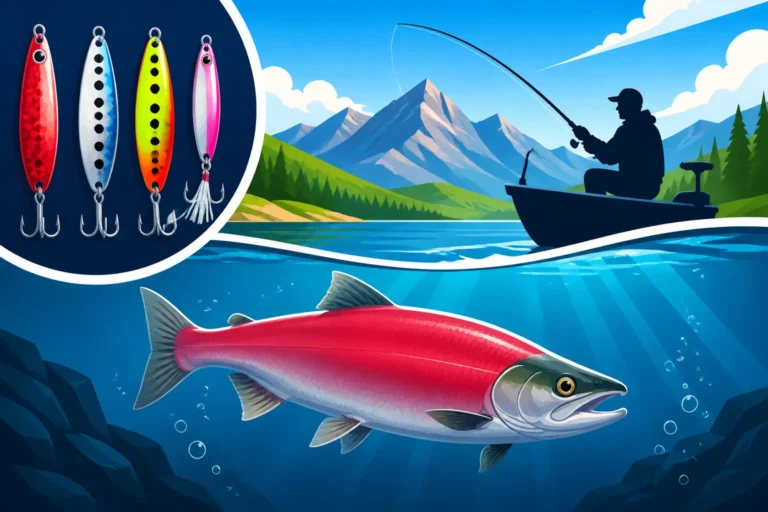
One of the most frustrating things when you're out on the water, targeting those feisty Kokanee salmon, is feeling like you're doing everything right—you've got the right gear, the perfect spot—but the fish just aren't biting. Often, the missing piece of the puzzle isn't your lure color or even the depth; it's your trolling speed. This guide is all about helping you fine-tune that crucial element to put more Kokanee in your cooler.
Understanding Kokanee Behavior and Trolling Dynamics
Kokanee are fascinating fish, and unlike some other species that might hit anything moving, they can be incredibly particular. Getting your trolling speed just right isn't a suggestion; it's often the key to success.
Why Speed Matters for Kokanee
Kokanee are plankton eaters for the most part, but they're also opportunistic feeders, meaning they'll readily strike at small invertebrates or even other small fish when presented enticingly. When you're trolling, you're trying to mimic a natural food source or provoke a territorial strike. If your lure moves too fast, it looks unnatural, like something trying to escape, or it simply passes by too quickly for them to react. Too slow, and it might not have the enticing action that triggers a bite.
Think about it like this: A Kokanee cruising through the water isn't looking for a race car; it's looking for a meal that's easy to catch. Your lure needs to appear vulnerable and alive. Different trolling speeds impart different actions to your dodgers, flashers, and terminal tackle, and those subtle differences can make all the difference. For instance, a dodger needs to "kick" and "flash" just right to attract Kokanee, and if you're outside its optimal speed range, it simply won't perform as intended. Anglers who consistently catch more Kokanee often spend a lot of time experimenting with their speed to get that perfect rhythm.
Factors Influencing Ideal Trolling Speed
The "perfect" trolling speed isn't a static number you can just set and forget. It's a dynamic target that changes based on several environmental and equipment factors. Paying attention to these nuances will make you a much more successful Kokanee angler.
First off, water temperature plays a huge role. In colder water, Kokanee tend to be more lethargic, meaning they're less likely to chase down a fast-moving bait. Their metabolism is slower, and they conserve energy. This means you’ll often need to slow down your trolling speed significantly. Conversely, in warmer water during peak summer, when Kokanee are more active and aggressive, you might find that a slightly faster pace triggers more strikes. It's about matching their energy levels.
Another critical factor is the time of day. Early morning and late evening often see Kokanee more active and higher in the water column as they feed. During these times, they might be more inclined to chase. Midday, especially if the sun is high and bright, they might retreat to deeper, cooler water and become less active, again favoring a slower presentation. The type of prey they are targeting also matters. If they are aggressively feeding on a school of tiny insects, a faster, more erratic lure might be the ticket. If they're just casually picking at suspended plankton, a slow, steady retrieve is better. Finally, your lure and bait choice dictates speed. Some dodgers and lures are designed to perform best at slower speeds, generating maximum flash and wiggle, while others need a bit more speed to get into their groove. We'll delve deeper into this, but knowing what your gear is designed to do is paramount.
Finding the Ideal Trolling Speed for Kokanee
Let's cut to the chase and talk about the numbers. While there's no single magic bullet, there's a range that most successful Kokanee anglers find themselves working within.
The "Goldilocks Zone" for Trolling Speed
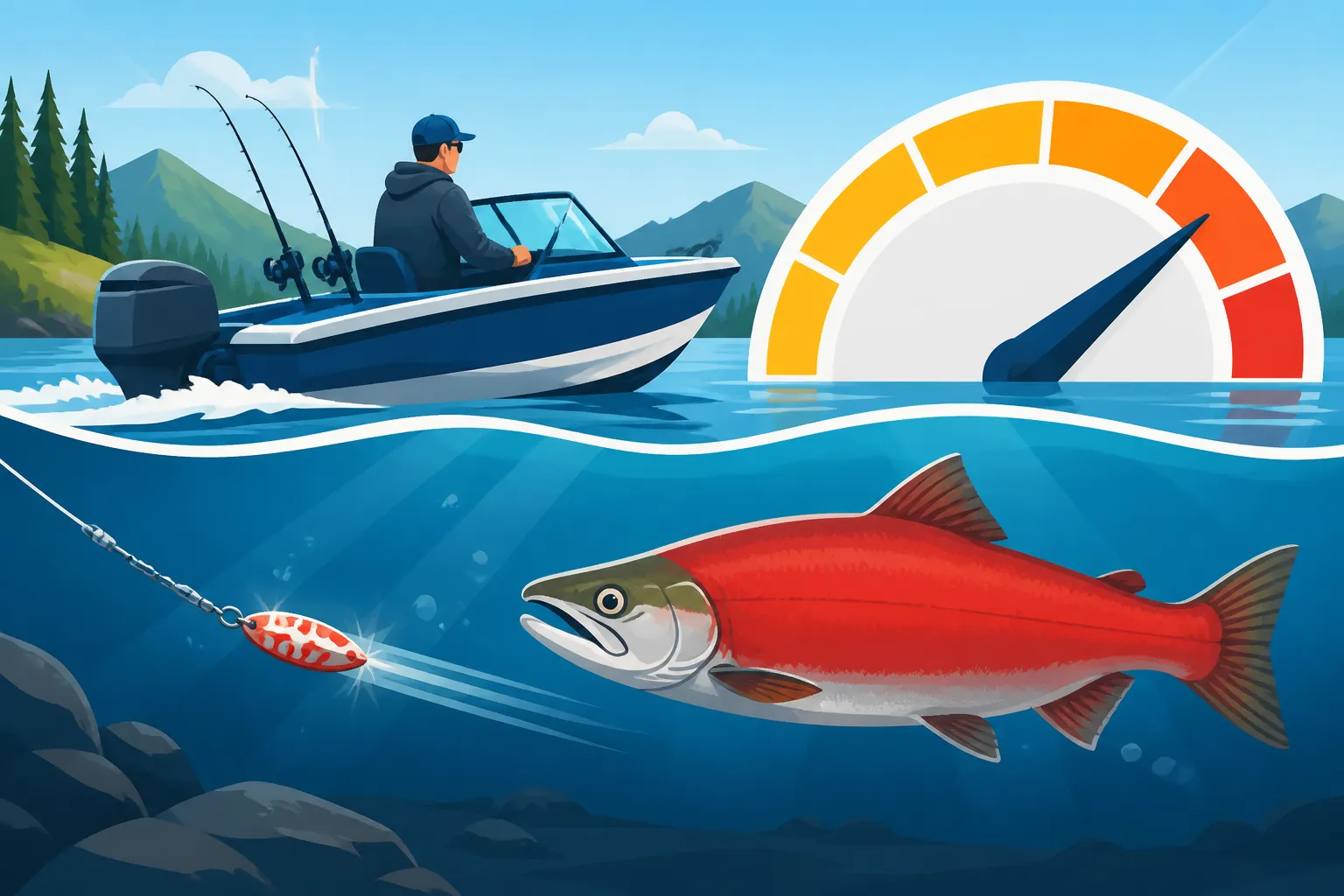
When you're starting out, a really good "Goldilocks Zone" for Kokanee trolling speed is generally between 0.8 to 1.8 miles per hour (mph). This range isn't arbitrary; it's where most Kokanee-specific dodgers and lures are designed to perform optimally, creating the enticing action that these fish can't resist. At the slower end, around 0.8-1.2 mph, you're getting a more subtle, almost vulnerable presentation. This is often deadly in cold water, when fish are a bit sluggish, or when they're particularly finicky. Think of it as a slow, easy meal passing by.
As you creep up towards 1.5-1.8 mph, your dodgers will flash more vigorously, and your lures will have a more active, darting motion. This speed range can be highly effective when Kokanee are more aggressive, perhaps during a strong feeding window, or in warmer water when their metabolism is higher. It also helps to cover water more efficiently if you're trying to locate schools of fish. Remember, this is your starting point. You won't just set it and forget it. You'll be constantly making micro-adjustments within this range based on what the fish are telling you.
Adjusting for Conditions and Lures
Understanding the general range is one thing, but truly mastering Kokanee trolling means constantly adjusting your speed. Think of it as a dance with the fish and the conditions. For instance, if you're fishing in early spring or late fall when water temperatures are chilly, Kokanee are often less active and suspended deeper. This is prime time to drop your speed down towards the lower end of our "Goldilocks Zone," say 0.8 to 1.0 mph. A slower pace allows your lure to stay in the strike zone longer and gives a lethargic fish more time to decide to bite. You might also find that specific dodgers, like a Sep's Pro Fishing 'Sidekick' or a Paulina Peak Tackle 'Killer Kokanee Dodger', have incredible action even at these slower speeds.
Conversely, imagine a bright, sunny summer day on a lake like Lake Coeur d'Alene, where Kokanee are often schooled up and actively feeding. In these scenarios, bumping your speed up to 1.5 to 1.8 mph can be incredibly effective. The faster speed often triggers aggressive strikes from actively feeding fish, and it allows your lures, especially spoons that dart and flash, to really come alive. It also helps cover more water quickly if you're searching for active schools. Always keep an eye on your rod tips. The rhythmic pulse you see is your dodger working. If it's barely moving, you might be too slow. If it's a frantic blur, you might be too fast. It's all about finding that happy medium where your tackle performs its best. You might even want to check out some different dodger designs on Amazon to see how they claim to perform at various speeds.
Advanced Techniques for Dialing In Your Speed
Getting precise with your trolling speed takes more than just a gut feeling. Modern technology and smart angling techniques can really help you pinpoint that exact speed Kokanee are looking for.
Using a GPS or Speedometer
Let's be honest, trying to judge your trolling speed by looking at the water or feeling the boat's movement is a recipe for frustration, especially when targeting finicky Kokanee. These fish can be so sensitive that a half-mile-per-hour difference can be the deciding factor between a full cooler and an empty one. That's why a reliable GPS unit or a dedicated speedometer is absolutely non-negotiable for serious Kokanee anglers.
Many modern fish finders and chartplotters, like those from Garmin or Humminbird, come with integrated GPS that displays your speed over ground (SOG). This is what you want to be watching. Speed over ground accounts for currents and wind, giving you an accurate measure of how fast your lure is actually moving through the water relative to the bottom, which is often more consistent than speed through water, especially in rivers or windy lakes. If you don't have a fancy unit, a simple, inexpensive handheld GPS or even a fishing app on your smartphone that shows SOG can work wonders. The key is consistency. Once you find a speed that works, you need to be able to replicate it precisely. If you're constantly guessing, you're constantly changing variables, making it harder to learn what works. Investing in a good GPS unit, which you can easily find on Amazon, will pay dividends.
The "S-Curve" Technique for Experimentation
One of the most effective tactics for finding the day's "hot" speed, and for triggering strikes, is the "S-curve" technique. It's simple in concept but incredibly powerful in practice. Instead of trolling in a perfectly straight line, intentionally steer your boat in a gentle "S" pattern. As your boat turns, the lures on the inside of the turn will slow down, and the lures on the outside of the turn will speed up.
What this does is expose your lures to a variety of speeds with minimal effort. Often, Kokanee will strike specifically when your lure speeds up or slows down during these turns. When a fish hits, you then know which side of the boat (inside or outside turn) and what action (speeding up or slowing down) was effective. This gives you a massive clue about the optimal speed for that specific moment. If most of your bites are coming on the outside of the turns, try increasing your base trolling speed slightly. If they're coming on the inside, slow down a bit. This continuous experimentation is how top anglers "dial in" their speed throughout the day, adapting to changing fish moods and conditions. It also helps your lures cover a wider swath of water, which is particularly useful when targeting scattered fish.
Paying Attention to Your Lures and Tackle
The type of lures and tackle you're using dictates, to a significant degree, the speed at which they perform their best. This is especially true for dodgers and flashers, which are designed to create specific actions and vibrations at certain speeds. A larger dodger, for instance, might need a slightly slower speed to achieve its full "kick" and flash without spinning out, whereas a smaller dodger can often handle faster speeds. Brands like Vance's 'Tackle Kokanee Killers' or Rocky Mountain Tackle 'Squid Dodgers' each have their own ideal operational speeds.
Then there's your terminal tackle. Hoochies (small plastic squid imitations) often perform best with a slower, more subtle action behind a dodger, allowing their tentacles to undulate enticingly. Spoons, on the other hand, might require a bit more speed to get that erratic, darting flash that mimics a fleeing baitfish. Wedding Rings or small spinners often have built-in action, but their rotational speed is still influenced by your trolling speed. It's crucial to observe your lures (if you can, perhaps by pulling them close to the boat in clear water or using an underwater camera) to see how they're behaving at different speeds. Does that dodger have a strong, rhythmic throb? Is your spoon darting or just dragging? Understanding how your specific gear reacts to speed is a critical step in becoming a proficient Kokanee angler. Remember, you can find a vast selection of these specialized Kokanee lures and dodgers on platforms like Amazon, allowing you to experiment with different brands and designs to see what works best in Idaho's diverse waters.
Adapting Your Speed to Conditions and Seasons
Successful Kokanee fishing isn't a one-size-fits-all endeavor. The best trolling speed will morph throughout the year and even throughout a single fishing day, demanding your constant attention and adjustment.
Environmental Influence on Fish Activity
The environment around you is constantly dictating how active Kokanee are, and thus, how quickly or slowly you should be presenting your lures. Water temperature, as we touched on earlier, is a paramount factor. In the cold depths of winter or early spring on a lake like Lake Pend Oreille or Cascade Reservoir, Kokanee are often lethargic. Their metabolism is slowed, and they aren't going to expend much energy chasing a bait. This is when slowing down to the 0.8-1.0 mph range becomes incredibly important. You're offering them an easy, irresistible meal right in front of their noses. As the water warms up through late spring and into summer, Kokanee become more active. They'll chase more, and you can often bump up your speed to 1.2-1.8 mph to cover more water and trigger more aggressive strikes.
Beyond temperature, light conditions play a role. On bright, sunny days, Kokanee might be more comfortable hitting a lure that’s moving a bit faster, creating more flash to draw attention. On overcast days, or during dawn and dusk, a slower, more deliberate presentation can often be more effective. Even changes in barometric pressure can affect how active fish are. A sudden drop in pressure might make them less inclined to chase, signaling a need to slow down. Always observe your surroundings, check the water temperature, and use these cues to inform your speed adjustments.
Seasonal Speed Variations for Kokanee
The changing seasons bring predictable shifts in Kokanee behavior, which, in turn, should influence your trolling speed.
-
Early Season (Ice-out to early summer): As the ice comes off the lakes, Kokanee are often found in the shallower, warmer waters, but they can still be quite sluggish from the winter. Your best bet here is to start slow, in that 0.8-1.2 mph range. Focus on subtle action from your dodgers and hoochies. The goal is to entice, not to provoke a chase. Many anglers find success shortly after "Idaho's Spring Runoff and How It Affects Fishing" has stabilized.
-
Mid-Summer (Warmest water): This is often when Kokanee are at their most active and aggressive. They're feeding heavily, sometimes at greater depths to find cooler water. You can often increase your speed to the 1.2-1.8 mph range, especially if you're using spoons or lures that benefit from a more energetic presentation. Don't be afraid to experiment with the faster end of this spectrum if you're not getting bites. "What Depth Kokanee Hold at in Summer on Idaho Lakes" is a good topic to understand here.
-
Late Season (Fall): As water temperatures begin to drop again, Kokanee start to transition back to a less active state, similar to the early season. This is also when they start to stage for spawning. You'll generally want to slow your trolling speed back down, often returning to the 0.8-1.2 mph range. The fish might still be large and powerful, but they're not always as willing to chase. This period can still offer fantastic fishing for those willing to adjust.
Understanding these seasonal rhythms for "Idaho Kokanee Fishing Guide" is crucial. Don't just pick a speed and stick with it. Be dynamic, observe, and adjust, and you'll find yourself much more successful on the water.
Here’s a quick reference table for general trolling speeds:
| Condition / Lure Type | Recommended Speed (mph) | Notes |
|---|---|---|
| General Starting Point | 1.0 – 1.5 | Good all-around range for most conditions. |
| Cold Water / Lethargic Fish | 0.8 – 1.2 | Slower speeds give fish more time to react; subtle lure action. |
| Warm Water / Active Fish | 1.2 – 1.8 | Faster speeds for aggressive strikes; covers more water. |
| Hoochies / Squid | 0.8 – 1.3 | Maximize tentacle undulation; subtle action. |
| Small Spoons | 1.2 – 1.8 | Allows for more darting and flashing action. |
| Wedding Rings / Spinners | 1.0 – 1.6 | Consistent rotation; can be effective across a range. |
| Large Dodgers (e.g., 6"+) | 0.8 – 1.2 | Prevents spinning out; strong "kick" and flash. |
| Small Dodgers (e.g., 4"-5") | 1.0 – 1.5 | Good action over a wider speed range. |
| Overcast/Low Light | 0.9 – 1.4 | May favor slower, more deliberate presentations. |
| Bright Sun/Midday | 1.1 – 1.7 | Can tolerate faster speeds with more flash. |
Remember, this table is a starting point. Always let the fish tell you what they prefer on any given day. To learn more about identifying your target, check out our guide on Idaho Kokanee Identification Guide.
Disclaimer
Fishing conditions and regulations in Idaho can change. Always consult the latest Idaho Department of Fish and Game regulations before heading out on the water. This guide is for informational purposes only and does not supersede official regulations.