What Depth Kokanee Hold at in Summer on Idaho Lakes
Finding those elusive Kokanee salmon in the vast, glittering expanse of an Idaho lake during the scorching summer months can feel like trying to solve a complex puzzle. Many anglers, myself included, have spent frustrating hours trolling seemingly perfect water only to find empty lines. This guide is here to unravel that mystery, explaining precisely why Kokanee seek certain depths in summer and how you can pinpoint their location for a more successful and enjoyable fishing trip.
The Summer Migration of Kokanee: Why Depth Matters So Much
Kokanee salmon, unlike some of their more tolerant finned neighbors, are essentially cold-water fish at heart. As the Idaho sun beats down and lake surface temperatures climb, these fish embark on a seasonal migration – not across miles of open water, but vertically, into the cooler, darker depths. Understanding this movement is the key to unlocking consistent summer Kokanee success.
Understanding the Kokanee's Thermal Refuge
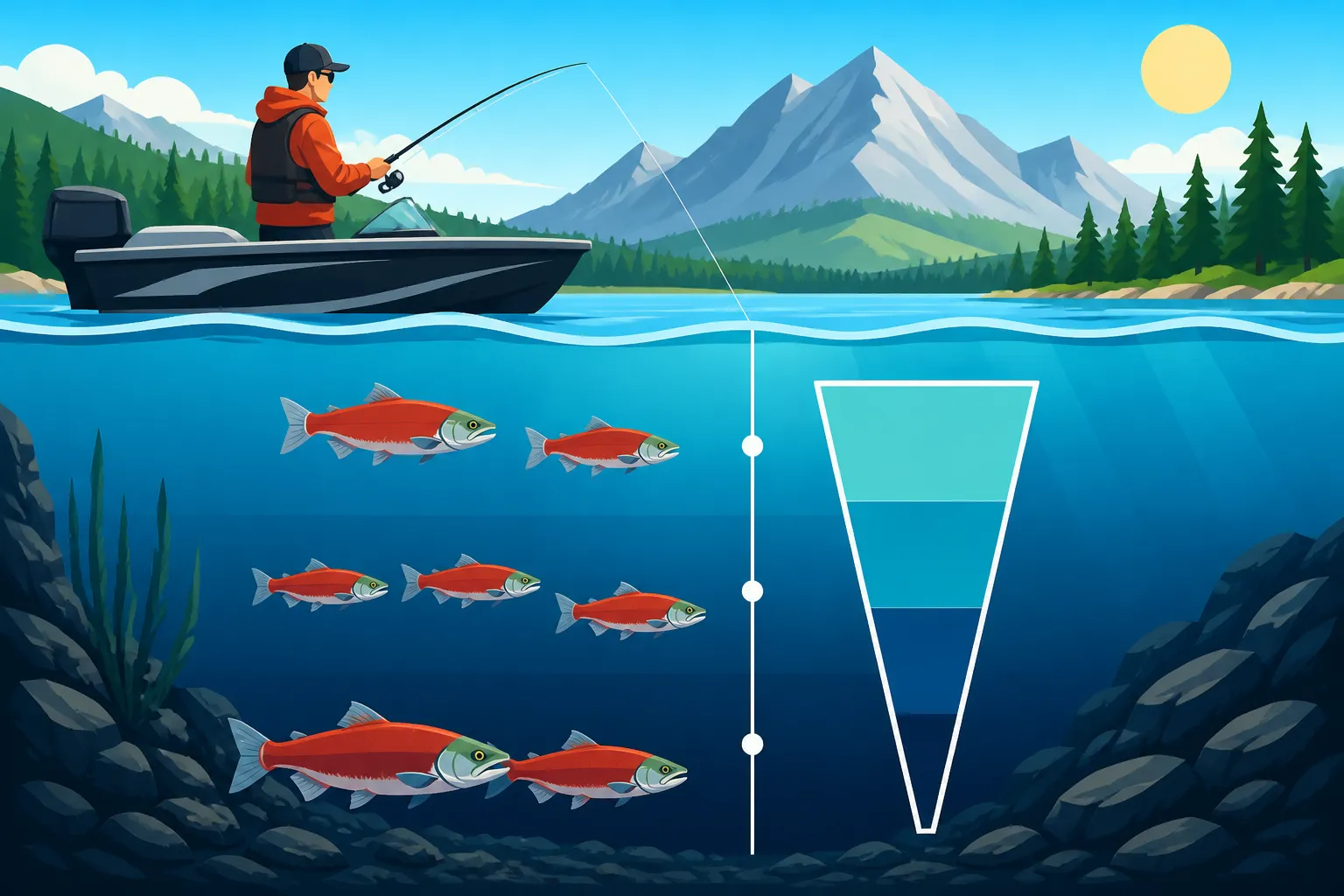
Think of an Idaho lake in summer like a layered cake. The sun warms the top layer, creating a "thermal stratification" where the water temperature changes significantly at different depths. The very top layer, the epilimnion, is warm and often low in oxygen. Below that lies the critical zone for Kokanee: the thermocline. This is a transitional layer where the temperature drops rapidly. Further down is the hypolimnion, the deep, cold water.
Kokanee absolutely thrive in water temperatures typically ranging from about 45 to 55 degrees Fahrenheit (7 to 13 degrees Celsius). When the surface water warms up to 60, 70, or even 80 degrees, these fish simply cannot tolerate it. They have to move, and their only refuge is down into the cool embrace of the thermocline or just below it. It’s a survival mechanism; staying in water that’s too warm stresses them, slows their metabolism, and can even be fatal over time. This quest for their preferred temperature range is the primary driver of their summer depth.
Oxygen Levels and Food Sources in the Depths
While cool water is paramount, it's not the only factor influencing where Kokanee hold. Even the deepest, coldest water can sometimes be devoid of sufficient oxygen, especially in some reservoirs where decomposition on the bottom consumes oxygen. Kokanee need both their ideal temperature and adequate dissolved oxygen to survive and feed. So, they're always searching for that sweet spot where these two critical elements align.
Their primary food source, microscopic zooplankton, also plays a huge role. Zooplankton themselves exhibit a phenomenon called diel vertical migration, meaning they move up and down in the water column throughout the day. They tend to rise closer to the surface at night or during low-light conditions to feed on phytoplankton, and then retreat to deeper, darker water during the day to avoid predators. Since Kokanee are largely sight-feeders on these tiny organisms, they will follow the densest concentrations of zooplankton. If the zooplankton are congregating at 60 feet, the Kokanee will likely be there too, provided the temperature and oxygen are favorable. This constant dance between temperature, oxygen, and food availability makes finding Kokanee a dynamic challenge that requires keen observation and adaptability.
Typical Depth Ranges for Summer Kokanee in Idaho Lakes
The exact depth where Kokanee hang out can vary quite a bit from one Idaho lake to another, and even within the same lake on different days. However, based on years of experience and what we know about their biology, there are some pretty reliable patterns we can discuss.
Specific Lake Examples and Their Trends
Let's look at some of Idaho's favorite Kokanee fisheries to give you a clearer picture:
-
Lake Coeur d'Alene: This iconic North Idaho lake is a prime example. In the early summer, you might find Kokanee anywhere from 30 to 50 feet. But once July and August truly settle in, with surface temperatures often soaring into the 70s, those fish head down. It's common to find them concentrated between 40 and 80 feet, sometimes even deeper during the brightest part of the day. The presence of apex predators like Chinook salmon also means Kokanee might go deeper to avoid being prey. If you're looking for tips on how to effectively pursue these fish, check out our guide on How to Troll for Kokanee on Lake Coeur d'Alene.
-
Dworshak Reservoir: Down in north-central Idaho, Dworshak is famous for its massive Kokanee, and they are notorious for holding deep in summer. It's not at all unusual to find Kokanee here consistently in the 60 to 120-foot range, and sometimes even pushing beyond 150 feet, especially in the warmest weeks of August. Dworshak's depth and unique thermal profile make it an exception, and you'll need serious downriggers to target these giants effectively.
-
Anderson Ranch Reservoir: East of Boise, Anderson Ranch also holds a good Kokanee population. Similar to Lake Coeur d'Alene, summer Kokanee here often prefer depths of 30 to 70 feet. The clearer the water and brighter the sun, the deeper they'll likely go. This reservoir can be quite busy, and boat traffic can also sometimes push fish a bit deeper.
-
Priest Lake: Another gem in North Idaho, Priest Lake offers excellent fishing, including for Kokanee. During summer, Kokanee here generally hold between 50 and 90 feet. They might go a bit deeper to evade predators like the massive lake trout that roam these waters.
It's vital to remember these are average ranges. Kokanee are notorious for being finicky, and their precise depth can shift throughout the day. This variability is why relying solely on historical data isn't always enough; real-time observation is crucial. For a broader understanding of fishing throughout the year, our Idaho Fishing Season Calendar offers great insights.
Factors Influencing Daily and Seasonal Depth Shifts
Kokanee don't just pick a depth and stay there all summer. Their vertical position is a dynamic response to several environmental factors:
-
Light Penetration: This is perhaps the biggest daily driver. On bright, sunny days with clear skies, more light penetrates the water, pushing Kokanee deeper into the shadows. Conversely, on cloudy or overcast days, they might venture a bit shallower because the light intensity is reduced. You'll often find Kokanee shallower at dawn and dusk, or on heavily overcast days, compared to midday under a scorching sun.
-
Weather Patterns: A sudden cold front can sometimes disrupt patterns, but generally, stable weather keeps them in predictable zones. Prolonged periods of heat, however, will push them to their deepest comfort zones.
-
Time of Day: As mentioned, early morning and late evening often see Kokanee rise higher in the water column as light diminishes. Midday usually means they're at their deepest.
-
Water Clarity: In lakes with exceptional clarity, like many of Idaho's high-mountain lakes, Kokanee will often hold deeper to find comfortable light levels, even if the temperature at a shallower depth might be acceptable. Murkier water might allow them to stay shallower.
-
Zooplankton Migration: As we discussed, their food source moves. The more densely packed the zooplankton, the more likely the Kokanee are to be right in the middle of that school. A good fish finder can help you spot these bait balls. Knowing How to Find Kokanee on a Fish Finder is an absolute game-changer.
Understanding these variables and how they interact is essential for becoming a successful Kokanee angler. It's not just about one magic depth; it's about being able to adapt to changing conditions. For more general advice, check out our Idaho Kokanee Fishing Guide.
Gear and Techniques for Targeting Deep Summer Kokanee
Once you understand why Kokanee go deep and where they generally hold, the next step is having the right tools and techniques to reach them. Targeting fish at 60+ feet isn't something you can do effectively with just any old fishing pole and a bobber.
Essential Electronics: Fish Finders and Downriggers
When Kokanee are deep, you absolutely must have the right electronics to even stand a chance. Otherwise, you're truly just guessing, and your success will be pure luck.
-
Fish Finders: This is your underwater vision. A quality fish finder is non-negotiable for summer Kokanee. You're looking for a unit that can clearly mark the thermocline (it often shows up as a distinct, often fuzzy, line on your screen), identify bait balls (these will appear as dense clouds or schools of tiny marks), and, most importantly, show you the individual fish arches that signify Kokanee. Start by scanning the entire water column, paying close attention to where bait is concentrated. If you see arches scattered within or just above these bait schools, you're in the right zone. Learning How to Use a Fish Finder on an Idaho Reservoir will dramatically increase your chances.
-
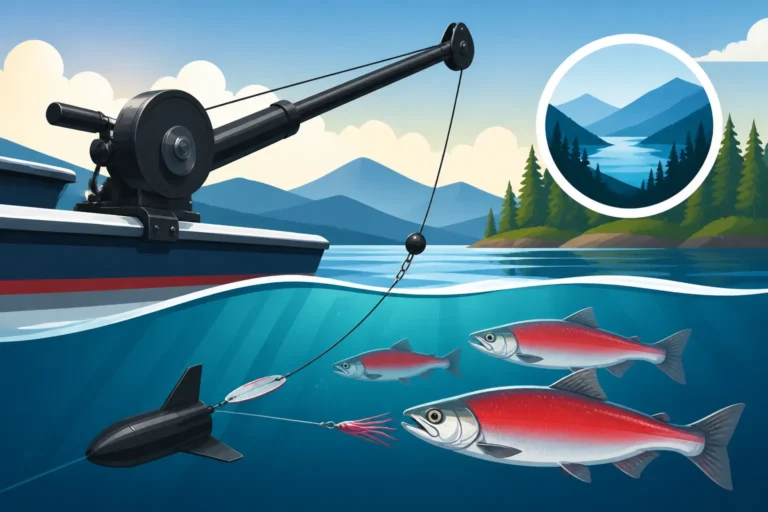
Downriggers: These are the workhorses for precise depth control. A downrigger allows you to drop a heavy cannonball weight to a specific depth, with your fishing line clipped into a release mechanism. This keeps your lure at the exact depth where you're marking fish, rather than letting it ride up or down with boat speed. You can find excellent manual or electric downriggers on Amazon, ranging from entry-level models perfect for a smaller boat to more advanced units with auto-depth features. For targeting those Dworshak giants at 100+ feet, electric downriggers are almost a necessity. Without them, maintaining a consistent depth is nearly impossible, especially when trolling.
Lures and Baits for Deep Water Presentation
Getting your lure to the right depth is only half the battle; it also needs to be enticing once it's there. Kokanee are known for their preference for flash, vibrant colors, and scent.
-
Lures: Small, flashy lures are key. Popular choices include mini kokanee hoochies, wedding ring spinners, and small spoons. Brands like Mack's Lure (their Kokanee Killer or Cha Cha Squidders are excellent) or similar high-action dodger-and-lure combos are incredibly effective. Look for lures that have good action at slower trolling speeds, as Kokanee often prefer a gentle presentation. You can easily stock up on a variety of colors and styles on Amazon before your trip. For more specific recommendations, check out our Best Lures for Idaho Kokanee Fishing guide.
-
Colors: Kokanee are drawn to bright, iridescent, and UV-reactive colors. Pinks, oranges, chartreuse, and chrome or silver are perennial favorites. Experimentation is crucial, as what works one day might not work the next. Having a variety of colors in your tackle box, readily available from retailers like Amazon, allows you to quickly adapt.
-
Scent: This is often overlooked but can be a game-changer. Kokanee have an excellent sense of smell. Adding a dab of scent to your lure, such as Pro-Cure Kokanee Killer, Mike's Bait Scent (krill or shrimp), or even garlic-infused corn, can significantly increase your strike rates. Apply scent frequently, as it washes off over time.
-
Dodgers/Flashers: These are crucial attractors. Positioned a foot or two in front of your lure, dodgers and flashers create vibration and flash that mimic schooling baitfish, drawing Kokanee from a distance. Choose dodgers in similar color schemes to your lures – silver, chrome, chartreuse, or pink are common. The size of your dodger should match your lure; generally, smaller dodgers (4-6 inches) are ideal for Kokanee. Learn more about effective trolling strategies in our comprehensive Idaho Trolling Techniques Guide.
-
Bait: The classic bait for Kokanee is shoepeg corn, dyed and infused with scent. A few kernels on one of the hooks of your treble lure can add that extra burst of attraction. Some anglers also use maggots or small pieces of shrimp.
Successfully fishing for deep summer Kokanee is a blend of scientific understanding, technological assistance, and a bit of trial and error. The more you experiment with depth, speed, and lure choices, the faster you'll zero in on what works for that particular day and lake. And remember, knowing the Best Trolling Speed for Kokanee is just as important as knowing the depth!
Here’s a quick overview of typical Kokanee depths in some Idaho lakes during the summer:
| Idaho Lake | Typical Summer Kokanee Depth Range (feet) | Key Factors Affecting Depth | Notes |
|---|---|---|---|
| Lake Coeur d'Alene | 40-80 feet | Sun intensity, Chinook presence, zooplankton migration | Can be shallower early morning, deeper midday. |
| Dworshak Reservoir | 60-120+ feet | Deepest stratification, abundant zooplankton in cold water | Known for consistently deep summer Kokanee; often requires electric downriggers. |
| Anderson Ranch Reservoir | 30-70 feet | Clarity, time of day, boat traffic | Also known for decent early season, then deeper in hot summer. |
| Priest Lake | 50-90 feet | Lake trout predation, thermocline location | May go deeper to avoid predators and find food; can vary greatly. |
| Lucky Peak Reservoir | 25-60 feet | Smaller reservoir, less extreme depths, proximity to Boise | Great for a quick trip, but depths are still temperature-dependent. |
Seasonal Changes and What to Expect for Summer Kokanee
Summer isn't just one static period for Kokanee; it's a dynamic phase that evolves from early warmth to the intensity of late summer, right into the pre-spawn behaviors. Understanding these nuances can help you predict their depths and actions even more accurately.
Early Summer vs. Late Summer Patterns
The "summer" Kokanee fishing season really breaks down into a few distinct phases, each with slightly different depth considerations:
-
Early Summer (June to Early July): As the ice comes off and spring runoff subsides, surface waters begin to warm, and the thermal stratification of the lake starts to form. During this period, Kokanee might not be at their absolute deepest yet. You might find them in the 25-60 foot range, especially during cooler spells or on overcast days. They're often very active feeders as they recover from winter and bulk up before the real heat sets in. This is a fantastic time for Summer Fishing in Idaho before the crowds and the deepest fish.
-
Mid-to-Late Summer (Mid-July through August): This is when Idaho lakes experience their warmest surface temperatures, and stratification is at its strongest. Consequently, Kokanee will be found at their deepest comfort zones, often pushing into the 60-100+ foot range on larger, deeper lakes like Dworshak or Lake Coeur d'Alene. Their metabolism can slow a bit in the extreme heat, and they might become more lethargic. Presentation needs to be precise, and scent becomes even more critical. You might even notice slight variations in their average size; for instance, understanding the Average Kokanee Size on Lake Coeur d'Alene This Year can sometimes hint at their overall health and feeding patterns.
-
Pre-Spawn (Late August into September): As summer wanes and the days shorten, some Kokanee (especially the older ones) begin to stage for their spawning run. While they still need cool, oxygenated water, they might start moving slightly shallower, especially in the mornings and evenings, as they begin their migration towards spawning grounds. Their colors will also start to deepen to brilliant reds and greens. This is often the last hurrah for catching them before they commit fully to the spawn.
Monitoring Conditions Beyond Depth
Successful Kokanee fishing isn't just about dropping a lure to a specific number on your downrigger. It's about being a detective on the water, observing and adapting to subtle cues:
-
Water Temperature: While your fish finder shows you depths, a good surface temperature gauge, and ideally, one that measures temperature at depth (some high-end fish finders or specialized thermometers do this), can give you crucial insights into the thermocline. Knowing the exact temperature at a given depth is more valuable than just the depth number itself.
-
Currents: Subsurface currents, especially in reservoirs, can impact where zooplankton concentrate and, by extension, where Kokanee will be. Pay attention to how your boat drifts and how your downrigger lines behave; any unexpected drag could indicate a current.
-
Barometric Pressure: While not always a precise indicator, falling barometric pressure often precedes a storm and can sometimes make fish more active. Stable, high pressure often means consistent, but potentially deeper, feeding patterns.
-
Angler Reports: Don't be too proud to ask! Local tackle shops, fishing forums, and even friendly anglers on the water are invaluable sources of current information. Conditions can change rapidly, and what worked yesterday might not work today. Information from fellow anglers can help you refine your depth, lure, and speed choices.
Ultimately, Kokanee fishing in summer requires patience, persistence, and a willingness to adapt. The more you understand their behavior, the better equipped you'll be to put fish in the net, no matter how deep they decide to roam.
Disclaimer
Fishing conditions and regulations can change rapidly. Always consult the latest Idaho Department of Fish and Game regulations before heading out on the water. This guide provides general information and best practices, but it is your responsibility to ensure compliance with all current rules and to prioritize safety during your fishing excursions.