How to Fish for Kokanee in Idaho
If you've ever felt the frustration of spending hours on the water, meticulously setting up your gear, only to come back with an empty cooler while others around you are landing beautiful, shimmering kokanee salmon, you're not alone. These finicky fish, a landlocked cousin of the sockeye, can be incredibly challenging to locate and entice. This comprehensive guide is designed to peel back the layers of mystery surrounding kokanee fishing in Idaho, providing you with the knowledge, techniques, and confidence to consistently catch these delicious and spirited fighters.
Understanding Idaho's Elusive Kokanee
Before you even think about dropping a line, it's crucial to understand the fish you're targeting. Kokanee are not your average trout; they have unique behaviors, dietary preferences, and physical characteristics that dictate how, when, and where you'll find them. Knowing these nuances is the first step to becoming a successful kokanee angler in the Gem State.
The Biology of Kokanee: Why They're Different
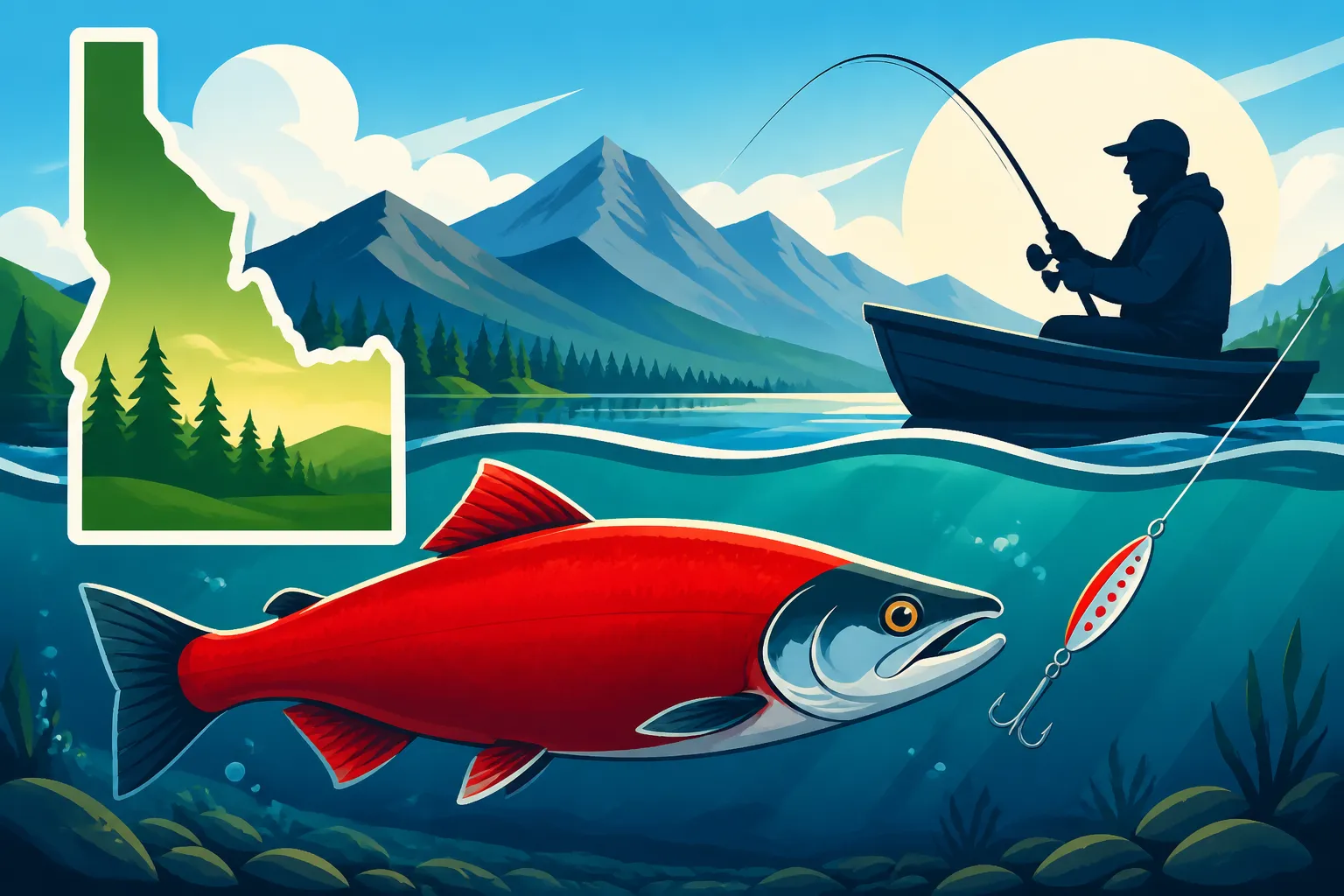
Kokanee (scientific name Oncorhynchus nerka kennerlyi) are truly fascinating. They are essentially freshwater-dwelling sockeye salmon, meaning they complete their entire life cycle without ever migrating to the ocean. This makes them distinct from Idaho's anadromous sockeye populations that return to places like Redfish Lake. Their unique biology directly impacts fishing strategies.
Firstly, kokanee are primarily planktivores, meaning their diet consists almost exclusively of zooplankton. This is a critical distinction from most trout species that feed on insects, smaller fish, or crustaceans. Because they chase microscopic organisms, kokanee don't typically hang around structure or ambush prey like bass or even some trout. Instead, they roam open water, often in large schools, following the plankton blooms. This pelagic behavior makes locating them a challenge, as they can be suspended at various depths throughout the water column, often far from shore. Their pursuit of plankton also means that brightly colored, flashy lures designed to imitate plankton or stir up curiosity are often more effective than traditional baitfish imitations.
Secondly, kokanee are schooling fish. If you find one, you're likely to find many. This is a double-edged sword: it makes them hard to locate initially, but once you do, the action can be fast and furious. The schools can be dense, showing up on a fish finder as large, amorphous blobs, or they can be looser, spread out across a wide area. Their schooling instinct also means that if one fish strikes, others in the school might follow suit, creating a temporary feeding frenzy. Understanding this social behavior helps in knowing when to stick with a spot or move on.
Finally, kokanee have incredibly delicate mouths. This isn't just a minor detail; it's a major factor in hook-sets and fighting them to the boat. Their soft mouth tissue means that aggressive hook-sets can easily tear the hook free, and too much pressure during the fight can result in a lost fish. This necessitates light tackle, sensitive rods, and a gentle hand on the reel's drag. Many experienced kokanee anglers use single, barbless hooks to further minimize tissue damage and aid in a clean release for fish not intended for the cooler, although Idaho regulations often don't mandate barbless for kokanee.
Prime Idaho Waters for Kokanee
Idaho is blessed with several fantastic kokanee fisheries, each offering a slightly different experience. Knowing which lakes hold healthy populations and what makes them tick is vital for planning your trip.
Perhaps the most famous kokanee fishery in Idaho is Lake Coeur d'Alene. This sprawling lake in North Idaho is renowned for its strong kokanee population, which in turn supports a robust Chinook salmon fishery. The kokanee here are often targeted by anglers using downriggers and specialized trolling setups. The lake's deep, cold waters provide an ideal environment for plankton blooms and the kokanee that feed on them. Fishing here can be very productive, especially from spring through fall, with popular areas including the deeper basins and along prominent points.
Further north, Dworshak Reservoir is another top-tier kokanee destination. This narrow, deep reservoir on the North Fork of the Clearwater River boasts an incredible kokanee population, often producing larger-than-average fish. Its remote setting offers a more wilderness-like experience, and anglers here also rely heavily on trolling techniques. Dworshak is known for its dramatic seasonal changes, with kokanee depth varying significantly from spring to late summer. For those looking for a truly epic kokanee experience, Dworshak frequently delivers.
In Southern Idaho, you'll find productive kokanee fishing in reservoirs like Anderson Ranch Reservoir and Lucky Peak Reservoir, both easily accessible from the Boise area. Anderson Ranch is particularly popular, offering good numbers of kokanee that respond well to trolling dodgers and hoochies. Lucky Peak, while closer to the city, also holds respectable numbers of kokanee, providing a convenient option for a quick fishing trip. These reservoirs tend to be shallower and warm up faster than their northern counterparts, which can influence kokanee depth and activity.
Lake Pend Oreille, another large North Idaho lake, also has a kokanee presence, though it's perhaps more famous for its record-breaking rainbow trout. The kokanee here contribute to the forage base for those massive rainbows, and anglers sometimes target them specifically, often finding them in the deeper, open water sections. While not as singularly focused on kokanee as Dworshak or Coeur d'Alene, it's certainly a place where you might encounter them. Each of these bodies of water will have specific areas, often related to depth changes, creek mouths, or submerged structures, where kokanee tend to congregate at different times of the year.
Identifying Kokanee and Regulatory Considerations
While mature kokanee, especially during their spawning run, are easy to identify by their vibrant red bodies and distinct humped backs, juvenile and non-spawning kokanee can sometimes be confused with other trout species, particularly rainbow trout. However, there are some key identification features to look for.
Kokanee typically have a more slender body profile than rainbow trout, and their mouths are smaller and do not extend past the eye. Unlike rainbow trout, which often have a black spot pattern extending onto their tail fin, kokanee usually have very few, if any, spots on their tails, or the spots are confined to the upper lobe. Their flesh is typically a deep orange-red, much like their anadromous sockeye relatives, due to their plankton-rich diet. This vibrant color is one of the reasons they are so prized as table fare. When in doubt, consulting the official Idaho Fish and Game regulations brochure, which often includes illustrations or detailed descriptions, is always the best practice.
Understanding the specific regulations is paramount for ethical and legal kokanee fishing. Idaho Fish and Game sets specific bag limits for kokanee, which can vary by water body and by year depending on population health. For instance, the general statewide rule for kokanee might be a certain number, but specific reservoirs or lakes could have special regulations that alter this. Dworshak Reservoir, for example, has historically had very generous kokanee limits due to overpopulation concerns, while other lakes might be more restrictive. It's not uncommon to see limits of 15 or 25 kokanee per day in some waters, reflecting the abundance and management goals for the species. Before heading out, always check the current year's "Idaho Fishing Regulations Explained" and specifically the "Idaho Kokanee Bag Limits" for your chosen destination. These rules are put in place to ensure sustainable fishing for everyone and contribute to the health of Idaho's diverse fisheries. Penalties for exceeding limits or violating other rules can be steep, so make sure you're up to date.
Gearing Up for Kokanee Success
Fishing for kokanee effectively requires a specific approach to tackle and electronics. While you can certainly catch them on general-purpose fishing gear, having the right specialized equipment will drastically increase your success rate and make the experience much more enjoyable. Think of it as having the right tools for a specialized job – you wouldn't use a screwdriver to pound a nail, and you wouldn't use a heavy catfish rod to feel the subtle bite of a kokanee.
Rods, Reels, and Line: The Foundation
When it comes to kokanee fishing, sensitivity and forgiveness are key for rods and reels. Their delicate mouths demand a light touch.
Your ideal kokanee rod should be a light to ultra-light action spinning or casting rod, typically between 6'6" and 7'6" in length. The most crucial feature is a very sensitive tip that can detect the often-subtle tap of a kokanee bite, or even just the slight quiver caused by a kokanee inhaling a lure while trolling. A fiberglass or composite rod often offers a more forgiving bend, which helps prevent hooks from tearing out of those soft mouths during the fight. Look for a rod with a smooth, parabolic bend rather than a stiff, fast-action tip. This allows the rod to absorb the shock of a head shake, reducing the chances of a pulled hook. Many popular kokanee rods are specifically marketed for the species, with brands like Lamiglas, Shimano, and Berkley offering excellent options.
Pair your sensitive rod with a small, lightweight spinning reel (size 1000-2500) or a low-profile baitcasting reel. The reel's most critical feature is a smooth, reliable drag system. You'll be fighting fish on light line, and a sticky or inconsistent drag will lead to break-offs. Ensure it can be finely adjusted to provide just enough resistance to tire the fish without putting excessive strain on the line or hook. A reel with a good gear ratio (around 5.0:1 to 6.0:1) is also beneficial for maintaining control and retrieving line efficiently without overpowering the delicate fish.
For line, 6 to 10-pound test monofilament or fluorocarbon is generally preferred. Monofilament offers more stretch, which acts as a shock absorber, further protecting against pulled hooks. Fluorocarbon, being less visible underwater and having less stretch, can be a good choice for leaders or in clear water conditions where fish are particularly spooky. Many anglers will run braided main line for sensitivity and then use a long leader (10-20 feet) of fluorocarbon or monofilament connected with a swivel. The swivel helps prevent line twist, especially when using dodgers or flashers. Whichever main line you choose, ensure it's fresh and free of nicks or abrasions, as light line can be easily compromised by wear and tear.
The Importance of Depth Control: Downriggers and Lead Core
Since kokanee often suspend in open water, sometimes as deep as 100 feet or more, simply casting or using weights won't consistently get your lure into the strike zone. This is where specialized depth control mechanisms become indispensable.
Downriggers are the absolute workhorses of serious kokanee fishing. These devices allow you to precisely lower your lure, attached to a short leader, to any desired depth using a heavy cannonball weight. Your fishing line is clipped into a release mechanism on the downrigger cable. When a fish strikes, the line pops free from the clip, allowing you to fight the fish directly without the weight. Downriggers are typically mounted to the boat, either manually operated or electric. The precision they offer is invaluable when kokanee are holding at a specific depth, which they frequently do, often following the thermocline (the layer of water where temperature changes rapidly). With a downrigger, you can accurately place your lure right in front of a school of fish you've located on your fish finder. Many anglers run multiple downriggers, some even "stacking" lines on a single downrigger cable, to present several lures at different depths simultaneously.
Lead core line is another popular method for reaching depth, particularly for those without downriggers or for targeting shallower kokanee. Lead core is a fishing line with a lead filament woven into its core, making it heavy and allowing it to sink. The line is typically color-coded, with each color segment (usually 10 yards) representing approximately 5-7 feet of depth at a given trolling speed. For example, if you let out five colors of lead core, your lure might be running 25-35 feet deep. While less precise than a downrigger, lead core is effective and much more portable. Anglers often spool lead core onto a dedicated reel and then attach a long monofilament or fluorocarbon leader to the end. The biggest drawback is that you fight the fish with the heavy lead core line in the water, which can reduce sensitivity. Combining lead core with different trolling speeds and lure types can help you target varying depths. Many successful kokanee anglers often consult a "Trolling Depth Chart for Idaho Kokanee by Month" to get a baseline idea of where fish might be holding, then fine-tune with their electronics.
Electronics: Your Eyes Beneath the Surface
In the world of kokanee fishing, electronics are not a luxury; they are a necessity. Since these fish spend most of their lives suspended in open water, often miles from any visible structure, a good fish finder is your most critical tool for locating schools and understanding their depth.
A modern fish finder or sonar unit allows you to literally see what's beneath your boat. For kokanee, you'll be looking for several key indicators on your screen. First and foremost, you're searching for "fish arches" or, more commonly for schooling kokanee, large "blobs" or "clouds" of fish. These represent dense schools that are often following bait balls (concentrations of zooplankton). Identifying these schools is paramount because if there are no fish on the screen, you're likely wasting your time trolling in that area.
Beyond just locating fish, your fish finder helps you understand their behavior and environment. It will display the water depth, surface temperature, and crucially, often illustrate the thermocline. The thermocline is a distinct layer in the water column where the temperature drops rapidly. Kokanee frequently congregate along or just above this layer, as it tends to concentrate their plankton food source and provides optimal temperature comfort. By identifying the thermocline, you can adjust your downriggers or lead core line to run your lures precisely at that depth.
Modern units with features like Down Imaging (DI) and Side Imaging (SI) can provide even more detail. Down Imaging gives you a photographic-like view directly beneath the boat, making it easier to distinguish fish from structure or dense plankton. Side Imaging allows you to scan wide areas to either side of your boat, helping you locate schools that might be just outside your main sonar cone. This is incredibly useful for covering more water quickly. You can find excellent fish finders from brands like Humminbird, Lowrance, and Garmin on Amazon, ranging from entry-level portable units perfect for smaller boats to advanced multi-function displays for serious anglers. Learning "How to Find Kokanee on a Fish Finder" effectively is a skill that comes with practice, but it's the single most important step in finding active fish. Without it, you're simply guessing.
Irresistible Lures and Baits
Once you've located the kokanee and have your depth control set, the next critical step is presenting them with something they can't resist. Kokanee are attracted by a combination of flash, vibration, and scent. Understanding how these elements work together will guide your lure and bait choices.
Dodgers, Flashers, and Their Attraction Power
Dodgers and flashers are not lures themselves; rather, they are attractors designed to create commotion, flash, and vibration in the water, drawing kokanee from a distance. They are essential components of most kokanee trolling setups.
A dodger is a concave, metal or plastic plate that wobbles back and forth as it's trolled, creating a darting, erratic motion. This motion is transmitted down the line to the trailing lure, giving it an enticing, wounded-baitfish-like action. Dodgers come in various sizes and colors, with popular options often featuring reflective tapes in shades of pink, green, orange, chartreuse, or silver. The size of the dodger will affect the action of your lure and how much drag it creates in the water. Larger dodgers create more action and can attract fish from farther away, but they also pull harder.
Flashers, on the other hand, typically spin or rotate, creating a continuous flash and vibration. They are often longer and thinner than dodgers. While they also impart action to the trailing lure, their primary role is visual attraction, mimicking the shimmer of a school of baitfish or simply creating a noticeable presence in the water. Like dodgers, flashers come in a wide array of colors and finishes. The choice between a dodger and a flasher, or even a specific color, can depend on water clarity, light conditions, and the kokanee's mood on any given day. Many anglers carry a variety to experiment with. You can find a wide variety of these dodgers and flashers from brands like Rocky Mountain Tackle, Shasta Tackle, and Mack's Lures on Amazon, making it easy to build a diverse arsenal.
These attractors are typically rigged with a short leader (often 6 to 18 inches) extending from the dodger/flasher to the actual lure. The leader length is crucial and can significantly impact the lure's action. A shorter leader might make the lure dart more aggressively, while a longer one allows for a more subtle, gliding action. Experimentation is key to finding what the fish prefer on a particular day.
Kokanee Lures: Hoochies, Spinners, and Jigs
Once the dodger or flasher has done its job of attracting attention, it's the lure's task to seal the deal. Kokanee lures are typically small, colorful, and designed to move enticingly even at slow trolling speeds.
Hoochies, also known as squid skirts, are incredibly popular for kokanee. These are soft plastic skirts, typically 1 to 2 inches long, often rigged with two small, sharp hooks. They come in every color imaginable, but pink, green, orange, and chartreuse are perennial favorites. The soft plastic undulates in the water, creating a lifelike movement that kokanee find irresistible, especially when paired with a dodger. They are highly versatile and can be tipped with a kernel of shoepeg corn (more on that later) for added scent and visual appeal. Different hoochie designs, some with internal beads or Mylar flash, offer variations in action and attraction.
Small spinners, sometimes called wedding ring spinners, are another go-to lure. These typically consist of a small blade (Colorado or willowleaf style) that spins around a wire shaft, followed by beads and a small, dressed hook. The spinning blade creates flash and vibration, while the beads and skirt add color and profile. Like hoochies, they are often tipped with corn. Spinners are effective at a variety of speeds and can be very productive, especially when kokanee are aggressive. Brands like Mack's Lures and P-Line make excellent kokanee-specific spinners.
While primarily a trolling species, kokanee can also be caught on small jigs, especially when vertically jigging over a suspended school. These are typically small lead-head jigs dressed with plastic grubs or bucktail, or small metal jigging spoons. Jig colors again lean towards bright, flashy options like pink, chartreuse, and silver. Jigging can be a highly effective technique when kokanee are tightly schooled and not actively chasing trolled lures, often requiring a sensitive rod to feel the light take. For ice fishing, small jigs become even more important.
The Critical Role of Scent and Corn
This is arguably the most crucial secret weapon in any kokanee angler's arsenal: scent and bait, specifically shoepeg corn. While dodgers and lures draw attention, corn and scent provide the irresistible appeal that coaxes a kokanee to bite.
Shoepeg corn, a specific variety of white corn, is the preferred choice. Its firm texture allows it to stay on the hook well, and its pale color provides a subtle visual target. The corn is typically soaked in a variety of powerful scents specifically formulated for kokanee. These scents are often anise-based, but others like garlic, krill, or a proprietary blend of attractants are also popular. Companies like Kokaneekiller, Pro-Cure, and Pautzke Bait Co. offer a wide range of these potent kokanee scents.
The reason scent and corn are so effective is multi-faceted. First, the corn itself provides a subtle visual cue that kokanee, with their excellent eyesight, can hone in on. It's just enough of a profile to look like something worth investigating. Second, the scent provides a powerful olfactory attractant. Kokanee, like most salmonids, have a highly developed sense of smell. The scent trails through the water, drawing fish closer to the lure. It also helps to mask any human scent that might be on the lure or hook, which can be a deterrent to these wary fish. Finally, the corn provides something for the fish to "mouth" onto. Kokanee often "taste" their food before committing to a full bite. The corn gives them a palatable, somewhat natural-feeling target to inhale, increasing the chances of a solid hook-up.
To use corn effectively, simply thread one or two kernels onto the hooks of your hoochie or spinner. Some anglers will pre-soak their corn in scent for days or even weeks, while others will add a few drops of scent to their lure just before deploying it. Experimentation with different scent profiles and corn amounts is often necessary to dial in what the kokanee prefer on a given day. Never underestimate the power of a fresh kernel of scent-soaked corn – it can make all the difference between a slow day and a banner day on the water.
Mastering the Art of Trolling for Kokanee
Trolling is by far the most effective and popular method for catching kokanee in Idaho. It allows you to cover vast expanses of open water, present your lures at precise depths, and find those elusive schools of fish. However, simply dragging a lure behind the boat isn't enough; true success comes from mastering the nuances of speed, depth, and presentation.
Perfecting Your Trolling Speed and Depth
These two variables are the absolute bedrock of successful kokanee trolling. Get them right, and you're halfway to filling your cooler.
Optimal trolling speed for kokanee is typically slow, usually ranging from 0.8 to 1.5 miles per hour. This slow speed allows dodgers and flashers to work effectively, imparting their enticing action to the trailing lures without overpowering them. It also gives kokanee enough time to react to the attractors and commit to a bite. Too fast, and your lures might spin unnaturally or zip past the fish too quickly; too slow, and they might lack the necessary action to entice a strike. The exact "Best Trolling Speed for Kokanee" can vary slightly depending on the specific lures you're using, the water temperature, and the mood of the fish. Some days they might prefer a slightly faster pace, while others they might want it practically dead slow. A GPS-enabled fish finder or dedicated speed indicator is crucial for maintaining consistent speed.
Depth is equally, if not more, critical. As discussed, kokanee are often suspended in a very narrow band of water, usually around the thermocline or where plankton is most concentrated. Being just a few feet above or below this zone can mean the difference between catching fish and getting skunked. Your downriggers or lead core line, combined with your fish finder, are your tools for precise depth control. Once you mark a school of fish on your electronics, immediately adjust your lures to run at or just above that depth. Sometimes, running one lure slightly above the fish and another right in the middle of the school can reveal their preference. Keep a keen eye on your fish finder, as kokanee schools can move up or down throughout the day in response to light, temperature, or plankton shifts. For a detailed breakdown of how to fine-tune your depth control and other trolling best practices, check out the article "How to Troll for Kokanee on Lake Coeur d'Alene."
Beyond simply setting a straight course, subtle changes in your boat's direction can trigger strikes. Performing gentle "S-turns" while trolling causes your lures on the inside of the turn to slow down and sink slightly, while those on the outside speed up and rise. This change in speed and depth can often provoke a hesitant kokanee to strike. Don't be afraid to experiment with these subtle boat maneuvers.
Reading the Water and Adjusting Your Spread
Successful kokanee anglers are constantly observing and adapting. The water conditions, time of day, and even the weather can all play a significant role in kokanee behavior and your trolling strategy.
Your electronics are not just for finding fish; they also help you read the water. Pay close attention to the water temperature displayed on your fish finder, especially the thermocline. As the day progresses and the sun intensifies, kokanee might move deeper to find cooler, more comfortable water. Conversely, during overcast conditions or early morning/late evening, they might move slightly shallower. Understanding these vertical movements is essential for adjusting your depth. If you're not getting bites at one depth, don't be afraid to raise or lower your lures by 5-10 feet to see if you can find the active zone.
Consider light conditions. On bright, sunny days, kokanee might be deeper and prefer more subdued lure colors or less flash. On cloudy days or in low light, brighter, more flashy lures can be more effective. Water clarity also plays a role; in clearer water, fish can be warier, and longer leaders with more natural-looking lures might be better. In stained water, more vibration and flash are often needed to get their attention.
"Your spread" refers to the arrangement of your lures behind the boat. Many kokanee boats run multiple rods, often utilizing two to four rods with downriggers, and sometimes additional rods fishing lead core or planer boards. The goal is to present a variety of lures, colors, and depths to figure out what the fish want. For example, you might run one rod with a pink dodger and hoochie at 50 feet, another with a green flasher and spinner at 40 feet, and a third with lead core running shallower. Keep track of which rod gets bites – this tells you about preferred color, lure type, and depth. Pay attention to how far back from the downrigger release your lure is running; this "setback" can be anywhere from 15 to 100 feet. Too short, and the fish might spook from the boat or downrigger ball; too long, and detecting subtle bites can be challenging.
Detecting Bites and Executing the Hookset
Kokanee bites are notoriously subtle. Unlike a hard-hitting bass or trout, a kokanee often just gives a gentle "tick," a slight deflection of the rod tip, or sometimes just a brief slackening of the line. Learning to detect these subtle takes is crucial.
When trolling with downriggers, your rod will be bent over under the tension of the downrigger clip. When a kokanee bites, the line will pop out of the clip, and the rod will snap upright. This is the clearest indication of a bite. However, sometimes a fish will mouth the lure without pulling the line free, resulting in a gentle tap on the rod tip. This is where a sensitive rod and constant vigilance come in. If you're running lead core or simply flat-lining, you'll be looking for those subtle taps or even just a slight change in the rhythm of your rod tip.
Once you detect a bite, the hookset is different than with other species. Remember, kokanee have delicate mouths. An aggressive, sweeping hookset will often rip the hook right out. Instead, simply reel steadily to come tight on the fish. The motion of the boat, combined with the continuous reeling, is usually enough to properly seat the small hooks. If you feel the fish, maintain steady, light pressure. Don't try to horse them in. Let your smooth drag do its job.
When fighting a kokanee, avoid pumping the rod aggressively. Instead, maintain a steady bend in the rod and a consistent retrieve, letting the rod's parabolic action absorb any head shakes. Keep the line tight, as any slack can give the fish an opportunity to spit the hook. As the fish approaches the boat, be ready with a net. A quick, clean scoop will help you land the fish without unnecessary stress or lost opportunities. Having a short-handled, rubberized landing net on board is a great idea, as the rubber coating protects the fish's slime coat if you're practicing catch and release.
Alternative Kokanee Fishing Methods
While trolling is king for kokanee, there are other methods that can be effective, particularly in specific situations or for anglers without a fully equipped trolling boat. These alternative techniques offer different challenges and rewards, and understanding them can expand your kokanee fishing repertoire.
Jigging for Suspended Schools
Vertical jigging is an effective method for kokanee, especially when they are tightly schooled and suspended directly beneath your boat, or during the ice fishing season. This technique involves dropping a small lure directly down to the depth where fish are marked on your electronics and imparting a jigging motion.
When to jig: Jigging is most effective when you can precisely position your boat over a concentrated school of kokanee. This often happens in deeper basins, near drop-offs, or in channels. Your fish finder is absolutely essential here, allowing you to see the school and drop your jig right into it. It's also a go-to method for "How to Ice Fish Idaho Lakes" for kokanee, where anglers drill holes over known kokanee haunts and jig through the ice. The lack of boat movement means the fish are often more receptive to a stationary, vertical presentation.
The setup for jigging is simpler than trolling: a sensitive, light-action rod (often shorter than trolling rods for better control), a small spinning reel, and 6-8 pound test monofilament or fluorocarbon line. Small metal jigging spoons (like a Northland Forage Minnow or a Kastmaster), lead-head jigs dressed with small grub tails (1-2 inches), or even small kokanee hoochies weighted with a split shot or small lead head are effective. Colors again follow the kokanee pattern: pink, green, orange, silver.
The jigging cadence is crucial. Drop your jig to the desired depth, then experiment with different retrieves. A common technique is to lift the rod tip 1-2 feet, then let it fall on a semi-slack line, allowing the lure to flutter and dance. Pause for a few seconds, then repeat. Sometimes a sharp rip followed by a long pause is effective, other times a subtle quiver. Bites will often feel like a light tap or simply a bit of added weight on the line. As with trolling, a gentle hookset is best. Tipping your jig with a kernel of scent-soaked shoepeg corn can significantly increase its appeal.
Bank Fishing Opportunities
Bank fishing for kokanee is arguably the most challenging method, as these fish primarily inhabit the open, deep water far from shore. However, it's not entirely impossible, and there are specific situations where shore-bound anglers can find success. This method typically requires a combination of good timing, specific locations, and patience.
The best opportunities for bank fishing kokanee usually occur during specific times of the year and day. In the very early spring, just after ice-out, kokanee can sometimes move into shallower areas as water temperatures begin to rise and they seek out plankton. Similarly, during their pre-spawn period in late summer and early fall, some kokanee may temporarily move closer to shore as they begin to stage for their upstream migration, though targeting them during this phase can be ethically questionable as their flesh quality deteriorates significantly. Early morning and late evening, when light levels are low, also offer a better chance of finding kokanee in shallower, more accessible water.
Look for locations that offer deep water access directly from the bank, such as steep drop-offs, reservoir dams, or rocky points that jut into the main lake. Some popular spots for bank fishing on larger lakes like "Lake Coeur d'Alene" might have designated public access points or piers that extend into deeper water, increasing your chances.
For tackle, a long casting rod (7-9 feet) with a spinning reel spooled with 8-10 pound test line will help you make long casts. A slip bobber rig is often the most effective setup. You can suspend a small jig (like a ½ oz Kastmaster or a small marabou jig) or a pre-tied kokanee spinner tipped with corn and scent beneath the bobber, allowing you to present it at a specific depth. Adjust the bobber stop to position your lure anywhere from 10 to 40 feet deep. Cast out, let it settle, and then retrieve very slowly, or simply let it drift with the current or wind. Some anglers also experiment with casting small spoons or inline spinners and retrieving them very slowly. While it requires more patience and luck than trolling, successfully landing a kokanee from the bank is incredibly rewarding.
Seasonal Strategies for Kokanee Anglers
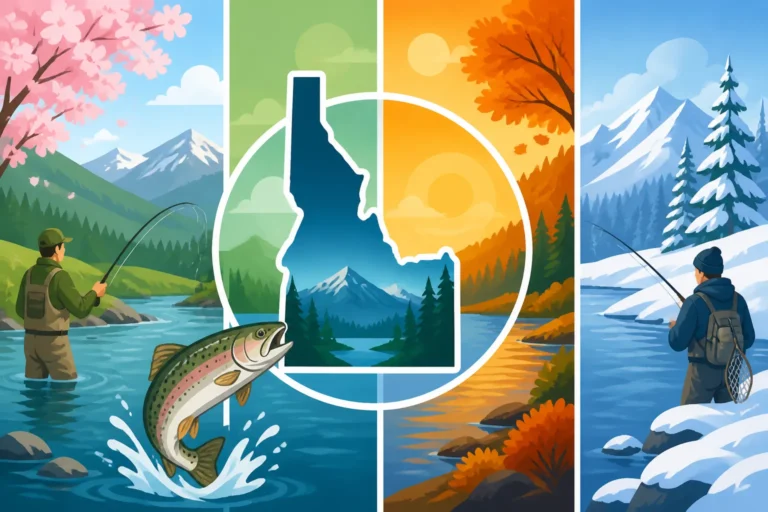
Kokanee behavior is heavily influenced by the seasons, primarily due to changes in water temperature, light penetration, and the availability of their plankton food source. Understanding these seasonal shifts is crucial for adapting your fishing strategy and maximizing your success throughout the year.
Spring Fishing: Shallow Water & Post-Spawn
As winter loosens its grip and the ice melts from Idaho's lakes and reservoirs, spring ushers in a new phase of kokanee fishing. This period, often just after "Fishing Idaho Right After Ice-Out," sees kokanee in relatively shallower water compared to their deep summer haunts.
In early spring, as surface water temperatures begin to climb, kokanee often move into the top 20-40 feet of the water column. They are actively feeding and can be quite aggressive. This is an excellent time to target them with shallow trolling techniques, sometimes even without downriggers if they are high enough. Lead core line can be very effective during this period, allowing you to present lures at specific, shallower depths.
Key strategies for spring kokanee:
- Depth: Focus on the upper water column. Start trolling your lures around 15-20 feet deep and gradually experiment deeper if you're not getting bites. Keep an eye on your fish finder for bait balls and any signs of kokanee.
- Lures: Bright, flashy colors tend to work well in the often-turbid post-runoff waters. Pink, orange, and chartreuse dodgers paired with matching hoochies or small spinners are good starting points.
- Speed: Maintain a slow trolling speed, generally 1.0 to 1.5 mph, to allow your dodgers and lures to work effectively in the cooler water.
- Locations: Look for areas where warming water might attract plankton, such as sun-exposed flats near creek mouths, or along shorelines that receive more direct sunlight.
The spring bite can be fast and furious, as kokanee are often hungry after a long winter. It's a fantastic time to get out on the water and enjoy some of Idaho's earliest open-water fishing.
Summer Fishing: Deep & Thermocline Tactics
Summer brings warmer surface temperatures, and with that, kokanee dive deep. This is when the necessity of specialized gear like downriggers truly shines, as kokanee will retreat to the cooler, oxygenated waters of the thermocline.
During the peak summer months, kokanee will typically congregate in the lower half of the water column, often at depths ranging from 40 to 100 feet, depending on the lake and its specific thermocline. They are still actively feeding on plankton, but finding them requires precision. The specific article "What Depth Kokanee Hold at in Summer on Idaho Lakes" provides excellent details on this.
Key strategies for summer kokanee:
- Depth: This is paramount. Use your fish finder to locate the thermocline and any suspended schools of kokanee. Target your lures precisely at these depths. Don't be afraid to try multiple depths simultaneously with a multi-rod spread.
- Lures: While bright colors still work, sometimes more subtle or natural patterns can be effective in clearer, deeper water. Experiment with different dodger/flasher colors and sizes. Often, pinks, greens, and oranges remain consistent producers.
- Time of Day: Early morning and late evening often provide the best bite, as light penetration is lower, and kokanee may be more active or even move slightly shallower. Midday can be slower, but kokanee are still catchable if you find their deep holding areas.
- Location: Focus on open water basins, offshore humps, or deep channels where kokanee are known to school. Don't be afraid to explore new areas with your electronics.
Summer kokanee fishing is often about patience and persistence. Finding the right depth and presenting your lure consistently within that narrow zone is the recipe for success.
Fall Fishing: Pre-Spawn Aggression
As summer transitions into fall, the kokanee life cycle takes a dramatic turn. This is the pre-spawn period, and it can offer some of the most aggressive kokanee fishing of the year, though with important ethical considerations.
In late summer and early fall, kokanee begin to mature and prepare for their spawning run. Their bodies start to undergo a transformation, with males developing a pronounced humped back and hooked jaw (kype), and both sexes changing color from silvery to brilliant red. During this pre-spawn phase, kokanee can become incredibly aggressive as they feed heavily to build up energy for spawning. They may also begin to move shallower as they stage near stream inlets or other spawning grounds.
Key strategies for fall kokanee:
- Depth: Kokanee might be found at a wider range of depths. They could still be deep in the main lake, but also moving shallower, sometimes into 20-40 feet, as they stage. Keep your electronics active and search for schools at varying depths.
- Lures: Bright, even garish, colors can be highly effective during this aggressive phase. Larger dodgers and flashers can also draw attention. Consider adding more vibration and flash to your presentation.
- Ethical Considerations: It's important to note that once kokanee start to turn noticeably red and develop their spawning characteristics, their flesh quality rapidly deteriorates. While they can be incredibly fun to catch during this aggressive pre-spawn period, many anglers choose to reduce their harvest or even switch to catch-and-release once the fish are clearly in their spawning colors. The Idaho Fish and Game regulations might also have specific rules regarding harvesting spawning kokanee in certain areas. Always be mindful of the "Idaho Catch Limits and Bag Limits Explained" and practice responsible angling.
The fall bite can be exciting, with hard strikes and strong fights. However, it's a good time to remember the value of conservation and respect for the fish's life cycle.
Troubleshooting and Advanced Kokanee Tactics
Even with the best gear and understanding of seasonal patterns, kokanee can sometimes be maddeningly uncooperative. That's when it's time to troubleshoot your setup and employ some advanced tactics. Beyond getting them to bite, knowing how to properly land and care for your catch ensures a successful trip from start to finish.
Experimentation and Fine-Tuning Your Presentation
When the bite slows down or you're simply not getting any action, it's time to start experimenting with every variable in your setup. No single magic bullet works every day, so continuous adjustment is key.
- Leader Length: This is a subtle but incredibly important variable. The distance between your dodger or flasher and your actual lure significantly impacts the lure's action. A shorter leader (e.g., 6-10 inches) will create a more aggressive, darting action, while a longer leader (e.g., 18-24 inches or more) will allow the lure to swim with a more natural, gliding motion. If fish are hitting short or not at all, try adjusting your leader length in small increments. You might find that a difference of just a few inches can unlock the bite.
- Lure Rotation: Don't stick to just one type or color of lure. If pink isn't working, switch to green or orange. If hoochies are slow, try a small spinner. Sometimes even a subtle variation in the pattern or amount of Mylar on a hoochie can make a difference. Having a dedicated tackle box or bag organized with various dodgers, flashers, hoochies, and spinners (many of which you can find on Amazon) allows for quick changes. Check out the "Best Lures for Idaho Kokanee Fishing" article for specific recommendations.
- Scent and Corn Variations: Experiment with different scent profiles. If garlic isn't producing, try anise or a sweet corn scent. Also, vary the amount of corn on your hooks – sometimes one kernel is enough, other times two or three. Ensure your corn is fresh and heavily scented.
- Trolling Speed Adjustments: Even slight changes in speed (e.g., from 1.2 mph to 0.9 mph, or vice-versa) can alter the action of your dodgers and lures enough to trigger strikes. Use your GPS or boat speed indicator to make precise, incremental adjustments.
- The "S-Turn" Tactic: As mentioned earlier, making gentle S-turns with your boat causes your lures to speed up and slow down, creating an erratic action that can trigger aggressive strikes from following fish. Don't just troll in a straight line; incorporate these subtle turns into your pattern.
- Depth Micro-Adjustments: If fish are marked at 60 feet, try running one lure at 58 feet and another at 62 feet. Kokanee can be incredibly depth-sensitive, and being just a couple of feet off can make all the difference.
The most successful kokanee anglers are the ones who are constantly experimenting, paying close attention to what is (and isn't) working, and adapting their presentation.
Landing and Handling Your Delicate Kokanee
Successfully hooking a kokanee is only half the battle; bringing it to the boat without losing it requires a delicate touch. Their soft mouths are prone to tearing, and an aggressive fight or mishandling can result in a lost fish.
- Light Drag is Key: As soon as you feel a kokanee on the line, ensure your reel's drag is set light enough to allow line to peel off smoothly when the fish pulls, but firm enough to maintain pressure. If the drag is too tight, the hook will likely tear free. A good test is to pull line off the reel by hand – it should come off without significant resistance.
- Maintain Constant Pressure: During the fight, keep a continuous bend in your rod and avoid any slack in the line. Slack is an opportunity for the fish to shake the hook. Let the rod and drag do the work.
- No "Pumping" the Rod: Unlike heavier fish, aggressively pumping the rod with kokanee can lead to lost fish. A steady retrieve, reeling when the fish pauses and letting the rod absorb the runs, is a more effective technique.
- The Net is Your Friend: Always use a landing net as the fish approaches the boat. A wide-mouthed, knotless, rubberized landing net is ideal. Avoid trying to hand-land kokanee or swinging them into the boat, as this is a common way to lose them at the last moment. Gently guide the fish into the net headfirst, then scoop.
- Handle with Care: If you intend to release the fish, handle it minimally and with wet hands to protect its slime coat. For those you plan to keep, quickly dispatch the fish to minimize stress and improve meat quality. Always be aware of the "Idaho Catch Limits and Bag Limits Explained" to ensure you're within legal harvest numbers.
Preparing Your Kokanee for the Table
Kokanee are renowned for their delicious, rich, orange-red flesh, often compared to their sockeye salmon relatives. However, to truly enjoy their culinary qualities, proper handling and preparation are essential. They are a delicate fish and can spoil quickly if not cared for immediately.
- Immediate Cooling: The most critical step is to get your kokanee on ice as soon as possible after catching them. Have a cooler filled with ice ready in your boat. Do not let them sit in a livewell or on the deck in the sun. The colder you keep them, the better their flesh quality will be. A good practice is to place them directly into an ice slurry (ice and water mix) to rapidly chill their core temperature.
- Bleeding (Optional but Recommended): Some anglers choose to bleed their kokanee immediately after catching them. This involves making a small cut behind the gills to allow the blood to drain out. Bleeding can improve the flavor and texture of the meat by removing residual blood, resulting in a cleaner, less "fishy" taste.
- Cleaning Promptly: While chilling them is the first priority, cleaning your kokanee soon after getting off the water is highly recommended. You can fillet them, or simply gut and gill them if you prefer to cook them whole.
- Cooking Versatility: Kokanee are incredibly versatile in the kitchen. They can be baked, grilled, pan-fried, smoked, or even used for sashimi if handled meticulously. Their rich, somewhat oily flesh holds up well to various cooking methods. Common seasonings include lemon, dill, garlic, salt, and pepper. For a truly Idaho experience, try grilling them over a cedar plank!
By taking these extra steps in landing and caring for your catch, you'll ensure that the delicious kokanee you worked so hard to catch provide a fantastic meal for you and your family.
| Lake/Reservoir | General Location | Best Seasons | Typical Depths (feet) | Key Features for Kokanee |
|---|---|---|---|---|
| Lake Coeur d'Alene | North Idaho | Spring, Summer, Fall | 40-100+ | Large, deep lake; supports Chinook; good plankton base |
| Dworshak Reservoir | North Idaho | Spring, Summer, Fall | 50-150+ | Very deep, cold, narrow; known for abundant, larger fish |
| Anderson Ranch Reservoir | Southwest Idaho | Spring, Summer, Fall | 30-80 | Accessible from Boise; good numbers; varied depths |
| Lucky Peak Reservoir | Southwest Idaho | Spring, Summer, Fall | 20-70 | Close to Boise; convenient; often good for numbers |
| Lake Pend Oreille | North Idaho | Summer, Fall | 60-120+ | Very deep; kokanee as forage for big rainbows; scattered |
| Cascade Reservoir | West Central Idaho | Spring, Summer | 20-50 | More consistent shallower in spring; good for early season |
Disclaimer
Fishing conditions and regulations in Idaho can change frequently. While this guide provides comprehensive information on how to fish for kokanee, it is essential to consult the latest Idaho Fish and Game regulations and proclamations before heading out on the water. Always prioritize safety, adhere to all local and state laws, and practice ethical angling to ensure the sustainability of Idaho's fisheries.