What Size Tackle to Use for Idaho Sturgeon
Trying to figure out the right tackle for Idaho sturgeon fishing can feel like a daunting task, especially when you consider the sheer size and power of these prehistoric giants. You don't want to show up under-gunned, risking a lost fish or, worse, exhausting an animal you intend to release. This guide will walk you through the essential gear choices, from rods and reels to hooks and line, ensuring you're well-equipped for a successful and ethical sturgeon adventure in Idaho's magnificent waters.
The Foundation: Rods Built for Battle
When it comes to Idaho sturgeon, we're not talking about your everyday trout rod. These fish are immense, powerful, and will put your gear to the ultimate test. Your rod is the primary connection between you and the fish, and skimping here is a recipe for disappointment and potential harm to the sturgeon. You need something that can absorb tremendous shock, provide leverage, and stand up to an extended, grueling fight.
Rod Length and Power Considerations
Choosing the right rod length and power rating is absolutely critical for sturgeon fishing. You need a rod that can handle heavy weights to keep your bait on the bottom in strong currents, and then absorb the incredible surges of a sturgeon. Most seasoned sturgeon anglers will recommend a rod in the 7 to 9-foot range. This length offers a good balance: it's long enough to cast heavy baits and provide leverage during a fight, but not so long that it becomes unwieldy, especially if you're fishing from a boat or a tighter bank spot.
Regarding power, you'll want to look for rods rated as "heavy" or "extra-heavy." Think of a broomstick, but with some flex! These rods are designed to lift and control truly massive fish. The action should ideally be "moderate-fast" or "fast." A moderate-fast action means the rod bends further down the blank, providing more cushioning and reducing the chance of hooks pulling out, while still having plenty of backbone in the lower section to apply serious pressure. A fast action means the bend is concentrated more towards the tip, offering excellent sensitivity for detecting subtle bites, which can be surprisingly light even from a giant sturgeon. Brands like Ugly Stik, Lamiglas, and Daiwa often have excellent options in this category that are specifically designed for big game fish and hold up well to abuse. You can often find a good selection of these heavy-duty rods on platforms like Amazon, making it convenient to compare different models and read reviews.
Material and Construction for Durability
The construction of your sturgeon rod dictates its durability and sensitivity. Most heavy-duty sturgeon rods are made from fiberglass, graphite, or a composite blend of both. Fiberglass rods are incredibly durable and forgiving, often able to withstand significant abuse. They tend to be heavier and less sensitive, but their sheer toughness is a major advantage when battling a monster. Graphite rods, on the other hand, are lighter and much more sensitive, allowing you to feel even the slightest tap on your bait. However, they can be more brittle and prone to breaking under extreme stress if not handled correctly.
Many anglers prefer a composite rod that combines the best features of both materials: the toughness of fiberglass with the sensitivity and lighter weight of graphite. This blend provides the resilience needed for powerful runs and head shakes, while still allowing you to detect those subtle takes that often characterize a sturgeon bite. Look for rods with robust reel seats that securely hold your heavy conventional reels, and durable guides (like those with ceramic or stainless steel inserts) that can withstand the friction of heavy braided line without grooving or cracking. The handle is also important; a long, sturdy butt section will allow you to brace the rod against your body for maximum leverage during a prolonged fight, easing the strain on your arms.
Reels and Line: The Unbreakable Connection
Your reel and line are arguably the most crucial components of your sturgeon tackle, as they bear the brunt of the fish's power during the fight. A weak link here will almost certainly lead to a heartbreaking snap or a stripped gear, leaving you wondering what could have been.
Choosing a Stout Reel
For Idaho sturgeon fishing, a conventional reel is the gold standard. Spinning reels, while versatile, generally lack the line capacity, cranking power, and robust drag systems required to effectively fight these behemoths. You'll want a heavy-duty, robust conventional reel, often referred to as a "boat reel" or "surf reel" in other contexts. Look for models with a high line capacity, capable of holding at least 250-300 yards of heavy braided line, sometimes even more. Sturgeon have incredibly powerful, long runs, especially in current, and you need that line reserve.
The drag system is paramount. It must be smooth, consistent, and capable of applying significant pressure without sticking or jerking, which can lead to snapped lines or pulled hooks. Reels with carbon fiber or multiple disc drag systems are ideal. Gear ratios are less critical than power and capacity, but a moderate gear ratio (e.g., 3.5:1 to 4.5:1) offers a good balance of retrieve speed and cranking power. Brands like Penn, Shimano, Daiwa, and Abu Garcia produce reliable conventional reels that are up to the task. Ensure the reel has sturdy metal construction, as plastic components can fail under the immense stress a large sturgeon can exert. You'll want to review your options and potentially purchase one that suits your style, perhaps even browsing on Amazon for specific models and accessories.
Line Strength and Type
This is where many anglers might initially go too light. For Idaho sturgeon, you'll want to spool your reel with heavy-duty braided line. Braided line offers several advantages: it has very little stretch, providing superior sensitivity for detecting bites and direct power transfer during a hook set; it's incredibly strong for its diameter, allowing you to spool more line on your reel; and it's highly abrasion-resistant. Most experienced sturgeon anglers opt for braided line in the 65-pound to 100-pound test range. Going any lighter significantly increases the risk of break-offs, prolonged fight times that can over-stress the fish, and ultimately, a lost fish.
For your leader, you'll want to use a strong monofilament or fluorocarbon line, typically in the 80-pound to 120-pound test range. The leader serves as a shock absorber, has better abrasion resistance against the sturgeon's rough skin or submerged snags, and is less visible to the fish than braid. A good knot, such as a Bimini Twist or an FG knot, is essential for connecting your braided mainline to your leader. The length of your leader can vary, but typically 3 to 6 feet is a good starting point. Understanding how to rig a line for Snake River sturgeon is crucial, and having reliable, strong line is the first step.
Terminal Tackle: Getting Down to Business
Once you've got your rod, reel, and line sorted, it's time to consider the business end of your setup: the terminal tackle. These small, but mighty components are what present your bait and ultimately secure the hookup.
Hook Size and Style for Sturgeon
Idaho fishing regulations regarding sturgeon are very specific, and one of the most important rules is the requirement for barbless hooks. This rule is in place to minimize harm to these incredible fish, as sturgeon fishing in Idaho is almost exclusively catch and release. For hooks, you'll generally want to use robust, strong-shanked circle hooks or octopus hooks in sizes ranging from 5/0 to 10/0.
Circle hooks are highly recommended because they are designed to hook fish in the corner of the mouth, significantly reducing gut-hooking and making for easier, safer releases. When a sturgeon takes the bait, you don't set the hook with a strong jerk; instead, you simply reel tight and let the fish's movement set the hook itself. Octopus hooks, also often used, require a more traditional hook set but should still be barbless. Look for hooks made from heavy-gauge wire that won't straighten out under the immense pressure of a fighting sturgeon. Many quality hook manufacturers produce excellent barbless options specifically for large game fish. You can easily find these specialized hooks from various retailers, including on Amazon, where you can compare different brands and sizes. For more detail, read up on why barbless hooks are required for Idaho sturgeon.
Weights and Rigs
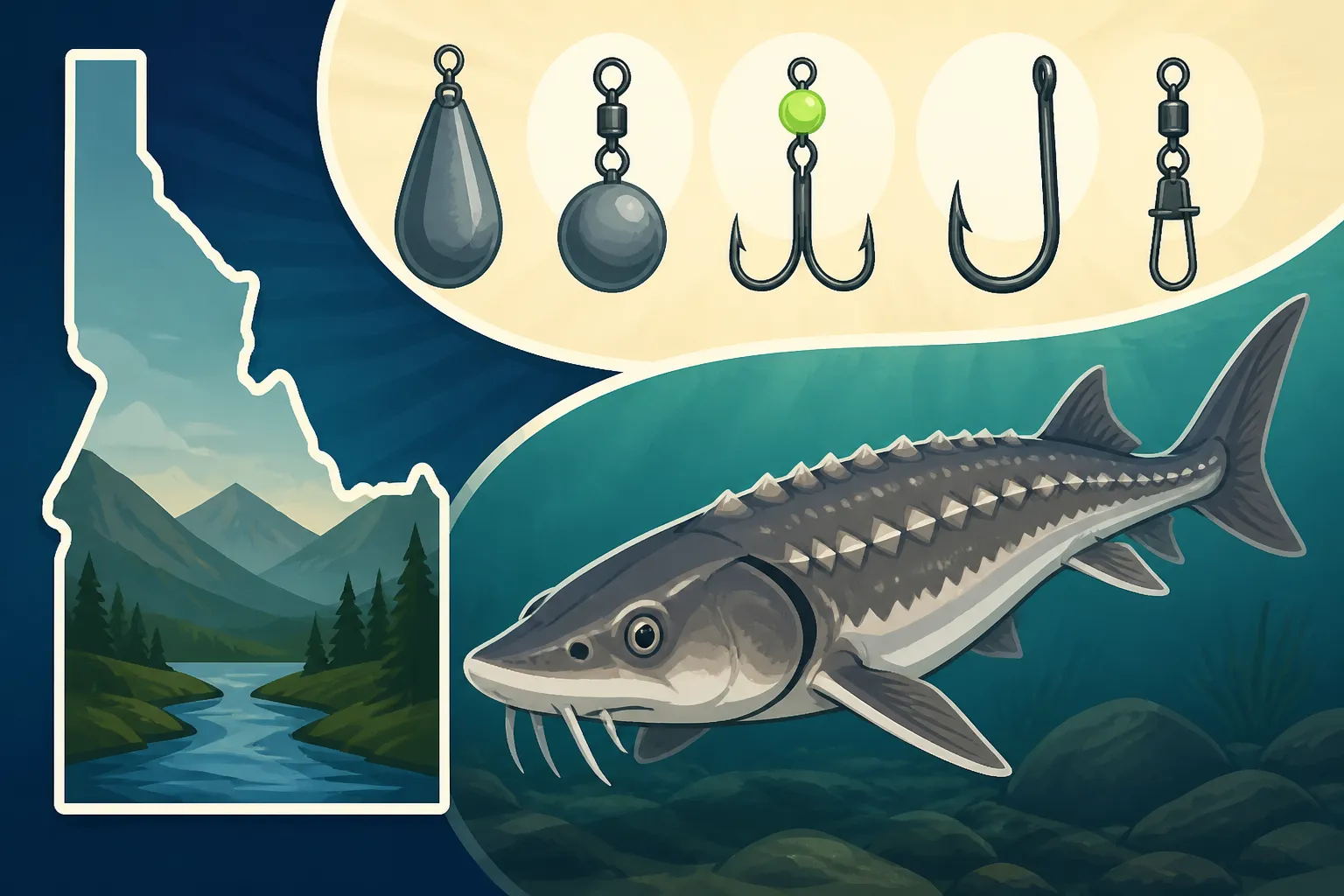
To keep your bait on the bottom where sturgeon feed, you'll need significant weight, especially in the strong currents of rivers like the Snake or Clearwater. Pyramid sinkers, flat bottom weights, or bell sinkers are common choices, ranging from 6 ounces up to 24 ounces or even more, depending on the current and depth. It's not uncommon to use a pound or more of lead in certain situations!
Most sturgeon rigs employ a sliding weight system. This typically involves threading your mainline through an egg sinker or a sliding sinker sleeve, then tying a heavy-duty swivel to the end of your mainline. Your leader, with the hook, is then tied to the other end of the swivel. This setup allows the line to run freely through the weight, so the sturgeon can pick up the bait and move away without immediately feeling the resistance of the heavy sinker. This often results in a more confident bite. Ensure all swivels and snaps are heavy-duty, rated for at least 100-150 pounds, as any weak link can lead to failure when a large sturgeon starts to run.
Bait Choices and Presentation
While not strictly tackle, bait is an indispensable part of your sturgeon fishing setup. Sturgeon are primarily scavengers with an excellent sense of smell. Popular bait choices include cut bait (like pieces of pikeminnow, herring, or mackerel), lamprey, squid, and even some strong-smelling commercial sturgeon baits. The key is fresh, oily bait that releases a strong scent trail in the water.
Your presentation should ensure the bait stays on the bottom and is easily accessible to the sturgeon. Often, a "Carolina Rig" style (sliding weight, bead, swivel, leader, hook) is effective. Make sure your bait is securely hooked, typically threaded onto the hook in a way that minimizes spinning in the current and ensures the hook point is exposed for a clean hookset. Remember, these fish have powerful jaws, but they're often inhaling the bait rather than biting it hard, so a well-presented, pungent bait is your best bet for enticing a take. For further reading, check out our guide on the Best Bait and Lures for Idaho Fishing.
Ethical Considerations and Proper Handling
Fishing for Idaho's majestic sturgeon comes with a significant responsibility. These are long-lived, sensitive fish, and their conservation is paramount. Proper tackle and handling techniques are not just good practice; they are often legally mandated and essential for the future of the fishery. If you're wondering about the specific requirements, our article on Idaho Sturgeon Fishing Rules is an excellent resource.
Minimizing Fight Time for Fish Health
Using appropriately sized and powerful tackle, as discussed above, directly contributes to minimizing fight time. An underpowered rod or insufficient line strength will prolong the battle, exhausting the sturgeon to the point where its chances of survival after release are severely diminished. A short, decisive fight (while still respecting the fish's power) is always best for the fish's well-being. This is why heavy-duty rods and reels with strong drags are non-negotiable. You want to apply steady, firm pressure to bring the fish in efficiently. Our guide on How to Fight a Sturgeon on the Snake River provides more tactical advice on this.
Landing and Release Tools
Proper landing and release tools are just as important as your fishing tackle. For large sturgeon, a very large, knotless landing net is essential. The net should be deep and wide enough to fully support the fish's body, preventing injury. Avoid using gaffs or any tools that might puncture the fish. Heavy-duty gloves are also highly recommended to protect your hands from the sturgeon's rough scutes (bony plates) and pectoral fins during handling. A measuring tape, preferably one that can be laid flat next to the fish without removing it from the water, is also crucial for compliance with any size regulations or for simply recording your catch.
Remember the Idaho Rule Against Removing Sturgeon from the Water. This means you must keep the sturgeon in the water at all times. This is why a large, deep net or shallow bank access is so important. Photos should be taken quickly with the fish still submerged. When releasing, ensure the fish is upright and strong enough to swim away on its own. Gently hold its tail and support its belly until it powers off. Learning how to release a sturgeon safely in Idaho is a skill every sturgeon angler should master.
Understanding Idaho's Sturgeon Rules
Idaho has very strict regulations concerning sturgeon, primarily because they are a protected species in many areas, like the Snake River. The general rule is catch-and-release only, with barbless hooks being mandatory. There are also specific rules about not removing the fish from the water, and often restrictions on fishing methods or areas. Before you even head out, you must be intimately familiar with the current Idaho Fishing Regulations Explained and specific rules for the waters you plan to fish. Ignorance of the law is no excuse, and violations can carry significant penalties. This species is too precious to risk. Our article on Why Snake River Sturgeon Fishing Is Catch and Release Only delves deeper into the conservation aspects.
By equipping yourself with the right heavy-duty tackle and committing to ethical handling practices, you'll not only increase your chances of landing one of Idaho's incredible sturgeon, but you'll also contribute to the conservation of this magnificent species for future generations to enjoy. It's a truly unique experience, and having the right gear makes all the difference.
Here's a quick summary table of recommended tackle for Idaho sturgeon:
| Component | Recommendation | Key Considerations |
|---|---|---|
| Rod | 7-9 feet, Heavy to Extra-Heavy power, Moderate-Fast to Fast action | Fiberglass, Graphite, or Composite for durability and sensitivity; robust reel seat. |
| Reel | Heavy-duty Conventional Reel (boat/surf style) | High line capacity (250-300+ yards), smooth & strong drag, sturdy metal construction. |
| Mainline | 65-100 lb Braided Line | Low stretch for sensitivity, high strength-to-diameter, abrasion resistance. |
| Leader | 80-120 lb Monofilament or Fluorocarbon | Abrasion resistance, shock absorption, less visible. |
| Hooks | 5/0 – 10/0, Strong-shanked Circle Hooks or Octopus Hooks | MUST BE BARBLESS, promotes mouth hooking, strong wire to prevent straightening. |
| Weights | 6-24+ oz Pyramid, Flat Bottom, or Bell Sinkers | Depends on current/depth; sliding weight rig recommended for bite detection. |
| Swivels/Snaps | Heavy-duty, rated 100-150+ lbs | Critical for preventing line twist and securing components. |
| Bait | Fresh, oily cut bait (pikeminnow, herring, mackerel), lamprey, squid, commercial bait | Strong scent trail to attract scavengers. |
Disclaimer
This article is for general informational purposes only and does not constitute professional advice. Laws, prices and regulations vary by location and change over time. Consult a qualified professional for guidance on your specific situation.