Best Lures for Idaho Kokanee Fishing
Trying to dial in the perfect lure for Idaho kokanee can feel like chasing a phantom sometimes, can't it? One day they're hitting everything you throw at them, and the next, they're invisible, snubbing even your most trusted offerings. It's enough to make you scratch your head and wonder if you're doing something wrong. But don't worry, you're not alone in that struggle! This comprehensive guide is going to strip away the mystery and dive deep into the best lures and precise strategies to help you consistently entice and land these feisty, delicious salmon across Idaho's amazing waters.
Understanding Kokanee Behavior and Preferences
Before we even talk about specific lures, it's absolutely crucial to understand the fish we're targeting. Kokanee are not your average trout; they're a special breed, and cracking their code starts with understanding their unique habits. Without this foundation, you're just throwing darts in the dark, and nobody wants that!
Why Kokanee are So Unique
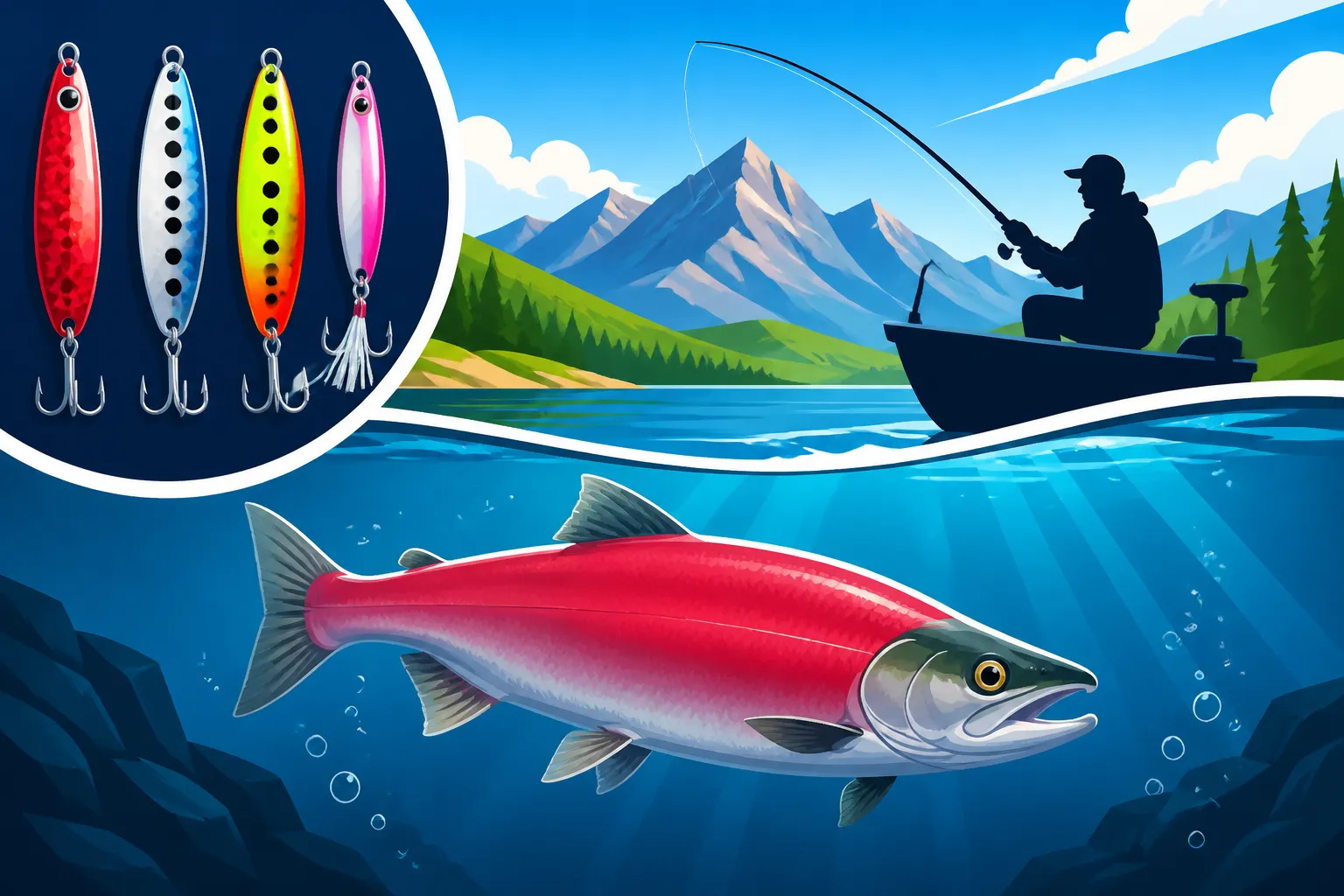
Kokanee salmon are, at their heart, landlocked sockeye salmon. This means they carry some of the same instincts as their ocean-going cousins, even though they live their entire lives in freshwater lakes and reservoirs. Unlike many trout species that often hug structure or feed aggressively on insects and smaller fish, kokanee are primarily plankton feeders. Imagine a tiny fish sifting microscopic organisms from the vast open water – that's often what they're doing. This primary diet heavily influences why they prefer small, subtle presentations rather than big, flashy baits.
They are also incredibly social fish, preferring to swim in large schools, often suspended in the open water column, far from shore or obvious structure. This schooling behavior means that when you find one, you've often found many, but it also makes them prone to moving frequently and being highly sensitive to changes in their environment. A sudden boat noise, a shadow overhead, or even just too much pressure can send a school diving deeper or scattering. They tend to be a bit skittish, requiring a finesse approach to truly tempt them. Knowing this helps you understand why bright, loud attractors paired with small, almost innocuous lures can be so deadly.
Key Factors Influencing Kokanee Bite
Kokanee aren't just unique; they're also highly responsive to environmental cues. Ignoring these factors is a sure way to go home empty-handed. Understanding them helps you predict where the fish will be and what mood they might be in.
Water Temperature and Depth
This is probably the single most critical factor in finding and catching kokanee. These fish are finicky about water temperature. They thrive in specific, cooler temperature bands, which usually means they'll be deeper in the water column during the heat of summer. As the seasons change, and water temperatures fluctuate, their preferred depth changes dramatically. In early spring and late fall, you might find them shallower, sometimes even within 20-30 feet of the surface. But come mid-summer on a lake like Lake Coeur d'Alene or Dworshak Reservoir, you could be dropping your gear down 60, 80, or even over 100 feet to reach them! Knowing What Depth Kokanee Hold at in Summer on Idaho Lakes is absolutely crucial for success. Your fish finder isn't just a fancy toy here; it's your best friend for locating these fish.
Light Conditions
Just like many other salmonids, kokanee tend to be more active and less spooky under certain light conditions. Overcast days, early mornings, and late evenings often provide the perfect low-light environment where kokanee feel more comfortable and feed more aggressively. On bright, sunny days, especially in clear Idaho waters, kokanee will often retreat to deeper, darker water. This means you might need to adjust your lure colors (sometimes brighter in deep, dark water, sometimes more subdued in bright, shallow water) and certainly your depth to match their comfort zone. The sun's intensity can truly make or break your day.
Water Clarity
Idaho boasts some incredibly clear lakes and reservoirs, which is beautiful but also presents a challenge for kokanee anglers. In clear water, fish have excellent visibility and can be very selective. They'll spot your main line, your heavy leaders, and any unnatural movements much easier. This is where subtle presentations, longer fluorocarbon leaders, and sometimes more natural or subdued lure colors really shine. In contrast, if you're fishing a body of water with a bit more turbidity (which isn't super common for prime kokanee spots, but can happen after heavy rains or snowmelt), brighter, flashier lures with more vibration might be necessary to get their attention. Always observe the water you're fishing and adjust accordingly.
Forage Base
While kokanee are primarily plankton feeders, it's an oversimplification to say they only eat plankton. They're opportunistic, and their aggression can be triggered by anything that resembles their microscopic food sources, or even just by an irritating flash of color zipping past. This is why small, subtle lures that mimic zooplankton or small invertebrates are so effective. However, especially as they get closer to their spawning phase, their aggression ramps up, and they might strike at lures that are more annoying than edible. The "hatch" or presence of abundant plankton doesn't always mean easy fishing; sometimes, when there's an overwhelming amount of natural food, your lure needs to stand out just enough to be noticed without being completely unnatural.
The Essential Lure Types for Idaho Kokanee
Now that we've dug into why kokanee behave the way they do, let's talk about the specific tools that consistently get them to bite. You'll notice a common theme here: small, subtle, and often brightly colored.
Small Jigs and Squids
These are absolute workhorses in the kokanee world, whether you're trolling them behind an attractor or jigging them directly. Their small profile and lifelike action are often exactly what finicky kokanee are looking for.
Tiny, Irresistible Offerings
Small jigs, typically in the 1/32 to 1/16 ounce range, are fantastic. Marabou jigs, with their soft, flowing feathers, breathe incredibly well in the water, mimicking small invertebrates. Rubber squids, sometimes called "hoochies" or "mini-squids," are equally effective. Brands like Mack's Lures Cha Cha Squids, Kokanee Killer squids, or even simple unweighted plastic grubs are all in this category. The magic is in their size and the way they undulate in the water, often with very little movement from your boat.
The reason they work so well is twofold: first, they can convincingly mimic the small prey items that kokanee occasionally target, or simply appear as an easy, albeit non-plankton, snack. Second, and perhaps more importantly, their erratic, darting action (especially when paired with an attractor) can trigger an aggressive, territorial strike, even if the fish isn't actively feeding.
Techniques and Colors That Pop
When trolling, these small jigs and squids are almost always rigged a short distance (8 to 18 inches) behind a dodger or flasher. The attractor imparts a wild, dancing motion to the tiny lure, making it come alive. If you're ice fishing or targeting very specific schools found on your How to Find Kokanee on a Fish Finder display, you can vertically jig these small lures with subtle lifts and drops, letting them flutter enticingly.
As for colors, this is where the kokanee obsession truly begins. While pink, orange, and chartreuse are undeniably the "holy trinity" for kokanee, don't be afraid to experiment. White, green, and even blue or purple can have their moments, especially in deeper or very clear water. Often, lures with a combination of these colors, perhaps with some glitter or UV enhancement, are the most effective. Pay attention to what's working on a given day; kokanee can be surprisingly particular.
Trolling Flies and Hoochies
Beyond jigs, tiny flies and hoochies are another staple for serious kokanee anglers. They offer a slightly different action and profile, which can be exactly what's needed when the fish are being extra picky.
Subtle Action, Big Results
Trolling flies for kokanee are usually very small, tied with Mylar, synthetic hair, or sometimes even natural materials like chenille. They don't have built-in action like a spinner; instead, they rely entirely on the motion imparted by your dodger or flasher. Brands like Wedding Ring, Kokanee Bug, and various micro-hoochie patterns are common. Hoochies, being small octopus skirts, are incredibly lifelike when darting behind an attractor.
These lures excel because their subtle, flowing action perfectly mimics small zooplankton or even tiny baitfish when retrieved slowly. The dodger's broad, sweeping motion makes the fly or hoochie dance and dart, creating an irresistible target for schooling kokanee. The key is that they don't overpower the fish with too much flash or vibration from the lure itself, letting the dodger do the heavy lifting in terms of attraction from a distance.
Rigging for Maximum Enticement
The most common and effective technique for these lures is trolling them behind a dodger or a Kokanee flasher. Your trolling speed is critical here, usually very slow, in the range of 1.0 to 1.8 miles per hour. This speed allows the dodger to impart its full, erratic action to the fly or hoochie without making it spin unnaturally. Experiment with your Best Trolling Speed for Kokanee to see what the fish prefer on any given day.
Color choices remain similar to jigs: pink, orange, and chartreuse are always a solid starting point. However, flies often come in more intricate color combinations and patterns. Sometimes a fly with a little bit of pearl or silver woven in, or even a subtle glow-in-the-dark feature, can make all the difference, especially in the deeper, darker reaches of Idaho's reservoirs. Don't be afraid to cycle through a few different patterns until you find the one that triggers the most strikes.
Spinner Blades and Small Spoons
While often associated with trout, certain types of spinner blades and small trolling spoons are incredibly effective for kokanee, especially when you need a bit more flash or vibration.
Flash and Vibration That Calls Them In
Tiny spinner blades, like the popular Smile Blade from Mack's Lures, are incredibly versatile. They add a subtle, consistent flash and vibration to your presentation. You'll often find these incorporated directly into kokanee rigs with a small bead or two, followed by a hoochie or fly. Small trolling spoons, such as those from Dick Nite or Needlefish, are designed to flutter and wobble with an erratic action that can trigger a feeding response or an aggressive strike.
These lures work by creating a visual and auditory disturbance that draws kokanee in. The flash mimics the scales of small baitfish or the glint of struggling insects, while the vibration can be felt by the kokanee's lateral line, pulling them in from a distance. Sometimes, especially when kokanee are less actively feeding but still suspended, a spoon or spinner's aggressive action can provoke a reaction strike when more subtle offerings are ignored.
When and How to Use Them
Small spinner blades are almost always used in conjunction with other lures – preceding a hoochie, a squid, or even a small jig. They add an extra layer of attraction without overwhelming the primary lure's action. They're typically trolled behind a dodger, just like flies and squids, using similar leader lengths.
Small trolling spoons can be fished either directly behind a downrigger release (without a dodger) for a more natural, uninhibited flutter, or sometimes still with a dodger ahead of them for maximum flash. When fished solo, they can be particularly effective in calmer conditions or when kokanee are particularly active and chasing. Again, light leaders are key. Colors like silver, gold, copper, and of course, pink and orange with prism tapes, are consistent producers. Always check the lure's action next to the boat before deploying to ensure it's performing as intended.
The Importance of Attractors and Scent
If lures are the bait, then attractors are the billboard, and scent is the irresistible aroma. For kokanee fishing, you almost never fish a lure without an attractor, and you never fish without scent. They are fundamental pillars of successful kokanee fishing.
Dodges and Flashers: The Kokanee Call
These aren't technically lures that hook fish, but they are undeniably the backbone of effective kokanee fishing. Dodgers and flashers are designed to create flash, vibration, and an erratic movement that draws kokanee from a distance, simulating a school of baitfish or a general disturbance that piques their curiosity.
Creating the Irresistible Illusion
Dodgers, like the popular Sep's Pro Fishing Dodgers or Vance's Tackle dodgers, have a broad, cupped shape that makes them oscillate widely in the water. This side-to-side wobble transfers a frantic, darting action to the trailing lure, making it dance enticingly. Flashers, such as the Shasta Tackle Sling Blade or Mack's Lures Flash Lite, are often longer and thinner, designed to spin or rotate, creating a continuous, glittering flash through the water column. Both types achieve the same goal: attracting attention.
They work by exploiting the kokanee's curious nature and keen lateral line, which detects vibrations in the water. From a distance, the flash and vibration can mimic a school of frantic baitfish, signaling a feeding opportunity or simply drawing the kokanee closer to investigate. Once they're drawn in, the small, subtle lure trailing behind is what seals the deal. It's a classic one-two punch: first, grab their attention, then present something they can't resist.
The Art of Rigging and Pairing
Rigging your dodger or flasher is crucial. Typically, you'll attach your main line to the front of the attractor and then tie a leader from the back of the attractor to your lure. The leader length is absolutely critical and often the subject of endless debate among kokanee anglers. Too short, and your lure gets lost in the dodger's violent action. Too long, and the dodger's action doesn't effectively transfer to the lure, leaving it lifeless. A common starting point for squids and flies is an 8 to 18-inch leader. For small spoons, you might go a bit longer, perhaps 24 inches or more, to let the spoon have its own natural flutter.
Matching the size of your dodger to your lure and trolling speed is also important. Larger dodgers create more action and are often used with slightly larger lures or when you want maximum attraction. Smaller dodgers are more subtle. Ensure your knots are strong and your leader material (fluorocarbon is highly recommended for its invisibility) is light enough not to inhibit the lure's action.
The Power of Scent and Bait
If attractors are the visual and vibrational call, then scent is the olfactory invitation that few kokanee can resist. For these highly tuned fish, adding scent to your lures is not optional; it's practically non-negotiable.
An Olfactory Advantage
Kokanee have an incredibly sensitive sense of smell, and they use it extensively to locate food. Our human scent, or the lack of any appealing scent on a naked lure, can be a major deterrent. Adding a potent, fish-attracting scent masks any foreign odors and provides an aromatic trail that draws kokanee in and encourages them to hold onto the lure longer once they strike. That extra second or two can be the difference between a missed bite and a hooked fish.
Common and highly effective scents include garlic, Bloody Tuna, Anise, and various proprietary blends from brands like Pro-Cure. These scents come in gels, oils, or sprays that you can apply directly to your lures.
The Magic of Scented Corn
Beyond just applying liquid scents, "shoepeg" corn is perhaps the most universally beloved kokanee bait. Shoepeg corn is a specific variety of corn known for its firm texture and ability to hold dye and scent. Anglers often marinate small kernels of shoepeg corn in various dyes (to make them pink, orange, or chartreuse) and powerful scents (like garlic or Anise) for hours or even days before fishing.
You thread one or two kernels of this scented, dyed corn onto your lure's hook, typically just past the barb. The corn provides a visual attractant, a burst of irresistible flavor and aroma, and a slight buoyancy that can subtly alter your lure's action. The combination of dodger, lure, and scented corn is a deadly trio for kokanee. Remember to refresh your corn frequently, as the scent washes off over time. Many of these specialized scents and corn dyes can be easily found and purchased on online retailers like Amazon.
Rigging Strategies and Presentation Techniques
Having the right lures and attractors is only half the battle. You also need to know how to present them effectively at the right depth, at the right speed, and with the right finesse. This is where your technique really comes into play.
Trolling with Downriggers and Lead Core
Reaching kokanee, which often suspend at precise depths in the open water, requires specialized depth control. The two primary methods are downriggers and lead core line.
Precision with Downriggers
Downriggers are the gold standard for precision depth control when trolling. They allow you to get your lure down to an exact depth and hold it there, even when making turns or adjusting speed. The setup involves a heavy cannonball weight (attached to a cable on a small crane-like arm) that is lowered to your desired depth. Your fishing line, with its dodger and lure, is attached to the cannonball cable via a release clip. When a fish bites, the clip releases your line, allowing you to fight the fish directly on your light tackle without the weight of the cannonball.
The beauty of downriggers lies in their ability to present lighter, more sensitive tackle at depth. This means you feel the bites better, and the fish fights harder on lighter line. They are particularly useful for targeting specific thermal layers or schools of fish that you've identified on your fish finder. Being able to adjust your depth quickly and accurately is a massive advantage when kokanee are on the move. When trolling for kokanee, remember that consistent depth is often key. You can check out more details on How to Troll for Kokanee on Lake Coeur d'Alene for specific tips.
Budget-Friendly Lead Core
For anglers without downriggers, or those looking for a simpler setup, lead core line is an excellent alternative. Lead core is a special fishing line with a lead filament woven into its core, making it sink. It's typically color-coded, with each color representing a certain length (e.g., 10 yards). The general rule of thumb is that each "color" gets your lure down about 5 feet at a trolling speed of 1.5-2.0 mph, though this can vary with lure size, line diameter, and speed. So, if you want to fish at 30 feet, you might let out 6 colors of lead core.
While not as precise as downriggers, lead core is far more affordable and doesn't require extra equipment hanging off your boat. The downside is that fighting a fish on lead core involves reeling in a significant amount of heavy, thick line, and bites can feel less distinct due to the line's stretch and weight. However, for many anglers, it's a perfectly effective way to reach those deeper kokanee, especially in waters like Anderson Ranch Reservoir where fishing at various depths might be productive.
Leader Lengths and Line Choices
The connection between your attractor and your lure, and the line you use to spool your reel, are far more important than many beginners realize. Details here can make a huge difference.
The Critical Leader
Your leader, the section of line connecting your dodger/flasher to your lure, is perhaps the most critical component in your entire kokanee rig. As mentioned earlier, the length dramatically affects the lure's action. A short leader (8-12 inches) will give your lure a very frantic, erratic darting motion, mimicking a struggling baitfish. A longer leader (15-24 inches) will allow the lure to have a more subtle, natural flutter, with less influence from the dodger. Experimentation is key to finding what the fish prefer on any given day or in specific water conditions.
Fluorocarbon leader material is highly recommended for its near-invisibility in water and its abrasion resistance. Kokanee have excellent eyesight, especially in clear Idaho waters, and a thick, visible mono leader can deter them. Use light test, typically 6-8 pound fluorocarbon, for your leader.
Choosing Your Main Line
For your main line, connecting your rod to your dodger (or lead core), anglers typically use either monofilament or braided line. Monofilament offers a good amount of stretch, which acts as a shock absorber against a kokanee's delicate mouth and headshakes, reducing tear-outs. An 8-10 pound test monofilament is a popular choice.
Braided line, on the other hand, offers superior sensitivity and strength for its diameter. This means you'll feel even the lightest taps. If you use braid, it's crucial to tie on a monofilament or fluorocarbon leader (a topshot) to the braid before connecting to your dodger. This adds some shock absorption and provides the nearly invisible connection needed for skittish kokanee. Remember, light line choices for your leader are key to success in How to Fish for Kokanee in Idaho.
Reading Your Electronics and Adjusting
Modern electronics aren't just for finding structure; they are absolutely indispensable for locating kokanee schools and understanding their behavior. Ignoring your fish finder is like trying to drive blindfolded.
Your Fish Finder: The Eye Underwater
A good quality fish finder is arguably the most important piece of gear for kokanee fishing, second only to a valid Idaho Fishing License Guide. Kokanee are pelagic, meaning they roam the open water, often suspending in deep water without any obvious markers on the surface. Your fish finder allows you to "see" these schools. Look for arches or distinct streaks suspended in the water column. Don't just look for fish on the bottom; kokanee are almost always off the bottom.
Pay attention to not just the presence of fish, but also their depth, density, and how they react to your boat. Sometimes, a school might appear, only to vanish as you pass over them – a sign they're spooky. Other times, they might linger, indicating they're more receptive.
The Thermocline and Constant Adjustments
Another critical feature your fish finder can help you locate is the thermocline. In many Idaho lakes and reservoirs, especially in summer, the water stratifies into layers of different temperatures. The thermocline is the distinct boundary between warmer surface water and colder deep water. Kokanee often congregate just above, in, or just below this thermocline, as it offers their preferred temperature range and often concentrates their plankton food source. Identifying this on your fish finder can instantly narrow down your search depth.
Because kokanee schools can move quickly, and their preferred depth can change throughout the day, constant adjustment is paramount. Don't just set your downriggers once and forget them. Keep an eye on your fish finder. If you stop seeing fish at your current depth, or if you notice new schools appearing shallower or deeper, don't hesitate to adjust your downrigger balls or lead core accordingly. Even a 5-10 foot change can make all the difference. Sometimes, a slight change in direction or speed can also trigger a bite. Stay dynamic!
Top Lures for Specific Idaho Kokanee Waters
Idaho is blessed with a diverse array of lakes and reservoirs, each with its own unique characteristics. While some lures are universally effective, understanding how to tailor your approach to specific bodies of water can significantly boost your success. The Idaho Fishing Regulations Explained will often include nuances for specific bodies of water, so always check those before heading out.
Lake Coeur d'Alene and Priest Lake
These two North Idaho gems offer fantastic kokanee fishing, but they have distinct personalities that can influence your lure choices.
Lake Coeur d'Alene: Big Water, Big Fish Potential
Lake Coeur d'Alene is a large, deep lake known for producing not only good numbers of kokanee but also some truly impressive Chinook salmon, which often feed on the kokanee! For this reason, while you're primarily targeting kokanee, a slightly more aggressive presentation can sometimes tempt a cruising Chinook. The kokanee here can also grow quite large, so don't be afraid to use lures that are on the slightly larger side of the "small" kokanee spectrum.
Flash is a big deal on Lake Coeur d'Alene's vast, clear waters. Incorporate dodgers with plenty of Mylar or prism tape. Pink, orange, and chartreuse squids and flies are still kings, but don't overlook blue or purple, especially in the deeper, clear water, as these colors can be very visible at depth. Pay close attention to your fish finder, as schools can be found across a wide range of depths, often concentrating in the main lake basin. Given the potential for larger fish, ensure your leader material is strong, perhaps bumping up to 8lb fluorocarbon. You can find more targeted strategies for Fishing Lake Coeur d'Alene for Kokanee and Chinook in our other guides.
Priest Lake: Kokanee and Trophy Lake Trout
Priest Lake, another stunning North Idaho lake, is famous for its massive lake trout (Mackinaw), but it also holds a healthy population of kokanee. Here, your kokanee setup needs to be dialed in specifically for them, as accidentally hooking a massive Mackinaw on light kokanee gear can be an adventure! The kokanee in Priest Lake tend to be more in line with the "standard" kokanee size, so sticking to smaller, more subtle presentations is generally wise.
The clear, cold waters of Priest Lake make finesse critical. Standard pink, orange, and chartreuse squids, flies, and small jigs behind a dodger will be your bread and butter. Consider lures with subtle UV enhancements, as these can be more visible at depth in clear water. While you might be fishing similar depths to Lake Coeur d'Alene, the emphasis here is often on tempting the kokanee without drawing too much attention from the larger predators lurking deeper. Light, long fluorocarbon leaders will increase your hook-ups.
Dworshak Reservoir and Anderson Ranch Reservoir
These reservoirs offer different environments and distinct kokanee opportunities.
Dworshak Reservoir: Home of the Jumbo Kokanee
Dworshak Reservoir, located in North Central Idaho near Orofino, is legendary for its massive kokanee, often referred to as "jumbo kokanee" due to their impressive size. This deep, clear, and cold reservoir provides ideal growing conditions, leading to kokanee that can push over 20 inches! Because of the sheer depth and the size of these fish, downriggers are almost essential here.
When fishing Dworshak, you'll often be targeting kokanee at significant depths – 80, 100, or even 120 feet down, especially in the summer. Lures like the Kokanee Killer squids, Mack's Lures Cha Cha Squids, and various hoochie patterns in chartreuse, pink, and orange are incredibly effective. Don't skimp on scent; a strong garlic or Bloody Tuna scent applied to your corn and lures is crucial. Given the size of the fish, ensure your hooks are sharp and strong, and your knots are meticulously tied. The battles with these jumbos can be intense, so be prepared for a fight on your light gear!
Anderson Ranch Reservoir: Accessible Kokanee Fishing
Anderson Ranch Reservoir, situated in the mountains east of Boise, offers a more accessible kokanee fishery, drawing anglers from the Treasure Valley. While the kokanee here may not reach the jumbo sizes of Dworshak, it provides consistent action and a beautiful setting. The reservoir is subject to drawdowns, so always check current conditions, as water levels can affect fish distribution and boat access. Our Fishing Anderson Ranch Reservoir guide has more specific insights.
Similar to other Idaho kokanee waters, bright pink, orange, and chartreuse lures are top producers. Small jigs, flies, and squids paired with dodgers are the go-to. Given the varied depths and contours of Anderson Ranch, a good fish finder is critical, but lead core line can also be a very effective and practical way to cover different depths without the need for downriggers. The fish here can be less pressured than some other locations, sometimes making them a bit more eager to bite, but attention to detail with scent and presentation still pays off handsomely.
Gear Considerations Beyond Lures
While lures and attractors are certainly the stars of the show, having the right supporting cast of gear can make your kokanee fishing experience much more enjoyable and successful. It's about having the right tools for the job, from the rod in your hand to the net you use to land your catch.
Rods, Reels, and Line
Choosing the right rod and reel setup for kokanee is all about finesse, sensitivity, and handling those delicate mouths.
The Perfect Rod Action
For kokanee trolling, you'll want a light to medium-light action rod, typically between 7 and 9 feet long. The most important feature is a soft, forgiving tip. Kokanee have incredibly soft mouths, and a stiff rod will lead to countless pulled hooks and lost fish as they headshake at the boat. The soft tip acts as a shock absorber, cushioning their powerful runs and delicate bites. Fiberglass or composite rods are often preferred over purely graphite rods for this reason, as they offer more give. Brands like Lamiglas, Fenwick, and Ugly Stik all offer excellent kokanee-specific rods. If you're ice fishing and jigging, a shorter, sensitive jigging rod is ideal for detecting those subtle uplifts or taps.
Reliable Reels
For trolling, small level-wind baitcasting reels are very popular. They allow for easy line counting, which is crucial for lead core setups or for knowing how much line you have out on your downrigger. Models with smooth drags are also important, as you'll be fighting fish on light lines. For jigging, a small, sensitive spinning reel spooled with light braid is a great choice. The key is a smooth, reliable drag system, as even modest kokanee can put up a surprisingly spirited fight.
Line Choices Revisited
We've touched on this already, but it bears repeating: your line choice matters significantly. For your main line, 8-10 pound monofilament provides a good balance of strength and stretch, which helps absorb the headshakes of a kokanee. Alternatively, 10-15 pound braided line offers excellent sensitivity, allowing you to detect even the lightest bites. If you opt for braid, always add a 10-20 foot top shot of 8-10 pound monofilament or fluorocarbon to give you that crucial stretch and invisibility near the dodger. And, as always, light (6-8 pound) fluorocarbon leaders are non-negotiable for their stealth and abrasion resistance.
Other Essential Kokanee Fishing Tools
Beyond your rod and reel, a few other items are absolute must-haves for a successful and enjoyable kokanee trip.
Landing Net
A long-handled landing net with a soft, knotless, rubberized mesh is critical. Kokanee often make a final surge at the boat, and their soft mouths can tear easily. A long handle helps you reach them, and the soft mesh protects their delicate scales and fins, especially if you plan to release any or need to quickly dispatch them. Using a net that’s gentle on the fish is also good practice, aligning with responsible angling.
Pliers and Forceps
Small needle-nose pliers or hemostats (fishing forceps) are invaluable for quickly and safely removing hooks from a kokanee's mouth. Their mouths are small, and the tiny hooks used on kokanee lures can be tricky to extract, especially with cold fingers. Having these on hand minimizes stress on the fish and keeps your fingers safe.
Cooler with Ice
Kokanee are renowned for their delicious, bright red flesh, but they are also highly perishable. As soon as you land a kokanee, it should go directly into a cooler filled with ice. This rapid chilling preserves the quality of the meat, ensuring that your catch is fresh and flavorful when you get it home. Don't let them sit in a warm fish box or on a stringer for too long.
Fish Finder and Depth Counter
We've already extolled the virtues of a fish finder for locating kokanee schools. It's truly a game-changer. For downriggers, having a line counter on your reel or a dedicated depth counter on your downrigger is essential for precise depth control. For lead core, understanding your line's color coding and how much depth each color provides is key. You can find quality depth counters and other essential tools for your boat on Amazon.
Necessary Permits
Finally, don't forget the administrative side of things! Always ensure you have a valid Idaho Fishing License Guide and check the Idaho Fishing Season Dates and Limits for the specific water you are fishing. Some waters might have specific regulations or require special permits, especially for anadromous species. A little planning goes a long way to avoid any unwelcome surprises on the water.
| Lure Type | Best Use Case | Typical Colors (Primary) | Leader Length (behind dodger) | Key Advantage |
|---|---|---|---|---|
| Small Jigs/Squids | Trolling behind dodger; Vertical jigging | Pink, Orange, Chartreuse, White | 8-18 inches | Subtle action, mimics small prey |
| Trolling Flies | Trolling behind dodger/flasher | Pink, Orange, Chartreuse, Blue | 8-18 inches | Ultra-subtle, plankton mimicry |
| Small Spoons | Trolling (with/without dodger) | Silver, Gold, Pink, Orange (prism) | 12-36 inches | Flash & wobble, aggressive strikes |
| Attractors (Dodgers/Flashers) | Essential for all trolling | Silver, Gold, Pink, Chartreuse (UV) | N/A (lure tied behind) | Draws fish from distance, imparts action |
| Scented Corn/Gels | Applied to all lures/hooks | Garlic, Anise, Bloody Tuna (on corn) | N/A | Olfactory attraction, longer bites |
Disclaimer
Fishing conditions and regulations in Idaho can change frequently. While this guide provides comprehensive information on kokanee fishing lures and techniques, it is crucial to consult the latest Idaho Fish and Game regulations and fishing reports before heading out. Always prioritize safety on the water and adhere to all local and state laws.