What Barbless Hooks Do for Sturgeon Survival
There's nothing quite like the thrill of hooking into one of Idaho's magnificent white sturgeon on the Snake River. But the sheer power and size of these prehistoric giants also bring a significant responsibility: ensuring their survival. Many anglers worry about the impact of the fight and hook on such a grand, vulnerable fish. This guide will walk you through precisely why barbless hooks are not just a regulation, but a critical tool for preserving Idaho's incredible sturgeon fishery and how you can make a real difference in their well-being.
The Delicate Nature of Sturgeon Fishing in Idaho
Idaho's sturgeon are truly special, a living relic from another age. They're often considered one of the ultimate freshwater sportfish, but their ancient lineage also makes them incredibly vulnerable. Understanding their delicate nature is the first step in appreciating why specific rules, like mandatory barbless hooks, are in place.
Sturgeon: An Ancient and Protected Species
Imagine a fish that's been swimming in these waters since the dinosaurs roamed. That's essentially what you're dealing with when you hook a white sturgeon in Idaho. These fish can live for over 100 years and grow to immense sizes, sometimes exceeding ten feet in length. Because of their slow growth rate and long lifespan, they are particularly susceptible to overfishing and habitat changes. They don't reproduce quickly, meaning that every individual fish is precious to the health of the overall population. This is why Idaho has strict regulations governing sturgeon fishing, largely focused on catch-and-release practices. The goal is to allow anglers to experience the thrill of the catch while ensuring these majestic creatures continue to thrive for generations. It’s a delicate balance that relies heavily on angler cooperation. You'll find more details about these protective measures in Idaho Sturgeon Fishing Rules.
The Challenge of Catch-and-Release for Large Fish
Catch-and-release is a cornerstone of responsible angling, but it presents unique challenges when dealing with fish as large and powerful as sturgeon. A small trout might be easily unhooked and released with minimal stress, but a sturgeon weighing hundreds of pounds and fighting with incredible strength can sustain significant injury if not handled correctly. The sheer force exerted during the fight, coupled with the potential for deeply embedded hooks or prolonged handling, can lead to exhaustion, physical trauma, and even delayed mortality after release. This is where every detail of your gear and technique, especially the type of hook you use, becomes critically important. The bigger the fish, the more pronounced these challenges become, making careful planning and execution absolutely vital for a successful and ethical release.
Why Barbless Hooks Are Essential for Sturgeon Survival
If you're wondering why every guide, every regulation, and every seasoned angler screams "barbless hooks" when it comes to sturgeon, it boils down to one primary factor: minimizing harm and maximizing the fish's chances of survival after release. It's not just a suggestion; it's a fundamental principle.
Minimizing Injury and Bleeding
The most significant benefit of barbless hooks is their ability to dramatically reduce the physical trauma inflicted on a fish. When a barbed hook penetrates a fish's mouth or throat, that barb acts like an anchor. To remove it, you often have to apply significant force, which can tear delicate tissues, widen the wound, and cause unnecessary bleeding. This is particularly problematic in areas like the gills or esophagus, where vital blood vessels are present. Deep tissue damage and excessive bleeding can leave a sturgeon vulnerable to infection, make it difficult for them to feed, and ultimately compromise their ability to survive in the wild.
Think of it like this: trying to pull a barbed arrow out of wood versus a smooth, barbless one. The barbed one tears, splinters, and resists. The barbless one slides out cleanly. For a sturgeon, this difference can mean the difference between a quick recovery and a prolonged struggle for life. The goal is to have the hook slide out as cleanly as it went in, leaving the smallest possible wound. This consideration is a key component of Idaho Sturgeon Catch and Release Rules Explained.
Faster, Easier Hook Removal
Anyone who has fumbled with a deeply set barbed hook knows the frustration, and unfortunately, the fish feels the stress. With a barbless hook, removal is almost always quicker and simpler. You don't have to wrestle with the barb, try to force it back through the entry wound, or risk further injury by trying to contort the fish. Often, a gentle twist or push is all it takes for a barbless hook to slide right out.
This speed is crucial. The less time a sturgeon spends out of the water, being handled, or struggling against a hook, the less stress it experiences. Reduced handling time translates directly to a higher survival rate. When you're dealing with a massive fish that can pull you around the boat, every second counts. An easy, swift release minimizes exhaustion and reduces the overall impact of the encounter on the fish. This efficiency is why many anglers, even those fishing for other species, are moving towards barbless hooks.
Reduced Stress During Release
Beyond physical injury, stress is a silent killer for released fish. A prolonged fight, rough handling, and an extended unhooking process can lead to physiological stress responses that impair a fish's ability to recover. This can include lactic acid buildup in the muscles, oxygen deprivation, and disruption of their metabolic processes. For an ancient, slow-moving fish like a sturgeon, this stress can be particularly detrimental.
Barbless hooks contribute to reducing this stress on multiple fronts. They enable a shorter fight (as you can often leverage the hook's easy removal to your advantage once the fish is subdued), faster hook removal, and gentler handling. The whole process becomes less traumatic for the fish, increasing the likelihood that it will swim away strong and healthy, ready to resume its normal activities. This focus on minimizing stress is also why Idaho Rule Against Removing Sturgeon from the Water is so important.
Here's a quick comparison of the benefits for sturgeon:
| Feature | Barbed Hook | Barbless Hook |
|---|---|---|
| Injury Risk | High: Tears tissue, causes significant bleeding. | Low: Slides out cleanly, minimal tissue damage. |
| Removal Speed | Slow: Requires force, can be difficult. | Fast: Often a gentle twist or push. |
| Fish Stress | High: Prolonged handling, greater exhaustion. | Low: Quick release, less overall trauma. |
| Survival Rate | Lower likelihood of survival post-release. | Higher likelihood of survival post-release. |
How to Choose and Use Barbless Hooks Effectively
Okay, so you're convinced barbless is the way to go. Excellent! But it's not just about grabbing any hook. There's a bit of finesse involved in choosing and using them correctly to ensure both effectiveness for you and safety for the sturgeon.
Selecting the Right Barbless Hook Size and Strength
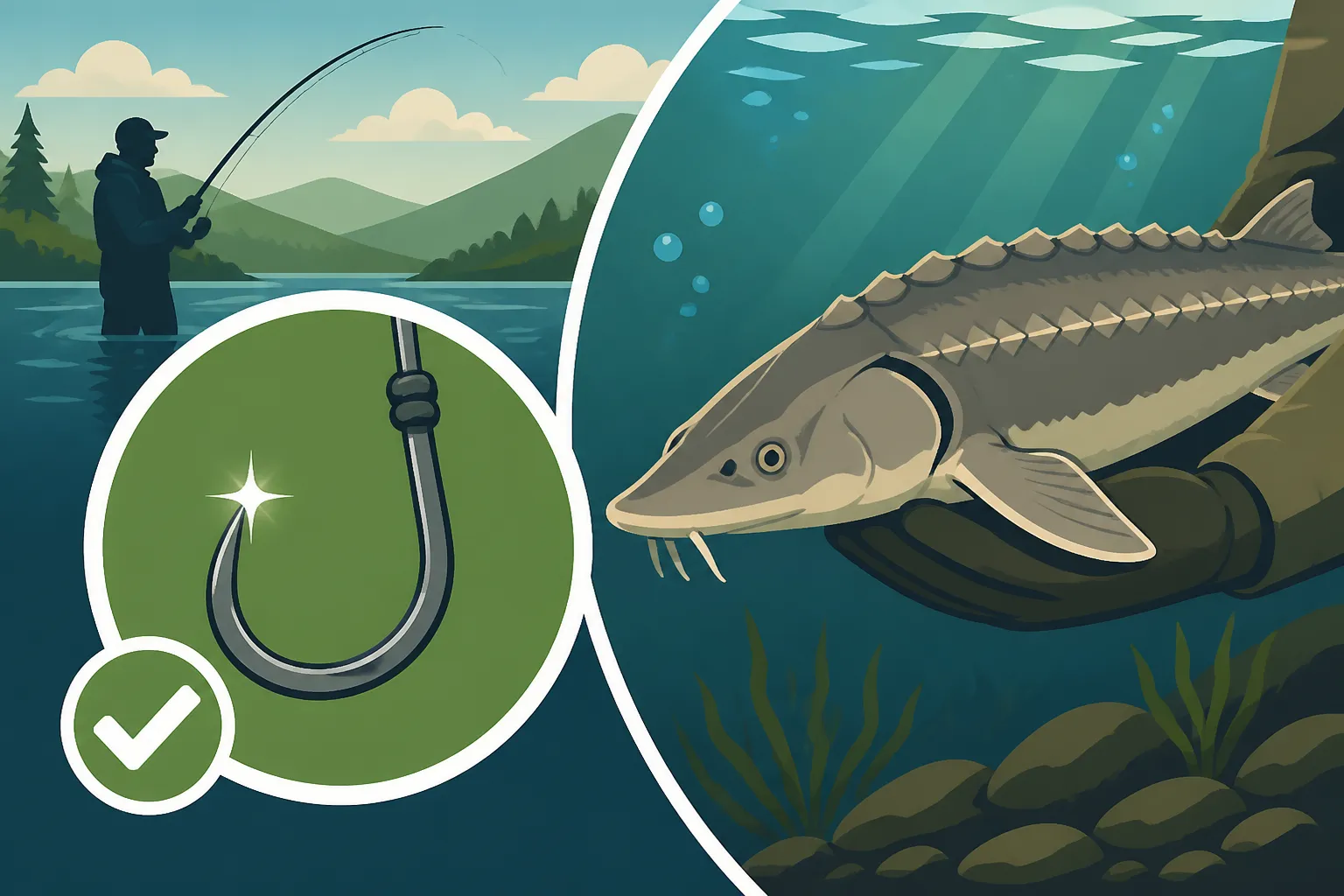
When targeting Idaho sturgeon, you need a hook that can stand up to their incredible power and size. This isn't the time for flimsy tackle. Look for hooks specifically designed for large, powerful fish, often labeled as "heavy-duty" or "catfish/sturgeon" hooks. The gauge of the wire should be thick enough not to straighten under extreme pressure, and the point should be sharp enough for easy penetration. Circle hooks are often preferred for sturgeon as they tend to hook in the corner of the mouth, reducing the chance of gut-hooking, which can be fatal. Make sure the hook size is appropriate for your bait and the size of the sturgeon you're likely to encounter. Too small, and it might get swallowed too easily; too large, and it might not hook effectively. You can find a good selection of robust barbless circle hooks on Amazon by searching for "heavy duty barbless circle hooks for sturgeon." When considering What Size Tackle to Use for Idaho Sturgeon, remember that the hook is arguably the most critical component.
Crimping Barbs on Your Existing Hooks
What if you've already got a tackle box full of perfectly good, strong hooks, but they all have barbs? Don't fret! You don't necessarily need to buy all new gear. You can easily convert most barbed hooks into barbless ones with a pair of pliers. Simply take a pair of needle-nose pliers or specialized crimping pliers, grip the barb firmly against the shank of the hook, and squeeze. You want to flatten the barb completely, pressing it down flush with the wire. Run your finger over it to ensure there are no sharp edges or protrusions that could snag tissue.
This simple modification is incredibly effective and cost-efficient. Just make sure you do it thoroughly on every hook you intend to use for sturgeon fishing. It's a quick step at home or even on the boat before you start fishing, and it makes all the difference for the fish. Even if you buy "barbless" hooks, it's a good practice to double-check them before use; sometimes a tiny burr remains that could still cause issues.
Proper Hooking Technique with Barbless Hooks
Using barbless hooks requires a slight adjustment in your hooking technique, especially if you're accustomed to relying on the barb to "lock" the hook in place. With barbless hooks, constant tension is key. Once you feel the bite and set the hook, keep a steady bend in your rod and maintain pressure on the line throughout the fight. This prevents slack, which could allow the hook to dislodge more easily.
Additionally, when setting the hook, aim for a firm, sweeping motion rather than a violent yank. Circle hooks, which are highly recommended for sturgeon, work best when you simply reel into the fish as it takes the bait, letting the hook rotate and find the corner of the mouth on its own. A hard hook-set can sometimes pull a circle hook out of position. Practice this technique, and you'll find that barbless hooks, especially circle hooks, are incredibly effective while being exponentially safer for the fish.
Beyond Hooks: Other Best Practices for Sturgeon Release
While barbless hooks are non-negotiable for sturgeon, they are just one piece of the puzzle for responsible angling. To truly maximize a sturgeon's survival chances, we need to consider the entire process from the moment they bite to their healthy swim away.
Minimizing Time Out of Water
Imagine holding your breath for an extended period after a grueling workout – that's a bit like what it is for a fish out of water. Sturgeon, like all fish, need water to breathe. Their gills are designed to extract oxygen from water, not air. Every second a sturgeon spends out of its aquatic environment is a second of oxygen deprivation and immense stress. This is why you must minimize the time it spends out of the water. This usually means unhooking the fish while it's still in the water, ideally alongside the boat or close to the bank.
If you absolutely must bring the fish partially out for a quick photo, do it swiftly and ensure its gills remain submerged if possible. Use specialized tools like large landing nets or a cradle designed for big fish, but always prioritize keeping the fish hydrated and breathing. This commitment to keeping the fish in its element goes hand-in-hand with Idaho Rule Against Removing Sturgeon from the Water.
Handling Large Sturgeon Safely and Gently
Handling a fish that can outweigh you requires technique, strength, and a whole lot of respect. Never lift a sturgeon by its tail, gills, or jaw, as this can cause severe internal injuries, especially to its spine and organs. Instead, support its body weight horizontally. For large sturgeon, this often means two or more people are needed, one supporting the head/gill plate area and another supporting the tail.
If you're on a boat, use a large, wet landing mat or a specially designed sturgeon cradle. If you're shore fishing, try to keep the fish in the shallows, ideally with its belly still in the water as much as possible. Avoid dragging the fish over rocks or abrasive surfaces. Wet your hands before touching the fish to protect its slime coat, which is a vital defense against infection. Gentle, deliberate movements are key to preventing unnecessary harm. Knowing How to Fight a Sturgeon on the Snake River will also help you bring the fish to the boat or shore more quickly and minimize its exhaustion.
Reviving and Releasing Properly
After the unhooking and any brief photo ops, the final step is a proper release. This isn't just about letting go; it's about ensuring the sturgeon is strong enough to swim away on its own. Hold the fish gently in the water, supporting its belly, and point its head into a gentle current if one is available. This allows water to flow over its gills, helping it to recover oxygen.
Watch for signs of recovery: the fish will start to move its fins, regain its color, and might even try to swim away from your grasp. Don't release it until it's ready. If it's struggling to stay upright, continue to hold it. This revival period is critical, especially after a long fight. Once it vigorously pulls away, let it go, sending it off to grow even bigger. For a more in-depth look at this vital final step, consult How to Release a Sturgeon Safely in Idaho. By combining barbless hooks with these best practices, you become a true steward of Idaho's incredible sturgeon fishery.
Disclaimer
This article is for general informational purposes only and does not constitute professional advice. Laws, prices and regulations vary by location and change over time. Consult a qualified professional for guidance on your specific situation.