What Mackinaw Means When Talking About Lake Trout
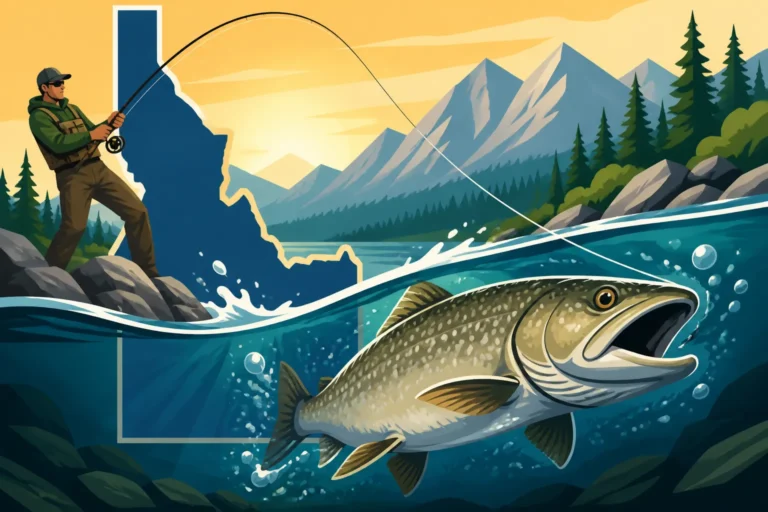
It's easy to get a little tangled up in the terminology when you're talking about fish, and the classic "Lake Trout" versus "Mackinaw" debate is a perfect example. You hear these names used interchangeably, sometimes with a knowing nod, other times with a shrug, and it can leave you wondering if you're talking about one fish, two similar fish, or just a quirky local nickname. Especially here in Idaho, where our deep, cold lakes hold some real monsters, understanding this distinction is key to joining in on the angler chatter and knowing exactly what kind of fish you're dreaming about catching. This guide is dedicated to untangling that linguistic knot, showing you precisely what "Mackinaw" means when you're referring to our majestic Idaho lake trout.
Unpacking the Name: Lake Trout, Mackinaw, and Other Aliases
Let's start by cutting straight to the chase: "Mackinaw" is simply another name for the Lake Trout. It’s not a different species, a subspecies, or some exotic cousin; it's the exact same fish. Think of it like calling a "soda" a "pop" or "coke" depending on where you grew up. The scientific community, and indeed most formal fisheries management, refers to Salvelinus namaycush as the Lake Trout. However, the term "Mackinaw" has a long and storied history, particularly in the Western United States and Canada, and it's deeply ingrained in the local fishing vernacular.
The Origins of "Mackinaw"
The common understanding is that "Mackinaw" likely originated from Mackinac Island or the Straits of Mackinac in Michigan, an area historically known for its abundant lake trout. As settlers moved westward, they brought the name with them, applying it to the large, predatory trout they found in the deep, cold lakes of states like Idaho, Montana, Wyoming, and Colorado. It became a colloquial term, a familiar handle for a fish that was both a vital food source and a formidable sport fish. For many anglers, especially those who’ve been around the block a few times, "Mackinaw" just feels right when describing these powerful, deep-water predators. It evokes a certain ruggedness, a sense of the wild, cold places where these fish thrive. It's a name passed down through generations of fishermen, and it carries with it a lot of tradition.
So, when you hear an old-timer on the docks of Priest Lake talk about hooking a big "Mack," they're not talking about some obscure fish; they're talking about a Lake Trout, plain and simple. It's often used when referring to larger, mature lake trout, or perhaps to emphasize their predatory nature and deep-water habitat. It’s less common to hear a small, recently stocked lake trout referred to as a "Mackinaw," though it’s technically still the same species. It's often reserved for those substantial fish that really give your arms a workout.
Other Regional Synonyms for Lake Trout
While "Mackinaw" is the most prevalent alternative name in Idaho and the West, Lake Trout also go by a few other aliases depending on the region. In some parts of Canada, particularly in aboriginal communities, they might be called "touladi" or "namaycush," closer to their scientific name. In the Great Lakes region, where they are also native and a huge part of the fishery, they are almost exclusively called "Lake Trout." You might occasionally hear them referred to as "Grey Trout" due to their coloration, especially the larger, older specimens that develop a more muted, silvery-grey hue.
What this all boils down to is that if you're in Idaho and someone mentions a "Mackinaw," you can confidently nod along knowing they're talking about a Lake Trout. It's just a reminder of the rich tapestry of fishing culture and how language evolves to fit the local landscape. Don’t let the name confuse you, just focus on the fish itself – a truly magnificent creature of Idaho's deep waters. Understanding this helps you appreciate the regional slang and connect with other anglers who might use different terms but share the same passion.
The Magnificent Lake Trout of Idaho: Where They Roam and Thrive
Idaho is a land of incredible natural beauty, and that includes some truly spectacular lakes and reservoirs that are perfect habitat for Lake Trout, or "Mackinaw" if you prefer. These fish are perfectly adapted to deep, cold, oxygen-rich waters, making our glacial-carved lakes and large, high-elevation reservoirs prime real estate for them. They are generally considered native to many parts of North America, and while some Idaho populations are native, others have been introduced over time to enhance sport fishing opportunities.
Prime Lake Trout Strongholds in the Gem State
When you think of Lake Trout in Idaho, one name immediately comes to mind: Priest Lake. This is arguably the state's most famous "Mackinaw" fishery, known for producing truly colossal fish. The deep, clear, frigid waters of Priest Lake are ideal for these cold-water predators. Anglers flock here specifically to target these giants, with many dreams centering around a true trophy. Priest Lake's Trophy Lake Trout Fishing Grounds are legendary, and for good reason. Lake trout here can live for decades, growing to immense sizes thanks to abundant forage fish like kokanee.
Beyond Priest Lake, other significant Lake Trout fisheries in Idaho include Lake Coeur d'Alene, although here they often play a more complex role in the ecosystem, impacting kokanee salmon populations. You'll also find them in some of the larger, deeper reservoirs, particularly those in higher elevations where water temperatures remain consistently cold. Places like Payette Lake near McCall, Redfish Lake in the Sawtooths, and even some of the deeper sections of Dworshak Reservoir can hold respectable populations. While not as universally distributed as Rainbow Trout or Cutthroat Trout, the specific Idaho waters where Lake Trout thrive are truly special. These fish are typically found in the deepest sections of these lakes during the warmer months, only venturing shallower during cooler periods or to spawn.
Ideal Habitat and Lifestyle
Lake Trout are a fascinating species, perfectly designed for their deep-water existence. They prefer water temperatures in the mid-40s to low-50s Fahrenheit, which is why you'll find them holding at significant depths during the summer. They are formidable predators, with a large mouth full of sharp teeth, and they'll readily consume a variety of forage, including smaller fish like kokanee, whitefish, and even smaller trout. This diet is what allows How Big Idaho's Lake Trout Can Grow to truly impress. A robust forage base means healthier, larger, and more numerous Lake Trout.
Their life cycle is also adapted to these cold environments. Lake Trout typically spawn in the fall, often over rocky shoals or gravel beds in relatively shallow water, but they will quickly retreat to deeper water once spawning is complete. The eggs then incubate over the long winter months, hatching in the spring. Because of their slow growth rate and long lifespan, these fish are particularly sensitive to overfishing and habitat degradation. A 20-pound Lake Trout isn't a young fish; it's a venerable elder of the lake, likely many years old, and a testament to the health of its environment. This makes responsible angling practices incredibly important when pursuing these impressive fish, which we'll touch on later.
Strategies for Targeting Idaho's Mackinaw
Alright, so you know what a "Mackinaw" is, and you know where to find them. Now comes the exciting part: how do you actually go about catching these deep-water giants in Idaho? It's not always easy, but it is incredibly rewarding. Targeting Lake Trout requires specific techniques, appropriate gear, and a good understanding of their behavior. These aren't the trout you'll typically catch on a dry fly in a small stream; these are heavy-duty fish that demand heavy-duty tactics.
Trolling: The Most Common Method
For most anglers, trolling is the go-to method for Lake Trout in Idaho's big lakes. This involves slowly moving your boat while dragging lures or bait at specific depths. Because Lake Trout often suspend in the water column or hold near the bottom in deep water, getting your offering down to them is crucial. This is where specialized equipment like downriggers, lead core line, or heavy weights come into play.
- Downriggers: These are perhaps the most effective tool for precise depth control. A heavy ball (cannonball) is deployed to a specific depth, and your fishing line is clipped to the downrigger cable with a release clip. When a fish bites, the line pops free, and you fight the fish directly. This allows you to present lures consistently at the depth where fish are feeding. For instance, How Deep Lake Trout Hold in Priest Lake in Summer might dictate running your downriggers at 80-120 feet, depending on the day.
- Lead Core Line: This specialized line has a lead core wrapped in a braided sheath, causing it to sink. The general rule of thumb is that one color (usually 10 yards) of lead core will sink your lure about 5 feet at a slow troll. You might run several colors out to achieve the desired depth without the need for additional weights.
- Diving Planers/Flatfish: These are devices that dive when trolled, carrying your lure with them. They're less precise than downriggers but can be effective for getting lures deeper, especially when targeting fish in the 20-60 foot range.
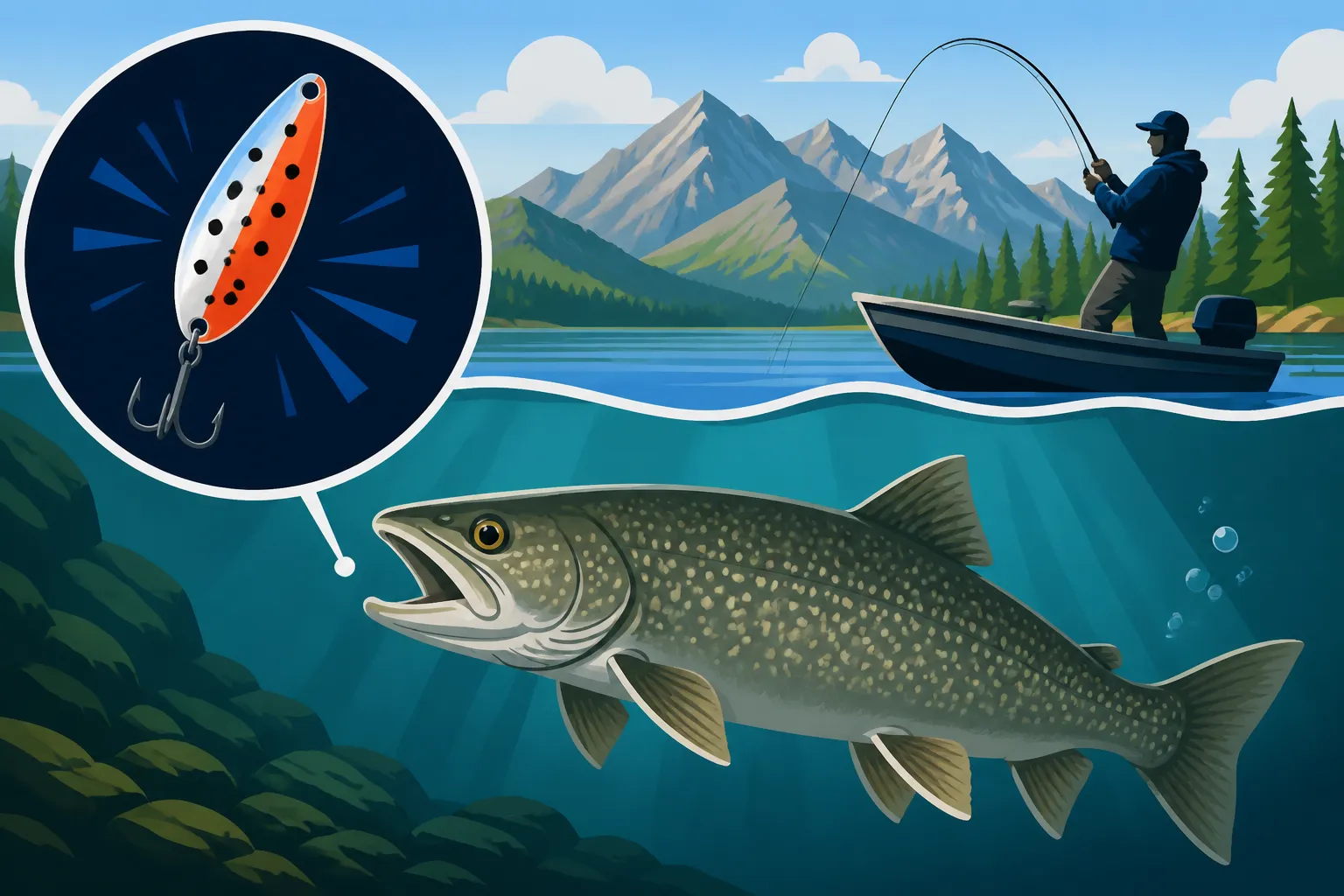
When trolling, lure selection is critical. Large spoons, like those made by Luhr Jensen or Dodger/Hoochie combinations, are very popular. Plugs, especially those mimicking kokanee or other baitfish, can also be highly effective. The key is to match the hatch – present something that looks like the forage fish the Mackinaw are feeding on. Color choice can vary, but silver, blue, green, and chartreuse are often good starting points. Speed is also important; a slower, more deliberate troll (around 1.5-2.5 mph) is often best for these big predators. You can find a wide array of trolling spoons and diving planers on Amazon to get your tackle box ready.
Jigging: A More Active Approach
While trolling covers a lot of water, jigging offers a more hands-on and active way to target Lake Trout, especially if you've marked fish on your sonar. Once you locate a school or individual fish holding near the bottom or a structure, you can stop over them and drop a heavy jig.
- Vertical Jigging: This involves dropping a heavy spoon or tube jig directly down to the fish's depth. You then use a rhythmic lift-and-drop motion to impart action to the lure, mimicking a wounded baitfish. Lake Trout will often strike on the fall or as you lift the jig. Popular jigging lures include heavy bucktail jigs, tube jigs, and specialized ice fishing jigs (which work just as well in open water). Adding a piece of cut bait, like a herring or an anchovy, to your jig can increase its appeal.
- Best Seasons: Jigging can be effective year-round, but it's particularly popular during the colder months, including ice fishing season. During winter, Lake Trout often cruise shallower zones under the ice, making them accessible to jigging through holes. How to Ice Fish Idaho Lakes often involves jigging for these species.
For jigging, a sensitive rod with a strong backbone is essential to detect subtle bites in deep water and to handle the powerful fights these fish put up. Fluorocarbon line is a good choice for leaders due to its invisibility and abrasion resistance. A good fish finder is invaluable for finding the fish you want to jig for.
Essential Gear for Mackinaw Fishing
Beyond the specific techniques, having the right gear is non-negotiable for Lake Trout.
- Rods and Reels: You'll want medium-heavy to heavy action rods, typically 7-9 feet long, paired with robust baitcasting or large spinning reels. These need to handle heavy lures, deep lines, and strong fish. A high-quality reel with a smooth drag system is paramount.
- Line: Braided mainline is often preferred for its strength and lack of stretch, which aids in hook sets at depth. Attach a fluorocarbon leader (15-30 lb test, depending on the conditions and target size) to your braided mainline.
- Lures and Bait: As mentioned, large spoons, plugs, and heavy jigs are key. Some anglers also use bait rigs with whole or cut baitfish.
- Electronics: A reliable fish finder/sonar unit is perhaps the most important piece of equipment for Mackinaw fishing. It allows you to locate fish, identify structure, and monitor your lure's depth.
- Landing Net: A large, sturdy landing net with a long handle is crucial for safely bringing big Lake Trout into the boat.
Remember, fishing for Lake Trout, especially the trophy ones Idaho is famous for, is often a game of patience and persistence. But when that rod bends over and the fight begins, you'll understand why so many anglers dedicate themselves to pursuing Idaho's magnificent Mackinaw. For specific equipment like specialized Lake Trout spoons or heavy-duty swivels, Amazon is a good place to start your search for Best Bait and Lures for Idaho Fishing.
Responsible Angling and Conservation for Lake Trout in Idaho
Catching a magnificent Lake Trout in Idaho is an experience you won't soon forget. These fish are powerful, beautiful, and a true testament to the health of our deep-water ecosystems. However, with their slow growth rates, long lifespans, and the popularity of the sport, responsible angling practices are paramount to ensuring these fisheries remain vibrant for generations to come. Conservation isn't just a word; it's a commitment from every angler who drops a line in Idaho's waters.
Understanding Idaho's Regulations
The Idaho Department of Fish and Game (IDFG) sets specific regulations for Lake Trout, and these can vary significantly from one water body to another. This is because Lake Trout play different roles in different lakes. In some lakes, like Priest Lake, they are the prized trophy fish, and regulations might be designed to protect larger specimens or manage overall harvest. In other lakes, where they might be non-native or exert significant predatory pressure on other desirable species (like kokanee salmon), regulations might encourage harvest to help balance the ecosystem. For instance, in some waters, there might be generous limits, while in others, there could be slot limits (requiring release of fish within a certain size range) or even catch-and-release only.
It is absolutely crucial to consult the most current Idaho Fishing Regulations Explained before you head out. These regulations cover daily bag limits, possession limits, size restrictions, and specific gear rules that might apply to Lake Trout. For example, some waters might have restrictions on bait, or require barbless hooks for certain species. Being informed is the first step in being a responsible angler. Never assume the rules are the same as last year, or the same as another lake you fished.
| Term / Alias | Scientific Name | Key Characteristics (Idaho) | Primary Habitat (Idaho) | Average Size (Idaho) |
|---|---|---|---|---|
| Lake Trout | Salvelinus namaycush | Deep-bodied, light spots on dark background, deeply forked tail | Deep, cold, oxygen-rich lakes & reservoirs | 5-20 lbs, but can exceed 50 lbs |
| Mackinaw | Salvelinus namaycush | Same as Lake Trout; often used for larger specimens | Same as Lake Trout | Often refers to larger fish |
| Grey Trout | Salvelinus namaycush | Older, larger fish can take on a more greyish hue | Same as Lake Trout | Usually larger, mature fish |
| Touladi / Namaycush | Salvelinus namaycush | Traditional indigenous names, less common in Idaho | N/A (General reference) | N/A |
Practicing Catch-and-Release for Larger Fish
While it’s always exciting to keep a legal fish for the dinner table, many anglers choose to release larger Lake Trout, especially those true trophies. These older, larger fish are often the best spawners, contributing significantly to the population's future. If you do plan to release a fish, particularly a large one caught from deep water, take precautions:
- Minimize Fight Time: Use appropriate tackle to bring the fish in quickly. A prolonged fight can exhaust the fish to the point where it cannot recover.
- Handle With Care: Keep the fish in the water as much as possible. If you must remove it for a quick photo, support its body horizontally and avoid touching its gills or eyes.
- De-hook Quickly: Use needle-nose pliers or a de-hooking tool to remove hooks cleanly. If a fish is deeply hooked, consider cutting the line as close to the hook as possible rather than tearing tissue trying to remove it.
- Recompression: For fish caught from very deep water (say, over 60 feet), they may suffer from barotrauma (swim bladder expansion). If you notice a distended belly or bulging eyes, a fizzing tool or descending device can help release the built-up gas and allow the fish to swim back down. Always research proper recompression techniques before attempting them.
For anglers looking to gain a deeper understanding of sustainable fishing, learning about Idaho Catch Limits and Bag Limits Explained and the specific rules for Lake Trout in Idaho Fishing Regulations Explained is invaluable.
The Role of Lake Trout in Idaho's Ecosystems
Lake Trout, whether native or introduced, play a crucial role as apex predators in Idaho's deep-water ecosystems. They help control populations of forage fish, and in turn, contribute to a balanced aquatic environment. However, when introduced into systems where they aren't native, or when their populations explode, they can sometimes have negative impacts on native fish species, such as Idaho Sockeye Salmon and the Redfish Lake Run or native Cutthroat Trout. This ecological dynamic is why IDFG often has very specific, and sometimes changing, management goals for Lake Trout in different bodies of water. For example, in some areas, there might be liberal limits on Lake Trout to reduce predation on species like native kokanee salmon, which are a vital food source for other predators, including humans.
Being a responsible angler means understanding not just how to catch a fish, but also its place in the broader ecosystem. It means respecting the regulations, practicing ethical catch-and-release when appropriate, and supporting conservation efforts. When you do all of that, every "Mackinaw" you encounter in Idaho's pristine waters becomes not just a catch, but a connection to the wild heart of the Gem State. Remember, your choices on the water directly impact the future of these incredible fisheries, so let's keep them healthy and thriving for everyone who loves Idaho fishing.
Disclaimer
This article is for general informational purposes only and does not constitute professional advice. Laws, prices and regulations vary by location and change over time. Consult a qualified professional for guidance on your specific situation.