How to Release a Sturgeon Safely in Idaho
Catching a magnificent sturgeon in Idaho's waters, especially on the legendary Snake River, is an experience many anglers dream of. But once that powerful fish is at your boat or the river's edge, a different kind of challenge begins: knowing exactly how to handle and release it safely and legally. This isn't just about good sportsmanship; it's vital for the survival of these ancient giants and essential for complying with strict Idaho fishing regulations. This guide will walk you through every critical step to ensure a healthy release, keeping both the fish and your fishing future secure.
Why Safe Sturgeon Release is Non-Negotiable in Idaho
Let's be real, seeing a massive sturgeon up close is awe-inspiring. They're prehistoric, powerful, and a true testament to Idaho's wild beauty. But their very existence in our waters is a fragile one, which is why the Idaho Fish and Game Department has very specific rules about how we interact with them. It's not just a suggestion; it's a critical part of conservation efforts, and frankly, it's the law.
These magnificent fish, particularly the white sturgeon found in the Snake River, are managed under strict catch-and-release guidelines. If you've ever wondered, "Why Snake River Sturgeon Fishing Is Catch and Release Only," it's primarily due to their long lifespan, slow reproductive cycle, and past overharvesting. They simply can't sustain themselves if anglers aren't incredibly careful with every single catch. Releasing them properly ensures they can continue to thrive and provide incredible fishing opportunities for generations to come. This also means understanding and adhering to all Idaho Fishing Regulations Explained, as sturgeon rules are among the most stringent.
Beyond conservation, there are serious legal ramifications if you don't follow proper release protocols. The Idaho Rule Against Removing Sturgeon from the Water is perhaps the most well-known and often misunderstood rule. It's in place because even a brief moment out of the water can cause severe damage to a sturgeon's internal organs due to their sheer weight and body structure. This isn't a fish you hoist for a quick photo op like a trout. Respecting this rule is paramount. Violations can lead to hefty fines, loss of fishing privileges, and a significant damper on your fishing adventure. So, let's treat these incredible creatures with the respect they deserve.
Preparing for the Catch: Gear Up for a Smooth Release
Before you even cast your line for sturgeon, preparation is key. You're not just hoping to catch one; you're planning for a responsible and safe release from the moment you hook up. Having the right tools readily accessible will make all the difference when you're battling a powerful fish and need to act quickly.
Essential Tools and Equipment
Imagine hooking into a trophy sturgeon, only to realize you're fumbling for a crucial piece of gear. It's a frustrating scenario that's easily avoidable. First and foremost, you absolutely need a large, strong landing net that can accommodate the size of sturgeon you expect to encounter. Look for nets with a wide, soft, rubberized mesh. This type of mesh is much gentler on the fish's delicate slime coat and fins than traditional nylon nets, minimizing abrasion and scale loss.
Next, a long-handled, sturdy pair of pliers or a specialized hook-removal tool is non-negotiable. You'll often find hooks deeply set or in awkward positions, and you want to be able to remove them without putting your hands too close to the sturgeon's mouth or gill plate. A good pair of gloves, especially those designed for fishing, can protect your hands and provide a better grip on the fish's rough skin if you need to handle it briefly. Many quality options for these tools can be found on Amazon, making it easy to prepare ahead of time. Don't forget a pair of heavy-duty bolt cutters or side cutters. In some cases, a deeply embedded hook, or one that's otherwise impossible to remove safely, is best cut at the bend close to the fish's mouth. This leaves a small piece of the hook to rust out rather than risking further harm to the sturgeon by trying to wrench it out.
Using Barbless Hooks: A Requirement, Not an Option
This is a critical point that cannot be stressed enough: Why Barbless Hooks Are Required for Idaho Sturgeon fishing. It's not just a good idea; it's a mandatory regulation. Barbless hooks greatly reduce the amount of damage caused to a sturgeon's mouth and make hook removal much, much easier and faster. When you're dealing with a powerful fish and want to minimize its time out of the water (or in a net), every second counts.
If you purchase hooks with barbs, you must crimp them down before you start fishing. You can do this easily with a pair of pliers. Just press the barb flat against the shank of the hook. Make it a habit before every fishing trip to check all your hooks. Trust me, it's far less stressful to deal with a barbless hook than to struggle with a barbed one embedded in a sturgeon's jaw, especially when the clock is ticking on the fish's welfare. This simple act is one of the most significant ways you contribute to successful catch and release.
Step-by-Step Guide to Safely Releasing a Sturgeon
You've hooked into one, played it expertly, and now it's close. This is the moment where calm, deliberate action makes all the difference. Remember, the goal is to get this fish back into the water quickly and with minimal stress.
Bringing the Sturgeon to Hand or Net
Once you've fought the sturgeon and it's near your boat or the shore, avoid dragging it onto dry land or over sharp rocks. This is where your large landing net comes into play. Gently guide the fish into the net, making sure it's fully supported. If you're fishing from a boat, try to keep the fish in the water as much as possible, either by the boat's side or in a large live well if it's designed for such large fish and well-oxygenated. Remember the rule: keep it wet!
If you're on shore, bring the sturgeon into very shallow water, just deep enough to keep its entire body submerged while you work. Do not pull it completely out of the water. This also makes it easier to use that specific What Size Tackle to Use for Idaho Sturgeon for landing, allowing you to control the fish without over-stressing it during the final moments of the fight. A strong, long rod combined with appropriate line strength gives you the leverage to guide the fish where it needs to go for a safe release.
Quick and Gentle Hook Removal
With the sturgeon contained and as submerged as possible, it's time for hook removal. This needs to be done quickly but without panic. Use your long-handled pliers or hook-removal tool. If the hook is visible and easily accessible in the corner of its mouth, a quick twist and pull should release it thanks to that barbless hook. Sometimes, the hook might be a bit deeper. Reach in carefully, taking care to avoid the sharp scutes (bony plates) on the sturgeon's body.
If the hook is swallowed or too deeply embedded to be removed quickly and easily without causing further trauma, do not force it. This is where those bolt cutters come in. Simply cut the line as close to the hook as possible. A barbless hook, especially a small piece of it, will usually rust out or be expelled by the fish over time. Attempting to dig out a deeply set hook can do far more damage, potentially puncturing organs or tearing tissue. The fish's well-being is the priority over retrieving a hook.
Revival and Release
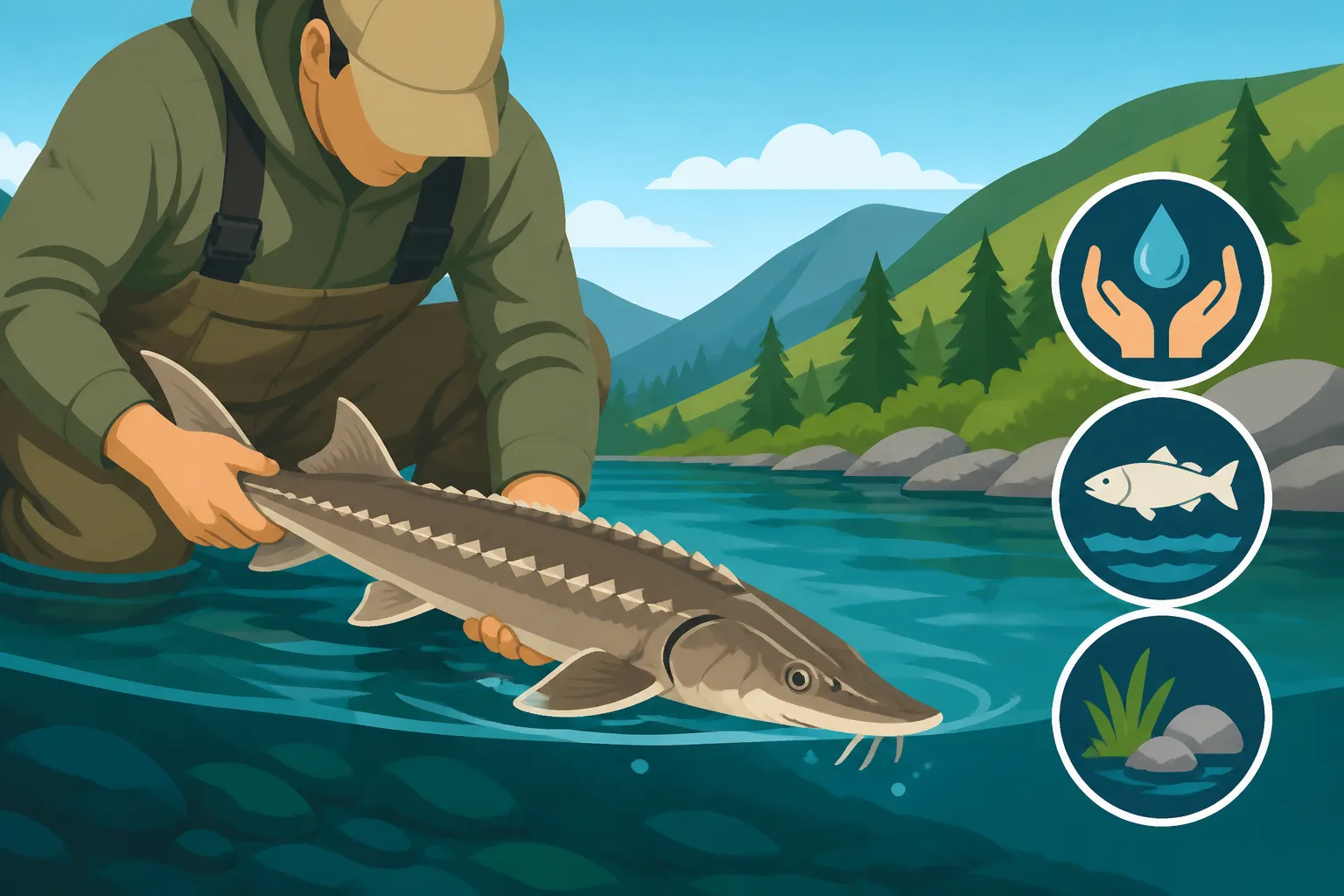
Once the hook is out (or the line cut), the sturgeon needs a moment to regain its bearings. Still keeping it submerged, hold the fish gently by the tail and support its belly. If you're in a boat, position it facing into the current. If you're on shore, hold it facing into any gentle flow. Gently move it back and forth to push water over its gills. This helps circulate oxygen and revive the fish. You'll feel it regain strength; it might even start to wiggle or try to swim away.
Don't release it until you feel it actively trying to swim away from you with vigor. This could take a few minutes, especially if it was a long fight. Be patient. Once it starts pushing against your hands, guiding itself, let it go. Watch it swim away strongly, disappearing back into the depths. Knowing How Long It Takes to Land a Sturgeon in Idaho can also help manage your expectations for the revival time, as a longer fight means a longer recovery period for the fish.
Common Mistakes to Avoid When Handling Sturgeon
Even with the best intentions, anglers can sometimes make mistakes that compromise a sturgeon's survival. Being aware of these pitfalls can help you avoid them and become a truly responsible sturgeon angler.
The Dangers of Removing Sturgeon from the Water
We've touched on this, but it bears repeating: never remove a sturgeon entirely from the water. This is arguably the most critical rule for sturgeon conservation in Idaho. Unlike many other fish species that can tolerate a brief period of air exposure, a sturgeon's massive body weight is not supported by air. When lifted out of the water, its internal organs can be crushed, leading to severe injury or even death, even if the fish appears to swim away fine.
This means no lifting for photos, no dragging onto the bank, and no attempting to weigh the fish outside of the water. If you absolutely want a photo, get down low, keep the fish mostly submerged, and get a quick shot with the fish in the net or shallow water. Your camera lens might get wet, but the sturgeon will thank you. The Idaho Fish and Game take this rule very seriously, so ignorance is no excuse. Always refer to the Idaho Catch-and-Release Sturgeon Rules Explained for the most current specifics.
Handling and Support: Don't Pinch and Don't Drop
Sturgeon have a unique body structure. Avoid grabbing or pinching them tightly, especially around the belly or gills. Their skin can be rough due to scutes, but their internal structure is still vulnerable. When supporting the fish for hook removal or revival, use both hands, one under the head/pectoral fins and the other supporting the tail, distributing the weight evenly. If you're using a net, let the net do the work of supporting the fish's entire body.
Accidentally dropping a sturgeon, even a short distance back into the water, can cause internal damage. Always maintain control until you're ready for its strong, self-propelled release. This is another reason why keeping the fish in the water or a submerged net is paramount, as it minimizes the risk of a dropped fish. Taking a guided trip with a seasoned outfitter, perhaps one of the excellent Snake River Fishing Guides, can also provide invaluable hands-on experience and ensure you're following best practices under expert supervision. They'll have all the gear and knowledge to handle these giants.
Going Beyond Bag Limits and Permits
While sturgeon fishing is strictly catch-and-release, it's still important to understand that violating other fishing regulations can lead to problems. For instance, while you're focused on sturgeon, you must still have the correct Idaho Fishing License Guide and any required permits. If you're fishing for other species concurrently, remember the Idaho Catch Limits and Bag Limits Explained for those fish. An oversight in one area could jeopardize your ability to fish for sturgeon in the future.
Never keep a sturgeon, regardless of size, even if you accidentally injure it severely. Report any serious injuries or mortalities to Idaho Fish and Game immediately. Their primary goal is the long-term health of the fishery, and your honest reporting helps them manage it effectively. Understanding the various permits, such as the Idaho Salmon and Steelhead Permit (which is separate from general fishing), highlights the state's commitment to specific species management, and sturgeon are no exception to this careful oversight.
Table: Sturgeon Release Do's and Don'ts
Here's a quick reference to help you remember the key actions for responsible sturgeon release.
| DO | DON'T |
|---|---|
| DO use a large, soft, rubberized landing net. | DON'T drag the sturgeon onto dry land or rocks. |
| DO keep the sturgeon fully submerged in water. | DON'T lift the sturgeon out of the water for photos. |
| DO use long-handled pliers or hook remover. | DON'T use barbed hooks; they are illegal and harmful. |
| DO cut the line close to the hook if deeply embedded. | DON'T try to wrench out a deeply swallowed hook. |
| DO revive the fish by moving it gently in water until it swims away strongly. | DON'T release the fish until it's actively trying to swim. |
| DO support the sturgeon's entire body when handling. | DON'T grab or pinch the sturgeon tightly. |
| DO report any serious injury or mortality to Idaho Fish and Game. | DON'T keep an injured sturgeon. |
Following these guidelines will not only help ensure the survival of Idaho's incredible sturgeon population but also protect you from potential legal issues. Respecting these ancient fish and their delicate ecosystem is a core part of being a true Idaho angler. Happy (and responsible) fishing!
Disclaimer
This article is for general informational purposes only and does not constitute professional advice. Laws, prices and regulations vary by location and change over time. Consult a qualified professional for guidance on your specific situation.