Idaho Sturgeon Catch and Release Rules Explained
There's nothing quite like the thrill of hooking into a colossal White Sturgeon in Idaho's majestic rivers, feeling that ancient power on the end of your line. But with such an incredible, long-lived creature comes immense responsibility, and Idaho's sturgeon fisheries are entirely focused on their careful preservation. This guide is here to walk you through all the crucial catch-and-release rules for Idaho sturgeon, ensuring you can enjoy this unique angling experience while doing your part to protect these magnificent fish for generations to come.
Why Idaho Sturgeon Fishing is Strictly Catch-and-Release
The decision to make sturgeon fishing exclusively catch-and-release isn't arbitrary; it's a critical conservation measure driven by the unique biology of these ancient fish and their precarious history. Many anglers might wonder why such a strict rule is in place, especially when other species have more liberal harvest limits. The simple truth is, White Sturgeon are not like other fish, and their survival hinges on every one of us playing by these rules.
Understanding the Vulnerability of White Sturgeon
Imagine a fish that can live for over 100 years, growing to truly enormous sizes, yet only reaches sexual maturity after 10 or even 20 years. That's a White Sturgeon. Their slow growth rate and delayed maturity make them incredibly vulnerable to overfishing. Historically, White Sturgeon populations in the Pacific Northwest, including parts of Idaho, faced severe declines due to commercial fishing in the late 19th and early 20th centuries, primarily for their meat and caviar. It's a sobering thought to consider how close we came to losing them entirely in some areas.
Today, while their numbers are improving in many parts of Idaho, they are still considered a sensitive species. The long recovery time for populations means that any harvest, no matter how small, could have disproportionately negative impacts. When you think about the sheer lifespan of these fish, catching and releasing a 50-year-old sturgeon means that fish can continue to contribute to spawning for decades to come, ensuring the future of its kind. If you're curious about the specifics of why this is such a focus, you can dive deeper into Why Sturgeon Fishing on the Snake River Is Catch and Release Only. It really highlights the fragile balance at play with these incredible fish.
The Role of Conservation in Sturgeon Recovery
The Idaho Department of Fish and Game (IDFG) has invested significant resources into White Sturgeon conservation, and catch-and-release fishing is a cornerstone of those efforts. This isn't just about throwing fish back; it's part of a much larger strategy that includes habitat protection, water quality management, and even targeted stocking programs in some areas to bolster populations. Every angler who adheres to the catch-and-release rules becomes an active participant in this recovery story.
Consider the Snake River, for example, especially sections below Hells Canyon. This area is renowned for its trophy sturgeon fishing, and it's a prime example of successful conservation. The strict rules allow these fish to thrive, grow to immense sizes, and reproduce naturally. It's a testament to what can be achieved when science-based management and angler cooperation come together. Without these regulations, the prospect of encountering a truly giant sturgeon, a fish that might have been swimming in these waters since before your grandparents were born, would be a much rarer, if not impossible, dream. Understanding the full picture of how these fish are managed can be found in a comprehensive Idaho Sturgeon Fishing Guide.
Essential Gear and Techniques for Responsible Sturgeon Angling
Catch-and-release for sturgeon isn't just about a good intention; it requires specific gear and techniques to ensure the fish's well-being. Using the right equipment is paramount to minimizing stress on these magnificent creatures and ensuring they swim away strong. Cutting corners here isn't just irresponsible, it can lead to unnecessary harm to the fish and potential legal trouble for you.
Barbless Hooks: Non-Negotiable for Sturgeon
If there's one rule you absolutely, positively must remember when sturgeon fishing in Idaho, it's the requirement for barbless hooks. This isn't a suggestion; it's a legal mandate and a critical component of successful catch-and-release. Barbless hooks allow for much easier and quicker hook removal, reducing tissue damage around the mouth and minimizing the time the fish is out of the water (even partially) or stressed on the line.
You can buy specialized barbless hooks designed for sturgeon, or you can easily modify standard barbed hooks by crimping the barb down with a pair of pliers. Just make sure it's completely flush with the shank. A quick check involves running your finger over the hook point; if you feel any protrusion from the barb, it's not truly barbless. This simple act of using a barbless hook makes an enormous difference in the fish's survival rate. When you're browsing for tackle online, consider picking up a good set of barbless circle hooks on Amazon – they're often preferred for sturgeon as they tend to hook in the corner of the mouth, making removal even easier. For a deep dive into this crucial regulation, check out Why Barbless Hooks Are Required for Idaho Sturgeon and Idaho Barbless Hook Requirements.
Heavy Tackle and Line for Quick Fights
While it might seem counterintuitive for catch-and-release, using heavy-duty tackle is actually a kindness to the sturgeon. A powerful rod, a robust reel with a smooth drag, and strong line are essential for landing these fish efficiently. The goal is to minimize the fight time, thereby reducing the physiological stress and exhaustion on the fish. A prolonged fight can deplete a sturgeon's energy reserves, making it more susceptible to predators or disease after release.
Think about a sturdy rod in the 7-to-9-foot range with a heavy or extra-heavy action, paired with a large conventional reel spooled with at least 80-pound braided line, or even heavier if you're targeting truly giant fish. Braided line offers excellent sensitivity and strength, which is crucial when fishing in strong currents or deeper holes where sturgeon often reside. When setting up your rig, ensure all knots are tied correctly and securely, as a lost fish with a trailing line and hook is a serious problem for the fish. For specific recommendations on what to use, the guide on What Size Tackle to Use for Idaho Sturgeon offers excellent advice.
Bait and Rigging Considerations
The type of bait and how you rig it also plays a role in responsible sturgeon fishing. Common baits like squid, nightcrawlers, lamprey, or cut bait (e.g., smelt, carp) are effective. The key is to present the bait in a way that minimizes the chance of deep hooking. Using a single barbless circle hook, as mentioned earlier, is often the best strategy because fish typically hook themselves in the corner of the mouth as they try to swim away with the bait. This makes removal much simpler and safer.
Avoid using treble hooks or multiple hooks if possible, as these increase the risk of foul-hooking or causing extensive damage. Keep your rig simple: a heavy lead weight (often 8-12 ounces or more, depending on current) to hold the bait on the bottom, a heavy swivel, and a leader of appropriate strength. The leader should be slightly lighter than your main line in case you get snagged, allowing you to break off the leader and weight without losing your entire main line and potentially leaving a long trail of line behind.
Strict Handling and Release Protocols
Once you've hooked and landed a sturgeon, the real test of your commitment to conservation begins. How you handle the fish during and immediately after the fight is critical to its survival. Idaho's rules are very clear on this, and they are designed to give these ancient fish the best possible chance of swimming away unharmed.
Keeping Sturgeon in the Water
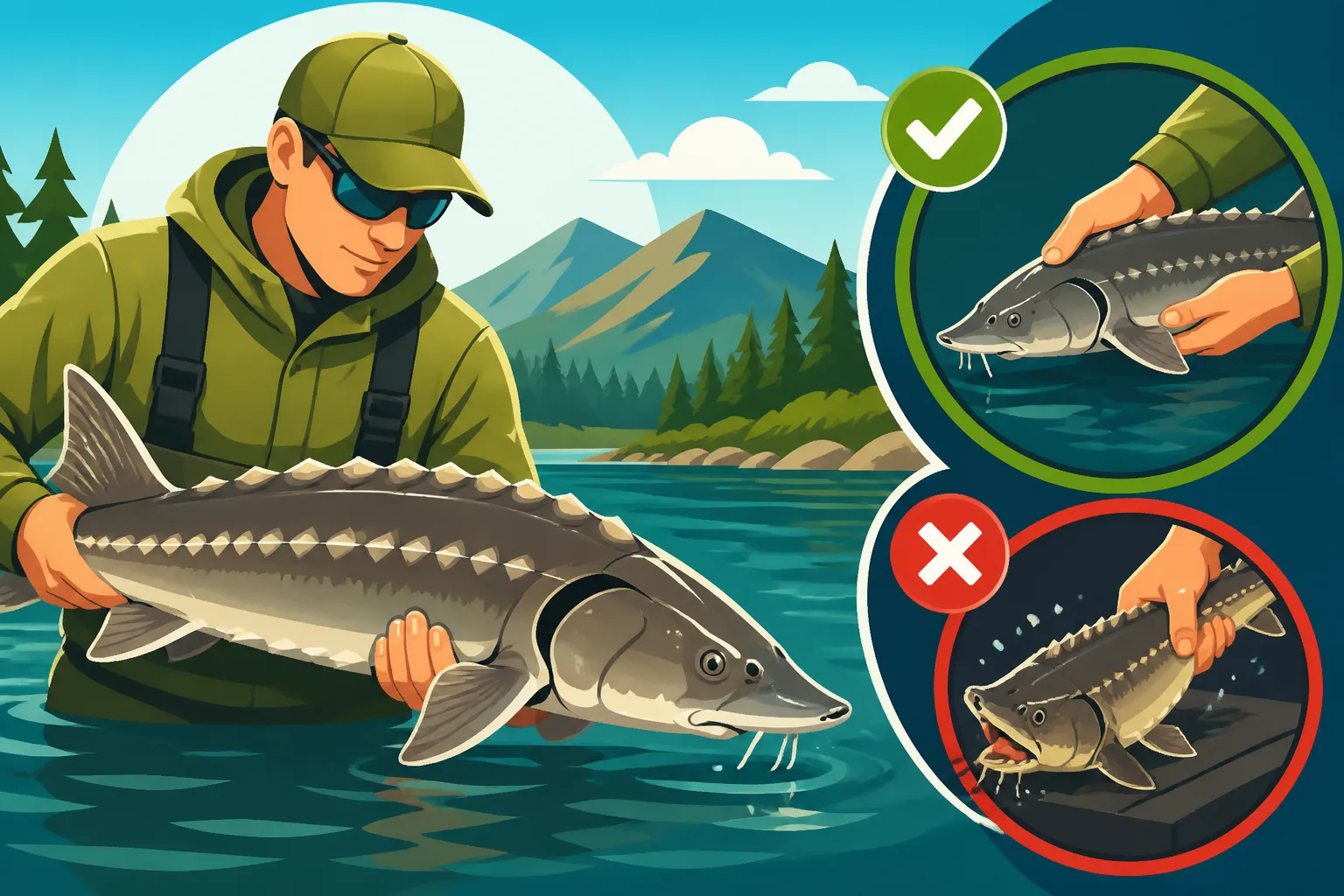
This is another absolute, non-negotiable rule: White Sturgeon must remain in the water at all times. You cannot remove them from the river or lake. This might sound challenging, especially with giant fish, but it's vital. Sturgeon are incredibly heavy and dense, and their internal organs are not designed to support their body weight out of the water. Lifting a large sturgeon, even partially, can cause severe internal damage, rupture organs, or damage their spines, leading to delayed mortality even if they appear to swim away fine.
When a sturgeon is brought to shore, boat-side, or shallow water, it must be supported by its belly. This often means getting into the water with the fish yourself. If fishing from a boat, anglers usually guide the fish into shallow water or, if the fish is smaller and can be adequately supported, use a specialized sturgeon cradle or net that keeps the fish submerged while allowing for handling. Do not drag the fish over rocks or abrasive surfaces. This rule is so important that the IDFG has made it a central tenet of sturgeon fishing, and you can learn more about it in Idaho Rule Against Removing Sturgeon from the Water.
Safe Measurement and Photography
Even with the "in the water" rule, you can still measure and get fantastic photos of your catch. For measuring, a flexible tape measure, often one that can be found on Amazon specifically designed for fishing, is invaluable. Extend the tape along the fish's body while it's in the water, from the tip of its snout to the fork of its tail. Have a buddy ready to snap photos. For photography, quick, low-angle shots are best. Get in the water with the fish, support it gently, and capture its grandeur. The goal is to minimize the time the fish is stressed or held, even in the water. Avoid excessive posing or prolonged photo sessions.
Remember, the fish's well-being takes precedence over a perfect photo. A quick, respectful interaction is much better for the sturgeon than a drawn-out photoshoot. If you're on a guided trip, your guide will be an expert at this, ensuring you get great memories without harming the fish. They're well-versed in How to Release a Sturgeon Safely in Idaho.
Proper Release and Revival
After measurement and a quick photo, the release process needs to be handled with care. The sturgeon might be tired from the fight, especially if it was a big one. Gently guide the fish to an area with current, if possible, and hold it upright by the tail and head. Allow water to flow over its gills, essentially "reviving" it. You'll feel the fish gaining strength; it might kick its tail or try to swim off. Only release it when it can swim away under its own power, without rolling over or drifting.
Sometimes, a fish needs a little extra time. Be patient. If you're in a boat, you might even "motor" it slowly forward to increase water flow over the gills. The goal is for the fish to depart vigorously, indicating it has recovered sufficiently. Never just toss a tired fish back into the current; that's a recipe for delayed mortality.
Navigating Idaho's Sturgeon Regulations and Licensing
Beyond the handling rules, there are other important regulations to be aware of when embarking on an Idaho sturgeon fishing adventure. Understanding the legal framework is just as important as knowing how to handle the fish. Ignorance of the law is never an excuse, and Idaho's fish and game officers take these regulations very seriously.
Understanding General Fishing Rules for Sturgeon
First and foremost, even for catch-and-release fishing, you need a valid Idaho fishing license. There's no separate "sturgeon permit" like there is for salmon or steelhead, but the general license is a must. Whether you're a resident or a nonresident, ensure your license is current before you even wet a line. You can easily purchase these online or at many sporting goods stores across the state. If you're wondering about the specifics of getting one, our comprehensive Idaho Fishing License Guide is a great resource.
Beyond the license, it’s crucial to familiarize yourself with the general statewide fishing regulations, which apply to all species unless superseded by specific species or waterbody rules. These often cover things like legal fishing hours, acceptable methods of take (though for sturgeon it's strictly hook and line), and general conduct. While sturgeon don't have a "bag limit" since they are catch-and-release only, all other rules in the Idaho Fishing Regulations Explained pamphlet still apply.
Also, be mindful of specific waterbody regulations. While the Snake River below Hells Canyon is a prime sturgeon destination, other areas like the Clearwater River or specific sections of the Salmon River might also hold sturgeon, each with its own nuances in regulations. Always consult the most current Idaho Fishing Seasons and Rules brochure, available on the IDFG website or at license vendors, before heading out.
Consequences of Non-Compliance
Violating sturgeon catch-and-release rules in Idaho can lead to serious consequences. These aren't minor infractions; they are taken very seriously due to the conservation status of White Sturgeon. Penalties can range from substantial fines—often hundreds or even thousands of dollars—to the loss of fishing privileges, confiscation of gear, or even jail time in severe cases.
For instance, removing a sturgeon from the water, even for a quick photo, is a clear violation. Using barbed hooks, or not properly releasing a fish to ensure its survival, can also lead to citations. Fish and Game officers patrol popular sturgeon fishing areas, and they are adept at spotting violations. It's simply not worth the risk.
Remember, the rules are in place to protect these magnificent fish. Anglers who consistently disregard regulations not only face legal repercussions but also tarnish the reputation of the angling community as a whole. Being a responsible angler means understanding and respecting the rules. While sturgeon don't have a "bag limit," violating the catch and release protocols can carry penalties similar to those for exceeding bag limits on other species, as detailed in discussions like What Happens If You Exceed Idaho's Bag Limit for other species.
Here's a quick summary of critical do's and don'ts for sturgeon catch-and-release in Idaho:
| Action | Do (Required/Recommended) | Don't (Illegal/Harmful) |
|---|---|---|
| Hooks | Use single, barbless hooks. Circle hooks are highly recommended. | Use barbed hooks, treble hooks, or multiple hooks. |
| Gear | Use heavy-duty rods, reels, and strong line (80lb+ braid). | Use light tackle that prolongs the fight and exhausts the fish. |
| Fish Removal | Keep sturgeon fully in the water at all times. Get in the water! | Lift any part of the sturgeon out of the water, even for a moment. |
| Handling | Support the fish horizontally by its belly while in the water. | Drag the fish over rocks/abrasive surfaces; hold it vertically by tail or gills. |
| Measuring/Photo | Use a flexible tape measure in the water; take quick, low-angle shots. | Prolong photography sessions; prioritize photos over fish recovery. |
| Release | Gently revive the fish in current until it swims away strongly. | Release a tired fish that is not ready to swim off on its own. |
| License | Possess a valid Idaho fishing license. | Fish for sturgeon without a current Idaho fishing license. |
| Bait | Use appropriate, legal baits (squid, cut bait, worms). | Use illegal baits or methods. |
Fishing for Idaho's White Sturgeon is an experience that transcends mere sport; it's a connection to the wild, ancient heart of these rivers. By understanding and diligently following these catch-and-release rules, you're not just complying with regulations—you're actively participating in the conservation of one of North America's most incredible fish species. Every responsible release contributes to their enduring legacy, ensuring that future generations can also marvel at the immense power and timeless beauty of an Idaho sturgeon.
Disclaimer
The information provided in this guide is for general informational purposes only and is not intended as legal advice. Fishing regulations can change frequently. Always consult the most current official Idaho Department of Fish and Game regulations brochure or website before engaging in any fishing activities.