Difference Between Crappie Species Anglers Often Confuse
It's a familiar scenario for many Idaho anglers: you’ve had a fantastic day out on the lake, reeling in crappie after crappie, and now you're back at the dock, looking at your cooler full of fish. A buddy glances over and asks, "So, mostly black crappie or white crappie today?" Suddenly, you’re staring at your catch, realizing you're not entirely sure. They all look… like crappie, right? This guide is here to help you confidently distinguish between the two most common crappie species, making you a more informed angler and ensuring you're always within Idaho's specific regulations.
The Crappie Conundrum: Why They Look So Similar
Crappie, belonging to the genus Pomoxis, are beloved panfish across Idaho and much of North America. They're fun to catch, often schooling in impressive numbers, and make for a delicious meal. However, the two primary species – the black crappie (Pomoxis nigromaculatus) and the white crappie (Pomoxis annularis) – share so many general characteristics that telling them apart at a glance can be a real head-scratcher. Both are slab-sided, disc-shaped fish with large mouths and dark eyes, and both inhabit many of the same waters, leading to understandable confusion.
Shared Characteristics
Think about their overall body plan: both crappie species possess that classic "panfish" profile, deep and compressed, making them feel much larger than their length might suggest. They both have relatively small heads with upturned mouths, perfectly adapted for gulping small baitfish and insects. Their fins are also quite similar in general shape and placement. They're often found in similar habitats, lurking around submerged timber, weed beds, and brush piles, making it common to catch both species in the same fishing session. This overlap in appearance and behavior is precisely why a lot of anglers, even seasoned ones, find themselves pausing to examine their catch closely.
Environmental Factors that Influence Appearance
To complicate matters further, environmental conditions can significantly influence how a crappie looks. Water clarity, diet, and even the color of the substrate can affect their overall coloration and the prominence of their markings. A black crappie caught in murky, tannic water might appear much darker and have less distinct spots than one caught in clear water over a sandy bottom. Similarly, a white crappie from a nutrient-rich lake might have more pronounced barring than one from a clearer, less fertile environment. These subtle variations mean you can't always rely on color or general "spottiness" alone to make a definitive identification. This is why it’s so important to learn the reliable, anatomical differences that don't change with their surroundings. Idaho Fish Species Guide can give you an overview of other fish you might encounter that also have environmental influences on their looks.
Spotlight on Black Crappie: Key Identification Marks
When you're trying to identify a black crappie, the key is to look beyond the general dark spots and focus on specific, reliable features. These markers will help you confidently say, "Yep, that's a black crappie!" even if its coloration is a bit muted due to local water conditions.
Dorsal Fin Spines: The Go-To Marker
This is, hands down, the most consistent and definitive way to tell a black crappie from a white crappie. Carefully count the spines in the dorsal fin (the fin on the fish's back). Black crappie will almost always have 7 or 8 dorsal spines. These are the stiff, pointed rays at the front of the fin, before the softer, segmented rays begin. This number is incredibly reliable. You don't have to guess or squint at faint markings; just count those spines. If you're struggling to count them accurately, you can gently run your finger over the fin to feel each individual spine. It's a method that works every single time, regardless of how dark or light the fish might be.
Coloration and Spotting Patterns
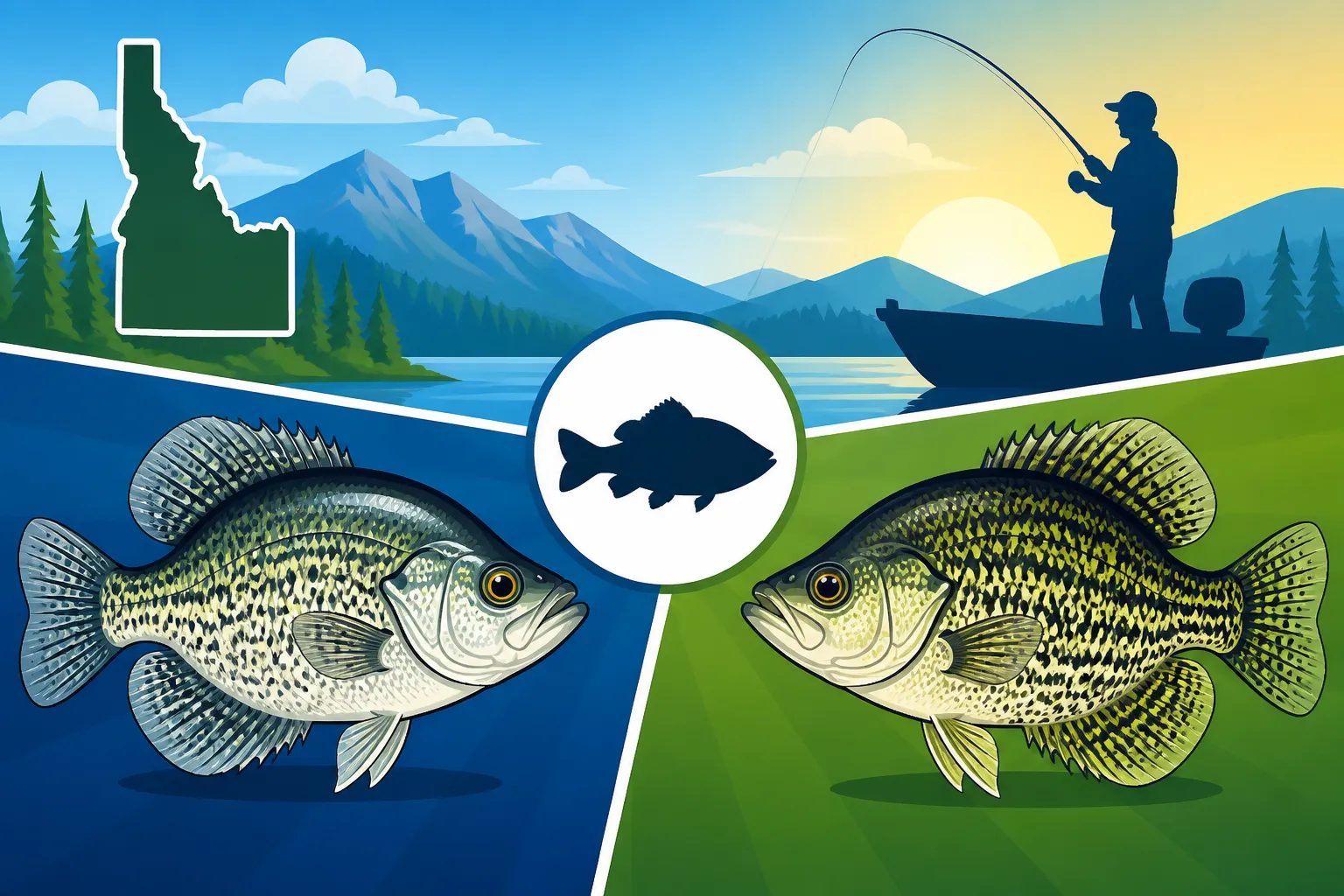
While not as definitive as the dorsal fin count, the black crappie's coloration and spotting patterns offer good clues. They typically have an overall darker appearance, often with an irregular scattering of dark spots all over their body. These spots don't usually form distinct vertical bars. Instead, they look more like a random speckling, almost like someone took a paintbrush and flicked dark paint across the fish's flanks. The overall background color can range from silvery-green to a dark, olive-brown, often with a golden sheen, especially if they’ve been feasting on a rich diet. Many anglers find it helpful to compare the fish to an image on their phone or a laminated fish identification card, which you can easily find on Amazon.
Mouth and Body Shape Nuances
Pay attention to the mouth, too. The black crappie generally has a shorter, more stout body profile compared to its white counterpart. Its mouth tends to be more compact, and when you look at its profile, you'll often notice that its overall shape is slightly more rounded or "moon-shaped" than the white crappie. The dorsal fin on a black crappie also tends to be roughly the same length as its anal fin (the fin underneath the fish, towards the tail). These are subtle differences, but when combined with the dorsal spine count, they can really solidify your identification.
Spotlight on White Crappie: Distinctive Features
Just like with black crappie, the trick to identifying white crappie is knowing which features are truly diagnostic. While they might appear lighter overall, relying solely on color can lead you astray. Focus on the anatomical details that set them apart.
Dorsal Fin Spines: A Clear Distinction
Here’s where the clear difference from the black crappie comes in: White crappie almost invariably have 5 or 6 dorsal spines. This count is shorter than the black crappie's 7 or 8, making it an unmistakable identifier. Again, if you're ever in doubt, just count those stiff, bony rays in the dorsal fin. If you count five or six, you can be confident you've got a white crappie. This method is especially crucial when fishing in waters where both species are present, like many of Idaho's reservoirs and larger lakes, ensuring you adhere to any specific length or bag limits for each species. It’s a core piece of knowledge for any angler interested in Idaho Crappie Fishing.
Vertical Barring and Overall Color
White crappie often, but not always, display faint to prominent vertical bars or stripes along their sides. These bars can be quite striking in some individuals, while in others, they might be barely perceptible, especially if the fish has been stressed or is in very clear water. Their overall body color tends to be lighter, usually a silvery-white or pale green, with these darker, sometimes broken, vertical bands. Unlike the speckled appearance of the black crappie, the markings on a white crappie have a more organized, linear look. This can be a useful visual cue, but always back it up with a spine count if there's any uncertainty.
Profile and Mouth Shape Differences
The white crappie generally has a more elongated, "tall" body profile. Its dorsal fin is also noticeably longer from front to back than the black crappie's. When you look at its mouth, you might notice it appears slightly larger and more pronounced than the black crappie's. Imagine a white crappie as having a somewhat more streamlined or oval shape compared to the black crappie’s rounder appearance. These are fine points, but with practice, they become second nature. Understanding these differences helps in distinguishing your catch, which can sometimes impact Idaho Daily Bag Limit for Kokanee if you're also fishing for other species with similar regulations.
Side-by-Side Comparison: Black vs. White Crappie
To really solidify your understanding, let's put these two species next to each other and highlight their most reliable distinguishing features. It's not just about what they generally look like, but what specific anatomical markers you can use every time.
Quick Visual Cues
Beyond the definitive spine count, there are some visual habits you can develop to quickly size up your catch. Think of the black crappie as the "speckled blob" and the white crappie as the "barred oval." If the spots are all over the place, like a starry night, you're likely holding a black crappie. If you see even faint hints of vertical lines, or if the fish is generally lighter with less dense spotting, lean towards white crappie. The dark splotch on the operculum (gill cover) is often more pronounced on black crappie, too, though this can vary. A good field guide or a handy fish ID app, many of which can be downloaded via Amazon on your smartphone, can be a great reference when you’re out on the water.
Fin Ray Counting: The Definitive Method
When all else fails, or if you simply want absolute certainty, counting the dorsal fin spines is your golden rule. This is the anatomical feature that holds true across all individuals, regardless of their environmental color variations or size.
Here's a quick summary table:
| Feature | Black Crappie (Pomoxis nigromaculatus) | White Crappie (Pomoxis annularis) |
|---|---|---|
| Dorsal Fin Spines | 7 to 8 (rarely 9) | 5 to 6 (rarely 7) |
| Coloration Pattern | Irregular, scattered dark spots | Often faint to prominent vertical bars |
| Overall Body Shape | More rounded, "moon-shaped" | More elongated, "tall" |
| Dorsal Fin Length | Roughly equal to anal fin length | Noticeably longer than anal fin length |
| Mouth Size | Generally more compact | Slightly larger, more pronounced |
Practicing this simple spine count will make you an expert in no time. You can even practice on pictures of fish before your next trip to Best Idaho Lakes for Crappie.
Beyond Identification: Habitat and Behavior Differences
While identification is key, understanding the subtle differences in where and how black and white crappie prefer to live can also give you clues and help you target one species over the other. They are both ambush predators, but their preferred ambush points can vary slightly.
Preferred Habitats and Structures
Black crappie tend to prefer clearer water with abundant vegetation and structure. Think of shallow weed beds, submerged brush, fallen trees, and docks in lakes, ponds, and slower sections of rivers. They are more tolerant of cooler, clearer water conditions. If you're fishing a pristine mountain lake with lots of submerged timber, you're likely to find more black crappie. Their speckled camouflage helps them blend into these complex, dappled light environments. This is important when considering Best Time of Year to Catch Crappie as their preferred habits may make them more or less active depending on the season.
White crappie, on the other hand, are often more adaptable and tolerant of murkier or more turbid waters, and they can thrive in areas with less vegetation. They frequently inhabit large reservoirs, slower-moving rivers, and even larger, somewhat turbid lakes. They often relate more to open water structures like channel edges, drop-offs, and submerged humps, though they'll still use brush piles. If you're fishing a large, sprawling reservoir with stained water, you might find a higher proportion of white crappie. Understanding these preferences can really help refine your Idaho Fishing Techniques Guide.
Spawning Differences
Both species are spring spawners, but their exact timing and preferred conditions can vary. Black crappie typically spawn when water temperatures hit the low to mid-60s Fahrenheit. They prefer to build their nests in shallower water, often near vegetation or other cover, and sometimes a bit deeper than white crappie. White crappie generally spawn a little later or at slightly warmer temperatures, usually in the mid to high-60s Fahrenheit. They tend to seek out very shallow, protected coves or flats, often preferring areas with hard bottoms. Knowing these subtle differences can give you an edge in locating crappie during the crucial spring months.
Why Accurate Identification Matters
Beyond satisfying your angling curiosity, accurately identifying crappie species has practical implications, from adhering to regulations to refining your fishing strategies. It's not just a trivial detail; it’s an important part of responsible and successful fishing in Idaho.
Regulatory Implications
Idaho, like many states, sometimes implements specific regulations that differ between black and white crappie, though often they are grouped together under a general "crappie" limit. However, there might be specific waters or situations where different size limits, bag limits, or even season restrictions could apply to one species but not the other. For example, some states might have a slot limit for one crappie species to protect larger fish, while the other species has a simple daily bag limit. If you consistently misidentify your catch, you could inadvertently be breaking a regulation, leading to fines or other penalties. Always consult the current Idaho Fishing Regulations Explained brochure before heading out, paying close attention to any species-specific rules for the body of water you plan to fish.
Targeting Strategies
Knowing which species you're catching, and subsequently which species is most abundant in a particular body of water, can significantly influence your fishing strategy. If you know a lake is primarily a black crappie fishery, you might focus your efforts on clearer, more vegetated areas with smaller jigs or minnows. If it's a white crappie hotspot, you might target deeper channel edges or larger brush piles in slightly murkier water, perhaps with a slightly larger profile bait to appeal to their generally larger mouths. This understanding also helps when planning future trips. For instance, if you're looking for Idaho Bass Fishing Guide information, you'll find that bass often share habitat with crappie, and knowing the crappie species present can give you clues about the overall health and type of fishery you’re in. It empowers you to make smarter decisions about where to cast your line and what tackle to use, making your time on the water more productive and enjoyable.
Disclaimer
This article is for general informational purposes only and does not constitute professional advice. Laws, prices and regulations vary by location and change over time. Consult a qualified professional for guidance on your specific situation.