Idaho Rainbow Trout vs Steelhead, What’s the Difference
It’s a common scenario out on Idaho’s beautiful waters: you hook into a magnificent, silver-sided fish, and your mind immediately races. Is it a rainbow trout, or have you just landed a prized steelhead? The truth is, these two fish are often confused, and for good reason—they look remarkably similar. This guide will dive deep into the fascinating world of rainbow trout and steelhead, untangling the genetic connections and environmental factors that make them distinct, so you'll know exactly what you've got on the end of your line.
The Basics: What is a Rainbow Trout?
Let's start with the fish that forms the foundation of our discussion: the rainbow trout. When most people picture a trout in Idaho, they're probably envisioning a rainbow. These fish are iconic to our rivers, lakes, and streams, known for their beautiful colors and spirited fight. They're a favorite among anglers of all skill levels, from folks casting a bobber and worm on a local pond to seasoned fly fishers stalking wary specimens on a crystal-clear spring creek.
Life Cycle and Habitat
Rainbow trout (scientific name: Oncorhynchus mykiss) are native to Pacific Ocean tributaries in Asia and North America, and they’ve been widely introduced across the globe, including all over Idaho. Here in our state, they thrive in a vast array of freshwater environments. You can find them in cold, clear mountain streams, the deep, sprawling reservoirs, and even the calmer sections of larger rivers. These fish are incredibly adaptable, which is a big reason for their widespread success and popularity.
A typical rainbow trout in Idaho will spend its entire life cycle in fresh water. They hatch from eggs laid in gravel beds, usually in flowing water, and grow from tiny fry to juvenile parr, characterized by distinctive vertical markings along their sides. As they mature, they feed on insects, crustaceans, smaller fish, and even plant matter, growing steadily. Their size can vary wildly depending on the food availability and water quality of their specific habitat. A stream-dwelling rainbow might only reach a few ounces, while a lake-dwelling rainbow, like those found in Lake Pend Oreille or Henry's Fork, could easily top several pounds and offer an incredible fight. Their entire existence revolves around the freshwater ecosystem they inhabit, completing their reproductive cycle without ever venturing into the ocean.
Common Characteristics and Identification
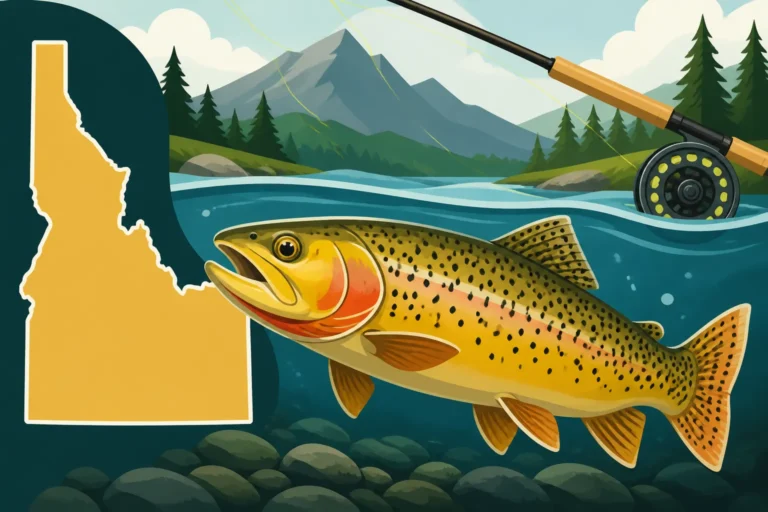
When you're looking at a classic rainbow trout, you'll generally notice a few defining features. Their bodies are typically fusiform—torpedo-shaped—which is ideal for strong swimming in currents. Their coloration is where they really get their "rainbow" name; they usually have a greenish-blue to golden-yellow back, silver sides, and a distinct pink or red stripe running horizontally along their lateral line, often fading or intensifying with mood or spawning condition. Their entire body, including their dorsal, adipose, and caudal (tail) fins, is usually covered in small, dark spots. These spots are often irregular and can extend down onto their gill plates and even their belly.
The mouth of a rainbow trout is generally medium-sized, with teeth present on both jaws, and the tongue. Their tail fin is typically broad and slightly forked, powerful for navigating strong currents. While these characteristics are generally true, remember that environmental factors like water clarity, diet, and even the genetics of a specific strain can influence their appearance. A rainbow from a murky reservoir might be duller and more silver, while one from a vibrant, clear mountain stream might exhibit incredibly vivid colors. This variability can sometimes make identification a fun challenge, even for experienced anglers. For those just starting out, picking up a good field guide or browsing fishing forums can help solidify these distinctions. You can often find excellent resources, including waterproof fishing guides, on Amazon.
The Enigma: What is a Steelhead?
Now, let’s talk about the steelhead. This is where the plot thickens and the lines blur for many anglers. The steelhead is, in essence, a rainbow trout, but with a critical difference: its life history. Steelhead are often referred to as the "anadromous" form of rainbow trout, meaning they are born in fresh water, migrate to the ocean to mature, and then return to fresh water to spawn. This incredible journey shapes their entire being, from their physical appearance to their fighting prowess.
Anadromous Nature and Ocean Journey
The life cycle of an Idaho steelhead is nothing short of epic. Like their resident rainbow cousins, steelhead eggs hatch in the gravel beds of Idaho’s rivers, particularly in the Clearwater, Salmon, and Snake River systems. The young fish, called fry and then parr, spend one to three years in these freshwater streams, growing and feeding. During this time, they look almost identical to young rainbow trout. However, a significant change occurs as they prepare for their migration. They undergo a physiological transformation known as "smoltification," where their bodies adapt to tolerate saltwater. They turn a distinctive chrome silver, their spots become less prominent, and they begin their long journey downstream to the Pacific Ocean.
Once in the ocean, steelhead can spend one to three years growing rapidly, feasting on abundant marine prey. This period of rapid growth in a rich marine environment is what allows them to reach impressive sizes. When they are ready to spawn, guided by an uncanny homing instinct, they turn around and begin their arduous journey back upriver. This migration can be hundreds, even a thousand miles, involving navigating powerful currents, waterfalls, and predators, all to return to the very gravel beds where they were born. It's a testament to their incredible resilience and drive. Understanding this journey is key to appreciating why these fish are so revered by anglers. If you're looking to learn more about the seasonal movements of these fish, check out our Idaho Fishing Season Dates and Limits guide.
Distinguishing Features and Regional Variations
When a steelhead returns to Idaho's freshwater rivers, its appearance is strikingly different from a resident rainbow trout. They are often described as "chrome bright" or "silver bullets." Their bodies are typically very streamlined and powerful, built for battling currents. The most prominent feature is their almost entirely silver coloration, often with a darker, bluish-green back, and a very subtle, if any, pink stripe. Their spots are usually much fainter, smaller, and more concentrated on their back and dorsal fin, rather than spread across their entire body and fins like a resident rainbow. Some returning steelhead, especially those that have been in fresh water for a while, might start to regain a hint of that pink stripe or more pronounced spotting, making identification tricky for the uninitiated.
Another key difference is size. Due to their ocean growth, steelhead are generally much larger and more powerfully built than resident rainbow trout of the same age. It's not uncommon for Idaho steelhead to weigh several pounds, with trophy fish reaching double digits. Their musculature is incredibly dense, providing for explosive runs and aerial acrobatics once hooked. While steelhead are found in many rivers, their specific characteristics can vary slightly by region and stock. For example, Clearwater River steelhead might look slightly different from those found further up the Salmon River. These subtle differences add to the mystique and challenge of pursuing these incredible fish.
Key Differences in Biology and Behavior
The story of rainbow trout versus steelhead isn't just about where they live; it's deeply rooted in their biology and the choices they make—or are genetically programmed to make—about their life history. These differences influence everything from their growth rates to their fighting style, making them distinct challenges and rewards for the angler.
Genetics and Life History Strategies
At their core, rainbow trout and steelhead share the same genetic makeup. They are the same species, Oncorhynchus mykiss. The difference lies in a fascinating biological phenomenon called "anadromy." Not all rainbow trout populations exhibit this migratory behavior. Some populations are entirely freshwater resident, spending their whole lives in a lake or river. Others, given access to the ocean, will develop the anadromous trait and become steelhead. It's believed that environmental factors, genetic predispositions, and even population density can influence whether a young rainbow trout decides to smolt and head to the ocean or stay put.
This means that within a single river system, you might find both resident rainbow trout and ocean-run steelhead. They can even interbreed, blurring the genetic lines further. The primary distinction is their life history strategy: one remains in freshwater, while the other undertakes an incredible saltwater journey. This fundamental difference drives everything else we observe about them. It's a constant source of wonder to think about the internal cues that tell a small parr to transform and begin its perilous journey to the sea, a journey that its sibling might never undertake, choosing instead to become a robust river resident. This complex interaction of genetics and environment makes Idaho's fisheries truly special.
Size, Coloration, and Physical Traits
While we've touched on this, it's worth a closer look at how these differences manifest physically when you're holding one of these fish.
Size:
- Rainbow Trout: Typically smaller, ranging from small pan-sized fish in streams (6-12 inches) to several pounds in large lakes or productive rivers (up to 20+ inches and 5-10 pounds). Their growth is limited by the food resources and space available in their freshwater environment.
- Steelhead: Generally much larger and heavier-bodied due to their time feeding in the ocean. Common sizes in Idaho's returning runs are 20-30 inches, with many fish exceeding 10-15 pounds. Their ocean diet of krill, squid, and smaller fish fuels rapid growth.
Coloration:
- Rainbow Trout: Display a wide range of colors. Often dark green to brown on the back, with a prominent, vibrant pink or red lateral stripe. Their sides are silver to yellowish, and they are typically heavily spotted over their entire body, including the head, gill plates, and all fins. The spots are usually irregular and distinct.
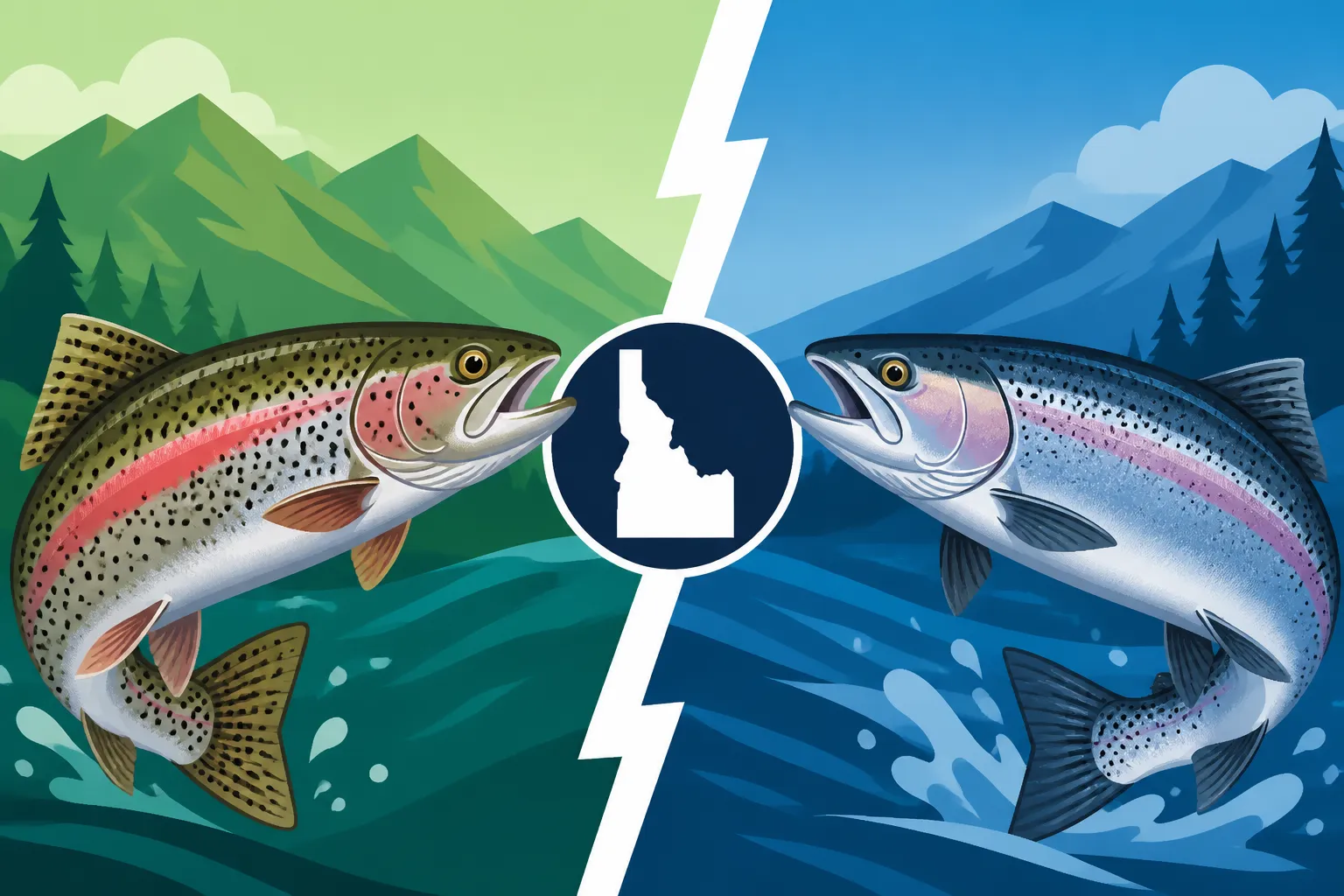
- Steelhead: Dominantly bright silver or "chrome" when they first enter freshwater from the ocean. Their backs are usually dark blue, green, or even purplish. The lateral stripe is often absent or a very faint blush of pink, and their spots are much smaller, less numerous, and primarily confined to the back above the lateral line and on the dorsal and caudal fins. As they spend more time in freshwater, especially approaching spawning, their colors can darken, and the pink stripe may become more pronounced, leading to confusion with resident rainbows.
Physical Traits:
- Rainbow Trout: While muscular, their bodies are usually built for sustained life in freshwater currents. Their fins are generally in good condition, though they can show wear from spawning or fighting.
- Steelhead: Possess an incredibly powerful, torpedo-shaped body, designed for long migrations and fighting strong currents. Their fins, especially the caudal fin, are often larger and more robust, reflecting their ocean journey. Occasionally, you might notice sea lice on newly returned steelhead, a tell-tale sign of their recent saltwater existence, though these parasites usually drop off quickly in freshwater.
| Feature | Rainbow Trout (Freshwater Resident) | Steelhead (Anadromous Rainbow Trout) |
|---|---|---|
| Life Cycle | Spends entire life in freshwater (lakes, rivers, streams). | Hatches in freshwater, migrates to ocean, returns to freshwater to spawn. |
| Average Size | 6-20+ inches; typically smaller, 0.5-5 lbs. | 20-30+ inches; significantly larger, 5-20+ lbs. |
| Coloration | Darker back (green/brown), silver/yellow sides, prominent pink/red stripe, heavy spotting all over. | Chrome silver body, darker blue/green back, faint or absent pink stripe, sparse spotting mostly on back. |
| Body Shape | Muscular, but often less streamlined, adapted to local environment. | Extremely powerful, torpedo-shaped, built for long migrations and strong currents. |
| Fins | Usually in good condition, spots often present. | Often more robust, especially caudal fin. Less spotting or faint spots. |
| Diet | Aquatic insects, terrestrial insects, small fish, crustaceans. | Abundant marine prey in ocean; ceases feeding or feeds minimally in freshwater during spawning migration. |
| Fight | Strong, acrobatic leaps, powerful runs. | Explosive, longer runs, more frequent and higher jumps, incredibly powerful. |
| Habitat | Widely distributed in diverse freshwater habitats across Idaho. | Primarily found in major river systems with ocean access (Clearwater, Salmon, Snake, Grande Ronde, Imnaha). |
Dietary Habits and Fishing Challenges
The different life histories of these fish directly impact what and how they eat, which, in turn, influences how we fish for them.
Rainbow Trout: Resident rainbow trout are opportunistic feeders. They actively forage for food throughout their lives in freshwater. Their diet consists of a wide variety of items: aquatic insects (mayflies, caddisflies, stoneflies), terrestrial insects that fall into the water (grasshoppers, ants), small baitfish, crayfish, leeches, and even fish eggs. This diverse diet makes them responsive to a wide array of lures, baits, and flies. Fishing for rainbows can be a year-round pursuit, adapting techniques to match insect hatches or water conditions. For example, during a spring caddis hatch on the Boise River, dry flies mimicking those insects can be incredibly effective. In larger lakes, trolling with spoons or spinnerbaits might be the ticket. When you're searching for specific trout fishing gear, Amazon is a great place to compare options and read reviews.
Steelhead: This is where the behavioral difference becomes stark. When steelhead return to freshwater to spawn, their primary focus is reproduction, not feeding. While they will occasionally strike at a lure or fly, it's often out of aggression, territoriality, or an instinctual response rather than true hunger. This makes fishing for steelhead a much more challenging and often frustrating endeavor. Anglers typically use presentation-based techniques like drift fishing with bait (roe, worms), jigs, or specific fly patterns designed to entice a reaction strike. Understanding their migration patterns and holding lies becomes paramount, as you're not necessarily targeting active feeders. The challenge of coaxing a strike from a fish that isn't actively eating is a huge part of the steelhead allure. To tackle this, anglers need specialized gear and an understanding of different tactics; our How to Fish for Steelhead in Idaho guide is a fantastic resource.
Where and When You'll Find Them in Idaho
Understanding the preferred habitats and seasonal movements of rainbow trout and steelhead is crucial for any angler in Idaho. The state offers an incredible diversity of waters, and knowing which fish to expect, and when, can make all the difference in planning a successful trip.
Typical Rainbow Trout Habitats
Idaho's freshwater resident rainbow trout are incredibly widespread, truly living up to their adaptability. You can find them in almost any cold, clean water body across the state, from the tiny headwaters of mountain streams in the Sawtooths to the vast expanse of Lake Coeur d'Alene.
- Lakes and Reservoirs: Many of Idaho's larger lakes and reservoirs, like Lake Pend Oreille, Lucky Peak, and American Falls Reservoir, hold thriving populations of rainbow trout. In these bigger waters, they often grow quite large, feeding on smaller fish and abundant insect life. Trolling with spoons, plugs, or even still fishing with bait from shore are common and effective methods. Fishing Lake Coeur d'Alene for Kokanee and Chinook often yields some beautiful rainbows as well.
- Rivers and Streams: From the famous fly-fishing mecca of Henry's Fork to the smaller, often unnamed creeks tumbling out of the mountains, rainbow trout are a staple. They prefer well-oxygenated water with plenty of cover like undercut banks, submerged logs, and rocky riffles. Fly fishing, spin fishing with small spinners or spoons, and bait fishing are all productive depending on the water and the specific regulations. The Boise River, right through town, is an excellent example of accessible rainbow trout fishing, regularly stocked and offering great opportunities. Our Best Rivers for Fishing in Idaho guide has even more detail on these spots.
- Stocked Ponds: Idaho Fish and Game regularly stocks hundreds of ponds and lakes across the state with rainbow trout, particularly for family fishing and ease of access. These "community ponds" are fantastic places for beginners and kids to experience the joy of catching trout.
Rainbow trout fishing is generally excellent from spring through fall, and often even through mild winters in many waters. They are more temperature-tolerant than some other trout species, making them a reliable target year-round in many areas, provided the water isn't too hot in summer or completely frozen over in winter.
Steelhead Migration Routes and Seasons
Steelhead, by their very nature, are tied to specific river systems that provide a pathway to the Pacific Ocean. In Idaho, this means focusing on the Snake River and its major tributaries, particularly the Clearwater River and the Salmon River. These rivers become bustling highways during their incredible migrations.
- Migration Routes: Steelhead begin their upstream journey from the Pacific Ocean, entering the Columbia River, then turning into the Snake River, and finally ascending into their natal tributaries like the Clearwater and Salmon. This journey involves passing numerous dams and traveling hundreds of miles inland, making Idaho's steelhead fishery one of the most inland in the world. Key fishing zones often include the lower Clearwater, the mainstem Clearwater, the Grande Ronde River (which flows into the Snake), and various stretches of the Salmon River, including its mainstem and forks.
- Seasons: Idaho experiences two primary steelhead runs:
- Fall Steelhead: These fish typically start entering Idaho waters in late summer and early fall (September/October), continuing through the winter. They are often aggressive and strong fighters as they are fresh from the ocean. This is a very popular time for anglers, especially on the Clearwater and Salmon rivers.
- Spring Steelhead: These are typically fish that entered the river systems in the fall or early winter but held over in deeper pools or larger river sections, continuing their migration and spawning in late winter/early spring (March-May). These fish can be a bit more lethargic, having spent months in freshwater, but they are still powerful and revered.
Steelhead fishing is highly regulated, with specific seasons, bag limits, and often catch-and-release rules for wild fish. It's imperative to consult the latest Idaho Fishing Regulations Explained and Idaho Catch Limits and Bag Limits Explained before heading out, as rules can change annually and vary by river section. The thrill of catching an ocean-run steelhead, knowing the incredible journey it has undertaken, is an experience unlike any other in freshwater fishing.
The Angler's Perspective: Fishing for Each
Approaching a fishing trip for rainbow trout versus steelhead requires different mindsets, tackle, and techniques. While both are members of the same species, their distinct life histories and behaviors in Idaho waters demand specialized strategies to be successful.
Gear and Techniques for Rainbow Trout
Fishing for rainbow trout in Idaho is wonderfully diverse, offering opportunities for almost any angling preference. The gear and techniques will depend heavily on the specific water you're fishing and the size of the trout you're targeting.
- Light Tackle Spin Fishing: This is probably the most common and accessible method. A light-action spinning rod (6-7 feet), paired with a small spinning reel spooled with 4-8 pound monofilament or fluorocarbon line, is perfect. Small inline spinners (like Panther Martin, Mepps, or Rooster Tail), spoons (Kastmasters, Little Cleos), and small jerkbaits or soft plastics can be incredibly effective. For bait fishing, a simple worm, power bait, or salmon eggs under a bobber or on a bottom rig works wonders, especially in stocked ponds and slower river sections. These are all widely available, and you can stock up on a variety of Best Lures for Idaho Trout Fishing from retailers like Amazon.
- Fly Fishing: For many, fly fishing for rainbow trout is the quintessential Idaho experience. A 3-6 weight fly rod (8.5-9 feet) is versatile for most Idaho trout waters. Depending on the season and prevailing hatches, you might be casting delicate dry flies to rising fish, drifting nymphs subsurface, or stripping streamers to entice aggressive takes. Understanding entomology and current river conditions is key to successful fly fishing. Rivers like Henry's Fork and Silver Creek are world-renowned for their technical fly fishing opportunities, demanding precise presentations. Our How to Fly Fish in Idaho guide goes into much greater detail on this art form.
- Trolling: In larger lakes and reservoirs, trolling from a boat is a popular and effective method for covering water and finding larger rainbow trout. Using downriggers to get lures (like spoons, squidders, or Rapalas) down to the desired depth, or simply flat-lining with weighted lines, can produce excellent results.
Rainbow trout are typically aggressive feeders, so if you find them, you can often catch several. The key is to match your presentation to their current food source and adjust for water conditions.
Gear and Techniques for Steelhead
Steelhead fishing, particularly for those iconic anadromous runs in Idaho, often demands heavier tackle and a more specialized approach than typical rainbow trout fishing. These fish are powerful, often strike subtly, and fight ferociously.
- Drift Fishing: This is a cornerstone technique for Idaho steelhead. Anglers use a heavy-action baitcasting or spinning rod (8-10.5 feet) with a sensitive tip, paired with a reel spooled with 15-30 pound braided line and a fluorocarbon leader. The goal is to present a small piece of bait (cured salmon roe, shrimp, or a worm) or an artificial lure (jig, Cheater, or small plug) near the bottom, tumbling naturally with the current. Weight is used to get the offering down, and the rod tip needs to be watched constantly for the often-subtle "tick" of a steelhead bite.
- Bobber and Jig/Float Fishing: Especially popular on rivers like the Clearwater, this method involves suspending a jig or bait beneath a large, visible float (bobber). The float helps present the offering at a consistent depth through a drift, often targeting specific holding water or current seams. This can be done from shore, a drift boat, or a jet boat.
- Casting Lures/Plugs: Aggressive steelhead will sometimes hit larger spinners, spoons, or diving plugs. Casting these into prime holding water and retrieving them can elicit a powerful strike.
- Fly Fishing for Steelhead: This is a highly specialized and often difficult pursuit, typically done with spey or switch rods (7-10 weight, 11-14 feet long) that allow for long, roll-casting techniques in large rivers. Anglers typically swing large, flashy flies (often weighted or on sink tips) through potential holding lies, hoping to provoke a reactionary strike. Understanding water flow and current speed is critical. If you're looking for Best Flies for Idaho Steelhead, you'll find plenty of inspiration online.
Because steelhead are not actively feeding, success often comes down to persistence, covering water thoroughly, and presenting your offering perfectly. It's a game of patience, skill, and sometimes a little bit of luck, but the reward of landing one of these magnificent ocean-run fish is truly unparalleled. Remember to check Idaho Steelhead Fishing Guide for detailed information on this challenging and rewarding pursuit.
Conservation and Regulation Considerations
The distinction between rainbow trout and steelhead isn't just academic; it has significant implications for conservation and the regulations that govern fishing in Idaho. Because steelhead are anadromous and undertake such extensive journeys, they face unique challenges and require specific protections.
Wild vs. Hatchery Distinctions
This is one of the most critical aspects when discussing rainbow trout and steelhead in Idaho. Due to historical overfishing, habitat loss, and the construction of dams, wild steelhead populations have faced severe declines. To mitigate this and provide fishing opportunities, large numbers of steelhead are raised in hatcheries and released into Idaho's rivers.
- Hatchery Steelhead: These fish are marked before release, most commonly by having their adipose fin (the small, fleshy fin between the dorsal and tail fin) clipped. This "fin clip" is the primary way anglers and fishery managers distinguish hatchery fish from wild fish. Hatchery steelhead are generally intended for harvest, as they supplement natural populations and provide a fishery.
- Wild Steelhead: These fish have an intact adipose fin and are often subject to strict catch-and-release regulations in Idaho. The goal is to protect and allow wild fish to return to their spawning grounds, ensuring the continuation of natural runs. Accidentally keeping a wild steelhead can result in significant fines and penalties, highlighting the importance of proper identification. Our guide on How to Tell a Hatchery Steelhead from a Wild One in Idaho provides critical visual cues.
While many resident rainbow trout populations in Idaho are wild and self-sustaining, others are heavily supplemented by hatchery stocking to create readily available fishing opportunities. Unlike steelhead, many stocked rainbows are not fin-clipped, as the distinction between wild and hatchery is often less critical for resident trout management, though local regulations should always be checked.
Why Regulations Differ
Given the biological and conservation differences, it makes perfect sense that Idaho's fishing regulations for rainbow trout and steelhead vary significantly.
- Rainbow Trout Regulations: For general resident rainbow trout, regulations are typically more liberal. Many waters have generous daily bag limits, and often the size limits are broad or non-existent. There are numerous "general regulations" for trout that apply statewide. However, even with rainbows, special regulations exist for specific waters (e.g., catch-and-release only sections on certain rivers, or specific size limits on trophy lakes). These regulations aim to maintain healthy populations while providing ample recreational opportunities.
- Steelhead Regulations: Steelhead regulations are almost always much more stringent and complex. This is due to their protected status (some runs are listed under the Endangered Species Act), the need to manage harvest of hatchery fish, and protect wild spawners.
- Permits: In addition to a general fishing license, anglers typically need an Idaho Salmon and Steelhead Permit to legally fish for steelhead. This permit helps fund conservation and management efforts.
- Bag Limits: Steelhead bag limits are usually much lower than general trout limits, often just 1-3 fish per day, and almost always restricted to fin-clipped hatchery fish.
- Catch and Release: As mentioned, wild steelhead (unclipped adipose fin) must be immediately released unharmed in most, if not all, Idaho waters. Understanding Idaho Hatchery vs Wild Steelhead Rules is non-negotiable for steelhead anglers.
- Season and Water Restrictions: Steelhead seasons are specific and often vary by river section. Certain river stretches may be closed entirely to steelhead fishing during critical migration or spawning periods.
The Idaho Department of Fish and Game (IDFG) publishes an annual fishing proclamation that outlines all these rules. It is absolutely essential for any angler, especially those targeting steelhead, to obtain and thoroughly read the current proclamation before heading out. Ignorance of the law is no excuse, and strict adherence to regulations ensures the sustainability of these incredible fisheries for future generations. For a detailed overview of what's allowed and what's not, make sure to consult the Idaho Fishing Regulations Explained before every trip.
Disclaimer
This article is for general informational purposes only and does not constitute professional advice. Laws, prices and regulations vary by location and change over time. Consult a qualified professional for guidance on your specific situation.