Idaho’s Spring Runoff and How It Affects Fishing
Ah, spring in Idaho! It brings with it a whole new set of challenges for anglers, doesn't it? One minute you're thinking about those crisp mornings, and the next, your favorite river looks like a chocolate milkshake. This can be incredibly frustrating, making you wonder if it's even worth trying to cast a line. But don't despair! This comprehensive guide will demystify Idaho's spring runoff, explain exactly how it impacts our beloved fisheries, and arm you with the knowledge and strategies to keep you successfully fishing through these unique conditions.
Understanding Idaho's Spring Runoff Phenomenon
Spring runoff isn't just a simple rise in water; it's a complex, dynamic process that dramatically reshapes our waterways each year. For those of us who live and breathe Idaho fishing, understanding this natural cycle is key to adapting our strategies and finding success even when the rivers are raging. It's not about giving up; it's about knowing where to look and how to approach it.
The Science Behind the Swell: Snowpack, Temperature, and Elevation
Idaho is a mountainous state, and that means our winter snowpack is the primary engine driving spring runoff. Think of our mountains as giant sponges, slowly accumulating water in the form of snow and ice all winter long. When spring arrives, several factors conspire to release that stored water, often with dramatic force.
First, snowpack depth and density are critical. A deep, heavy snowpack from a wet winter means more water waiting to melt. If that snowpack is particularly dense, it holds more water per cubic foot, exacerbating the runoff potential. Idaho Fish and Game often monitors these snowpack levels closely, and you can usually find reports that predict the severity of the coming runoff season. Secondly, rising air temperatures play a direct role. As spring days get warmer, especially with sustained warmth and sunny skies, the snowpack melts more rapidly. This is why a sudden warm spell can trigger a huge surge in river flows almost overnight. It's not just the daytime highs; warmer nighttime temperatures prevent the snowpack from refreezing, leading to continuous melting. Finally, elevation dictates the timing. Lower elevation snow melts first, contributing to early spring swells. As temperatures continue to rise, the melt line creeps higher up the mountains, bringing more and more water into the system, peaking when the high-elevation snows begin to go. This staggered melt can mean some rivers have multiple runoff peaks, or that sections of the same river experience runoff at different times.
Imagine the Salmon River in mid-May. You might find its lower sections already peaking from lower-elevation melt, while farther upstream, the high mountain snows are still holding firm, waiting for hotter weather to unleash their contribution. This intricate dance between snow, sun, and elevation is why two rivers in different parts of the state can behave completely differently during the same spring week.
The Annual Cycle: When to Expect Peak Runoff
While the exact timing and intensity vary year to year, Idaho's spring runoff generally follows a predictable rhythm. It typically kicks off in earnest sometime in April, gathers momentum through May, and often reaches its crescendo in late May or early June. However, this is a broad strokes view, and it's heavily influenced by the specific geography and weather patterns of any given year.
Early spring, usually March and early April, often sees what we call "false runoff" or "early freshets." These are smaller, localized swells driven by rain events or minor warmups melting the lowest snow. Rivers might get muddy and rise for a day or two, then quickly drop and clear. These are good training wheels for the main event! The true, sustained runoff usually begins when daytime temperatures consistently stay above freezing and nights no longer drop significantly below. This is when you'll see those dramatic, sustained rises in river levels. Peak runoff, the period of highest flows and often most challenging conditions, commonly hits between mid-May and early June. For example, if you're planning a trip to fish the famous Henry's Fork, you'd typically expect the runoff to be in full swing by late May, making certain sections difficult to wade or even access. However, some years with heavy snow or a prolonged cool spring can push this peak well into June, or even early July for higher elevation streams. Conversely, a light snowpack and an early, hot spring can bring an earlier and quicker runoff period.
Experienced anglers know to consult streamflow gauges and weather forecasts religiously during this time. Websites like the USGS Water Resources provide real-time streamflow data for many Idaho rivers, showing flow rates (CFS – cubic feet per second) and water height. This is your best friend for understanding what's happening on the ground and making informed decisions about where and when to fish. Looking at the historical averages for streamflow on a specific river can also give you a good idea of what to expect, though nature always reserves the right to surprise us.
How Runoff Transforms Idaho's Rivers and Lakes
When the switch is flipped and runoff begins in earnest, Idaho's aquatic environments undergo a profound transformation. It's more than just a bit of extra water; it's a complete shift in conditions that impacts everything from water clarity to the very structure of the riverbed. Understanding these changes is crucial for predicting where fish will be and how they'll be behaving.
Elevated Water Levels and Increased Flow Rates
The most obvious effect of runoff is the dramatic increase in water levels and flow rates. Rivers swell, often pushing beyond their normal banks, inundating floodplains and creating temporary side channels. What might have been a gentle riffle in July becomes a raging torrent in May. This surge in volume and velocity has several significant implications for anglers.
Firstly, familiar fishing spots can become unrecognizable or simply too dangerous to access. That favorite gravel bar you wade to in August? It might be 10 feet underwater and carrying logs downstream during peak runoff. The sheer force of the water makes wading incredibly risky, if not impossible, in many areas. Even from the bank, casting can be a challenge against the powerful current. Secondly, fish habitats are altered. While some fish might temporarily move into newly flooded areas, the primary effect is that fish often seek refuge from the main current. This means they'll gravitate towards slower seams, eddies, backwaters, and the mouths of calmer tributaries. They're trying to conserve energy and avoid being swept downstream. Anglers targeting areas with reduced current flow will generally have much better luck. This is where Reading Water on Idaho's Rivers becomes an invaluable skill. Finally, navigation by boat becomes trickier. While higher water can sometimes allow access to new areas, the increased debris (logs, branches) and powerful currents demand extreme caution, especially for those in smaller craft like rafts, drift boats, or kayaks. Always prioritize safety and know your limits, and definitely check current flow forecasts before launching.
Turbidity and Sedimentation: The "Chocolate Milk" Effect
One of the most disheartening sights for an angler during runoff is seeing their favorite clear-running stream turn into a thick, muddy torrent, often described as "chocolate milk." This turbidity, or cloudiness, is caused by increased sedimentation – fine particles of silt, clay, and organic matter scoured from the banks and riverbeds by the powerful currents. This isn't just an aesthetic issue; it fundamentally changes how fish interact with their environment and, therefore, how we must fish for them.
The most immediate impact of high turbidity is on visibility. Fish, especially those that rely heavily on sight for hunting (like many trout species), find it much harder to see prey. Similarly, they can't see your line or lure as easily, which can be both a challenge and an advantage. On the flip side, this reduced visibility means fish feel more secure. They might move into shallower, more exposed areas than they would in clear water, emboldened by the murk. The "chocolate milk" also brings with it a rich influx of nutrients and organic matter, stimulating insect and invertebrate activity, which in turn can create new feeding opportunities for fish. However, for the angler, it means relying less on visual cues and more on other senses that fish use: vibration, scent, and contrast. This is where strategies like using larger, brighter lures or those with strong vibrations come into play, as we'll discuss later in this guide. Areas where the water clears even slightly, such as the confluence of a clear tributary with a muddy main river, often become prime fishing grounds. These "sweet spots" offer a buffet of food washed in from the main channel, combined with better visibility for the fish.
Water Temperature Fluctuations
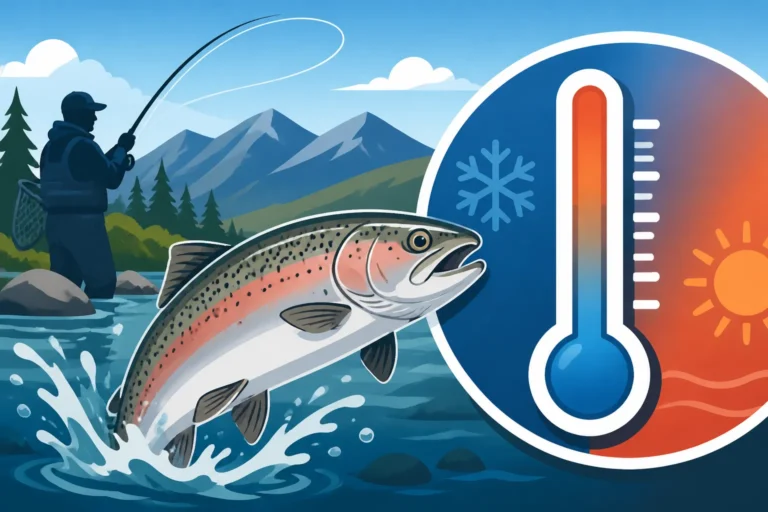
Spring runoff isn't just about water quantity and clarity; it also brings significant shifts in water temperature, which heavily influences fish metabolism and activity levels. The melting snowpack, which is near freezing, introduces a large volume of cold water into the system. This can initially cause river temperatures to drop considerably.
For species like trout and steelhead, which prefer cooler water, this might sound good. However, an abrupt drop to very cold temperatures can actually slow down their metabolism, making them less active and less likely to chase a bait. They might become lethargic, holding tight to the bottom or in deep pools. As the runoff progresses and air temperatures warm, the water can gradually warm up again, but this warming process can be uneven, creating pockets of warmer and colder water throughout the river system. For example, a river section flowing through a sunny, open valley might warm up faster than a shaded canyon section. These temperature variations can dictate where fish decide to hold. They will often seek out the most comfortable thermal zones, which could be slightly warmer seams or calmer backwaters where the sun has had a chance to penetrate and warm the water. On the other hand, the colder, oxygen-rich inflow from runoff can actually be a boon for certain fish, particularly later in the spring as summer approaches and other waters might be getting too warm. This fresh, cold influx keeps dissolved oxygen levels high, which is vital for fish health. Understanding these subtle temperature shifts, even a degree or two, can make a significant difference in locating active fish. This is why a good quality water thermometer is a smart addition to your Idaho Fishing Gear Guide by Season when heading out during spring runoff.
Impact on Fish Behavior and Location
The dramatic changes brought by spring runoff force fish to adjust their behavior and relocate within their aquatic environment. As anglers, our job is to understand these adjustments and pinpoint where the fish are likely to be hiding, feeding, or preparing to spawn. It's like a big game of hide-and-seek, but with currents and mud.
Fish Seeking Refuge and Slower Currents
When rivers swell and currents rage, fish instinctively seek out areas where they can expend less energy to hold their position. Fighting a relentless current is exhausting and unsustainable. This means they will move out of the main, fast-flowing channels and into pockets of calmer water.
Think about eddies, which are those swirling pockets of slower water found downstream of obstructions like large boulders, fallen trees, or bends in the river. Fish will tuck into these eddies, often right at the current seam where the fast water meets the slow. They can sit here, resting, while also keeping an eye on the conveyor belt of food being washed downstream by the main current. Another prime refuge is backwaters and side channels. As the river overflows its banks, it creates temporary calm areas. These can be goldmines, especially if they have some cover like submerged vegetation or brush. Fish will also utilize embankments and undercut banks where the current is significantly reduced, offering overhead protection and a place to avoid the brunt of the flow. Finally, the mouths of tributaries are often critical during runoff. If a smaller tributary is running clearer and slower than the main river, fish from the main stem will stack up in its calmer, often clearer waters, waiting for conditions to improve. This creates a natural funnel for fish, making these confluences highly productive spots. When you're fishing during runoff, always keep an eye out for any feature that breaks the main current flow – that's where the fish will be. They're not going to be out in the middle of the torrent, struggling against the power of nature.
Foraging Opportunities in Murky Waters
While the "chocolate milk" conditions might seem like a hindrance, for many fish, it actually presents unique foraging opportunities. Reduced visibility doesn't mean fish stop eating; it means they change how and what they eat.
In turbid water, fish often rely more on scent and vibration to locate food rather than sight alone. This is particularly true for bottom-feeding species or those that are less visually dependent, but even trout will adapt. The runoff also washes a massive amount of food into the river system. Worms, insects, larvae, and even small rodents get dislodged from the banks and swept into the current. This makes the river a veritable buffet, and fish know it. They'll position themselves strategically in those slower current seams or eddies, waiting for food to drift by. For the angler, this means choosing baits and lures that exploit these senses. Baits with strong natural scents, like worms, roe, or PowerBait, become incredibly effective. Lures with a strong vibration or flash, such as spinnerbaits, spoons, or crankbaits, can also attract attention in low-visibility water. The larger profile of these lures makes them easier to detect. Don't be afraid to use brighter, more contrasting colors like chartreuse, orange, or hot pink, as these can stand out better in murky conditions than natural hues. This is especially true for species like Steelhead, where certain bright colors are consistently effective. Fishing during runoff can often mean big fish if you can find them. The reduced pressure from other anglers (who might be deterred by the conditions) and the abundance of food can lead to some surprisingly productive days.
The Effect on Spawning Cycles
Spring runoff occurs concurrently with the spawning cycles of several important Idaho fish species, and this overlap can significantly influence fish behavior and fishing regulations. For many trout species, like Rainbow and Cutthroat Trout, spring is their spawning season.
The high, cold, and often muddy water from runoff can delay or disrupt spawning activities. Spawning fish require specific conditions, including relatively stable gravel beds and good water quality, for successful egg deposition and incubation. Heavy sedimentation can smother eggs, and extreme currents can wash them away. This is why you'll often find special regulations, such as catch-and-release only or closures, on certain rivers or river sections during spring. It's critical to be aware of and respect these regulations, as protecting spawning fish ensures future generations. For example, some parts of the Salmon River might have specific rules to protect migrating Chinook Salmon or Steelhead, which are often trying to reach spawning grounds during the spring months. Consult the latest Idaho Fishing Regulations Explained every year, as they can change. If you do encounter spawning fish (often seen in shallow, gravelly areas in pairs or groups, exhibiting agitated behavior), it's best to leave them undisturbed. These fish are focused on reproduction and are highly vulnerable.
Conversely, other species might benefit or be less impacted. Warmwater species like Smallmouth Bass often spawn later in the spring or early summer when water temperatures are warmer and runoff has subsided. Even for trout, some resilient individuals will find suitable pockets to spawn regardless of the conditions. Understanding these natural rhythms helps us make ethical and effective decisions as anglers.
Strategic Fishing Approaches During Runoff
Okay, so the rivers are high and muddy, and the fish are hunkered down. Now what? This is where your strategy needs to shift. You can't just throw the same old lure in the same old spot and expect results. Spring runoff demands adaptability, patience, and a willingness to try different tactics.
Targeting Tributaries and Tailwaters
When the main stem of a river is a raging, muddy torrent, smart anglers often turn their attention to tributaries and tailwaters. These areas can offer dramatically different conditions and provide excellent fishing opportunities.
Tributaries are often your best bet. Smaller streams and creeks typically have less snowpack in their headwaters, or their runoff cycle might simply be different. They can clear up faster or not get as muddy as the main river. Fish from the main river will often push into these clearer, calmer tributaries seeking refuge and food. Look for the confluence where the tributary meets the main river – the seam where the clear water meets the muddy water is a classic hotspot. Fish will stack up here, waiting for food to wash in from the main river while enjoying better visibility and reduced current. Even a small creek flowing into a major river can hold a surprising number of fish during runoff. Focus on fishing within the tributary itself, or just at its mouth, using techniques that allow your bait or lure to drift naturally into the holding lies.
Tailwaters, the sections of river immediately downstream from dams, are another fantastic option. Dams effectively regulate water flow and sediment. The water released from the bottom of a reservoir is often much clearer and more stable in temperature than natural river flow during runoff. This creates a consistent, fish-friendly environment below the dam, often with abundant insect life. Famous Idaho tailwaters like the Henry's Fork below Island Park Dam or the South Fork of the Snake River below Palisades Dam can remain fishable and productive during periods when other rivers are blown out. However, always be aware of generation schedules, as sudden increases in flow can still occur and be dangerous. You might find excellent trout fishing here, as the regulated flow provides a stable environment for aquatic insects, leading to consistent hatches and feeding opportunities. Remember to always consult the Idaho Fishing Season Dates and Limits for specific tailwaters, as special regulations often apply to these highly managed fisheries.
Embracing Lakes and Reservoirs
While rivers are undergoing their chaotic transformation, Idaho's lakes and reservoirs offer a completely different, and often more stable, fishing environment during spring runoff.
Unlike rivers, lakes and reservoirs don't experience the same dramatic increases in flow or turbidity throughout their entire body of water. While incoming feeder streams might bring in some muddy water, the vastness of the lake often allows this sediment to settle or disperse, leaving large areas of relatively clear water. This means fish aren't battling currents or struggling with zero visibility. They can continue their normal feeding patterns and are often more active. Early spring on reservoirs can be fantastic for species like crappie, perch, smallmouth bass, and even trout. Fish will often move into shallower areas that are warming up faster, seeking out food and preparing for spawning. Trolling for species like Kokanee or Rainbow Trout can be highly effective on large bodies of water like Lake Coeur d'Alene or Lake Pend Oreille. Even if feeder streams are muddy, the main body of the lake often remains very fishable.
Reservoirs also act as huge settling ponds. While they might get a bit turbid near the inflows from swollen rivers, the main lake body often remains quite clear. Target areas away from major river inflows, or focus on bays and coves that are protected from the direct impact of runoff. For those who enjoy Idaho Lake Trout Fishing Guide, spring can be an excellent time as these deep-dwelling fish become more active in the cooling waters. Using techniques like jigging or trolling with downriggers can put you on fish in these large water bodies. The consistency of lake fishing can be a welcome relief from the unpredictable nature of river fishing during peak runoff.
Adapting Gear and Techniques for High, Muddy Water
Fishing successfully in high, muddy water requires a deliberate shift in your gear and techniques. What works in clear, low water often won't cut it when conditions are challenging.
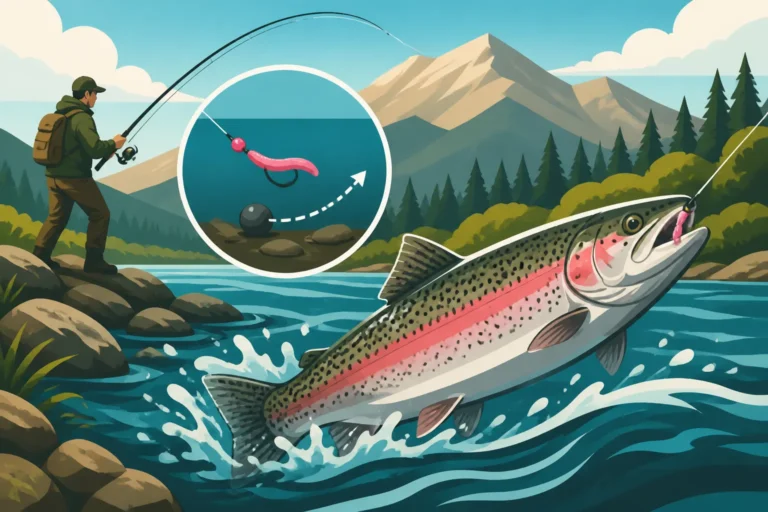
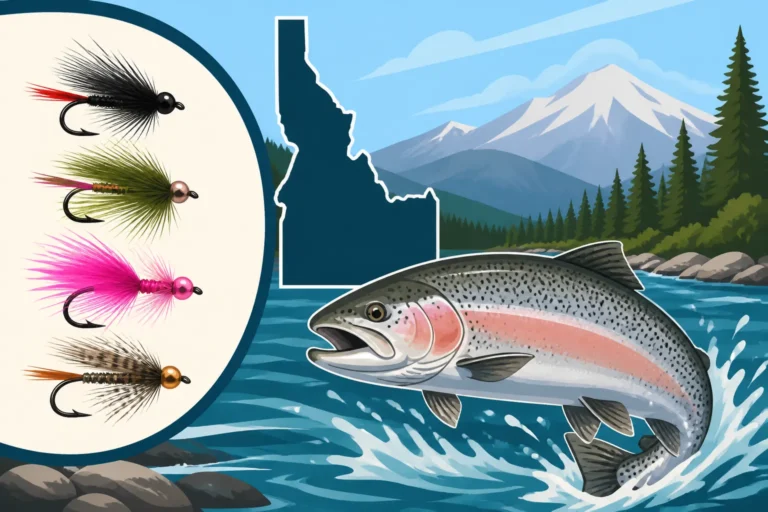
Firstly, go bigger and brighter with your lures and baits. In turbid water, fish have limited visibility, so you need something that grabs their attention through vibration, scent, or contrasting color. Larger lures create more disturbance in the water, sending out vibrations that fish can detect with their lateral lines. Bright colors like chartreuse, orange, hot pink, or even bright white stand out much better than subtle, natural hues. For example, instead of a small, natural-colored fly, you might switch to a large, brightly colored streamer. If you're spin fishing, consider larger spinnerbaits, spoons, or plugs. My fishing buddy always swears by a particular hot pink soft plastic worm he picked up on Amazon when the river is running like coffee. It's obnoxious in clear water, but irresistible in the murk.
Secondly, focus on scent. Baits with strong natural scents or those enhanced with scent attractants become incredibly effective. Live bait like worms, crayfish, or even roe can be deadly. If you're using artificials, consider adding scent gels or sprays. Brands like Pro-Cure offer a wide range of scents that can make a difference. Thirdly, fishing deeper and slower is often key. Fish in high water tend to hug the bottom to avoid the strong currents. You'll need enough weight to get your presentation down to where they are holding. Use heavier sinkers, split shot, or weighted flies. A slower presentation gives fish more time to locate your offering in the reduced visibility. Instead of fast retrieves, think slow drifts or methodical jigging. Consider using a bobber and jig setup, or even simply drift fishing with bait, allowing the current to carry your offering naturally into slower pockets. For Idaho Steelhead Fishing Guide, methods like drift fishing with bait or jigs, or back-trolling plugs, are often employed during higher flows.
Finally, consider stronger line. The debris in the water (sticks, leaves) can snag your line and abrade it, plus fighting strong currents puts extra strain on your tackle. A slightly heavier leader or mainline can prevent frustrating break-offs. A fluorocarbon leader is always a good choice for its abrasion resistance and low visibility, even in muddy water. For a detailed look at various options, check out Best Bait and Lures for Idaho Fishing.
| Technique / Gear Type | Recommended for Runoff Conditions | Why it Works |
|---|---|---|
| Lures | Large, bright spinners/spoons | High visibility, strong vibration |
| Wobbling plugs (e.g., Kwikfish) | Aggressive action, displaces water | |
| Bright colored jigs with scent | Scent and visual contrast, good for drift | |
| Baits | Live worms, nightcrawlers | Natural scent, wiggles, easy to find |
| Salmon/Steelhead roe (cured) | Strong scent, natural food source | |
| Scented soft plastics | Scent, vibrant colors | |
| Line | Heavier fluorocarbon leaders | Abrasion resistance, lower visibility than mono |
| Braided mainline (for casting) | No stretch, sensitive, strong | |
| Weights | Heavier sinkers (pencil, slinky) | Get bait to the bottom in strong current |
| Heavier jig heads | Essential for deep, slow presentations | |
| Fishing Method | Drift fishing | Natural presentation, covers water |
| Bottom bouncing (bait/jigs) | Gets right to where fish are holding | |
| Focus on current seams & eddies | Fish congregate in slower water |
Essential Gear and Safety Considerations
When fishing during Idaho's spring runoff, having the right gear isn't just about catching more fish; it's about staying comfortable and, more importantly, staying safe. The conditions can be unpredictable and dangerous, so a little preparation goes a long way.
Must-Have Tackle for Runoff Conditions
Beyond the basic rod and reel, there are a few specific tackle items that become truly essential when you're facing high, fast, and often muddy water.
First, enough weight, and then some. You need to be able to get your offering down to the fish, who are likely hugging the bottom to escape the current. This means having a variety of sinkers – heavier split shot, slinky weights, pencil weights, or bell sinkers. Don't be afraid to add more weight than you think you need initially. You can always take it off, but you can't put on what you don't have. For example, if you're drift fishing for Idaho Rainbow Trout Fishing Guide on a swollen river, you might need double the weight you'd use in summer. Second, stronger, brighter lines and leaders. The debris in the water can abrade lines, and the force of the current puts extra strain on your tackle. Consider using a slightly heavier test fluorocarbon leader for abrasion resistance, and don't shy away from high-visibility mainlines (like bright yellow or orange braid) for easier bite detection and tracking your line in murky water. Third, larger, louder, and brighter lures or baits. As discussed, visibility is nil. Lures with strong vibrations, large profiles, or bright, contrasting colors will get noticed. Think big, bright spinnerbaits, jointed plugs that wobble aggressively, or jigs dressed in chartreuse or hot pink. For bait fishing, worms, cured roe, or PowerBait with extra scent attractants are prime choices. Stock up on these before you head out, especially if you plan to do any serious river fishing during this period. You can find many effective options for these conditions on Amazon, ensuring you're prepared.
Finally, a good pair of pliers or forceps and a net with a rubber mesh. You're likely to catch fish that are fighting hard in heavy current, and a quick, safe release is paramount. The rubber mesh protects the fish's slime coat, and strong pliers will help you remove hooks efficiently, especially if you're using larger, trebled lures. Having a variety of tackle, ready to adapt to the specific conditions of the day, is crucial. What worked yesterday might not work today, and what works on one river might not work on another. Being prepared with a diverse selection of runoff-appropriate gear means you're always ready to adjust.
Prioritizing Safety on Swollen Waters
This cannot be stressed enough: safety is paramount when fishing during spring runoff. The power of high, fast-moving water is immense and can be incredibly dangerous, even for experienced outdoors enthusiasts.
First and foremost, never underestimate the current. What looks like a calm edge can have a powerful undercurrent. Even seemingly shallow areas can become deadly if the current is strong enough to sweep your feet out from under you. Always wear a wading belt if you're in waders; it can prevent your waders from filling with water should you fall, potentially saving your life. Beyond that, a personal flotation device (PFD) is non-negotiable if you are wading in a river with any significant current, or if you are fishing from a boat. Even the most confident swimmer can be overwhelmed by cold, swift water. Modern PFDs are comfortable and don't hinder casting.
Secondly, wading staffs are your best friend. A sturdy wading staff provides a crucial third point of contact with the bottom, helping you maintain balance and test water depth and current strength before taking a step. Always move slowly and deliberately, facing upstream or up-current, shuffling your feet rather than lifting them. Avoid wading alone if possible, and always let someone know where you are going and when you expect to return. If you're fishing from a boat, be acutely aware of submerged debris like logs and branches that the high water is carrying. These can damage your prop, hull, or even capsize your boat. Scan the water constantly and wear your PFD. Finally, hypothermia is a real risk. The water is often meltwater cold, and even a brief immersion can lead to a rapid drop in body temperature. Dress in layers, wear good quality waterproof outer layers, and consider bringing extra dry clothes in a dry bag, even for a day trip. The beauty of Idaho's spring can be deceiving, and respecting the raw power of runoff is the first step to a safe and enjoyable fishing experience.
Post-Runoff Fishing: The Golden Window
While runoff can be challenging, it eventually subsides, ushering in what many experienced anglers consider one of the best fishing periods of the entire year. The post-runoff window is often characterized by incredible productivity and active fish.
The Clearing Waters and Renewed Opportunities
As the last of the significant snowpack melts and streamflows begin to drop, the rivers gradually start to clear. This transition from muddy torrents to clearer, but still healthy, flows marks the beginning of the "golden window" for Idaho anglers.
When the water clarity improves, fish can once again rely on their sight to hunt, and they often do so with gusto. After weeks of limited visibility, they're eager to chase down prey. The reduced flows also mean that fish can spread out more from their tight holding lies, but they often remain in robust numbers, having benefited from the plentiful food washed downstream during runoff. This means you'll find them in more familiar riffles, runs, and pools. The river, while still higher and stronger than summer levels, becomes much more accessible for wading and drift boat fishing. This is often the time when hatches become more prolific and consistent, offering fantastic opportunities for fly anglers. Think about the Clearwater River after a strong steelhead run, when the water has dropped and cleared sufficiently. While steelhead might be thinning out, resident trout will be incredibly active, feeding on the bounty that runoff provided.
The key here is timing. Don't wait until the water is crystal clear and summer levels. The period just as the water clears, when it still has a slight "stain" or green tint, can be exceptionally productive. This slight turbidity still offers fish a sense of security, allowing them to feed aggressively without being overly spooky. This post-runoff period also means access to many remote high-mountain lakes and streams starts to open up as snow clears from roads and trails, providing even more options for the adventurous angler.
Hatch Cycles and Insect Activity
The post-runoff period is often synonymous with incredibly vibrant insect hatches, which in turn drive intense feeding frenzies among trout and other fish species. The stable water conditions that follow runoff allow insect life to thrive, leading to some of the most exciting fishing of the year.
As water temperatures stabilize and clear, aquatic insect larvae and nymphs become active. Large hatches of stoneflies, caddisflies, and mayflies are common during late spring and early summer in Idaho's rivers. Think about the famous Green Drake hatches on some of Idaho's renowned rivers, like parts of the South Fork of the Snake or the Henry's Fork. When these insects emerge, fish become highly opportunistic, often rising eagerly to consume them off the surface. For fly anglers, this is pure heaven. Matching the hatch with appropriate dry flies can lead to truly memorable days on the water. Even spin and bait anglers can capitalize on these hatches by using lures that imitate the emerging insects or by fishing with bait where fish are actively feeding. Understanding the Idaho Fishing Techniques Guide specifically for matching hatches can elevate your success significantly.
Beyond the aquatic insects, the receding floodwaters leave behind damp soil, encouraging terrestrial insects like grasshoppers, ants, and beetles to become more active. Many of these terrestrials inevitably end up in the water, providing another readily available food source for hungry fish. This makes patterns like hopper-dropper rigs highly effective. The abundance of food, combined with the comfortable water temperatures and improved visibility, makes fish incredibly active and willing to bite. It's a time of plenty for fish and anglers alike, a well-deserved reward after navigating the challenges of spring runoff. So, instead of dreading runoff, view it as a necessary cleansing that sets the stage for fantastic fishing in the weeks that follow.
Disclaimer
Please remember that fishing conditions in Idaho can change rapidly, especially during spring runoff. Always consult the latest Idaho Fish and Game regulations and local river conditions before heading out. Safety should always be your top priority. This guide provides general information and recommendations, but personal judgment and caution are always required on the water.