Best Technique for Catching Steelhead from the Bank
One of the biggest frustrations for many anglers hoping to connect with Idaho steelhead is feeling like they're at a disadvantage without a boat. Watching those jet boats and drift boats effortlessly work prime runs can make bank fishing feel like a fool's errand. But I'm here to tell you that with the right approach and a solid understanding of steelhead behavior, you can absolutely be successful from the bank. This guide will walk you through the most effective techniques to land those magnificent fish right from shore.
Understanding Idaho Steelhead Behavior from the Bank
Before you even make your first cast, it's crucial to understand a bit about how steelhead behave, especially when you're limited to the bank. These aren't just any trout; they're anadromous rainbow trout, meaning they spend part of their lives in the ocean before returning to freshwater rivers to spawn. This journey makes them incredibly powerful and often very particular. Knowing where they like to hold and why is your first step to success.
How Steelhead Hold in River Currents
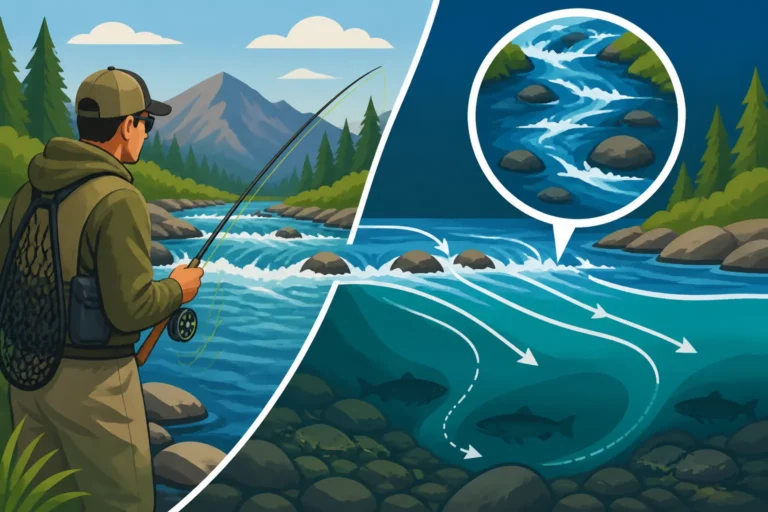
Steelhead are constantly looking for a balance between resting and having access to current that delivers food (even if they're not actively feeding, they hold in areas where food would be if they were hungry). From the bank, this means focusing on specific types of water. They love holding in "travel lanes" – channels and seams in the current where they can move upstream with less effort. Think about the softer water behind large rocks, submerged logs, or ledges that break the main current. These are often called "holding lies." They'll also stack up in deeper pools, especially at the tail-out (the slower, shallower end of a pool) or the head (the faster, entering water).
During their migration, steelhead aren't typically feeding aggressively like resident trout might be. Instead, they're often reacting out of instinct or annoyance. Your presentation needs to be perfect, drifting naturally into their strike zone without alarming them. This is why understanding current seams, eddies, and how the water flows over different structures is so vital. If you can identify these subtle changes in the river's texture and speed from the bank, you're halfway there to figuring out where the fish might be.
Key Bank Access Points and Water Features
Idaho's steelhead rivers like the Clearwater, Salmon, and Snake offer a variety of bank access points, from designated pull-offs with easy walks to more rugged, hike-in spots. When you're scouting, look for stretches of river that have a good mix of water types within casting distance from shore. Prime features include deep pools, current seams where fast and slow water meet, gravel bars, and areas with submerged structure like boulders or fallen trees. The deeper water along cut banks, where the river has carved out a steep bank, can also be fantastic as fish often hold right against the bank in these spots.
Access is everything when you're on foot. Sometimes, just a short walk up or downriver from a main parking area can put you on undisturbed water. Be mindful of private property signs and always respect land access. Public lands along these rivers, often managed by the Bureau of Land Management (BLM) or Forest Service, provide excellent opportunities. Even subtle changes in river depth or current speed that might not look like much can be game-changers, offering a brief resting spot for a steelhead on its journey upstream. Pay attention to areas where the river necks down or widens, as these transitions often concentrate fish.
Essential Gear for Bank Steelhead Anglers
Having the right equipment doesn't guarantee a fish, but it certainly puts the odds in your favor. Bank fishing for steelhead requires gear that can handle powerful fish, deliver a precise cast, and withstand the often rugged conditions of Idaho's riverbanks. Don't skimp on quality here; these fish will test your tackle.
Rod, Reel, and Line Selection
For bank steelhead fishing, a longer rod is usually your best friend. Rods in the 9 to 11-foot range, with a medium-heavy action, are ideal. The extra length helps with casting longer distances, mending your line to control your drift, and keeping your line out of the water to prevent drag. It also provides better leverage when fighting a strong fish, especially when you can't follow it downstream. A good quality graphite rod will offer the sensitivity you need to detect subtle takes and the backbone to turn a powerful steelhead. You can often find a great selection of these specialized rods on platforms like Amazon.
Pair your rod with a reliable spinning reel or a baitcasting reel, depending on your preference. For spinning gear, a 3000-4000 series reel with a smooth drag system is perfect. For baitcasters, a low-profile reel designed for heavy line and big fish will do the trick. Your main line should be a strong monofilament or fluorocarbon in the 12-20 pound test range, or braided line with a fluorocarbon leader. Braided line offers incredible sensitivity and casting distance, but always add a monofilament or fluorocarbon leader (8-15 lb test) because it's less visible to fish and offers better abrasion resistance against rocks and logs. Make sure your reel is spooled with fresh line at the start of each season. For leader material, I'm a big fan of high-quality fluorocarbon from brands you can easily pick up at any local fly shop or even order through Amazon, it just sinks better and is nearly invisible underwater.
Terminal Tackle and Bait/Lure Choices
Your terminal tackle is where the magic happens – or doesn't. You need to be able to present your offering naturally while still having the strength to hold a fighting steelhead. Here's a breakdown of common items:
- Hooks: Sharp, strong, single-point hooks are key. Sizes generally range from 1/0 to 4/0, depending on your bait. Barbless hooks are often required in special regulation waters, and they're always a good idea for the health of the fish.
- Weights: For float fishing, you'll use split shot or pencil lead to get your bait down. For bottom bouncing or drift fishing, slinky weights or similar inline weights are fantastic as they snag less. The amount of weight will depend entirely on the current speed and depth.
- Swivels: High-quality barrel swivels or three-way swivels are essential for preventing line twist and connecting different parts of your rig (e.g., main line to leader).
- Floats/Bobbers: For float fishing, a good slip bobber is crucial. These allow your line to slide through the bobber, letting you fish deep water while still being able to cast effectively. Choose floats that are sensitive enough to detect subtle bites but buoyant enough to carry your weight and bait.
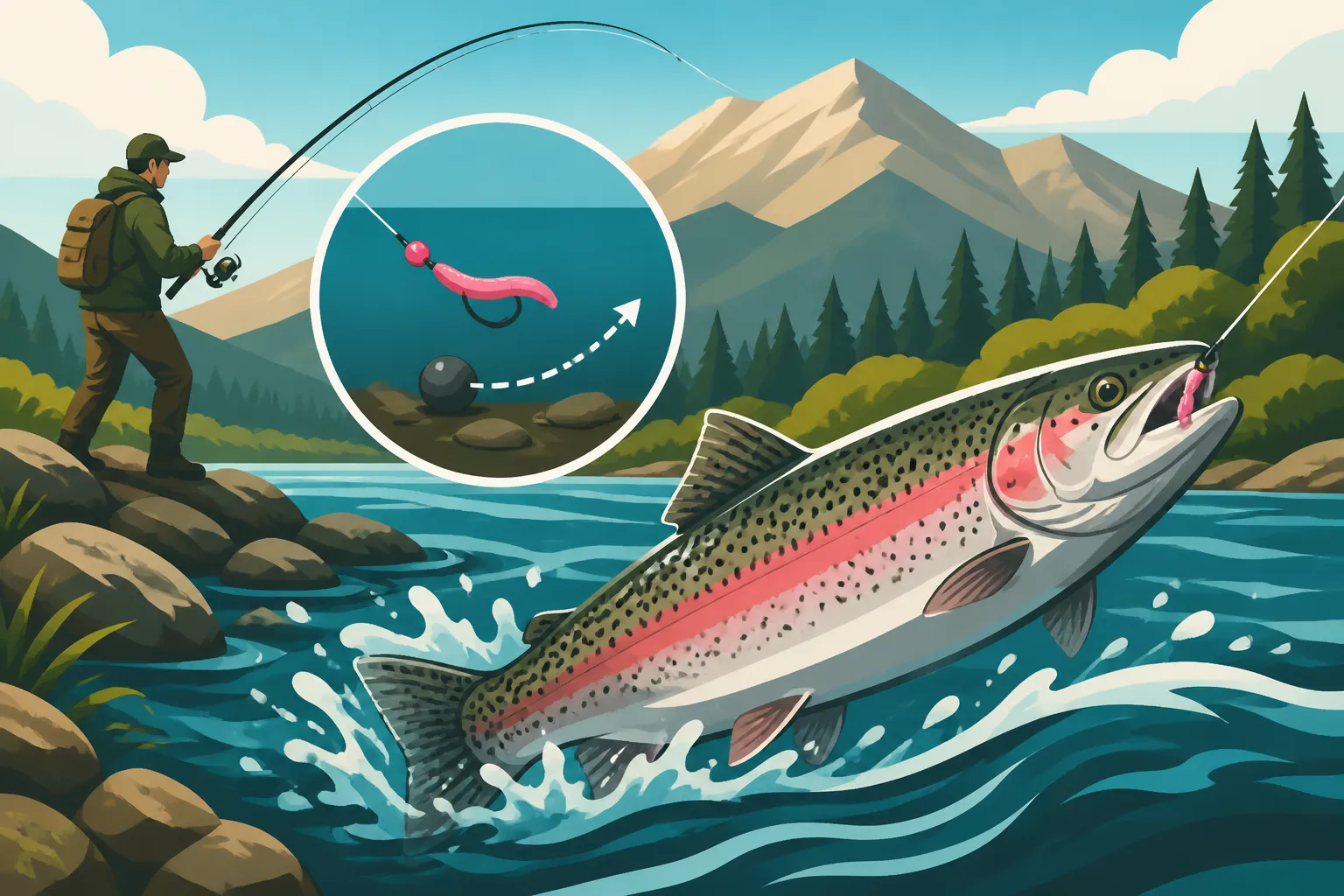
- Bait: Roe (cured salmon or steelhead eggs) is a classic and incredibly effective steelhead bait. Worms, especially nightcrawlers, can also work. Soft plastics resembling eggs (like a "pink worm" or "drift bobber") are also popular and can be purchased in various sizes and colors.
- Lures: Spoons, spinners, and small plugs are all excellent choices. Spoons like the Little Cleo or a Kitimat are fantastic for casting and retrieving, mimicking wounded baitfish. Spinners such as the Blue Fox Vibrax or Mepps Aglia are also productive. Small, brightly colored plugs (often called "Hot Shots" or "Wiggle Warts") can be incredibly effective when swung through holding water. You can explore a wide variety of these lures at your local tackle shop or online retailers.
For information on Idaho Fishing Season Dates and Limits and specific Idaho Steelhead Bag Limits, always check the most current regulations before you head out.
Top Bank Fishing Techniques for Idaho Steelhead
Now that you have your gear sorted, let's dive into the most effective ways to present your offerings to steelhead from the riverbank. These techniques are tried and true, built on decades of angler experience on Idaho's most productive waters.
Float Fishing with a Bobber and Jig
Float fishing, often referred to as "bobber dogging" or "drift fishing with a float," is arguably one of the most effective and popular bank techniques for steelhead in Idaho. The beauty of this method is its ability to present your bait or jig naturally at a consistent depth through a drift, mimicking how a free-floating item would travel down the river.
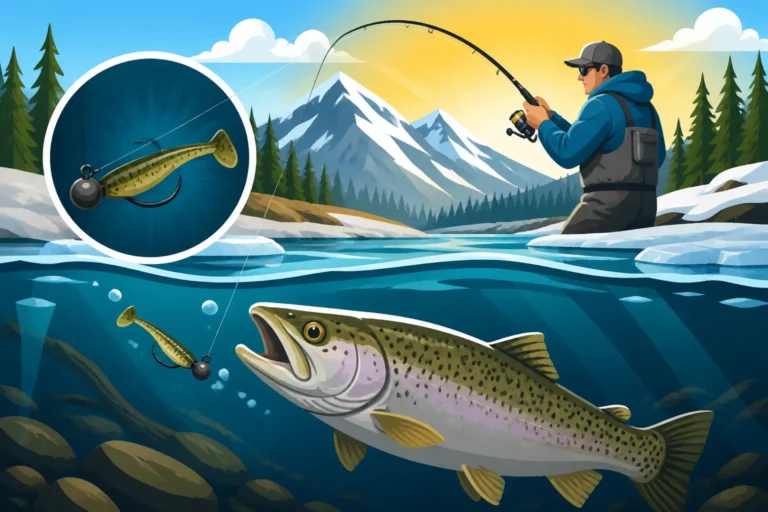
Here’s how it works: You set up a slip bobber rig. This involves threading your main line through a small, adjustable bobber stop, then a bead, then your slip bobber, and finally tying on a barrel swivel. To the other end of the swivel, you attach a leader (typically 18-36 inches long, often fluorocarbon) and then your jig, bait hook with roe, or a plastic worm. You add just enough split shot or pencil lead above the swivel to make the float ride correctly in the water, only showing a small portion of its bright tip. The bobber stop allows you to adjust the fishing depth easily, setting it deeper or shallower depending on the water you're fishing.
Once rigged, you cast upstream and slightly across the current, letting your float and offering drift downstream at the same speed as the natural current. This is crucial: the float should drift freely, without any drag from your line pulling it faster or slower than the water. As it drifts, your jig or bait bounces along the bottom, or just above it, right in the strike zone of any waiting steelhead. When the bobber dips or stops, it's game on! This technique is especially potent in clear water or when fish are holding in distinct current seams. For detailed guidance on your Best Rod Setup for Idaho Steelhead Fishing, check out our dedicated guide.
Side-Drifting and Back-Trolling (Adapted for Bank)
While traditionally boat techniques, bank anglers can effectively adapt the principles of side-drifting and back-trolling to present bait in a similar fashion. The core idea is to let the current work for you, presenting your offering naturally downstream, often with a slight "check" or slowed drift.
For side-drifting from the bank, you're essentially looking to achieve a long, controlled bottom bounce with your bait. This usually involves a lighter main line, a heavier leader (perhaps 10-20 lb test), and a small slinky weight or pencil lead tied to a short dropper line (6-12 inches) off a three-way swivel, with your bait (roe, plastic worm, or a small jig) on a longer leader (18-36 inches) trailing behind the weight. You cast upstream and across, letting the weight bounce along the bottom. The key is to keep just enough tension to feel the weight tapping the bottom, allowing your bait to tumble naturally. You can subtly "mend" your line (throwing a small loop upstream) to slow the drift of your line and allow your bait to stay in the target zone longer.
Back-trolling from the bank is more about presenting a stationary plug or lure in a holding lie and letting the current make it "work." You'd cast a diving plug (like a Hot Shot or Kwikfish) into the desired run, and instead of retrieving it, you hold your rod tip steady, letting the current push the plug's lip and make it dive and wobble in place. You might slowly walk downstream with the current, or simply cast to a productive slot and let the plug bounce and dive. The trick is to find the right amount of current and depth for your particular plug to work its magic. This technique is fantastic for covering specific pools or deep runs where steelhead are known to stack up.
Casting and Retrieving Lures and Spoons
Sometimes, the simplest approach is the most effective. Casting and retrieving lures such as spoons, spinners, and small plugs can be incredibly productive, especially when steelhead are aggressive or when you need to cover a lot of water quickly from the bank.
Spoons are heavy, metallic lures that wobble enticingly when retrieved. The classic Little Cleo or a Kitimat spoon, often in bright colors like orange, red, or brass, can mimic a wounded baitfish perfectly. You cast them out, let them sink to the desired depth, and then reel them in with a steady retrieve, perhaps adding a few jerks or pauses to entice a strike. They're great for fishing across current seams, into deep pools, or even through riffles. Their weight also makes them excellent for long casts from shore.
Spinners, like the Blue Fox Vibrax or Mepps Aglia, rely on a rotating blade to create flash and vibration. These are fantastic for probing shallower runs, the heads of pools, or current edges. Cast them upstream and slightly across, letting them swing down and across the current as you retrieve. The blade should be spinning continuously; if it's not, you're retrieving too slowly or your spinner is fouled. Bright colors are often preferred in clear water, while darker or more natural tones can work well in stained conditions.
Small diving plugs are another excellent choice for casting and retrieving. While they excel in the adapted back-trolling technique, a slow, steady retrieve with a plug can also trigger bites. These lures are designed to dive to a specific depth and wobble wildly, making them irresistible to curious or aggressive steelhead. Experiment with different retrieve speeds and pauses to find what the fish are reacting to on any given day. Remember, the goal is often to annoy a steelhead into striking, rather than triggering a feeding response.
These techniques are best applied after you've spent some time observing the water and understanding where fish might be holding. Learning How to Set the Hook on a Steelhead is critical once you get a strike, as these powerful fish can be masters of escape!
Reading the Water and Maximizing Your Chances
Successfully catching steelhead from the bank isn't just about the technique; it's about being a savvy angler. This means keenly observing the river, understanding subtle cues, and applying your knowledge to put your presentation exactly where it needs to be.
Identifying Productive Lies from Shore
From the bank, your ability to "read the water" is your superpower. Steelhead, being migratory, are constantly looking for spots to rest and conserve energy while still being in a position to move when they feel like it. These spots are called "lies." Look for:
- Current Seams: These are lines where fast water meets slower water. Steelhead will often sit just on the edge of the faster current, letting food drift by without expending too much energy. Imagine the "V" shape where two currents merge; the fish are often right in that seam.
- Tail-outs of Pools: The downstream, shallower end of a deep pool is a classic steelhead holding area. Fish often stage here before moving into shallower water or into the next run. This is a prime spot for float fishing.
- Heads of Pools/Runs: The faster water entering a pool or a long run can also hold fish, especially if there are boulders or depressions offering a break from the current. Plugs and heavier spoons can work well here.
- Behind Obstructions: Any large rock, log, or even a subtle underwater hump that breaks the main current can create an eddy or a "cushion" of slower water where a steelhead will rest. Casting upstream of these obstructions and letting your offering drift into the calmer water is a solid strategy.
- Cut Banks: Where the river has eroded a steep bank, creating an overhang or a deeper channel right along the shore. Steelhead will often sit in the deeper, darker water right against these banks, especially during brighter parts of the day.
Your eyes are your most important tool. Spend time watching the water, noticing how currents swirl, where eddies form, and where the river bottom changes (if visible). Even when the fish aren't biting, you're learning. Keep in mind that for a resident, this is their home, but for a steelhead, it's a stop along their incredible journey. They're not necessarily trying to feed, but rather to conserve energy and stay hidden. To understand the different strategies for various conditions, consider exploring Fall Steelhead Fishing Techniques on the Clearwater and Salmon Rivers.
| Technique | Pros | Cons | Ideal Conditions / Locations |
|---|---|---|---|
| Float Fishing (Bobber & Jig) | Natural drift, covers specific depth, good bite detection | Can be limited by casting distance, requires specific water depth/speed | Medium-speed runs, heads/tails of pools, seams, moderate depth |
| Side-Drifting (Bank Adapted) | Natural bottom presentation, covers wider area, versatile for bait | Can snag easily, requires good feel for bottom, wind can hinder drift | Deep runs, gravel bars, areas with consistent bottom, moderate current |
| Casting & Retrieving (Lures) | Covers lots of water, triggers aggressive strikes, simple to learn | Less natural presentation, might spook wary fish, prone to snags | Faster runs, open water, active fish, searching for fish across a broad area |
Stealth and Presentation Tips
Steelhead can be incredibly spooky, especially in clear water or pressured areas. Your approach from the bank can make or break your day.
- Walk softly: Heavy footsteps on the bank can send vibrations through the ground and into the water, alarming fish. Approach the river's edge carefully and quietly.
- Stay low: If possible, try to stay out of the direct skyline of the fish. Wear drab, natural colors that blend with the surroundings rather than bright, contrasting clothes.
- Make your first cast count: Often, the fish are less wary on the first few casts into a fresh run. Try to put your offering exactly where you think the fish will be.
- Natural drift: This is paramount for most steelhead techniques, especially float fishing and side-drifting. Your bait or lure needs to move at the same speed as the current, without your line pulling it unnaturally. Practice mending your line to achieve this perfect, drag-free drift. Any unnatural movement can cause a steelhead to ignore your offering entirely.
- Leader length and material: In clear water, a longer, lighter fluorocarbon leader will be less visible and can make a huge difference. Don't be afraid to experiment with leader lengths from 2 to 5 feet, especially when fish are finicky.
- Fish thoroughly: Don't just cast to the middle of the river. Work every inch of a promising run, from right at the bank (especially cut banks) to as far out as you can cast, and every depth in between. Change your weight, leader length, or jig size to explore the entire water column.
Remember, patience is a virtue in steelhead fishing. You might make dozens, even hundreds, of casts before getting a bite. But when that bobber plunges or you feel that distinctive thump, all the effort becomes worthwhile. If you're wondering about specific costs, you might find our guide on the Total Cost to Fish for Steelhead in Idaho as a Resident helpful. And always remember to consult the Idaho Fishing Regulations Explained before heading out to ensure you're compliant with all local rules.
Disclaimer
This article is for general informational purposes only and does not constitute professional advice. Laws, prices and regulations vary by location and change over time. Consult a qualified professional for guidance on your specific situation.