Fishing Lake Coeur d’Alene for Kokanee and Chinook
Oh, Lake Coeur d'Alene! It's one of those places that calls to you, isn't it? But for many anglers, especially if you're new to its vast, deep waters, trying to figure out how to consistently catch its prized Kokanee and Chinook salmon can feel like finding a needle in a haystack. You've heard the stories of monster Chinook and abundant Kokanee, but translating that into your own successful fishing trip often comes with a frustrating learning curve. This guide is here to unravel those mysteries, helping you understand the unique challenges and rewarding techniques for targeting these two incredible species on Lake Coeur d'Alene.
Understanding the Jewel of North Idaho for Salmon Fishing
Lake Coeur d'Alene isn't just a pretty face; it's a massive, complex fishery, stretching nearly 25 miles long with a surface area of over 26,000 acres. Its depths plunge to over 200 feet in some areas, offering diverse habitats for various fish species, but none are more celebrated among anglers than the Kokanee and Chinook salmon. For those looking to plan a trip, understanding the lake's geography and how fish utilize its features is key. It's not like fishing a small pond; this is a serious body of water that demands respect and a strategic approach. If you're wondering about other prime locations in the area, our guide to the Best Fishing Spots in North Idaho might offer some more inspiration.
The Dynamics of Lake Coeur d'Alene's Ecosystem
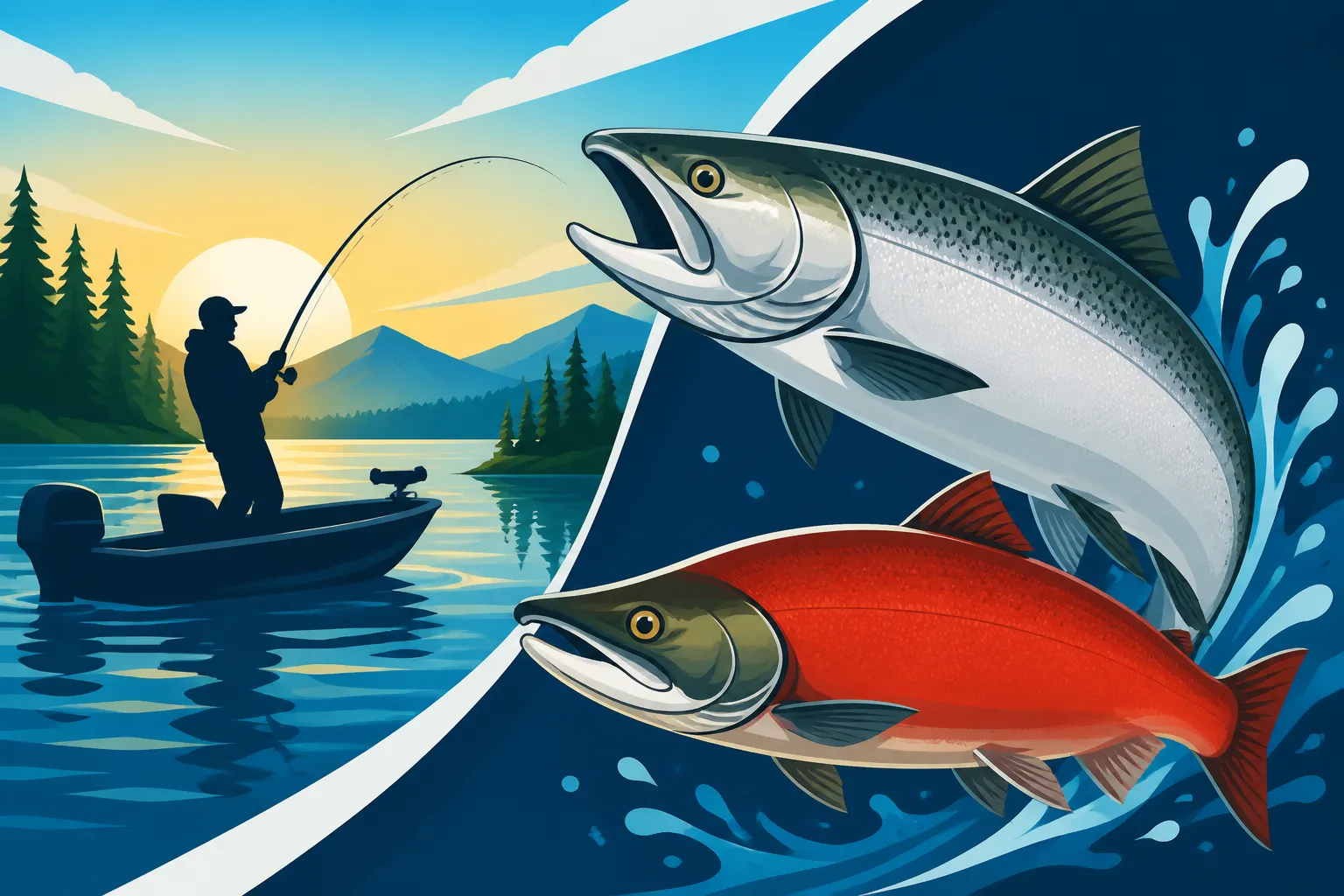
This lake, fed primarily by the Coeur d'Alene River and the St. Joe River, is a vibrant ecosystem. It's home to a variety of fish, but the salmon species are truly special. The interaction between the Kokanee (landlocked sockeye salmon) and the much larger Chinook salmon is particularly fascinating and crucial for anglers to grasp. Chinook were introduced decades ago to control the booming Kokanee population, and they’ve created a thrilling, if sometimes challenging, predator-prey dynamic. This delicate balance means that where you find Kokanee, Chinook are often not far behind, always looking for their next meal.
The lake's water levels can fluctuate throughout the year, especially with seasonal drawdowns and releases from the Post Falls Dam. These changes can impact fish behavior, pushing them to different depths or concentrations. Understanding these subtle shifts, often reported by local guides or through fishing forums, can give you a significant advantage. The clarity of the water also plays a role; while generally clear, some sections can be influenced by river inputs after heavy rains or snowmelt.
Primary Fishing Zones and Hotspots
Lake Coeur d'Alene boasts several key areas known for productive salmon fishing. The southern end, particularly around Rockford Bay, Cottonwood Bay, and the general vicinity of the St. Joe River mouth, often holds good numbers of Kokanee and, consequently, Chinook. The central part of the lake, including the main basin and areas near Arrow Point and Harrison, can also be incredibly productive, especially for deeper-holding fish. Further north, towards the city of Coeur d'Alene, fishing can be excellent, particularly in the Spokane River arm as fish move towards spawning grounds in the fall.
It's not just about broad areas; specific features like submerged points, humps, and ledges where baitfish congregate are critical. Often, these spots are revealed by a good fish finder. Many local anglers also keep an eye on water temperature breaks, which can concentrate both bait and predators. For those new to the area, checking out Top Boat Ramps on Lake Coeur d'Alene is a great first step to understanding access points. Knowing your way around these hot zones can save you a lot of time searching.
Targeting Kokanee Salmon on Lake Coeur d'Alene
Kokanee salmon are often the bread and butter of Lake Coeur d'Alene fishing. These landlocked sockeye are delicious, feisty, and, once you crack the code, can be caught in good numbers. Their schooling behavior and preference for specific depths make them a classic trolling target. Many anglers focus on Kokanee because they offer consistent action, and the experience of catching a limit of these vibrant, silvery fish is incredibly satisfying.
Essential Gear and Setup for Kokanee
To consistently catch Kokanee, you'll need the right tools. The backbone of most Kokanee setups is a downrigger, which allows you to present your lure at precise depths. A good quality fish finder is non-negotiable for locating schools and understanding their depth. Rods should be light to medium-light action with a sensitive tip, ideally 7-8 feet long, paired with a reliable spinning reel spooled with 8-10 pound monofilament or fluorocarbon.
When it comes to terminal tackle, Kokanee are often enticed by small dodgers or flashers, followed by a short leader (6-18 inches) to a small, bright lure or bait. Popular choices include small hoochies, wedding rings, or Mack's Lures, often tipped with a piece of shoepeg corn soaked in a scent attractant. The key is subtlety and scent; Kokanee have an excellent sense of smell. If you're curious about specific options, our article on Best Lures for Idaho Kokanee Fishing delves deeper into proven attractants.
Proven Techniques for Success
Trolling is king for Kokanee. The goal is to move slowly, typically between 1.0 and 1.8 miles per hour, allowing your dodger and lure to impart an irresistible action. Varying your speed slightly can often trigger strikes. Once you locate a school using your fish finder, it's crucial to adjust your downrigger depths to match where the fish are holding. Kokanee often school at very specific depths, sometimes within a 5-10 foot band. Our guide on How to Troll for Kokanee on Lake Coeur d'Alene provides a comprehensive breakdown of effective strategies.
Another critical technique is to pay close attention to the details. Keep your hooks sharp, refresh your corn bait regularly, and don't be afraid to experiment with different dodger colors, lure patterns, and scents. Sometimes a minor change, like switching from a pink dodger to a green one, can make all the difference. When a fish hits, keep steady pressure; Kokanee have soft mouths, so a smooth retrieve is important to avoid pulling the hook. If you see fish on your sonar but aren't getting bites, check out How to Find Kokanee on a Fish Finder for tips on interpreting those signals.
Seasonal Patterns and Prime Times
Kokanee fishing on Lake Coeur d'Alene follows predictable seasonal patterns. In early spring, after ice-out, Kokanee can be found shallower, often in the top 20-40 feet of water, as they chase zooplankton. As the water warms in late spring and early summer, they move deeper, often concentrating in the thermocline, which might be anywhere from 40 to 80 feet, or even deeper, depending on the year. Summer sees them settle into these deeper, cooler waters, often requiring downriggers to reach them effectively. Our guide on What Depth Kokanee Hold at in Summer on Idaho Lakes offers precise details for those warmer months.
Fall is another excellent time, especially as they begin their pre-spawn aggregations. While they become more difficult to catch as they approach spawning, the period leading up to it can offer fantastic action. Early mornings and late evenings are generally the most productive times, regardless of the season, as low light conditions often encourage fish to feed more actively. Keep an eye on local fishing reports, as conditions can change from week to week.
Hunting Chinook Salmon on Lake Coeur d'Alene
The Chinook salmon, or "King" salmon, are the apex predators of Lake Coeur d'Alene, offering a thrilling challenge for anglers seeking a trophy. These powerful fish can grow to impressive sizes, with the lake producing Chinook well over 20 pounds regularly. Catching one is an experience that stays with you, a testament to its raw power and the angler's skill. Many consider a Coeur d'Alene Chinook the ultimate prize.
Preferred Lures and Baits for Kings
Unlike Kokanee, which prefer smaller, subtler offerings, Chinook are drawn to larger, more aggressive presentations. Plugs like Mag Lips, Kwikfish, or Flatfish in sizes 4.5 to 6.0 are excellent choices. Trolling spoons, such as those from Gibbs Delta or Silver Horde, in larger sizes (3.0-5.0 inches) are also highly effective, especially in metallic finishes or bright colors like green, blue, or chartreuse. Herring or anchovy, either brined or in a cut-plug rig, is also a perennial favorite, often paired with a flasher for added attraction. Some anglers even use large Kokanee patterns, understanding the predator-prey relationship.
The key with Chinook is often to mimic a fleeing or injured baitfish. Experiment with different colors and actions until you find what the fish prefer on any given day. Fresh bait is paramount if you're using it; don't skimp on quality or preparation. For those planning on participating in local events, understanding the Minimum Size to Weigh In a Chinook at the Coeur d'Alene Derby can inform your lure choices.
Effective Trolling Strategies for Chinook
Trolling for Chinook typically involves higher speeds than for Kokanee, often between 2.0 and 3.5 miles per hour, though this can vary. Again, downriggers are essential for precise depth control. Chinook are often found near large schools of Kokanee, so if you're marking Kokanee, don't be afraid to deploy larger Chinook offerings nearby. They'll also patrol structure like drop-offs, underwater islands, and steep ledges.
Many anglers employ a technique called "stacking" on their downriggers, where two lines are run off a single downrigger ball at different depths, allowing them to cover more of the water column. You'll also want to watch your sonar not just for fish, but for bait balls. Where there's a dense concentration of bait, there's a good chance a hungry Chinook is lurking. Our broader guide on How to Fish for Chinook Salmon in Idaho provides excellent foundational knowledge for this species. When a Chinook hits, it's often a violent strike, followed by a powerful, sustained run. Be ready!
Where and When to Find Trophy Chinook
Chinook salmon on Lake Coeur d'Alene can be found throughout the lake, but certain areas tend to produce larger fish or higher concentrations. The main lake basin, particularly the deeper sections, holds big Kings. Areas around the mouth of the Coeur d'Alene River, as well as the southern bays like Cougar Bay and Rockford Bay, can be productive. As with Kokanee, early mornings and late evenings are often prime feeding times.
The best time of year for trophy Chinook typically spans from late spring through early fall. May and June can be excellent as the fish become more active after winter. Summer months often see them settle into deeper, cooler water. Fall, especially September and October, can be fantastic as the fish begin their pre-spawn movements and become very aggressive feeders, trying to pack on weight before their reproductive journey. Always consult the most current Idaho Fish and Game regulations for specific seasons and limits, which our resource on Idaho Fishing Regulations Explained can help clarify.
Regulations, Licenses, and Best Practices
Fishing on Lake Coeur d'Alene, like anywhere in Idaho, requires adherence to specific rules designed to protect fish populations and ensure sustainable angling for generations to come. It’s not just about catching fish; it’s about being a responsible steward of the resource. Don't let the thought of regulations intimidate you; they're straightforward once you know where to look. Many anglers find the help of a local guide invaluable for navigating these waters, and platforms like FishingBooker can connect you with experienced Coeur d'Alene captains who know the rules inside and out.
Understanding Idaho Fishing Licenses and Permits
Before you even think about casting a line, ensure you have the appropriate Idaho fishing license. Residents and non-residents have different requirements and costs. Typically, you'll need a general fishing license. For specific species like salmon or steelhead, you might also need additional permits or tags. It’s always best to check the current Idaho Fish and Game regulations or visit their website. You can also pick up a license at many sporting goods stores, local tackle shops, and even some convenience stores around Coeur d'Alene. Our comprehensive Idaho Fishing License Guide is an excellent place to start to ensure you're fully compliant before heading out.
Daily Bag and Possession Limits
Catch limits are in place to prevent overfishing and maintain healthy populations of both Kokanee and Chinook. These limits can change, so always consult the latest Idaho Fishing Regulations. Typically, Kokanee will have a more generous daily bag limit, while Chinook salmon limits are often much stricter, sometimes as low as one or two fish per day, or even catch-and-release only in certain periods or areas. Possession limits are usually twice the daily bag limit, meaning you can have up to that many fish in your freezer at home, but only the daily limit can be caught in a single day. Make sure you understand these distinctions. A detailed breakdown can be found in our article on Idaho Catch Limits and Bag Limits Explained.
Responsible Angling and Conservation
Beyond the rules, practicing responsible angling is vital. This includes proper catch-and-release techniques for any fish you don't intend to keep, minimizing stress and injury. Barbless hooks can greatly aid in this. Be mindful of your impact on the environment, packing out all trash and respecting private property. Using a platform like FishingBooker to find a reputable guide can also expose you to best practices for handling fish and understanding local conservation efforts. Supporting local conservation groups, even through something as simple as purchasing your license, helps ensure these fisheries thrive. Remember, we all want to enjoy Idaho's incredible fishing opportunities for years to come.
Accessing Lake Coeur d'Alene's Fishing Opportunities
Getting onto Lake Coeur d'Alene is usually straightforward, whether you're bringing your own boat or looking to fish from shore. Understanding the various access points, particularly around the city of Coeur d'Alene itself and extending south, will help you plan your trip effectively. The sheer size of the lake means there are options for almost every type of angler, from those with large boats to those simply looking for a quiet spot to cast a line.
Public Boat Launches and Marinas
Lake Coeur d'Alene has numerous public boat launches and marinas scattered around its shores, offering excellent access. In the city of Coeur d'Alene, the Third Street Boat Launch and the Higgens Point Boat Launch are popular choices. Further south, you'll find launches in Harrison, St. Maries, and other smaller communities. Many marinas offer fuel, tackle, and sometimes even guide services or boat rentals. Before heading out, it's a good idea to check local conditions, especially during peak seasons when ramps can be busy. For a comprehensive list and details, refer to our guide on Top Boat Ramps on Lake Coeur d'Alene.
It's wise to arrive early on weekends, especially during summer, to secure a parking spot and avoid long lines at the ramps. Always practice proper boat ramp etiquette, ensuring your boat is prepped before backing down and moving quickly once launched. This helps keep everyone's day running smoothly.
Shoreline Fishing and Accessible Piers
While much of the best salmon fishing is done from a boat, there are still some opportunities for shore anglers, especially for Kokanee during certain times of the year or for other species like trout and bass. The Coeur d'Alene Boardwalk offers some accessible spots, and various parks along the lakefront, such as McEuen Park and City Park in Coeur d'Alene, provide limited shoreline access. You might also find some public access points around the southern reaches of the lake, often near campgrounds or smaller towns.
For specific information on spots you can reach without a boat, our article on Shore Fishing Access on Lake Coeur d'Alene will be a valuable resource. While you might not be landing trophy Chinook from shore regularly, it's still a fantastic way to enjoy the beauty of the lake and perhaps catch some panfish or trout, and sometimes even Kokanee if they move shallow.
| Species | Primary Method | Target Depth (Summer) | Typical Lure/Bait | Best Season | Average Size |
|---|---|---|---|---|---|
| Kokanee | Trolling | 40-80 feet | Small dodgers, hoochies, corn | Spring-Fall | 10-14 inches |
| Chinook | Trolling | 30-100+ feet | Large plugs, spoons, cut bait | Late Spring-Early Fall | 10-25+ lbs |
Planning Your Ultimate Lake Coeur d'Alene Fishing Trip
A successful fishing trip to Lake Coeur d'Alene, especially if you're targeting its prized salmon, is all about preparation. From checking the weather to booking a guide, thinking ahead can turn a good trip into an unforgettable one. Don't leave things to chance; a little planning goes a long way, and it means more time on the water, actually fishing, rather than scrambling.
Weather and Water Conditions
Idaho weather, particularly in the northern panhandle, can be unpredictable. Always check the forecast before heading out, paying attention to wind, precipitation, and temperature changes. Strong winds can make fishing uncomfortable and even dangerous on a large lake like Coeur d'Alene, creating choppy conditions. Water temperature is also a critical factor, as it dictates where salmon will hold in the water column. Spring runoff can sometimes muddy certain sections of the lake, affecting clarity and fish behavior, but generally, the main body of Lake Coeur d'Alene remains quite clear.
Remember to dress in layers, as mornings can be chilly even in summer, and a hot afternoon can quickly turn breezy on the water. Sun protection is also a must, including sunscreen, a wide-brimmed hat, and polarized sunglasses to help spot subtle changes on the water.
Hiring a Local Fishing Guide or Charter
For many, especially those new to Lake Coeur d'Alene or targeting specific species like large Chinook, hiring a local guide is invaluable. A good guide knows the lake intimately, understands the seasonal patterns, current regulations, and has all the specialized gear needed for a successful trip. They can teach you techniques, put you on fish, and dramatically increase your chances of success. Plus, they handle the boat and navigation, allowing you to focus purely on the fishing. FishingBooker is an excellent platform to browse and book highly-rated local guides and charters specializing in Kokanee and Chinook fishing on Lake Coeur d'Alene. Their expertise can save you years of trial and error.
Guides on FishingBooker offer various trip lengths, from half-day excursions perfect for families or beginners, to full-day adventures for dedicated anglers. They often provide all the necessary rods, reels, and tackle, and sometimes even clean your catch. It's a fantastic way to maximize your time and learn from the best.
Lodging and Dining Options
The city of Coeur d'Alene itself offers a wide array of lodging options, from luxury resorts like The Coeur d'Alene Resort to comfortable hotels, charming bed and breakfasts, and numerous vacation rentals. You'll find options to fit every budget and preference. Many accommodations are located right on the lake or just a short drive from public access points.
Dining in Coeur d'Alene is equally diverse, with everything from casual cafes to upscale restaurants. After a long day on the water, there’s nothing better than a delicious meal to celebrate your catches (or just the beauty of the day!). Local eateries often feature fresh, regional ingredients, and you'll find plenty of spots offering views of the lake. Booking lodging and guide services through a trusted source like FishingBooker ensures you’re supported through your entire trip planning process.
Disclaimer
Please remember that fishing regulations, seasons, and limits can change. Always consult the latest Idaho Fish and Game regulations or visit their official website before any fishing trip. This guide is for informational purposes only and should not be considered a substitute for official legal documents or expert advice.