Idaho Hatchery vs Wild Steelhead Rules
It can feel incredibly frustrating to be out on Idaho's beautiful rivers, rod in hand, only to be constantly second-guessing whether the steelhead you just hooked is a hatchery fish you can keep, or a wild one that absolutely must be released. The rules around hatchery versus wild steelhead in Idaho can seem complex, even a little intimidating, and nobody wants to inadvertently break the law or harm a precious wild fish population. This guide is here to untangle those complexities, explaining everything you need to know about distinguishing hatchery from wild steelhead and understanding the critical regulations that protect these magnificent fish, ensuring you can enjoy your fishing responsibly and confidently.
The Basics of Idaho Steelhead: Wild vs. Hatchery
Before we dive deep into the specific rules, it's really helpful to understand what a steelhead is and why we even have this distinction between wild and hatchery fish in Idaho. This isn't just some arbitrary classification; it's rooted in biology, conservation, and the history of fishing in our great state.
What is a Steelhead, Anyway?
First things first, let's clarify what we're talking about when we say "steelhead." Many folks get confused, and it's understandable! A steelhead is actually a anadromous rainbow trout. That's a mouthful, right? Basically, it's a rainbow trout that acts like a salmon: it's born in freshwater rivers, migrates out to the ocean to grow big and strong, and then returns to those same freshwater rivers to spawn. Unlike salmon, steelhead can survive spawning and potentially return to the ocean and spawn again, though not all do.
In Idaho, these incredible fish embark on one of the longest freshwater migrations of any anadromous fish, traveling hundreds of miles from the Pacific Ocean, up the Columbia River, the Snake River, and finally into the Clearwater, Salmon, and Grande Ronde river systems. It's a journey that truly boggles the mind and showcases their incredible resilience. Understanding this journey is key to appreciating why these fish, especially the wild ones, are so revered and protected. If you're looking for more comprehensive details, our guide on Idaho Steelhead Fishing Guide offers an excellent overview of these amazing fish and the fisheries they support.
The Journey of an Idaho Steelhead
Imagine the epic trek these fish make. A steelhead egg hatches in a cold, clear Idaho stream. The tiny fry grows into a parr, spending a year or two in its natal stream, feeding and developing. Then, it undergoes a physiological transformation called "smoltification," preparing its body for saltwater. As a smolt, it heads downstream, eventually reaching the vast Pacific Ocean. There, it will spend 1-3 years feeding and growing, sometimes reaching impressive sizes.
When the time comes to spawn, an internal compass guides the mature steelhead back to the mouth of the Columbia River, and then up the massive river system, navigating countless rapids, dams, and challenges to return to the very gravel beds where it was born. This incredible migration is a testament to the power of nature, but it also highlights the many hurdles these fish face, both natural and man-made. The energy and sheer will it takes for a steelhead to make this journey are why every fish, especially a wild one, is so incredibly valuable to the ecosystem.
Why Hatcheries Play a Role
Given the epic journey and the numerous obstacles—like dams, habitat loss, and predation—it's become clear over the decades that wild steelhead populations alone can't sustain the historic fishing opportunities that Idaho anglers cherish. This is where hatcheries come into play. Idaho, like many other states in the Pacific Northwest, has invested in a comprehensive hatchery program.
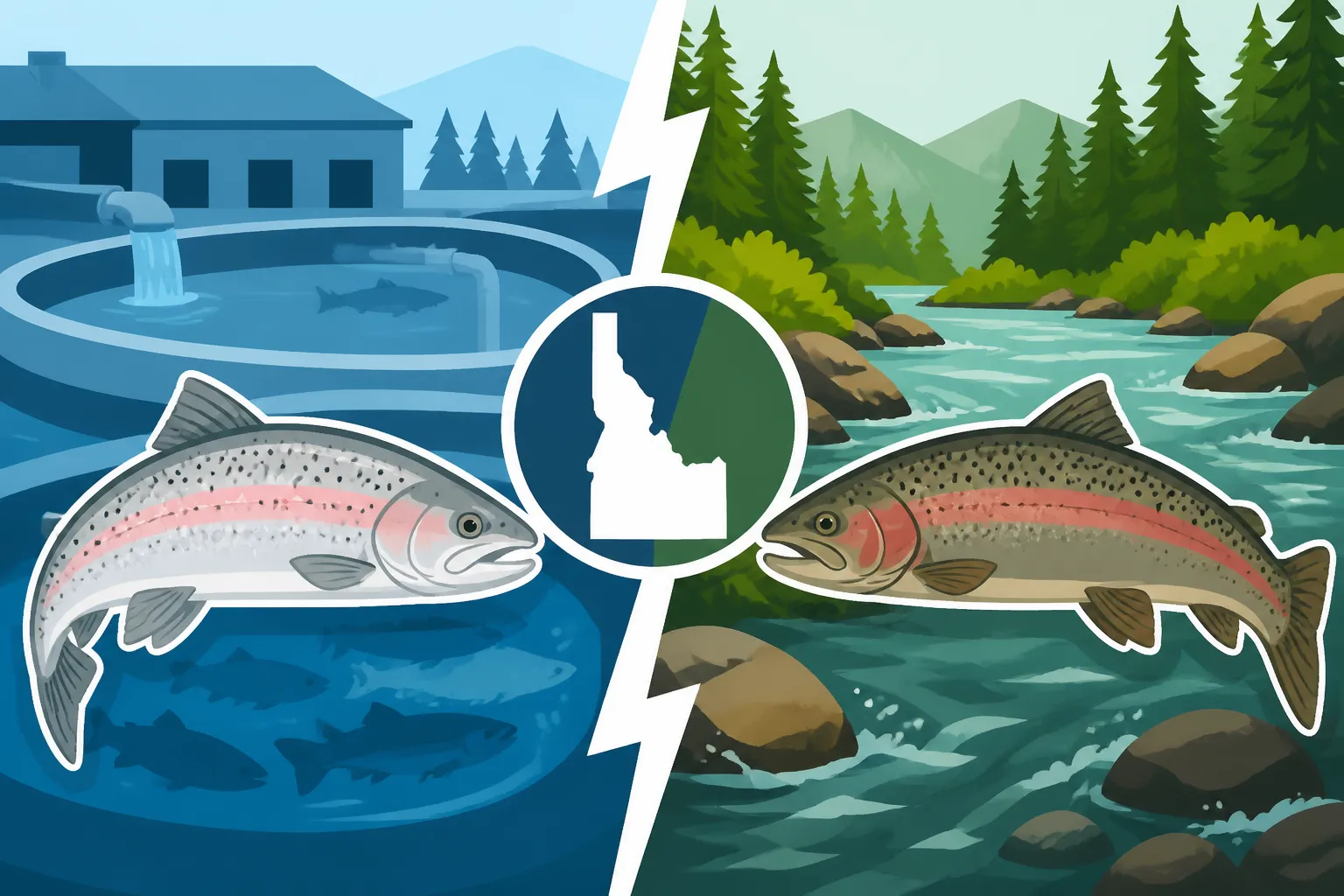
The primary purpose of these hatcheries is to supplement wild populations and provide harvest opportunities for anglers. Without hatchery-produced fish, the seasons would be far shorter, and the bag limits would be much stricter, if fishing was allowed at all on some systems. Hatchery fish are typically raised in controlled environments for a period, then released into the rivers to migrate to the ocean. When they return, they provide a fishable surplus, allowing anglers to participate in the sport without putting undue pressure on the genetically distinct and often more vulnerable wild stocks. This dual system allows Idaho Fish and Game to manage for both conservation and recreation, a balance that is constantly being refined. For a deeper dive into these management practices, check out our piece on Idaho Fishing Regulations Explained.
How to Tell Them Apart: Identification Features
Okay, this is often the trickiest part for anglers, but it’s absolutely essential to get right. Knowing how to quickly and accurately identify a hatchery steelhead versus a wild one could be the difference between a legal catch and a hefty fine, not to mention the impact on the fish itself.
The Adipose Fin: Your Primary Clue
When you hook a steelhead in Idaho, your very first and most reliable indicator for identification will be its adipose fin. What's an adipose fin, you ask? It's that small, fleshy fin located on the back of the fish, between the dorsal fin and the tail fin. It looks almost like a little fleshy nub.
For nearly all hatchery steelhead released in Idaho, this adipose fin is removed, or "clipped," when the fish are very young, before they're released into the wild. This process is painless for the fish and leaves a distinct, clean scar where the fin once was. A steelhead with a missing adipose fin is, almost without exception, a hatchery fish. Conversely, a steelhead with its adipose fin intact is considered a wild fish and must be released immediately and unharmed. This simple visual cue is your best friend on the river. Our article on What a Clipped Adipose Fin Means on a Steelhead goes into even greater detail about this vital identification mark. You can even find specialized fishing tools on Amazon, like fin clippers, though hopefully, you won't need one on the river for this purpose!
Other Physical Markers to Look For
While the adipose fin clip is the primary and most reliable method of identification, there are often other subtle differences that can help you distinguish between hatchery and wild steelhead. However, these are secondary and should never be used as the sole basis for identification if the adipose fin is present.
- Fin Condition: Hatchery fish, having been raised in concrete raceways with many other fish, often have fins that are more worn, stubby, or frayed. Their dorsal, pectoral, and caudal (tail) fins might show signs of rubbing or damage from their confined environment. Wild steelhead, on the other hand, typically boast pristine, well-formed, and sharply pointed fins that reflect their life in natural, uncrowded river environments.
- Coloration and Pattern: This is less reliable, as coloration can vary greatly depending on the river, water conditions, and even the fish's diet. However, hatchery fish can sometimes appear duller or have less vibrant coloring than their wild counterparts. Wild steelhead often display richer, more iridescent colors and distinct spotting patterns that are beautifully adapted to their natural surroundings.
- Snout and Gills: In some cases, hatchery fish might have slightly blunter snouts or show minor deformities around the gills due to their early life in concrete tanks. Wild fish generally have sleek, streamlined snouts and perfectly formed gills, crucial for their survival in fast-moving water.
Again, these are subtle cues. When in doubt, always default to the adipose fin. If it's there, it's wild. If it's not, it's hatchery. For a visual aid, consider looking up an Idaho Steelhead Identification Guide to see clear examples of these differences.
When Identification Gets Tricky
Sometimes, despite your best efforts, identifying a steelhead can be tricky. There are a few scenarios that can throw anglers for a loop:
- Regenerated Fins: Very rarely, a hatchery fish might have a partially regenerated adipose fin. It won't be perfectly formed like a wild fin, but it might be enough to cause confusion. In these rare cases, look for scarring at the base of the fin or other hatchery markers like worn fins. If you are at all uncertain, it's always safest to treat the fish as wild and release it.
- Poor Lighting or Turbid Water: If you're fishing in low light conditions, or if the water is murky, getting a clear view of the adipose fin can be a challenge. This is where a good headlamp, polarized sunglasses, and a careful, quick handling of the fish become paramount. Try to bring the fish close enough to your net to clearly see the fin without stressing it unnecessarily.
- Damage from Predators or Gear: Occasionally, a wild fish might have a damaged adipose fin due to an encounter with a predator or even a previous angling experience. Again, look for signs of a natural, albeit damaged, fin rather than the clean, surgical clip of a hatchery fish.
The key takeaway here is: if you can't be 100% sure it's a hatchery fish, assume it's wild and release it immediately. This precautionary principle is vital for protecting Idaho's invaluable wild steelhead populations. Having a pair of good fish pliers or forceps can also help with quick, safe hook removal, minimizing stress on any fish you have to release. You can easily find high-quality options for these tools on Amazon.
Navigating Idaho's Steelhead Fishing Regulations
Once you can confidently identify a hatchery versus a wild steelhead, the next step is understanding Idaho's specific fishing regulations that govern what you can and cannot do. These rules are not just suggestions; they are legally binding and designed to protect the future of steelhead fishing.
Catching and Keeping Hatchery Steelhead
For hatchery steelhead, those identifiable by their clipped adipose fin, Idaho Fish and Game regulations generally allow for harvest, but within strict daily and possession limits. These limits vary depending on the specific river system, the time of year, and sometimes even the particular section of a river. It's absolutely crucial to consult the current Idaho Fishing Regulation Brochure and Proclamation before heading out, as these rules can change annually or even mid-season based on run forecasts and actual returns.
Typically, you'll find daily bag limits that allow you to keep a certain number of hatchery steelhead per day, and possession limits that define the total number you can have on hand. For example, some areas might allow you to keep three hatchery steelhead per day, with a possession limit of nine. However, these numbers are entirely illustrative and must be verified with the official Idaho Fish and Game regulations. Remember, every angler needs an Idaho Fishing License Guide to participate, along with the appropriate steelhead permit. Our guide on Idaho Catch Limits and Bag Limits Explained offers more generalized information about these rules across various species.
Also, be aware of the "catch and release" component for certain species or times of year, even for hatchery fish. While you might be able to keep hatchery steelhead, you must still handle them carefully until you decide whether to retain them. If you're targeting a specific run or area, make sure you understand the nuances.
The Strict Rules for Wild Steelhead
This is where the rules become absolute: all wild steelhead caught in Idaho must be released immediately and unharmed. There are no exceptions to this rule. A wild steelhead is identified by its intact adipose fin, as we discussed. This strict catch-and-release mandate is critical for the conservation of wild populations, which are often listed under the Endangered Species Act in parts of their range.
When you catch a wild steelhead:
- Minimize Handling: Keep the fish in the water as much as possible. Avoid taking it out of the water for photos, especially in warmer conditions.
- Use Wet Hands: If you must handle the fish, wet your hands thoroughly to protect its protective slime coat.
- Remove Hook Gently: Use needle-nose pliers or forceps to quickly and gently remove the hook. Barbless hooks are often required or highly recommended in steelhead fisheries because they cause less damage and make release easier. Our article Why Wild Steelhead Must Be Released in Idaho delves deeper into the ecological reasons for this crucial rule.
- Revive if Necessary: If the fish appears sluggish, hold it gently in the current, facing upstream, until it regains its strength and can swim away on its own.
- Record (if required): While you can't keep wild steelhead, some regulations might still require you to record your catch, even if released, on your Idaho Catch Record Card Requirements. Always check the current rules.
Violating these rules can lead to significant penalties, including hefty fines and loss of fishing privileges. It's a serious matter, and Idaho Fish and Game actively enforces these regulations to ensure the long-term health of our steelhead runs.
Specific Waterbody Regulations and Exceptions
Idaho's fishing regulations are not a one-size-fits-all blanket over the entire state. Steelhead rules, in particular, can be highly localized. What's permissible on the Clearwater River might be different from the Salmon River, or even different sections of the same river. These specific waterbody regulations often account for:
- Different Run Timings: Steelhead runs occur at different times on different rivers. The Idaho Fishing Season Dates and Limits for the Clearwater River might vary from the Salmon River, impacting when seasons open and close.
- Population Health: The health and size of the steelhead run can vary from one river to another, leading to differing bag limits or even closures.
- Special Rules: Some sections of rivers might have "special regulations" such as fly-fishing only, bait restrictions, or even specific gear requirements (like single barbless hooks). For example, some stretches of the Snake River, while not primarily a steelhead fishery, might have rules impacting all anadromous fish.
It's your responsibility as an angler to know the specific rules for the exact water you're fishing. The Idaho Fish and Game website and their annual printed regulation brochures are the definitive sources for this information. Don't rely on word-of-mouth or outdated information. This diligence ensures you're compliant and contributing to responsible angling. The total cost to fish for steelhead in Idaho as a resident includes not just your license, but also these specific permits, emphasizing the value placed on these fisheries.
The Crucial Reasons Behind the Rules
You might wonder why Idaho Fish and Game has such stringent and sometimes complex rules regarding hatchery vs. wild steelhead. It's not just to make things hard for anglers, but to ensure the long-term sustainability of this incredible fishery and protect a vital part of Idaho's natural heritage.
Protecting Wild Steelhead Genetics and Populations
The primary driver behind the strict protection of wild steelhead is genetics. Wild steelhead populations are the result of thousands of years of natural selection, evolving specific genetic traits that allow them to thrive in their unique river systems. These wild fish possess the genetic diversity and adaptability needed to cope with changing environmental conditions, diseases, and other pressures.
Hatchery fish, while valuable for providing fishing opportunities, are often less genetically diverse. Relying too heavily on hatchery fish, or allowing interbreeding between hatchery and wild fish, can dilute the genetic fitness of wild populations, making them less resilient. The rules, therefore, act as a barrier to protect the genetic integrity of wild steelhead, ensuring that their innate ability to survive and reproduce in the wild is preserved for future generations. This is a core tenet of modern fisheries management and directly impacts the longevity of these amazing fish. It's a fundamental reason why Idaho Rainbow Trout vs Steelhead, What's the Difference goes beyond just appearance to genetic origin.
Supporting Sustainable Fisheries
The goal of Idaho Fish and Game, and indeed all responsible anglers, is to create and maintain sustainable fisheries. This means ensuring that we can continue to enjoy fishing for steelhead year after year, decade after decade, without depleting the resource. The hatchery vs. wild rules are a critical tool in achieving this.
By allowing anglers to harvest hatchery steelhead while strictly protecting wild ones, the state manages to satisfy recreational demand while simultaneously ensuring that the core breeding stock (the wild fish) remains robust. This strategy creates a buffer against overfishing and environmental fluctuations. Without this careful management, even a few years of high harvest on wild fish could decimate populations, leading to lengthy closures and a significant loss for Idaho's angling community. It’s a delicate balance that relies heavily on angler compliance and understanding.
The Role of Angler Education and Compliance
Ultimately, the success of these conservation efforts hinges on educated and compliant anglers. The rules aren't self-enforcing; they require every person on the water to understand the difference between hatchery and wild steelhead, know the regulations, and act responsibly.
Idaho Fish and Game invests resources in outreach and education, and it's our collective responsibility as anglers to do our part. This means taking the time to read the current regulations, asking questions if unsure, and making conscious decisions to respect the resource. When anglers understand why the rules exist—to preserve the incredible experience of fishing for steelhead for themselves and future generations—compliance naturally improves. It creates a community of stewards who appreciate the privilege of fishing these waters.
Furthermore, reporting violations or suspicious activity is also part of angler compliance. If you see someone knowingly breaking the rules, it's not just about one fish; it's about undermining the entire conservation effort. Being a responsible angler means being an advocate for the resource.
Practical Guidance for Responsible Steelhead Angling
Knowing the rules is one thing, but applying them effectively and ethically on the river is another. Here are some practical tips to help you become a more responsible and successful steelhead angler in Idaho.
Essential Gear and Techniques for Safe Release
When you're targeting steelhead, especially in waters where wild fish are present, having the right gear and knowing proper handling techniques are paramount for safe release. Remember, even hatchery fish you initially intend to keep might need to be released if you reach your bag limit or decide to target a different species.
- Barbless Hooks: Many Idaho steelhead waters either require or strongly recommend the use of single, barbless hooks. Even if not mandated, using them is a best practice. They penetrate less deeply and are much easier to remove, causing minimal damage to the fish's mouth. If your hooks aren't barbless, use a pair of pliers to crimp down the barb before you start fishing.
- Forceps or Pliers: A good pair of long-nosed forceps or de-hooking pliers is essential for quickly and safely removing hooks, especially from deeper-hooked fish. Keep them readily accessible.
- Rubberized Landing Net: Avoid knotless nylon nets, as these can strip off a fish's protective slime coat and damage its fins. A net with rubberized mesh is much gentler on fish, reducing injury and stress during landing and release. Brands like Frabill or Fishpond offer excellent rubberized nets that are widely available, including on Amazon.
- Minimize Fight Time: While it's exhilarating to fight a powerful steelhead, try to bring the fish to hand as quickly as possible without over-stressing your tackle. Prolonged fights, especially in warmer water, can exhaust a fish to the point where it struggles to recover after release.
- In-Water Release: The golden rule for releasing fish is to keep them in the water as much as possible. If you need to identify the adipose fin, quickly lift the fish just enough to see it clearly, then immediately submerge it. Avoid dragging fish onto dry land or rocks.
- Proper Holding: If you must briefly hold a fish for a photo, support its weight horizontally with two hands, one gently under the belly and one near the tail. Never hold a large fish vertically by the jaw or gills, as this can cause severe internal damage.
- Check for Injury: Before releasing, take a moment to observe the fish. Is it bleeding? Are its fins damaged? If it's struggling, hold it gently in a calm current, allowing water to flow over its gills until it swims away under its own power.
What to Do If You Catch a Wild Steelhead Accidentally
It's going to happen. You're out there, doing everything right, and suddenly, you've got a beautiful wild steelhead on your line. It's exhilarating, but also a moment that requires quick and decisive action. The key is to be prepared and act swiftly and gently.
- Recognize Immediately: As soon as you bring the fish close, identify it. Does it have an adipose fin? Yes? Then it's wild. No hesitation.
- Keep it Wet: The moment you identify it as wild, keep it submerged in your net or gently in your hands in the water. Resist the urge to lift it high for a photo, no matter how beautiful it is.
- Remove Hook: Using your forceps or pliers, gently back the hook out. If the fish is deeply hooked and removing the hook quickly would cause more damage, it's often better to simply cut the line as close to the hook as possible. The hook will eventually rust out, and this minimizes handling time and stress. This is particularly true if you are using specialized steelhead flies, where quick release is paramount. Our post on Best Flies for Idaho Steelhead highlights patterns that often allow for easier release.
- Revive and Release: Hold the fish gently, facing upstream in a mild current, allowing water to flow over its gills. Watch for its fins to start moving purposefully, and for it to show signs of wanting to swim away. Once it's strong enough, let it go. It should swim away with a powerful kick.
- Clean Your Hands: Always wash your hands after handling fish, particularly before eating or handling other gear, to prevent the spread of any potential pathogens.
Remember, the moment you realize it's a wild steelhead, your priority shifts entirely to its safe and immediate release. This is crucial for the Idaho Chinook Salmon and Steelhead Permit and general regulations.
Reporting and Resources for Anglers
Staying informed and being a good steward of the resource also means knowing where to get information and how to report issues.
- Idaho Fish and Game Website: This is your absolute go-to for the most current regulations, season dates, run updates, and stocking reports. Bookmark it, or even better, download their mobile app, "Go Outdoors Idaho," for instant access to regulations, your license, and reporting tools while you're on the go.
- Regulation Brochures: Pick up a physical copy of the annual fishing regulations from any Idaho Fish and Game office, licensed vendor, or sporting goods store. It's always a good idea to have a paper copy, even if you rely on the app, especially if you're in an area with no cell service. Places like Cabela's or Sportsman's Warehouse often have these readily available.
- Report Violations: If you witness a violation of fishing regulations—someone keeping a wild steelhead, exceeding bag limits, or fishing without a license—it's your responsibility to report it. You can do so confidentially through the Idaho Fish and Game "Citizens Against Poaching" (CAP) hotline or online reporting system. The number is typically listed in the regulation brochure. Providing detailed information (location, time, vehicle description, angler description) is helpful.
- Community Forums and Local Knowledge: While official sources are primary, local tackle shops and reputable online fishing forums can offer valuable insights into current conditions, fishing reports, and community best practices. Just be sure to always verify any information from unofficial sources against the official regulations.
- Fishing Licenses and Permits: Ensure you always have your valid Idaho Fishing License Guide and any necessary permits, like the Idaho Salmon and Steelhead Permit, with you. They are required by law. Knowing where to buy an Idaho Fishing License Online Purchase or at a local vendor is part of being prepared.
By actively engaging with these resources and adhering to best practices, you contribute directly to the health of Idaho's steelhead fisheries, ensuring these magnificent fish continue their epic journeys for generations to come.
Comparison of Hatchery vs. Wild Steelhead Characteristics
To help solidify the differences between hatchery and wild steelhead, here's a quick comparison table of their key characteristics. Remember, the adipose fin is your most reliable guide!
| Feature | Hatchery Steelhead | Wild Steelhead |
|---|---|---|
| Adipose Fin | Absent (clipped, leaving a clean scar) | Present (intact, fully formed) |
| Fins (General) | Often worn, frayed, or blunt due to hatchery tanks | Pristine, well-formed, sharply pointed |
| Coloration | Sometimes duller, less vibrant | Richer, more iridescent, distinct patterns |
| Snout/Head | Can be slightly blunter or show minor deformities | Streamlined, natural shape |
| Genetics | Less diverse, bred for production | Genetically diverse, adapted to natural environment |
| Legal Status | Generally legal to harvest (check limits) | Must be immediately released unharmed |
| Conservation | Supplements fishing opportunities | Critical for long-term species survival |
Disclaimer
Please note: Fishing regulations in Idaho are subject to change. Always consult the most current Idaho Fish and Game fishing regulations brochure or their official website before heading out on the water. This guide is for informational purposes only and does not constitute legal advice.