Idaho Fishing Permits and Stamps Explained
Idaho offers some truly spectacular fishing experiences, from chasing trophy trout in crystal-clear rivers to battling powerful steelhead. But let's be honest, trying to figure out all the different permits and stamps required on top of your base fishing license can feel like you need a law degree. It's frustrating to think you've got everything covered, only to realize you're missing a crucial piece of paper for that dream steelhead trip. This comprehensive guide is here to untangle the complexities of Idaho fishing permits and stamps, ensuring you understand exactly what you need, why you need it, and how to get it, so your time on the water is worry-free and fun.
Understanding the Basics: Licenses, Permits, and Stamps
Before we dive into the nitty-gritty, let's clear up some common confusion. Many anglers, especially those new to Idaho or even long-time residents who only fish for certain species, often mix up what's a "license," a "permit," and a "stamp." They all sound similar, and honestly, the lines can feel a bit blurry, but understanding their distinct roles is key to staying compliant and avoiding unexpected headaches while enjoying Idaho's incredible fisheries.
What's the Difference Anyway?
Think of your basic Idaho fishing license as your fundamental entry ticket to fish any legal waters in the state. It's the core document that says, "Yes, I am authorized to participate in the general act of angling." Without this, you can't really do anything else. Whether you're a resident or a non-resident, this is your starting point. You can find all the details on obtaining this initial authorization in our comprehensive Idaho Fishing License Guide.
Now, a "permit" is usually an add-on that grants you specific privileges, often for certain high-value or highly regulated species. These are not optional if you plan to target or harvest those particular fish. For instance, if you're dreaming of tangling with a powerful steelhead, you'll need your base fishing license and a specific Steelhead Permit. These permits are crucial for species management, allowing the Idaho Department of Fish and Game (IDFG) to closely monitor catch rates, manage populations, and fund conservation efforts specific to those species. Without the right permit, even with a valid fishing license, you're not legally allowed to fish for or possess that particular species.
Finally, "stamps" or "fees" function similarly to permits in that they are additional requirements often tied to specific activities or conservation goals. In Idaho, the most prominent one you'll encounter that feels like a "stamp" is the Access and Depredation Fee. While it might not be a physical stamp you lick and affix to your license anymore (everything is digital these days, thank goodness!), it's an annual fee that helps fund programs benefiting both wildlife and landowners, ensuring public access for hunting and fishing. These additional fees ensure that the ongoing costs of managing Idaho's diverse wildlife resources and maintaining access to incredible fishing spots are covered, benefiting all anglers in the long run.
Why So Many Extra Requirements?
It's a fair question, and one that often leads to a bit of grumbling, especially for those of us who just want to enjoy a peaceful day on the water without a mountain of paperwork. You might think, "I already bought my license, why do I need more?" The simple truth is, these additional permits and stamps are absolutely vital for maintaining the health and sustainability of Idaho's fisheries. They're not just arbitrary hurdles; they're the backbone of conservation.
Consider species like steelhead and Chinook salmon. These are anadromous fish, meaning they spend part of their lives in the ocean and return to Idaho's freshwater rivers to spawn. Managing these populations is incredibly complex, involving interstate and international agreements, hatchery programs, and intense monitoring. The funds generated from specific permits, like the Idaho Steelhead Permit, go directly towards these efforts. This means paying for fish stocking, habitat restoration projects that improve spawning grounds, and the salaries of the dedicated biologists who track fish populations and set seasons. Without these dedicated funds, these iconic fisheries simply wouldn't thrive, or might even disappear entirely.
Furthermore, these permits act as a data collection tool. When you purchase a Steelhead Permit, for example, you're often issued a catch record card. This card, which needs to be filled out accurately and returned, provides invaluable data to IDFG. It helps them understand angler effort, catch rates, and harvest numbers, which directly informs future management decisions, ensuring that fishing opportunities remain available for generations to come. It might feel like a chore to fill out, but it's a direct contribution to the future of the sport we all love. It’s all part of the larger picture of Idaho Fishing Regulations Explained and keeping our waters healthy.
Who Needs What? Age and Residency Factors
The requirements for licenses, permits, and stamps aren't a one-size-fits-all situation. Who needs what largely depends on a few key factors: your age, your residency status, and of course, what species you intend to fish for. This is where it gets a little nuanced, and honestly, where most people get tripped up.
Let's start with the basics for a general fishing license. If you're an Idaho resident, you'll need to purchase an Idaho Resident Fishing License. If you're visiting from out of state, an Idaho Nonresident Fishing License Guide will walk you through the options, which often include annual or shorter-term licenses like the Idaho One-Day Fishing License. For most anglers aged 14 and older, a license is mandatory. However, there are some wonderful exceptions for younger anglers. Kids under 14 generally don't need a license to fish in Idaho, which is fantastic for introducing the next generation to the sport! They still, however, must abide by all catch limits and rules. You can dive deeper into these age-related specifics in our guide on Idaho Fishing Rules for Kids and Families.
When it comes to permits, these generally apply to anyone who plans to target the specific species, regardless of age (if they're old enough to need a base license) or residency. For example, if a 15-year-old resident wants to fish for steelhead, they'll need their junior fishing license AND a Steelhead Permit. The same goes for a non-resident adult. The cost might vary between resident and non-resident options, but the requirement for the permit itself remains consistent for the target species. Seniors in Idaho also have some considerations; while they enjoy discounted general fishing licenses, they will still need to purchase species-specific permits if they plan to fish for steelhead or Chinook salmon. The Idaho Fishing License Age Requirements guide has more detailed information on specific age brackets and their associated needs. Remember, always carry proof of age and residency, especially if you're claiming a resident rate or an age-based exemption, because Fish and Game officers do check!
Essential Permits for Specific Species
Idaho is a land of incredible fishing diversity, offering opportunities to chase everything from giant sturgeon to acrobatic trout. But with these diverse opportunities come specific regulations designed to protect and manage each unique fishery. It's not enough to simply have a general fishing license; if you're targeting certain sought-after species, you'll need additional permits. These permits are crucial for funding and monitoring, ensuring these magnificent fish remain a part of Idaho's natural heritage.
The Elusive Steelhead Permit
Ah, steelhead! These ocean-going rainbow trout are legendary in Idaho, drawing anglers from all corners of the globe to its storied rivers like the Clearwater and the Salmon. But chasing these magnificent fish comes with a special requirement: the Idaho Steelhead Permit. This isn't just a suggestion; it's a mandatory permit for anyone, resident or non-resident, who plans to fish for or harvest steelhead in Idaho waters. You can't just stumble into a steelhead run with your basic fishing license and expect to be compliant.
The Steelhead Permit is specifically designed to help the IDFG manage these unique and sometimes fragile populations. The funds generated directly support hatchery operations that augment wild runs, vital habitat restoration projects, and research efforts to understand steelhead migration patterns and survival rates. Without these permits, Idaho simply wouldn't have the resources to sustain its world-class steelhead fishery. When you purchase this permit, you'll also receive a catch record card, which is critically important. Every steelhead you catch, whether kept or released, must be recorded on this card. It provides biologists with invaluable real-time data on angler effort and harvest, which in turn influences future bag limits and season structures. Missing, incomplete, or unreturned catch cards are a serious issue and can result in fines, so treat that little piece of paper with the utmost respect. Details about catch limits can be found in our Idaho Steelhead Bag Limits article, and a deep dive into the sport is available in the Idaho Steelhead Fishing Guide.
For example, imagine you've planned a fantastic fall trip to the Clearwater River, famous for its big B-run steelhead. You've got your new rod and reel, a fresh spool of line, and a tackle box full of your favorite offerings from Amazon. You even remembered your annual fishing license. You're out there, hooking into a beautiful hatchery steelhead, when a Fish and Game officer approaches. He asks to see your license and permits. If you can't produce that Steelhead Permit, even if you planned to release the fish, you're in violation. It's a common mistake, and the officers are generally understanding, but ignorance of the rules isn't an excuse. Always double-check you have the correct permit before you even cast a line for steelhead.
Chasing Chinook Salmon: A Separate Requirement
While steelhead get a lot of attention, Idaho is also home to Chinook salmon, another incredible anadromous species that makes an epic journey from the ocean to spawn in Idaho's rivers. Just like steelhead, pursuing Chinook salmon requires a specific add-on to your general fishing license: the Idaho Chinook Salmon Season Permit. This permit is typically available seasonally and is tied to specific fisheries and run forecasts.
Chinook salmon runs in Idaho can be highly variable year to year, influenced by ocean conditions, river flows, and dam passage survival. Because of this, the IDFG manages Chinook fishing very carefully. The permit ensures that anglers contribute directly to the management and conservation efforts for these specific salmon runs. The revenue helps fund hatcheries, research, and monitoring programs that are vital for sustaining these fish. Similar to steelhead, when you purchase your Chinook Salmon Permit, you will also receive a catch record card. This card is absolutely essential for tracking individual angler harvest and total catch. Proper completion and timely return of this card allow biologists to make informed decisions about future seasons, ensuring the long-term viability of the fishery. If you're planning a trip to the Salmon River or Clearwater for these magnificent fish, make sure this permit is in your possession. Our Idaho Chinook Salmon Fishing Guide provides a wealth of information on targeting these powerful fish.
Consider a scenario: you've heard whispers of a fantastic Chinook run on the upper Salmon River in July. You've purchased your annual fishing license and are ready to go. You head out, full of anticipation, and start casting. Suddenly, you hook into a massive Chinook. What a fight! But if you haven't purchased the specific Idaho Chinook Salmon Season Permit, that fish, regardless of whether you intend to keep it or not, is technically caught illegally. The IDFG takes these regulations seriously because the health of these salmon runs depends on precise management. Always check the current fishing proclamation for the specific season dates and locations where Chinook fishing is open and the permit is required. These seasons can be quite short and specific, so staying informed is paramount.
Sturgeon and Other Special Cases
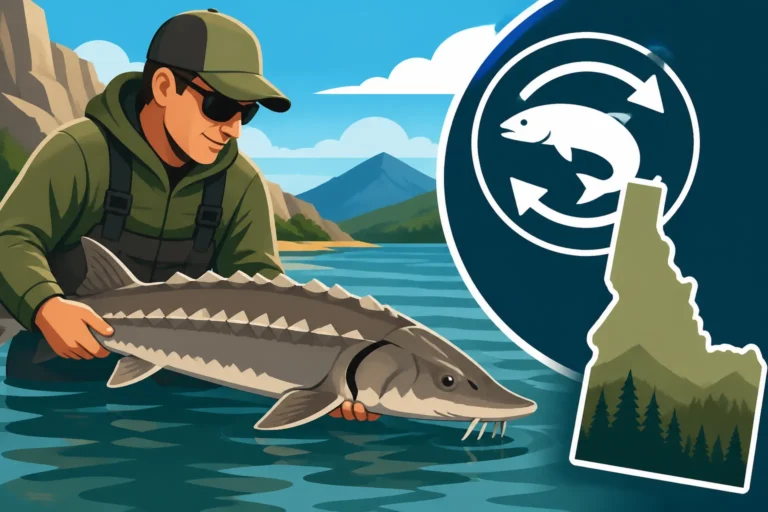
Idaho is truly special for its populations of White Sturgeon, particularly in the Snake River. These ancient, enormous fish are incredible to encounter, often growing to truly monumental sizes. However, fishing for sturgeon in Idaho comes with very strict regulations, though it doesn't always involve a specific permit in the same way steelhead or Chinook do.
Currently, sturgeon fishing in Idaho is exclusively catch-and-release, with the exception of a very limited harvest fishery for hatchery-origin sturgeon below Shoshone Falls. For the vast majority of anglers, it's about the thrill of the catch and the awe of seeing these prehistoric giants up close before releasing them unharmed. To fish for sturgeon, you absolutely need a valid Idaho general fishing license. Beyond that, there isn't a separate, distinct "Sturgeon Permit" you purchase. However, the catch-and-release nature means adherence to very specific rules: barbless hooks are mandatory, and it is strictly illegal to remove any sturgeon from the water. These rules are in place to minimize stress and injury to these long-lived, often vulnerable fish. Many anglers opt for specialized sturgeon gear, which can be easily found on platforms like Amazon, to ensure they can land and release these large fish safely and efficiently. You can find all the critical details and requirements in the Idaho Sturgeon Fishing Rules guide.
Beyond sturgeon, there aren't many other species that require an additional statewide permit beyond your general fishing license in Idaho. However, this doesn't mean there aren't specific rules or even local permits for certain waters or situations. Some private waters, tribal lands, or specific managed ponds might have their own unique requirements or additional fees. Always consult the Idaho Fish and Game fishing regulations booklet for the specific body of water you plan to fish. This is particularly important for special regulation waters, where tackle, bait, or catch limits might be significantly different from general statewide rules. For example, some high mountain lakes or delicate spring creeks might have fly-fishing-only restrictions or even single-barbless-hook requirements. It's always your responsibility as an angler to know the specific rules for where you are fishing.
Conservation and Access Fees
Beyond the species-specific permits, Idaho also has certain fees that aren't tied to a particular fish but are instead crucial for broader conservation efforts and maintaining public access to our cherished outdoors. These fees might not always be labeled as "stamps" in the traditional sense, but they serve a similar purpose, acting as essential contributions to the health of the state's natural resources and the continued enjoyment of fishing by all.
Idaho's Access and Depredation Fee
The Idaho Access and Depredation Fee is one of those often-overlooked but incredibly important charges that applies to anyone purchasing an annual Idaho fishing license, as well as those buying annual hunting and combination licenses. You might wonder, "What exactly is this fee for?" And honestly, it's a valid question, because it's not immediately clear what "access and depredation" means to the average angler.
This fee serves a dual purpose that directly benefits both wildlife and outdoor enthusiasts. First, the "Access" portion of the fee helps fund programs that secure and maintain public access to private lands for hunting and fishing. Imagine wanting to fish a prime stretch of river that flows through private property. Without access agreements between landowners and the IDFG, that land could be closed off to public use. These funds help negotiate, establish, and maintain those crucial access points, ensuring that anglers continue to have places to cast a line, even on lands that aren't federally or state-owned. It's about ensuring those prime fishing spots remain open for everyone to enjoy, not just a select few. Our article on Idaho Access and Depredation Fee Explained goes into further detail about its function.
Second, the "Depredation" component addresses damage caused by wildlife to private property, particularly agricultural lands. For instance, elk or deer might eat crops, or waterfowl could damage fields. Funds from this fee go towards mitigating these conflicts, compensating landowners for damages, and implementing preventative measures. This helps foster positive relationships between landowners and the outdoor community, making landowners more amenable to allowing public access for fishing and hunting. So, while it might feel like "just another fee," it's a critical investment in the future of public land access and wildlife management in Idaho. When you're picking up your annual license, remember that this small addition is working behind the scenes to keep those fishing gates open.
Understanding the Idaho Catch Record Card Requirements
While not a "stamp" in the traditional sense, the Idaho catch record card is an indispensable tool that functions very much like one in terms of data collection and regulatory importance. It's a critical component for specific fisheries, primarily steelhead and Chinook salmon, and understanding its requirements is paramount for any angler targeting these species. Many anglers might view it as a bit of a nuisance, another thing to keep track of, but its role in managing these valuable resources cannot be overstated.
When you purchase your Idaho Steelhead Permit or Idaho Chinook Salmon Season Permit, you will be issued a corresponding catch record card. This card is your personal logbook for that specific fishery. The rules are very clear: you must validate your card before fishing, and you must record every single steelhead or Chinook salmon you catch, whether you intend to keep it or release it. This includes wild fish that must be released. You'll need to accurately record the date, location, species (steelhead vs. Chinook), and whether the fish was hatchery (fin-clipped) or wild (unclipped). If you keep a hatchery fish, you'll also record that. The specifics of how to fill it out are crucial, and we have a dedicated guide on Idaho Catch Record Card Requirements to help you navigate this process.
The data collected from these cards is absolutely vital for the IDFG. It provides them with real-time insights into fishing pressure, catch rates, and harvest numbers for these important anadromous species. This information directly influences decisions on season lengths, bag limits, and conservation strategies. If anglers fail to return their cards, or return them incomplete or inaccurate, the data becomes unreliable, making it harder for biologists to manage the fishery effectively. Imagine trying to manage a business without any sales figures – that's what biologists face without accurate catch data. So, when you're diligently filling out your card, remember you're contributing directly to the future of steelhead and Chinook fishing in Idaho. Don't forget to return your card by the specified deadline, even if you didn't catch anything, to avoid potential fines or penalties.
How These Funds Benefit Idaho's Fisheries
It's easy to see all these permits and fees as simply costs, extra money you have to shell out before you can even wet a line. And while that's true in the short term, it's really important to remember that these funds are investments in the future of Idaho's fishing heritage. Every dollar from licenses, permits, and fees goes directly back into programs and initiatives that enhance and protect the very fisheries we love to explore.
Think about the incredible diversity of fish in Idaho's waters. From the trophy rainbow trout in Lake Pend Oreille to the feisty smallmouth bass in the Snake River, and of course, the iconic steelhead and Chinook salmon, managing these populations requires significant resources. Funds generated by permits directly support critical hatchery programs that stock millions of trout, kokanee, and other species into Idaho's lakes and rivers each year, ensuring there are plenty of fish for everyone. This is particularly noticeable in urban ponds and smaller lakes that rely heavily on stocking for consistent fishing opportunities.
Beyond stocking, a huge portion of these funds is dedicated to habitat restoration and protection. This means improving stream health for trout, creating better spawning grounds for salmon, managing riparian zones, and ensuring water quality across the state. It also funds important research projects that monitor fish health, track migrations, and study the impacts of environmental changes. These projects are essential for making informed, science-based management decisions. Enforcement, too, benefits from these funds, ensuring that rules are followed, and resources are protected from illegal activities. So, the next time you're enjoying a pristine mountain lake, reeling in a feisty trout, or witnessing a vibrant salmon run, take a moment to appreciate that your permits and fees played a direct role in making that experience possible. It’s a collective effort to sustain the Best Fishing Spots in Idaho and beyond.
Navigating the Purchase Process
Alright, you've grasped why these permits and stamps are important. Now comes the practical part: actually getting them in your hands (or, more accurately, stored on your phone). The good news is that Idaho Fish and Game has made the process relatively streamlined, with several convenient options available. Gone are the days of needing to track down a specific regional office during business hours to get everything squared away.
Where to Buy Your Permits and Stamps
Idaho offers multiple avenues for purchasing your general fishing license and any necessary permits or fees, giving you flexibility to choose what works best for your schedule and location. The easiest and often most recommended method in this digital age is online. The Idaho Fish and Game website is a robust portal where you can purchase your annual fishing license, add on your Steelhead Permit, your Chinook Salmon Season Permit, and pay your Access and Depredation Fee all in one go. The process is intuitive, and once completed, you can often print a temporary license and receive an electronic version almost immediately. This means you can decide to go fishing on a whim, purchase what you need from your living room, and be legal within minutes. For a step-by-step guide, check out our article on How to Buy an Idaho Fishing License Online.
If you prefer a more traditional approach or need some in-person assistance, you have plenty of options. Most sporting goods stores across Idaho, like Cabela's, Sportsman's Warehouse, and even many local tackle shops, act as authorized license vendors. Major grocery chains like Fred Meyer often have a customer service desk where you can also purchase licenses and permits. These vendors are equipped to help you navigate the various options, confirm your residency, and print out your physical license and permits on the spot. This is a great choice if you're already out shopping for bait or last-minute gear from Amazon for your trip, or if you simply prefer talking to a real person. Our guide on Where to Buy an Idaho Fishing License provides a more comprehensive list of vendor types.
Finally, you can always visit an Idaho Fish and Game regional office. While perhaps not as convenient for many, especially if you don't live near one, the staff at these offices are incredibly knowledgeable and can provide expert advice on regulations, local fishing conditions, and ensure you have exactly what you need for your planned outing. Regardless of where you choose to purchase, the important thing is to ensure all your documents are valid and in your possession before you head to the water.
Combining Licenses and Permits: Combo Options
For many outdoor enthusiasts in Idaho, fishing isn't their only passion. If you're someone who also enjoys hunting or trapping, Idaho Fish and Game offers combination licenses that can be a great value. The most common is the Idaho Combination Hunting and Fishing License. This single license package allows you to carry both hunting and fishing privileges under one umbrella, often at a reduced cost compared to buying them separately.
When you purchase a combination license, it typically covers your general hunting and fishing privileges. However, just like with a standalone fishing license, you will still need to purchase species-specific permits or pay additional fees if you plan to hunt for big game or fish for steelhead or Chinook salmon. For example, if you have a Combination Hunting and Fishing License, but want to chase steelhead, you'll still need to add on the Idaho Steelhead Permit. The system is designed to allow you to easily attach these additional permits to your primary combination license.
This approach offers convenience and potential cost savings. Instead of managing multiple separate licenses, you have one primary document. It also simplifies the renewal process, as you're typically renewing one package rather than several. For families or individuals who are deeply engaged in Idaho's outdoor pursuits, exploring the combination license options is definitely worthwhile. It's designed to make life a little easier for those who spend a significant amount of time enjoying both the rod and the rifle.
What Information You'll Need for Purchase
Whether you're buying online or in person, gathering the correct information beforehand will make the purchase process smooth and quick. There's nothing more frustrating than getting halfway through buying your license only to realize you're missing a crucial piece of identification!
First and foremost, you'll need personal identification. For residents, this typically means a valid Idaho driver's license or state ID card. This proves your residency, which is essential for getting the correct resident pricing for your license and permits. If you've recently moved to Idaho, you may need to demonstrate proof of residency (e.g., utility bills, voter registration) in addition to your ID if your driver's license hasn't been updated yet. Non-residents will need a valid driver's license or state ID from their home state or country.
If you've purchased an Idaho fishing license before, having your previous license number or your IDFG customer ID can significantly speed up the process. This allows the system to easily look up your profile and attach any new purchases to your existing history. If you're a first-time buyer, you'll simply be creating a new profile. You'll also need to provide your date of birth, physical address, and contact information. For online purchases, a valid credit or debit card is necessary. It's always a good idea to have this information readily accessible before you start the purchasing process, whether you're at a sporting goods store counter or sitting at your computer. A quick pre-check can save you a lot of time and potential frustration.
Common Questions and Avoiding Pitfalls
Even with all the information available, there are still some recurring questions and common mistakes that anglers make regarding Idaho fishing permits and stamps. It's easy to get caught up in the excitement of a fishing trip and overlook a detail, but understanding these common pitfalls can save you from potential fines and a ruined day on the water.
Do You Need a Permit for Catch and Release?
This is a really common question, and one that often trips people up. The short answer is: absolutely, yes. If a specific permit is required to fish for a certain species, you need that permit even if your intention is purely catch and release. Many anglers mistakenly believe that if they're not keeping the fish, they don't need the special permit. This is incorrect and can lead to serious legal trouble.
Think about it this way: the act of "fishing for" a species implies that you are targeting it with appropriate gear and techniques, even if you plan to release it. The permit is tied to the opportunity to fish for that species, not just the act of harvesting it. The funds generated from these permits are used for overall species management, conservation, and research, which benefits both catch-and-release and harvest-oriented fisheries. Moreover, catch record cards often require you to log all catches, including released fish, as this data is crucial for population monitoring. For instance, if you're out on the Clearwater River trying your hand at steelhead fishing, you must have an Idaho Steelhead Permit, regardless of whether you intend to keep a hatchery fish or release every single one. Ignoring this rule is a violation. We cover this in more detail in Is an Idaho Fishing License Required for Catch and Release?.
Consider a scenario where you're an avid fly angler who practices strict catch and release. You decide to target Chinook salmon on the Salmon River during an open season. You're using a single barbless hook, being extremely careful with the fish, and plan to release every one unharmed. You've got your general fishing license. However, if you don't have the Idaho Chinook Salmon Season Permit, you're still fishing illegally for that species. The permit is about the act of targeting the species, and the biological data collected from all catches, not just the ones taken home. Always ensure you have the appropriate permits for the species you are pursuing, even if your personal philosophy is entirely catch-and-release.
What Happens If You Don't Have the Right Permit?
This is where the rubber meets the road, and it's something no angler wants to experience. Getting caught without the correct license or, more specifically, the required permits or stamps for the species you're fishing for, can have significant and unpleasant consequences. It's not just a polite reminder; it's a violation of state law, and Idaho Fish and Game officers are fully authorized to enforce these regulations.
The most immediate and common consequence is a citation and a fine. The amount of the fine can vary depending on the specific violation, but it's often much more expensive than the cost of the permit you neglected to buy in the first place. For instance, a Steelhead Permit might cost around $12-$20 for a resident, but the fine for fishing steelhead without one could easily be over $100, plus court costs. It's a costly lesson to learn, and frankly, completely avoidable. Beyond the monetary fine, you might also face other penalties. In some cases, your fishing gear could be confiscated. Imagine losing your favorite rod and reel because you forgot a $10 permit – that's a tough pill to swallow.
Furthermore, repeated offenses or severe violations could lead to the suspension of your fishing privileges, meaning you could be barred from fishing in Idaho for a period of time. It's not just about the money; it's about respecting the regulations designed to protect and conserve Idaho's valuable fish populations. Fish and Game officers are out there doing important work to protect our resources, and they appreciate anglers who are compliant. So, before you leave the house, always perform a quick check: do you have your valid Idaho fishing license, and are all the necessary species-specific permits or conservation stamps in your possession for what you intend to fish for that day? A few seconds of verification can save you a world of trouble.
Keeping Track of Your Permits and Catch Record Cards
In an age where everything seems to be digital, it can be a bit of a juggling act to keep track of your fishing permits, especially if you have physical catch record cards. However, ensuring you have proof of your valid license and all required permits with you while fishing is non-negotiable. Whether it's a digital image on your phone or a physical printout, you must be able to present it to a Fish and Game officer upon request.
For your general fishing license and most permits, many anglers simply keep a digital copy on their smartphone. A screenshot or a PDF saved to your phone's photo library or files is often sufficient, provided it's legible and easily accessible. Just make sure your phone is charged! However, some anglers prefer to print out a physical copy and laminate it (or buy a waterproof holder from Amazon) to protect it from the elements. This is especially useful in areas with no cell service where you might not be able to pull up a digital file easily.
Catch record cards for steelhead and Chinook salmon, however, are a different beast. These are physical documents that you must carry with you and fill out immediately upon catching a fish. They often come printed on special, durable paper, but it's still a good idea to keep them protected in a waterproof wallet or a small, clear Ziploc bag tucked into your tackle box. Losing a catch record card, or having it get wet and illegible, can be a problem, as it might prevent you from accurately reporting your catch and could lead to issues. The card needs to be submitted to IDFG by a specified deadline, even if you caught no fish. This mandatory reporting is crucial for fisheries management, as discussed in How to Read an Idaho Fishing Catch Record Card. Treat your catch record card as seriously as you treat your actual license; it's a vital part of your legal fishing responsibilities.
Seasonal Considerations and Permit Validity
Idaho's fishing opportunities are wonderfully diverse, shifting with the seasons. From ice fishing in winter to high mountain lake adventures in summer and thrilling steelhead runs in fall and spring, there's always something to chase. However, this seasonal variety also means that permits and regulations can change throughout the year, adding another layer of complexity that every angler needs to be aware of.
Understanding Season-Specific Permits
Some permits in Idaho are not year-round necessities but are instead tied to specific seasons or even specific windows within those seasons. The most prominent example of this is the Idaho Chinook Salmon Season Permit. Unlike the Steelhead Permit, which covers a much broader period, the Chinook permit is highly seasonal, often active only for a few weeks or months when specific salmon runs are open to harvest in particular river sections.
This seasonality is directly linked to the biological cycles of the fish and the IDFG's careful management strategies. Chinook salmon runs can be very sensitive, and fishing seasons are often set based on projected returns and conservation goals. Because of this, it's absolutely critical for anglers planning to target Chinook to not only purchase the permit but also to check the most current Idaho fishing regulations proclamation for specific opening and closing dates, as well as designated fishing areas. These seasons can be announced with relatively short notice, or adjusted mid-season if conditions change. Fishing outside of these specific, permitted windows, even with a valid permit, is illegal. Our Idaho Fishing Season Dates and Limits guide is your go-to resource for understanding these fluctuating timelines.
Imagine planning a summer fishing trip specifically for Chinook salmon on the Snake River. You purchase your annual fishing license and the Chinook permit in May. You arrive in July, excited, only to discover that the Chinook season for that particular stretch of the river closed in late June. Your permit is technically active, but the season itself is closed, making any fishing for that species illegal. This highlights the importance of not just buying the permit but also staying continuously informed about the open seasons and specific regulations for the waters you plan to fish. Always verify the current proclamation right before your trip!
Permit Validity and Expiration Dates
Understanding how long your permits and licenses are valid is crucial for continuous, worry-free fishing. It's a common mistake to assume that an "annual" license or permit is valid for a full 365 days from the purchase date. In Idaho, like many states, this isn't always the case, and misunderstanding the validity period can lead to unknowingly fishing without proper authorization.
Most annual Idaho fishing licenses and associated annual permits (like the Steelhead Permit and the Access and Depredation Fee) operate on a calendar year basis. This means they are typically valid from January 1st through December 31st of the year they are purchased. So, if you buy an "annual" license in July, it will still expire on December 31st of that same year, not the following July. This is an important distinction, especially if you're buying late in the year or if you're planning a trip spanning across a calendar year. However, there are exceptions; some short-term licenses, like the one-day or three-day fishing licenses, are valid for the specific number of days from their purchase date. Our Idaho Fishing License Validity Period article has all the specifics.
Always double-check the expiration date printed on your physical or digital license and permits. If you're planning an extended fishing trip that starts in December and rolls into January, you'll need to ensure you have licenses and permits for both calendar years. Forgetting to renew could mean that while you started the trip legally, you ended it in violation of the rules. A quick check of your wallet or phone for those dates before heading out, especially after the new year, can save you from an awkward encounter with a Fish and Game officer. Keeping track of these dates is just as important as knowing the local fishing regulations themselves.
Changes to Regulations and How to Stay Informed
Idaho's fishing regulations are not static; they can and do change. Sometimes these changes are minor, such as slight adjustments to bag limits or season dates for a particular water. Other times, they can be more significant, introducing new permit requirements or closing entire fisheries due to conservation concerns. Staying informed about these changes is an angler's responsibility and is crucial for legal and ethical fishing.
The Idaho Department of Fish and Game is the primary authority for all fishing regulations. They publish a comprehensive fishing regulations brochure, often called a proclamation, annually. This document is the definitive guide to all rules, including details on specific permits, bag limits, season dates, and special regulations for individual bodies of water. You can usually pick up a physical copy at any license vendor, IDFG office, or sporting goods store. However, the most up-to-date source will always be the IDFG website. They frequently post emergency rule changes, season extensions, or closures there, sometimes with very short notice. Our Where to Find Idaho's Current Fishing Rules Brochure guide can point you in the right direction.
It's a good practice to review the regulations annually, even if you've been fishing the same spots for years. A quick glance before each trip, especially if you're targeting a new species or visiting a new area, is highly recommended. Subscribing to IDFG newsletters or following their social media channels can also help you stay abreast of changes. This proactive approach ensures you're always fishing within the rules, contributing to conservation, and avoiding any unnecessary penalties. Remember, the rules are there for a reason—to protect the amazing fisheries that make Idaho such a premier fishing destination.
Idaho Fishing Permits and Essential Fees Summary
To help clarify the various permits and fees discussed, here's a table summarizing the main ones you'll encounter in Idaho fishing:
| Permit/Fee Type | Who Needs It | Purpose & Key Details | Validity Period |
|---|---|---|---|
| General Fishing License | All anglers 14+ years (residents & non-residents) | Mandatory base license to fish any public waters in Idaho. Funds general fisheries management, enforcement, and education. | Calendar Year (Annual) / Specific Days (Short-term) |
| Idaho Steelhead Permit | Anglers targeting/harvesting Steelhead (14+ years) | Required in addition to a general license for steelhead. Funds steelhead hatcheries, habitat, and research. Includes a mandatory catch record card. | Calendar Year (Annual) |
| Idaho Chinook Salmon Season Permit | Anglers targeting/harvesting Chinook Salmon (14+ years) | Required in addition to a general license during open Chinook seasons. Funds Chinook hatcheries, habitat, and research. Includes a mandatory catch record card. Highly seasonal and water-specific. | Season-Specific Dates |
| Access and Depredation Fee | All purchasers of annual fishing, hunting, or combo licenses | Supports landowner relations, public access programs, and compensation for wildlife depredation on private lands. | Calendar Year (Annual) |
| Catch Record Cards | Anglers with Steelhead or Chinook Salmon Permits | Mandatory data collection tool. Must be carried, filled out immediately for every fish caught (kept or released), and returned to IDFG by deadline. Critical for population management. | Tied to specific permit |
| Sturgeon Fishing | Anglers targeting Sturgeon (14+ years) | Requires a general fishing license. No specific "permit" but strict catch-and-release rules apply (barbless hooks, no removal from water). Special regulations for limited harvest below Shoshone Falls. | General License Validity |
Disclaimer
The information provided in this guide is intended for general informational purposes only and is subject to change. While we strive to provide accurate and up-to-date content, fishing regulations, permit requirements, and fees in Idaho can change frequently. It is always the angler's responsibility to consult the current Idaho Department of Fish and Game (IDFG) fishing regulations proclamation or visit the official IDFG website before engaging in any fishing activity. Relying solely on third-party information may result in violations of state law.