Idaho Resident Fishing License Guide
Navigating the world of fishing licenses can feel a bit like wading through murky waters, especially when you're a long-time Idaho resident just trying to enjoy the incredible fishing opportunities our state offers. It's easy to assume you know the drill, but rules and options change, and missing a small detail can quickly put a damper on your peaceful day on the water. This comprehensive guide is here to clear up all the confusion, laying out everything you need to know about securing and understanding your Idaho resident fishing license so you can fish legally and confidently.
Understanding Why a Resident Fishing License Matters in Idaho
For many of us, fishing is more than just a hobby; it's a cherished tradition, a way to connect with Idaho's stunning natural beauty, and a chance to put fresh fish on the dinner table. But before you cast your first line, there's a fundamental step that often causes a bit of head-scratching: getting that all-important fishing license. It's not just a bureaucratic hoop to jump through; it's a critical component of responsible angling that ensures our state's fisheries remain vibrant for generations to come.
The Legal Imperative: Why You Can't Just "Wing It"
Let's be honest, we've all probably had that fleeting thought: "Do I really need a license for just an hour of fishing at the local pond?" The short answer, my friend, is a resounding yes. In Idaho, if you're 14 years or older and plan to fish any public waters, or even certain private waters, you absolutely need a valid fishing license. This isn't some arbitrary rule designed to annoy you; it's the law, plain and simple. Imagine pulling up to your favorite river, excited for a peaceful morning, only to be approached by an Idaho Fish and Game officer asking for your license. Without one, that tranquil morning could quickly turn into a costly citation, ranging from fines to potential loss of fishing privileges. It's not a scare tactic, it's just the reality of fishing responsibly in our state. The Idaho Department of Fish and Game (IDFG) enforces these regulations to manage our precious natural resources, and having a license is your proof that you're playing by the rules. Nobody wants to be the angler who finds out the hard way that a fishing license is non-negotiable.
Funding Conservation: Your License Dollars at Work
Beyond the legal requirement, there's a much deeper, more impactful reason your resident fishing license matters: conservation. Every dollar you spend on that license, and any associated permits, goes directly back into managing and enhancing Idaho's fisheries. Think about it this way: when you purchase your license, you're directly contributing to programs that stock trout in local lakes, maintain boat launches, conduct critical research on fish populations, manage invasive species, and conserve vital fish habitats across the state. Without these funds, the incredible fishing opportunities we enjoy in places like the Snake River, Lake Coeur d'Alene, or even those hidden high-mountain lakes wouldn't be sustainable. It's an investment in the future of fishing, ensuring that our children and grandchildren can experience the same joy and bounty that we do today. So, that seemingly small fee is actually a powerful tool for environmental stewardship, turning every angler into a conservationist.
Who Qualifies for an Idaho Resident Fishing License?
One of the first big hurdles for many people, especially those who've recently moved to our beautiful state, is figuring out if they even qualify for a resident license. It might seem straightforward, but Idaho Fish and Game has specific criteria that go beyond just having an Idaho address. It’s all about proving your commitment to the Gem State as your primary home.
Defining "Residency" – It's More Than Just Living Here
So, what exactly does "resident" mean in the eyes of the Idaho Department of Fish and Game? It's a question that trips up a lot of folks. Generally, to qualify for an Idaho resident fishing license, you must have lived in Idaho for at least six consecutive months immediately prior to purchasing the license. And it's not enough to just say you live here; you need to demonstrate that Idaho is truly your primary home. This means things like:
- Establishing a permanent domicile: This is your primary residence, not a temporary vacation spot.
- Registering to vote in Idaho: This is a big one. It shows intent to make Idaho your long-term home.
- Obtaining an Idaho driver's license or state identification card: Your out-of-state license won't cut it. You need to show you've formally changed your residency.
- Registering your vehicles in Idaho: This includes cars, trucks, and even your boat.
- Filing Idaho state income tax returns: If you're required to file, showing that you do so as an Idaho resident is key.
If you're fresh off a move, you'll need to hit that six-month mark before you can claim resident status for fishing licenses. It can be a little frustrating waiting, but these rules are in place to ensure that the benefits of resident pricing are truly for those who contribute to the state's resources year-round. You can find more detailed information on specific requirements in the Idaho Resident Fishing License Guide.
Special Considerations for Military, Students, and Newcomers
Idaho Fish and Game understands that life isn't always neat and tidy, and certain groups have unique circumstances when it comes to residency.
- Active Military Personnel: If you're active-duty military and stationed in Idaho, you (and often your immediate family) may qualify for resident licenses regardless of your original state of residency, given proper documentation of your station orders. This is a huge benefit for those serving our country, making it easier for them to enjoy our local waters.
- Idaho College Students: Nonresident students attending an Idaho college or university on a full-time basis can often qualify for resident licenses. This makes sense; if you're spending a significant portion of your year studying and living here, you should be able to fish at resident rates. Again, proper student identification and enrollment verification will be necessary.
- Newcomers Still in the Six-Month Window: If you've just moved to Idaho and haven't hit that six-month residency mark yet, you'll unfortunately still need to purchase a nonresident fishing license. While it might sting a little to pay the higher fee, think of it as a temporary pass to enjoy Idaho's amazing fishing while you officially transition. Once that six-month period passes and you've established your residency as outlined above, you can then purchase your Idaho resident fishing license. It's a small waiting game, but the payoff of resident prices for years to come is well worth it.
Different Types of Resident Fishing Licenses Available
Once you've confirmed your resident status, the next step is figuring out which license is right for you. It's not always a one-size-fits-all situation, and Idaho offers several options to cater to different needs and fishing habits. Understanding these choices can save you money and ensure you're fully covered for your planned adventures.
The Standard Annual License: Your Go-To Option
For most Idaho residents who plan to fish regularly throughout the year, the standard annual fishing license is the absolute best value and the most common choice. This license covers you for an entire calendar year, typically from January 1st to December 31st. It's your foundational pass to access nearly all general fishing waters in the state, from trout streams to bass lakes.
Let's imagine you're someone who loves to hit the Boise River for trout after work in the spring, then maybe heads up to Lake Cascade for some perch fishing in the summer, and finishes the year with some ice fishing on a local reservoir. An annual license ensures you don't have to think about buying a new license every time you go out. It provides peace of mind and, over the course of a year, costs significantly less than buying multiple short-term licenses. It's definitely the most popular choice among avid and even casual anglers who know they'll be out more than a few times. You can always check the Idaho Fishing License Cost Guide for current pricing on the annual resident license.
Short-Term Options and Specialty Permits
While the annual license is great, sometimes you only need to fish for a short period, or you're targeting specific, highly regulated species.
-
One-Day or Multi-Day Licenses (for some residents): While primarily aimed at nonresidents, Idaho does offer some short-term options that might appeal to a very specific resident angler, though they are often less cost-effective than an annual license if you plan on fishing more than a couple of days. For instance, if you only plan one or two fishing trips a year, calculating the cost versus an annual license might reveal a negligible difference, but it's worth checking. However, for most residents, the annual license is usually the better deal even for moderate fishing.
-
Specialty Permits (Salmon and Steelhead, Two-Pole Validation): This is where things can get a bit more nuanced. If you're planning to target anadromous fish like steelhead or Chinook salmon, you'll need to purchase additional permits on top of your base fishing license. For instance, the Idaho Salmon and Steelhead Permit is absolutely mandatory if you plan to fish for these iconic species. It's a separate fee that goes towards managing these specific, highly valued fisheries. Another common add-on is the two-pole validation. If you want to fish with two rods simultaneously in waters where it's permitted (and many anglers do for efficiency!), you'll need this validation. Always double-check the current regulations for the specific waters you're fishing, as not all waters allow two poles.
Combination Licenses: Hunting and Fishing Together
For those residents who enjoy both pursuits, Idaho offers combination licenses that bundle fishing and hunting privileges into one convenient package. This can often be a cost-effective solution compared to buying separate licenses for each activity.
- Combination Hunting and Fishing License: This is exactly what it sounds like. It allows you to both hunt and fish in Idaho for the license year, assuming you meet all the other requirements for both activities (like hunter education for hunting). It's a fantastic option for the true outdoors enthusiast who loves to spend as much time as possible in Idaho's wild spaces, whether stalking elk or casting for trout. It simplifies the process, as you only have one license to keep track of, and often comes at a slight discount compared to buying the equivalent annual hunting and fishing licenses separately. For families where everyone participates in both, this can be a real budgeting win.
When you're looking at purchasing any license, it's always a good idea to think about your entire year's outdoor plans. Do you hunt birds in the fall? Do you dream of steelhead in the winter? Tallying up your anticipated activities can help you decide if a combination license or just the standard fishing license plus necessary permits is your best bet.
The Cost Breakdown for Idaho Resident Fishing Licenses
Let's talk brass tacks: what's this going to cost you? It's a common concern, and while an Idaho resident fishing license is incredibly affordable compared to many other states, especially considering the quality of our fisheries, understanding the exact fees and potential add-ons is key. Nobody likes hidden surprises when they're trying to plan a fishing trip.
Annual License Fees: What to Expect
The base annual resident fishing license fee is designed to be accessible for Idahoans. While prices can adjust slightly from year to year, they remain a fantastic value for a full year of fishing access.
For instance, as of my last check, a standard adult resident annual fishing license typically costs around $30. This core fee grants you general fishing privileges throughout the state. However, it's crucial to remember that this is just the base fee. It's like buying a new car – the advertised price is just the starting point before you add all the features you actually want or need. This annual license is valid for the calendar year, from January 1st to December 31st, regardless of when you purchase it. So, if you buy it in July, it still expires on December 31st of that same year. This makes buying earlier in the year generally more advantageous. You can always get the most current and precise figures directly from the Idaho Fish and Game website or by checking the detailed Idaho Resident Fishing License Cost guide.
Add-on Permits and Their Prices
This is where your total cost can increase, depending on what you plan to fish for. Idaho has some incredible, unique fisheries, and protecting them requires additional, species-specific funding.
- Salmon and Steelhead Permit: If you're serious about chasing those majestic anadromous fish like steelhead or Chinook salmon, you absolutely need this permit. The Idaho Salmon and Steelhead Permit Cost is a separate fee, typically around $12.50 for residents. This permit is vital for funding the extensive management, research, and restoration efforts that go into sustaining these migratory fish populations, which embark on incredible journeys from the Pacific Ocean back to Idaho's rivers. Without this permit, you cannot legally fish for or possess salmon or steelhead.
- Access and Depredation Fee: This is another important add-on for many anglers. The Idaho Access and Depredation Fee Explained is a small fee, usually just a couple of dollars, that helps fund programs to resolve conflicts between wildlife and private landowners and to secure public access to hunting and fishing lands. It's a small price to pay to ensure we continue to have places to fish, especially as our state grows.
- Two-Pole Validation: For those who want to maximize their chances with two fishing rods, the two-pole validation is required. This permit usually costs around $15 for residents. It allows you to fish with two lines in designated waters, offering flexibility, particularly for methods like still fishing or trolling where a second line can greatly increase your odds.
These add-ons might seem like small amounts individually, but they do add up. It’s always best to consider all your fishing plans for the year and purchase all necessary permits at once to avoid any last-minute scrambling or, worse, being caught without the proper validation.
How Age Affects Pricing: Youth, Senior, and Disabled Angler Discounts
Idaho is great about making fishing accessible to everyone, and that includes special pricing for different age groups and those with disabilities.
- Youth Licenses: Kids under the age of 14 do not need a fishing license to fish in Idaho! This is fantastic for families, making it super easy to get youngsters out on the water without an extra expense. Once they hit 14, they'll need to purchase a license. The Idaho Youth Fishing License Rules specifies that resident youth aged 14 to 17 can get an annual fishing license at a significantly reduced rate, often just a few dollars. This is a brilliant way to encourage the next generation of anglers.
- Senior Discounts: Idaho also recognizes its senior residents. If you're an Idaho resident aged 65 or older, you qualify for a discounted annual fishing license. The Idaho Senior Fishing License Discount provides a welcome reduction in cost, usually bringing the price down to just a few dollars, similar to youth licenses. It's a small token of appreciation for those who have contributed to our state over the years and are still enjoying its natural resources.
- Disabled Angler Licenses: For qualifying disabled residents, Idaho Fish and Game offers reduced-cost licenses. Specific criteria must be met, often involving proof of disability from a medical professional or government agency. These special licenses are designed to ensure that physical challenges don't become financial barriers to enjoying Idaho's great outdoors.
Here's a quick overview of common resident license costs, though remember, these are approximate and can change, so always verify current prices on the IDFG website or at an authorized vendor:
| License Type | Typical Resident Cost (Approx.) | Notes |
|---|---|---|
| Annual Fishing License (Adult) | $30 | Base license for ages 18-64 |
| Annual Fishing License (Youth) | $8 | Ages 14-17 |
| Annual Fishing License (Senior) | $8 | Ages 65+ |
| Annual Fishing License (Disabled) | $8 | Requires proof of disability |
| Salmon/Steelhead Permit | $12.50 | Required for fishing salmon/steelhead |
| Two-Pole Validation | $15 | Allows use of two rods where permitted |
| Access/Depredation Fee | $5 | Helps fund public access and wildlife conflict resolution |
| Combination Hunting & Fishing (Adult) | $45 | Bundles annual hunting and fishing |
Please note: These prices are illustrative and subject to change by the Idaho Department of Fish and Game. Always check the official IDFG website for the most current information.
Where and How to Purchase Your Idaho Resident Fishing License
Okay, you know what you need, and you understand the costs. Now comes the practical part: actually buying the thing! Thankfully, Idaho Fish and Game has made the process pretty straightforward, offering several convenient ways to get your license in hand.
The Convenience of Online Purchases
In today's digital world, buying your fishing license online is often the easiest and quickest option for many residents. The Idaho Fish and Game website offers a secure and user-friendly portal where you can purchase your license from the comfort of your own home, any time of day or night.
The process is generally intuitive: you'll navigate to the licensing section, select "Resident" and the type of license you need (annual, combo, etc.), and add any necessary permits like the Salmon/Steelhead permit or two-pole validation. You'll then enter your personal information, verify your residency status (they often check against state databases for driver's licenses or voter registration), and pay with a credit or debit card. Once the transaction is complete, you'll usually receive an immediate confirmation email with a temporary license that you can print out and use right away. You might also receive a physical license in the mail a few weeks later, but the printed temporary version is perfectly valid. This method is incredibly convenient if you suddenly decide to go fishing on a Sunday morning and realize your license expired, or if you prefer to plan your trips and get everything squared away in advance. It's also great if you're like me and tend to misplace paper documents; having a digital record and the ability to print duplicates is a lifesaver.
In-Person Options: Sporting Goods Stores and IDFG Offices
For those who prefer a more traditional approach, or if you have specific questions you want to ask in person, there are plenty of physical locations where you can purchase your Idaho resident fishing license.
- Authorized License Vendors: These are typically local sporting goods stores, bait shops, and even some general merchandise retailers throughout the state. Big names like Cabela's, Sportsman's Warehouse, and even many local hardware stores often serve as authorized vendors. Look for the Idaho Fish and Game logo or signage indicating they sell licenses. These vendors have special systems set up to issue licenses on the spot, and the staff are often fellow anglers who can provide valuable local fishing tips. This is a great option if you're already stopping to pick up some bait, lures (maybe a new spinner you saw on Amazon!), or snacks for your trip.
- Idaho Department of Fish and Game Offices: Of course, you can always visit a regional IDFG office during business hours. The staff there are experts and can help you navigate any complex residency questions or permit requirements. While perhaps less convenient than a local store for many, it's the definitive source for all things Fish and Game and can be invaluable if you have unique circumstances or need detailed information.
To find the closest authorized vendor or IDFG office, you can often use the "Where to Buy an Idaho Fishing License" search tool on the IDFG website. It's a simple way to locate a physical sales agent near you.
What Information You'll Need to Provide
Regardless of whether you buy online or in person, you'll need to have certain information ready to prove your identity and residency. This typically includes:
- Personal Identification: A valid Idaho driver's license or state ID card is usually sufficient. For military or students, specific military ID or student ID may be required along with other forms of verification.
- Date of Birth: To verify age for youth or senior discounts.
- Physical Address: To confirm your Idaho residency.
- Social Security Number: This is a federal requirement for all hunting and fishing license purchases in the United States, used for child support enforcement purposes.
- Previous License Information (if renewing): If you're renewing, having your old license number handy can speed up the process.
Having all this information ready will make the purchase process smooth and quick, getting you out on the water faster.
Validity, Renewal, and Duplicates: Keeping Your License Current
You've got your license, you're ready to fish – fantastic! But the journey doesn't end there. Understanding how long your license is valid, how to renew it, and what to do if it goes missing are crucial pieces of information for every responsible Idaho angler. Nobody wants to be caught with an expired license.
Understanding Your License's Expiration Date
For most annual Idaho resident fishing licenses, the validity period is straightforward: they are valid for the calendar year, expiring on December 31st, regardless of when you purchased them during that year. So, whether you bought your license on January 1st or August 15th, it will still expire on December 31st of that same year.
This calendar-year validity is important to keep in mind, especially towards the end of the year. If you're planning a late-season fishing trip in December, ensure your license is for the current year. If you plan to fish in January of the next year, you'll need to purchase a new license for that new year. This system is common in many states and helps simplify renewals, but it can catch new anglers or those who only fish occasionally off guard. Always double-check the expiration date printed on your physical license or visible in your online account.
The Simple Process of Renewing Your License
Thankfully, renewing your Idaho resident fishing license is typically even easier than the initial purchase. Since the IDFG already has your information on file, it's often a quick click or two.
- Online Renewal: This is by far the most convenient method. Close to the end of the year, or even in the new year, you can log into your Idaho Fish and Game account online. Your previous license information will usually be linked, allowing you to select your desired licenses and permits for the new year with minimal data entry. You'll confirm your details, pay the fees, and receive an instant digital confirmation. This means you can renew your license in minutes, even on New Year's Day, and be ready to hit those year-round fishing waters. The How to Renew an Idaho Fishing License guide provides a step-by-step walkthrough of this process.
- In-Person Renewal: You can, of course, also renew your license at any authorized vendor or IDFG office. Just bring your old license (if you have it) or your ID, and they can look up your angler profile in their system. It's a simple transaction that ensures you're set for another year of Idaho fishing adventures.
Many anglers actually make it a habit to renew their license as part of their end-of-year outdoor planning, perhaps while browsing new gear or a fishing calendar on Amazon.
Losing Your License? How to Get a Duplicate
It happens to the best of us: you're digging through your tackle box, wallet, or backpack, and your fishing license is nowhere to be found. Don't panic! Getting a duplicate of your Idaho resident fishing license is relatively easy.
- Online Duplicate: The Idaho Fish and Game online licensing system allows you to easily print a duplicate of your current, valid license. Simply log into your account, navigate to your license history, and you should have an option to print a replacement. This is incredibly helpful when you're out in the field and realize your license isn't where it should be, assuming you have access to a printer.
- In-Person Duplicate: Any authorized license vendor or IDFG office can also print a duplicate license for you. You'll just need to provide your identification, and they can access your record and issue a new copy. There might be a small fee for a duplicate print, but it's well worth it to avoid a citation for fishing without proof of a license.
Remember, having your license on you (either physical or a digital copy that you can display on your phone, though a physical copy is always recommended in case of no signal) is a requirement while fishing. A duplicate ensures you're always in compliance, even if your original decides to take an unplanned swim.
Essential Idaho Fishing Regulations Every Resident Should Know
Getting your resident fishing license is just the first step. To truly enjoy your time on Idaho's waters without stress, you need to be familiar with the regulations that govern what, when, and how you can fish. These rules are in place to ensure sustainable fisheries and protect sensitive species, and ignorance of them is unfortunately no excuse in the eyes of the law.
Catch Limits and Bag Limits: Don't Get Caught Off Guard
This is perhaps the most critical set of regulations to understand. Every fish species in Idaho has specific daily catch limits and possession limits, and these can vary wildly depending on the water body.
- Daily Bag Limit: This is the maximum number of a specific fish species you can legally catch and keep in a single day. For instance, the general statewide daily bag limit for trout on most Idaho waters is typically six fish. However, this is just a general rule. Some specific lakes or river sections might have higher limits, while others, particularly special regulation waters, might have significantly reduced limits or even be catch-and-release only for certain species.
- Possession Limit: This is the maximum number of a specific fish species you can have in your possession at any given time, regardless of how many days it took you to catch them. Often, the possession limit is twice the daily bag limit, but again, this can vary.
The worst feeling is ending a fantastic day of fishing, proudly displaying your catch, only to realize you've inadvertently exceeded the limit for a particular species. This is a common mistake for new anglers or those visiting a new body of water. Always, always consult the current Idaho Fishing Regulations brochure for the specific water you intend to fish before you cast a line. This brochure is available for free at IDFG offices, authorized vendors, and online. The Idaho Catch Limits and Bag Limits Explained post delves into this topic in much greater detail, providing specific examples for various fish.
Special Regulation Waters and Area-Specific Rules
Idaho is blessed with an incredible diversity of fisheries, from high mountain lakes to vast reservoirs and powerful rivers. To manage these unique ecosystems, the IDFG implements special regulations for specific water bodies or sections of rivers.
- Varying Seasons and Bait Restrictions: Some waters might have different fishing seasons than the general statewide season. For example, certain sections of famous rivers like the Henry's Fork might be fly-fishing only, or have specific bait restrictions. Other waters might be "trophy" waters with larger size minimums or catch-and-release only rules for certain species.
- Understanding the Fine Print: It's not enough to just know the general rules; you need to know the specific rules for your chosen fishing spot. Imagine planning a dream trip to Silver Creek, a world-renowned spring creek, only to find out you've brought the wrong tackle because it's fly-fishing only. Or fishing the Clearwater River for steelhead and not realizing specific sections have different bag limits or retention rules for hatchery versus wild fish. These details are clearly laid out in the official Idaho Fishing Regulations brochure, often organized by region and water body. Taking the time to read this section thoroughly is non-negotiable for a successful and legal trip.
Understanding Barbless Hook and Catch-and-Release Requirements
For many sensitive fish populations, particularly large game fish like sturgeon or protected wild species like certain trout or steelhead, special handling rules are in place to ensure their survival after being caught.
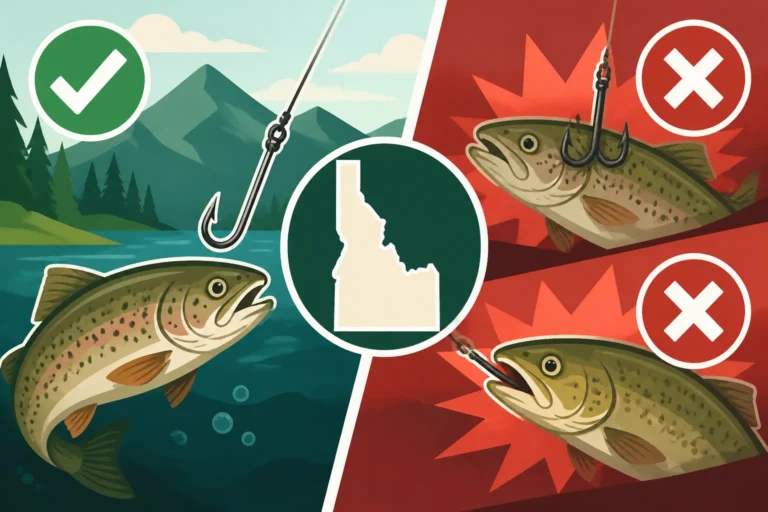
- Barbless Hooks: In many special regulation waters, especially those with catch-and-release rules or for species like sturgeon, barbless hooks are mandatory. Barbless hooks minimize tissue damage to the fish, making it easier and safer to release them unharmed. You can buy barbless hooks at most sporting goods stores or even convert barbed hooks by simply crimping down the barb with a pair of pliers. This simple act of preparation makes a huge difference for fish survival.
- Catch-and-Release Rules: For some species and in certain waters, catch-and-release is strictly enforced. This means that once caught, the fish must be immediately and carefully released back into the water without undue harm. This is often the case for wild steelhead, large sturgeon, or native trout in sensitive habitats. Understanding how to properly handle and release a fish is a crucial skill for any responsible angler in these situations. Improper handling can still lead to a fish's death, even if released, and can sometimes result in a citation. Ensure your hands are wet before touching a fish, minimize its time out of water, and use proper de-hooking tools.
The Idaho Fishing Regulations Explained guide is an excellent resource that breaks down many of these complex rules and helps clarify common points of confusion for resident anglers.
Common Resident License Misconceptions and Troubleshooting
Even with all the information out there, certain myths and misunderstandings about Idaho resident fishing licenses persist. Let's tackle some of these common questions and scenarios to ensure you're never left guessing.
"I'm Only Catch-and-Release, Do I Still Need One?"
This is probably one of the most common misconceptions among anglers, particularly those new to the sport or those who practice strictly catch-and-release. The idea is, "If I'm not taking anything home, I'm not impacting the fish population, so why do I need a license?"
The blunt truth is, yes, absolutely, you still need a fishing license, even if you intend to release every single fish you catch. The act of "fishing" itself, whether for retention or release, requires a license if you are 14 years or older. This is because your license fees contribute to the broader conservation efforts that benefit all fish populations, regardless of whether they end up in a cooler or swim away. Also, even with the best intentions, accidental harm or mortality can occur during catch and release, and the license system accounts for this. The IDFG needs to regulate and monitor all angling pressure on a fishery, not just the harvest. So, if your line is in the water with the intent to catch fish, you need that valid Idaho resident fishing license. There's no exception for catch-and-release only, despite what some might think.
Fishing on Private Land: Does a License Apply?
Another frequent question revolves around fishing on private property. "If I'm fishing on my friend's private pond, or on a section of river that runs through private land, do I still need a license?"
The answer here is a bit more nuanced, but generally, yes, a fishing license is still required for fishing on private land if the water itself is considered public water or if it's connected to public waters and holds migratory fish. Most rivers, streams, and larger lakes in Idaho, even those that flow through or border private property, are considered public waters. Therefore, if you're fishing these waters, even if accessing them from private land (with the landowner's permission, of course!), you will need a license.
The only real exception would be for a completely enclosed, privately owned pond or lake that has no inflow or outflow connections to public waters and is stocked solely by the landowner. These are rare, and usually, the fish populations aren't self-sustaining without artificial stocking. So, to be safe, assume you need a license. It's better to be covered than to risk a fine. Always ensure you have permission before stepping onto private land, even if you have a license. Trespassing is a separate, serious offense.
What Happens If You're Caught Without a License?
Let's address the elephant in the room. What happens if, despite all this information, you find yourself on the water without a valid Idaho resident fishing license? It's not a pleasant scenario, and the consequences can range from a warning to significant penalties.
- Citations and Fines: The most immediate consequence is typically a citation from an Idaho Fish and Game officer. Fishing without a valid license is a misdemeanor offense in Idaho, and fines can be substantial. These fines vary, but they can easily run into the hundreds of dollars, far exceeding the cost of an annual license.
- Confiscation of Gear: In some cases, particularly for repeat offenders or more serious violations, officers may have the authority to confiscate your fishing gear. Imagine losing your favorite rod and reel, not just paying a fine!
- Loss of Privileges: Beyond fines and confiscation, a conviction for fishing without a license can lead to the suspension of your fishing privileges for a period of time, not just in Idaho but potentially in other states as well through interstate compacts. This means you wouldn't be able to legally fish anywhere, even if you tried to buy a license later.
- Embarrassment and Frustration: Beyond the legal and financial penalties, there's the sheer frustration and embarrassment of being caught. What was supposed to be a relaxing day turns into a stressful encounter with law enforcement, and it can sour your enjoyment of fishing for a long time.
It's simply not worth the risk. The cost of an Idaho resident fishing license is minimal compared to the potential consequences of not having one. Make it a habit to check your license before every trip, keep it in a secure, waterproof place, and consider having a digital copy on your phone as a backup. The What Happens If You Fish in Idaho Without a License? guide goes into more detail about these repercussions. Being prepared and compliant is the easiest way to ensure your time on Idaho's beautiful waters is always enjoyable and worry-free.
Disclaimer
The information provided in this guide is intended for general informational purposes only and does not constitute legal advice. While we strive to offer accurate and up-to-date information, fishing regulations and license requirements are subject to change by the Idaho Department of Fish and Game. Always consult the official Idaho Fish and Game website or the most current Idaho Fishing Regulations brochure for the definitive and legally binding rules before engaging in any fishing activities.