How to Read an Idaho Fishing Catch Record Card
There’s nothing quite like the feeling of landing a beautiful fish in Idaho’s pristine waters, but that moment can quickly turn to mild panic when you remember that little catch record card tucked away in your wallet. It can feel like taking a pop quiz in the middle of a perfect fishing day, with all those tiny boxes and specific instructions. This guide is here to walk you through exactly how to read and understand your Idaho fishing catch record card, demystifying each section so you can focus on the joy of fishing, not the anxiety of paperwork.
Understanding the Purpose of Your Catch Record Card
Before we dive into the nitty-gritty of filling out your card, let's talk about why these cards exist in the first place. It’s easy to feel like it’s just another piece of bureaucratic red tape, but trust me, there’s a really good reason for it, one that benefits all of us who love to fish Idaho. The Idaho Department of Fish and Game (IDFG) uses the data collected from these cards to monitor fish populations, especially for sensitive species like salmon, steelhead, and sturgeon. This information is absolutely vital for making informed management decisions, setting bag limits, and ensuring sustainable fisheries for future generations.
Think of it this way: every time you fill out your card accurately, you’re contributing directly to the health of the very fish you love to pursue. Without this data, IDFG wouldn't know if a particular run is struggling, if catch limits need to be adjusted, or if specific conservation efforts are working. It's a critical tool for managing our precious natural resources. So, while it might feel like a chore at the end of a long day on the river, remember that you’re playing an active role in conservation. It’s part of being a responsible angler in the Gem State. Of course, this card is just one piece of the puzzle; you’ll also need an Idaho Fishing License Guide to ensure you're fully compliant, and the broader Idaho Fishing Regulations Explained are also paramount.
Why Certain Species Require Them
Not every fish you catch in Idaho requires a catch record card entry. Primarily, these cards are mandatory for anadromous species like Chinook salmon and steelhead, and also for white sturgeon. Why these specific species? It largely comes down to their unique life cycles, conservation status, and the intense fishing pressure they often face.
- Steelhead and Chinook Salmon: These incredible fish migrate from the ocean, up the Columbia River, and into Idaho's tributaries like the Clearwater and Salmon rivers, to spawn. Their populations are subject to a myriad of factors, including dam passage, ocean conditions, and fishing pressure across multiple states. Tracking individual catches is crucial for managing these complex runs. The catch record card, often tied to a specific endorsement like the Idaho Salmon and Steelhead Permit, allows IDFG to precisely measure angler harvest and effort. This helps them determine if current Idaho Steelhead Bag Limits or Chinook salmon limits are appropriate or if adjustments are necessary to protect wild populations while still allowing for a recreational fishery.
- White Sturgeon: Idaho's white sturgeon population, particularly in the Snake River, is an ancient and magnificent fishery, but it’s also one that requires very careful management. Sturgeon are long-lived, slow to mature, and highly vulnerable to overfishing. Because of their protected status and catch-and-release rules in many areas, the catch record card helps monitor angler encounters, effort, and compliance with rules like releasing fish unharmed. Even though many sturgeon fisheries are strictly catch-and-release, documenting these encounters is still vital for population health assessments. Understanding the specifics of Idaho Sturgeon Fishing Rules will further clarify why meticulous record-keeping is so important for these gentle giants.
What Happens to the Information You Record
Once you’ve done your part and returned your completed catch record card to IDFG, your diligent efforts contribute to a much larger dataset. The information is meticulously compiled and analyzed by fisheries biologists. They look at trends over time: Are more steelhead being caught in the Clearwater River than last year? Are anglers reporting catches in new areas? Is the average size of harvested Chinook declining?
This data directly informs future regulation changes, stocking programs, and habitat restoration projects. For example, if cards consistently show low harvest numbers for a particular steelhead run, it might trigger a review of harvest limits or a closer look at dam passage survival rates. Conversely, if catches are robust, it could indicate a healthy, thriving population that can sustain continued angling. Your little card is a piece of a giant puzzle that helps keep Idaho's fisheries strong and healthy for everyone, including future generations of anglers. It’s a direct line of communication between you, the angler, and the scientists working to protect our shared resource.
Decoding the Anatomy of Your Catch Record Card
Alright, let's get down to the brass tacks: what's actually on this card, and what do all those little boxes mean? It can look a bit intimidating at first glance, but once you break it down, it's pretty straightforward. Most Idaho fishing catch record cards, especially for salmon and steelhead, follow a similar format. You might even grab a few extra waterproof pens and a small fishing notebook from Amazon before your trip, just to be prepared.
Personal Information and License Details
The very first section of your catch record card is typically dedicated to your personal identification and fishing license information. This is standard stuff, but it's crucial for tying your catches back to you and your legal angling privileges.
- Name and Address: Pretty self-explanatory! Make sure this matches the information on your fishing license.
- Customer ID / License Number: This is perhaps the most important identifier. It's unique to you and links directly to your Idaho Fishing License Cost Guide and the type of license you hold (e.g., resident, non-resident, annual). Double-check that you're entering the correct number from your current license. An incorrect number here can make your submitted card invalid, meaning your valuable catch data won't be counted, and worse, you could be cited for improper reporting.
- Permit Number(s): If you're targeting species like salmon or steelhead, you'll need specific permits in addition to your general fishing license. For example, you’ll have an Idaho Salmon and Steelhead Permit number. This section is where you’ll record that permit number. It's essential because these permits often have their own specific rules, seasons, and harvest limits separate from your general license. For instance, What the Idaho Steelhead Permit Covers is distinct from your basic fishing license.
Specific Species Tracking Sections
After your personal details, the card will have dedicated sections for each specific species it's designed to track. These are typically rows or columns for individual fish catches. This is where the real work, and accuracy, comes in.
Let’s take steelhead as a prime example, as they are a frequent target that requires meticulous record-keeping. The card will usually have columns for:
- Date of Catch: The exact calendar date you caught the fish. This is crucial for tracking seasonal trends and ensuring you're fishing within open seasons.
- River/Water Body: The name of the river, stream, or lake where you caught the fish. Specificity matters here; sometimes, cards will even have sections for upper vs. lower river stretches. For example, knowing if you caught a fish on the main Salmon River or one of its tributaries like the Little Salmon.
- Location/River Section: This asks for a more precise location within the river or water body. For example, "Clearwater River – Orofino stretch" or "Snake River – Below Hells Canyon Dam." This helps IDFG pinpoint areas of high effort or successful catches.
- Species: While the card might be specifically for "Steelhead," there could be nuances. For example, some cards differentiate between various salmon species if they are in the same waters.
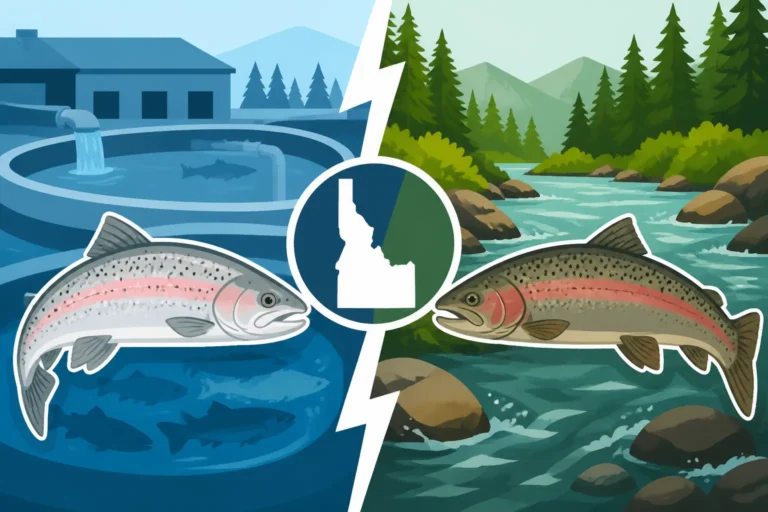
- Hatchery/Wild: This is critical for steelhead and salmon. In Idaho, wild steelhead and Chinook salmon are almost universally protected and must be released unharmed. Hatchery fish, which typically have a clipped adipose fin (the small, fleshy fin on their back between the dorsal and tail fins), are generally legal to harvest within limits. The card will have a box to mark "H" for hatchery or "W" for wild. Knowing How to Tell a Hatchery Steelhead from a Wild One in Idaho is non-negotiable for anyone targeting these fish.
- Kept/Released: Did you keep the fish for harvest (within your bag limit, of course!), or did you release it? Mark "K" for kept or "R" for released. Even released fish count towards the data, especially for species like sturgeon where catch-and-release is the norm.
- Fin Clip (for steelhead/salmon): If you kept a hatchery fish, some cards might ask you to specify which fin was clipped (e.g., adipose, ventral). This is less common on the standard angler card but can be present on more specialized versions. Typically, the adipose fin clip is the primary identifier.
- Validation Box (for retained fish): For kept steelhead and Chinook, many cards require you to "validate" the catch by punching out or crossing off a specific space on your card immediately after retention. This "tagging" prevents you from keeping more than your daily or seasonal limit. This section of the card is directly linked to your Idaho Catch Limits and Bag Limits Explained.
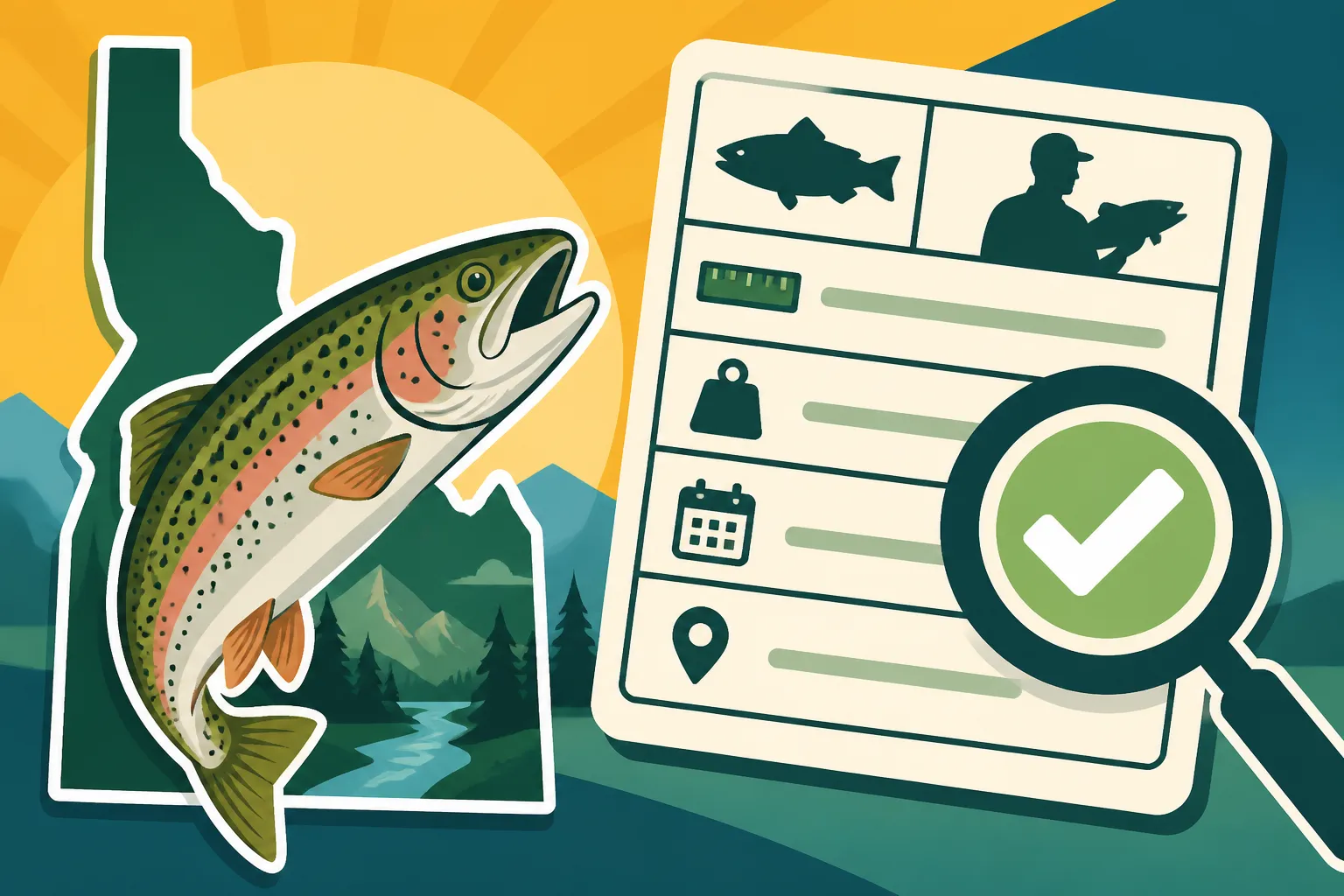
Here's a simplified table illustrating common fields you might find on an Idaho fishing catch record card:
| Field Section | Example Field Name | Purpose | Notes |
|---|---|---|---|
| Angler Information | Name | Identifies the angler. | Must match your license. |
| Customer ID | Unique identifier linking to your license. | Essential for validation and data tracking. | |
| Permit Number(s) | Specific permit for target species (e.g., Steelhead). | Required for certain fisheries; record correctly. | |
| Catch Entry (per fish) | Date | When the fish was caught. | Use MM/DD or DD/MM format. |
| Water Body | Name of the river/lake/reservoir. | Be specific (e.g., "Clearwater River" not just "river"). | |
| Location/River Section | More precise area of catch. | Helps IDFG understand localized fishing pressure. | |
| Species | Type of fish caught (e.g., "Steelhead"). | Confirm species identification carefully. | |
| Hatchery (H) / Wild (W) | Distinguishes between hatchery-reared (clipped fin) and wild fish. | CRITICAL for legality and conservation. Wild fish are often catch-and-release only. This is where How to Identify a Hatchery Steelhead is vital. | |
| Kept (K) / Released (R) | Indicates if the fish was harvested or returned to water. | Even released fish contribute important data. For species like sturgeon, it's almost always 'R'. | |
| Validation Box | Mark for retained fish (punch, cross-out). | Must be done immediately upon retention. Prevents over-bagging. Directly ties to your Idaho Steelhead Bag Limits. |
Return Instructions
Finally, towards the bottom or on the back of your card, you’ll find instructions for returning it. This section is just as important as the catch entries themselves.
- Due Date: There's usually a specific deadline by which your card must be returned, often by December 31st for annual permits. Missing this deadline can result in fines or penalties, and again, your valuable data is lost.
- Return Address: A mailing address for the Idaho Department of Fish and Game.
- Online Reporting (if available): Some permits may offer an option to report your catches online. If this is an option, the card will typically provide the website or a QR code. This is often the easiest and fastest way to ensure your card is submitted correctly and on time.
Always read these instructions carefully! They can sometimes vary slightly depending on the specific permit or year.
Step-by-Step Guide to Filling Out Your Catch Record Card
Now that you know what all those fields mean, let’s go through the process of actually filling out your card. It might seem like a lot to remember in the heat of the moment, but with a little practice, it becomes second nature. This process is key to your compliance with Idaho Catch Record Card Requirements and ensures your contributions to conservation are counted.
Before You Start Fishing
Preparation is key to hassle-free record-keeping. Don't wait until you've got a fish on the line to figure out your card!
- Read the Entire Card and Regulations: Before your first cast, take a few minutes to read through the entire catch record card. Familiarize yourself with all the sections and their requirements. At the same time, review the specific regulations for the waters you'll be fishing, paying close attention to species identification, bag limits, and any special rules for that particular section of river or lake. Your Idaho Fishing Regulations Explained brochure is your best friend here.
- Fill in Personal & License Information: Complete your name, address, Customer ID, and any relevant permit numbers (like your Idaho Salmon and Steelhead Permit) before you even leave the house or launch your boat. This saves time and ensures accuracy when you're out on the water.
- Choose the Right Writing Instrument: This might sound trivial, but it's important. Use a waterproof, permanent fine-point pen or pencil. Rain, boat spray, or even just sweaty hands can easily smudge or erase entries made with a regular pen, rendering your card illegible. Look for permanent, fine-point markers – you can find great options on Amazon that won't smudge or fade. Many anglers swear by waterproof notebooks or even laminated copies of their regulations, readily available on Amazon or at local sporting goods stores.
Immediately After Catching a Fish
This is where the "in the moment" reporting happens. The key word here is immediately. Don't wait until you're back at the truck or camp.
- Identify the Species: First and foremost, correctly identify your catch. Is it a steelhead? A Chinook salmon? A sturgeon? This is crucial because different species have different regulations and reporting requirements.
- Determine Hatchery or Wild (for applicable species): For steelhead and Chinook, this step is absolutely critical. Inspect the fish for an adipose fin clip. If the adipose fin is present and intact, it's a wild fish and must generally be released unharmed. If the adipose fin is clipped, it's a hatchery fish, and you can retain it within legal limits. Remember Idaho Hatchery vs Wild Steelhead Rules are strict.
- Decide to Keep or Release: Make your decision based on regulations, your bag limit, and your personal preference.
- Record the Catch (Within 5-10 Minutes): Regardless of whether you keep or release, immediately record the necessary information on your card.
- Date: The current date.
- Water Body/Location: Be as specific as possible.
- Species:
- Hatchery (H) or Wild (W):
- Kept (K) or Released (R):
- Validate Retained Fish (Punch/Mark Immediately): If you kept a legal hatchery fish, you must immediately validate that catch on your card. This usually means punching out the designated box, or sometimes drawing an "X" through it, depending on the card's design. This action "tags" the fish to your license and prevents you from keeping another fish that would put you over your daily or seasonal limit. Forgetting this step or waiting to do it later can lead to serious fines. This is outlined in detail in guides like How to Fill Out an Idaho Steelhead Catch Record Card.
What to Do If You Make a Mistake
Mistakes happen, especially when your hands are cold or you're excited. Don't panic, but address it correctly.
- Small Error (e.g., wrong date): If you've just made a minor error that's still clearly legible, simply cross it out with a single line, write the correct information next to it, and initial the correction. Don't try to erase it or use white-out, as that can make the card look tampered with.
- Major Error/Illegible: If you've really messed up a line beyond clear correction, it’s often best to draw a clear line through the entire entry and start a new entry on the next available line. It's always better to have an unused, clearly crossed-out entry than an unreadable or confusing one.
- Losing Your Card: This is a big one. If you lose your catch record card, you must obtain a replacement. This typically means visiting an IDFG office or a licensed vendor. You cannot legally fish for species requiring the card without it in your possession. You also won’t be able to retrieve lost catch information, which could be an issue if you’ve already harvested fish.
Common Pitfalls and Pro Tips for Catch Record Card Compliance
Navigating the nuances of fishing regulations can be tricky, and the catch record card is a frequent source of questions. But with a bit of foresight and some smart habits, you can avoid common mistakes and ensure you're always in compliance.
Avoiding Common Mistakes
It's easy to make an error, especially when you're new to fishing in Idaho or dealing with dynamic regulations.
- Forgetting to Fill Out the Card: This is probably the most common mistake. You’ve had an amazing day, you’re tired, and you just want to get home. But that little card needs attention before you leave the water. Forgetting to record a kept fish, or worse, forgetting to validate it, can lead to fines. It's often viewed as if you're trying to hide something, even if it's just an oversight. Set an alarm on your phone, or create a ritual for yourself immediately after landing a fish.
- Incorrect Species Identification: Mistaking a wild cutthroat trout for a hatchery rainbow, or a small Chinook for a coho, can lead to serious trouble, especially if you retain a protected species. Always err on the side of caution. If you're not 100% sure, release the fish. Refer to your IDFG regulation booklet, which usually has excellent illustrations, or consult an experienced angler.
- Misidentifying Hatchery vs. Wild: We've talked about this, but it bears repeating. The adipose fin clip is the key. Wild steelhead and salmon are the backbone of future runs. Retaining a wild fish is a significant violation and carries hefty penalties. Always double-check that fin, even if the fish seems like an obvious hatchery fish. Remember, if there’s no clip, it's wild – let it go! For more on this, check out What the Idaho Steelhead Permit Covers.
- Not Validating Immediately: The rule is clear: immediately upon retaining a fish, you must validate your catch on the card. This isn't something you do when you get back to the boat launch or home. If a conservation officer checks your cooler and finds a retained steelhead that isn't validated, you could face consequences, even if you’re under the legal limit. Keep your card and pen accessible.
- Illegible Entries: A smudged, faded, or unreadable entry is as good as no entry at all. This is why a good waterproof pen or pencil is vital. If an officer can't clearly read what you've written, they can't verify your compliance.
Pro Tips for Seamless Compliance
A little forethought goes a long way in making catch record card management simple.
- Keep Your Card Accessible: Don't bury it deep in your tackle box or in a forgotten pocket. Keep it in a waterproof holder (like a small Ziploc bag or a dedicated waterproof wallet) in an easily accessible pocket of your waders or fishing vest. When you need it, you want to grab it in seconds.
- Carry a Spare Pen/Pencil: Pens run out of ink, break, or get lost. Always have a backup. Consider a short pencil attached to your license holder with a small string, or a couple of those reliable Sharpie Mini markers.
- Laminate Important Information: Some anglers will print out a small, laminated cheat sheet with key identification tips (e.g., hatchery vs. wild fin clip diagrams), a summary of daily limits for their target species, and even common river section names. This can be invaluable, especially when trying to quickly identify a species or remember a specific regulation.
- Utilize Online Resources: The Idaho Fish and Game website is a treasure trove of information. Not only can you often purchase or renew your license online, but many special permits and regulations are updated frequently. Bookmark the IDFG website on your phone, so you can quickly look up specific rules if you're ever in doubt while on the water. If you're unsure about the local tackle shops, a quick search on Amazon for 'Idaho fishing gear' can point you to helpful resources.
- Take a Picture (for personal reference, not official record): If you’re ever unsure about an entry you made, take a quick photo of your card with your phone after you’ve filled it out correctly. This is not a substitute for the official card, but it can be a helpful personal reference if you later have questions or want to verify an entry.
- Return Your Card ON TIME: Make a note of the return deadline (usually by December 31st for annual permits) and submit your card well in advance. Mail it in, or use online reporting if available. Not returning your card can jeopardize your ability to purchase a license in the future, and again, critical data is lost. And for those fishing with little ones, remember to check the Idaho Fishing Rules for Kids and Families to ensure everyone, young and old, understands their responsibilities.
By following these tips and truly understanding the significance of your catch record card, you'll not only stay compliant but also become an even more valuable contributor to Idaho's incredible fishing heritage.
Disclaimer
Please remember that fishing regulations, including those pertaining to catch record cards, can change. Always consult the most current Idaho Fishing Regulations brochure or the Idaho Department of Fish and Game website for the most up-to-date and accurate information before heading out to fish. This guide is for informational purposes only and should not be considered legal advice.