How to Fish for Smallmouth Bass in Idaho Rivers
For many anglers, the thrilling tug of a smallmouth bass in an Idaho river is an unmatched experience. Yet, finding and consistently catching these aggressive, hard-fighting fish in moving water can feel like a puzzle, especially when currents, water levels, and fish behavior are constantly shifting. This comprehensive guide is designed to break down the complexities, offering seasoned strategies and practical advice to help you master the art of river smallmouth bass fishing in the Gem State.
Understanding Idaho's Smallmouth Bass Habitats in Rivers
Successfully targeting smallmouth bass in Idaho's rivers begins with understanding their preferred homes and hideouts. Unlike their largemouth cousins who often lurk in stagnant, weedy waters, smallmouth thrive in moving water, gravitating towards specific structures that offer shelter, ambush points, and access to food.
Prime River Sections and Structure
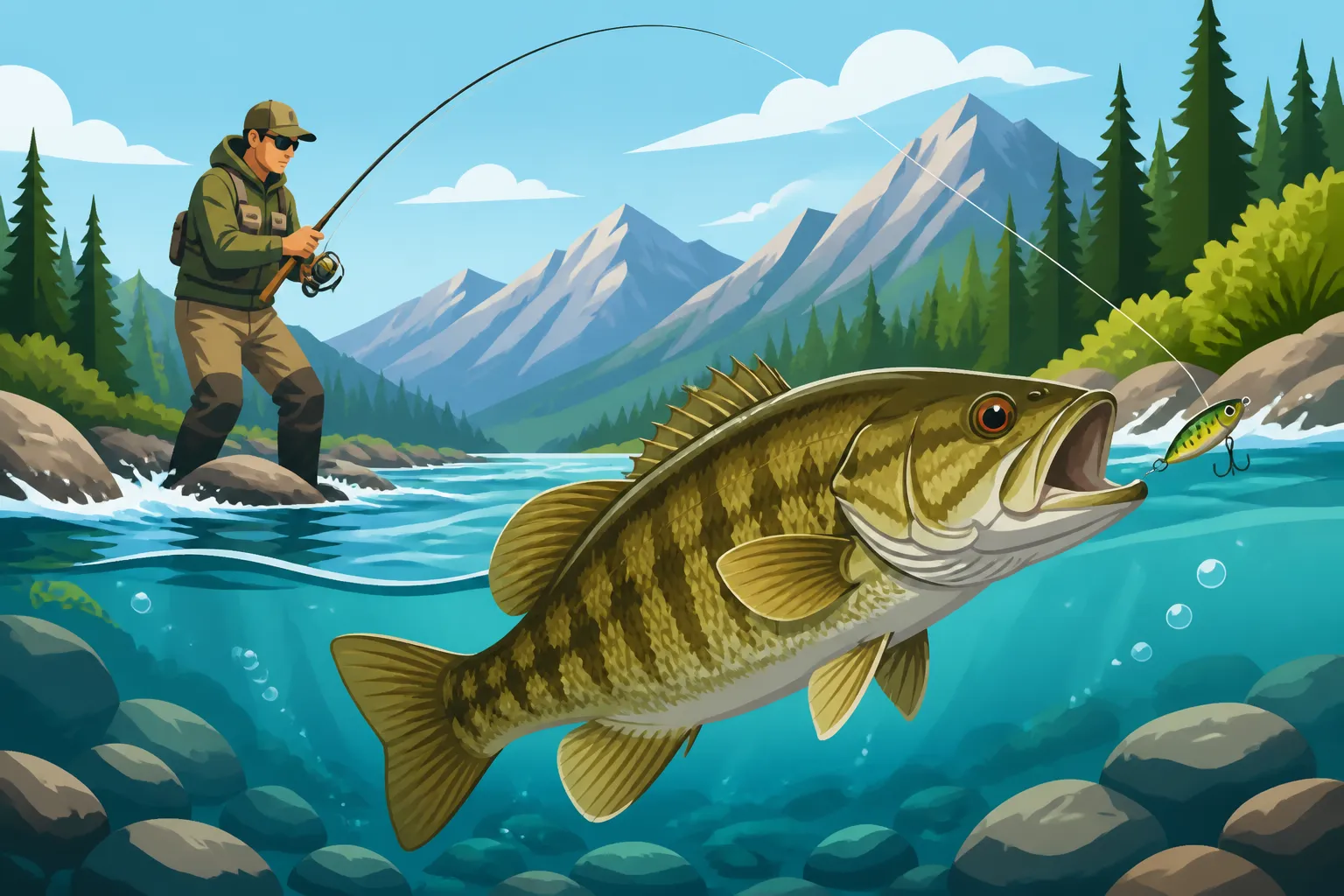
Idaho is blessed with incredible smallmouth bass rivers, none more famous than the mighty Snake River. Other productive systems include the lower Clearwater River and the lower Salmon River, especially where they flow into the larger Snake. These rivers, particularly the Snake, offer a mosaic of habitats perfect for smallmouth. You'll find them congregating around rocky banks, which provide essential cover and absorb solar heat, making these spots warmer earlier in the season. Current breaks are absolute goldmines. Think about any feature that disrupts the main flow: large boulders, downed trees, submerged timber, bridge pilings, or even subtle changes in the riverbed. These spots create eddies or slack water where smallmouth can rest without expending too much energy, waiting to ambush prey swept downstream by the current.
Riffles and pools are also key. While riffles provide oxygen and attract baitfish, the smallmouth themselves often stage just below these faster sections, in the deeper, calmer water of the pools, ready to dart into the current for a meal. Look for areas where a shallow riffle transitions into a deeper hole – that transition zone is often prime real estate. Furthermore, points or ledges that jut out into the current, creating distinct current seams, are magnets for smallmouth. They'll position themselves on the calm side of the seam, ambushing anything that drifts by on the faster side. Remember, these fish are predatory opportunists, always looking for the easiest meal, and structure provides that advantage.
Water Conditions and Preferred Environments
Smallmouth bass are incredibly sensitive to their environment, and understanding their preferences regarding water conditions is paramount. Their activity levels are closely tied to water temperature. Generally, smallmouth become most active when river temperatures are between 55 and 70 degrees Fahrenheit. Below 50 degrees, they tend to be lethargic, retreating to deeper, more stable water, while temperatures much above 75 degrees can also slow them down as oxygen levels decrease. You can often find fish in these deeper, cooler pockets during hot summer days.
Clarity is another significant factor. Smallmouth are visual predators and prefer water with at least some visibility, allowing them to spot prey and their own lures. In overly turbid or muddy water, they rely more on lateral line senses, and bright, noisy lures might become more effective. However, their sweet spot is often lightly stained or clear water where they can hunt effectively. Current speed also plays a role; while they love moving water, excessively fast, turbulent flows can make it difficult for them to hold position and feed. They'll seek out those aforementioned current breaks and eddies where the flow is more manageable, yet still provides a conveyor belt of food. Knowing how to read these dynamics is a crucial part of your strategy, allowing you to narrow down productive stretches on rivers like the Snake River and maximize your time on the water.
Essential Gear for River Smallmouth Bass
When you're chasing smallmouth in Idaho's rivers, having the right gear isn't just about comfort; it's about efficiency and effectiveness. These fish are fighters, and the river environment demands tackle that can stand up to the challenge.
Rods, Reels, and Line Choices
For river smallmouth, you'll generally want a versatile setup that allows for accurate casting and sufficient power to battle fish in current. A medium-light to medium power rod, typically between 6'6" and 7'6" in length, is often ideal. A fast action rod is preferred as it offers a sensitive tip for detecting subtle bites and a strong backbone for setting hooks and fighting fish. Popular brands like St. Croix, Fenwick, or even more budget-friendly options found on Amazon offer excellent choices in these specifications. Many anglers opt for spinning reels for their ease of use, particularly for lighter lures and finesse techniques. A 2000 to 3000 series spinning reel provides a good balance of line capacity and retrieve power. For those who prefer baitcasting, a medium-heavy rod with a high-speed retrieve reel (7.1:1 or higher) is fantastic for quickly working lures and setting hooks in heavier cover.
When it comes to line, you have a few excellent options, each with its own advantages. Eight to 12-pound test fluorocarbon is a favorite for many smallmouth anglers. It's nearly invisible underwater, offers excellent sensitivity, and has good abrasion resistance – a huge plus when fishing around rocky riverbeds. Monofilament line of the same test is also viable, offering good knot strength and shock absorption, which can be useful when fighting hard-charging smallmouth. Some anglers prefer to spool up with braided line (10-20 lb test) for maximum casting distance and sensitivity, often tying a fluorocarbon leader (6-10 lb test) to maintain stealth. This combination provides the best of both worlds and is a technique worth exploring. Don't forget, having the proper gear is key to maximizing your chances and adhering to Idaho Fishing Rules on the Number of Rods Per Angler if you plan to use multiple setups.
Lures, Baits, and Terminal Tackle
The world of smallmouth bass lures is vast, but for river fishing, certain categories consistently outperform others. Crankbaits are indispensable, particularly those designed to dive to depths between 4 to 12 feet. Choose natural baitfish colors like perch, crawfish, or shad patterns for clear water, and brighter colors like chartreuse or fire tiger for stained water. Square-bill crankbaits are excellent for deflecting off rocks without snagging, making them perfect for those rocky river stretches.
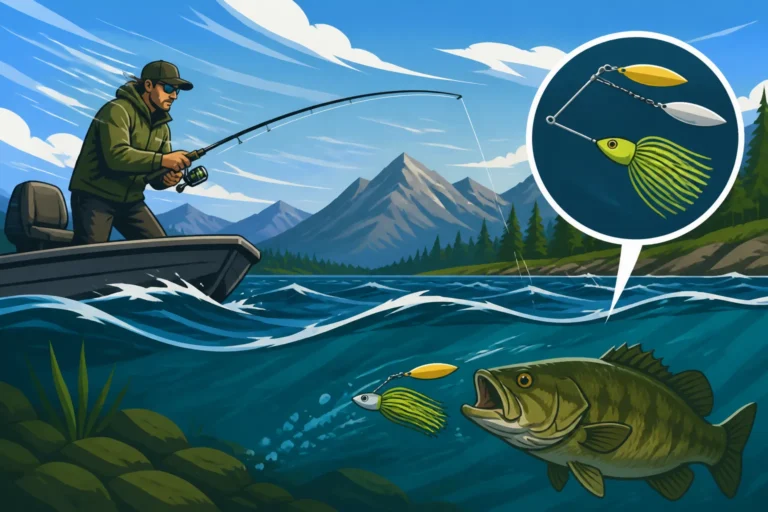
Soft plastics are incredibly versatile. Tube baits, often rigged on an internal jig head, mimic crawfish and gobies, both staple foods for river smallmouth. Grubs, especially on a jig head, are simple yet effective. Senko-style worms, Texas-rigged or wacky-rigged, can entice even the most finicky bass. Crawfish imitations, whether soft plastics or small jigs dressed with plastic trailers, are a must-have, as crawfish are a primary food source in many Idaho rivers. Spinnerbaits, with their flashing blades and vibrating skirts, are fantastic for covering water and triggering reaction strikes, especially in stained water or around submerged timber. Jerkbaits and topwater lures (poppers, walking baits) shine when fish are actively feeding closer to the surface. You can find a fantastic selection of all these on Amazon, often at competitive prices. For terminal tackle, carry a variety of jig heads (1/8 oz to 3/8 oz), extra hooks (EWG hooks for Texas rigging), split shot, and small barrel swivels. Understanding what to use and when is crucial, and our Best Bait and Lures for Idaho Fishing guide can provide even more detail.
| Lure Type | Best Conditions | Retrieve Style | Pros | Cons |
|---|---|---|---|---|
| Crankbaits | Clear to slightly stained water, around structure | Steady retrieve, occasional twitch | Covers water, triggers reaction strikes | Can snag easily in heavy cover, depth specific |
| Soft Plastics | Varied conditions, especially finesse situations | Dragging, hopping, slow retrieve, twitch | Mimics natural prey, highly versatile | Can be slow to fish, sometimes less durable |
| Spinnerbaits | Stained water, current breaks, windy conditions | Steady retrieve, stop-and-go | Vibration and flash attract fish, weedless | Can be less effective in very clear water |
| Jerkbaits | Clear water, cooler temperatures, active fish | Twitch-pause-twitch | Irregular action, great for triggering bites | Requires specific technique, can be tedious |
| Topwater | Low light (dawn/dusk), calm water, active fish | Popping, walking, steady retrieve | Exciting strikes, covers large areas | Only effective when fish are looking up |
| Tube Baits | Rocky bottoms, current seams, mimicking crawfish | Dragging, hopping, jigging | Realistic profile, effective for craw-eaters | Can get hung up easily on rocks |
Proven Techniques for Targeting River Smallmouth
Catching river smallmouth is often about precision and presentation. These fish are smart, ambush predators, and your approach can make all the difference between a productive day and a frustrating one.
Casting and Presentation Strategies
Accuracy is paramount when fishing for river smallmouth. You're often targeting specific current breaks, rock piles, or submerged logs. Learn to cast precisely, placing your lure exactly where you think a bass might be holding. Fan casting, where you cast in a circular pattern to cover a wide area, is an excellent way to locate active fish in a new spot. However, once you find them, focus your casts to that productive zone. Skipping lures, especially soft plastics or small jigs, under overhanging branches or docks can be incredibly effective, allowing you to reach bass that other anglers might miss. Pitching, a shorter, more controlled underhand cast, is great for quietly placing lures into tight spots.
Your retrieve speed and style should match the conditions and the fish's mood. In colder water or during less active periods, a slower, more deliberate retrieve, perhaps dragging a tube bait along the bottom or slowly hopping a jig, can be key. When fish are active, a faster retrieve with a crankbait or spinnerbait can trigger aggressive reaction strikes. Don't be afraid to experiment with stop-and-go retrieves, sudden twitches, or pauses, as these erratic movements often mimic wounded prey and can be irresistible to a smallmouth. Remember, the river current will affect your lure's presentation, so learn to "work with" the current, allowing it to carry your lure naturally into strike zones.
Reading the Water and Approach
The ability to "read the water" is perhaps the most critical skill for river smallmouth anglers. This involves understanding how current flows, where fish are likely to hide, and what those subtle underwater cues mean. Look for distinct current breaks where faster water meets slower water – these seams are highways for bait and ambush points for bass. Eddies, those swirling pockets of calmer water behind large obstructions, are classic smallmouth haunts. They provide a comfortable resting spot with easy access to passing food. Pay close attention to changes in depth, indicated by darker water or subtle ripples on the surface. Deeper pools adjacent to riffles or rapids are often holding areas. Our guide on Reading Water on Idaho's Rivers can give you an even deeper dive into these concepts.
Your approach to these spots is just as important as your cast. Stealth is vital. Smallmouth can be surprisingly skittish, especially in clear water. If you're wading, move slowly and deliberately, avoiding shuffling your feet excessively. If you're fishing from a boat, maintain a quiet approach, using trolling motors sparingly and avoiding banging gear. Position yourself upstream of your target whenever possible, allowing the current to carry your scent and sound away from the fish. Cast beyond your target and retrieve through the strike zone, rather than casting directly onto it, which can spook fish. Always wear polarized sunglasses to help you see subsurface structure and potentially even the fish themselves.
Seasonal Considerations for River Smallmouth Success
Just like people, smallmouth bass change their habits with the seasons. Understanding these shifts is crucial for consistent success on Idaho's rivers. Their behavior is largely dictated by water temperature, which drives their metabolism and spawning cycles.
Spring and Pre-Spawn Tactics
As winter's chill finally gives way to spring, the rivers begin to warm, triggering the smallmouth bass to emerge from their deeper, less active wintering holes. This pre-spawn period is one of the most exciting times to fish. Water temperatures typically climb into the mid-40s to low 50s Fahrenheit, prompting the bass to move towards shallower, sun-warmed areas. Look for staging areas like large flats adjacent to deeper channels, rocky points that absorb heat, and protected coves or eddies with slower currents. These are the places where they'll gather before moving onto their spawning beds.
During pre-spawn, smallmouth are often hungry and aggressive, trying to pack on weight before the energy-intensive spawning ritual. Slower retrieves are usually more effective, as the fish are not yet in full chase mode. Jigs with crawfish imitators, suspending jerkbaits, and slow-rolled spinnerbaits are excellent choices. Try dragging tube baits or plastic craws along the bottom of rocky transitions. As the water inches closer to the low 50s, crankbaits that mimic baitfish can also become deadly. It's a fantastic time to connect with some of the biggest smallmouth of the year. Always check the Idaho Fishing Season Calendar to ensure you're compliant with any specific regulations for different water bodies during this crucial period.
Summer and Fall Strategies
Once the water temperatures hit the high 50s and low 60s, smallmouth move into their spawning phase. After the spawn, they become incredibly active throughout the summer, often feeding heavily. During the peak of summer, especially on hot, sunny days, smallmouth will often seek refuge in deeper, cooler water. Target deeper pools, ledges, and areas with strong current breaks that provide oxygen and cooler temperatures. Early mornings and late evenings often offer the best bite, as water temperatures are cooler and baitfish are more active. Topwater lures can be incredibly exciting during these low-light periods. Throughout the day, stick with jigs, soft plastics, and deep-diving crankbaits to target fish holding closer to the bottom. Fast-moving current seams and riffles that churn up oxygen and dislodge food are always good bets.
As summer fades into fall, the water temperatures begin to drop, signaling another major feeding frenzy for smallmouth. This is when they start to school up, migrating towards deeper holes where they will eventually winter. They become incredibly aggressive, trying to fatten up for the leaner months ahead. Fall can offer some of the most consistent and exciting smallmouth action. Spinnerbaits, crankbaits, and jerkbaits worked aggressively through current breaks and deeper runs can be highly effective. Look for schools of baitfish, as the smallmouth won't be far behind. This period lasts until water temperatures dip consistently into the low 50s and 40s. Understanding these seasonal changes is fundamental to having success across the year, and our guide to the Best Time of Year to Fish in Idaho offers even broader seasonal insights.
Advanced Tips and Responsible Angling
Beyond the basics, there are always ways to refine your approach and ensure the longevity of Idaho's incredible smallmouth bass fisheries. Adapting to conditions and practicing proper fish care are marks of a truly skilled angler.
Adjusting to River Flow and Clarity
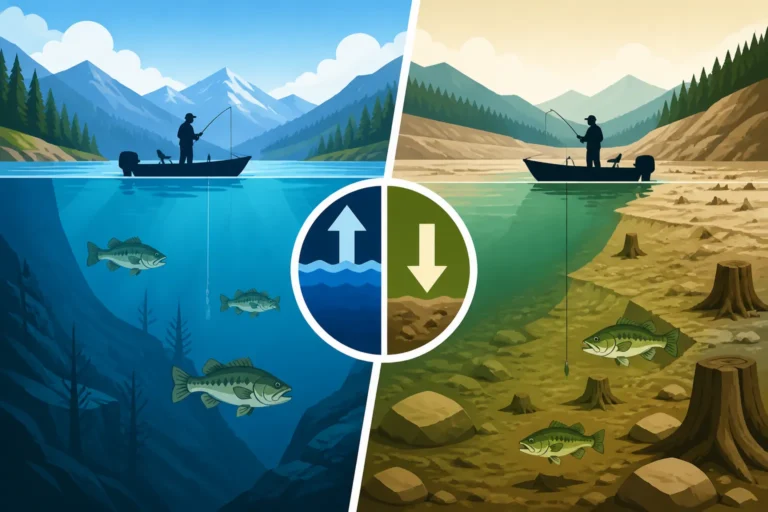
River conditions are rarely static, and a successful smallmouth angler knows how to adapt. High water and fast flows, often seen during spring runoff or after heavy rains, can make fishing challenging. Smallmouth will typically move out of the main current and seek refuge in slower, more protected areas like back eddies, flooded timber, or shallow pockets behind large boulders. During these times, focus on these calmer zones, and consider using heavier jigs or weights to ensure your lure gets down to the fish. Brightly colored lures, like chartreuse or orange spinnerbaits and crankbaits, can also be more visible in murky, high water.
Conversely, during periods of low water, which can occur in late summer or fall, smallmouth will often congregate in deeper holes or depressions in the riverbed. They become more cautious and may require a more subtle, finesse presentation. Think light line, smaller soft plastics, and a slower retrieve. In crystal-clear, low water, stealth is paramount. Long casts, natural lure colors, and a quiet approach become essential. Always be observant of the water color and speed; these cues will tell you where the fish are likely holding and what lures they might respond to. Our comprehensive Idaho Fishing Techniques Guide delves into these adaptations in more detail.
Catch and Release Best Practices
Idaho's smallmouth bass populations, particularly in rivers, are a precious resource. Practicing responsible catch and release is vital to ensure these fisheries remain healthy and vibrant for future generations. When you land a smallmouth, handle it as little as possible. Wet your hands before touching the fish to protect its protective slime coat. Avoid holding the fish vertically by its jaw, especially if it's a larger bass, as this can damage its internal organs or jaw. Instead, support the fish horizontally with one hand under its belly and the other gently gripping the lower jaw.
Use a de-hooking tool or needle-nose pliers to quickly remove the hook. If the fish has swallowed the hook deeply, it's often best to cut the line as close to the hook as possible rather than trying to rip it out, which can cause fatal injuries. Consider switching to single, barbless hooks, which make de-hooking much easier and quicker, causing less stress to the fish. When releasing the fish, gently place it back into the water, headfirst, in a calm area, and hold it upright until it swims away on its own. If it's struggling, gently rock it back and forth to help water flow over its gills. Understanding and adhering to Idaho Daily Bag Limit for Smallmouth Bass is also crucial, and remember, exceeding the bag limit can lead to serious consequences, as detailed in What Happens If You Exceed Idaho's Bag Limit?. Our collective efforts in conservation ensure that the thrill of catching an Idaho smallmouth bass remains a cherished experience for all.
Disclaimer
Please note: Fishing regulations in Idaho are subject to change. Always consult the latest Idaho Fishing Regulations and Seasons publication from the Idaho Department of Fish and Game before heading out on the water. This guide is for informational purposes only and does not supersede official regulations.