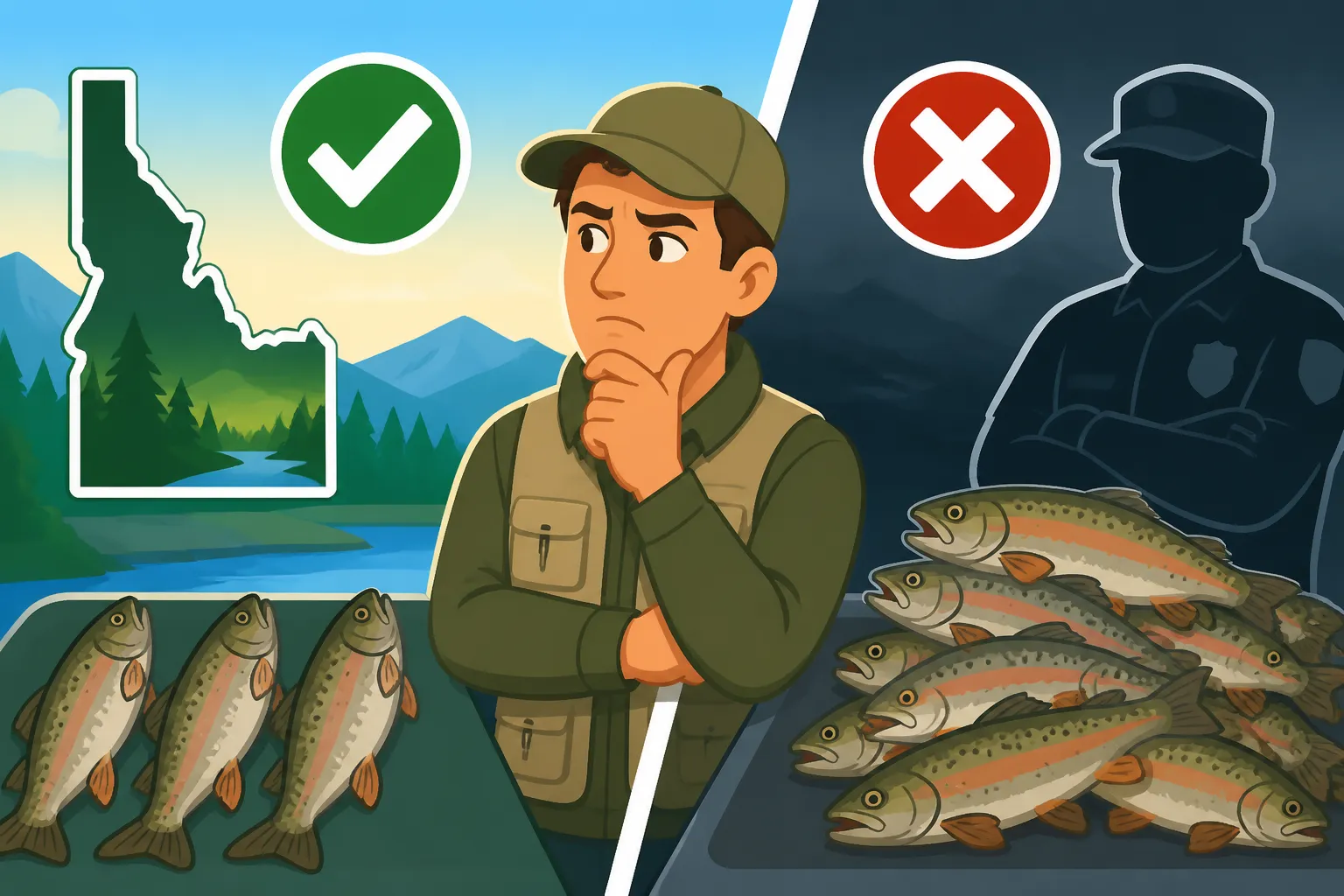
What Happens If You Exceed Idaho’s Bag Limit?
The thrill of a successful fishing trip in Idaho is unmatched – the crisp mountain air, the beautiful waters, and the excitement of a tug on your line. But amidst that excitement, it's surprisingly easy to lose track, or maybe you just misread a rule, and suddenly you've got one more fish than you're allowed. That moment of realization, or worse, the unexpected tap on the shoulder from a conservation officer, can turn a fantastic day into a nightmare. Understanding what happens when you exceed Idaho's fishing bag limits isn't just about avoiding trouble; it's about protecting our incredible fisheries and ensuring everyone gets to enjoy them for years to come. This guide will walk you through the real-world implications, from immediate on-the-spot consequences to the serious long-term legal and financial repercussions, so you can make sure your next outing is memorable for all the right reasons.
Understanding Idaho's Fishing Bag Limits
Let's be honest, sometimes the rules can feel a bit overwhelming. But when it comes to bag limits, these aren't just arbitrary numbers; they're the bedrock of sustainable fishing. Overlooking them, even by accident, can have significant consequences.
Why Bag Limits Exist
Bag limits aren't designed to make your life harder or to minimize your fun. Quite the opposite, actually. They are a critical tool used by the Idaho Department of Fish and Game (IDFG) to manage our precious fish populations responsibly. Think about it: without limits, some popular fishing spots or particularly vulnerable species, like our iconic wild steelhead or native cutthroat trout, could quickly be overfished to the point of collapse.
Imagine a popular stream teeming with trout. If every angler kept every fish they caught, that stream would be barren in no time. Bag limits ensure that enough fish remain in the ecosystem to spawn, grow, and maintain healthy populations. This balance is crucial for conservation, especially for anadromous species like salmon and steelhead that face monumental journeys and numerous challenges. It's about making sure that your kids, and their kids, will still have vibrant fisheries to enjoy. It's a collective responsibility, really, to ensure the sustainability of this incredible resource we all cherish.
How to Find Current Bag Limits
This is where many anglers can get tripped up, and it's totally understandable. Idaho's fishing regulations can be complex because they're not always one-size-fits-all. A lot of folks assume that once they've looked up the general statewide rules, they're good to go. But here's the kicker: bag limits often vary dramatically by specific water body, fish species, and even the time of year. For instance, the daily bag limit for trout on the main stem of the Snake River might be different from a small alpine lake in the Sawtooths. And don't even get me started on the intricate rules for species like steelhead and Chinook salmon!
The absolute best and most up-to-date source for all this information is the official Idaho Fish and Game website. They publish an annual fishing proclamation that outlines every single rule you need to know. You can download the PDF to your phone, or better yet, grab a physical copy from any local sporting goods store or even some convenience stores across the state. Sometimes, you can even find handy laminated regulation guides on platforms like Amazon, which are fantastic for keeping in your tackle box. Always, always check the most recent edition, because rules can and do change. A quick glance at the "Idaho Fishing Regulation Brochure and Proclamation" before you head out can save you a world of trouble. Remember, ignorance of the law isn't an excuse in the eyes of a conservation officer.
Common Misconceptions About Limits
It’s easy to fall into traps of thinking that can lead to unintentional violations. One of the most common misconceptions is thinking, "It's just one extra fish; no one will notice." Or, "I'm keeping it for my buddy who hasn't caught anything yet." Another big one is confusing daily bag limits with possession limits.
Let's clear that up:
- Daily Bag Limit: This is the maximum number of a specific species you can harvest and retain in a single day. Once you hit this number, any additional fish of that species, even if you catch and immediately release them, generally contribute to your daily limit if they are not released unharmed.
- Possession Limit: This is the maximum number of a specific species you can have in your possession at any given time, whether that's in your cooler, your vehicle, or stored at home. This often applies to multiple days of fishing.
So, if the daily limit for trout is 6, and you've already kept 6, you cannot keep a 7th, even if you caught it minutes later. And if the possession limit is 12, that means you can't have more than 12 trout from previous fishing trips in your freezer plus any you're carrying, even if you fished for two days and kept 6 each day. These details are super important. Take a closer look at "Idaho Catch Limits and Bag Limits Explained" and "Idaho Possession Limits Explained" to ensure you're fully up to speed.
The Immediate Consequences of Exceeding Bag Limits
So, you've accidentally or intentionally gone over the limit. What happens next? This isn't just about a slap on the wrist. The moment a conservation officer gets involved, the situation can escalate quickly, turning your peaceful day into a stressful encounter.
On-the-Spot Enforcement and Citations
Picture this: you're packing up after a fantastic day on the water, maybe a little too fantastic, and a uniform approaches your vehicle or boat. Conservation officers with the Idaho Department of Fish and Game are highly trained professionals. They patrol popular fishing areas – rivers like the Salmon, lakes like Coeur d'Alene, or even smaller, more remote spots – and they are incredibly adept at observing angler behavior. They often know the regulations for their patrol areas down to the specific bends in a river.
An officer will typically identify themselves and ask to see your fishing license and, quite possibly, to inspect your catch. They have the authority to do this without a warrant. If they find you've exceeded the bag limit, they will issue you a citation. This isn't just a friendly warning; it's a legal document requiring you to appear in court or pay a fine. They will take detailed notes, photograph the fish, and document the specific violation. It can be a humbling and stressful experience, and it's a stark reminder that these rules are serious.
Confiscation and Loss of Privileges
The immediate repercussions often extend beyond just a citation. If you are found with fish over the legal limit, those illegally harvested fish will be confiscated. They won't be returned to the water, nor will you get to keep them. In more severe cases, especially repeat offenses or significant over-limits, conservation officers also have the authority to seize your fishing tackle, such as rods, reels, and nets, and in extreme circumstances, even your boat or vehicle, particularly if it was used in a major poaching incident.
Beyond physical property, there's the very real possibility of losing your fishing privileges right then and there. Depending on the severity of the violation, your current fishing license could be seized or suspended on the spot. This means your fishing day, or even your entire fishing season, is over immediately. Imagine planning a long-awaited trip, only to have your "Idaho Fishing License Guide" invalidated because of one preventable mistake. It's a costly lesson to learn, both in terms of money and lost time on the water.
Long-Term Legal and Financial Repercussions
The immediate consequences are just the beginning. Exceeding bag limits in Idaho can lead to serious legal battles, hefty fines, and long-lasting impacts on your ability to enjoy the outdoors. These aren't just minor infractions; they are violations of wildlife law that carry significant weight.
Fines and Court Costs
When you receive a citation for exceeding bag limits, you're looking at more than just the hassle of dealing with it. You're facing monetary fines that can range from a few hundred dollars for minor first-time offenses to thousands of dollars for more egregious violations. The amount of the fine often depends on the species of fish (some are valued higher due to conservation status, like steelhead), the number of fish over the limit, and whether you have any prior violations. For instance, illegally taken steelhead or salmon can carry much higher penalties than a few extra panfish.
Beyond the base fine, you'll also be responsible for court costs and various administrative fees. If you decide to contest the citation and hire an attorney, you'll be adding legal fees to that bill as well. Furthermore, Idaho Fish and Game often assigns a monetary restitution value to each illegally harvested fish, which you'll be ordered to pay in addition to any fines. So, that "one extra fish" can quickly turn into a financial burden that far outweighs the cost of your license or gear.
Potential Jail Time or Probation
While it's uncommon for a single, minor over-limit violation to result in jail time, it's not entirely out of the question for more serious offenses. Exceeding bag limits can be classified as a misdemeanor, and for repeat offenders, those who are significantly over the limit (e.g., hoarding fish), or those involved in commercial poaching, the charges can be elevated. Misdemeanor convictions can carry penalties of up to six months in jail and significant fines.
In lieu of or in addition to jail time, you might be sentenced to probation or community service. This means regular check-ins with a probation officer, restrictions on your activities, and mandatory hours of community service, all of which can be incredibly disruptive to your life and professional career. It's crucial to understand that these aren't just "fishing tickets"; they are criminal offenses that go on your record and can have far-reaching implications, including affecting background checks for employment or housing.
Impact on Future Fishing Privileges
Perhaps one of the most disheartening long-term consequences for an avid angler is the suspension or revocation of fishing privileges. Depending on the severity and frequency of your violations, the Idaho Fish and Game Commission can suspend your ability to purchase a fishing license for a set period, often ranging from one to five years. In extreme cases, like multiple serious poaching offenses, a permanent revocation is possible.
What makes this even more impactful is the Interstate Wildlife Violator Compact. Idaho is a member of this compact, which means that a suspension of your fishing privileges in Idaho could be recognized and enforced by over 40 other states across the country. So, if you lose your Idaho license for three years, you might also be prevented from fishing in Montana, Oregon, or even Florida during that same period. This severely limits your ability to pursue your passion for fishing, both locally and when traveling. It's a penalty that really hits hard for those who love the sport, and it can make purchasing your next "Idaho Fishing License Online Purchase" impossible.
Avoiding Accidental Violations
Nobody wants to face fines, lose their privileges, or end up in court over a fishing trip. The good news is that most violations can be completely avoided with a little foresight, careful planning, and a commitment to staying informed.
Double-Checking Regulations Before You Go
This is perhaps the single most important step you can take. Before every single fishing trip, make it a habit to check the current Idaho fishing regulations. Even if you've fished the same spot a hundred times, rules can change annually or even mid-season due to conservation efforts, fish stocking, or environmental factors.
Start by visiting the official Idaho Fish and Game website. They update their online resources regularly. You can also pick up a physical copy of the "Idaho Fishing Regulations Explained" brochure, often available at local sporting goods stores like Cabela's or your neighborhood bait shop. Keep a copy in your tackle box or boat. Better yet, many anglers download the PDF to their phone so it's always accessible, even without cell service. Make a mental note, or even jot down, the specific bag limits for the species you're targeting in the particular body of water you'll be fishing. Don't rely on old information or what someone told you last year. Staying informed is your best defense against accidental violations.
Counting Your Catch Carefully
When the fish are biting, it's easy to get caught up in the moment. However, losing track of how many fish you've retained is a surefire way to exceed your limit. Develop a system for keeping an accurate count.
- Stringers or Livewells: If you're keeping fish, use a stringer or a livewell that allows you to easily see and count your catch. This makes it simple to monitor your progress toward the limit.
- Designated Cooler: Some anglers use a dedicated cooler for fish they intend to keep, and once that cooler is "full" to the limit, they switch to catch-and-release for the rest of the day, or change target species.
- Catch Record Cards: For species like steelhead and Chinook salmon, Idaho requires a "Idaho Catch Record Card Requirements". These aren't just for tracking; they force you to record your catch immediately, which serves as an excellent way to keep tabs on your limit. Even for species not requiring a card, using a small notebook to jot down each kept fish can be a simple, effective method.
It's about being diligent. Once you've hit your limit for a particular species, you need to either switch to a different species with an open limit or transition to catch-and-release only for the remainder of your trip.
Educating Yourself and Your Fishing Buddies
Fishing is often a social activity, and it's easy to assume everyone knows the rules. But when it comes to bag limits, everyone in your fishing party can be held responsible for violations, especially if you're all sharing a boat or fishing together. Even if only one person caught the extra fish, the entire group could face scrutiny or even citations.
Take the initiative to discuss the regulations with your friends and family before you even leave home. If you're fishing with kids, make sure they understand the rules too. It's a great opportunity to teach them about conservation and responsible angling. You can find excellent resources specifically tailored for younger anglers, like those mentioned in "Idaho Fishing Rules for Kids and Families". Sharing knowledge and promoting a culture of compliance within your fishing group not only prevents violations but also fosters a deeper respect for Idaho's incredible natural resources.
Remember, fishing gear can sometimes help you stay organized. Investing in a good tackle box with clear compartments or a well-designed stringer (available on Amazon, among other places) can make tracking your catch easier.
Summary of Potential Consequences for Exceeding Idaho Bag Limits
To give you a clearer picture of the varying degrees of penalties, here’s a simplified table outlining what you might generally expect if you exceed bag limits in Idaho. Please remember, these are illustrative examples, and actual penalties can vary greatly based on specific circumstances, species involved, location, number of fish, and the discretion of the courts and Idaho Fish and Game.
| Violation Severity | Example Scenario | Common Legal Classification | Typical Fines & Costs | License Impact | Other Penalties |
|---|---|---|---|---|---|
| Minor Offense | Keeping 1-2 fish over the daily limit for common species (e.g., stocked trout in general waters) | Infraction or Misdemeanor (Class C) | $100 – $500 + court costs & restitution | Warning, short suspension (e.g., 6 months – 1 year) | Confiscation of illegally taken fish |
| Moderate Offense | Keeping 3-5 fish over the daily limit, or exceeding possession limits, or taking protected species (e.g., wild steelhead, native cutthroat) | Misdemeanor (Class B) | $500 – $1,500 + court costs & significant restitution per fish | Suspension (1 – 3 years), entry into Interstate Wildlife Violator Compact | Confiscation of illegally taken fish, possible seizure of gear |
| Serious Offense | Significantly over the limit (6+ fish), repeat offender, attempting to sell illegally taken fish, taking endangered/threatened species | Misdemeanor (Class A) or Felony | $1,500 – $5,000+ + court costs & high restitution | Long-term suspension (3 – 5+ years), permanent revocation possible | Confiscation of all illegally taken fish, seizure of gear/boat/vehicle, probation, community service, potential jail time |
| Aggravated Offense | Commercial poaching, multiple serious violations, resisting arrest/inspection | Felony | $5,000+ + extensive court costs & restitution | Permanent license revocation in Idaho and other states | Significant jail time, probation, seizure of all property involved in crime |
This table illustrates that even seemingly small mistakes can add up, and the consequences quickly become severe if violations involve protected species, high numbers of fish, or repeat offenses.
Disclaimer
The information provided in this article is intended for general guidance and informational purposes only. While we strive to be accurate and up-to-date, fishing regulations in Idaho can change. It is always the angler's responsibility to consult the official Idaho Department of Fish and Game regulations and proclamations for the most current and specific rules pertaining to the waters and species they intend to fish. This guide does not constitute legal advice, and any legal questions should be directed to a qualified attorney.