Idaho Kokanee Identification Guide
It’s a common scenario on Idaho’s beautiful waters: you reel in a flash of silver, and for a moment, you’re not quite sure what you’ve got. Is it a trout? A salmon? Specifically, when it comes to the feisty kokanee, it can be tricky to tell them apart from other species, especially if you’re new to Idaho fishing. This comprehensive guide is here to demystify kokanee identification, helping you confidently recognize these unique fish and understand their distinct features.
What Exactly is a Kokanee?
Before we dive into the nitty-gritty of identification, let’s get a clear picture of what a kokanee actually is. These aren't just any fish; they're a fascinating part of Idaho's diverse aquatic ecosystem, and understanding their lineage helps explain why they look the way they do.
Landlocked Sockeye Salmon
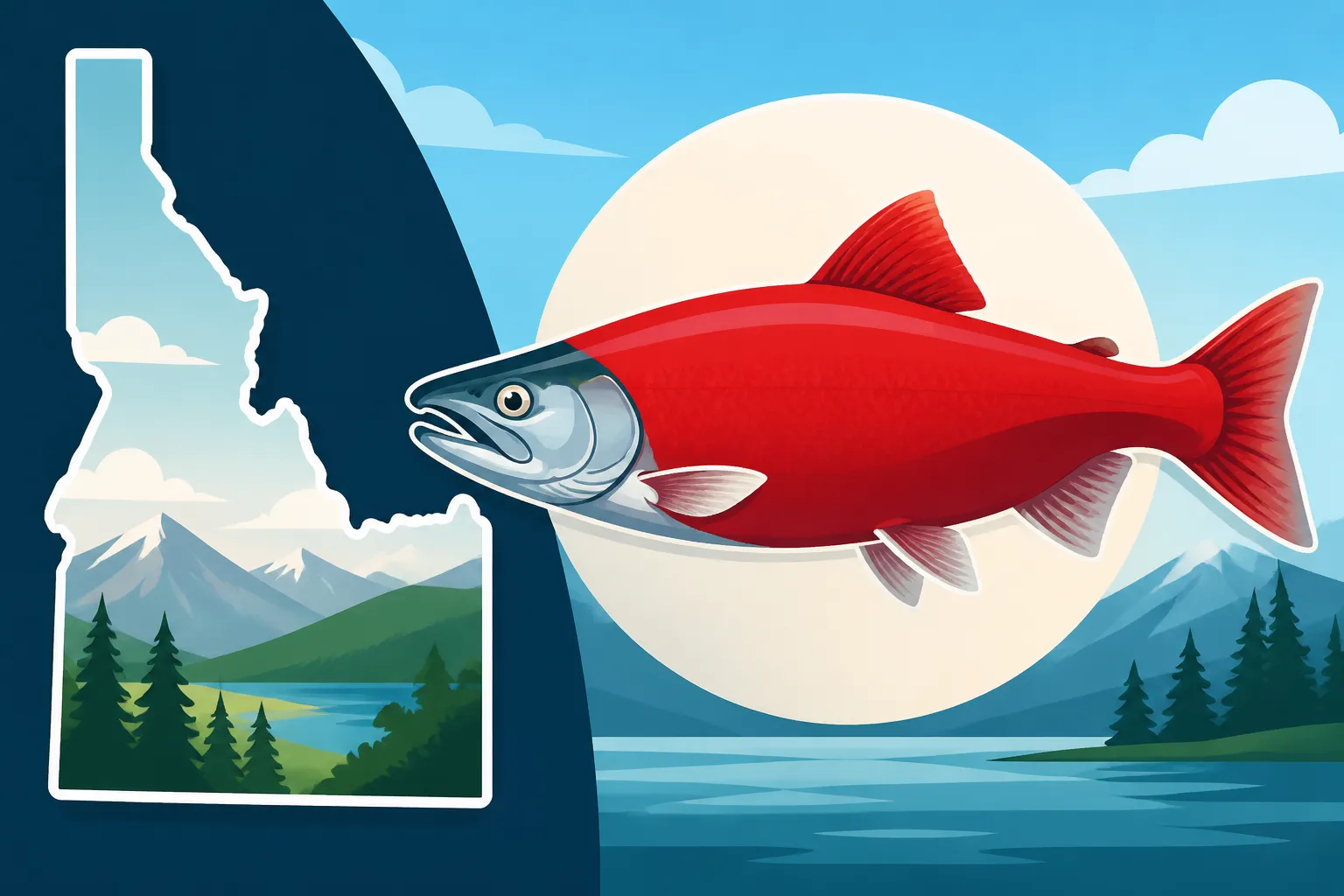
The most important thing to know about kokanee is right in their informal name: they are landlocked sockeye salmon. Imagine a sockeye salmon, which typically spends its life cycle migrating from freshwater rivers to the ocean and back again, but now picture that same fish completing its entire life cycle exclusively in freshwater lakes and rivers. That's a kokanee! They're genetically identical to their ocean-going cousins but have adapted to a freshwater-only existence. This adaptation means they generally don't grow as large as an anadromous sockeye, but they retain many of the same biological characteristics, especially when it comes to their spawning behavior and coloration. This unique heritage makes them incredibly distinct among Idaho's fish populations. You might hear people talking about Difference Between Kokanee and Sockeye Salmon or Why Kokanee Are Called Landlocked Sockeye, and this is exactly why.
Natural Habitat and Distribution
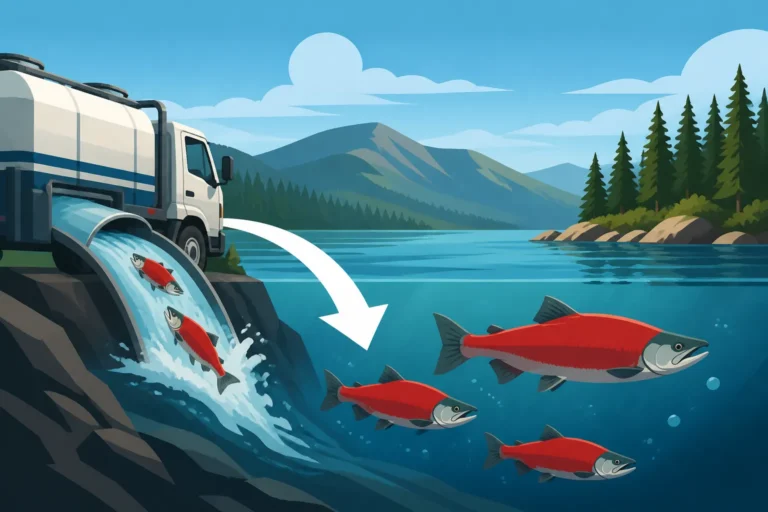
Kokanee thrive in large, deep, cold-water lakes and reservoirs across Idaho, where they feed primarily on zooplankton. They are pelagic fish, meaning they typically inhabit the open water column rather than sticking close to the bottom or shore, except during spawning season. Some of the most famous kokanee fisheries in Idaho include Lake Coeur d'Alene, Lake Pend Oreille, and Cascade Reservoir. These waters provide the ideal conditions—deep, cool, and rich in plankton—for kokanee to flourish. They're often found in very specific thermal layers in the water column, making them a favorite target for anglers who employ specialized trolling techniques. Understanding their preferred habitat can give you a clue as to whether the fish you're targeting or have hooked is indeed a kokanee, as they're unlikely to be found in warm, shallow ponds where bass or panfish might be prevalent. Idaho's management efforts often include stocking these waters, which you can read more about in Does Lake Coeur d'Alene Get Stocked with Kokanee?.
Key Physical Characteristics for Identification
Now, let's get down to the visual cues. When you pull a fish out of the water and suspect it might be a kokanee, these are the features you'll want to quickly examine. They might seem subtle at first, but with a little practice, you'll spot them every time.
Size and Body Shape
Typically, kokanee in Idaho are smaller than many of the other salmonids you might encounter. A "good-sized" kokanee might be anywhere from 10 to 18 inches long, though some trophy kokanee can push past that. In waters like Lake Coeur d'Alene, the Average Kokanee Size on Lake Coeur d'Alene This Year can vary depending on food availability and population density. Their body shape is generally streamlined and somewhat slender, reflecting their open-water existence. They aren't as robust or "heavy-bodied" as some of the larger trout species, nor do they typically have the deep, powerful body structure that some anadromous salmon exhibit before spawning. Think of a sleek, silver bullet, built for cruising through open water rather than navigating strong river currents for extended periods.
Coloration and Markings
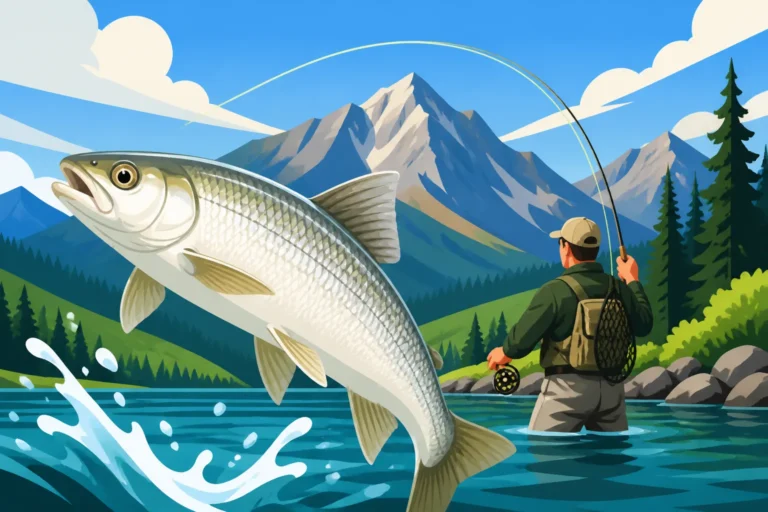
This is where things can get a little tricky due to seasonal changes, but let's focus on their non-spawning phase first. For most of the year, kokanee are a striking, bright silver, often with a slightly darker, bluish-green back that fades to white on their belly. They typically have very few, if any, spots on their body. If they do have spots, they are usually small, sparse, and found only on their back or the upper lobe of their tail fin. The absence of numerous, distinct spots is a key identifier when comparing them to many trout species. Their tail fin is often slightly forked, another important clue. This silvery sheen makes them incredibly beautiful fish, glinting in the sunlight as you bring them to the net. A good quality fish identification guide from Amazon can really help here, with clear illustrations to compare.
Mouth, Teeth, and Gill Rakers
Take a close look at the mouth of a kokanee. During their non-spawning phase, their mouths are relatively small and delicate, with tiny, barely perceptible teeth. They are plankton feeders, so they don't need large, sharp teeth like a predator fish. What's more interesting, though often harder to see without careful examination, are their gill rakers. These are bony projections on the gill arches that act like a sieve, filtering plankton from the water. Kokanee have numerous, long, and closely spaced gill rakers, which is a tell-tale sign of their planktivorous diet. In contrast, fish that eat other fish or insects will have fewer, shorter, and more widely spaced gill rakers. If you can get a gentle look inside the mouth, or even just observe the delicate structure, it can be a significant clue.
Fin Structure and Appearance
Examining the fins can also help you confirm your identification. Kokanee possess an adipose fin, which is a small, fleshy fin located on their back between the dorsal fin and the tail fin. This is a common characteristic among salmonids. Their tail fin, as mentioned, is typically moderately forked. The dorsal fin is usually singular, and their pectoral and pelvic fins are generally well-proportioned to their body size. One distinct feature, especially when compared to trout, is the overall delicate nature of their fins. They aren't as thick or heavily structured as you might see on a larger, hard-fighting rainbow or brown trout. The tail fin, while forked, won't be as deeply cut as some species, but certainly not square like a brook trout.
Distinguishing Kokanee from Similar Species
This is often the trickiest part for anglers. Idaho waters are home to a variety of salmonids, and at a glance, some can look quite similar to kokanee. Knowing the subtle differences can prevent misidentification, which is important for adhering to regulations and contributing to conservation. Idaho Fishing Regulations Explained can be quite specific about species!
Kokanee vs. Rainbow Trout
Rainbow trout are probably the most commonly confused species with kokanee, especially smaller, silvery rainbows often found in lakes. Here’s how to tell them apart:
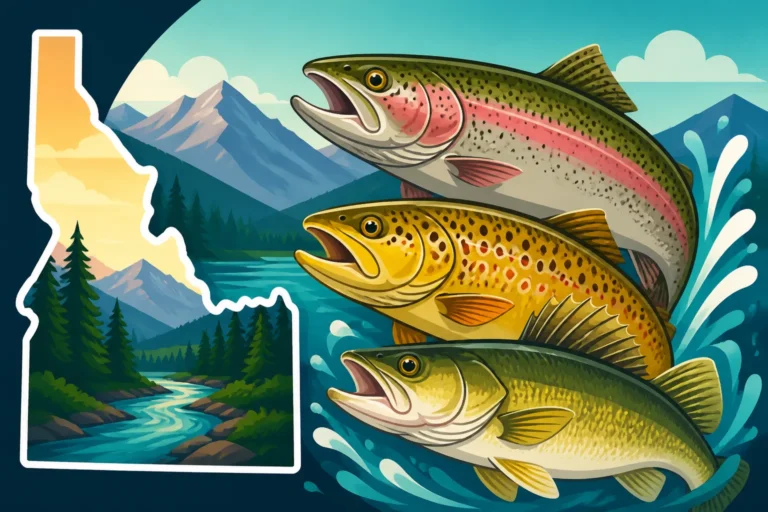
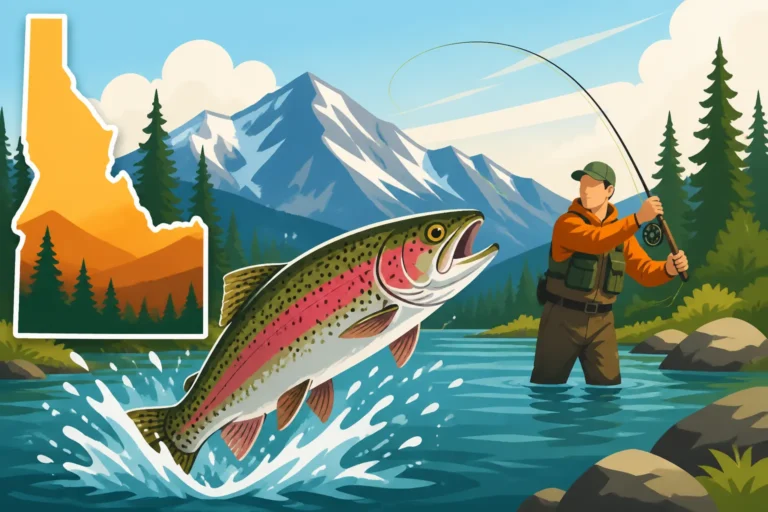
- Spots: Rainbow trout typically have numerous, distinct black spots all over their body, including their dorsal fin and, crucially, their tail fin. Kokanee, as we discussed, have very few or no spots, and if present, they are sparse and usually only on the upper back or tail. This is your number one visual cue.
- Mouth: While both have relatively small mouths, rainbow trout's mouths are generally larger and extend further back than a kokanee's.
- Coloration: Non-spawning rainbow trout can be quite silver, but they often have a faint to prominent pink or red band along their lateral line, especially in larger, mature fish. Kokanee lack this distinct band, maintaining their uniform silver-blue coloration.
- Tail: Both can have somewhat forked tails, but a rainbow's fork is often less pronounced or nearly square on smaller fish, whereas a kokanee's is usually a bit more defined.
If you're ever in doubt, count the spots on the tail. Many spots often mean rainbow.
Kokanee vs. Cutthroat Trout
Cutthroat trout are another common salmonid in Idaho that can cause confusion. They get their name from the distinct red or orange slash marks found under their lower jaw, which is your most reliable identifier.
- Cutthroat Slash: This is the absolute giveaway. Kokanee never have these red or orange slashes under their jaw. If you see the slash, it's a cutthroat. You can learn more about specific types in Westslope Cutthroat Trout in Idaho and Yellowstone Cutthroat Trout in Idaho.
- Spots: Cutthroat trout, especially Westslope Cutthroat, are often heavily spotted, particularly towards their tail. These spots can be smaller and more numerous than on a rainbow. Kokanee, again, are mostly unspotted.
- Coloration: While cutthroat can also be silvery, they often have a more olive-green or golden hue on their flanks, and their overall appearance isn't as uniformly bright silver as a kokanee.
Kokanee vs. Juvenile Chinook Salmon
This comparison is less common but can happen, especially in waters like Lake Coeur d'Alene where Chinook salmon are also present. Juvenile Chinook salmon in freshwater can be very silvery and might not have developed all their adult characteristics.
- Pyloric Caeca: This is an internal identifier (not something you'd see on the water), but it's a key biological difference. Chinook have many pyloric caeca (digestive appendages near the stomach entrance), while sockeye (and thus kokanee) have far fewer.
- Gum Line: If you can get a look inside the mouth, check the gum line where the teeth are attached. Chinook salmon typically have a black gum line, both on the upper and lower jaw. Kokanee will have a lighter, often white, gum line.
- Spots: While juvenile Chinook can be silvery with spots, their spots are generally larger and more irregular than the fine spots sometimes seen on kokanee.
Here's a handy table to quickly compare these species:
| Feature | Kokanee | Rainbow Trout | Cutthroat Trout | Juvenile Chinook Salmon |
|---|---|---|---|---|
| Primary Color | Bright silver, blue-green back | Silvery, greenish-blue back, often pink stripe | Silvery to olive/golden, often dark back | Bright silver, dark back |
| Body Spots | Few to none; sparse, small, on back/tail | Numerous, distinct spots on body, dorsal, and tail | Many, often fine spots, especially on tail | Larger, irregular spots on back and both tail lobes |
| Under Jaw | No distinctive marks | No distinctive marks | Distinct red/orange "slash" marks | No distinctive marks |
| Mouth/Teeth | Small, delicate mouth, tiny teeth | Larger mouth than kokanee, small teeth | Similar to rainbow, small teeth | Larger mouth, distinct black gum line |
| Tail Fin | Moderately forked | Moderately forked to square | Moderately forked | Slightly forked to square, often spotted |
| Diet | Primarily zooplankton | Insects, crustaceans, smaller fish | Insects, crustaceans, smaller fish | Insects, crustaceans, smaller fish |
Other Trout Species
You might also encounter Brown Trout or Brook Trout. Brown trout are typically characterized by large, dark spots often haloed with lighter rings, and usually some red spots, on a golden-brown background. Their tails are typically square or only slightly forked. Brook trout have distinctive worm-like markings (vermiculations) on their backs and dorsal fins, along with red spots (some with blue halos) on their sides, and white leading edges on their pectoral, pelvic, and anal fins. Neither of these species are likely to be confused with the predominantly silver, unspotted kokanee.
Seasonal Color Changes and Spawning Behavior
This is perhaps the biggest wild card in kokanee identification. If you only ever saw them during their pre-spawning phase, it would be easy. But when they get ready to spawn, kokanee undergo one of the most dramatic transformations in the fish world.
Pre-Spawning Transformation
As the late summer and early fall approach, kokanee begin to stage for their annual spawning run. During this time, which can vary slightly by water body and temperature, their silvery bodies start to change. The most noticeable alteration is a shift in color. Their bright silver scales begin to deepen, often taking on a rosy red or even deep crimson hue. This color change is more pronounced in males but is visible in females as well. The males also start to develop a noticeable kype, which is a hooked jaw, and their back becomes humped. While still technically kokanee, their appearance can be quite startlingly different from their summer form. This transformation is a natural part of their lifecycle, as they prepare to move into shallower waters or river mouths to deposit their eggs.
Spawning Phase Characteristics
When kokanee are actively spawning, typically in the fall, their coloration is at its most vibrant. Males will be a brilliant, fiery red, often with an olive-green head and dark fins. Their kype will be fully developed, and their backs will be significantly humped. Females will also be deep red, though perhaps not as intensely colored as the males, and will have a less pronounced kype. At this stage, they look very little like the sleek, silver fish they were just months prior. They are focused entirely on reproduction and will aggressively defend their redds (nests). During this time, they often migrate into tributary streams or shallow shoreline areas of lakes. Fishing for them during this period can be regulated differently, so it’s essential to be aware of Idaho Fishing Season Dates and Limits for specific waters. A bright red, humped-back fish with a hooked jaw is almost certainly a spawning kokanee or sockeye.
Post-Spawning Changes
Like all Pacific salmon, kokanee are semelparous, meaning they spawn only once and then die shortly after. After the strenuous act of spawning, their bodies begin to deteriorate rapidly. Their colors fade, their flesh becomes soft, and they often become covered in fungus. You might see these "spent" fish washed up on shore or slowly drifting in the water. It's a natural, albeit melancholic, end to their life cycle, completing the circle of life for the species. During this post-spawning phase, they are not typically targeted by anglers and are usually quite easy to identify as having completed their purpose.
Common Misconceptions and Pro Tips
Even with all this information, there are still some myths and tricks of the trade that can help you when you’re out on the water. Fishing in Idaho is about learning, and sharing knowledge is part of the fun!
Myth Busting: Red Herring or Real Kokanee?
One common misconception revolves around the red coloration. Some anglers might assume any red fish is a kokanee, but that's not always true. While kokanee famously turn red, other fish can exhibit reddish hues due especially during spawning or due to diet. For instance, some rainbow trout might have very strong pink lateral lines. However, the entire body turning a deep, uniform red with an olive-green head and a pronounced kype is very specific to spawning kokanee and sockeye. If you see a fish that's generally silvery with a red stripe, it's likely a rainbow. If it's entirely red with a hooked jaw and humped back, it's almost certainly a kokanee in its spawning phase.
Field Identification Tips and Tools
When you're out fishing, quick and accurate identification is key. Here are some pro tips:
- Observe Carefully: Don't just glance. Take a moment to really look at the fish. Check for spots, jawline, and overall body shape. If you're fishing with family, it's a great teaching moment for Idaho Fishing Rules for Kids and Families.
- Carry a Waterproof Identification Card/Book: A small, laminated card or a compact fish identification book can be invaluable. You can often find excellent, region-specific guides on Amazon that fit right into your tackle box or vest pocket.
- Measure (If Keeping): If you intend to keep the fish and are unsure, measure it. Size limits can vary by species and water. A waterproof ruler from Amazon is a simple, yet effective tool to have.
- Take a Picture: Modern smartphones make this easy. If you're still uncertain, snap a clear photo from different angles and consult it later or ask a more experienced angler.
- Handle Gently: If you're releasing the fish, minimize handling time. Wet your hands before touching the fish to protect its slime coat, and keep it in the water as much as possible.
The Role of Catch and Release
For many anglers, especially when targeting kokanee in certain systems, catch and release is a common practice. When you are practicing catch and release, proper identification becomes even more critical. You need to know if the fish you've caught is a protected species, undersized, or simply not what you're targeting. For instance, if you accidentally catch a wild steelhead while targeting kokanee (which is unlikely but hypothetically possible), knowing how to identify and carefully release it is paramount. Understanding Idaho Catch-and-Release Sturgeon Rules highlights why proper identification is so important across different species for conservation.
Why Proper Identification Matters
Beyond satisfying your curiosity, correctly identifying your catch has serious implications for both the angler and the fishery. It's about being a responsible steward of Idaho's natural resources.
Navigating Idaho Fishing Regulations
Idaho's fishing regulations are designed to protect fish populations and ensure sustainable fishing opportunities for everyone. These rules are highly specific, often detailing catch limits, possession limits, and even length restrictions by species and by water body. For example, the daily bag limit for kokanee can be very different from the daily bag limit for rainbow trout on the same lake. If you misidentify a kokanee as a rainbow trout, you could inadvertently exceed the legal limit for one species or keep a fish that is protected. This could lead to citations and penalties, which nobody wants. Always check the latest Idaho Fishing Regulations Explained before heading out, as they can change. Your Idaho Fishing License Guide is your first step to being legal, but knowing the species you're pursuing is equally vital.
Conservation Efforts and Species Protection
Accurate identification plays a direct role in conservation. Many species in Idaho, like wild steelhead or certain populations of cutthroat trout, have specific protections or harvest restrictions. While kokanee are generally managed for harvest, misidentifying a protected fish as a kokanee (or vice-versa) could harm vulnerable populations. Conservation efforts rely on anglers knowing what they're catching and adhering to rules designed to protect the health and future of the fishery. By properly identifying kokanee, you contribute to accurate creel surveys and help fishery managers make informed decisions about stocking, harvest limits, and habitat protection. This responsible approach ensures that future generations can enjoy the thrill of reeling in these beautiful fish.
Ensuring a Sustainable Fishery
Ultimately, every angler shares a responsibility to maintain a sustainable fishery. This isn't just about following rules; it's about understanding the ecosystem. When you know how to identify different species, you become a more informed participant in the fishing community. You can accurately report your catches, engage in productive discussions about fish health, and advocate for practices that support long-term sustainability. The more precise we are in identifying our catches, the better Idaho Fish and Game can monitor populations and manage our precious fishing resources. So, the next time you land a shimmering fish in one of Idaho’s pristine lakes, take a moment, examine it closely, and appreciate the distinct beauty of the Idaho kokanee.
Disclaimer
This article is for general informational purposes only and does not constitute professional advice. Laws, prices and regulations vary by location and change over time. Consult a qualified professional for guidance on your specific situation.