Idaho Chinook Salmon Identification Guide
There's nothing quite like the thrill of a hard-fighting salmon on your line in Idaho's majestic rivers, but let's be honest, sometimes telling exactly what you've hooked can be a real head-scratcher. With several salmonid species sharing our waters, especially those incredible anadromous fish like Chinook and Steelhead, it's easy to get confused in the heat of the moment. This guide is here to walk you through the tell-tale signs of an Idaho Chinook Salmon, helping you identify your catch confidently and comply with regulations.
The Basics of Idaho Chinook Salmon
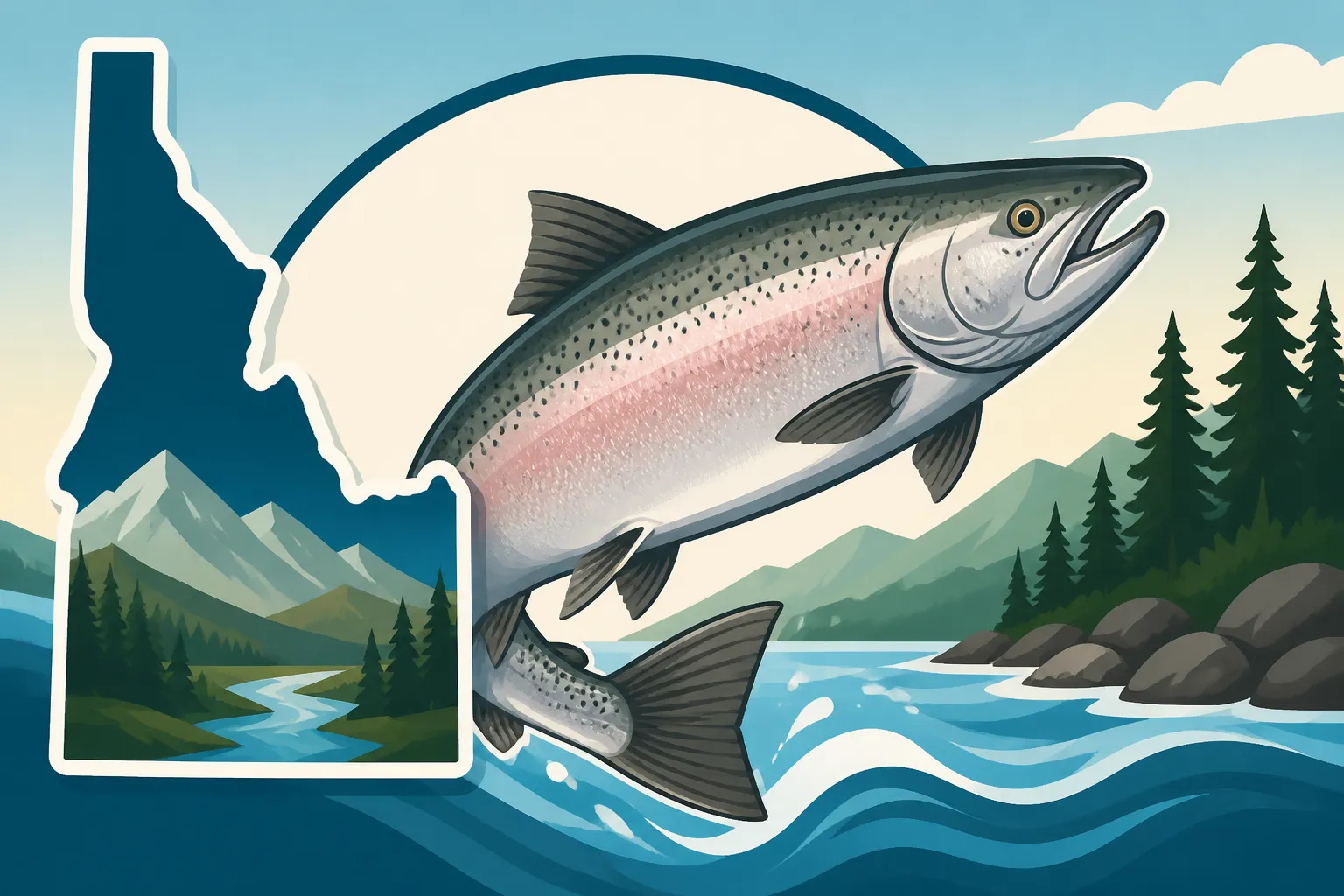
When we talk about Idaho Chinook Salmon, we're usually talking about a fish that has made an epic journey from the Pacific Ocean, up the Columbia River system, and into our state's incredible river drainages like the Salmon and Clearwater. These magnificent creatures are also sometimes called "King Salmon" for good reason – they are often the largest and most powerful of the Pacific salmon species.
General Characteristics and Life Cycle in Idaho
Chinook Salmon are truly incredible athletes of the fish world. They hatch in Idaho's freshwater rivers, spend anywhere from a few months to a couple of years growing in these streams, and then embark on an arduous migration to the Pacific Ocean. There, they'll spend several years bulking up, feeding on smaller fish and crustaceans, before the irresistible call of their spawning grounds brings them back. It's this incredible journey that makes them such a prized catch for anglers. You'll primarily encounter them in Idaho during their spawning migrations, which typically occur in the spring, summer, and fall, depending on the specific run. Understanding their life cycle helps appreciate why conservation and accurate identification are so crucial.
Their incredible strength and size are legendary, making them a bucket-list fish for many anglers. When you hook into a Chinook, you'll know it! They're notorious for powerful runs and deep dives, testing your gear and your resolve. They really embody the wild spirit of Idaho's rivers, and seeing one in person, whether in the water or on the end of your line, is an unforgettable experience.
Why Identification Matters for Anglers
Accurate identification isn't just about bragging rights (though those are nice too!). It's absolutely critical for conservation and legal compliance here in Idaho. The rules around keeping Chinook, especially wild versus hatchery-raised fish, are very strict. Misidentifying a fish could lead to accidental violation of catch limits or even keeping a protected wild fish, which carries serious penalties. Plus, knowing what you're targeting allows you to use the most effective fishing techniques and gear. For instance, the gear you'd use for a trophy Chinook might be overkill for a smaller Kokanee.
Idaho Fish and Game takes its management of these precious resources very seriously, and that means anglers need to do their part. Fishing regulations, which are detailed in documents like the Idaho Fishing Regulation Brochure and Proclamation, often differentiate between species and even between hatchery and wild populations within the same species. It's your responsibility to know what you've caught. This means spending a little time learning the features, even if you just plan on catch-and-release fishing. Getting it wrong could have consequences, both for you and for the future of these amazing fish.
Key Physical Features for Identification
Okay, let's get down to the nitty-gritty: how do you actually tell a Chinook from other fish? It often comes down to a few distinct physical traits that, once you know them, become much easier to spot. Think of it like learning the secret handshake of the salmon world.
Mouth, Gums, and Jawline
One of the absolute best ways to identify a Chinook Salmon is by looking inside its mouth. Don't be shy about a quick, careful look if you're not sure! They have dark gums, almost entirely black, along the lower jaw and typically a dark mouth interior. This is a primary differentiator from many other salmonids.
Compare this to, say, a Steelhead, which usually has white or lighter gums. The teeth of a Chinook are also often more pronounced, particularly in older spawning adults, giving them a formidable appearance. Sometimes, with older, darker fish, it can be harder to see, but usually, that dark gum line is your first big clue. This is a detail you can often spot quickly and confidently.
Furthermore, Chinook Salmon typically have small, sharp teeth that are present on both the upper and lower jaws. Their jawline can appear quite thick and robust, especially as they mature and begin their spawning changes. The roof of their mouth and tongue also tend to be dark or black. These mouth characteristics are often the most reliable way to confirm you've got a Chinook on your line.
Tail and Caudal Fin
Another significant identifier for Chinook Salmon is their tail, or caudal fin. Unlike some other salmonids that might have spots concentrated on the upper lobe, Chinook usually display spots across both lobes of their tail. This is a crucial distinction. The tail itself is also typically quite broad and slightly forked, giving it a powerful, paddle-like appearance.
The spots aren't always super obvious, especially on darker, spawning-phase fish, but if you look closely, you should see them. The leading edge of the tail can also feel a bit stiffer and thicker than other salmon species, built for those long, upstream migrations. This powerful tail is what gives them their incredible fighting ability, making them such a challenge to land. Many anglers will tell you that the sight of those spotted tail lobes splashing on the surface is an unforgettable moment.
Dorsal Fin and Scales
Chinook Salmon typically have a relatively small dorsal fin compared to the size of their body, and like their tail, it often features some dark spots. However, the spots on the dorsal fin can be less defined than those on the tail. Their scales are relatively large compared to other salmon species and have a smooth, almost metallic feel when healthy.
As they enter fresh water and near spawning, their scales can become embedded in their skin, and their skin thickens, making them look a bit rougher. The overall body shape is thick and powerful, not sleek and torpedo-like such as a Steelhead might be. If you're looking for gear, a good quality magnifying glass (like those available on Amazon) can sometimes help you examine these finer details on a fish you're trying to identify.
Body Coloration and Spotting Patterns
The overall body color of a Chinook Salmon can vary dramatically depending on where they are in their life cycle. In the ocean, they are typically silvery with a darker back. As they enter fresh water and begin their spawning migration, their coloration changes to a darker, almost bronze or reddish-brown hue. Some might even develop a mottled, splotchy pattern.
What's consistent, however, is the presence of irregular, often large, dark spots on their back and dorsal fin, extending onto both lobes of their tail. These spots are usually rounder and more defined than the smaller, more numerous spots you might see on a Rainbow Trout or Steelhead. The contrast of these spots against their changing body color can be a strong visual cue.
| Feature | Chinook Salmon | Steelhead (Ocean-run Rainbow) | Kokanee (Landlocked Sockeye) |
|---|---|---|---|
| Mouth/Gums | Entirely dark/black gums and mouth interior | White or light gums, often light mouth interior | White gums, often dark mouth interior |
| Tail Spots | Spots on both upper and lower lobes of tail | Spots typically on upper lobe only, or none | No distinct spots on tail |
| Body Spots | Large, irregular spots on back and dorsal fin | Smaller, numerous spots all over body | No distinct spots (unless mixed with Rainbows) |
| Body Color (Spawning) | Dark bronze, reddish, sometimes mottled | Darker, often with red stripe along side | Bright red body with green head (spawning) |
| Size | Generally largest Pacific salmon | Large, but typically smaller than Chinook | Smaller, usually under 20 inches |
| Adipose Fin | Can be present or clipped (hatchery) | Can be present or clipped (hatchery) | Almost always present, as mostly wild |
Distinguishing Wild Chinook from Hatchery Chinook
This distinction is perhaps the most vital for Idaho anglers, as regulations often strictly dictate what you can and cannot keep. Wild Chinook Salmon are often protected to help rebuild their populations, while hatchery fish are released to supplement fishing opportunities. Knowing the difference is crucial for staying within the law and doing your part for conservation. You can find more specific rules in guides like Idaho Chinook Salmon Fishing Guide and Idaho Catch Limits and Bag Limits Explained.
The Adipose Fin Clip Explained
The most common and reliable way to distinguish a hatchery-raised Chinook Salmon from a wild one is by looking for an adipose fin clip. The adipose fin is that small, fleshy fin located on the back, between the dorsal fin and the tail. Hatcheries often remove this fin from young salmon (and Steelhead) before releasing them into the wild.
If the adipose fin is missing, it almost always indicates a hatchery fish. If the adipose fin is present, it's a wild fish. It's a simple, unmistakable marker once you know what to look for. Always double-check this before deciding to keep a fish. This clip is a universal sign, just like knowing What a Clipped Adipose Fin Means on a Steelhead.
It's crucial to understand that if a fish has an intact adipose fin, it is considered wild and must be released unharmed. This practice is essential for the recovery of wild populations. Even if you think you're sure it's a hatchery fish, if that adipose fin is there, it's a wild fish and it goes back in the water. This single rule helps ensure the sustainability of Idaho's salmon runs. Sometimes the clip can be rough or not perfectly clean, but even a scar or missing fin base counts as clipped.
Other Subtle Differences
While the adipose fin clip is the primary identifier, there can be other subtle differences between hatchery and wild Chinook. Wild fish often have a more pristine, unblemished appearance due to their entirely natural upbringing. Their fins might be perfectly formed, and their scales less abraded. Hatchery fish, on the other hand, might sometimes show signs of life in a concrete raceway, such as slightly eroded fins or minor scars from rubbing against tank walls.
However, these are not foolproof methods and should never override the adipose fin clip. A wild fish could get a scraped fin, and a hatchery fish could have perfectly formed fins. Always, always, always default to the adipose fin as your definitive guide. If you're ever in doubt, the safest and most responsible action is to release the fish. Why Wild Steelhead Must Be Released in Idaho outlines a similar principle that directly applies to Chinook.
Comparing Chinook to Other Idaho Salmonids
Idaho's waters are home to a fantastic array of salmonid species, and some of them can look strikingly similar to the untrained eye. It's really important to know how to tell them apart, especially when catch regulations vary widely between species.
Chinook vs. Steelhead (Ocean-run Rainbow Trout)
This is perhaps the most common confusion for anglers in Idaho. Both Chinook Salmon and Steelhead make long migrations from the ocean, are powerful fighters, and can be found in the same rivers. However, there are key differences. Steelhead (which are essentially ocean-run Rainbow Trout) generally have lighter or white gums, whereas Chinook have those distinct dark/black gums. Steelhead also tend to have smaller, more numerous spots that extend below their lateral line and are often concentrated on the upper lobe of their tail, or sometimes even lacking distinct tail spots. Chinook, by contrast, have larger, more irregular spots across their back and on both lobes of their tail.
The body shape can also be a clue. Steelhead often have a more torpedo-like, sleek profile, built for speed, while Chinook are typically stockier and more robust, especially around the shoulders, reflecting their immense power. You can dive deeper into these distinctions in Difference Between Chinook Salmon and Steelhead. Remember, both can be adipose clipped as hatchery fish, so rely on the mouth and spotting patterns first.
For example, imagine you're fishing the Clearwater River, and you hook into a powerful fish. Your heart is pounding! You carefully bring it in. First, you check the adipose fin – it's clipped, so it's a hatchery fish. Now, is it a Chinook or a Steelhead? You gently open its mouth. If those gums are jet black, you've got a Chinook. If they're white or pale, it's a Steelhead. It really is that simple once you know what to look for! Tools like waterproof fish identification cards, easily found on Amazon, can be super helpful for quick reference on the water.
Chinook vs. Kokanee (Landlocked Sockeye)
Comparing a Chinook to a Kokanee might seem obvious at first glance, as Kokanee are much smaller, typically only 10-20 inches long. However, both are salmon, and when Kokanee are in their bright red spawning phase, some anglers might still get a bit confused. The main distinction is size, as How Big Do Chinook Salmon Get highlights, they can be absolutely massive, whereas Kokanee are considerably smaller. Beyond size, Kokanee lack the distinct large spots of a Chinook.
Kokanee are landlocked Sockeye Salmon, meaning they complete their entire life cycle in freshwater, never making it to the ocean. They are famous for their brilliant red bodies and green heads during spawning, a color pattern a Chinook rarely, if ever, displays. Their mouth is also different; while their mouth interior can be dark, their gums are typically white, unlike the all-dark mouth of a Chinook. Difference Between Kokanee and Sockeye Salmon explains more about the nuances of this species.
Think about fishing on Lake Coeur d'Alene, where both species coexist. You're out trolling, hoping for a trophy Chinook. If you reel in a smaller, silvery fish with no real spots and a white gum line, it's likely a Kokanee. If it's a gigantic, powerful fish with black gums and spots on both tail lobes, you've hit the Chinook jackpot!
Chinook vs. Other Salmon Species
While Chinook, Steelhead, and Kokanee are the most prominent anadromous or landlocked salmonids you'll encounter and need to differentiate in Idaho, other salmon species aren't as prevalent or are managed differently. For example, Idaho has very limited, protected runs of Sockeye Salmon (which are essentially the ocean-going version of Kokanee), most famously the Redfish Lake sockeye. These are highly endangered and strictly catch-and-release only.
Other Pacific salmon species like Coho or Pink Salmon are not typically found in Idaho's sport fisheries in significant numbers. So, for the most part, focusing on the distinctions between Chinook, Steelhead, and Kokanee will cover 99% of your identification needs on Idaho waters. Always check the current Idaho Fishing Regulations Explained for any updates on specific rivers or special regulations.
Practical Tips for Angler Identification on the Water
Identifying fish quickly and accurately, especially a powerful species like a Chinook, requires a bit of practice and some on-the-water savvy. The goal is to make a positive identification without causing undue stress to the fish, particularly if you intend to release it.
What to Look for During the Fight
Even before you land a fish, you can start gathering clues. The sheer power and sustained runs of a large Chinook are often unmistakable. If you're fighting a fish that feels like you've hooked a freight train, ripping line off your reel with incredible force, you're likely dealing with a larger salmonid. Chinook are known for long, deep runs, whereas a Steelhead might make more acrobatic jumps.
As the fish gets closer to the boat or bank, pay attention to flashes of color. While a Steelhead might show a hint of a red stripe, a Chinook will often just show that powerful, dark-backed, silvery-sided profile (if it's a fresh fish) or a darker, bronze hue if it's been in the river longer. Notice how the tail flashes – are there spots visible on both lobes? That's a strong Chinook indicator. Keep your eyes peeled for that small adipose fin, even while the fish is still in the water; if you can clearly see it, you know it's wild and should be prepared for an immediate release. A quality pair of polarized sunglasses, available from retailers like Amazon, can greatly enhance your ability to spot these features underwater.
Post-Catch Visual Cues
Once you've safely landed the fish (or brought it close to your boat), that's your prime opportunity for a clear visual inspection. First, quickly check for the adipose fin clip. This is your number one priority for regulatory compliance. If it's present, the fish is wild and must be released immediately and carefully. If it's clipped, proceed to further identification.
Next, open the mouth gently and look at the gums. Are they entirely dark or black? This is a definitive Chinook trait. Then, look at the tail. Are there distinct, irregular spots on both the upper and lower lobes? Again, a strong Chinook indicator. Check the back and dorsal fin for those larger, distinct spots. If all these features align – clipped adipose fin (if keeping), dark gums, and spots on both tail lobes – you can be confident you've caught an Idaho Chinook Salmon. Take a moment to appreciate its beauty, then proceed according to regulations for either release or retention.
When in Doubt: Err on the Side of Caution
This is the golden rule of fishing, especially when dealing with regulated species like Chinook Salmon: When in doubt, let it out! It is always better to release a fish you can't positively identify than to risk keeping a protected wild fish or violating a size or bag limit. The penalties for such violations can be significant, including hefty fines and loss of fishing privileges. More importantly, releasing an unknown fish contributes to conservation efforts and ensures healthy fish populations for future generations of anglers.
Carry a copy of the current Idaho fishing regulations with you – either a physical copy or a digital version on your phone. Many anglers also find a laminated fish identification card helpful for quick, on-the-spot comparisons. These resources, coupled with the knowledge you've gained here, will make you a more confident and responsible angler on Idaho's amazing waters. Remember, the goal is to enjoy the sport responsibly and preserve our natural treasures.
Disclaimer
This article is for general informational purposes only and does not constitute professional advice. Laws, prices and regulations vary by location and change over time. Consult a qualified professional for guidance on your specific situation.