Fishing Cascade Reservoir for Tiger Muskie and Perch
The vast waters of Cascade Reservoir can feel a bit overwhelming, can't they? You've heard whispers of monster Tiger Muskie lurking in the depths or perhaps you're just aiming for a cooler full of delicious yellow perch, but figuring out where to start, what to use, and when to go can be a real head-scratcher. This guide is designed to unravel those complexities, offering a practical, down-to-earth look at successfully fishing Cascade Reservoir for its most sought-after species, helping you turn those whispers into triumphant tales.
Understanding Cascade Reservoir's Unique Fishery
Cascade Reservoir isn't just another body of water; it's a dynamic, ever-changing ecosystem that offers vastly different angling experiences depending on what you're targeting. Its sheer size and the diversity of its habitat make it both a challenge and a reward for those willing to learn its secrets.
A Deep Dive into the Reservoir's Characteristics
Nestled in the picturesque Long Valley, about an hour and a half north of Boise and just south of McCall, Cascade Reservoir is one of Idaho's largest impoundments, stretching over 28,000 acres when full. It was created in 1948 by damming the North Fork of the Payette River, primarily for irrigation, but it has since become a recreational paradise. The reservoir features a diverse underwater landscape, from vast open flats to deep channels, submerged timber, and extensive weed beds. These structures are crucial for fish, providing cover, ambush points, and foraging grounds.
Water levels in Cascade can fluctuate significantly throughout the year, especially from late summer through winter, as water is released for irrigation. These drawdowns can expose vast areas, changing fish patterns and access points. What might be a prime fishing spot in June could be high and dry by September. Understanding these shifts is key to consistent success. The inflow of the North Fork Payette River also brings in nutrients and influences water clarity, which further dictates where fish hold and feed.
The Allure of Tiger Muskie
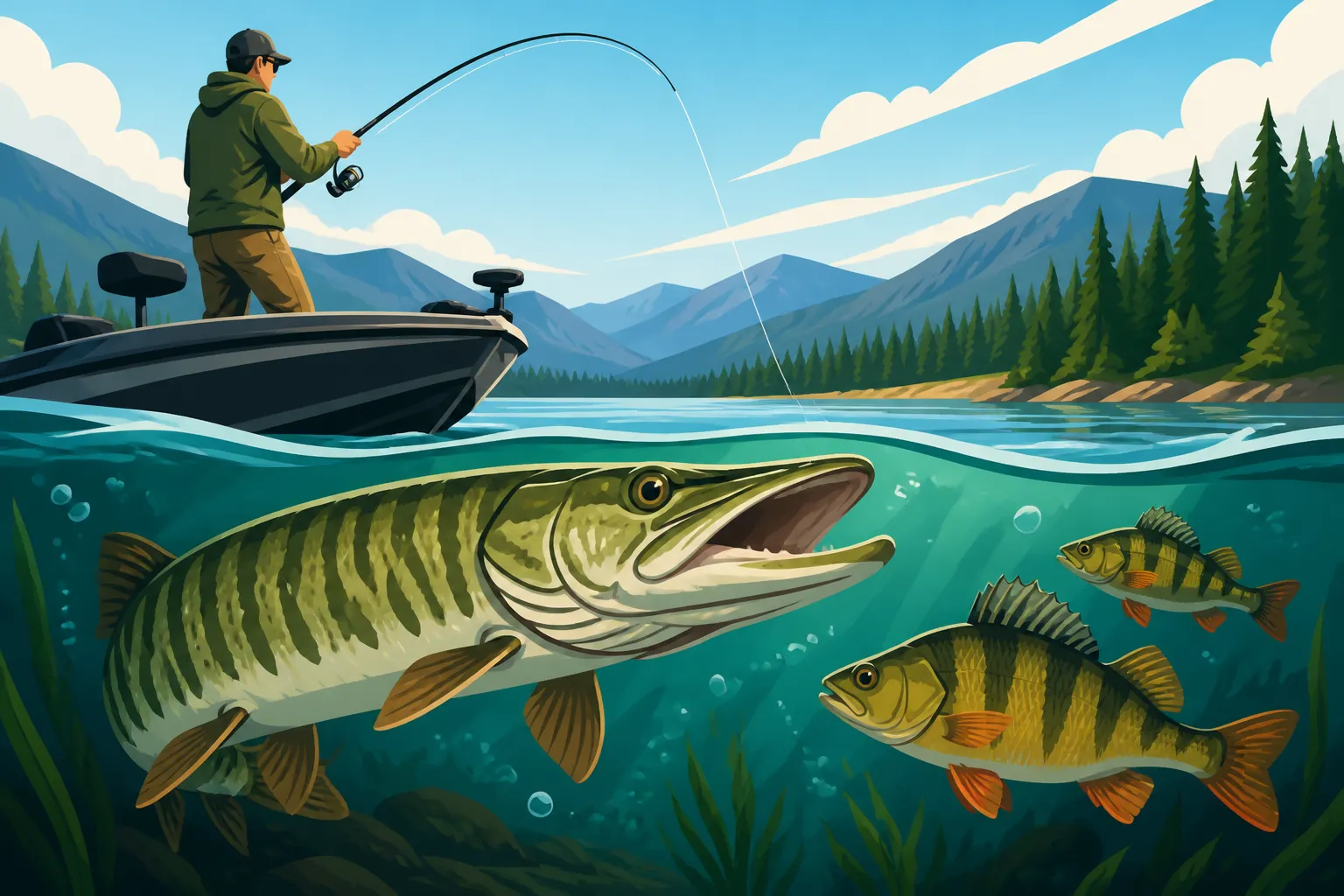
Ah, the Tiger Muskie! Just the name conjures images of powerful, toothy predators. These aren't native to Idaho; they're a sterile hybrid cross between a Muskie and a Northern Pike, introduced to Cascade Reservoir and a few other Idaho waters in the late 1990s and early 2000s. The Idaho Department of Fish and Game stocked them primarily to control the overpopulation of undesirable fish like pikeminnow and to create a unique trophy fishery.
What makes them so appealing to anglers? Their size, for one. They grow big, with Idaho's state record Tiger Muskie, caught right here in Cascade, weighing over 38 pounds! They're also incredibly aggressive fighters, known for explosive strikes and aerial acrobatics. But it's their elusive nature that really captivates anglers. These "fish of 10,000 casts" demand patience, persistence, and a healthy dose of specialized knowledge. Landing one is a monumental achievement, a true testament to an angler's skill and dedication.
The Abundance of Yellow Perch
On the other end of the spectrum from the solitary muskie, you have the schooling yellow perch. These are Cascade's bread and butter, especially for families and those just looking for consistent action and excellent table fare. Perch thrive in Cascade thanks to its abundant forage base (insect larvae, small minnows, plankton) and diverse habitat, particularly the vast weed beds and areas with soft bottoms.
Their schooling behavior means that once you find a school, you can often catch dozens in short order. This makes them incredibly popular, particularly during the ice fishing season when anglers descend upon Cascade by the thousands. While not the trophy fish a muskie is, a fat Cascade perch provides a firm, flaky fillet that's hard to beat. They also play a crucial role in the reservoir's ecosystem, serving as a primary food source for larger predators, including those very same Tiger Muskie. So, catching a mess of perch isn't just fun; it's part of the natural balance here.
Prime Fishing Locations on Cascade Reservoir
With its sprawling size, knowing where to start on Cascade Reservoir can be the biggest hurdle. Luckily, certain areas consistently produce for specific species. It's all about understanding the type of habitat each fish prefers and how those preferences change with the seasons.
Hotspots for Tiger Muskie
Tiger Muskie are ambush predators, so finding them means looking for structure. They love to hide, waiting for an unsuspecting meal to swim by. On Cascade, this often means targeting the extensive submerged timber stands, particularly in the deeper channels and coves. Areas around the North Fork Payette River inlet, especially where timber meets deeper water, can be goldmines. Look for rocky points, sudden depth changes, and the edges of expansive weed beds that drop off into deeper water. Muskie will patrol these edges, especially during low-light conditions.
Specific coves and bays like Sugarloaf and French Creek areas are often mentioned as muskie hotspots due to their varied underwater topography and abundant forage. In the spring, after ice-out, muskie will often be found shallower, cruising the weed lines and sun-warmed bays. As summer progresses and water temperatures rise, they'll retreat to deeper, cooler water, often suspending over structure or lurking in the thermocline. Come fall, as the water cools, they become incredibly active again, aggressively feeding to build up reserves for winter, making those mid-depth structures prime targets once more.
Finding Those Perch Schools
Unlike muskie, perch are often found in large schools, making them easier to locate once you understand their patterns. Generally, perch prefer moderate depths with soft bottoms, usually associated with weed beds or submerged timber. They're less structure-oriented than muskie but still use cover for protection and feeding.
During the spring, as the water warms, perch will move into shallow bays and flats for spawning, making them very accessible from shore or by boat in areas like Lake Cascade State Park's various units. As summer heats up, they'll often push deeper, concentrating off points or along the edges of larger weed flats. Come fall, they regroup into massive schools, often moving into the main body of the reservoir at mid-depths, making them easier to find with a fish finder.
For shore anglers, the numerous access points along Lake Cascade State Park, including spots like Van Wyck Park, Picnic Point, and Crown Point, often provide excellent shore fishing opportunities for perch, particularly in spring and fall. For boat anglers, just about anywhere you can find a good weed line or submerged timber at the right depth can hold schools of perch. Remember that while a spot might be good one day, perch are mobile, so having a good fish finder to mark those schools is crucial.
Access Points and Facilities
Cascade Reservoir boasts numerous public access points, making it angler-friendly for both boaters and shore fishermen.
Prominent Boat Launches:
- Donnelly: Offers multiple ramps, including the main Donnelly ramp.
- Boulder Creek: Located on the east side, providing access to a different section of the reservoir.
- French Creek: Another popular spot with good facilities, often a good starting point for exploring muskie grounds.
- West Mountain: On the western shore, offering access to the deeper, western side.
Shore Fishing Access:
Lake Cascade State Park manages several units around the reservoir, many of which provide excellent shore access:
- Van Wyck Park: Near Donnelly, often great for perch.
- Picnic Point: Good access, particularly in spring.
- Buttercup: Another popular day-use area with shore fishing.
- Crown Point: On the eastern side, offers diverse shore fishing opportunities.
Beyond the water, the nearby towns of Donnelly and McCall offer essential amenities. You'll find bait shops like Donnelly Sports or McCall's Ridley's Family Markets and The Backcountry Tackle Company that are well-stocked with local baits and tackle tailored to Cascade's species. There are also plenty of camping options within Lake Cascade State Park and surrounding national forests, as well as a variety of lodging choices in Donnelly and McCall, from hotels to cabin rentals, catering to all budgets and preferences.
Essential Techniques and Gear for Cascade Fishing
Fishing Cascade Reservoir effectively means understanding the distinct needs of its primary game fish: the solitary, hard-fighting Tiger Muskie and the schooling, delectable Yellow Perch. You can't use the same setup for both and expect consistent results.
Muskie Tactics: The Hunt for the Esox
Hunting for Tiger Muskie is a pursuit that demands specialized gear and a methodical approach. These are not passive fish; they are apex predators.
Trolling for Trophies: Trolling is a highly effective method for covering vast amounts of water and locating active muskie. You'll want to use large crankbaits, often 8 inches or longer, designed to dive to specific depths. Brands like Rapala Super Shad Rap, Bucher DepthRaider, or large Grandma Lures are popular choices. Don't forget spoons either; a classic Johnson Silver Minnow with a pork trailer can be deadly, especially when worked over submerged timber. Speed is crucial – usually 3-5 mph, but experiment until you find what triggers a strike. A heavy-duty fluorocarbon leader (80-100 lb test) or a steel leader is absolutely essential to prevent bite-offs from their razor-sharp teeth.
Casting and Retrieving: For those who prefer a more active approach, casting large jerkbaits, glide baits, or spinnerbaits is the way to go. Lures like the Esox Cobra spinnerbait, large soft plastics, or big bucktails are excellent choices. Cast them to weed edges, submerged timber, or rocky points, and retrieve with an erratic, enticing action. The "figure-8" at the boat is a non-negotiable step: as your lure approaches the boat, sweep it in a large figure-8 motion directly beneath the surface. Muskie often follow a lure right to the boat, and this maneuver can trigger a last-second strike. You'll find a lot more insights into these methods in a comprehensive Idaho Fishing Techniques Guide.
Heavy-Duty Gear: Muskie fishing is not for light tackle. You need a stout rod, typically a heavy power, fast action baitcasting rod ranging from 8 to 9 feet. Pair this with a robust baitcasting reel capable of handling heavy lines and offering a powerful drag system. Braided line, in the 65-100 lb test range, is standard for its strength and lack of stretch, which aids in hook sets. This kind of setup allows you to cast those heavy lures all day and stand a chance when you finally hook into a true Cascade Monster.
Perch Prowess: Simple Yet Effective
Catching perch is generally much more straightforward and requires far less specialized gear than muskie fishing, making it ideal for beginners and casual anglers.
Jigging and Still Fishing: For open water, small jigs (1/16 to 1/8 ounce) tipped with maggots, a small piece of worm, or even a soft plastic grub like a Berkley Gulp! Minnow are incredibly effective. You can jig these vertically from a boat over a school or cast and retrieve them slowly near cover. A classic bobber and hook setup with a worm or corn can also be incredibly productive, especially for shore anglers or kids. Just cast it out, let it sit, and wait for that bobber to disappear!
Ice Fishing Dominance: Winter is the prime time for perch on Cascade. When the reservoir freezes over, anglers flock to the ice. Vertical jigging is the name of the game here. Small ice fishing spoons like a Swedish Pimple, K-Drill, or Northland Forage Minnow, often tipped with a piece of perch eye or a wax worm, are irresistible to perch. Tungsten jigs in tiny sizes (1/32 to 1/8 ounce) also work wonders, fished aggressively to call fish in, then subtlely once they're near. For more specific cold-weather advice, check out How to Jig for Perch Through the Ice.
Light Tackle: For perch, a light to medium-light action spinning rod, around 5 to 6 feet in length, paired with a small spinning reel, is perfect. Spool it with 4-8 lb test monofilament or a thin braided line with a fluorocarbon leader for sensitivity. This lighter tackle makes even a modest perch feel like a trophy. When choosing your lures, consult the Best Bait and Lures for Idaho Fishing for species-specific recommendations.
Electronics and Ancillary Gear
While not strictly essential for every trip, modern electronics can dramatically increase your success, especially on a large body of water like Cascade. A quality fish finder with side imaging and down imaging capabilities is invaluable for both muskie and perch. For muskie, it helps identify submerged timber, rock piles, and deep weed lines where they ambush prey. For perch, it's a game-changer for locating those dense schools in open water or along contours. GPS is also crucial for marking productive spots and navigating safely.
For muskie, always carry specialized tools:
- Long-nose pliers and jaw spreaders: to safely remove hooks from their toothy mouths.
- Large, rubberized landing net: essential for landing big fish safely and protecting their delicate slime coat.
- Bolt cutters: a last resort if a hook is deeply swallowed, allowing you to cut the hook and leave the shank to rust out, giving the fish a better chance of survival.
For perch, a small tackle box to organize your jigs and bait, a cooler for bait, and a stringer or livewell if you plan on keeping your catch are all you really need. Don't forget polarized sunglasses to spot fish and structure in shallower water, sunscreen, and weather-appropriate clothing.
Best Times to Fish Cascade Reservoir
Timing is everything when it comes to fishing Cascade Reservoir. The behavior of Tiger Muskie and Yellow Perch shifts dramatically with the seasons and even with daily weather patterns. Understanding these cycles can put you in the right place at the right time.
Seasonal Hot and Cold for Muskie
Tiger Muskie, like most cold-water predators, have distinct seasonal patterns that dictate when and where you'll find them.
Spring (Ice-out to early Summer): This is often considered one of the best times for muskie. After the long winter, fish are hungry and active, moving into shallower, warming waters to feed and eventually spawn. Look for them cruising weed lines and sun-drenched bays. The post-spawn bite, once they've recovered, can be incredibly aggressive. The period right after ice-out, when the reservoir first opens up, can be fantastic.
Summer: As water temperatures climb, muskie will generally move deeper, seeking cooler, oxygen-rich water. This can make them harder to target, especially during the heat of midday. Focus your efforts on early mornings, late evenings, and even into the night. They'll relate to deeper structure—submerged timber, rocky ledges, or the thermocline if one sets up. Patience is key during the summer months.
Fall: Ah, the "fall shuffle." Many muskie anglers consider autumn the absolute prime time for trophy fish. As the water cools, muskie embark on a furious feeding frenzy, bulking up for the lean winter months. They can be found from shallow to mid-depths, often extremely aggressive. Large baits worked slowly and deliberately can trigger massive strikes. The consistent cooling trend means fish are often more predictable and willing to chase. This is a critical period for any angler targeting these elusive fish.
Winter (Ice Fishing): While challenging, it's not impossible to catch muskie through the ice on Cascade. It requires extreme patience and slow, subtle presentations in deep holes or along steep drops. However, the vast majority of winter anglers here are focused on perch. For a broader overview of seasonal changes, consult Best Time of Year to Fish in Idaho or Idaho Fishing Season Calendar.
Peak Perch Periods
Yellow perch are much more forgiving than muskie, offering consistent action throughout much of the year, but some periods are undeniably better.
Spring: Another excellent time for perch. As soon as the ice leaves, perch move into shallow bays and flats, often in large numbers, to spawn. This makes them easily accessible from shore or by boat in relatively shallow water. The bite can be fast and furious, and it's a great time to fill a cooler.
Summer: Perch fishing remains good through the summer. While they might move deeper as the water warms, schooling behavior persists. You'll find them holding off points, along deeper weed edges, or suspending over structure. Early mornings and late evenings are often the most productive, though you can find them throughout the day if you locate a good school.
Fall: Similar to muskie, fall is a fantastic time for perch. They consolidate into massive schools, feeding heavily in preparation for winter. This makes them relatively easy to find with a fish finder, and once you're on a school, the action can be non-stop. The cooler water temperatures also make for firmer, better-tasting fillets.
Winter (Ice Fishing): Without a doubt, winter is THE peak season for perch on Cascade. The reservoir transforms into an ice fishing mecca, with shantytowns appearing across the frozen surface. Anglers catch literally thousands of perch daily through the ice. The fish are often concentrated in specific areas, and once you find them, you're in for some incredible action. It's a social event, a family affair, and for many, the highlight of the Idaho fishing year. While not exactly the same, some of the strategies are similar to Ice Fishing on Payette Lake.
Understanding Weather and Water Conditions
Beyond the seasons, daily weather and water conditions play a huge role. Water temperature is paramount; both muskie and perch have preferred temperature ranges for activity. Barometric pressure can also influence feeding; stable weather systems often lead to better fishing than rapidly changing conditions.
Wind can be your friend or foe. A gentle breeze can create a "walleye chop" that helps concentrate baitfish and disorients predators, making wind-blown points excellent muskie spots. However, strong winds can make boating unsafe and fishing difficult. Water clarity also matters; muskie often prefer a bit of stain in the water for ambushing prey, while perch are generally less picky. Always check local forecasts and, if possible, water level reports, especially if fishing during irrigation season. Idaho Power often provides real-time data for reservoir levels, which can be invaluable for planning your trip.
Regulations and Responsible Angling
Before you even think about casting a line into Cascade Reservoir, it's absolutely crucial to be familiar with the current Idaho fishing regulations. Ignoring these rules can lead to hefty fines and impact the health of this fantastic fishery.
Navigating Idaho Fish and Game Rules for Cascade
First and foremost, everyone over the age of 14 needs an Idaho Fishing License Guide. This applies to both residents and non-residents, and there are various options from annual to multi-day licenses. Make sure you understand the nuances, including any necessary permits or stamps if you plan to target other species on different waters.
Specific to Cascade Reservoir, pay very close attention to the rules for Tiger Muskie. Because they are a trophy management species, they typically have very restrictive size limits (often minimum lengths, like 40 inches) and low bag limits (sometimes just one fish, or even catch-and-release only). These regulations are designed to protect the breeding stock and allow these impressive fish to reach trophy sizes. It's critical to check the most current Idaho Fish and Game Fishing Seasons and Rules brochure, as these regulations can and do change annually. For a deep dive into all the rules, refer to Idaho Fishing Regulations Explained.
For Yellow Perch, the rules are generally much more generous, reflecting their abundance. Often, there are very liberal daily bag limits. However, even with perch, always double-check the specific regulations for Cascade Reservoir, as local rules can sometimes supersede general statewide limits. While not always required, using barbless hooks is a good practice, especially if you're practicing catch-and-release for muskie, as it minimizes harm to the fish.
Here's a simplified table illustrating potential regulations for Cascade, but always consult the official Idaho Fish and Game brochure for the most current and accurate information:
| Species | Size Limit (Example) | Daily Bag Limit (Example) | Notes |
|---|---|---|---|
| Tiger Muskie | 40 inches minimum | 1 fish | Check for catch-and-release only periods |
| Yellow Perch | None | 25 fish | Highly abundant, generous limits |
Catch and Release Best Practices for Muskie
Given the trophy status and often restrictive regulations for Tiger Muskie, practicing proper catch and release is not just a suggestion; it's a responsibility. These fish are a valuable resource, and their survival after release ensures future angling opportunities.
When you hook a muskie, fight it quickly and efficiently to minimize stress. Once landed, keep the fish in the water as much as possible. Excessive air exposure can be highly detrimental. Use a large, rubberized landing net to safely cradle the fish. Have your tools ready: long-nose pliers, jaw spreaders, and potentially hook cutters. Carefully remove the hooks. If a hook is deeply embedded or difficult to remove, cut the hook shank and leave the barb in the fish to dissolve.
Before releasing, take a moment to revive the fish. Hold it gently by the tail and support its belly, facing it into the current or moving it back and forth gently to push water over its gills. Only release the fish when it can swim off under its own power. These efforts directly contribute to the conservation of Cascade's unique muskie fishery. For more specific information on catch limits across the state, see Idaho Catch Limits and Bag Limits Explained.
Ethical Angling and Conservation
Beyond the specific regulations for muskie and perch, being an ethical angler means respecting the environment and fellow outdoors enthusiasts. "Pack it in, pack it out" is more than a slogan; it's a commitment to leaving no trace. This means taking all your trash, fishing line, and discarded bait with you.
Respect other anglers by giving them space, especially if they're on a productive spot. Be mindful of noise, especially on busy days or when fishing near campgrounds. A major threat to any fishery is the introduction of invasive species. Always clean, drain, and dry your boat, trailer, and gear thoroughly before moving between different bodies of water. This prevents the spread of harmful plants, animals, and diseases that can devastate native populations and ecosystems.
Cascade Reservoir is a special place, offering a truly unique blend of trophy hunting and family-friendly fishing. By adhering to regulations and practicing responsible angling, we can ensure that this incredible resource remains vibrant and healthy for generations of Idaho anglers to enjoy.
Planning Your Cascade Reservoir Fishing Trip
A successful fishing trip to Cascade Reservoir, whether you're targeting elusive Tiger Muskie or abundant Yellow Perch, often boils down to good planning. From deciding if you need a guide to figuring out where to stay and what to pack, a little foresight goes a long way.
Booking a Guide or Charter
For many anglers, especially those new to Cascade Reservoir or targeting a challenging species like Tiger Muskie, booking a guide can be an absolute game-changer. The benefits are numerous:
- Local Knowledge: A good guide knows the reservoir like the back of their hand – where the fish are holding based on the season, weather, and water levels. They know the muskie hotspots and the perch congregating areas.
- Specialized Gear: Muskie fishing requires heavy-duty, often expensive, gear. A guide will have all the right rods, reels, and a vast arsenal of lures, saving you significant investment.
- Increased Success Rates: While no guide can guarantee a fish, their expertise dramatically improves your chances of hooking up.
- Learning Curve: A guided trip is an invaluable learning experience. You'll pick up techniques, understand fish behavior, and gain confidence for future trips.
When looking for a guide, start with online searches for "Cascade Reservoir fishing guides" or "Idaho muskie guides." Local tackle shops in Donnelly or McCall are also excellent resources, often having business cards or recommendations for reputable captains. Word-of-mouth from fellow anglers is always a strong indicator.
Before booking, make sure to ask plenty of questions: What species do they specialize in? What's their experience on Cascade? What's included in the price (e.g., tackle, bait, snacks, drinks)? What are their cancellation policies? And importantly, ensure they are properly licensed. You can find a good starting point for finding guides by looking at resources like FishingBooker, which lists various Idaho fishing guides and charter options, allowing you to compare services and read reviews before committing. For more general advice on securing assistance, check out How to Book a Fishing Guide in Idaho and review the Idaho Fishing Guide Cost Guide to understand pricing expectations.
Lodging, Amenities, and Local Flavor
Making your fishing trip comfortable and enjoyable means thinking about where you'll lay your head and what amenities are nearby.
- Nearby Towns: The towns of Donnelly and McCall are your primary hubs. Donnelly is closer to the reservoir's main body, offering a more rustic, laid-back vibe. McCall, a bit further north, is a larger, more resort-style town with more dining and entertainment options.
- Lodging Options: Cascade Reservoir is surrounded by numerous camping opportunities, from developed sites within Lake Cascade State Park to primitive sites in the surrounding Boise National Forest. If you prefer more comfort, both Donnelly and McCall offer hotels, motels, charming cabin rentals, and a plethora of Airbnb options.
- Restaurants and Groceries: You'll find a range of dining experiences, from casual diners to upscale restaurants, especially in McCall. Grocery stores are available in both towns for stocking up on supplies.
- Other Activities: If you're traveling with family or want a break from fishing, the area offers plenty. Hiking and biking trails abound, boating and paddleboarding are popular on the reservoir, and nearby hot springs like Gold Fork Hot Springs offer a relaxing soak. In winter, McCall boasts fantastic skiing and snowboarding at Brundage Mountain. This makes Cascade an ideal destination for a multi-faceted family vacation where fishing can be a highlight, not the sole focus.
Preparing Your Checklist
Nobody wants to get to the boat ramp and realize they've forgotten something critical. A good checklist is your best friend:
- Licensing: Your valid Idaho fishing license is non-negotiable. If you're on a guided trip, verify if any additional permits are handled by the guide.
- Rods, Reels, Line: Ensure you have the right setups for both muskie (heavy-duty) and perch (light tackle). Check lines for nicks and ensure reels are properly spooled.
- Baits and Lures: Pack a variety. For muskie, include large crankbaits, jerkbaits, glide baits, and bucktails. For perch, bring small jigs, spoons, grubs, and live bait like worms or maggots.
- Tackle Box Essentials: Pliers, clippers, extra hooks, sinkers, bobbers, and leaders are crucial. For muskie, remember the specialized release tools: jaw spreaders, long-nose pliers, and a large net.
- Safety Gear: Personal Flotation Devices (PFDs) for everyone, a well-stocked first-aid kit, and a reliable communication device (cell phone, satellite messenger if venturing far).
- Comfort Items: Sunscreen, bug spray, polarized sunglasses, a wide-brimmed hat, rain gear (the weather can change quickly in the mountains), extra layers, snacks, and plenty of water.
- Documentation: Don't forget your camera to capture that incredible muskie or the overflowing bucket of perch!
By taking the time to plan, whether it's booking an experienced guide or simply packing the right gear, you'll be setting yourself up for a memorable and successful adventure on the beautiful waters of Cascade Reservoir.
Disclaimer
Please remember that fishing regulations, conditions, and fish populations can change. Always consult the latest official Idaho Department of Fish and Game regulations and local forecasts before heading out on any fishing trip. The information provided in this guide is for general informational purposes only and should not be considered a substitute for official sources. Fish responsibly and safely!