Why Barbless Hooks Are Required for Idaho Sturgeon
For anyone who’s spent time fishing Idaho's majestic rivers, especially those legendary stretches of the Snake, you know there’s nothing quite like the thrill of hooking into one of Idaho's prehistoric giants: the White Sturgeon. But with that incredible experience comes a significant responsibility, and if you’ve been paying attention to the regulations, you'll know that barbless hooks aren't just a suggestion—they're a strict requirement. This isn't just arbitrary red tape; it's a vital measure designed to protect these incredible, long-lived fish, ensuring that future generations can also experience the awe of a sturgeon encounter. This guide will dive deep into the specific reasons behind this crucial rule, what it means for your fishing trip, and how it helps keep Idaho's sturgeon population thriving.
The Vulnerability of Idaho's Sturgeon Population
Idaho's White Sturgeon are truly magnificent creatures, living fossils that can reach immense sizes and incredible ages. Their very nature makes them particularly susceptible to the impacts of fishing pressure, which is why strict conservation measures, including the barbless hook rule, are absolutely essential for their survival and recovery.
A Legacy of Giants and Their Challenges
Imagine a fish that can outlive you, your children, and even your grandchildren. Idaho's White Sturgeon can live for over 100 years, growing to lengths exceeding 10 feet and weighing hundreds of pounds. These slow-growing, late-maturing fish are a testament to ancient ecosystems, but their very longevity and size make them vulnerable. They don't reproduce quickly, and it takes many years for them to reach sexual maturity. Historically, these incredible fish faced significant challenges from overfishing and habitat degradation, particularly during the early 20th century. Dams constructed along rivers like the Snake fragmented their populations, isolating groups and impeding their natural migrations to spawning grounds.
Because of these historical impacts and their unique biological characteristics, sturgeon populations are slow to recover, even with conservation efforts. Every individual fish is incredibly valuable to the overall health and genetic diversity of the species. This understanding is at the heart of why every interaction an angler has with a sturgeon must be handled with the utmost care. This is why the Idaho Department of Fish and Game has put into place comprehensive regulations, thoroughly explained in the Idaho Fishing Regulations Explained guide, to protect these unique fish.
Why Every Interaction Matters
When you hook a large sturgeon, it's an exhilarating fight, often lasting a considerable amount of time. While catch-and-release fishing has become a cornerstone of modern conservation, the stress placed on a fish during this process can still be significant. For a sturgeon, which might live for decades after being caught and released, minimizing that stress and any potential injury is paramount. A prolonged fight can lead to exhaustion, and any physical damage from the hook itself can open the door to infection, make it harder for the fish to feed, or even directly impair vital functions.
Considering their long lifespan, an injury sustained today could impact a sturgeon for years to come. That’s why every single catch-and-release event needs to be as gentle and efficient as possible. The goal is to ensure the fish swims away strong, healthy, and with the best possible chance of long-term survival and successful reproduction. This principle underpins the entire approach to Idaho Sturgeon Fishing Guide, emphasizing ethical and sustainable practices.
The Mechanics of Barbless Hooks: A Gentle Release
The requirement for barbless hooks isn't just a random rule; it's based on sound biological principles that prioritize the well-being of the fish. These hooks are fundamentally designed to minimize trauma and facilitate a quick, clean release, which is critical for species like the White Sturgeon.
Minimizing Tissue Damage
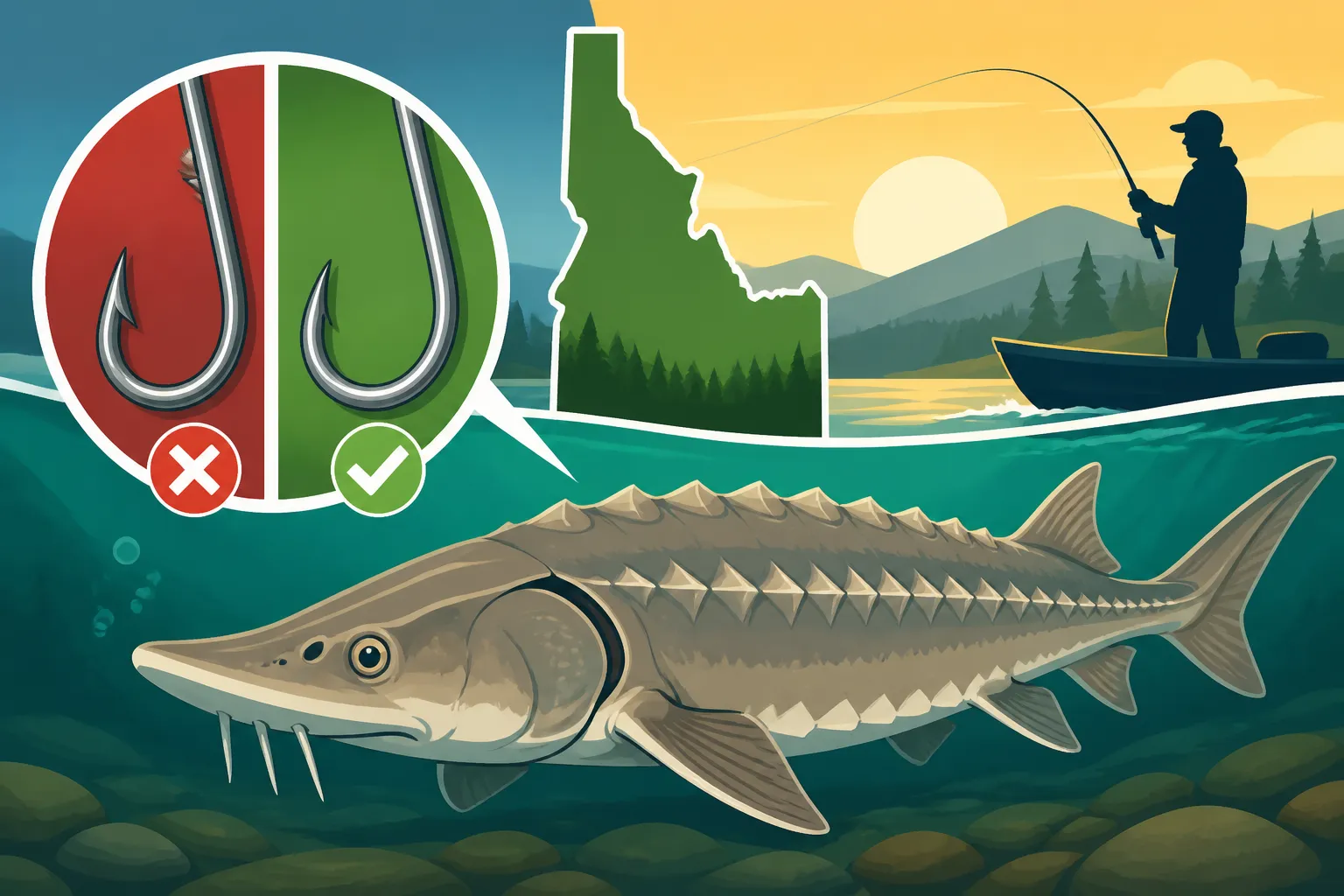
The barb on a traditional hook is designed to secure the hook firmly in the fish's mouth, making it difficult for the fish to shake free. However, this same feature can cause significant tearing and damage, especially in the tough, cartilaginous mouths of sturgeon, or worse, if the fish swallows the hook. A barbed hook can embed deeply, tearing more tissue as it's removed, potentially causing injury to the jaw, gills, or even internal organs.
Barbless hooks, on the other hand, penetrate and hold purely by tension. When the line goes slack, or when manipulated by the angler, they slide out much more easily and cleanly. This dramatically reduces the amount of tissue damage inflicted during the catch and, most importantly, during the unhooking process. Less damage means a quicker recovery for the fish, a lower risk of infection, and a better chance of feeding and surviving without long-term complications. For a species as fragile in recovery as the sturgeon, even minor injuries can have cumulative negative effects over their long lives.
Facilitating Quick and Easy Unhooking
Beyond reducing tissue damage, barbless hooks are a game-changer for the unhooking process itself. Imagine wrestling a massive sturgeon, trying to gain control, and then fumbling with a deeply embedded barbed hook while the fish thrashes. This can be stressful for both the angler and the fish, prolonging the time the fish is out of the water or under duress.
With a barbless hook, the unhooking is often almost instantaneous. Once the fish is brought close enough, a quick twist or gentle pull with a pair of pliers can usually dislodge the hook with minimal effort. This efficiency means less handling time, less air exposure, and a much faster return to the water for the sturgeon. This is especially crucial for Idaho Rule Against Removing Sturgeon from the Water, as anglers are generally expected to unhook these giants while they remain submerged or at least partially in the water. This rapid release capability directly supports the overarching goal of reducing post-release mortality and stress for these incredible fish, which is the cornerstone of Why Sturgeon Fishing on the Snake River Is Catch and Release Only.
Idaho Fish and Game's Commitment to Conservation
The Idaho Department of Fish and Game (IDFG) plays a critical role in managing and conserving Idaho's diverse fish populations. Their regulations, including the mandatory use of barbless hooks for sturgeon, are not arbitrary but are carefully developed based on scientific research and a deep commitment to sustainable fisheries.
The Rationale Behind the Regulation
The IDFG's primary objective for White Sturgeon fishing in Idaho is conservation and recovery. They recognize that sturgeon populations are vulnerable and require careful management to ensure their continued existence and health. The barbless hook regulation is a direct outcome of this commitment, a science-backed decision to minimize the impact of recreational fishing. Studies have repeatedly shown that barbless hooks significantly reduce injury and mortality rates in catch-and-release fisheries, particularly for large, long-lived species.
By implementing this rule, IDFG aims to:
- Maximize post-release survival: Ensure that as many caught sturgeon as possible survive the experience unharmed.
- Reduce handling stress: Facilitate quicker unhooking, minimizing the overall stress on the fish.
- Promote responsible angling: Educate anglers on best practices for handling vulnerable species.
This regulation works in tandem with other rules, such as specific gear requirements for How to Rig a Line for Snake River Sturgeon and limitations on What Size Tackle to Use for Idaho Sturgeon, all designed to ensure that anglers are equipped to catch these fish safely and release them effectively.
Beyond Hooks: Other Sturgeon Protection Measures
The barbless hook requirement is just one piece of a larger, comprehensive conservation strategy for Idaho's White Sturgeon. IDFG employs several other critical measures to safeguard these ancient fish, demonstrating a holistic approach to their protection:
- Catch-and-Release Only: As mentioned, virtually all sturgeon fishing in Idaho, especially on the Snake River, is strictly catch-and-release. This rule recognizes the endangered status of some populations and the slow reproductive rate of the species. This means anglers must understand Idaho Catch-and-Release Sturgeon Rules Explained thoroughly.
- No Removing Sturgeon from Water: This regulation is extremely important. Removing a large sturgeon from the water, even briefly, can cause severe internal injuries due to their heavy bodies and lack of skeletal support in air. It's critical to keep the fish in the water at all times for photos, measurement, and release.
- Single-Point Hooks and Gear Restrictions: In most designated sturgeon waters, only single-point hooks are allowed, and treble hooks are strictly prohibited. These specific tackle rules further reduce the potential for injury, working alongside the barbless hook rule to ensure minimal harm.
- Designated Baits: Certain baits may be restricted or required to minimize harm or unintentional hooking. Anglers must check current regulations for Best Bait for Idaho Sturgeon Fishing.
- Monitoring and Research: IDFG continuously monitors sturgeon populations, conducting research on their numbers, health, and habitats. This data-driven approach allows them to adapt regulations as needed to ensure the species' long-term viability, particularly in key areas like Snake River Fishing for Smallmouth Bass and Sturgeon.
- Reporting Requirements: In some areas, anglers may be required to report their sturgeon catches to aid in population monitoring.
These multifaceted regulations, outlined in the comprehensive Idaho Fishing License Guide, work together to create a robust protective framework for Idaho's magnificent White Sturgeon, ensuring that these giants continue to thrive in our waters.
Practical Tips for Anglers Using Barbless Hooks
Switching to barbless hooks, or modifying your existing tackle, is a simple step that makes a world of difference for sturgeon. It might require a slight adjustment to your angling technique, but the benefits for the fish are immeasurable.
Preparing Your Tackle
Getting ready for a sturgeon trip with barbless hooks is straightforward. You have a couple of options:
- Buy Pre-Made Barbless Hooks: Many tackle manufacturers now offer hooks that are explicitly sold as "barbless." These are often designed with slightly different geometries to compensate for the lack of a barb, providing excellent hooking and holding power when kept under tension. When shopping online, particularly on sites like Amazon, you can easily filter for "barbless hooks" to find a wide selection from reputable brands.
- Crimp Your Barbs: If you already have your favorite hooks, or can't find the exact barbless style you want, you can easily make them barbless yourself. All you need is a pair of strong pliers (needle-nose pliers or a dedicated crimping tool work best). Simply grasp the barb firmly and squeeze it down flush against the hook shank. Give it a quick check with your finger or a cloth—if it catches, squeeze it tighter until it's smooth. This is a common practice among fly anglers too, who often flatten the barbs on their flies. It’s a quick, easy, and effective modification that ensures compliance with the regulation.
Before you even get on the water, ensure all your hooks are indeed barbless. Double-check your setup, including any spare hooks in your tackle box. This small preparation saves hassle and ensures you're ready to fish responsibly.
Mastering the Barbless Hook Technique
Fishing with barbless hooks for powerful fish like sturgeon isn't drastically different, but a few subtle adjustments can improve your success rate and further benefit the fish.
- Keep Constant Tension: This is the golden rule of barbless fishing. Without a barb, the hook relies entirely on constant pressure to stay embedded. Once you set the hook, keep your rod bent and the line taut. Avoid any slack line, as even a momentary lapse can allow the hook to dislodge. This means being particularly attentive during the fight, especially when a sturgeon makes a powerful run or head shake.
- Strong Hook Sets: A firm, authoritative hook set is crucial to ensure good penetration. Don't be timid; you want that hook to bite cleanly into the sturgeon's mouth. Given their tough mouths, a strong, sharp hook is your best friend.
- Smooth Drags and Controlled Fights: While you want to keep tension, you also don't want to muscle the fish too aggressively, especially with lighter tackle. Use your drag effectively to tire the fish out gradually. A smooth drag allows the fish to run when it needs to, preventing the line from breaking or the hook from pulling out under sudden, extreme pressure.
- Swift and Gentle Release: Once the sturgeon is alongside the boat or close to shore (always keeping it in the water!), the barbless hook will be much easier to remove. Have your hook-removal tool (long-nosed pliers or a de-hooker) ready. Grasp the hook shank, twist gently if needed, and the hook should slide right out. Minimize the time the fish is out of its natural environment. If you're ever unsure, take a moment to review How to Release a Sturgeon Safely in Idaho before your trip. Remember to avoid lifting the fish's head too high out of the water, and never pull it onto the bank. These simple techniques ensure the sturgeon, which can grow to enormous sizes—just think about How Big White Sturgeon Can Grow—has the best chance of survival.
Fishing with barbless hooks is a testament to an angler's commitment to conservation. It's a small change that yields massive benefits for the fish and ensures that the incredible tradition of sturgeon fishing can continue for generations to come.
Barbed vs. Barbless Hooks for Sturgeon Fishing
To help visualize the difference and understand the benefits, here's a quick comparison of barbed versus barbless hooks in the context of sturgeon fishing:
| Feature | Barbed Hook | Barbless Hook |
|---|---|---|
| Hook Retention | Barb provides extra grip, making it harder for fish to shake loose. | Relies solely on constant line tension to stay embedded. |
| Tissue Damage | Can cause significant tearing upon penetration and removal, especially if deeply embedded. | Minimizes tissue damage; slides out cleanly with less tearing. |
| Unhooking Difficulty | Often requires more force and manipulation to remove, potentially prolonging handling time. | Easier and quicker to remove, reducing handling stress and air exposure for the fish. |
| Fish Stress | Higher potential for prolonged stress and injury. | Significantly lower stress and injury rates; promotes faster recovery. |
| Regulation Compliance | Illegal for sturgeon fishing in Idaho. | Mandatory for sturgeon fishing in Idaho. |
| Angler Technique | More forgiving of slack line during the fight. | Requires constant tension and a more mindful fighting technique. |
| Conservation Impact | Detrimental to fragile, long-lived species in catch-and-release fisheries. | Essential for sustainable catch-and-release practices and species recovery. |
This table clearly illustrates why the Idaho Fish and Game Department's regulation is so vital for preserving Idaho's sturgeon population.
Disclaimer
Please remember that fishing regulations, including those concerning tackle and methods, can change. Always consult the latest Idaho Fishing Regulations brochure or the official Idaho Department of Fish and Game website before heading out on your trip. This information is intended as a general guide and not as a substitute for official regulations.