How to Identify a Hatchery Steelhead
There’s nothing quite like the thrill of hooking into an Idaho steelhead, a true icon of our wild rivers. But the excitement can quickly turn to anxiety when you're unsure if the magnificent fish on the end of your line is a hatchery-raised fish you can legally keep, or a precious wild one that absolutely must be released unharmed. This guide is here to walk you through the distinct signs and crucial details you need to confidently identify a hatchery steelhead, ensuring you stay within the law and do your part for conservation.
Why Differentiating Hatchery from Wild Steelhead is Crucial
Anglers often get a bit flustered when they hear about the strict rules for steelhead. It's not just about catching fish; it's about understanding the delicate balance of our ecosystems and playing a responsible role in their preservation. Idaho, like many states, has a deep commitment to its wild fish populations, and that's why knowing the difference between a hatchery steelhead and a wild one isn't just a suggestion—it's a fundamental part of fishing here.
Understanding Idaho's Conservation Goals
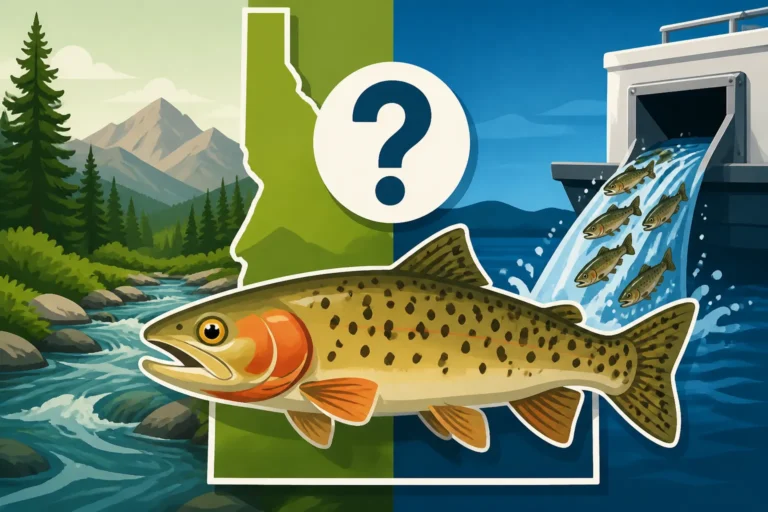
Idaho's rivers and streams are home to some truly incredible wild steelhead runs. These fish are a testament to the health of our waters and are vital for maintaining genetic diversity and strong, self-sustaining populations. Hatcheries play an important role, too, by supplementing fish numbers for harvest opportunities, taking pressure off the wild stock. But the ultimate goal is always to protect and enhance those wild fish. When you release a wild steelhead, you're not just letting a fish go; you're contributing to the future of Idaho's fisheries. It's about respecting the natural heritage of our state and ensuring future generations can experience the same incredible angling opportunities we enjoy today. For a broader look at the rules, check out Idaho Fishing Regulations Explained.
The Legal Ramifications of Misidentification
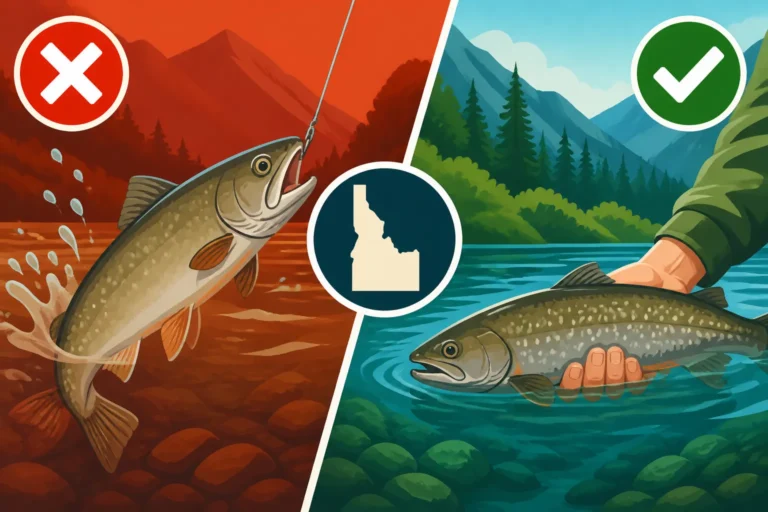
Let’s be brutally honest: making a mistake here can be costly. Idaho has very clear regulations regarding steelhead. Generally speaking, wild steelhead are protected and must be released immediately and unharmed. Hatchery steelhead, identified by a clipped adipose fin, are often fair game for harvest within specific bag limits and seasons. If you mistakenly keep a wild steelhead, even unintentionally, you could face significant fines, loss of fishing privileges, and even confiscation of your gear. Enforcement officers are out there, and they take these rules very seriously. It’s not a situation you want to find yourself in, especially after an otherwise fantastic day on the water. So, before you ever consider keeping a steelhead, you must be 100% certain of its origin. This is why learning Why Wild Steelhead Must Be Released in Idaho is so critical.
The Primary Identifier: The Adipose Fin Clip
When it comes to telling the difference between a hatchery steelhead and a wild one, there's one primary feature that acts as your definitive guide: the adipose fin clip. This isn't just a slight mark; it's a deliberate and visible alteration made to hatchery-raised fish.
What is an Adipose Fin?
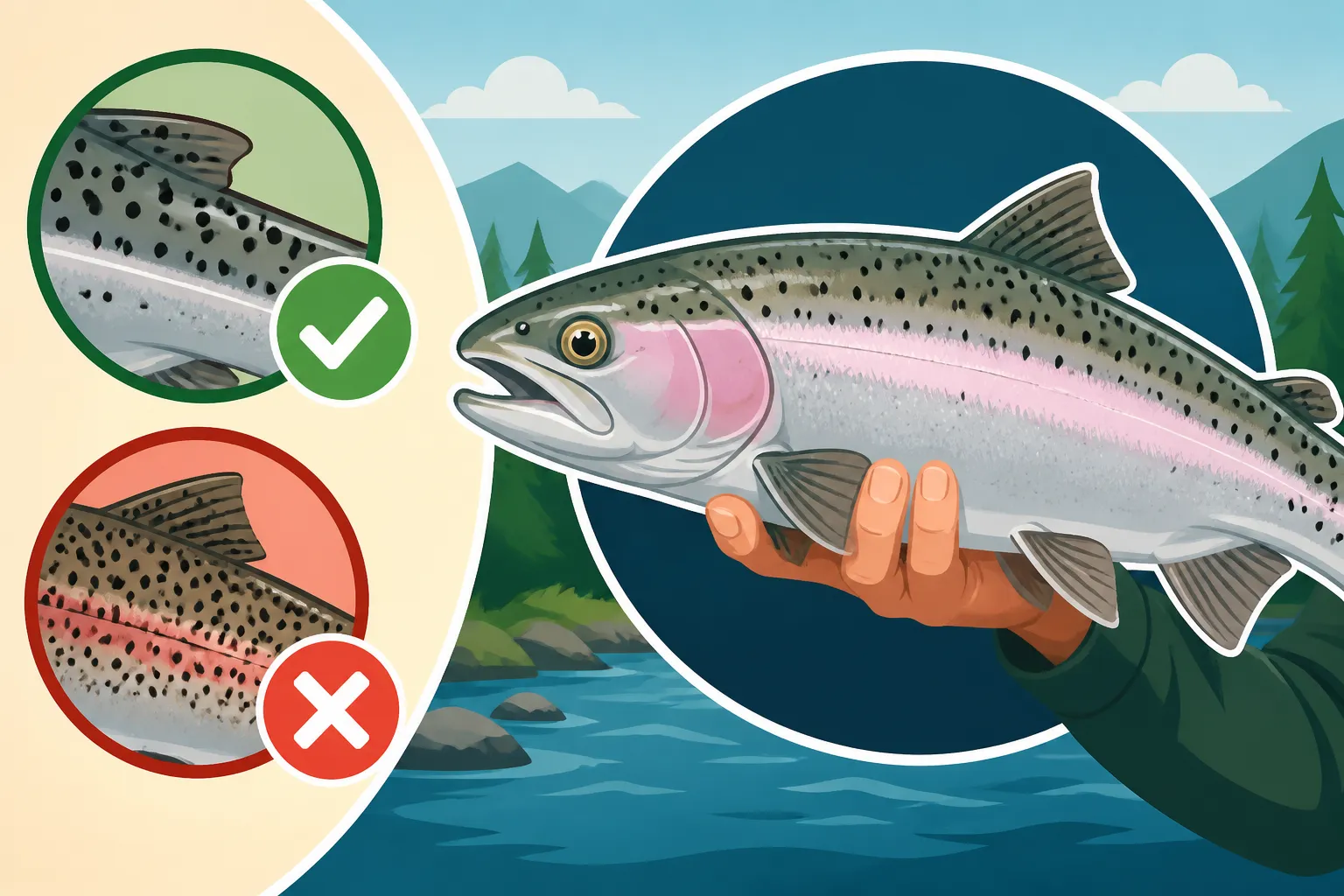
Before we talk about the clip, let's clarify what an adipose fin is. If you look at a trout or salmon species, you’ll notice two main dorsal fins on their back. The first dorsal fin is large and typically has rays. Then, further back on the body, closer to the tail, there's a small, fleshy fin with no rays. This little fatty fin is the adipose fin. It's a characteristic feature of salmonids, and it's present on both wild and hatchery steelhead. On a wild steelhead, this fin will be perfectly intact and symmetrical, much like a tiny, smooth triangle.
How the Fin Clip Works and What to Look For
The adipose fin clip is essentially a permanent tag. When steelhead are raised in a hatchery, during their juvenile stage (often as smolts), a small, precise incision is made to remove this adipose fin. It's a quick, harmless procedure that doesn't affect the fish's long-term survival or ability to swim.
When you catch a steelhead, the very first thing you need to do, before anything else, is gently examine this area. What you're looking for is the absence of the adipose fin. A hatchery steelhead will have a completely missing adipose fin, leaving a smooth, flat area where that little fleshy fin would normally be. It's not usually a partial clip; it's generally a full removal. Sometimes, there might be a small scar or a slight indentation.
Here's a quick comparison:
| Feature | Wild Steelhead | Hatchery Steelhead |
|---|---|---|
| Adipose Fin | Present, intact, and healthy | Completely absent (clipped) |
| Other Fins | Often well-formed, may show minor wear | Can be worn, frayed, or stubby |
| Snout/Head | Pointed, well-proportioned | Can be rounded or blunt from hatchery life |
| Body Shape | Sleek, often more streamlined | Can appear slightly heavier or less refined |
| Coloration | Vibrant, distinct patterns, darker overall | Sometimes paler, less defined markings |
Understanding What a Clipped Adipose Fin Means on a Steelhead is your number one tool in identification.
Common Misconceptions and Challenges with the Adipose Clip
While the adipose fin clip is generally a very reliable indicator, there are a few things that can sometimes make identification tricky or lead to confusion:
- Regrowth or Partial Clip: While rare, a very small piece of the adipose fin might occasionally appear to have regrown, or the clip might not have been perfectly clean. In these extremely rare cases, if you see any tissue that looks like an adipose fin, treat the fish as wild. It's always best to err on the side of caution.
- Damage from Predators or Injury: Sometimes, a wild steelhead might have an adipose fin that has been damaged or torn off due to a predator attack, entanglement, or other injuries. This is where it gets tough. A truly wild fish that has lost its adipose fin due to injury will often show signs of scarring, irregular tissue, or an asymmetrical wound, rather than the clean, smooth cut of a hatchery clip. If there's any doubt that it's a clean clip, assume it's wild and release it.
- Lighting and Water Clarity: In low light conditions, or if the water is murky, it can be hard to get a good look. This is why it’s critical to gently bring the fish close, potentially into a net, for a clear view. Never rely on a quick glance. Always give it a thorough, respectful examination. Remember, a wild steelhead's life depends on your careful observation.
Secondary Identification Clues for Hatchery Steelhead
While the adipose fin clip is the golden rule for identifying hatchery steelhead, it’s not the only thing that can hint at a fish’s origin. There are several secondary characteristics that, when combined with the fin clip (or in rare, confusing cases, to reinforce your decision), can give you a more complete picture. Think of these as supporting evidence rather than definitive proof on their own.
Fin Condition and Erosion
Hatchery life is very different from growing up in a wild river. Fish in hatcheries are often in crowded concrete raceways, which can lead to fin damage. They bump into each other, scrape against the walls and bottom, and are generally exposed to conditions that aren't conducive to pristine fin growth.
When you look at the other fins on a hatchery steelhead – the pectoral, pelvic, dorsal, and caudal (tail) fins – you might notice signs of erosion. These fins can appear:
- Worn down or frayed: The edges might not be sharp and clean like a wild fish's fins.
- Rounded or stubby: Instead of being long and pointed, they might look shorter or blunter.
- Discolored or scarred: You might see patches of white or red, indicating past injury or bacterial infection common in crowded environments.
A wild steelhead, by contrast, typically has much healthier, more perfectly formed fins. They're usually sharp, clean-edged, and show very little sign of wear, save for minor nicks from natural encounters. So, if you see a clipped adipose fin and heavily worn other fins, it's a pretty strong double confirmation.
Snout Shape and Head Condition
Another subtle but often noticeable difference can be found in the fish's head and snout. Hatchery steelhead can sometimes have a slightly different head shape compared to their wild counterparts.
- Rounded or blunt snout: Because hatchery fish spend their early lives in confined spaces and may constantly bump against tank walls, their snouts can become more rounded or blunter over time.
- Deformed jaws: In some cases, prolonged hatchery conditions can even lead to slight deformities in the jaw structure, though this is less common.
Wild steelhead generally exhibit a more streamlined, pointed, and natural snout shape, reflecting their life spent navigating currents and feeding in open water. This isn't a hard-and-fast rule, as individual fish vary, but it's another piece of the puzzle to consider.
Overall Body Condition and Coloration
The environment a fish grows up in has a huge impact on its physical appearance.
- Body Shape: Hatchery steelhead, fed a consistent diet and not needing to fight strong currents as much, sometimes appear a bit "softer" or less athletic in their build. They might be thicker-bodied but lack the hard, muscular feel of a truly wild fish that has spent its life battling upstream. Wild steelhead are often lean, powerful, and incredibly streamlined, built for endurance.
- Coloration: Wild steelhead tend to have more vibrant, richer coloration. Their spots are often more defined, their lateral line might be a deeper red or pink, and their overall body color can be darker and more camouflaged to their natural river environment. Hatchery fish, on the other hand, can sometimes appear paler, with less intense coloring and less distinct spotting. This isn't always the case, but it's another potential clue.
Think of it like comparing a house cat to a wild bobcat. Both are cats, but one has a ruggedness and intensity born of survival in the wild that the other simply doesn't possess. While these secondary clues are helpful, they are never a substitute for confirming the adipose fin clip. Use them to support your primary observation, especially in challenging identification scenarios. For more on what these differences mean for regulations, check out Hatchery vs Wild Steelhead in Idaho.
Practicing Identification and What to Do When Unsure
Becoming proficient at identifying hatchery steelhead takes practice and a commitment to careful observation. It's a skill that improves with every fish you encounter. Don't feel discouraged if it's not immediately obvious; even seasoned anglers have moments of doubt.
Observing Fish on the River
The best way to get good at this is to simply go fishing! Every steelhead you catch is a learning opportunity.
- Handle with care: Always handle steelhead as gently as possible. Use a rubber mesh net to minimize slime loss and fin damage. Keep the fish in the water as much as possible, especially if you plan to release it.
- Look immediately: As soon as the fish is in your net or alongside the boat, turn its back towards you and immediately look for the adipose fin. Don't delay.
- Take a mental snapshot: Pay attention to the overall look of the fish – its body, fins, snout, and color. Even if it's a clear adipose clip, note these secondary characteristics. Over time, you'll start to develop an intuitive sense for the differences.
- Consider a waterproof ID card: Some anglers keep a small, waterproof card with diagrams of hatchery vs. wild steelhead in their tackle box or vest. You might even find some useful visual aids on sites like Amazon that you can print out and laminate for quick reference.
When in Doubt, Let it Go
This is perhaps the most important rule of all: If you are not 100% certain that the steelhead has a clean, unambiguous adipose fin clip, you must release it. There's no "almost sure" when it comes to keeping a wild steelhead. The risk isn't worth it, both for your legal standing and, more importantly, for the future of the wild fish population. A quick, gentle release ensures that fish can continue its journey upstream to spawn. It's an ethical obligation for every angler. Remember, specific bag limits apply to hatchery fish, so even if it's clipped, make sure you know Idaho Steelhead Bag Limits.
Resources for Further Learning
Don't feel like you have to figure this all out on your own. There are fantastic resources available to help you become an expert identifier:
- Idaho Department of Fish and Game (IDFG) Brochures: The IDFG publishes comprehensive fishing regulations and often includes detailed diagrams and photos specifically showing how to identify hatchery vs. wild steelhead. Pick up a copy wherever you buy your Idaho Fishing License Guide or find them online. They're your official source for all the rules and visual aids.
- Local Tackle Shops and Guides: The folks at your local sporting goods store or bait shop are usually a wealth of knowledge. They see these fish all the time and can offer practical advice and show you examples. Similarly, if you ever go out with an Idaho Steelhead Fishing Guide, they will be excellent teachers in the field.
- Online Videos and Forums: Many anglers share videos and photos of steelhead identification. Just be sure to cross-reference any information with official IDFG resources, as online advice can sometimes be inaccurate. Look for videos that clearly demonstrate the adipose fin clip.
By diligently applying these identification methods, you'll not only enhance your own fishing experience but also become a crucial partner in the conservation of Idaho's incredible steelhead fishery. Happy fishing, and tight lines!
Disclaimer
This article is for general informational purposes only and does not constitute professional advice. Laws, prices and regulations vary by location and change over time. Consult a qualified professional for guidance on your specific situation.