Best Technique for Catching Steelhead from a Drift Boat
There's nothing quite like the rush of a steelhead on the line, especially when you're drifting silently down a pristine Idaho river. But let's be real, navigating those currents and presenting your gear effectively from a drift boat can feel like a whole different ballgame compared to bank fishing. This comprehensive guide is here to demystify the best techniques for catching steelhead from a drift boat, helping you maximize your chances on Idaho's legendary rivers.
Understanding Drift Boat Steelhead Fishing in Idaho
Fishing for steelhead from a drift boat is a truly unique and often incredibly effective way to pursue these elusive fish in Idaho. It offers advantages that bank fishing simply can't, allowing anglers to cover vast stretches of water, access prime holding lies, and present baits or lures with unparalleled precision. However, it also comes with its own set of skills and considerations, from mastering boat control to understanding river dynamics.
Why Drift Boats Excel for Steelhead Anglers
Drift boats, with their flat bottoms and rockered bows, are specifically designed to navigate shallow, rocky rivers with ease, making them perfect for many of Idaho's steelhead waters. Their design allows them to be rowed or maneuvered efficiently downstream, controlled by the current and oars. This translates to several key benefits for the steelhead angler. Firstly, stealth. A well-controlled drift boat moves quietly with the current, minimizing disturbance to the fish below. You can often glide right over or past prime holding water without spooking weary steelhead. This quiet approach is often the difference between a successful hook-up and an empty swing.
Secondly, access. Drift boats open up miles of river that are simply inaccessible to wade or bank anglers. This means you can reach those untouched pockets, the deep slots, and the undisturbed current seams where steelhead often stack up away from pressure. It’s not just about getting to more water, it’s about getting to better water. You gain the freedom to explore and present your offerings in spots that see far less angling pressure, which can be a huge advantage when targeting these notoriously finicky fish.
Thirdly, covering water efficiently. Instead of being limited to a single spot, a drift boat allows you to effectively fish a long stretch of river, presenting your lure or bait repeatedly through various types of water. You can target specific runs, then quickly move to the next promising section. This mobility dramatically increases your chances of encountering a fish that's willing to bite, making every minute on the water count. The ability to methodically work through a pool, then reposition for the next prime spot, is a game-changer.
The Unique Advantages of Idaho's Rivers for Drift Boating
Idaho boasts some of the West's most iconic steelhead rivers, many of which are perfectly suited for drift boat fishing. Rivers like the Clearwater, Salmon, and Grande Ronde offer incredible opportunities for anglers. The varied terrain, from long, smooth glides to turbulent rapids and deep pools, demands versatile techniques that drift boats facilitate. Each river has its own character and best times for targeting steelhead, requiring anglers to adapt their approach. If you're planning a trip, be sure to consult Idaho Fishing Season Dates and Limits to know when the steelhead runs are typically strong.
For example, the Clearwater River is renowned for its consistent runs and larger-than-average steelhead, often favoring methods that cover a lot of water and present bait slowly through deep troughs. The Salmon River, on the other hand, with its wilder nature and more diverse stretches, might call for more technical boat handling and precise presentations around structure. Understanding these nuances and how to apply drift boat techniques to each river's unique features is crucial for success. Don't forget, these are wild fisheries and understanding Idaho Fishing Regulations Explained is paramount, especially when it comes to specific river rules and species identification.
Key Drift Boat Techniques for Idaho Steelhead
Once you're out on the water in your drift boat, the real fun (and challenge!) begins. There are several highly effective techniques for targeting Idaho steelhead from a boat, each suited to different river conditions and fish behavior. Mastering these will significantly elevate your game.
Side-Drifting for Subtle Bites
Side-drifting is arguably the most iconic and often the most effective drift boat technique for steelhead in Idaho. It involves positioning your boat to drift downstream at roughly the same speed as the current, allowing your bait or lure to drift naturally ahead of or alongside the boat. The goal is to present your offering as naturally as possible, mimicking how food would drift in the current, right into a steelhead's strike zone. This technique is fantastic for covering wide runs and detecting those incredibly subtle takes. For a deeper dive into this specific method, check out our guide on Side-Drifting Technique for Idaho Steelhead.
To execute a good side-drift, the rower (or "oarsman") uses the oars to slow the boat's progress just enough so the lines drift freely, slightly ahead of the boat. Anglers cast out, often using lighter mainline with a lead-off dropper weight, such as a Slinky or pencil lead, and a short leader to bait or a small lure. The key is to maintain constant tension with your rod tip slightly elevated, watching for any hesitation or subtle tug on the line. When a steelhead bites, it might not be a violent strike; often, it's just a slight "stop" or "tick" as the fish inhales the offering. It requires focus and quick reactions to set the hook effectively.
The beauty of side-drifting is its versatility. You can use a variety of baits like cured roe, shrimp, or even artificial baits, or small lures like Cheaters or small beads. Adjusting your weight and leader length allows you to fish different depths and current speeds. On a typical side-drift setup, you might have your bait just ticking the bottom or slightly suspended, depending on the river depth and how the fish are holding. This natural presentation is often irresistible to steelhead, especially in clear water conditions where they can be very selective.
Bobber-Dogging the Deeper Runs
When steelhead are holding in deeper, slower runs, or when you need to precisely fish a specific slot, "bobber-dogging" (or float fishing) from a drift boat becomes a go-to method. This technique utilizes a large, buoyant float (the "bobber") to suspend your bait or lure at a precise depth, allowing it to drift naturally with the current. Unlike traditional bobber fishing where the float is stationary, in bobber-dogging, the float itself moves downstream, mimicking a natural drift. This approach is particularly effective in those long, deep pools and seams that often hold larger, more aggressive steelhead. If you want to refine your technique, explore How to Fish a Bobber and Jig for Idaho Steelhead.
The setup for bobber-dogging involves a sturdy float, often torpedo-shaped for stability in current, with weight (like pencil lead or split shot) strategically placed above the swivel that connects to your leader. The leader, typically 18-36 inches, then goes to your offering—often cured roe, a prawn, or a small jig. The float allows your bait to stay in the strike zone, off the bottom, preventing snags while still presenting naturally. As your boat drifts downstream, the oarsman controls the boat's speed to match the float's drift, ensuring a "drag-free" presentation.
Detecting a strike with bobber-dogging is usually more obvious than side-drifting; the float will dip, pause, or get pulled under. The key is to set the hook immediately and firmly. This technique shines when fish are holding in distinct pockets or when you want to avoid bottom snags in complex terrain. It’s also an excellent way to cover water systematically, ensuring your bait passes through every potential lie at the optimal depth. Keep in mind, the best depths for steelhead can change, so being able to adjust your float depth quickly is a definite advantage.
Back-Trolling Plugs and Bait
For those times when steelhead are aggressive, or when you're fishing specific holding water with a more consistent depth, back-trolling plugs or bait can be incredibly productive. This technique involves using your drift boat's oars to slowly move against the current, holding the boat relatively stationary while your plugs or weighted bait offerings "work" downstream, often diving and wobbling right in front of where steelhead are holding. It's a powerful way to entice a reaction strike. You can find more specific advice on this in our article How to Back-Troll Plugs for Idaho Steelhead.
When back-trolling, the boat is pointed upstream, and the oars are used to precisely control the boat's speed, often just slightly slower than the current, or just enough to hold it in a specific spot. Anglers deploy diving plugs (like certain Amazon-available Kwikfish or Wiggle Warts) or heavily weighted bait rigs upstream, allowing them to dive and wiggle into the target zone. The action of the plug, combined with its slow, tantalizing movement, can trigger aggressive strikes from otherwise passive steelhead.
This technique is particularly effective in areas with consistent current flow and depth, such as the heads of pools or long, even runs. It allows you to saturate a productive area, making multiple passes through a known holding lie. The key is to match your plug size and diving depth to the water you're fishing and ensure a slow, controlled presentation. Many anglers will "back-troll" a bait wrap in conjunction with the plugs, often using cured roe or prawns to add scent to the presentation, making it even more appealing.
Essential Gear and Setup for Drift Boat Steelhead
Having the right gear is non-negotiable for successful drift boat steelhead fishing in Idaho. Not only does it make your fishing experience more enjoyable, but it also increases your chances of landing one of these powerful fish. From rods and reels to the smallest piece of terminal tackle, every component plays a role.
Rod and Reel Combinations for Drift Boat Fishing
The choice of rod and reel largely depends on the specific technique you're employing, but versatility is key for drift boat fishing. For side-drifting and bobber-dogging, a sensitive yet powerful rod is essential. Many anglers opt for longer casting rods, typically 9 to 11 feet, with a medium-light to medium-heavy action. This length allows for better line control, easier mending, and increased leverage when fighting a strong steelhead. These rods are usually paired with reliable spinning reels or small baitcasting reels spooled with 10-20 lb monofilament or braided line, often with a fluorocarbon leader. For detailed options, see our guide on Best Rod Setup for Idaho Steelhead Fishing.
When back-trolling plugs, a slightly shorter, more robust rod might be preferred, often in the 8 to 9-foot range with a medium-heavy to heavy action. These rods need to withstand the constant pressure of pulling diving plugs and have enough backbone to handle a powerful fish that might hit close to the boat. Baitcasting reels are commonly used for this technique due to their line capacity and power, spooled with strong braided line (20-50 lb) and a heavy monofilament or fluorocarbon leader to absorb shock and provide abrasion resistance.
| Technique | Rod Length & Action | Reel Type | Line Type & Strength | Target Depth | Primary Offering |
|---|---|---|---|---|---|
| Side-Drifting | 9-11 ft, Med-Light to Med-Heavy | Spinning/Baitcast | Mono/Braid (10-20lb) | Bottom-ticking | Roe, Shrimp, Beads |
| Bobber-Dogging | 9-11 ft, Med-Light to Med-Heavy | Spinning | Mono/Braid (10-20lb) | Suspended | Roe, Prawn, Jigs |
| Back-Trolling | 8-9 ft, Med-Heavy to Heavy | Baitcast | Braid (20-50lb) | Deep, Mid-column | Diving Plugs, Bait Wraps |
Terminal Tackle and Bait/Lures
Your terminal tackle selection will be critical and will vary based on your chosen technique and river conditions. For side-drifting and bobber-dogging, you'll need various weights (slinkies, pencil lead, split shot), swivels, beads, and an assortment of hooks appropriate for your bait size. Good quality hooks are crucial – sharp, strong hooks like those from Gamakatsu or Owner can be found on Amazon and will make a huge difference in hook-up ratios. Don't skimp here! For baits, cured steelhead roe is a classic, as are prawns, shrimp, and sometimes even nightcrawlers. Artificial alternatives like scent-infused soft plastics or beads can also be highly effective, especially in clearer water.
When back-trolling, a selection of diving plugs in various sizes and colors is essential. Popular choices might include Yakima Bait Company's Kwikfish or Luhr Jensen's Jet A-Lure. The color and size preference of steelhead can change daily, so having a good assortment allows you to adapt. Often, natural colors work best in clear water, while brighter colors can be effective in stained or turbid conditions. Additionally, bait wraps (mesh material used to secure cured roe or other scent-rich baits to your plugs) can add an extra layer of attraction. Always carry a variety of options.
Safety and Comfort on the Water
Beyond fishing gear, personal safety and comfort are paramount on a drift boat trip. Always wear a U.S. Coast Guard-approved Personal Flotation Device (PFD). Many modern PFDs are comfortable, inflatable, and designed for fishing, allowing for full range of motion. You can find excellent options on Amazon. A well-stocked first-aid kit, emergency signaling devices (like a whistle or air horn), and a spare oar are also non-negotiables.
For comfort, dress in layers appropriate for Idaho's often unpredictable weather. Waterproof outerwear is essential, as is warm headwear and gloves, especially during the colder steelhead seasons. Bring plenty of water and snacks. A small cooler to keep your lunch and drinks, plus another for your catch, is also a good idea. Remember, if you're lucky enough to hook into a wild steelhead, you'll need to know How to Tell Hatchery Steelhead from Wild Steelhead by Sight to ensure proper release, as wild steelhead are often protected.
Reading the River and Maximizing Your Drift
Mastering the techniques is one thing, but knowing where to apply them and how to best present them comes down to excellent river reading skills and precise boat control. These are skills that improve with experience but can be actively developed by understanding key principles.
Identifying Prime Steelhead Lies
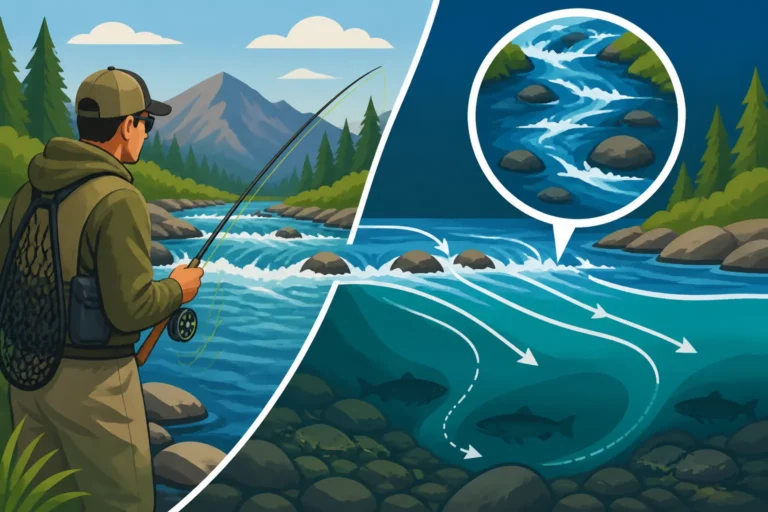
Steelhead are creatures of comfort and efficiency. They'll typically hold in areas where they can expend minimal energy while still having access to current that brings food (or what they perceive as food) to them. Look for "seams" – the lines where fast water meets slow water. These are classic holding lies. The slower water acts as a resting area, while the adjacent faster current acts as a food conveyor belt. Steelhead will often sit just inside the slower water, darting out to intercept anything that floats by.
Deep pools, especially those with structure like submerged logs, boulders, or ledges, are also prime spots. Look for distinct current breaks created by these features. The "tail-outs" of pools (where the water speeds up before transitioning into a riffle) and the "heads" of pools (where the water slows down after a riffle) are also highly productive. Riffles themselves, particularly those with deeper slots, can hold actively feeding steelhead. Understanding Idaho Fishing Regulations Explained will also help you identify any special regulation waters where steelhead may be holding under unique protections.
Mastering Boat Control and Oar Strokes
Boat control is the foundation of effective drift boat fishing. The oarsman's job is to position the boat to allow anglers to present their offerings perfectly and maintain a consistent, drag-free drift. This means understanding how to use the oars to slow the boat, speed it up, or pivot it to change the angle of the drift. For side-drifting, the oarsman typically slows the boat down slightly more than the current, allowing the lines to lead. For bobber-dogging, the goal is to match the boat's speed precisely with the float.
Key oar strokes include the "draw stroke" (pulling water towards the boat to slow it down or move it sideways), the "push stroke" (pushing water away to speed up or move sideways), and various pivot strokes to turn the boat. It's a dance with the current, requiring constant micro-adjustments. The best oarsmen make it look effortless, allowing their anglers to focus solely on fishing. This skill is honed over many hours on the water, but practicing fundamental strokes in different current speeds will build confidence quickly. Remember, safety first, especially in swift Idaho rivers.
The Importance of Stealth and Presentation
Steelhead are incredibly wary fish. Any unnatural movement, sound, or presentation can send them packing. This is where the drift boat's stealth advantage truly shines, but it requires the anglers and oarsman to work in harmony. Keep movements inside the boat to a minimum and avoid banging gear around. Casts should be smooth and accurate, placing your offering precisely into the target zone without a loud splash or significant line drag.
A "drag-free" presentation is the holy grail. This means your line, leader, and lure/bait are all moving at exactly the same speed as the current, allowing your offering to behave as naturally as possible. Any drag on your line will cause your bait to move unnaturally, signaling to a steelhead that something is amiss. This is why line mending (tossing a loop of line upstream to counteract current differential) and precise boat control are so critical. The more natural your presentation, the higher your chances of enticing a bite from a discerning Idaho steelhead. Consider carrying a copy of Idaho Steelhead Fishing Guide or How to Fish for Steelhead in Idaho for on-the-water tips. Don't forget, if you're targeting these amazing fish, you'll need an Idaho Salmon and Steelhead Permit in addition to your regular fishing license.
Disclaimer
This article is for general informational purposes only and does not constitute professional advice. Laws, prices and regulations vary by location and change over time. Consult a qualified professional for guidance on your specific situation.