How to Tell Hatchery Steelhead from Wild Steelhead by Sight
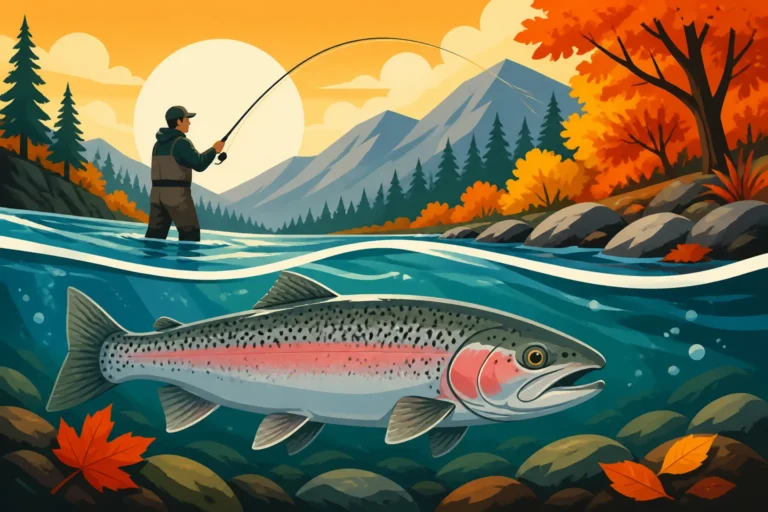
There's nothing quite like the thrill of feeling that tug on your line and reeling in an Idaho steelhead. It's a moment of pure adrenaline! But then, as that beautiful fish breaks the surface, a new challenge often arises: is it a wild steelhead or a hatchery-reared one? This isn't just an academic question; knowing the difference by sight is absolutely paramount for every angler in Idaho. Not only do regulations often dictate what you can and cannot keep based on this distinction, but responsible identification is crucial for the conservation of our precious wild steelhead populations. This guide will walk you through exactly what to look for, ensuring you're confident in your identification every time you hook one of these magnificent fish.
The Defining Feature: The Adipose Fin
When it comes to telling the difference between a hatchery-reared steelhead and a wild one in Idaho, there's one primary, undeniable visual cue that trumps all others. If you learn nothing else from this guide, learn this: check the adipose fin.
Understanding the Adipose Fin's Natural Appearance
First, let's talk about what a healthy, untouched adipose fin looks like. This isn't a fin that's used for propulsion or steering like the dorsal or caudal (tail) fin. Instead, the adipose fin is a small, fleshy, soft-rayed fin located on the back of the fish, specifically between the dorsal fin and the tail fin. Think of it as a little fleshy tab. On a wild steelhead, this fin will be fully intact, perfectly formed, and triangular or slightly rounded in shape. It will be smooth, with no nicks, cuts, or scarring. It's just naturally there, a subtle but distinct feature.
The Clipped Adipose Fin: The Key Indicator
Now, for the critical part. Hatchery-raised steelhead in Idaho, particularly those intended for harvest, undergo a process called "fin clipping." This involves carefully removing the adipose fin when the fish are very young, typically as juveniles before they are released into rivers. The procedure is performed precisely, often using specialized equipment, resulting in a clean, distinctive absence of the fin.
So, when you land a steelhead, the first thing you need to do is locate where that adipose fin should be. If it's completely missing, and the area looks like a clean scar or simply a smooth space where the fin would have been, you've got yourself a hatchery steelhead. This is the absolute, most reliable method of identification. There's no ambiguity here when the clip is done correctly. The Idaho Department of Fish and Game (IDFG) utilizes this clipping program to allow anglers to differentiate between hatchery and wild fish, thereby protecting naturally spawning populations. This practice is part of broader Idaho Steelhead Identification Guide efforts.
What If It's Missing Naturally?
It's natural to wonder, what if a wild fish somehow lost its adipose fin through injury or a congenital defect? While extremely rare, it's theoretically possible for a wild fish to have a naturally damaged or missing adipose fin. However, a naturally lost fin will typically look very different from a hatchery clip. A natural injury might leave ragged edges, scar tissue that isn't smooth, or evidence of a struggle. A hatchery clip, on the other hand, is almost always a clean, precise removal.
If you ever find yourself in a situation where you're truly unsure, perhaps because the fin appears partially present or oddly scarred, it's always best to err on the side of caution. In Idaho, if there's any doubt, treat the fish as wild and release it unharmed. The goal is to conserve wild populations, and a cautious approach helps ensure that. For a deeper dive into the significance, you might want to read What a Clipped Adipose Fin Means on a Steelhead.
Secondary Visual Cues for Identification
While the adipose fin clip is the definitive marker, there are other visual cues that, when combined with the adipose fin check, can sometimes help paint a clearer picture. These are not foolproof on their own and should never be used as the sole basis for identification, but they can offer supporting evidence.
Fin Condition and Overall Appearance
Think about where these fish grow up. Wild steelhead hatch and grow in rivers and streams, navigating natural obstacles and currents. Their fins are constantly in motion, used for steering, balance, and propulsion in dynamic environments. Because of this, wild steelhead typically have pristine, well-defined fins – dorsal, pectoral, pelvic, and caudal fins will all be in excellent condition, with sharp edges and a strong, natural shape.
Hatchery fish, on the other hand, spend their early lives in crowded concrete raceways. This environment, while necessary for raising large numbers of fish, can take a toll. Fish in close quarters often rub against each other and the raceway walls, leading to wear and tear on their fins. You might notice that hatchery steelhead can have fins that are:
- Frayed or Worn: The edges of their fins might appear ragged or chewed, especially the caudal (tail) fin.
- Stubby or Deformed: Constant rubbing can inhibit natural fin growth, sometimes leading to blunter or slightly misshapen fins compared to their wild counterparts.
- Discolored: While less common, sometimes parts of the fins might appear discolored or scarred from past injuries in the hatchery environment.
This isn't a universal truth for all hatchery fish, as facility conditions and fish density vary, but it's a common observation that can provide additional clues.
Body Markings and Coloration
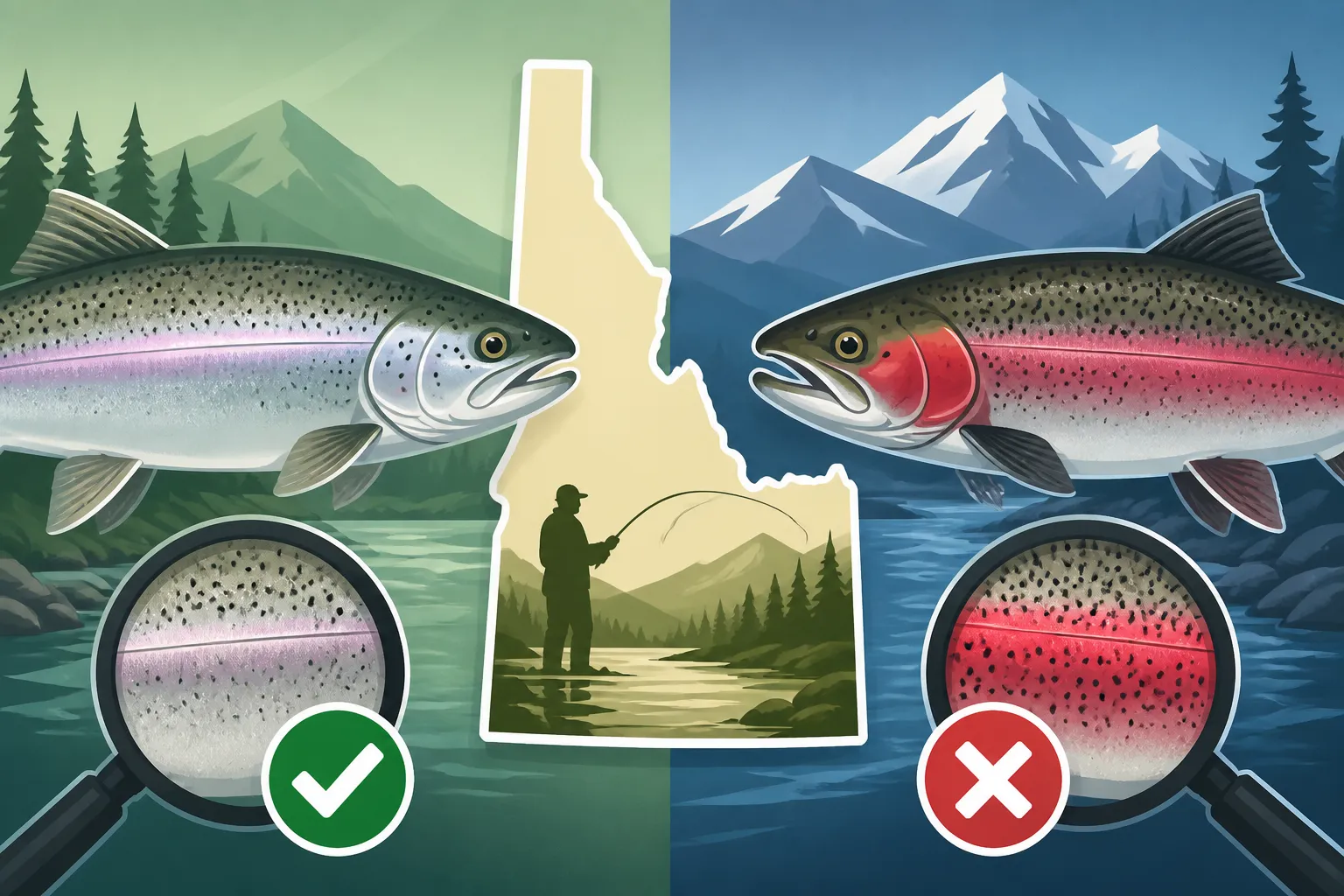
This is perhaps the trickiest secondary cue because it's so variable. Wild steelhead spend their entire lives in natural ecosystems, adapting to their surroundings. Their coloration tends to be more vibrant, with richer greens, blues, silvers, and reds, and their spotting patterns (often black spots on their back and upper sides) can be more distinct and natural-looking, offering excellent camouflage. The intensity of their colors can also vary based on their diet and the specific water body they inhabit.
Hatchery fish, due to their controlled diet and environment, sometimes exhibit a duller, more uniform, or muted coloration. Their spots might be less distinct, or their overall sheen might appear less vibrant. However, this is highly unreliable. Once hatchery fish are released into the wild, their diet and environment change rapidly, and they can quickly take on many of the same vibrant characteristics as wild fish. You absolutely cannot rely on color or spotting alone to distinguish between the two.
Snout and Jaw Appearance
Another subtle cue, though again, not definitive, relates to the snout and jaw. In a hatchery environment, fish might repeatedly bump into concrete walls or other structures. This can sometimes lead to a slightly blunter, more worn, or even subtly deformed snout or jaw compared to the typically streamlined and sharp profile of a wild steelhead. This is a very minor detail and often hard to discern without significant experience, but some seasoned anglers do notice it as part of the overall "look" of a hatchery fish.
Why Correct Identification is Absolutely Non-Negotiable
Understanding the difference between wild and hatchery steelhead isn't just a fun angling fact; it's a critical component of responsible and legal fishing in Idaho. The regulations surrounding these fish are designed to protect and restore wild populations, which are fundamental to the health of our river ecosystems.
Idaho Fishing Regulations and Conservation
Idaho has very strict rules about keeping steelhead, and these rules are almost always tied to whether the fish is hatchery-reared or wild. For instance, on many river sections, it is strictly catch-and-release for wild steelhead, meaning you must release any wild fish you catch, often immediately and unharmed. Conversely, hatchery steelhead are often fair game for retention within specific bag limits. Ignoring these rules, whether intentionally or accidentally, can lead to significant fines and penalties.
The conservation efforts focus heavily on wild steelhead because these fish are the backbone of the species' long-term survival. They possess genetic diversity and natural adaptations that are crucial for resilience against environmental changes. When you accidentally keep a wild steelhead, you're directly impacting the spawning potential of that river system. This is why knowing Why Wild Steelhead Must Be Released in Idaho, and how to identify them, is so critical. Familiarize yourself with the full Idaho Fishing Regulations Explained, which are updated annually by the Idaho Department of Fish and Game.
The Purpose of Hatcheries in Idaho Fishing
Hatcheries play a vital role in Idaho's fisheries management. Their primary purpose is to supplement fish populations, especially for species like steelhead, where wild runs have been impacted by historical factors such as dams and habitat loss. By releasing millions of hatchery-raised steelhead, the IDFG aims to:
- Provide harvest opportunities: Hatchery fish absorb much of the fishing pressure, allowing anglers to enjoy catching and keeping fish without impacting vulnerable wild stocks.
- Support recovery efforts: In some cases, hatchery fish are used in recovery programs to re-establish runs in areas where wild populations are depleted.
- Mitigate impacts: Hatchery programs can help mitigate the impacts of hydroelectric dams by providing fish to areas above dams where wild fish struggle to return.
Essentially, hatcheries are there to provide a sustainable fishery while protecting the wild resource. Understanding this balance helps underscore why clear identification, supported by knowledge of Idaho Hatchery vs Wild Steelhead Rules, is so important.
Ethical Angling Practices and Handling
Even with the best identification skills, sometimes you might be unsure, or you might accidentally catch a wild fish you intended to release. Ethical angling dictates that if you're ever in doubt, or if the fish is clearly wild and must be released, you do so quickly and with the utmost care. This means:
- Minimize handling: Keep the fish in the water as much as possible.
- Wet hands: Always wet your hands before touching a fish to protect its slime coat.
- Support the fish: Support its body horizontally, never vertically by the jaw or tail alone.
- Remove the hook quickly: Use pliers or a de-hooking tool to remove the hook efficiently. Barbless hooks can make this much easier and cause less damage, often a requirement in Idaho Barbless Hook Requirements.
- Allow for recovery: Hold the fish gently in the current, facing upstream, until it can swim away under its own power.
Being prepared with the right tools can make a huge difference. A good pair of long-nosed pliers or a de-hooker can be found easily on Amazon, making hook removal quicker and less stressful for the fish. A waterproof camera or a headlamp (also available on Amazon) can be handy for early morning or late evening checks, ensuring you can clearly see that adipose fin.
Here's a quick comparison table to summarize the key visual differences:
| Feature | Wild Steelhead | Hatchery Steelhead | Reliability for Identification |
|---|---|---|---|
| Adipose Fin | Present, fully intact, smooth, naturally shaped | Completely absent (clipped), smooth scar where fin should be | Highly Reliable (Primary) |
| Other Fin Condition | Pristine, sharp edges, undamaged | Often frayed, worn, stubby, or slightly deformed | Secondary (Suggestive) |
| Coloration & Markings | Often vibrant, distinct, natural patterns | Can be duller, more uniform, less distinct | Secondary (Variable, Unreliable Alone) |
| Snout/Jaw | Streamlined, sharp profile | Can be slightly blunter or worn | Secondary (Subtle, Unreliable Alone) |
This table should serve as a quick reference when you're on the water. Remember, the adipose fin is your number one indicator! Always double-check, and when in doubt, release. This approach safeguards the future of Idaho's incredible steelhead fishery for everyone. If you're planning a trip specifically for these fish, consider looking into a dedicated Idaho Steelhead Fishing Guide.
Disclaimer
The information provided in this guide is for general informational purposes only and is not intended as legal advice. Fishing regulations in Idaho are subject to change by the Idaho Department of Fish and Game. Always consult the most current official Idaho Fishing Seasons and Rules brochure before fishing to ensure compliance with all laws and regulations.