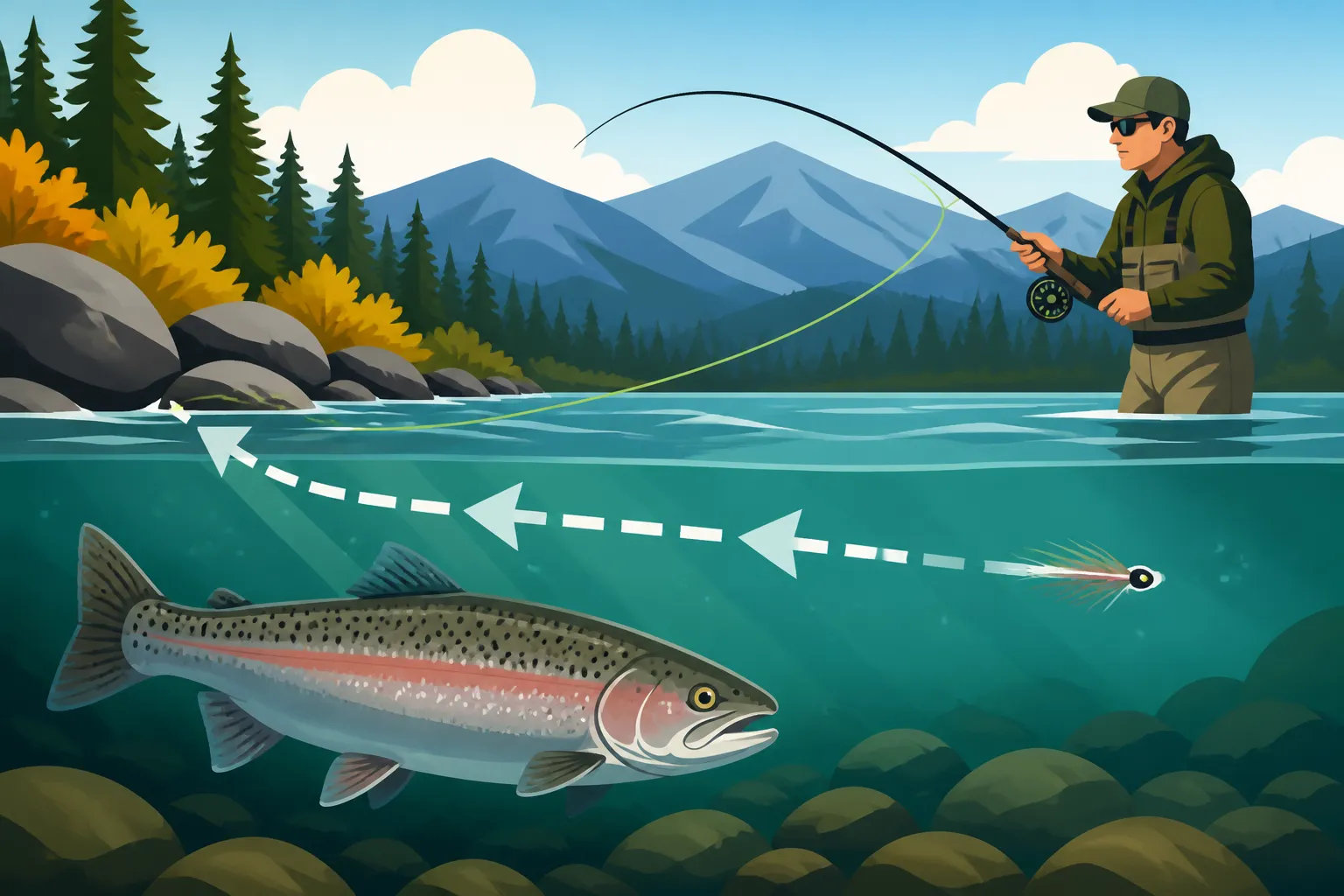
Side-Drifting Technique for Idaho Steelhead
Oh, the Idaho steelhead! If you've spent any time on our glorious rivers, you know these chrome beauties are a challenge, a true test of an angler's skill and patience. Many of us have stared at the powerful currents, wondering just how to get our bait or lure to those finicky fish holding tight to the bottom. This comprehensive guide is here to unravel the mysteries of side-drifting, a proven and highly effective technique that can significantly increase your success when chasing Idaho's prized steelhead.
Understanding the Side-Drifting Technique for Steelhead
Side-drifting is one of those techniques that, once you "get it," feels incredibly intuitive, but it takes a bit of explanation to truly grasp why it's so potent. It's fundamentally about presenting your offering in the most natural way possible to steelhead that are often holding in specific, sometimes subtle, current breaks or depressions.
What is Side-Drifting and Why It Works
At its heart, side-drifting is a boat-based technique where you use the river's current to gently drift your bait or lure downstream, perpendicular or at a slight angle to the current, while maintaining a tight, controlled line. Instead of casting out and letting your gear simply swing with the current (which has its place!), side-drifting uses boat control—often with an experienced guide or skilled angler at the helm—to guide your presentation through prime steelhead lies. The boat moves at a speed that matches the current, or slightly slower, allowing your gear to tumble along the bottom as if it were a natural piece of food dislodged by the flow.
Why does this work so well for Idaho steelhead? Well, these fish are incredibly sensitive to unnatural presentations. They're often in their spawning migration, focusing more on energy conservation than actively hunting. A bait that appears to "swim" unnaturally fast or drag against the current is usually ignored. Side-drifting mimics natural river debris, like a cluster of dislodged salmon eggs or a bug larva bouncing along. It puts your offering right in their face, often giving them just enough time to react without expending too much energy. Plus, it allows you to cover a lot of prime water systematically, maximizing your chances of hitting those productive holding spots. This is a primary technique you'll want to master, whether you're fishing the Clearwater or the Salmon River. If you're looking for more general knowledge, check out our Idaho Fishing Techniques Guide.
Key Principles of Effective Side-Drifting
Effective side-drifting isn't just about dropping a line in the water and hoping for the best. It hinges on a few critical principles:
- Matching the Current Speed: This is perhaps the most crucial element. Your boat needs to be moving downstream at a speed that closely matches the current where your gear is drifting. If your boat is too fast, your weight will lift off the bottom and your bait will swing unnaturally. Too slow, and your weight will drag, causing your bait to hang up frequently and look distinctly unnatural. The goal is a perfect "dead drift" where your bait is almost weightless, just barely touching the bottom.
- Maintaining a Tight Line: While dead-drifting, you still want a relatively tight line. This doesn't mean a taut, stretched line, but rather enough tension that you can feel every subtle bump, tick, and, most importantly, the soft take of a steelhead. Slack line is your enemy; it prevents you from feeling bites and setting the hook effectively.
- Bottom Contact: Steelhead, especially those holding in winter or during their migration, are often hugging the riverbed. Your side-drift setup needs to be heavy enough to maintain intermittent contact with the bottom, but not so heavy that it constantly snags or drags. The idea is to have your weight tap, tap, tapping along the gravel or rock, sending up small puffs of sediment, which can attract curious fish.
- Boat Positioning and Angle: Your boat's position and angle relative to the current are vital. You're typically presenting to fish holding downstream and slightly to the side of the boat. The boat should be angled to allow your lines to stream out and downriver at an optimal angle, allowing your gear to sweep through the target zone. An experienced boat operator knows how to "ferry" the boat, using the current and oars or a motor to achieve this precise drift.
Essential Gear for Side-Drifting Idaho Steelhead
Just like any specialized fishing technique, side-drifting for Idaho steelhead requires a specific setup to maximize your effectiveness. Don't worry, you don't need to break the bank, but having the right tools makes a huge difference.
Rod, Reel, and Line Considerations
When it comes to steelhead, your rod, reel, and line are your direct connection to the fish, and each plays a critical role in side-drifting.
- Rods: You're looking for a rod with a sensitive tip but plenty of backbone. A typical side-drifting rod might be 8 to 10.5 feet long, with a medium-light to medium action. The sensitive tip allows you to detect those subtle takes and feel your weight ticking the bottom. The longer length helps manage line, keep it out of the current, and absorb the shock of a powerful steelhead run. Graphite rods are favored for their sensitivity. If you're new to this, a longer, slightly softer rod can be more forgiving. You'll want to review our Best Rod Setup for Idaho Steelhead Fishing for more in-depth advice.
- Reels: Most anglers prefer baitcasting reels for side-drifting due to their control, especially when managing line and making precise casts. They allow for easy thumb control of the spool, essential for letting line out or slowing a drift. Spinning reels can work, especially for beginners, but often lack the fine control needed for consistent side-drifting. Make sure your reel has a smooth, reliable drag system—a powerful steelhead will test it immediately.
- Line: Your main line will typically be braided line, ranging from 20 to 50 lb test, chosen for its strength and lack of stretch, which enhances sensitivity. The low stretch of braid means you feel everything your weight is doing and every subtle take. However, braid is visible, so you'll always tie a fluorocarbon leader to your main line. The leader, usually 8 to 15 lb test, provides invisibility in the water and a bit of shock absorption. You can find a wide array of specialized fishing line on Amazon, from high-quality braids to various fluorocarbon leader materials. For specific knots to connect your leader, check out Best Knot for Steelhead Fishing.
Weights, Floats, and Terminal Tackle Choices
This is where the side-drifting setup gets a little more nuanced, as you need to build a system that achieves that perfect bottom contact and natural presentation.
- Weights: The most common weights for side-drifting are slinky weights or pencil weights. Slinky weights are typically sections of lead shot inside a piece of parachute cord, which makes them very snag-resistant. Pencil weights are just what they sound like – thin, elongated lead weights. The weight you use depends entirely on the current speed and depth. You want the lightest weight possible that still allows you to consistently tick the bottom. This often means carrying a range of weights, from 1/4 ounce up to 1 ounce or more, to adjust as conditions change. The weight is usually attached to a swivel, with a short dropper line (often lighter than your leader) so that if you snag, you only lose the weight, not your entire rig.
- Floats (Optional, but useful): While side-drifting often relies on feeling the bottom, sometimes a small, high-visibility float or "drift bobber" is incorporated. This isn't a traditional bobber that holds your bait suspended, but rather a small, sensitive float that indicates subtle bites or changes in the current. It sits above your weight and bait, just off the surface, acting as a visual indicator without suspending your bait high in the water column. This can be especially helpful in choppy water or when learning to feel the drift.
- Swivels and Beads: Barrel swivels are essential to prevent line twist, especially when using cured eggs or yarn that might spin in the current. Beads are often used to protect knots from sliding weights or to add a bit of attraction just above your bait.
- Hooks: For steelhead, you'll typically use a single, sharp hook, often a size 1 or 2, snelled onto your leader. The size of the hook will depend on the bait you're using. Barbless hooks are frequently required or highly recommended in many Idaho steelhead waters, so always check the current Idaho Fishing Regulations Explained.
Best Baits and Scent for Side-Drifting
Steelhead are highly scent-oriented, especially in river systems where salmon and steelhead eggs are a natural food source.
- Cured Roe/Eggs: This is by far the most popular and effective bait for side-drifting steelhead. Fresh, properly cured salmon or steelhead eggs (often in mesh bags, or "roe bags") are irresistible to steelhead. The curing process enhances their scent, color, and durability. Many anglers spend hours perfecting their own curing recipes, but you can also buy high-quality cured eggs.
- Shrimp: Small pieces of cooked cocktail shrimp, often dyed and scented, can also be very effective, especially in certain waters or during specific times of the year.
- Yarn: While not a "bait" in the traditional sense, yarn often accompanies eggs or can be fished alone. It absorbs scent very well, provides a visual stimulant (especially in bright colors), and can impart a fluttering action. Many anglers tie small "yarnies" that imitate an egg cluster.
- Scent: No matter what bait you use, adding a high-quality fish scent is almost always a good idea. Scents like Anise, Krill, or various "egg sac" formulas can significantly increase your bite rate. You can apply these to your eggs, shrimp, or yarn. Amazon offers a vast selection of popular fishing scents and attractants.
Mastering the Side-Drifting Process on Idaho Rivers
Once you have your gear sorted, it's time to put it all together on the water. Side-drifting is a dance between boat, current, and angler, and it takes practice to perfect.
Reading the Water and Positioning Your Boat
Before you even drop a line, understanding where the steelhead are likely to be is paramount.
- Understanding Steelhead Lies: Steelhead love current breaks, especially those that offer a bit of respite from the main flow but are still close enough to grab drifting food. Look for seams where fast water meets slower water, the edges of submerged rocks, gravel bars, sudden depth changes, and the tails of long pools. They'll often be on the current-side of structure, just out of the main force. Areas with overhead cover, like sweepers or bankside brush, are also prime. If you're fishing on the Clearwater River, for example, those gravel bars and eddy lines are gold. Knowing Idaho Fishing Rules for the Clearwater River Explained is key.
- Boat Positioning: The boat's position is dictated by the water you want to fish. You'll typically start your drift well upstream of the target zone. The goal is to position the boat slightly upstream and to the side of where you expect the fish to be. The boat needs to be angled into the current, allowing you to use the oars or motor to control your downstream speed, matching it to the current the lines are in. You want to present your bait to the fish, not from directly above them, which can spook them. This controlled boat drift is what sets side-drifting apart from just floating downstream.
Executing the Drift and Detecting Bites
This is the moment of truth, the execution of the side-drift.
- Initiating the Drift: Once in position, carefully let out line, allowing your weight to hit the bottom. You want just enough line out to ensure your weight is ticking the bottom intermittently. With a baitcaster, you'll use your thumb to control the line as it peels off the spool.
- Maintaining the Drift: As the boat moves downstream, you'll constantly be adjusting. If your weight stops ticking the bottom, let out a little more line. If you start snagging too often or your rod tip is bent over from dragging, reel in a foot or two or lighten your weight. The goal is that constant, light "tick, tick, tick" sensation. Keep your rod tip up, pointed downstream at your line, maintaining that slight bend in the rod that allows you to feel the bottom and any subtle takes.
- Detecting Bites: Steelhead bites can be incredibly subtle – sometimes just a light tap, a momentary stop in the "tick, tick, tick," or a sudden feeling of weight. Because your line is always under slight tension, you need to pay close attention to any deviation from the normal bottom contact. Don't wait for a huge yank! If anything feels different, set the hook immediately. A quick, firm sweep of the rod tip is usually all it takes. Often, a steelhead will simply mouth the bait, and if you hesitate, it's gone. For a refresher on hooking, see How to Set the Hook on a Steelhead.
Common Side-Drifting Challenges and Solutions
Side-drifting, like any effective technique, comes with its own set of frustrations. Don't worry, every angler faces them!
- Snagging: This is probably the most common challenge. It means your weight is too heavy for the current, you're not moving fast enough with the current, or you're drifting through too rocky an area.
- Solution: Lighten your weight, speed up your boat (or your retrieve if you're trying to compensate for a too-slow drift), or adjust your drift path to avoid snaggy areas. Using a lighter dropper line for your weight means you only lose the weight, not the whole rig.
- Not Feeling the Bottom: If you can't feel your weight ticking, your weight is too light, you have too much line out, or your boat is moving too fast for your line.
- Solution: Increase your weight, reel in a little line, or slow down your boat to match the current more closely.
- Missed Bites: If you're feeling taps but not hooking up, it could be a few things:
- Solution: Your hook might be too large for your bait, your bait presentation isn't natural enough, or you're hesitating on the hookset. Try a smaller hook, adjust your bait (e.g., smaller egg cluster), or be quicker to set the hook. Sometimes, a subtle bite is just a fish bumping the line, but it's always worth a quick hookset to check.
- Wind and Weather: Wind can make boat control and line management incredibly difficult.
- Solution: Try to drift on the lee side of the river if possible. If the wind is truly howling, it might be a day for a different technique or fishing from the bank in a sheltered spot. Sometimes, heavier weights are needed to keep lines down when wind is pushing the boat.
Optimizing Your Side-Drifting Success for Idaho Steelhead
Side-drifting isn't a static technique; it's dynamic and requires adaptation. Fine-tuning your approach based on conditions will make a big difference.
Seasonal and Water Condition Adjustments
Idaho's rivers change dramatically throughout the year, and so should your side-drifting strategy.
- Water Temperature: Steelhead are cold-blooded, so their metabolism and activity levels are highly tied to water temperature. In colder water (e.g., winter steelhead season), they tend to be more lethargic and hold in slower, deeper water. Your drifts should be slower, your presentations even more subtle, and scents more potent. In warmer water (e.g., early fall or late spring), they might be more active and willing to chase a slightly faster drift. How Water Temperature Affects Idaho Trout Fishing can offer more insights into this dynamic.
- Water Clarity: This is a huge factor. In clear water, steelhead are incredibly wary. You'll need longer, lighter fluorocarbon leaders, smaller baits, and perfectly natural drifts. Bright colors might be less effective. In stained or slightly off-color water, you can often get away with heavier leaders and brighter, larger baits, as the fish rely more on scent and silhouette.
- River Flow/Level: High, fast water often pushes steelhead into softer seams closer to the bank or behind larger obstacles. You'll need heavier weights and more robust gear to deal with the powerful current. Low, clear water (common in late summer or fall) makes fish more spooky, requiring stealth and delicate presentations. Knowing when Idaho's Spring Runoff and How It Affects Fishing occurs is also crucial, as very high water can make side-drifting impossible.
- Time of Year: Fall steelhead, often fresh from the ocean, can be aggressive. Winter steelhead might be slower to bite, requiring more patience and scent. Understanding When Idaho's Steelhead Season Runs Through the Winter and Why Fall Is the Best Time for Clearwater River Steelhead will inform your approach.
Here's a quick reference table for side-drifting adjustments:
| Condition | Water Temp | Water Clarity | River Flow | Recommended Adjustments |
|---|---|---|---|---|
| Cold Water | Low | Clear/Stained | Low/Medium | Slower drifts, potent scents, smaller baits, lighter leaders, target deeper, slower water. |
| Warm Water | High | Clear/Stained | Medium | Faster drifts, active presentations, slightly larger baits, cover more water. |
| High/Fast | Any | Stained | High | Heavier weights, focus on softer seams and eddies, robust gear. |
| Low/Clear | Any | Clear | Low | Long, light fluorocarbon leaders, small natural baits, stealth, perfect drifts. |
| Windy | Any | Any | Any | Heavier weights, precise boat control, consider sheltered drifts. |
Combining Side-Drifting with Other Techniques
While side-drifting is a powerful technique on its own, it's often most effective when used as part of a broader strategy, or in conjunction with other methods.
- Exploring with Plugs or Spinners: Before or after a side-drifting pass, some anglers will run diving plugs or cast spinners through the same water, especially if they suspect actively biting fish. This can sometimes trigger a strike from a fish unwilling to take a stationary bait. How to Back-Troll Plugs for Idaho Steelhead is a technique that complements side-drifting well.
- Integrating with Bobber and Jig: In certain slower, deeper pools or when fish are known to be holding high, a bobber and jig setup can be deadly. You can run this alongside your side-drifting lines, effectively covering different depths. For more on this, check out How to Fish a Bobber and Jig for Idaho Steelhead.
- Bank Fishing Adaptation: While primarily a boat technique, the principles of side-drifting can be adapted for bank anglers in certain situations, especially on rivers with consistent currents and good access. You might use a longer rod to manage line and a larger float to achieve a similar 'dead drift' through prime holding water, letting the current take your bait downstream while trying to minimize drag. It's often more challenging, but the core idea of a natural, bottom-bouncing presentation remains.
Mastering the side-drifting technique for Idaho steelhead is a journey, not a destination. It requires patience, keen observation, and a willingness to adapt. But when that rod suddenly loads up, and you feel the raw power of a fresh Idaho steelhead on the end of your line, all the effort will be incredibly worthwhile. Keep practicing, keep learning, and those chrome beauties will start coming to hand!
Disclaimer
This article is for general informational purposes only and does not constitute professional advice. Laws, prices and regulations vary by location and change over time. Consult a qualified professional for guidance on your specific situation.