Average Size of Kokanee Caught on Lake Coeur d’Alene
It's incredibly exciting to plan a fishing trip to Lake Coeur d'Alene, especially when you're dreaming of those vibrant, hard-fighting kokanee. But let's be honest, one of the first questions on every angler's mind is, "How big are they really?" It's frustrating when you hear rumors of monster fish, only to arrive and find smaller ones, or vice versa. This guide will help you understand the average size of kokanee you can expect to catch on Lake Coeur d'Alene, diving into the factors that influence their growth and offering tips to help you find the bigger ones.
Understanding Kokanee Size Factors on Lake Coeur d'Alene
Kokanee salmon, the landlocked sockeye salmon, are a truly special fish, and Lake Coeur d'Alene is renowned for its fishery. However, like any wild population, their size isn't static. It's influenced by a complex web of environmental and biological factors that are constantly in flux. Understanding these can help you set realistic expectations and even strategize your approach.
Natural Growth Rates and Lifespan
Kokanee typically have a relatively short lifespan, usually maturing and spawning around three to four years of age. This means they have a limited window to grow. In ideal conditions, with abundant food and favorable water temperatures, they can pack on size quite rapidly. However, if conditions are less than optimal, their growth can be stunted. It's a race against time for these fish, as their biological clock pushes them towards reproduction.
Think about it like this: a kokanee that hatches in a lean year might start smaller and struggle to catch up, even if subsequent years offer better forage. Conversely, a fish born into a boom year could have a head start, growing larger and stronger early on. This natural variation within a single year class contributes significantly to the range of sizes you'll encounter on any given day. Factors like genetics also play a role, though it's harder for us anglers to observe that directly.
Forage Base and Competition
The availability of food is arguably the most critical factor influencing kokanee size in Lake Coeur d'Alene. Kokanee are primarily plankton eaters, feasting on tiny crustaceans like zooplankton. If the lake's plankton population is robust and healthy, kokanee thrive. When the plankton numbers are down, or if there's too much competition for that food, their growth suffers.
Lake Coeur d'Alene has a fascinating ecosystem, and the kokanee don't live in a vacuum. Other species, like the introduced Chinook salmon, also rely on the kokanee as a food source, but perhaps more importantly, these larger predators can indirectly impact kokanee size by competing for the same forage base when young, or simply by altering the kokanee's behavior patterns, forcing them to expend more energy to avoid predation. The balance of these populations is a delicate dance, often managed through stocking programs, to ensure a healthy fishery. You can learn more about how they manage these populations in our guide on Does Lake Coeur d'Alene Get Stocked with Kokanee?.
Water Conditions and Habitat
The overall health of Lake Coeur d'Alene itself directly impacts kokanee growth. Water temperature, oxygen levels, and water quality are all crucial. Kokanee are cold-water fish, preferring temperatures in the 50-60°F range. During the warmer summer months, they'll retreat to deeper, cooler waters where oxygen levels are still sufficient. If these thermal refuges are limited, or if oxygen becomes scarce, it stresses the fish, diverting energy from growth.
Habitat also includes the structure of the lake bottom and the presence of healthy aquatic ecosystems that support the plankton they eat. A lake with diverse depths, submerged structures, and healthy plant life (where appropriate) offers more resources and protection. Any changes in the lake's environment, whether natural or human-induced, can ripple through the food web and ultimately affect the size and health of the kokanee population.
What "Average Size" Really Means for Lake Coeur d'Alene Kokanee
When we talk about "average size," it's not a hard-and-fast rule. It's more of a general range that captures most of the fish you're likely to encounter. Understanding this average, along with its variations, can significantly improve your fishing experience and manage expectations. Nobody wants to be disappointed when the fish don't match the "story" size!
Typical Lengths and Weights
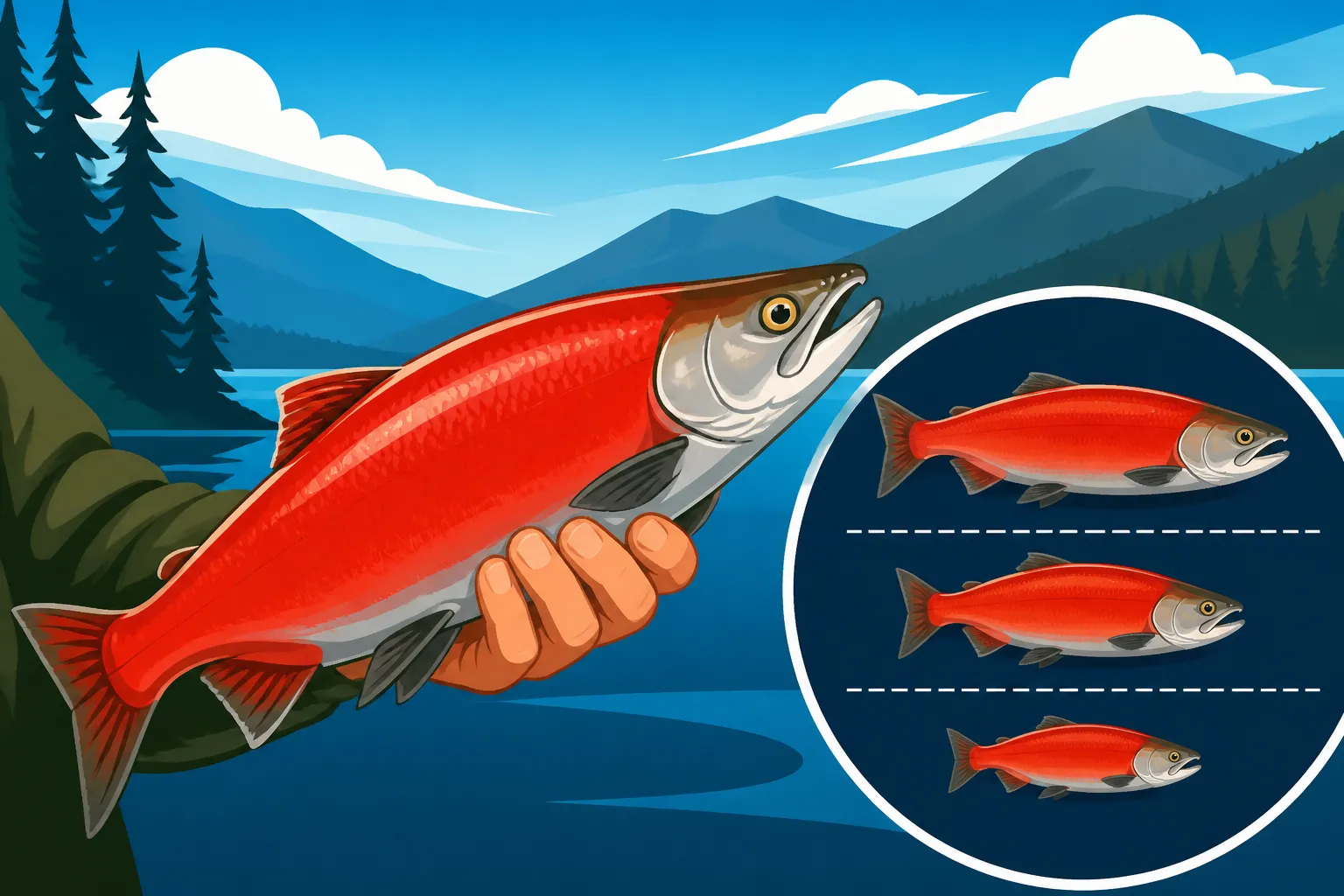
For Lake Coeur d'Alene, a typical kokanee will often fall into the 10 to 14-inch range. Many anglers consider a 12-inch kokanee to be a "good" fish, and anything approaching 14 inches or more is often seen as a fantastic catch. In terms of weight, these fish usually weigh between half a pound and a pound and a half. It's important to remember that these are slender, streamlined fish built for speed and efficiency in open water, not bulky weight.
However, anglers occasionally land kokanee that break this mold. Fish in the 16 to 18-inch range are less common but certainly present, and these larger specimens can tip the scales at two pounds or even slightly more. These are often older fish that have managed to avoid predators and find a consistent food supply. It's these bigger fish that truly get the adrenaline pumping! You can explore more about finding them in Where to Catch Kokanee on Lake Coeur d'Alene.
Let's look at a general expectation:
| Size Category | Length Range (inches) | Weight Range (pounds) | Frequency of Catch |
|---|---|---|---|
| Small | 8-10 | 0.25 – 0.5 | Fairly Common |
| Average | 10-14 | 0.5 – 1.5 | Most Common |
| Large | 14-16 | 1.5 – 2.0 | Less Common |
| Trophy | 16+ | 2.0+ | Rare, but Possible |
Seasonal Variations in Size and Condition
The time of year plays a huge role in the size and fighting condition of Lake Coeur d'Alene kokanee. Early in the season, typically late spring to early summer, you'll often find kokanee that are still growing. They might be a bit leaner, but they're incredibly energetic and put up a spirited fight. As summer progresses and they continue to feed heavily, their condition improves, and they become fatter and heavier. This is often when you'll encounter the "average" size fish at their peak.
Towards late summer and into fall, as kokanee approach their spawning cycle, their appearance can change dramatically. They develop their characteristic red coloration, their jaws become hooked, and their flesh begins to soften. While they might still be long, a "trophy" fish caught in the fall, while visually stunning, might not carry the same fighting weight as a fish of similar length caught in mid-summer. Anglers often target different qualities of fish depending on the season, whether it's the fight, the beauty, or the table fare.
How Angler Reports and Data Influence Averages
The "average size" isn't just pulled from thin air; it's a dynamic figure influenced by what anglers are actually catching and reporting. Local tackle shops, fishing forums, and even dedicated tournaments or derbies provide invaluable data points. When many anglers are consistently catching 12-inch kokanee, that reinforces the perceived average. Conversely, a few reports of 16-inch fish can shift the perception upward, even if they aren't the norm.
Fisheries biologists also conduct their own surveys, netting and measuring fish to get a more scientific understanding of the population's age structure and growth rates. They analyze factors like scale samples to determine age, and then cross-reference that with length and weight to see how well the fish are growing each year. This combination of scientific data and anecdotal angler reports helps paint the most accurate picture of what you can expect on Lake Coeur d'Alene. Keeping an eye on local reports before your trip can give you a real-time snapshot of the current situation.
Strategies for Finding Larger Kokanee on Lake Coeur d'Alene
While it's true that the average size is what it is, there are definitely strategies you can employ to increase your chances of hooking into those bigger, more desirable kokanee on Lake Coeur d'Alene. It's not just about luck; it's about understanding their behavior and habitat.
Targeting Productive Depths and Structures
Kokanee are pelagic, meaning they inhabit the open water column, often suspended far from shore or bottom. However, they aren't randomly distributed. They school up, and these schools will congregate where food is abundant and water conditions (temperature, oxygen) are optimal. For larger kokanee, this often means deeper water, especially during the warmer months. You'll typically find them anywhere from 30 to 80 feet down, sometimes even deeper. A good fish finder is an indispensable tool for locating these schools and determining the exact depth they're holding at. You can delve into more detail about this in What Depth Kokanee Hold at in Summer on Idaho Lakes.
Look for areas where submerged structures, like old creek channels, drop-offs, or underwater humps, might concentrate plankton. While kokanee won't hug these structures like bass, the food chain often starts there. Trolling over these features, or even along the edges of the main lake channels, can put your lure in front of more active, larger fish. It often requires a bit of trial and error, moving from one depth to another until you mark fish on your sonar.
Lures, Baits, and Techniques for Bigger Bites
Larger kokanee, while still plankton eaters, can be more selective or simply require a slightly different presentation to entice a bite. Trolling is the name of the game for kokanee, and it involves special gear to get your lures down to the correct depth. Downriggers are common, allowing precise depth control. For lures, think small, flashy, and vibrant. Kokanee are attracted to bright colors and erratic action. Small hoochies, wedding rings, or mini-squids in pink, orange, or green are perennial favorites. Adding a dodger or flasher in front of your lure creates extra flash and vibration, mimicking a small school of baitfish and drawing kokanee in from a distance.
When it comes to bait, a kernel or two of Shoepeg corn, often soaked in an attractant scent like garlic or anise, is a classic kokanee enhancement. The corn adds a visual trigger, a burst of flavor, and a scent trail that can be irresistible. Don't be afraid to experiment with different lure colors and scent combinations, as kokanee can be surprisingly picky on any given day. Many anglers find excellent selections of these specialized lures and scents on platforms like Amazon, allowing them to stock up for their next trip. Remember to pay attention to your trolling speed; subtle changes can make a big difference. For more detailed advice, check out Best Lures for Idaho Kokanee Fishing.
Understanding Peak Seasons for Trophy Kokanee
While you can catch kokanee throughout their open season on Lake Coeur d'Alene, certain times offer a better shot at bigger fish. As mentioned, mid-summer often finds kokanee at their plumpest and most active before the pre-spawn changes begin. The fish have had ample time to feed, and water temperatures are typically stable, concentrating them in predictable depths. This period, from late June through August, is generally considered prime time for targeting both numbers and size.
Early spring, just after ice-out, can also produce some surprisingly large kokanee, as they emerge hungry from winter. However, they might be more scattered, and finding them requires a bit more effort. As fall approaches, the kokanee begin their journey towards spawning, and while they might be impressive in length and color, their eating quality diminishes, and they may be less aggressive feeders. Timing your trip during these peak feeding windows can significantly improve your chances of landing a true Lake Coeur d'Alene bruiser.
Managing Expectations and Enjoying the Experience
Let's face it, fishing is about more than just the biggest fish. It's about the entire experience, the challenge, the beauty of the lake, and the stories you bring home. While aiming for a trophy is fun, it's equally important to embrace the full spectrum of what Lake Coeur d'Alene's kokanee fishery offers.
The Thrill of the Catch, Regardless of Size
Kokanee, even the smaller ones, are renowned for their feisty fight. They are fast, acrobatic, and can make thrilling runs that test your drag and your patience. There's a distinct joy in seeing that bright red flash beneath the surface, knowing you've successfully tricked one of these beautiful fish. Every hook-up, every battle, is a victory in itself. Don't underestimate the fun you can have catching a limit of "average" sized kokanee.
Remember, fishing is often about the cumulative experience. It's the crisp morning air, the stunning scenery of Lake Coeur d'Alene, the quiet camaraderie with fishing buddies, or the joy of teaching a child to reel in their first fish. A successful day isn't always measured in inches or pounds, but in memories made. Even a small kokanee caught on a rod and reel picked up from Amazon can provide immense satisfaction. Idaho Kokanee Fishing Guide offers more insights into the overall experience.
Conservation and Sustainable Fishing Practices
As responsible anglers, it's our duty to protect this incredible resource. The kokanee fishery on Lake Coeur d'Alene is vibrant, thanks to careful management and the cooperation of anglers. Always be mindful of the current regulations regarding bag limits, size restrictions, and gear. These rules are in place to ensure a sustainable population for generations to come. If you're unsure, always consult the latest Idaho Fishing Regulations Explained before heading out.
Practice catch-and-release responsibly for fish you don't intend to keep, especially if you're targeting larger, older fish that are valuable for spawning. Handle fish gently with wet hands, minimize their time out of the water, and use appropriate de-hooking tools. By following these simple guidelines, we can all contribute to the continued health and abundance of Lake Coeur d'Alene's kokanee, ensuring that future anglers can also enjoy the thrill of chasing these magnificent fish.
Disclaimer
This article is for general informational purposes only and does not constitute professional advice. Laws, prices and regulations vary by location and change over time. Consult a qualified professional for guidance on your specific situation.