Idaho Sturgeon Fishing Guide
There's nothing quite like the thrill of chasing a true leviathan, a living relic from prehistoric times, right here in Idaho. But let's be honest, the thought of trying to catch a White Sturgeon can feel intimidating. These aren't your average trout; they're massive, powerful, and protected, which means you need to know your stuff to have a safe, successful, and legal encounter. This guide is going to walk you through everything you need to know about Idaho sturgeon fishing, from understanding these incredible fish to the exact gear, techniques, and regulations that will make your experience unforgettable.
Understanding Idaho's White Sturgeon: A Gentle Giant
Imagine a fish that swam alongside dinosaurs, a creature that has roamed our rivers for millions of years, largely unchanged. That's the White Sturgeon for you. In Idaho, particularly on the Snake River, we're fortunate enough to have a population of these magnificent, long-lived fish. But because they are such an ancient and vulnerable species, fishing for them comes with a huge responsibility. It's not just about the catch; it's about respecting a living piece of history.
Biology and Life Cycle of Idaho Sturgeon
White Sturgeon are truly remarkable. They can live for over 100 years, growing to incredible sizes – sometimes exceeding 10 feet in length and weighing hundreds of pounds. Think about that for a second: a fish that could be older than your grandparents! They are bottom-feeders, using their sensitive barbels (those whisker-like protrusions around their mouths) to detect food like crayfish, mussels, and small fish along the riverbed. Their mouth is actually beneath their snout, like a vacuum cleaner, allowing them to suck up prey.
Their life cycle is slow, which is one of the reasons they're so vulnerable. Sturgeon don't reach sexual maturity until they're quite old, often 15-20 years for males and 20-25 years for females. And even then, they don't spawn every year. This slow reproductive rate means that overfishing, habitat destruction, or even careless handling can have a devastating long-term impact on their populations.
When they do spawn, it's usually in fast-moving water over gravel bottoms. The eggs are sticky and attach to the substrate, and once they hatch, the tiny sturgeon larvae begin their journey, slowly growing into the giants we marvel at today. It’s a delicate balance, and every angler plays a part in keeping that balance intact.
Why White Sturgeon are Special in Idaho
Idaho's White Sturgeon population is pretty unique. The Snake River, in particular, is one of the last strongholds for these impressive fish in the western United States. While populations in other areas have faced significant decline, Idaho has worked hard to maintain and restore its sturgeon, particularly in stretches like the middle Snake River. This means that a successful fishing trip here isn't just a personal achievement; it's a testament to ongoing conservation efforts.
Fishing for sturgeon in Idaho offers a rare opportunity to connect with a truly wild, native species in its natural habitat. It's a chance to witness the power of nature up close and personal. Many anglers describe the fight as something entirely different from any other fish, a deep, powerful tug that can last for a long time. It's a true test of strength and patience, and that's why so many people dream of landing one of these prehistoric beasts.
The sheer size of these fish means that encountering one is always an awe-inspiring event. When you hook into a sturgeon, you're not just reeling in a fish; you're battling a creature that could easily outweigh you, with a history stretching back millennia. It’s an experience that truly puts you in your place, reminding you of the incredible wildness that still exists in our rivers.
Distinguishing Sturgeon from Other Fish
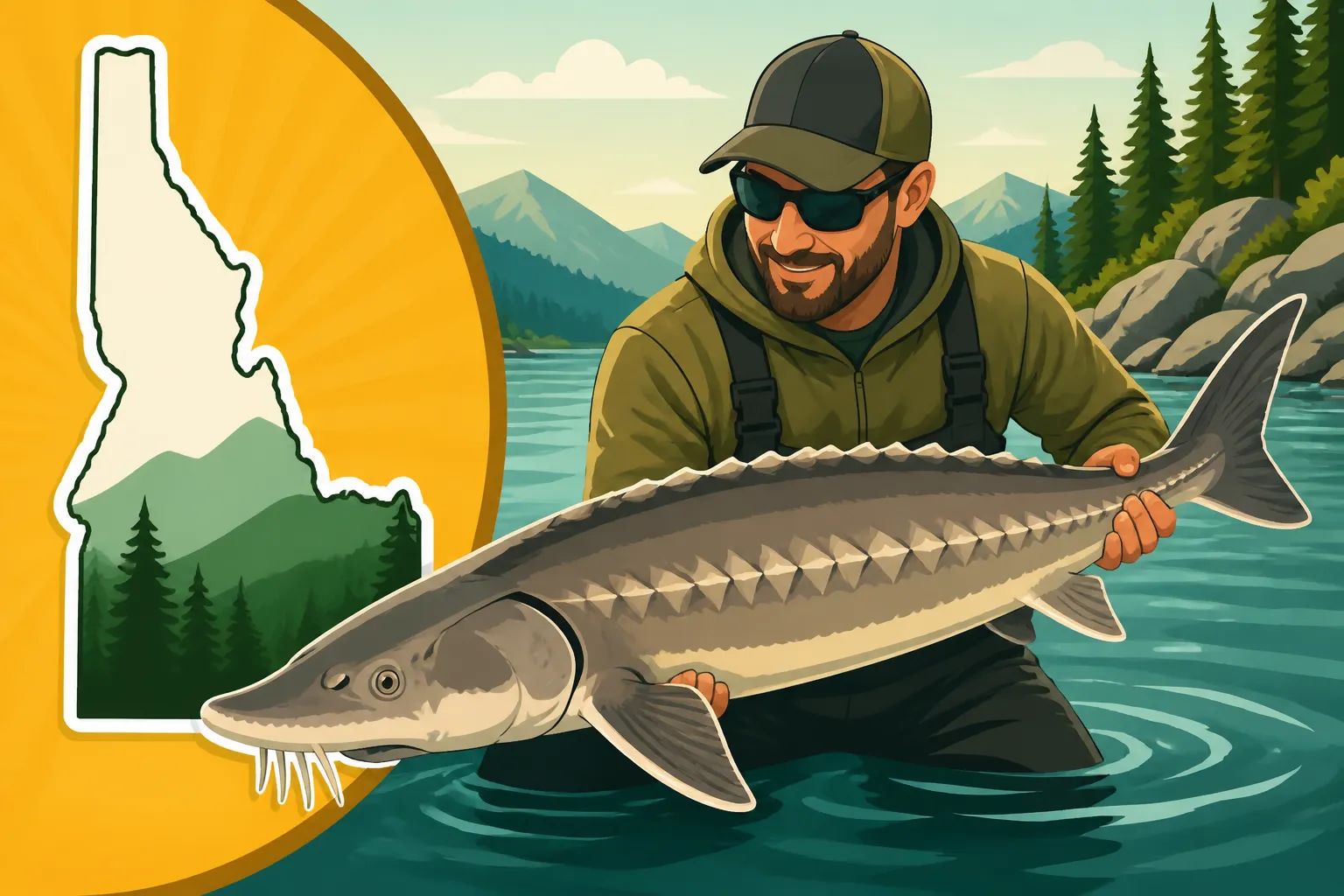
While sturgeon are pretty distinct, especially when you see their prehistoric-looking bodies, it's good to know their key features. They have a cartilaginous skeleton, more like a shark than a bony fish, and rows of bony plates called scutes along their body instead of scales. Their elongated, torpedo-shaped body, flattened snout, and the four barbels near their mouth are unmistakable. They also have a deeply forked tail fin.
The most common sturgeon species you'll encounter in Idaho is the White Sturgeon, easily identified by its whitish-grey underside and darker back. There are other species of sturgeon globally, but the White Sturgeon is the focus for anglers in Idaho. You won't typically confuse them with other large Idaho fish like trout or salmon, which have very different body shapes, fins, and mouths.
Knowing these identification markers is crucial because different species might have different regulations, though for sturgeon in Idaho, the rules are pretty universal due to their protected status. Always be certain of your catch, especially when dealing with such an important species.
Where to Find Sturgeon in Idaho
When it comes to White Sturgeon, one river in Idaho reigns supreme: the mighty Snake River. This iconic waterway, particularly certain stretches, offers some of the best sturgeon fishing opportunities in the state. Understanding these prime habitats and how to access them is key to a successful trip.
The Mighty Snake River: Prime Sturgeon Habitat
The Snake River, as it carves its way through Idaho, provides the ideal environment for White Sturgeon. These fish prefer deep pools, slower currents, and areas with rocky or gravelly bottoms where they can scour for food. The river's abundant forage, combined with its diverse structure, creates perfect sturgeon real estate. You'll often find them congregating in areas downstream from dams or large rapids, where food gets funneled and deep water provides sanctuary.
The sheer power and size of the Snake River also play a role. It’s a vast system, and while sturgeon are widespread, they aren't everywhere. Focusing your efforts on known productive stretches significantly increases your chances. Where to Fish for Sturgeon on the Snake River delves deeper into specific locations.
Many stretches of the Snake River are accessible by boat, offering anglers the best chance to reach prime sturgeon holes. While bank fishing is possible in some areas, a boat opens up a lot more territory and allows you to target deeper, less pressured spots. The river can be treacherous in places, so always exercise caution and ensure your boat is suitable for the conditions.
Specific Hotspots on the Snake River
While the entire Snake River holds potential, some sections are particularly famous for their sturgeon populations. Hells Canyon, a deep and rugged canyon forming part of the border between Idaho and Oregon, is legendary. Its deep pools and strong currents are perfect for these bottom-dwellers, and it's known for producing some truly massive fish. However, access here can be challenging, often requiring a jet boat and an experienced hand to navigate its waters.
Further upstream, near the communities of Glenns Ferry and Hagerman, the Snake River also offers excellent sturgeon opportunities. These areas are often more accessible for bank anglers and those with smaller boats, though the fish here might not reach the colossal sizes sometimes found in Hells Canyon. Look for areas with prominent ledges, drop-offs, and eddies, which are typical sturgeon haunts.
Other notable stretches include areas below Brownlee Dam, Oxbow Dam, and Hells Canyon Dam, where food washes downstream and deep holes provide respite from the current. Always check the latest local regulations for specific stretches, as rules can vary by water body and time of year.
Other Potential Waters
While the Snake River is undoubtedly the main event for sturgeon fishing in Idaho, it's worth noting that other waters occasionally hold White Sturgeon, typically in systems connected to the Snake. Historically, some sturgeon have been found in the lower reaches of major tributaries like the Clearwater River and Salmon River, although these occurrences are less common and usually involve transient fish from the main Snake system.
However, for practical stionging purposes, if you're planning a dedicated sturgeon trip, the Snake River is where you want to be. The populations there are more stable, and the chances of success are significantly higher. Deviating from the Snake River for sturgeon could lead to a lot of casting with very little reward.
It’s always a good idea to consult the Idaho Department of Fish and Game (IDFG) regulations and stocking reports, though sturgeon are not "stocked" in the traditional sense like trout. These resources can provide updated information on populations and areas where sturgeon are known to thrive. Focus your energy where these ancient fish genuinely call home.
Essential Gear for Idaho Sturgeon Fishing
You wouldn't bring a butter knife to a sword fight, and you certainly wouldn't bring a lightweight trout rod to a sturgeon battle. These fish are incredibly powerful, and having the right gear isn't just about catching them – it's about doing it efficiently and, most importantly, safely for both you and the fish. Investing in robust equipment is paramount.
Rods, Reels, and Line: Building Your Setup
When it comes to rods, think heavy-duty. You'll want a stout, powerful rod, often in the 7 to 9-foot range, with a heavy or extra-heavy action. Many anglers opt for conventional boat rods designed for saltwater or big game. Look for rods with a strong backbone that can handle the incredible pulling power of a large sturgeon. Brands like Ugly Stik, with their GX2 series, offer durable and affordable options widely available on platforms like Amazon, perfect for anglers getting into heavy-duty fishing.
For reels, a large, robust conventional (level-wind) reel is the go-to choice. These reels are built for brute strength and have excellent drag systems, which you'll absolutely need when a sturgeon decides to bolt. Capacity is key, as these fish can make long runs. You'll want a reel that can hold at least 250-300 yards of heavy line. Spinning reels can work for smaller sturgeon, but for the true giants, conventional gear provides better leverage and power. Again, check out options on Amazon for reels with high line capacity and strong drag.
Line choice is critical. Braided line is highly favored for sturgeon fishing due to its incredible strength-to-diameter ratio and lack of stretch, which gives you excellent sensitivity to detect those subtle sturgeon bites on the bottom. You'll want at least 80-120 lb test braided line, possibly even heavier in areas with strong currents or huge fish. Some anglers will add a monofilament or fluorocarbon leader for abrasion resistance and knot tying, but the main line should be braid. What Size Tackle to Use for Idaho Sturgeon provides more detailed recommendations on tackle.
| Gear Type | Recommendation | Key Features |
|---|---|---|
| Rod | Heavy or Extra-Heavy Action Boat Rod (7-9 ft) | Strong backbone, durable construction, good leverage |
| Reel | Large Conventional (Level-Wind) Reel | High line capacity (250-300+ yds), powerful drag |
| Main Line | Braided Line (80-120 lb test) | No stretch, high sensitivity, extreme strength |
| Leader Line | Heavy Monofilament or Fluorocarbon (100-200 lb test) | Abrasion resistance, supple for knots |
Terminal Tackle: Hooks, Weights, and Swivels
Your terminal tackle needs to be as tough as the rest of your setup. Hooks are non-negotiable: you must use barbless hooks for sturgeon fishing in Idaho. This isn't just a suggestion; it's a critical regulation designed to protect these fish. Barbless hooks minimize damage to the fish's mouth and make for quicker, safer releases. Sizes typically range from 7/0 to 12/0, depending on your bait size and the target fish. Circle hooks are often preferred because they tend to hook fish in the corner of the mouth, reducing gut hooks.
Weights are essential to keep your bait on the bottom in strong currents. You'll need pyramid sinkers or flat river sinkers, often weighing anywhere from 8 ounces to a couple of pounds, sometimes even more in extremely fast water. It’s a good idea to bring a variety of sizes so you can adjust to different current speeds. The goal is to hold your bait firmly on the bottom without it rolling, which can tangle your line.
Swivels and snap swivels should be heavy-duty, rated for at least 150-200 lb test. Barrel swivels help prevent line twist, especially when casting or if your bait spins in the current. Connecting your main line to your leader and your leader to your weight setup requires strong connections that won't fail under pressure. All these items are readily available from tackle shops or online retailers like Amazon, so stock up before you head out.
Bait Selection: What Sturgeon Can't Resist
Sturgeon are scavengers with an incredible sense of smell, so pungent, oily baits are the order of the day. There's no single "best" bait, but some consistently outperform others. Cut bait, particularly from oily fish, is a top choice. Shad, herring, and even oily portions of carp or squawfish (northern pikeminnow) are highly effective. Cut these into chunks that are about 2-4 inches long and 1-2 inches wide, making sure to leave some skin on for scent and to help keep it on the hook.
Other popular baits include roe (fish eggs), lamprey, and even shrimp or crayfish. Some anglers swear by cured baits that have been treated with scent attractants to make them even more potent. Whatever you choose, make sure it’s fresh or properly thawed, as old, mushy bait won't stay on the hook well and won't be as appealing to the sturgeon.
Presentation is key. You want your bait to be easily detectable by the sturgeon's sensitive barbels. Fresh bait, strategically placed in a known sturgeon haunt, is your best bet for enticing a bite. Always check Best Bait for Idaho Sturgeon Fishing for the latest recommendations and specifics, as local preferences and availability can sometimes vary.
Sturgeon Fishing Techniques and Strategies
Landing a sturgeon isn't just about having the right gear; it's about understanding how these fish feed, where they hold, and how to effectively present your bait. Patience, precision, and a bit of river knowledge will go a long way.
Anchoring and Rigging Your Bait
The foundation of successful sturgeon fishing is getting your bait to the fish and keeping it there. If you're fishing from a boat, anchoring securely is non-negotiable, especially in river currents. You'll need a heavy anchor (or two, deployed from bow and stern for stability) to prevent your boat from dragging. Position your boat strategically upstream of a deep hole or current seam where sturgeon are likely to be holding.
Once anchored, your rigging needs to be robust and effective. The most common setup is a sliding sinker rig. This involves threading your main line through a large-eye pyramid or flat sinker, then tying a heavy barrel swivel to the end of your main line. A leader (often 18-36 inches of heavy mono or fluorocarbon, 100-200 lb test) is then tied to the other end of the swivel, and your barbless hook is tied to the end of the leader. This setup allows the sturgeon to pick up the bait and move off with it slightly without immediately feeling the weight of the sinker, leading to a more natural presentation and better hookups.
Some anglers will use a three-way swivel rig, particularly in areas where snags are frequent. This rig has one eye for the main line, one for a shorter leader to the weight (often with a lighter break-off line so you only lose the weight in a snag), and one for your hook leader. Experiment with what works best for the specific stretch of river you're on, but remember that minimizing snags is key to conservation, as lost tackle can pose a hazard to wildlife.
After casting, let your rig sink directly to the bottom. Once it settles, keep a slight bend in your rod tip – enough to feel the current, but not so tight that you move your bait. This subtle tension allows you to detect even the most delicate tap from a cautious sturgeon.
Reading the River and Locating Sturgeon
Sturgeon are masters of efficiency. They don't typically expend a lot of energy fighting currents. Instead, they seek out holding water where they can conserve energy and wait for food to come to them. This often means deep holes, the slower water on the inside bends of rivers, eddies behind large boulders or structure, and the seams where fast water meets slow water. Downstream of major rapids or dams is also a prime location, as these areas tend to collect food.
Learning to "read the water" is an art form. Look for changes in current speed, depth, and bottom contour. Fish finders are incredibly useful tools for identifying these features and even for spotting large fish arches on the bottom. Pay attention to river characteristics; if you see a sudden drop-off or a deep channel, chances are good that sturgeon will be there.
Current is also a factor. Too fast, and your bait might not settle or be detected. Too slow, and the scent trail might not disperse effectively. The "Goldilocks" zone—just right—is often where you'll find the most success. Experienced guides often have years of accumulated knowledge about specific holes and structures where sturgeon consistently hold. If you're new to a section of the Snake River, observing where other successful anglers are fishing (from a respectful distance, of course) can provide valuable clues.
Setting the Hook and Fighting These Powerhouses
Sturgeon bites can be incredibly subtle, sometimes just a gentle tap or a slight bowing of your rod tip. Other times, it's a slow, steady pull. Resist the urge to yank your rod at the first twitch. With a circle hook and sliding sinker rig, the fish often hooks itself as it moves off. When you feel that solid, sustained pressure or a steady pull, it's time to slowly lift your rod, reeling tight until you feel solid resistance, then set the hook with a strong, sweeping motion. Remember, their mouths are tough and cartilaginous, so a firm set is necessary.
Once hooked, be prepared for a fight unlike any other. Sturgeon are known for powerful, head-shaking runs, deep dives, and sometimes even impressive aerial leaps. Keep your drag set appropriately—tight enough to put pressure on the fish, but loose enough to allow line to peel off during a run, preventing your line from breaking or your hook from pulling. Never try to horse a big sturgeon in; let the rod and reel do the work. How Long It Takes to Land a Sturgeon in Idaho can give you an idea of the endurance required.
The fight can be long and arduous, especially with a large fish. Pumping the rod (lifting the rod tip, then lowering it while reeling down to gain line) is a common technique. Always keep constant pressure on the fish. Avoid sudden jerks, which can snap your line or pull the hook. Work together if you're with a fishing partner, communicating about the fish's movements. Remember, the goal is to land the fish safely and efficiently for a quick release, so don't overtire it more than necessary.
Idaho Sturgeon Regulations and Conservation
Sturgeon are not just another game fish; they are a treasured, ancient species facing unique conservation challenges. Because of this, Idaho's regulations around sturgeon fishing are strict, and adherence is absolutely mandatory. These rules are in place to ensure these magnificent fish continue to thrive for generations to come.
Mandatory Catch and Release: The Golden Rule
The most fundamental rule for sturgeon fishing in Idaho is that it is strictly catch and release only. There are no exceptions. This means that every single sturgeon caught must be immediately and carefully released back into the water where it was caught. This isn't just good practice; it's the law. The penalties for keeping a sturgeon can be severe, including hefty fines and loss of fishing privileges.
This regulation underscores the critical importance of sturgeon to Idaho's ecosystem and heritage. Their slow growth, late maturity, and long lifespan make them particularly vulnerable to population declines if even a small number are removed. Catch and release ensures that these fish can continue to contribute to the breeding population and maintain a healthy genetic diversity.
Every angler has a moral and legal obligation to uphold this rule. It's a privilege to fish for sturgeon, not a right, and that privilege comes with the responsibility of being a steward for the species. If you're not prepared for a pure catch-and-release experience, sturgeon fishing isn't for you. Idaho Catch-and-Release Sturgeon Rules provides comprehensive details on these regulations.
Barbless Hooks and Safe Handling Practices
Another non-negotiable regulation in Idaho sturgeon fishing is the use of barbless hooks only. A barbed hook can cause significant damage to a sturgeon's mouth, making it difficult for them to feed or even leading to infection. Barbless hooks, on the other hand, allow for quick and easy removal, minimizing stress and injury to the fish. You can buy hooks that are already barbless, or you can simply crimp down the barb on a regular hook with pliers. Make sure you check this before you even cast your first line! Idaho Barbless Hook Requirements explains this in detail.
Safe handling extends beyond just hooks. When you land a sturgeon, time is of the essence. Keep the fish in the water as much as possible. If you need to bring it close to the boat or shore for a photo (and please, be quick and gentle!), ensure you support its body adequately. Never lift a large sturgeon by its head, tail, or gills alone, as this can cause severe internal injuries. Use large nets or tail ropes if necessary, but always prioritize keeping the fish wet and supporting its full weight.
It's also crucial to release the fish in a calm, controlled manner. If it's tired from the fight, hold it gently in the current, facing upstream, until it regains its strength and can swim away under its own power. Do not simply toss it back. This careful approach to handling is vital for the sturgeon's survival after release.
Permits and Licenses: Staying Legal
Before you even think about dropping a line for sturgeon, you need to make sure you're properly licensed and permitted. Every angler, regardless of age (unless specifically exempt by law, like very young children), needs a valid Idaho fishing license. This is your basic entry ticket to fish any waters in the state. Idaho Fishing License Guide is a great resource for understanding the different types of licenses available.
In addition to a general fishing license, certain species or specific waters might require additional permits or tags. While a specific "sturgeon permit" isn't generally a standalone item like a salmon or steelhead permit, it's always critical to consult the current Idaho Fishing Regulations brochure. This document, available online or at license vendors, outlines all the current rules, bag limits (none for sturgeon, remember!), and any special endorsements required for specific species or areas.
Don't assume you know the rules from last year or another state. Regulations can change, and ignorance is no excuse. Always double-check the most up-to-date information before you head out. A quick check will save you a lot of potential headaches and ensure your fishing trip is both enjoyable and legal.
The Catch and Release Ethic: Why It Matters
Fishing for White Sturgeon is a unique experience precisely because of the strong emphasis on catch and release. It's not just a rule; it's a deep-seated ethic that preserves an ancient species and allows future generations to share in the thrill of encountering these magnificent fish. For sturgeon, catch and release isn't a preference; it's fundamental to their survival.
Protecting an Ancient Species
White Sturgeon are often called "living fossils" because their lineage dates back millions of years. This incredible longevity comes with a trade-off: they grow slowly, mature late, and reproduce infrequently. This biological reality means their populations are highly sensitive to human impact. Historically, sturgeon were heavily fished for their meat and caviar, leading to severe declines in many areas. In Idaho, diligent conservation efforts and strict catch-and-release rules have helped stabilize and, in some cases, recover populations.
When we practice careful catch and release, we are actively participating in the conservation of this ancient species. Every sturgeon released unharmed has the potential to live for many more decades, grow even larger, and contribute to future spawning events. Without this ethic, the opportunity to fish for these giants would quickly disappear, turning a vibrant fishery into a memory. Are Idaho's White Sturgeon Endangered? helps put their conservation status into perspective.
It's a testament to the power of responsible angling. By prioritizing the fish's well-being over a momentary desire to keep a trophy, we ensure the longevity of the species and the sport itself. This stewardship is a responsibility every sturgeon angler in Idaho proudly carries.
Best Practices for Sturgeon Release
Releasing a sturgeon correctly is just as important as catching it. The goal is to minimize stress and physical harm. Here’s a breakdown of best practices:
- Keep it in the water: This is the golden rule. Sturgeon are large and heavy, and their internal organs can be damaged by their own weight if they're lifted vertically out of the water. Fight the fish efficiently to minimize exhaustion, and when it's ready, bring it alongside the boat or to a shallow, calm area near shore.
- Remove the hook quickly: With barbless hooks, this is usually straightforward. Use long-nosed pliers or a hook remover. If the hook is deeply embedded, cut the line as close to the hook as possible rather than tearing tissue. Remember, this is why circle hooks and barbless hooks are mandated – they dramatically improve survivability.
- Support its body: If you absolutely must lift the fish partially for a quick photograph, ensure you have multiple people supporting its entire length, especially the abdominal area. Never hold a large sturgeon by just the head or tail. A good technique is to cradle the fish gently with wet hands or gloves.
- No removing from water: This is a crucial and often misunderstood rule. For large sturgeon in Idaho, it is illegal to remove them entirely from the water. This Idaho Rule Against Removing Sturgeon from the Water exists because the immense weight and size of these fish means that even a brief moment out of the water can cause irreversible internal damage.
- Revive if necessary: If the fish seems sluggish after the fight, gently hold it upright in the current, allowing water to flow over its gills. Move it back and forth slightly until it kicks strongly and swims away on its own. Don't force it or release it until it's clearly ready.
Following these steps ensures that your thrilling catch contributes positively to the sturgeon population.
The Rule Against Removing Sturgeon from the Water
Let's emphasize this one more time because it's so vital: you cannot remove a sturgeon from the water in Idaho. This isn't just a suggestion; it is a strict regulation from the Idaho Department of Fish and Game. Many people are tempted to hoist these impressive fish out of the water for a "trophy shot," but doing so is illegal and incredibly harmful to the fish.
A sturgeon's skeletal structure, while flexible, is not designed to support its massive weight out of water. Lifting a large sturgeon, even for a few seconds, can cause serious internal organ damage, spinal injury, and other trauma that might not be immediately apparent but can lead to the fish's death later. Imagine being picked up by your head and feet, with your entire body weight sagging in the middle – that's what it's like for a sturgeon.
The rule exists to give these ancient fish the best possible chance of survival after being caught. A quick photo with the sturgeon still submerged, head just above water, is generally acceptable, provided it's done quickly and respectfully. But completely removing it from its element is a definite no-go. Adhering to this rule is perhaps the single most important act of conservation an individual sturgeon angler can perform.
Best Times and Conditions for Sturgeon Fishing
Just like any other species, sturgeon have preferred times and conditions that make them more active and willing to bite. Understanding these patterns can significantly increase your chances of success and help you plan your Idaho sturgeon adventure more effectively.
Seasonal Patterns and River Flows
Sturgeon can be caught year-round in Idaho, but certain seasons tend to be more productive. Spring (April-June) is often excellent as water temperatures begin to rise and runoff brings fresh food into the system. As the river flows increase due to snowmelt, sturgeon will often move into slower, deeper pockets to avoid the heavy current, making them more predictable targets.
Summer (July-September) can also be very good, especially in the early morning and late evening when water temperatures are cooler. During the heat of the day, sturgeon might move to the deepest, coolest holes. Fall (September-November) sees sturgeon becoming more active as they feed heavily in preparation for winter. This can be a fantastic time to target them, especially before colder temperatures set in.
Winter (December-March) fishing is possible, but it can be more challenging. Sturgeon are less active in cold water, and their metabolism slows down. Bites can be very subtle, and you'll need a lot of patience. Access can also be an issue with snow and ice, making boat launches difficult. Regardless of the season, monitoring river flows (often available from hydro-electric dam operators or USGS stream gauges) is crucial. Drastically high or low flows can affect fish behavior and make fishing tougher.
Daily Factors: Tides, Weather, and Water Temperature
While Idaho's rivers aren't tidal in the ocean sense, water levels and flow rates can fluctuate daily due to dam operations or natural influences. These changes can impact where sturgeon hold and how actively they feed. Stable river flows for several days usually lead to better fishing. Sudden drops or rises in water level can put the fish off the bite temporarily.
Weather plays a role, though perhaps less directly than for surface-feeding fish. Cloudy days or periods of stable, moderate weather are often preferred. Drastic changes in barometric pressure (like before a major storm) can sometimes slow the bite, while stable high pressure can be productive. However, sturgeon are less affected by surface conditions than, say, trout rising to flies.
Water temperature is a significant factor. Sturgeon are cold-blooded, and their activity levels are directly tied to water temperature. They are generally most active when water temperatures are in the 50s and 60s Fahrenheit (around 10-20°C). As temperatures drop significantly below this, their metabolism slows, and they become lethargic. Conversely, extremely warm water (rarely an issue in prime Idaho sturgeon waters) can also stress them. Anglers often use water temperature gauges to help locate active fish.
Optimal Water Conditions for Success
For sturgeon, slightly off-color or "stained" water can often be ideal. While gin-clear water makes them more skittish and visible, heavily muddy water (like during peak spring runoff) can make it hard for them to locate your bait, even with their excellent sense of smell. A light stain in the water, often referred to as "coffee with cream" clarity, provides cover for the fish and allows your scent trail to disperse effectively without being washed away too quickly.
Moderate current is also key. Sturgeon prefer to sit just out of the main current, in a seam or eddy, where food is swept to them. You want enough current to carry the scent of your bait downstream, attracting fish, but not so much that it's difficult to keep your bait on the bottom or that the fish have to expend too much energy to grab it. Areas where the current slows down naturally, like deep bends or behind structure, are prime targets.
Ultimately, patience is your best friend when sturgeon fishing. Sometimes, you'll have to sit on a spot for a long time before a sturgeon decides to investigate your offering. But when that rod tip finally takes a serious dip, all that waiting will be instantly worth it.
Common Challenges and How to Overcome Them
Sturgeon fishing, while incredibly rewarding, comes with its own set of challenges. From battling the elements and the river itself to managing expectations during long waits, being prepared for these obstacles will make your trip much more enjoyable and successful.
Snags, Lost Tackle, and Strong Currents
One of the most frustrating aspects of bottom fishing in a river environment is dealing with snags. Sturgeon habitats often include rocky bottoms, submerged logs, and other debris that love to grab your sinker or hook. Strong currents exacerbate this problem, pulling your line into crevices. The more tackle you lose, the more frustrating and expensive the trip becomes.
To minimize snags, consider using a lighter leader for your sinker if using a three-way swivel rig. This way, if your sinker gets stuck, you only lose the weight and not your entire terminal rig. Another trick is to use "breakaway" weights made from old spark plugs or rocks in mesh bags, which can be sacrificed easily. When you do get snagged, try changing the angle of your pull. Move your boat (if safe to do so) or walk along the bank to pull from a different direction. Patience is key; sometimes a little wiggle can free your line.
Strong currents are a double-edged sword: they carry scent, but they make it hard to hold bottom and detect bites. Ensure you have a variety of heavy sinkers to match the current. You might need to deploy two anchors from your boat to really hold steady in powerful flows. Watch your line closely; if it’s consistently sweeping downstream, your weight is too light, and your bait isn't where it needs to be.
Dealing with Long Waits and Patience
Sturgeon fishing is not for the impatient. These fish are slow-moving, methodical feeders, and they often take their time to investigate a bait. It's not uncommon to sit for hours without a bite, or even an entire day. This can be tough, especially when you're buzzing with excitement. Managing your expectations is crucial.
Bring distractions! A good book, a podcast, or simply enjoying the natural beauty of the Snake River can help pass the time. Pack plenty of snacks and drinks. Fish with a friend or family member to share conversation and the experience. Remember that every cast is a potential record-breaker, and that anticipation is part of the fun.
The reward for patience, however, is immense. That sudden, powerful pull on your line after a long wait is one of the most exhilarating feelings in fishing. It makes every minute of waiting worthwhile. Think of the waiting as part of the hunt, a deep connection to the slow, ancient rhythms of the river.
Ensuring Safety on the Water
Fishing Idaho's big rivers, especially the Snake River, demands respect and a keen awareness of safety. Whether you're in a boat or on the bank, safety should always be your top priority.
If boating, always wear a life jacket, or at least have one readily accessible for every person on board. Check your boat's engine, fuel, and safety equipment before you launch. Be aware of river hazards like rapids, submerged rocks, and wing dams. Large rivers can develop chop and waves, especially in windy conditions, so operate your boat at a safe speed. Let someone know your float plan and expected return time, especially if you're venturing into remote sections like Hells Canyon.
For bank anglers, be mindful of slippery rocks, steep banks, and strong currents. Never wade into water you're unsure of, especially in a swift river. Bring appropriate footwear with good grip. Be aware of wildlife in the area, and always tell someone where you're going and when you expect to be back. The power of these rivers is immense, and a moment of carelessness can have serious consequences. Always check the weather forecast before you go, as conditions can change rapidly in the mountains.
Disclaimer
This article is for general informational purposes only and does not constitute professional advice. Laws, prices and regulations vary by location and change over time. Consult a qualified professional for guidance on your specific situation.