Bank Fishing Tips for the Boise River Greenbelt
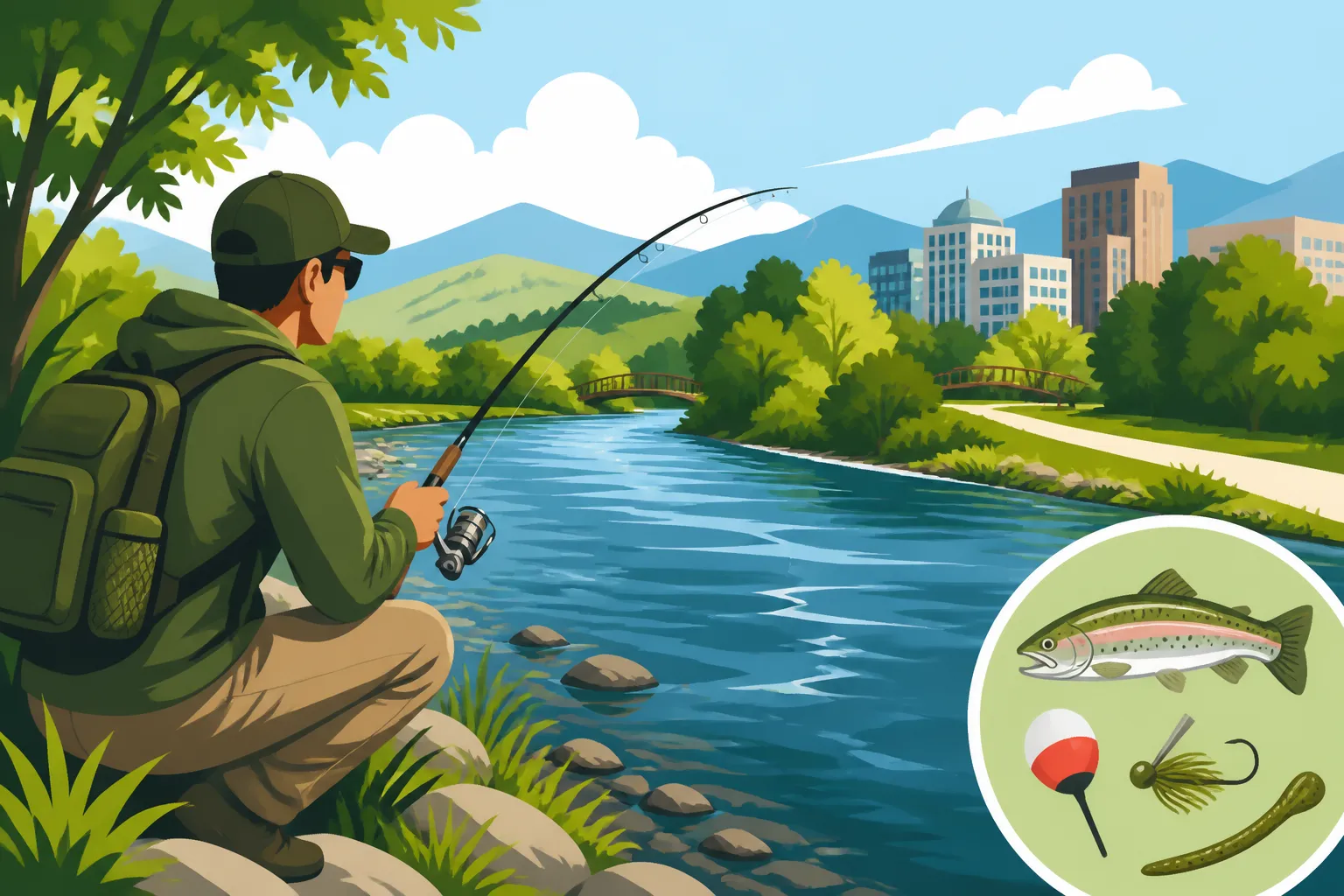
Oh, the Boise River Greenbelt! It's such a gem, isn't it? You see people walking, cycling, picnicking, and every now and then, you spot an angler casting a line. It can feel a little intimidating to try and join in if you're not sure where to start, especially when you're looking at a river that weaves right through the heart of a city. But trust me, fishing the Greenbelt from the bank is not only entirely doable but can be incredibly rewarding. This guide is all about giving you the inside scoop, validating those initial hesitations, and equipping you with the practical advice you need to feel confident reeling in a catch right from the riverbank.
Understanding the Boise River Greenbelt Fishery
Before you even think about tying on a hook, it's really helpful to understand what makes the Boise River, especially the section flowing through the Greenbelt, such a unique and accessible fishery. It's not a remote wilderness stream, but it offers a surprising variety for an urban river.
What You'll Find Swimming in These Waters
When you're bank fishing the Boise River Greenbelt, you're primarily targeting trout, but there's a good chance you might encounter a few other species too. The Idaho Department of Fish and Game does a fantastic job of regularly stocking the river with catchable-sized rainbow trout, especially in the spring and fall. This means there's a consistent population of eager fish for anglers, making it a great spot for beginners and families. You're not always going to catch a trophy, but you're usually going to catch fish, which is half the fun!
Beyond the stocked rainbows, you might also find some wild brown trout. These guys are often a bit more elusive and tend to be larger, making them a real prize. They're more wary and require a stealthier approach, but they're definitely present in the deeper holes and under bank cover. As the water warms in the summer, you'll also start to see smallmouth bass become more active. They're aggressive fighters and can add an exciting dimension to your Greenbelt fishing adventure. In the cooler months, particularly in late fall and winter, you can even target mountain whitefish, a native species that provides a fun challenge on light tackle. It's a nice mix that keeps things interesting, proving that "city fishing" doesn't mean "boring fishing."
Prime Bank Fishing Locations Along the Greenbelt
The beauty of the Greenbelt is its accessibility, but some spots are definitely more angler-friendly than others. From downtown Boise heading upstream, you'll find numerous parks and public access points that offer fantastic bank fishing opportunities. Think about areas around Ann Morrison Park or Kathryn Albertson Park. These spots often have good river access with maintained paths, making it easy to haul your gear. The downside is they can be quite popular with walkers, runners, and cyclists, so you'll want to be mindful of others.
Further upstream, places like Barber Park offer excellent access, especially if you're looking to wade a bit in designated areas, though the focus here is strictly on bank fishing. The river's flow and depth can vary significantly in these areas, creating diverse habitats. The stretch closer to the Lucky Peak Dam, while still considered part of the lower Boise River, also provides some quieter spots with less foot traffic and deeper runs, which can be fantastic for targeting those more elusive brown trout or active smallmouth bass. When you're scouting, look for bends in the river, fallen trees, or any natural structure that provides cover for fish. These are usually prime spots. Always remember to check for specific access rules as you move along, as some sections might have restrictions or private property signage.
Seasonal Opportunities and Challenges
Fishing the Boise River Greenbelt is truly a year-round activity, but each season brings its own set of unique opportunities and challenges. Spring, for instance, often means high water due to snowmelt, sometimes referred to as "runoff." This can make fishing tough as the water becomes murky and swift. However, savvy anglers know that finding eddies and slower pockets of water during this time can still yield success. The fish are often pushed to the banks, making them more accessible to bank anglers. As the water clears and recedes, typically late spring into early summer, the fishing really heats up, especially for stocked trout. This is a great time to hit the river before the scorching summer sun fully arrives.
Summer brings warmer water temperatures, which can make trout a bit sluggish, pushing them into deeper, cooler pockets. This is when smallmouth bass really shine, as they thrive in warmer conditions. You'll need to adapt your techniques, perhaps fishing earlier in the morning or later in the evening when temperatures are cooler. Fall is a personal favorite for many, as the air cools, the leaves change, and the trout become very active again. The river gets re-stocked, and the fishing can be phenomenal. Plus, mountain whitefish start to become a more prominent target. Even winter can offer great opportunities, especially during mild spells, with a chance to catch active trout or whitefish in clearer, slower water. It's all about understanding what the river is doing and how the fish react to those changes. For a detailed look at how high water impacts fishing, check out our guide on Idaho's Spring Runoff and How It Affects Fishing.
Essential Gear and Tackle for Greenbelt Bank Anglers
One of the best things about bank fishing the Greenbelt is that you don't need a boatload of expensive gear to have a successful day. Simplicity and versatility are your friends here.
Rod and Reel Setups for Success
For most bank fishing on the Boise River Greenbelt, a light to medium-light spinning rod and reel combo is absolutely perfect. Think of a rod in the 6 to 7-foot range, with a fast or moderate-fast action, paired with a small spinning reel spooled with 4 to 6-pound test monofilament or fluorocarbon line. This setup is incredibly versatile; it allows you to cast lighter baits and lures effectively, provides enough sensitivity to feel subtle bites, and has enough backbone to handle a feisty trout or a surprising smallmouth bass. If you're planning on focusing specifically on those larger brown trout or smallmouth, you might lean towards a slightly heavier 7-foot medium-light rod with 8-pound test, giving you a bit more power.
For those interested in fly fishing, the Greenbelt offers some fantastic opportunities too, especially during hatches or for targeting more selective wild trout. A 4 or 5-weight fly rod, about 8.5 to 9 feet long, is a great all-around choice. Spool your reel with a weight-forward floating line matched to your rod, and carry an assortment of leaders and tippet in various strengths, usually 4x to 6x. While fly fishing from the bank can be challenging due to trees and casting space, it's certainly possible in many open areas. The key is to be prepared with a setup that can handle a range of conditions and fish sizes without being overly cumbersome.
Baits, Lures, and Flies That Get Bites
This is where the fun really begins! For the stocked rainbow trout, you honestly can't go wrong with classic baits. PowerBait, especially in bright colors like chartreuse, orange, or rainbow, fished off the bottom with a small split shot and a light leader, is incredibly effective. Worms, whether live or artificial, are also always a winner. And don't laugh, but sometimes a kernel of canned corn can be surprisingly successful, especially if you're fishing where people commonly chum or where fish are used to seeing it. For those looking for more active fishing, small spinners like Mepps, Panther Martin, or Rooster Tail in sizes #0 to #2 are deadly. Silver, gold, or brass blades with a variety of dressing colors will cover most conditions. Small spoons, such as Kastmasters or Little Cleos, also work wonders, especially in sizes around 1/8 to 1/4 ounce. You can find a huge variety of these effective lures on Amazon, making it easy to stock up before your trip. For targeting smallmouth bass, consider small crankbaits, soft plastic jigs, or even plastic worms rigged wacky style.
Fly anglers will want a selection of nymphs (e.g., Pheasant Tails, Hare's Ears, Prince Nymphs in sizes 14-18) for subsurface fishing, especially during cooler water periods. When hatches occur, having a few dry flies (like Elk Hair Caddis, Adams, or Parachute Adams in sizes 12-18) can lead to some exhilarating topwater action. Streamers, such as Woolly Buggers in olive or black, can also entice larger trout and smallmouth. The key is to observe the water; if you see bugs flying or fish rising, try to "match the hatch." For more specific recommendations, our guide on Best Lures for Idaho Trout Fishing offers excellent insights.
Bankside Essentials Beyond the Rod
It's not just about the rod and reel; having a few other crucial items can make your Greenbelt bank fishing trip much more enjoyable and successful. First and foremost, you'll need an Idaho Fishing License Guide. It's legally required, and easily obtained online or at many sporting goods stores. Always carry it with you. A good pair of pliers or forceps for hook removal is essential, not just for safety (avoiding hooks in fingers!) but for the well-being of the fish. A small landing net, especially one with a rubberized mesh, is also invaluable for safely landing fish, particularly if you plan to practice catch-and-release.
Beyond that, comfort and safety should be top of mind. Dress in layers, as Idaho weather can change quickly. Wear comfortable, waterproof footwear, as riverbanks can be muddy or slippery. polarized sunglasses are a game-changer for spotting fish and seeing underwater structure, plus they protect your eyes from stray hooks. Don't forget water and snacks, especially on longer outings. A small backpack or tackle bag to carry your lures, extra line, and essentials is also super handy. And please, always bring a trash bag to pack out everything you pack in—let's keep our Greenbelt beautiful for everyone.
Techniques for Effective Bank Fishing on the Boise River
Now that you're geared up, let's talk strategy. Bank fishing isn't just about throwing a line in the water; it's about understanding the river and presenting your offering effectively.
Mastering Your Cast and Presentation
When bank fishing, especially on a river like the Boise, your casting technique and how you present your bait or lure are paramount. For spinning gear, practice a simple overhead cast to achieve distance and accuracy, aiming for likely fish-holding spots like deeper pools, current seams where fast and slow water meet, or around submerged structures. Avoid casting directly over where you think fish are holding, as the line and lure landing can spook them. Instead, cast slightly upstream and allow your bait or lure to drift naturally into the strike zone. This is often called "dead drifting" when using bait or soft plastics, mimicking natural food tumbling downstream.
For fly fishing, limited backcasting space often means you'll be relying on roll casts or even short, accurate overhead casts in clearer areas. The goal is always a gentle presentation. If you're using nymphs, a strike indicator can help you detect subtle bites. If using dry flies, focus on getting a drag-free drift that looks as natural as possible. Reading the water is a crucial skill for all anglers. Look for changes in current speed, depth, and cover. Fish will often hold in slower water adjacent to faster currents, conserving energy while waiting for food to drift by. For more on this, check out our piece on Reading Water on Idaho's Rivers.
Best Practices for Catch-and-Release
Many anglers on the Boise River Greenbelt practice catch-and-release, especially for native species like brown trout or if they've already kept their daily limit of stocked rainbows. If you plan to release fish, it's vital to do so responsibly to ensure their survival. Always wet your hands before touching a fish, as dry hands can remove their protective slime layer, making them susceptible to disease. Handle the fish as little as possible, supporting its body horizontally. Avoid squeezing or holding them by the gills.
Use pliers or forceps to quickly remove the hook. If the fish is deeply hooked, it's often better to cut the line as close to the hook as possible rather than tearing sensitive tissue trying to retrieve it. Using barbless hooks or pinching down the barbs on your hooks makes removal much easier and less damaging. This is a practice I highly recommend, and you can even buy many lures barbless or convert them yourself with a pair of pliers. When releasing, gently hold the fish upright in the water, facing upstream into the current, until it regains its strength and swims away on its own. Never just toss a fish back into the water. Our guide on Is an Idaho Fishing License Required for Catch and Release? further details some nuances of these regulations.
Adapting to Changing River Conditions
The Boise River is a dynamic environment, and conditions can change rapidly, especially with weather fluctuations or dam operations. A successful bank angler learns to adapt. During periods of high, murky water (like spring runoff), fish tend to hold closer to the banks, seeking refuge from the strong currents. They also rely more on scent than sight, so natural baits like worms or smelly artificial baits become more effective. Brightly colored lures with strong vibrations can also help fish locate them in low visibility.
Conversely, during low-flow periods in summer, the water often becomes clearer and warmer. Fish will retreat to deeper holes, shaded areas, or oxygenated riffles. This is when stealth becomes even more important. Use lighter lines, longer leaders, and more natural-colored lures or flies. Early morning and late evening often provide the best fishing during hot spells. If you're struggling to get bites, don't be afraid to change your location, your bait, or your presentation. Sometimes just a slight modification can make all the difference. Remember, the fish are always there; it's just about figuring out what they want on any given day.
Navigating Regulations and Etiquette
Fishing the Greenbelt means sharing the space with a lot of people and respecting the rules designed to protect the fishery. A little knowledge goes a long way.
Understanding Idaho Fishing Regulations
Before you cast a line, you absolutely need to be familiar with Idaho's fishing regulations. As mentioned, an Idaho fishing license is mandatory for anyone over the age of 14, and there are different options like the Idaho Resident Annual Fishing License or an Idaho One-Day Fishing License if you're just visiting. The Boise River through the Greenbelt falls under general statewide fishing rules, but always double-check the current Idaho Fishing Regulation Brochure or proclamation for any specific local rules, closures, or special regulations that might apply to certain sections. These change periodically, and it's your responsibility to know them.
Key things to pay attention to include daily bag limits and possession limits for various species. For example, there are specific Idaho Trout Limits by Water and general Idaho Catch Limits and Bag Limits Explained. Often, for rainbow trout, you might be allowed to keep a certain number, but wild brown trout could be catch-and-release only. Understanding how to identify your catch is therefore essential. Ignorance of the rules isn't an excuse, and violations can lead to fines or loss of fishing privileges. So, take a few minutes to read up—it's an investment in your fishing future!
Being a Good Neighbor on the Greenbelt
The Boise River Greenbelt is a multi-use pathway, shared by thousands of people every day. As an angler, you're part of that community, and practicing good etiquette ensures a pleasant experience for everyone. Always be respectful of other users – cyclists, walkers, runners, and other anglers. If someone is approaching on the path behind you, be ready to move your rod or step aside briefly. If another angler is already in a spot, give them plenty of space, typically at least 50 feet, unless they invite you closer. There's nothing worse than having someone cast right on top of you.
Always pack out everything you pack in. This includes old fishing line, bait containers, and any food wrappers. Leaving trash behind not only spoils the natural beauty but can also be harmful to wildlife. Respect private property; much of the land along the Greenbelt is privately owned, even if it looks like open access. Stick to designated public access points and avoid trespassing. Essentially, treat the area as if it were your own backyard, or even better, as a shared natural treasure.
Safety First When Fishing Urban Waters
Even though you're in a city, fishing the Boise River involves some inherent risks, and it's always wise to prioritize safety. The river current, especially during high flows, can be deceptively strong. Be cautious when walking near the bank, as edges can be soft, slippery, or unstable. If you're wading, ensure you have proper footwear with good grip and consider a wading staff for stability. The water temperature, even in summer, can be quite cold, so be mindful of potential hypothermia if you accidentally fall in.
Be aware of your surroundings. While generally safe, it's always smart to know where you are and have a way to contact help if needed. Fishing with a buddy, especially in more secluded areas, is always a good idea. Also, keep an eye out for potential hazards like submerged debris, which can snag your line or pose a tripping hazard. If you're fishing near bridges or structures, be cautious of passing boats or tubers, giving them ample room. A little bit of foresight goes a long way in ensuring your bank fishing trip on the Greenbelt is not only fun but also safe.
Here’s a quick overview of some common catches on the Boise River Greenbelt:
| Species | Typical Size | Best Baits/Lures | Notes |
|---|---|---|---|
| Rainbow Trout | 8-16 inches | PowerBait, Worms, Spinners, Small Spoons | Regularly stocked, great for beginners. |
| Brown Trout | 12-20+ inches | Spinners, Streamers, Worms | More wary, often larger, catch-and-release recommended for wild fish. |
| Smallmouth Bass | 10-18 inches | Small Crankbaits, Soft Plastics, Spinners | Active in warmer months, good fighters. |
| Mountain Whitefish | 10-15 inches | Small Nymphs, Worms, Small Jigs | Native species, excellent winter target. |
So there you have it, a pretty comprehensive rundown for hitting the Boise River Greenbelt from the bank. It's a truly accessible urban fishery that offers something for everyone, from the casual afternoon angler to those looking for a bit more of a challenge. Don't let the city backdrop fool you; this river has plenty of fish and plenty of adventure to offer. Get out there, be safe, and enjoy the beauty of fishing in the heart of Idaho's capital!
Disclaimer
This article is for general informational purposes only and does not constitute professional advice. Laws, prices and regulations vary by location and change over time. Consult a qualified professional for guidance on your specific situation.