Does Idaho’s Wildfire Smoke Affect Summer Fishing?
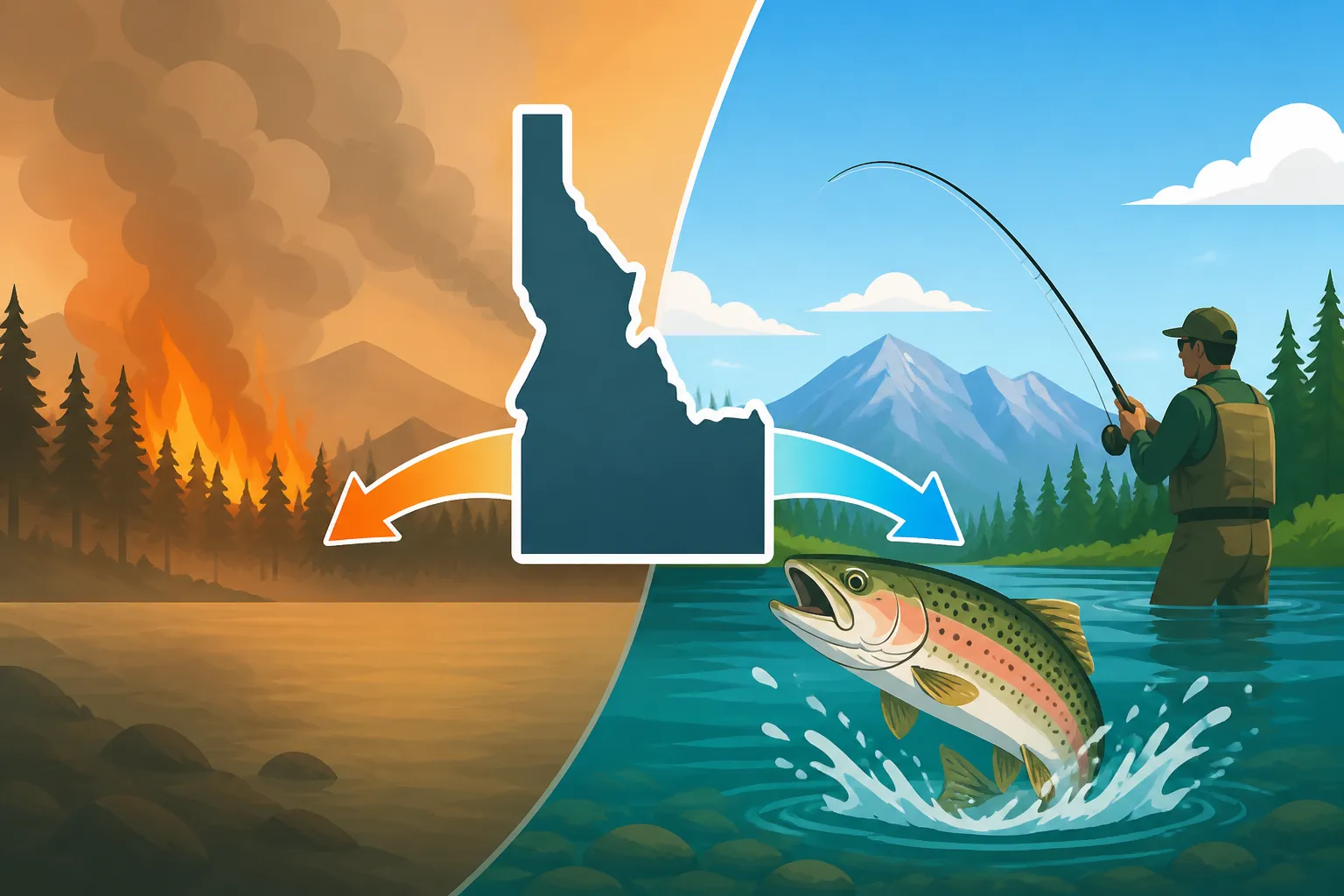
Oh, the quintessential Idaho summer! Crisp mountain air, crystal-clear streams, and the promise of a trout on the line. But let's be real: lately, those picture-perfect scenes are often marred by a haze of wildfire smoke that creeps in, turning our blue skies a dismal gray. It's incredibly frustrating when you've planned a cherished fishing trip, only to wonder if the smoky conditions will ruin your experience or even put a damper on the fish's willingness to bite. This guide is here to unravel the complex relationship between wildfire smoke and your summer fishing endeavors in Idaho, helping you understand the impacts and how you can still make the most of your time on the water.
The Direct Impact of Wildfire Smoke on Anglers
When those familiar plumes start rising over the mountains, or even when smoke drifts in from fires far away, the first and most obvious effects are on us, the anglers. It's not just an aesthetic issue; it's a real physical and mental challenge that can quickly turn a relaxing day into a miserable one.
Visibility and Respiratory Concerns
Let's talk about what you can see – or rather, what you can't see. Heavy smoke drastically reduces visibility, and if you're trying to spot rising trout on a glassy river or navigate a boat through a busy reservoir, that can be a genuine problem. Casting accuracy can suffer, especially for fly anglers who rely on visual cues, and simply enjoying the scenic beauty of Idaho is out the window. Beyond visibility, the air quality itself is a major concern. Breathing in particulate matter from wildfire smoke can irritate your eyes, nose, and throat, leading to coughing, wheezing, and even exacerbating conditions like asthma. It’s absolutely disheartening to arrive at your favorite fishing spot, ready for a day of tranquility, only to find yourself struggling to breathe or constantly rubbing your stinging eyes. This isn't just an inconvenience; it can be a serious health risk, especially for those with pre-existing conditions, kids, or older anglers. Always check the Air Quality Index (AQI) for your planned fishing location before you even load up the truck.
Mental and Enjoyment Factors
Beyond the physical, there's a significant psychological toll that smoky conditions take on an outdoor experience. We fish to connect with nature, to find peace, and to escape the everyday grind. When the air is thick with smoke, the stunning vistas of the Sawtooths or the clear waters of the Henry's Fork become obscured, replaced by a dull, oppressive haze. That sense of wildness and open space is diminished, making it hard to feel truly immersed. Family fishing trips, especially, can be impacted. Kids might get irritable from the smoke, complaining about itchy eyes or throats, and the general mood of the outing can shift from joyful anticipation to resigned endurance. You might find yourself constantly checking the wind direction, hoping for a shift, rather than focusing on your cast. It's perfectly valid to feel utterly disappointed when conditions negate the very reasons you seek out Idaho's incredible fishing opportunities. The enjoyment factor, for many, goes right out the window when smoke is prevalent.
How Smoke Affects the Aquatic Environment and Fish Behavior
While we humans are directly breathing that smoky air, fish are, thankfully, submerged. This gives them a layer of protection from the immediate particulate matter, but it doesn't mean their world is entirely unaffected. The nuances of how smoke influences the aquatic environment can subtly, and sometimes not so subtly, alter fish behavior.
Water Temperature and Oxygen Levels
One of the more complex interactions to consider is how smoke might influence water temperature. Smoke plumes can act like a massive, diffuse cloud cover, reducing the amount of direct sunlight hitting the water. In the heat of an Idaho summer, particularly during prolonged heatwaves, this reduction in solar radiation could potentially lead to slightly cooler water temperatures in some shallow areas or smaller, exposed streams. This might sound like a silver lining for cold-water species like trout that struggle in warm water. However, the effect is often minor and highly dependent on the density and duration of the smoke, as well as the specific water body's characteristics.
As for oxygen levels, it's generally not a direct, immediate concern from smoke alone. While ash falling into the water could theoretically consume some dissolved oxygen as it decomposes, this would typically require an immense, sustained ashfall into a relatively stagnant or low-flow water body to have a significant impact. Most of Idaho's major rivers and lakes have sufficient flow and volume to dilute any ash quickly, preventing widespread oxygen depletion. The larger and more immediate threats to oxygen levels typically come from extreme heat, algal blooms, or direct fire impacts (like runoff from burned areas after rain, which isn't directly related to smoke itself).
Light Penetration and Forage Base
The reduced sunlight caused by dense smoke does have a more direct and often noticeable impact on the underwater world: light penetration. Just as it gets darker earlier on a smoky day, the amount of light filtering through the water column is diminished. This can have a ripple effect on the forage base. Many aquatic insects, such as mayflies and caddisflies, which are vital food sources for trout, time their emergence and activity based on light cycles. A persistent, dim environment could alter their behavior, potentially leading to less predictable hatches or a shift in when they're most active. Similarly, phytoplankton, the microscopic plants at the very bottom of the aquatic food chain, rely on sunlight for photosynthesis. A prolonged period of low light could impact their growth, which in turn affects zooplankton and, eventually, the fish that feed on them.
What does this mean for fish? They are highly attuned to their environment. Reduced light might make them feel more secure and less exposed, potentially encouraging them to feed more actively during what would typically be brighter parts of the day. This is a crucial detail for anglers to consider. Instead of only targeting dawn and dusk, a smoky, overcast day might offer extended periods of subsurface feeding activity.
Fish Stress and Activity
Generally, fish are pretty resilient creatures, and the smoke itself isn't directly "stressing" them in the same way it affects our lungs. They aren't breathing the air; they're breathing dissolved oxygen in the water. However, any subtle changes in their environment – be it light levels, minor temperature shifts, or altered food availability – can influence their behavior. Some studies have suggested that prolonged environmental changes, even subtle ones, can lead to physiological stress in fish, making them less active or more wary.
Think of it like this: if their primary food sources are behaving differently due to low light, the fish themselves will have to adapt their feeding patterns. They might move to different areas, or simply become less eager to chase a flashy lure if their metabolic rate is slightly altered. While a single smoky day might not change much, a week of dense smoke could certainly lead to noticeable shifts in where and when fish are holding and feeding. For species like trout, which are notoriously sensitive, these subtle changes can make the difference between a productive day and one where you're scratching your head wondering why nothing is biting.
Adapting Your Fishing Strategy During Smoky Conditions
So, the smoke is here. You’ve still got that itch to fish, and thankfully, all hope is not lost. Adapting your approach can make a huge difference in your success and enjoyment. It’s all about working with the conditions, not against them.
Choosing the Right Waters
Not all waters respond the same way to wildfire smoke. When conditions are smoky, consider targeting larger, deeper lakes and rivers. These bodies of water often have better air circulation, which can help disperse the smoke more quickly than in sheltered canyons or small ponds. The sheer volume of water also makes them more resistant to slight temperature fluctuations or minor ashfall. Think of large systems like Lake Coeur d'Alene for kokanee and Chinook, or the expansive Snake River for bass and sturgeon. These vast waters are often less impacted by the localized, ground-level smoke effects.
Sometimes, heading to high-elevation lakes can offer an escape. If the smoke is trapped in an inversion layer in the valleys, higher elevations might be above it, offering surprisingly clear air and breathtaking views (even if they're a bit hazy in the distance). However, this isn't a guarantee, and it's essential to check localized air quality and fire maps. For specific guidance on where to go, browsing through resources like Best Fishing Spots in Idaho can help you find suitable alternatives. Always verify current fire conditions and closures through official Idaho Fish and Game channels and the Forest Service before heading into the backcountry, as some areas might be entirely off-limits due to active fires.
Adjusting Techniques and Timing
This is where your angling prowess truly comes into play. Since smoke often creates a perpetual low-light environment, fish might be more active throughout the day, not just at dawn and dusk. This can be a boon, extending your prime fishing windows significantly. Don't be afraid to fish in the middle of the day when the sun would normally be high and bright. The reduced light penetration also means that your usual subtle lures might get lost in the murk. Consider switching to brighter, more contrasting colors or lures with more flash and vibration to grab a fish's attention. If you're a lure angler, this might mean a chartreuse spinner or a crankbait with a rattle. Fly anglers might opt for larger, darker patterns or those with flashy materials that are more visible in subdued light. You can find a fantastic selection of these types of lures and flies on Amazon to ensure you're well-stocked.
Stealth remains crucial, even though human visibility is impaired. Fish are still sensitive to vibrations and sudden movements. Approach your fishing spots carefully, keep your profile low, and make quiet casts. If you typically target highly visual feeders like trout, consider that they might be relying more on lateral lines and scent. Live bait or scented lures could become more effective. Also, remember that different fish species react differently. Bass, for instance, are often less bothered by changes in light than trout, making them a potentially more reliable target during smoky periods. For a comprehensive overview of how various methods work, check out our Idaho Fishing Techniques Guide.
Essential Gear for Smoky Days
Being prepared with the right gear can make a huge difference in your comfort and safety when fishing in smoky conditions. First and foremost, if you're sensitive to smoke or plan to be out for extended periods, consider wearing a good quality N95 or KN95 mask. These can significantly filter out harmful particulate matter, making breathing much easier. You can easily find comfortable options for N95 masks on Amazon. Don't forget eye protection; sunglasses or clear safety glasses can help shield your eyes from irritation and make it easier to see through the haze.
Hydration is always important when recreating outdoors, but it's even more critical when exposed to smoke, as it can contribute to dehydration. Carry plenty of water. If you're heading into more remote areas, especially during fire season, communication devices are non-negotiable. A satellite messenger like a Garmin inReach or a Spot X, also readily available on Amazon, can be a lifesaver for checking conditions or calling for help if an emergency arises or conditions rapidly worsen. Even if you're not in the remote backcountry, a portable weather radio can keep you updated on any fire-related weather changes or new advisories. Lastly, a good pair of waders and a reliable rain jacket are always wise investments for Idaho fishing, providing protection from the elements, smoke included. For more insights on seasonal gear, our Idaho Fishing Gear Guide by Season offers excellent advice.
Planning Ahead and Staying Safe
Idaho's beauty is undeniable, but it comes with the responsibility of being prepared, especially during fire season. A little foresight can save your trip – and potentially your health.
Monitoring Conditions
The most crucial step in dealing with summer smoke is diligent monitoring of conditions before you leave and throughout your trip. The Idaho Department of Fish and Game (IDFG) website is your first stop for any fishing-specific closures or advisories. Beyond that, national resources like AirNow.gov provide real-time air quality data down to specific locations, allowing you to gauge the severity of the smoke. It will show you the AQI, which is color-coded and easy to understand. Additionally, follow the U.S. Forest Service and Bureau of Land Management for updates on active wildfires, containment levels, and most importantly, any area or road closures. You absolutely do not want to find yourself in a situation where your planned access point is closed or, worse, near an active fire zone. Always consult the official Idaho Fishing Regulation Brochure and Proclamation for the latest rules and any emergency closures.
| Condition Aspect | Clear Summer Day | Smoky Summer Day (Moderate to Heavy) | Recommended Angler Adaptation |
|---|---|---|---|
| Air Quality | Excellent | Poor (elevated particulate matter) | Wear N95 mask, eye protection; stay hydrated. |
| Visibility | High, clear | Low, hazy | Use brighter lures/flies; fish closer to target. |
| Sunlight | Strong, direct | Diffused, reduced | Fish extended hours, not just dawn/dusk; use low-light tactics. |
| Water Temp. | Can get warm | Potentially slightly cooler (minor) | Focus on deeper, larger waters or cooler headwaters. |
| Fish Activity | Often peaks at low light | May be active throughout the day due to low light; can be less aggressive. | Adjust timing, try different lures/bait; slower retrieves. |
| Forage Base | Normal cycles | Potentially altered insect hatches | Observe for subtle hatches; use subsurface patterns; consider bait. |
| Enjoyment | High, scenic | Reduced, discomfort | Prioritize health and safety; have a backup plan. |
Having a Backup Plan
Let's face it: sometimes, despite all your preparation, the smoke simply makes fishing impossible or unenjoyable. It's okay to call off a trip. No fish is worth risking your health or having a truly miserable time. This is where having a backup plan becomes invaluable. If the smoke is localized to one part of Idaho, perhaps you can pivot to a different region that’s clearer. Our guide on Idaho Fishing Season Dates and Limits might give you ideas for alternative times of year if rescheduling is an option. If fishing is out entirely, consider exploring Idaho's indoor attractions, museums, or even just relaxing at a cabin with a good book.
It’s also wise to consider broader alternative plans. Sometimes, the smoke is so widespread across Idaho that even a major change in location doesn't help. In such cases, if you're truly dedicated to fishing, looking at neighboring states might be an option, but always check their fire and smoke conditions too. Remember, safety and enjoyment are paramount. While the desire to hit the water is strong, knowing when to hang up the rods and try another day is a sign of a seasoned angler. Don't push yourself or your family into an unhealthy or unpleasant situation. Consider different types of fishing altogether, perhaps focusing on waters that stay open all year, as outlined in Idaho Waters That Stay Open All Year, giving you more flexibility.
Disclaimer
The information provided in this guide is for general informational purposes only and does not constitute professional advice. Wildfire conditions and air quality can change rapidly. Always consult official government sources, such as the Idaho Department of Fish and Game, the U.S. Forest Service, and AirNow.gov, for the most current and accurate information regarding fire closures, air quality, and fishing regulations before planning or embarking on any fishing trip. Your safety and well-being are your responsibility.