How to Read a Riffle on an Idaho River
Ever found yourself standing by an Idaho river, looking at a section of choppy, fast-moving water, and wondering, "What even is that, and why does everyone keep saying fish love it?" It's a common frustration, especially for new anglers or those transitioning from stillwater lakes to the dynamic world of rivers. That broken surface can look chaotic and impossible to fish effectively. But trust me, once you learn to decipher the subtle clues within these turbulent stretches, you'll unlock some of the most productive fishing in the Gem State. This guide is all about helping you understand how to read a riffle on an Idaho river, transforming that confusing churn into a map of fish-holding lies.
What Exactly Is a Riffle on an Idaho River?
Let's start with the basics, because understanding the fundamental anatomy of a river section is key to unlocking its secrets. A riffle isn't just "fast water"; it's a specific type of habitat that forms where the riverbed becomes shallower and often consists of larger rocks, gravel, and cobble. This change in depth and substrate forces the water to speed up and become turbulent, creating that characteristic broken, agitated surface you see.
Differentiating Riffles from Runs and Pools
Think of a river as a series of connected rooms, each serving a different purpose for fish. You typically have three main "rooms":
- Riffles: These are the shallow, fast-moving, highly oxygenated sections. They are the "kitchens" of the river, where food is generated and dislodged from the bottom. The broken surface provides excellent cover for fish from overhead predators.
- Runs: Often found directly downstream from a riffle, a run is a deeper, smoother, but still flowing section. The water speed is moderate, creating a nice conveyor belt of food dislodged from the riffle above. Fish often hold at the head or tail of runs, or in the main body, expending less energy than they would in a riffle but still getting plenty of food.
- Pools: These are the deepest, slowest-moving sections of a river, often found where the river widens or takes a sharp bend. Pools are the "living rooms" or "bedrooms" for fish – places of rest, refuge from strong currents, and deeper protection from predators. While pools hold fish, they aren't typically the primary feeding grounds unless a hatch is occurring on the surface.
Riffles are dynamic and exciting because they combine food production with oxygenation and cover, making them irresistible to many fish species, especially trout.
The Lifeblood of a Riffle: Oxygen and Food
The turbulence of a riffle isn't just for show. As the water tumbles over rocks and gravel, it mixes vigorously with the air, incorporating a huge amount of dissolved oxygen. This high oxygen content is crucial for fish, especially in warmer months when oxygen levels in slower, deeper water can drop. It literally makes the water easier to breathe.
Beyond oxygen, riffles are bustling ecosystems. The complex substrate of rocks and gravel provides an ideal home for a vast array of aquatic insects like caddisflies, mayflies, and stoneflies. These insects, in various life stages (larvae, nymphs), cling to the bottom, feeding on algae and detritus. When currents dislodge them, they become a vital food source for waiting fish. Think of it: the faster the water, the more food is dislodged and swept downstream. This constant buffet is why fish are willing to expend energy holding in or near a riffle. Knowing what insects are prevalent in these areas can also guide your fly or lure selection, making your Idaho Fishing Techniques Guide even more effective.
Deciphering the Currents: Micro-Habitats Within a Riffle
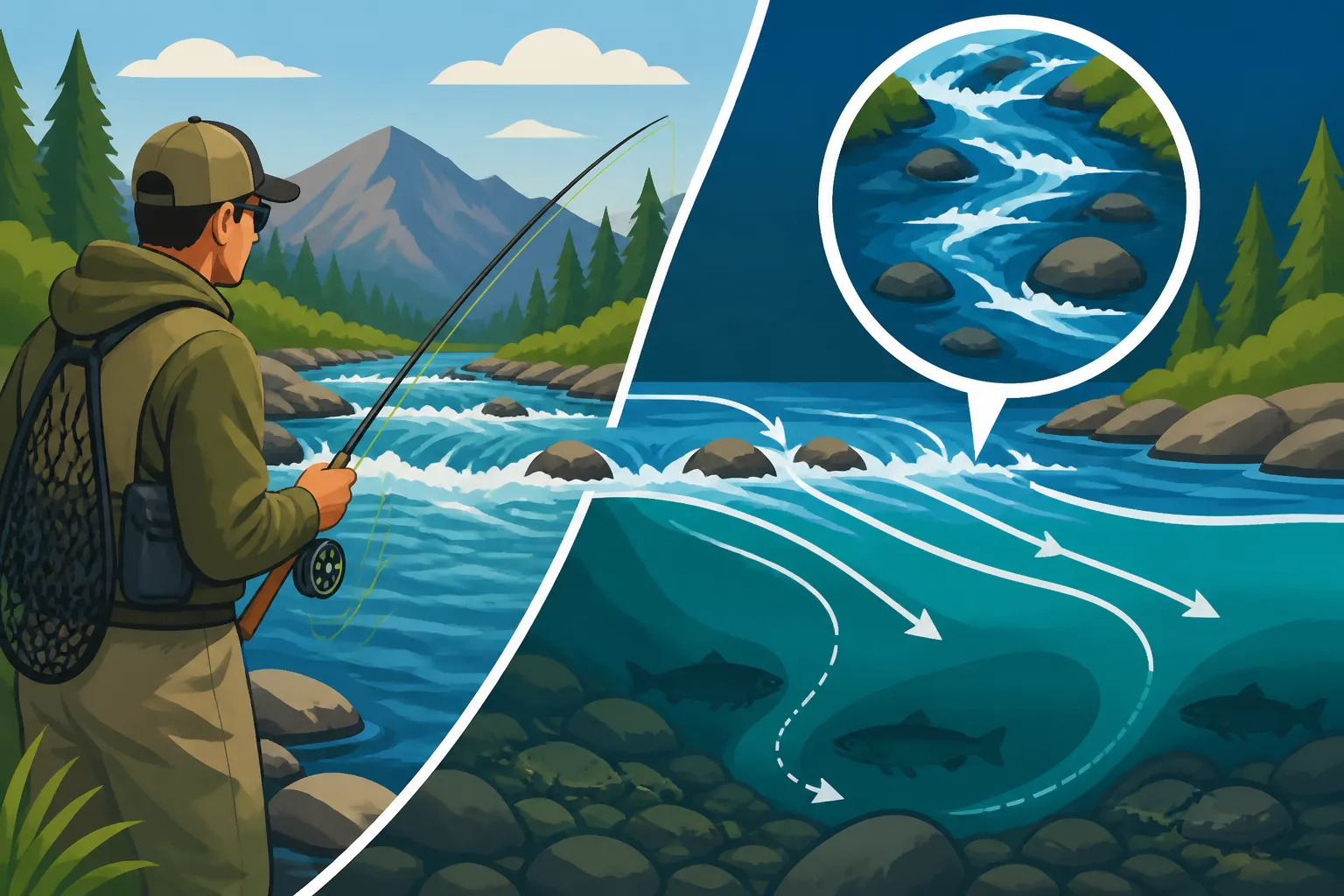
A riffle might look like a uniform wash of fast water, but look closer, and you'll see a complex tapestry of varying current speeds and distinct holding lies for fish. Learning to identify these micro-habitats is like having x-ray vision into the river.
Seams, Eddies, and Slack Water Pockets
Within the main flow of a riffle, you'll often find distinct "seams" where faster water meets slower water. These seams are gold mines. Fish will position themselves in the slower water, often just to the side of the main current, allowing them to conserve energy while waiting for food to be delivered by the faster flow. It’s like standing on the sidewalk watching a parade of snacks go by.
- Current Seams: These are visible lines on the surface where two different current speeds converge. A classic example is a seam formed by a large boulder in the middle of the riffle. The water pushing past the boulder will be faster, while the water immediately behind it, in the "cushion" zone, will be slower. Fish will sit in that slower water, darting out into the faster current to grab a passing meal.
- Eddies: These are swirling pockets of water, often found behind large obstructions like boulders, logs, or points of land. Eddies can be small, just a few inches wide, or quite large. The water in an eddy often moves in a circular pattern, sometimes even upstream against the main current. Fish love eddies because they offer a complete break from the main current, providing a comfortable resting spot while still having easy access to food that gets swept into the eddy.
- Slack Water Pockets: These are small areas of slower-moving or nearly still water, usually tucked against the bank, behind rocks, or in depressions on the riverbed. They offer a perfect hideout where fish can rest, yet still ambush prey.
Understanding how these seams and eddies form can help you place your fly or lure precisely where a fish is likely to be holding, rather than just casting blindly into the fast water. Consider bringing a selection of heavier flies or lures to get down quickly in these faster currents, perhaps a small tungsten nymph or a heavier spinner. Many anglers find great deals on these types of terminal tackle on Amazon.
The Role of Submerged Structure in Current Breaks
It's not just visible rocks that create these current breaks. The entire riverbed in a riffle is usually a mosaic of submerged rocks, gravel, and cobble. Each of these creates miniature current disturbances that fish exploit.
- Large Boulders: These are obvious current breaks. The upstream side often has a pillow of slower water, and the downstream side has a calm "tail" or eddy. Both are prime holding spots.
- Gravel Bars and Ledges: Changes in the riverbed elevation can create subtle current seams and shelves where fish tuck in. Pay attention to how the water flows over these changes; a slight dip or rise can create a significant current break just below it.
- Woody Debris (Logs, Branches): While sometimes a snagging hazard, submerged logs and branches are fantastic fish habitat. They break up the current, provide cover, and often harbor insect life. If you can safely cast near them without getting hung up, they're worth targeting. This is especially true when fishing some of the productive waters mentioned in our guide on Idaho Rivers Known for Mountain Whitefish.
When you're looking at a riffle, don't just see the chaos. Imagine the water flowing around and over every piece of structure, creating hidden pockets and lanes of slower water where a fish can comfortably wait.
Looking for the "Dinner Bell": Bugs, Structure, and Fish Lies
Now that we understand the physical dynamics of a riffle, let's talk about what makes fish decide where to hold within them. It all comes down to food and safety. Riffles are feeding zones, and fish position themselves to maximize caloric intake while minimizing energy expenditure and exposure to predators.
Aquatic Insect Activity
Riffles are prime insect habitat, and fish know it. The presence of emerging insects is a huge "dinner bell" for trout.
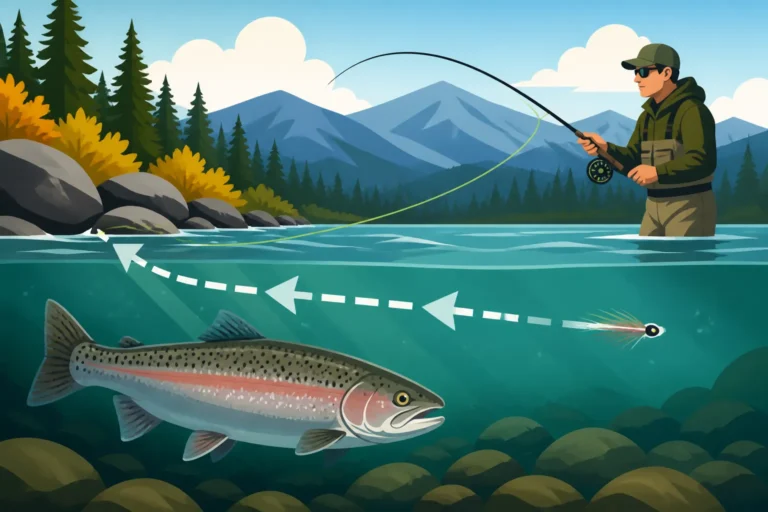
- Nymphs and Larvae: Most of the insect life in a riffle is sub-surface. Caddisfly larvae, mayfly nymphs, and stonefly nymphs cling to the underside of rocks. When the current dislodges them, they drift downstream, becoming easy targets. Fish will often hold in or just below the fastest part of a riffle, specifically to intercept these drifting nymphs. This is why nymphing techniques are so effective in riffles.
- Emergers: As insects prepare to hatch, they often drift upwards towards the surface. These "emergers" are vulnerable and represent a substantial meal for fish. You might see subtle rises or swirls on the surface as fish feed on them. This indicates a good time to switch to an emerger pattern or a soft-hackle wet fly.
- Hatches: While not as common in the fastest, shallowest parts of riffles, some insects do hatch in these areas, and the adults will quickly take flight. However, the downstream edge of a riffle, where it transitions into a run or pool, can be a great place to find fish feeding on emerging adults or even spent spinners that have fallen back onto the water. Knowing Idaho's Spring Runoff and How It Affects Fishing can give you an edge, as insect activity changes with water levels and temperatures.
To really maximize your chances, pay attention to the insects you see. Turn over a few rocks, observe what flies are buzzing around, and try to "match the hatch" or at least present something similar in size and color.
Substrate and Depth: Where Fish Feel Safe
Fish, especially larger ones, need to feel secure. In a riffle, this security comes from a combination of depth, overhead cover (from the broken surface), and submerged structure.
- Deeper Channels: Even within a generally shallow riffle, there will be deeper channels or depressions. These provide more water depth, making fish feel safer. They're often carved out by the strongest currents and are prime places for bigger fish to lie in wait.
- Large Rocks and Boulders: We've touched on these already for current breaks, but they also offer excellent physical cover. A fish can tuck in behind or beside a large rock, hidden from aerial predators and feeling secure from the main current. This is where a lot of the big ones hide! Our article on Idaho Trout Limits by Water might shed some light on what you can expect to keep from these areas.
- Turbulence as Cover: The broken, choppy surface of a riffle is a fish's best friend. It acts like camouflage, making it very difficult for ospreys, eagles, and even you, the angler, to spot them from above. This allows fish to be more active and less wary, even in relatively shallow water.
When you're reading a riffle, mentally trace the path of your fly or lure. Does it pass through those prime security zones? Does it drift naturally into an eddy or along a seam where a fish might be hiding?
Putting It All Together: Fishing Riffles Effectively
Now that you're a riffle-reading expert, how do you translate that knowledge into more hooked fish? It's about combining observation with smart presentation.
Approach and Casting Strategies
Your approach to a riffle is crucial. Remember, while the broken surface offers cover, fish can still be spooked by heavy footsteps on the bank or sudden movements.
- Stealth is Key: Approach the riffle slowly and quietly, trying to stay low or use bankside vegetation for cover.
- Upstream or Up-and-Across: For most fly fishing and light spin fishing, casting upstream or up-and-across the current is usually the most effective. This allows your fly or lure to drift naturally downstream into the fish's feeding lane before your line or body passes over them. If you're using bait, like for the species detailed in our Idaho Sturgeon Fishing Guide, you might adjust your technique, but for trout in riffles, natural drift is paramount.
- Short, Accurate Casts: Often, you don't need to cast across the entire river. Focus on hitting the seams, eddies, and pockets you've identified. Shorter, more accurate casts are better than long, sloppy ones.
Drift Control and Presentation
A natural drift is perhaps the single most important factor when fishing a riffle. Fish in these fast currents have less time to inspect your offering; it needs to look like a free-floating meal.
- Mending Your Line: If you're fly fishing or even spin fishing with light tackle, "mending" your line is vital. This means lifting and repositioning your line upstream during the drift to prevent drag, allowing your fly or lure to float at the same speed as the natural current. This is particularly important on the complex waters of Henry's Fork, as covered in our How to Fly Fish Henry's Fork article.
- Weighting Your Rig: In fast, turbulent water, you often need weight to get your offering down to where the fish are holding. This could be split shot on your leader, heavily weighted flies, or specific jig heads for lures. The goal is to get to the fish's level without snagging the bottom too often.
- Reading Your Indicator/Line: Whether you're using a strike indicator or just watching your line, pay close attention to any hesitation, twitch, or sudden movement. Bites can be subtle in fast water. Set the hook!
Seasonal Considerations for Riffle Fishing
Riffles are productive year-round, but their effectiveness can change with the seasons.
- Spring: As water temperatures begin to rise and runoff recedes, riffles become incredibly active. Stoneflies and Caddisflies become very active, and fish are hungry after a long winter. Check out Spring Fishing in Idaho for more tips.
- Summer: Riffles are sanctuaries in the summer heat. The high oxygen content makes them attractive to fish when deeper, slower waters might become stagnant or too warm. Early morning and late evening can be particularly productive as fish feed more actively.
- Fall: Fall can be outstanding for riffle fishing, especially as trout prepare for spawning. Many larger insects are still active, and fish are putting on weight. This is also a prime time for species like Steelhead in other parts of the state.
- Winter: Even in winter, open riffles can hold fish, especially on mild days. While insect activity slows, the reliable oxygenation still makes them viable. Deeper pockets within riffles are key.
| Riffle Feature | Why Fish Like It | How to Fish It Effectively |
|---|---|---|
| Fast Water Zone | High oxygen, dislodges food constantly. | Use weighted nymphs, streamers, or heavy spinners. Cast upstream and allow a deep, natural drift. Watch for subtle takes. |
| Current Seams | Energy efficient feeding lanes. | Focus casts along the seam, allowing your offering to drift from fast water into slow. Mend line aggressively to avoid drag. |
| Behind Large Rocks | Shelter from current, ambush point. | Cast slightly upstream of the rock and let your presentation drift into the slack water pocket behind it. Expect a quick strike. |
| Edge of Riffle | Transition to deeper water, prime holding. | Target the head of the run or tail of the riffle with a longer drift, covering both fast and slightly slower water. |
| Submerged Gravel/Cobble | Prime insect habitat, provides cover. | Systematically cover these areas with a natural drift, focusing on any subtle depressions or changes in depth. |
Understanding how to read a riffle on an Idaho river means you're not just casting into random water. You're making informed decisions, targeting specific areas where fish are most likely to be holding and feeding. It takes practice, but the rewards are well worth the effort. So next time you're on the river, take a moment, observe the water, and start dissecting that riffle – you might just find your next trophy fish! Remember to always check the most recent Idaho Fishing Regulations Explained before heading out.
Disclaimer
This article is for general informational purposes only and does not constitute professional advice. Laws, prices and regulations vary by location and change over time. Consult a qualified professional for guidance on your specific situation.