Idaho Rules on Releasing Caught Fish Back into a Different Lake
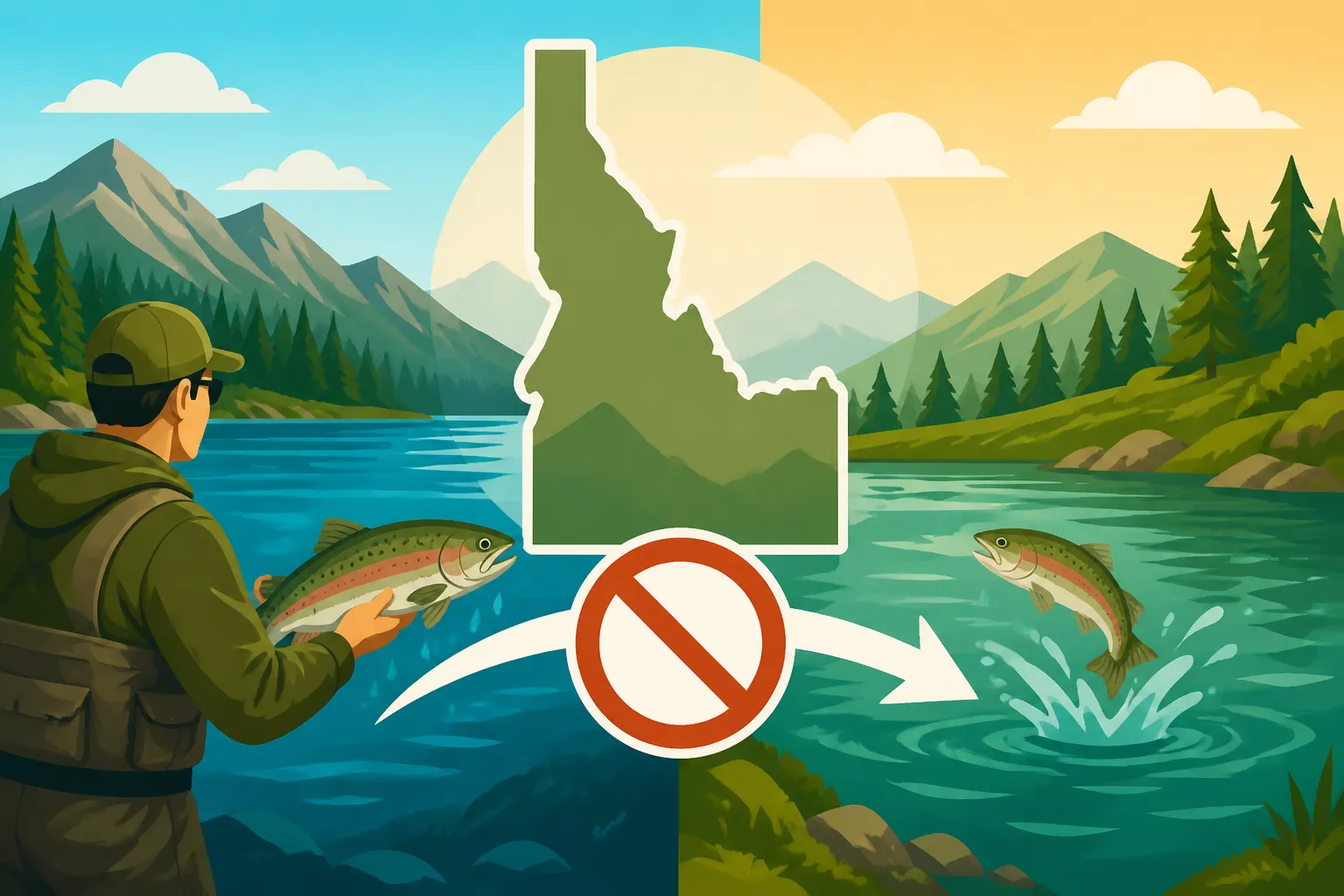
You've just landed a gorgeous trout or a feisty bass, and as you admire your catch, a thought pops into your head: "This little guy would probably thrive even better in that lake just down the road!" It's a natural inclination, rooted in wanting the best for the fish and perhaps even thinking you're helping out. However, when it comes to Idaho's waters, moving a fish you've caught from one lake or river to another is a definite no-go. This guide will walk you through why Idaho has strict rules against relocating fish, the ecological consequences, and what anglers should do with their catch.
The Straight Scoop: Can You Move Fish Between Idaho Waters?
Let's cut right to the chase because this is a question many well-meaning anglers ponder. You're out on a fantastic day, perhaps on a smaller pond near Boise, and you catch a few more rainbow trout than you planned. You know a bigger reservoir nearby, like Lucky Peak, has more room. Or maybe you're exploring the Snake River, catch a unique smallmouth bass, and think it might introduce new genes to a different system. While your intentions might be pure, the simple, unequivocal answer in Idaho is no, you absolutely cannot move a live fish from one water body to another and release it, with very few exceptions and strict permitting.
The Simple Answer: A Resounding No
Idaho, like most states dedicated to managing and protecting its fisheries, has explicit regulations preventing the unauthorized movement of live fish. It doesn't matter if it's the same species, a different species, or if you believe you're "helping" the fish or the ecosystem. The moment you remove a live fish from the water body it was caught in with the intention of releasing it elsewhere, you are stepping into a regulatory minefield that carries significant penalties. This isn't just a suggestion; it's a critical rule enforced by Idaho Fish and Game to safeguard the state's diverse aquatic environments. Think of it this way: each body of water, whether it's a high mountain lake, a meandering river, or a vast reservoir, is its own unique, delicate ecosystem. Introducing an outside element, even one that seems benign, can have unforeseen and damaging consequences.
Why This Question Even Comes Up
It’s easy to understand why this thought might occur to an angler. You might catch a fish that's too small to keep but you're worried it won't survive if released back into crowded water. Or perhaps you've heard tales of "bucket biologists" who introduce game fish into barren ponds to create a new fishery, and you might think you're doing something similar. Some anglers might simply not want to keep their catch but wish for it to have a "better life" elsewhere. Furthermore, the sheer joy of fishing and the desire to share that experience might lead to ideas of "transplanting" fish to a more convenient local pond for children or beginners. However, these seemingly innocent actions can have profound, negative ripple effects that threaten the very health of the fisheries we cherish. The notion often stems from a lack of awareness about the complex ecological balance at play in Idaho's waters.
Why Idaho Says "No": The Ecological Dangers of Fish Relocation
Idaho's stringent rules against moving fish aren't arbitrary; they are deeply rooted in scientific understanding of aquatic ecology and the very real threats that fish relocation poses. The consequences can be far-reaching, affecting not just the fish themselves but the entire ecosystem, from the smallest invertebrates to the largest predators. These regulations are designed to protect Idaho's native fish species and to preserve the delicate balance that has evolved over millennia.
Disease Transmission and Pathogen Spread
One of the most critical reasons against moving fish is the risk of spreading diseases and parasites. Imagine a fish from one lake carrying a pathogen, like the microscopic spores that cause whirling disease, or the bacteria responsible for kidney disease. These pathogens might be common in its home water, but the fish there have developed some immunity. When that fish is introduced to a new lake or river, the resident fish might have no defense against the new disease.
This happened with whirling disease, which devastated trout populations in many Western states. It can be carried unwittingly by fish, even if they show no outward symptoms. Once introduced, it can spread rapidly, infecting native and wild fish, particularly young trout and salmon. This can lead to massive die-offs, deformities, and long-term population declines that are incredibly difficult, if not impossible, to reverse. Idaho Fish and Game actively monitors for such diseases, and unauthorized fish movement completely undermines these efforts, putting all fisheries at risk.
Genetic Contamination and Loss of Local Adaptations
Fish populations, especially those isolated in specific watersheds, develop unique genetic characteristics that allow them to thrive in their particular environment. These adaptations can include resistance to local diseases, specific feeding behaviors, or tolerance to certain water temperatures or flows. When fish from a different genetic strain are introduced, they can interbreed with the local population, diluting these valuable adaptations. This is known as genetic contamination.
For example, Idaho has distinct populations of native cutthroat trout, such as the Westslope Cutthroat and Yellowstone Cutthroat. These populations are adapted to specific conditions in their respective rivers and streams. Introducing a different strain, even another cutthroat, can weaken the genetic integrity of the native fish, making them less resilient to environmental changes or disease. This loss of genetic diversity can have devastating long-term impacts on the health and survival of iconic species, jeopardizing future generations of anglers. You can learn more about these fascinating fish in our Idaho Cutthroat Trout Fishing Guide.
The Threat of Invasive Species
This might seem obvious for entirely different species (like introducing northern pike into a trout lake where they don't belong), but it also applies to moving individuals of the same species. Even if the fish you move is native to Idaho, it might still carry organisms or diseases that are invasive to its new potential home. More commonly, anglers illegally introduce species that are not native, leading to disastrous consequences.
Take for instance, invasive fish species found in Idaho waters such as common carp or certain types of minnows that, once established, can outcompete native fish for food and habitat. Tiger muskie, while a popular sport fish in some waters like Cascade Reservoir, were carefully introduced to serve a specific management purpose. Uncontrolled introductions of species like northern pike in non-target waters can decimate native trout and salmon populations, upsetting decades of careful fishery management. Idaho Fish and Game dedicates significant resources to controlling these threats, and moving any live fish without authorization bypasses these critical protections.
Ecosystem Imbalance and Competition
Every lake, river, and stream in Idaho has a delicate balance of predators and prey, competitors, and food sources. Introducing fish from another water body can throw this entire system into disarray. A new fish, even if it's the same species, might have different foraging habits or be larger, putting undue pressure on existing prey populations. It could outcompete native fish for food, spawning grounds, or shelter.
Consider a small, isolated mountain lake with a fragile population of native trout. If an angler introduces a species of bass, that bass could rapidly reproduce, eat all the trout fry, and fundamentally change the ecosystem, potentially leading to the collapse of the trout fishery. This isn't just theoretical; it's happened in countless places due to illegal fish introductions. Protecting these balances is why understanding Idaho's Idaho Fish Species Guide and the specific regulations for each water body is so crucial.
The Letter of the Law: Idaho Fish and Game Regulations on Fish Transport
Ignorance of the law is never an excuse, and Idaho Fish and Game takes its role in protecting the state's fisheries very seriously. The regulations surrounding the transport of live fish are clear, designed to prevent the ecological disasters detailed above. As an angler in Idaho, it's your responsibility to know and follow these rules. You can always refer to the official Idaho Fishing Regulations Explained for the most up-to-date information.
Specific Rules Against Live Fish Transport
Idaho Administrative Code and the Idaho Fish and Game Rules explicitly prohibit the transport of live fish from one water body to another without specific permits. This isn't a gray area. Unless you are a licensed aquaculture facility with valid permits issued by the state, or you are transporting baitfish under very strict, species-specific, and source-specific regulations, moving live fish is illegal.
This rule means that even if you catch a small panfish like a bluegill or perch, and you think it would make a great addition to your private pond down the road, you cannot legally move it. The only exception for transporting live fish generally applies to commercial operations with specific licenses and strict disease testing protocols, or very limited scenarios where fish are captured and relocated by Idaho Fish and Game for management purposes. For the average angler, any transport of a live fish is considered a violation.
Penalties and Consequences
The consequences of being caught illegally transporting or releasing fish can be severe. This isn't just a slap on the wrist. Idaho Fish and Game conservation officers are vigilant, and they view illegal fish introductions as a serious threat to the state's natural resources. Penalties can include substantial fines, forfeiture of fishing equipment (including boats and vehicles used in the commission of the crime), and the suspension or revocation of your Idaho fishing license.
Imagine the frustration and cost if your annual Idaho Resident Annual Fishing License or Idaho Nonresident Annual Fishing License is revoked, or your carefully selected fishing gear, perhaps a new rod and reel you ordered from Amazon, is confiscated. These penalties are designed to be a deterrent, emphasizing the gravity of the offense. For repeat offenders or those involved in larger-scale illegal introductions, charges can escalate. Remember, violations like this are often taken as seriously as exceeding bag limits or fishing without a license, as they pose a long-term threat to the fishery. If you're wondering What Happens If You Exceed Idaho's Bag Limit?, or What Happens If You Fish in Idaho Without a License?, the repercussions for illegally moving fish are often in the same serious ballpark.
The Exception: Releasing to the Same Water Body
It's crucial to distinguish between illegal fish relocation and responsible catch-and-release practices. Idaho encourages and often requires catch-and-release in many waters, especially for protected species or those outside of legal harvest windows. The key difference is that these fish are released back into the same water body from which they were caught.
When practicing catch-and-release, you're not introducing a foreign element to a new ecosystem. Instead, you're allowing that fish to continue its life cycle within its established habitat. This is a vital conservation tool that helps maintain healthy fish populations. Whether it's a prized steelhead on the Clearwater River, a large rainbow trout on Lake Pend Oreille, or a sturgeon on the Snake River, releasing it back into the water it came from is perfectly legal and often the best choice for the fish and the fishery. For specific guidelines, check out the Idaho Catch-and-Release Sturgeon Rules Explained.
Doing It Right: Proper Catch and Release or Legal Harvest
As responsible anglers, our goal should always be to minimize our impact on the environment and contribute positively to the health of Idaho's fisheries. This means understanding and adhering to regulations, and practicing ethical fishing methods. There's immense satisfaction in a well-managed fishing trip, whether you're bringing home dinner or sending a magnificent fish back to swim another day.
The Art of Responsible Catch and Release
If you intend to release your catch, whether by choice or by regulation, doing so properly is paramount to the fish's survival. Rapid, gentle handling is key. Always keep the fish in the water as much as possible, especially if you're taking a quick photo. Wet your hands before touching the fish to protect its delicate slime coat, which acts as a barrier against disease. Avoid squeezing the fish, particularly around its gills or internal organs.
Use appropriate tackle for the species you're targeting to land the fish quickly, minimizing its fight and stress. Barbless hooks are highly recommended, as they cause less damage and are easier to remove. For sensitive species like Idaho's White Sturgeon, barbless hooks are legally required. If the hook is deeply embedded, it's often better to cut the line as close to the hook as possible rather than risk further injury trying to remove it. When releasing, gently hold the fish upright in the water until it regains its strength and can swim away on its own. These practices significantly increase the survival rate of released fish. You can find more specific advice on our guide, How to Release a Sturgeon Safely in Idaho.
Understanding and Adhering to Bag Limits
Before you even cast your line, it's essential to familiarize yourself with the current Idaho Catch Limits and Bag Limits Explained for the specific water body and species you plan to target. These limits can vary significantly by location and time of year. Bag limits are set by Idaho Fish and Game to ensure sustainable harvest and prevent overfishing. Once you've reached your daily bag limit for a particular species, you must stop fishing for that species for the day.
This doesn't mean you can just keep catching and releasing if you've already filled your limit and want to try for a bigger one. In many cases, once you possess the legal limit, you should cease fishing for that species. This is a common misunderstanding that can lead to violations. Always consult the official Idaho Fishing Seasons Dates and Limits proclamation available from Idaho Fish and Game. Knowing these limits is not just about avoiding a fine; it's about being a responsible steward of the resource.
Planning Ahead: What to Do with Your Catch
Before heading out, decide whether you're fishing for sport (catch and release) or for harvest. If you plan to keep fish, ensure you have the proper means to care for them. This means a cooler filled with ice, ready to immediately cool down your fish to preserve its quality. Don't let fish sit in a warm livewell or on a stringer in warm water for extended periods, as this severely compromises the taste and quality of the meat.
Also, be mindful of the "possession limit," which is the total number of fish you can have in your possession at any given time, including those at home. This is often higher than the daily bag limit but is still an important regulation to follow. For family outings, teach kids about these limits as part of the fun of fishing. Our guide on Idaho Fishing Rules for Kids and Families has more great tips for introducing youngsters to the sport responsibly. Planning your trip around legal harvest and safe storage ensures that any fish you keep will be delicious and sustainably sourced. A reliable cooler is an angler's best friend – you can find excellent options on Amazon from brands like YETI, RTIC, or Coleman.
Reporting Concerns: What to Do If You See Something
Finally, if you witness someone illegally moving fish or engaging in any other suspicious activity that could harm Idaho's fisheries, it's vital to report it. Idaho Fish and Game relies on responsible anglers to be their eyes and ears on the water. You can discreetly contact your local Idaho Fish and Game office or use their Citizen's Against Poaching (CAP) hotline.
Providing as much detail as possible—such as the location, time, vehicle description, and what you observed—can be incredibly helpful for conservation officers investigating these matters. While it might feel uncomfortable to report someone, remember that you are protecting the integrity and health of the fisheries for everyone, now and in the future. It’s an act of true conservation and ensures that Idaho remains a premier fishing destination.
Disclaimer
The information provided in this guide is for general informational purposes only and does not constitute legal advice. Fishing regulations in Idaho can change, and specific rules may vary by water body and species. Always consult the most current Idaho Fish and Game Fishing Seasons and Rules brochure or visit the official Idaho Fish and Game website for the most accurate and up-to-date regulations before you head out on the water. It is the angler's responsibility to understand and comply with all applicable laws and regulations.