Why Sturgeon Fishing on the Snake River Is Catch and Release Only
It's a question many anglers ponder, especially when they finally come face-to-face with one of Idaho's truly ancient creatures: "Why is sturgeon fishing on the Snake River strictly catch and release?" You've put in the time, the effort, battled a fish older than many civilizations, and yet, the rules dictate you must let it go. This feeling of wanting to bring home a trophy is completely understandable, but there are incredibly important, science-backed reasons why these magnificent White Sturgeon are protected this way. This guide will walk you through the history, biology, and conservation efforts that make catch-and-release a non-negotiable part of angling for these living dinosaurs.
The Ancient Giants' Precarious Journey
Fishing for White Sturgeon on the Snake River is an encounter with living history. These are not your average fish; they are true survivors from prehistoric times, and their unique biology is precisely why they're so vulnerable. Understanding their journey helps explain the strict catch-and-release rules.
Historical Impacts on Sturgeon Populations
It’s hard to imagine now, but the Snake River's White Sturgeon populations were once far more abundant. Back in the late 19th and early 20th centuries, commercial fishing had a devastating impact. These large, slow-growing fish were easy targets, highly prized for their meat and especially their roe (caviar). Unregulated harvest led to massive declines, pushing populations to critically low levels. Think about it: catching hundreds, even thousands, of fish that take decades to mature means you can wipe out an entire generation before they even have a chance to reproduce.
Beyond overfishing, habitat degradation played a massive role. The construction of dams along the Snake River, like those near Hells Canyon, significantly fragmented their habitat. Sturgeon are migratory, moving up and down the river to spawn and find food. Dams act as impassable barriers, isolating populations and preventing natural genetic exchange. This historical double-whammy of aggressive harvest and habitat destruction set the stage for the dire situation we faced, necessitating extreme conservation measures. Learning about the specific rules gives a better picture in our comprehensive Idaho Fishing Regulations Explained guide.
Slow Growth and Reproduction: A Recipe for Vulnerability
One of the most critical factors making White Sturgeon so vulnerable is their incredibly slow life cycle. Unlike trout or bass that might spawn after a year or two, female White Sturgeon don't reach sexual maturity until they are 15 to 25 years old! Males mature a bit earlier, around 8 to 18 years old, but even that is a long time in the fish world. And once they do mature, they don't spawn every year; often, it's every 2 to 11 years.
Imagine if humans only had children every decade or two, and couldn't even start until their 20s. It would take generations to replace a lost population. For sturgeon, this means that every fish removed from the ecosystem is a huge loss, potentially impacting reproduction for decades to come. If you catch one of the really big ones, a truly massive White Sturgeon could be anywhere from 60 to over 100 years old! Understanding How Old Is a Snake River White Sturgeon helps put their longevity into perspective and highlights why every individual matters so much to the health of the species. It's a testament to their resilience that they're still here, but also a stark reminder of their fragility.
Essential Regulations and Their Role in Protection
The strict catch-and-release regulations for White Sturgeon on the Snake River aren't just arbitrary rules; they are carefully crafted conservation tools designed to reverse historical declines and ensure these incredible fish continue to thrive. Every aspect, from your fishing license to the hooks you use, plays a vital role.
The Mandate for Catch-and-Release
The most fundamental rule for White Sturgeon on the Snake River is the absolute requirement for catch-and-release. This isn't just a suggestion; it's the law. The underlying principle is simple: to allow every sturgeon caught to survive and contribute to future generations. This regulation directly addresses the historical overharvest and slow reproductive rates. By ensuring that fish are returned to the water unharmed, Idaho Fish and Game maximizes the number of mature, breeding individuals in the population.
This policy has been incredibly effective. Over the past few decades, thanks to diligent management and angler compliance, White Sturgeon populations in some sections of the Snake River have shown remarkable recovery. The system is designed to provide anglers with the thrilling experience of hooking one of these giants while safeguarding the species. It truly transforms every angler into a conservationist. Make sure you're always up-to-date on all Idaho Fishing License Guide requirements before heading out.
Specific Gear Restrictions for Sturgeon Health
Beyond the catch-and-release mandate, there are very specific gear requirements that are equally crucial for sturgeon survival. These aren't about making fishing harder; they're about minimizing harm to the fish.
- Barbless Hooks: This is non-negotiable. Why Barbless Hooks Are Required for Idaho Sturgeon boils down to reducing internal injury and making hook removal quick and easy. Barbed hooks can tear tissue, especially in the sensitive mouthparts of a sturgeon, leading to infection or inability to feed. With a barbless hook, the fish can often be unhooked while still in the water, minimizing stress. Many anglers even pinch down the barbs on their existing hooks with a pair of pliers, an easy modification to comply with the rules. You can find quality pliers and other essential gear on platforms like Amazon.
- Line Strength and Rod Size: While not always explicitly regulated by maximum strength, using appropriately heavy tackle is paramount. Battling a massive sturgeon on light gear can prolong the fight to an exhausting degree, stressing the fish to a point where its chances of survival after release are severely diminished. Think 80-pound test braided line and heavy-action rods designed for big game. This allows you to land the fish quickly and efficiently, reducing the fight time and exhaustion for both you and the sturgeon.
- No Treble Hooks: Only single-point hooks are allowed for sturgeon fishing. Treble hooks increase the chance of snagging the fish outside the mouth or causing multiple deep wounds, which is detrimental to their health.
These regulations work together to create an environment where the thrill of the catch doesn't come at the cost of the fish's well-being.
Strict Handling Protocols: Keep Them in the Water
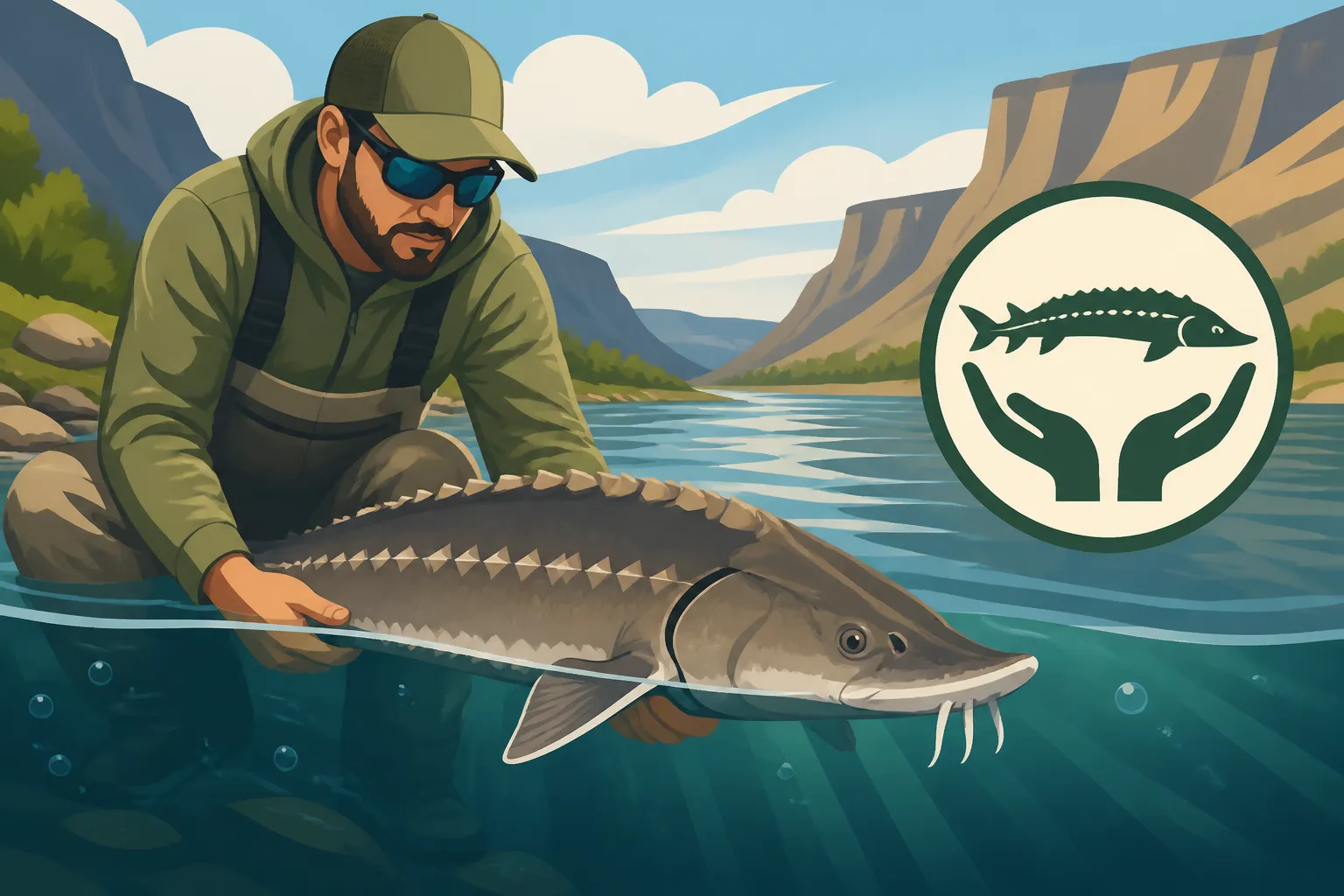
One of the most important aspects of sturgeon catch-and-release, and often the most overlooked by new anglers, is the strict protocol for handling these behemoths. The overarching rule is simple: Idaho Rule Against Removing Sturgeon from the Water.
- Why Stay in the Water? Sturgeon are incredibly large and heavy. Their internal organs are not designed to support their immense body weight out of the water. Lifting a large sturgeon, even briefly, can cause severe internal organ damage, rupture blood vessels, or damage their spine and musculature, leading to a delayed mortality event known as "post-release mortality." Even holding a smaller sturgeon horizontally by its tail and head out of the water can cause harm.
- Measuring and Photographing: All measurements for length (for data collection purposes) and photographs must be done with the fish submerged. Anglers are encouraged to use large nets or slings to cradle the fish partially out of the water while still in the water for a quick photo, ensuring most of its body remains supported by the water. This requires teamwork and preparation, but it's vital.
- Revival: If a sturgeon appears lethargic after the fight, it's your responsibility to help it revive. Hold the fish gently by the tail, pointing its head into the current (if there is one), and allow water to flow over its gills until it regains its strength and can swim away under its own power. This can sometimes take several minutes, but patience is key. These specific rules are part of the broader Idaho Catch-and-Release Sturgeon Rules Explained.
These detailed regulations might seem like a lot, but they are absolutely essential for ensuring that every sturgeon you catch has the best possible chance of survival and can continue its vital role in the Snake River ecosystem.
Your Role in Sturgeon Conservation
As an angler targeting White Sturgeon, you are much more than just a participant; you are an active steward of these magnificent fish. Your actions, from the moment you cast your line to the moment you release your catch, directly impact their survival and the future of sturgeon fishing in Idaho.
Mastering Safe Handling Techniques
Understanding and practicing safe handling techniques is perhaps the most critical way you contribute to sturgeon conservation. It's not enough to just use barbless hooks; how you interact with the fish matters immensely.
- Be Prepared: Before you even cast, ensure you have the right tools. A large, rubberized landing net or a specially designed sturgeon sling makes handling easier and safer for the fish. Have your camera ready for quick photos, and if you plan to measure, know your method that keeps the fish submerged. A sturdy pair of long-nose pliers from a reputable brand found on Amazon, for example, is indispensable for quick hook removal.
- Minimize Fight Time: As mentioned, use heavy enough tackle to bring the fish to the boat or shore as efficiently as possible. A long, drawn-out fight exhausts the sturgeon, depleting its energy reserves and increasing lactic acid buildup, which can be fatal.
- Keep it Wet: This cannot be stressed enough. Always keep the sturgeon in the water. If you're fishing from a boat, bring the fish alongside. If on shore, wade in to meet the fish. For photos, hold the fish by the tail and jaw, ensuring its body remains mostly submerged. If it's a giant, two people may be needed, one supporting the head and gills, the other the tail, all while keeping the fish in the water.
- Gentle Hook Removal: With barbless hooks, removal should be swift. Use pliers to twist the hook out. If the hook is deeply set, consider cutting the line as close to the hook as possible. Hooks made of non-corrosive materials will often rust out over time, causing less harm than struggling to remove a deeply embedded hook.
- Allow for Full Recovery: After release, observe the fish. Don't just let it go and motor away. If it seems sluggish, hold it gently, facing into the current if possible, allowing water to flow over its gills until it shows strong signs of recovery and can swim off on its own power. This is a crucial step in How to Release a Sturgeon Safely in Idaho.
Understanding Permits and Licenses
To legally fish for sturgeon in Idaho, you need more than just a standard fishing license. A specific sturgeon permit is often required, which helps Idaho Fish and Game monitor angling pressure and fund conservation efforts.
- Idaho Fishing License: Of course, you need a valid Idaho fishing license. This applies to both residents and non-residents. Information on how to obtain one, including online options, is readily available. Check out the Idaho Nonresident Fishing License Guide or the Idaho Resident Fishing License Guide for detailed information.
- Sturgeon Permit: While sturgeon fishing on the Snake River is catch-and-release, you still need a separate permit. This permit helps the Idaho Department of Fish and Game track the number of anglers targeting sturgeon and gather important data about participation. This data is vital for managing the fishery and ensuring sustainability. Knowing if Do You Need a License to Fish for Sturgeon in Idaho is essential before planning your trip.
These permits are not just about revenue; they are a critical part of the data collection process that informs management decisions. Every permit purchased is a statement of support for the conservation of these incredible fish.
Being an Ambassador for Sturgeon Conservation
Beyond following the rules, you can play an even larger role as an ambassador for sturgeon conservation.
- Educate Others: Share your knowledge and passion. If you see someone struggling with a sturgeon, or about to remove one from the water, kindly offer assistance and explain the importance of proper handling. Many people simply don't know the rules or the "why" behind them.
- Report Violations: Unfortunately, some individuals may not adhere to the regulations. If you witness poaching or improper handling, report it to Idaho Fish and Game. Their enforcement officers are critical to protecting these vulnerable populations.
- Participate in Citizen Science: Idaho Fish and Game often encourages anglers to report catch data, especially for marked or tagged fish. This information helps biologists understand growth rates, movements, and population health.
- Support Conservation Organizations: Various local and national organizations are dedicated to sturgeon research and habitat restoration. Supporting them through membership or donations can make a tangible difference.
By embracing these roles, you become an active participant in preserving the legacy of White Sturgeon on the Snake River. Every time you cast a line, you're not just fishing; you're contributing to a conservation success story. For deeper insights into where these efforts are most concentrated, consider looking at the Best Fishing Spots on the Snake River for Sturgeon.
Understanding the Life Cycle and Vulnerabilities
To truly appreciate why catch-and-release is so critical for Snake River sturgeon, it helps to dive a little deeper into their unique life history and the specific ways these ancient traits make them susceptible to human impacts.
Sturgeon Spawning and Nursery Habits
White Sturgeon have a very specific set of environmental requirements for successful spawning. They prefer fast-flowing, turbulent water over gravel or cobble substrates, typically in the main stem of large rivers. When conditions are right, females can release hundreds of thousands of eggs, but only a tiny fraction will ever survive to become adults.
- Temperature Sensitivity: Spawning is temperature-dependent, usually occurring in late spring or early summer when water temperatures are just right. Climate change and altered river flows can disrupt this delicate balance.
- Flow Requirements: Dams and water management can significantly alter the natural flow regimes of rivers, impacting the availability of suitable spawning grounds. Lower flows can expose eggs, while sudden, extreme fluctuations can wash them away.
- Nursery Habitat: Larval and juvenile sturgeon rely on specific, often calmer, side channels and eddies for protection and food. If these nursery habitats are degraded by sedimentation from runoff, pollution, or changes in river structure, survival rates plummet.
Their reliance on specific conditions means that any major disruption in the river environment, whether from human activities or natural events, can have a magnified impact on their reproductive success.
Longevity and Growth Rates
We've touched on their long lifespan, but it's worth reiterating the sheer scale of it. White Sturgeon are one of the longest-living freshwater fish species in North America. They can live for over 100 years, and some estimates push that even further. This incredible longevity comes with a trade-off: extremely slow growth to maturity and infrequent spawning.
Consider this: a trout might grow to a catchable size in 2-3 years, and spawn multiple times in its life. A White Sturgeon that's only 5 feet long might be 20-30 years old, just barely reaching reproductive age. The truly massive ones—the ones that earn the title "How Big Do White Sturgeon Get in the Snake River"—are likely decades, if not a century, old. Each year a sturgeon survives, it contributes more to the overall health and genetic diversity of the population. Removing even a single adult from this incredibly long-lived, slow-reproducing species has a disproportionately large impact compared to faster-reproducing fish. The "one-and-done" nature of commercial harvest in the past was particularly devastating precisely because of these biological realities.
A Comparative Look: Do's and Don'ts of Sturgeon Fishing
To make it easier, here's a quick reference guide on how to be a responsible sturgeon angler on the Snake River.
| Aspect of Fishing | Do's for Responsible Angling | Don'ts for Sturgeon Protection |
|---|---|---|
| Licenses & Permits | Ensure you have a valid Idaho fishing license AND the required Sturgeon Permit. | Fish without both permits; assume a standard license is enough. |
| Hooks | Use single, barbless hooks only. Pinch barbs down on existing hooks with pliers. | Use barbed hooks, treble hooks, or multiple hook setups. |
| Tackle | Use heavy-action rods and strong braided line (e.g., 80lb test) to land fish quickly. | Use light tackle that prolongs the fight and exhausts the fish. |
| Landing Fish | Use a large, rubberized net or sturgeon sling to safely guide the fish alongside your boat or to shore. | Attempt to hoist or drag the fish by its tail, gills, or body without support. |
| Handling Fish | Keep the sturgeon in the water at all times. Support its body fully if bringing it partially out of the water for a quick photo. | Remove the entire fish from the water, even for a quick photo. |
| Measuring/Photos | Perform all measurements and take photos with the fish submerged or mostly submerged, supporting its weight. | Stand the fish vertically or horizontally out of water for photos. |
| Hook Removal | Use long-nose pliers to quickly remove the barbless hook. If deeply swallowed, cut the line close to the hook. | Yank or tear at the hook; struggle with a deeply set hook causing more damage. |
| Releasing Fish | Gently hold the fish, facing into the current, until it regains strength and swims away on its own. | Release a lethargic fish without ensuring it can swim independently. |
| Reporting | Report any observed illegal activity or fish tagging information to Idaho Fish and Game. | Ignore illegal activities or fail to report important biological observations. |
| Bait | Use legal, natural baits such as dead fish (e.g., cut bait) or worms that attract sturgeon. (Check regulations for specifics). | Use live bait where prohibited, or baits that could harm the fish if ingested. (Always consult the current Idaho Fishing Regulation Brochure and Proclamation). |
Remember, your active participation in these conservation practices ensures that future generations will also have the opportunity to experience the awe-inspiring thrill of catching and releasing one of Idaho's magnificent White Sturgeon.
Disclaimer
The information provided in this guide is for general informational purposes only and is not intended as legal advice. Fishing regulations in Idaho can change, and it is the angler's responsibility to consult the most current Idaho Department of Fish and Game regulations and proclamations before fishing. Always verify specific rules, license requirements, and any special area restrictions directly with official sources.