The Best Stretch of the Snake River for Sturgeon
The vastness of the Snake River can be incredibly intimidating for anyone hoping to land one of its legendary white sturgeon. It’s easy to feel overwhelmed trying to pinpoint where these elusive giants might be hiding, leading to countless hours spent in unproductive water. This guide is here to cut through the guesswork, helping you understand precisely which stretches of the Snake River offer the most promising opportunities for a thrilling encounter with Idaho’s biggest fish.
The Allure of Idaho's Giant Sturgeon Fishery
There’s something truly primal about the idea of hooking into a fish that predates the dinosaurs, a creature capable of growing to immense sizes and living for over a hundred years. That's precisely what you get with white sturgeon in Idaho's Snake River. These aren't your everyday trout or bass; these are true freshwater titans, and pursuing them is an experience unlike any other. Anglers from all over the world are drawn to Idaho specifically for the chance to battle one of these incredible fish, which can reach over 10 feet long and weigh hundreds of pounds.
The Snake River, winding its way through diverse landscapes, offers a unique habitat for these long-lived fish. While sturgeon are found in various parts of the river, certain sections consistently produce more and larger fish, making them prime destinations for dedicated anglers. It’s not just about their size; it’s about the raw power they possess, the sheer strength required to bring them to the boat, and the profound respect they command. This isn't a quick tug-and-release situation; it's a test of patience, skill, and endurance, culminating in a memorable catch that will be talked about for years.
Zeroing In: The Most Productive Sturgeon Stretches on the Snake River
When it comes to targeting trophy white sturgeon, not all parts of the Snake River are created equal. Experienced guides and seasoned anglers know that success often hinges on finding those sweet spots where conditions are just right for these bottom-dwelling behemoths. The river's dynamics – depth, current, available food, and structure – all play a critical role in concentrating sturgeon populations. Focusing your efforts on these well-known, productive stretches will dramatically increase your chances of connecting with a true monster.
The Hells Canyon Stretch: A Trophy Fishery
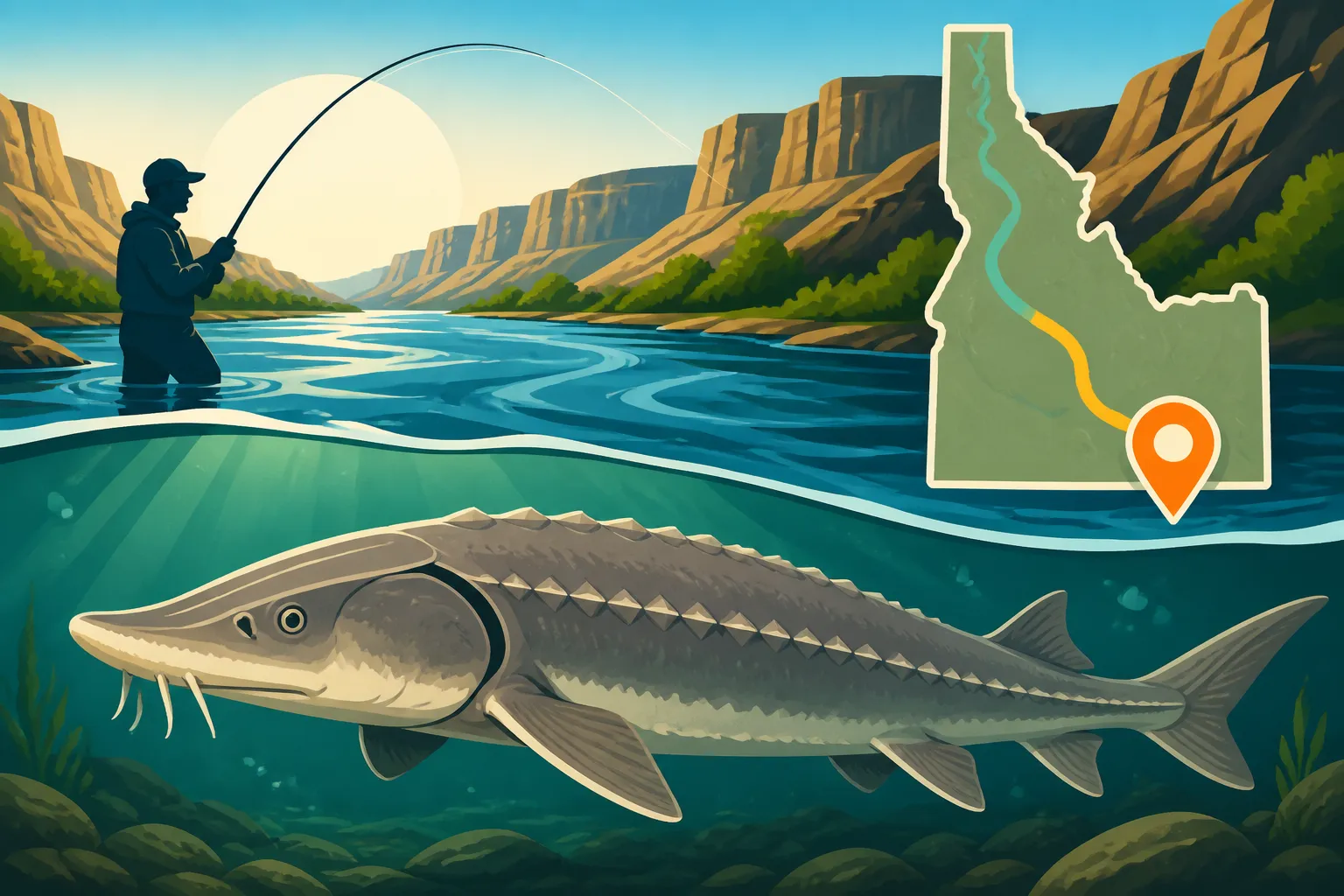
Without a doubt, the Hells Canyon stretch of the Snake River stands out as the undisputed heavyweight champion for white sturgeon fishing in Idaho. This isn't just a good spot; it's legendary. Hells Canyon is North America’s deepest river gorge, a dramatic landscape carved by millennia of water flow, creating an almost perfect environment for giant sturgeon. The deep, cold waters, often exceeding 100 feet in places, combined with numerous deep pools, eddies, and strong currents, provide ideal habitat and an abundance of food sources.
Anglers venturing into Hells Canyon often do so with the specific goal of catching a true trophy sturgeon. This area is known for consistently producing fish over 6 feet in length, with some pushing 8 or even 10 feet. The river here holds a robust population of these ancient fish, thriving in the nutrient-rich environment. Accessing this stretch often requires a jet boat due to the swift currents and rugged terrain, making a guided trip a popular and highly recommended option. Many reputable outfitters operating out of places like Lewiston, Idaho, or Clarkston, Washington, specialize in these trips. You can often find experienced guides who know these waters like the back of their hand through platforms like FishingBooker, ensuring you get to the most productive spots safely and efficiently. The sheer scale of the canyon adds to the adventure, making every fight with a sturgeon an epic tale against a breathtaking backdrop.
The C.J. Strike Reservoir Area: Accessibility and Abundance
While Hells Canyon is famous for its giants, the C.J. Strike Reservoir area, located southeast of Boise, offers a fantastic, more accessible sturgeon fishery, especially for those looking for a diverse angling experience. This reservoir is formed by the confluence of the Snake and Bruneau rivers and provides a different kind of sturgeon habitat: deep, slack water with plenty of submerged structure. While the trophy potential might not consistently match Hells Canyon for the absolute biggest fish, C.J. Strike is renowned for its sheer numbers of sturgeon, with many fish in the 3-6 foot range, and some larger specimens always lurking.
The accessibility of C.J. Strike makes it a popular choice for both local anglers and those visiting the Boise area. There are numerous boat launches, and the reservoir itself is easier to navigate than the powerful currents of Hells Canyon. This area is also excellent for families or those newer to sturgeon fishing, offering a high probability of success. The reservoir’s ecosystem supports a rich forage base, including carp and other baitfish, which are crucial for a healthy sturgeon population. Fishing here often involves anchoring in deep channels or near prominent drop-offs and waiting patiently for that tell-tale tap on the line. It's a great spot to hone your sturgeon fishing skills and enjoy the excitement of frequent hook-ups.
Other Notable Snake River Hotspots
Beyond the titans of Hells Canyon and the abundance of C.J. Strike, the Snake River offers several other worthwhile stretches for sturgeon encounters. These areas might not draw the same headline-grabbing attention but still hold healthy populations of white sturgeon, offering excellent fishing opportunities.
The stretch of the Snake River near Swan Falls Dam, downstream from C.J. Strike, is another productive area. The deep pools and turbulent tailwaters below the dam create a prime feeding ground and holding area for sturgeon. This section is known for producing good numbers of fish, often ranging from smaller 'shakers' to respectable 5-6 footers. Access can be a bit more challenging in some spots, requiring local knowledge or a sturdy boat, but the rewards are often worth the effort. Similarly, sections of the Snake River both upstream and downstream of the American Falls Reservoir can hold good numbers of sturgeon. While the main reservoir itself is more known for trout and perch, the riverine sections around it, particularly those with deeper channels and slower currents, provide ideal habitats. As always, consulting local bait shops or fishing reports can give you the most up-to-date information on which specific holes are producing. Remember, persistence and scouting are key when exploring these less-frequented but still productive waters.
Understanding What Makes a Prime Sturgeon Spot
Sturgeon aren't randomly distributed throughout the river; they have specific habitat preferences that dictate where they spend their time. Knowing what to look for can drastically improve your chances of finding them, even on stretches of the river that aren't as widely publicized. It's about thinking like a sturgeon – what would they need to thrive?
Deep Holes and Current Breaks
White sturgeon are predominantly bottom-dwellers, and they love deep water. This preference isn't just about comfort; it's about safety, temperature regulation, and food access. The deepest holes and channels in the Snake River are almost always prime targets. These areas often provide sanctuary from strong currents and offer stable water temperatures, especially during extreme heat or cold. However, it's not just about depth; it's about the combination of depth and current breaks.
Sturgeon are powerful swimmers, but they're also opportunistic feeders who conserve energy. They will often position themselves in areas where the current slows down, allowing them to rest while still being close to the main current that brings food. Look for seams where fast water meets slow water, the upstream or downstream side of large boulders, inside bends of the river, or behind submerged obstacles. These current breaks often create eddy lines where food accumulates, making them perfect ambush points for sturgeon. A good depth finder is an invaluable tool for locating these crucial bottom features and understanding the riverbed contour. Knowing where these deep holes are, especially in relation to current breaks, is the first step to successful sturgeon fishing.
Food Sources and Bottom Composition
Sturgeon are primarily scavengers and bottom feeders, with a diet consisting largely of dead fish, aquatic insects, crustaceans, and anything else they can vacuum up from the riverbed. Therefore, a prime sturgeon spot is almost always one with an abundant and consistent food supply. Areas where baitfish congregate, or where other fish species spawn or die off naturally, will attract sturgeon. This is why spots below dams or confluences of rivers are often so productive – they act as natural traps for food.
The composition of the river bottom is also a significant factor. While sturgeon will traverse various substrates, they often prefer softer bottoms like mud, sand, or gravel, where their preferred food items are more easily found or where they can sift through the sediment with their sensitive barbels. Hard, rocky bottoms might hold less appeal unless there are significant current breaks creating pockets of softer sediment. When you’re anchoring, try to find a spot where your anchor can dig in, often indicating a softer bottom. If you're exploring with a depth sounder, look for areas with less "noise" or a softer return signal on the bottom, which might suggest a muddier or sandier substrate. Understanding the relationship between available food and favorable bottom composition is key to predicting where sturgeon will gather. For detailed regulations on what bait you can use, it’s always best to check the official Idaho Fishing Regulations Explained guide before you head out.
Essential Gear and Techniques for Snake River Sturgeon
Landing a fish that can outweigh a grown person requires specialized gear and techniques. You can't show up with a lightweight trout rod and expect success. Sturgeon fishing is a heavy tackle game, demanding robust equipment designed to handle immense power and prolonged fights.
Heavy Tackle and Rigging
When targeting white sturgeon on the Snake River, your tackle needs to be seriously heavy-duty. Think big game. You'll want a heavy-action rod, typically 7 to 9 feet in length, rated for lines between 50 and 120 pounds. These rods have the backbone to absorb powerful runs and lift heavy weights from deep water. Pair this with a robust baitcasting or conventional reel that has a strong drag system and a high line capacity. Reels like the Penn Fathom, Daiwa Saltiga, or Shimano Tekota are popular choices among sturgeon anglers.
For line, braided superline (e.g., PowerPro, Sufix) in the 80 to 150-pound test range is standard. Braid offers incredible strength, minimal stretch for solid hook sets, and excellent abrasion resistance against rocky bottoms. However, you'll need a long, heavy monofilament or fluorocarbon leader, typically 100-200 pound test, to provide invisibility and extra abrasion resistance right at the business end. Your terminal tackle will include large, strong swivels, heavy lead weights (often 8-24 ounces or more, depending on current), and crucially, heavy-gauge, barbless circle hooks. The Why Barbless Hooks Are Required for Idaho Sturgeon rule is not just a regulation, it's a critical part of ensuring the survival of these majestic fish. Rigging involves a sliding sinker setup, where the weight slides freely on your main line, terminating at a strong swivel, followed by your leader and hook. This allows the sturgeon to pick up the bait without feeling the resistance of the heavy sinker immediately. If you're wondering how to properly set up your line, a quick search for "How to Rig a Line for Snake River Sturgeon" will provide helpful diagrams and step-by-step instructions.
The Importance of Bait Selection
Sturgeon are not picky eaters, but they definitely have preferences. The most effective baits are those that are oily, smelly, and readily available in their natural diet. Fresh bait is always best, as its scent trail is far more potent and appealing to these creatures, which rely heavily on smell to locate food.
Common and highly effective baits for Snake River sturgeon include cut bait from oily fish like shad, carp, or pikeminnow. These can be cut into steaks or chunks, ensuring plenty of surface area to release scent. Other popular choices include lamprey eels (where legal and available), squid, and even shrimp. Some anglers also experiment with marinated baits, using various fish oils or commercial attractants to enhance the appeal. The key is to use enough bait to create a strong scent plume in the water without making it so large that a sturgeon can't easily engulf the hook. Presenting your bait effectively means ensuring it stays on the bottom, right where the sturgeon are feeding. When planning your trip, you might want to look into "Best Bait for Idaho Sturgeon Fishing" to get the most current recommendations.
Mastering the Hook Set and Fight
One of the biggest mistakes beginners make is trying to set the hook on a sturgeon like they would a bass. Sturgeon often "mouth" the bait or swim off slowly with it before committing. With circle hooks, a traditional, hard hook set is not only unnecessary but can actually pull the hook out of the fish's mouth. Instead, when you feel a steady pull or see your rod tip steadily bending, simply reel down until your rod is heavily loaded, then lift the rod smoothly. The circle hook is designed to slide into the corner of the fish's mouth as pressure is applied, leading to a much safer and more reliable hook set.
Once hooked, prepare for a battle. Sturgeon are incredibly powerful, capable of long, sustained runs and acrobatic jumps, even when they’re huge. Keep constant pressure on the fish, using your reel's drag system to wear it down. Pumping the rod (lifting and reeling down) helps gain line, but be prepared for sudden surges. The fight can last anywhere from 15 minutes for smaller fish to well over an hour for a true monster. It’s physically demanding, so having a good fighting belt can be a real back-saver. When the fish is finally tired, lead it gently to the boat. This is where teamwork often comes in, especially on guided trips where the guide will handle the fish in the water. To truly understand what you're in for, reading up on "How to Fight a Sturgeon on the Snake River" can provide invaluable tips.
Navigating Idaho's Sturgeon Regulations
Idaho is incredibly protective of its white sturgeon population, and for good reason. These are long-lived, slow-reproducing fish that are vulnerable to overfishing. Consequently, the regulations surrounding sturgeon fishing in Idaho are strict and must be followed to the letter. Ignorance of the rules is never an excuse, and violations can lead to hefty fines and loss of fishing privileges.
Strict Catch-and-Release Rules
Perhaps the most important rule for sturgeon fishing in Idaho is that it is strictly catch-and-release. This isn't an option; it's a mandate. You cannot retain any white sturgeon caught in Idaho waters. This regulation is crucial for the conservation of the species, ensuring that these magnificent fish continue to thrive for future generations. This means every sturgeon you catch, regardless of size, must be released unharmed back into the water where it was caught. The importance of this rule cannot be overstated, and it’s why understanding "Why Snake River Sturgeon Fishing Is Catch and Release Only" is so vital.
| Aspect of Sturgeon Fishing | Idaho Regulation/Practice | Why it's Important |
|---|---|---|
| Retention | Strictly Catch-and-Release | Conserves slow-reproducing, long-lived species for future generations. |
| Hooks | Single, barbless hooks only | Minimizes damage and increases survival rate of released fish. |
| Removing from Water | Illegal to remove any sturgeon | Prevents internal organ damage and undue stress, especially to large fish. |
| Measurement | Measure in the water | Reduces stress and injury from handling; often requires specialized tape. |
| Gear | Heavy-duty, appropriate tackle | Ensures fish can be landed quickly and safely, minimizing exhaustion. |
| Bait | Must adhere to local regulations | Prevents introduction of invasive species or diseases; check current rules. |
Barbless Hooks and Safe Handling Practices
To support the catch-and-release ethic, Idaho regulations specifically require the use of single, barbless hooks when fishing for sturgeon. The barb on a traditional hook can cause significant damage, especially if the hook is deeply ingested or in a sensitive area. Barbless hooks, on the other hand, are much easier to remove, minimizing trauma and speeding up the release process. You can either buy pre-made barbless hooks or simply crimp down the barb on a regular hook with pliers. Make sure your hook is truly barbless; if it snags on clothing, it should slide right off without resistance.
Beyond hooks, safe handling practices are paramount. This means keeping the fish in the water as much as possible. It is illegal to remove any sturgeon from the water in Idaho. When you bring a sturgeon alongside the boat, measure it while it's still in the water, take any photos quickly, and release it as gently as possible. Avoid dragging the fish onto rocky banks or placing it on dry surfaces. Use wet gloves if you must handle the fish, supporting its body horizontally, especially for larger specimens. Guides, such as those found on FishingBooker, are experts in these protocols and will ensure that the fish is handled with the utmost care, increasing its chances of survival. For a complete understanding of best practices, read up on Idaho Catch-and-Release Sturgeon Rules. These practices ensure that the next angler, or even future generations, will have the opportunity to experience the thrill of catching one of these magnificent fish.
Disclaimer
The information provided in this guide is for general informational purposes only and is subject to change. Fishing regulations, season dates, and access points can vary and are updated periodically by the Idaho Department of Fish and Game. Always consult the official Idaho Fish and Game regulations and local advisories before planning your fishing trip to ensure compliance with current laws and safe practices.