What Bass Species Live in Idaho Waters
Many anglers, especially those new to the Gem State, are often surprised to learn that Idaho offers far more than just incredible trout fishing. While our rivers and high mountain lakes are indeed legendary for trout, the truth is that Idaho's waters are also home to a thriving and exciting bass fishery. If you've been wondering if you can chase those hard-fighting, bronze-backed, or green-hued beauties here, you're in for a treat! This comprehensive guide will dive deep into the specific bass species you'll encounter in Idaho and give you the inside scoop on where these aggressive predators lurk.
Idaho's Premier Bass Species: Smallmouth and Largemouth
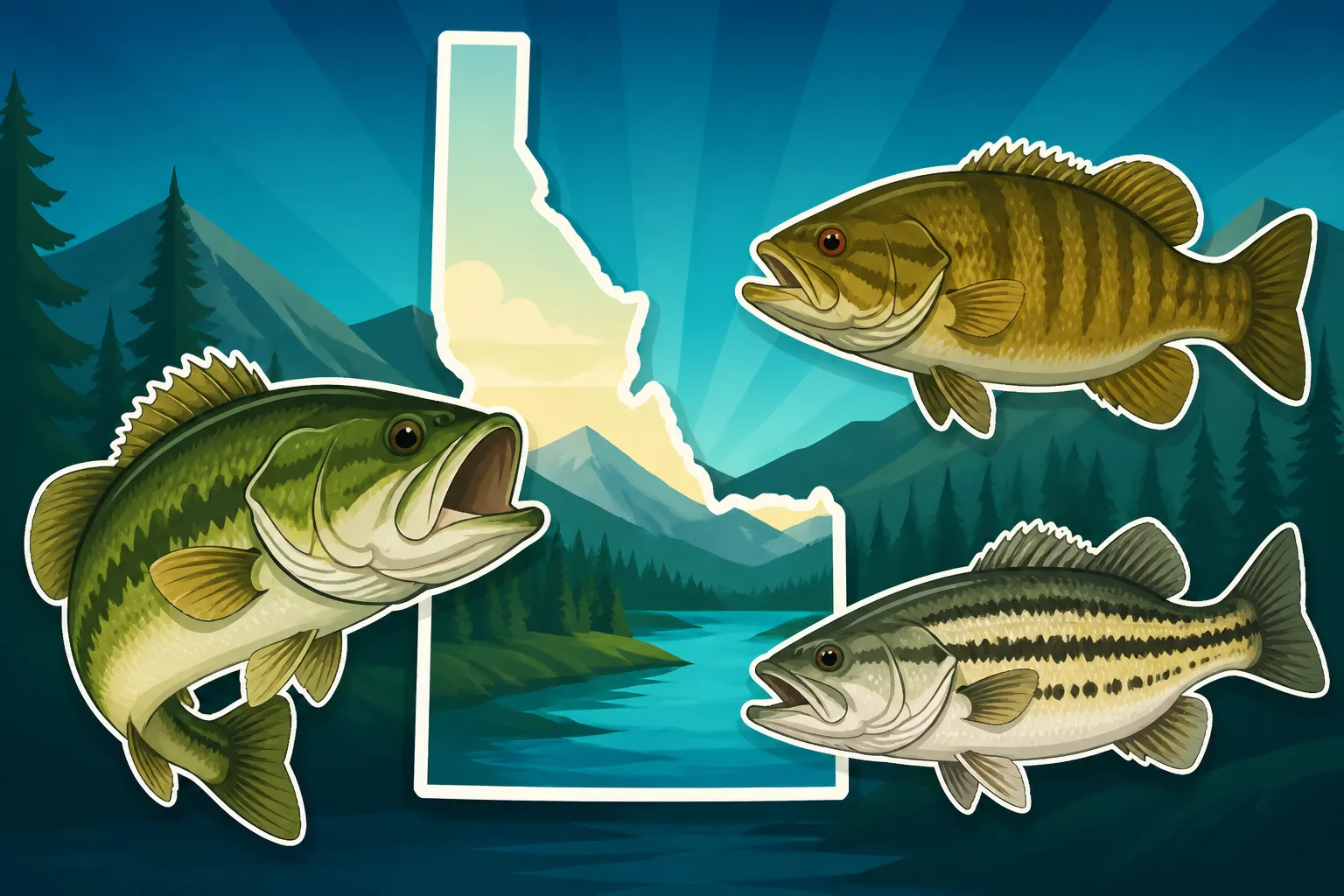
When people talk about bass fishing in Idaho, they're almost always referring to two main species: the smallmouth bass and the largemouth bass. These two fish, while both members of the sunfish family and sharing a penchant for aggressive strikes, have distinct preferences in habitat and behavior that make targeting each a unique and rewarding experience. Forget the idea that Idaho is solely a trout haven; our bass fisheries are vibrant and offer fantastic opportunities for both seasoned anglers and those just starting out. Learning to distinguish between these two bass species is the first step in understanding where and how to pursue them effectively in our diverse waters.
The Dynamic Duo of Idaho Bass Fishing
It’s easy to group all "bass" together, but understanding the subtle yet significant differences between smallmouth and largemouth is key to success. Think of them as two different kinds of athletes: the smallmouth is a river sprinter, preferring current and rocky structure, while the largemouth is a lake brawler, favoring weeds and submerged timber. Both offer exhilarating fights and are a blast to catch, but knowing what you're up against helps you choose the right gear and approach. This knowledge can really make the difference between a slow day and one filled with exciting hookups. Idaho Bass Fishing Guide will give you an even broader overview of everything bass-related in our state.
Why Bass Thrive in Idaho
You might be thinking, "Idaho? For bass?" And it's a fair question if your mental image of Idaho is solely pristine alpine lakes and rushing trout streams. However, Idaho boasts a vast network of warmer rivers, reservoirs, and natural lakes that provide ideal conditions for both smallmouth and largemouth bass. The Snake River system, in particular, with its slower stretches, abundant rocky features, and diverse forage, has become a smallmouth paradise. Meanwhile, countless reservoirs and some natural lakes, especially in the southern and western parts of the state, offer the shallow, vegetated, and timber-filled environments that largemouth bass adore. Our varied topography and climates create these distinct niches, allowing both species to flourish.
Delving Deeper: The Smallmouth Bass in Idaho
The smallmouth bass, often called "bronze-back" or "brown bass," is arguably the more celebrated of Idaho's bass species, especially among river anglers. Known for their incredible fighting ability and acrobatic jumps, smallmouth offer an unparalleled fishing experience. They are built for power and speed, making them a formidable opponent on light tackle. Many an angler has been surprised by the sheer strength of an Idaho smallmouth, mistaking it for a much larger fish.
Identifying the Smallmouth Bass
When you pull a smallmouth from the water, you'll immediately notice its distinctive features. They typically have a brownish or bronze coloration, often with vertical bars or mottling along their sides, which helps them camouflage against rocky riverbeds. A key identifier is their mouth: when closed, the upper jaw (maxillary) usually does not extend beyond the back edge of their eye. They also tend to have reddish eyes. Their dorsal fin is deeply notched, giving the appearance of two separate fins. These characteristics not only make them beautiful fish but also hint at their preferred environments.
For a quick reference, here's a comparison:
| Feature | Smallmouth Bass | Largemouth Bass |
|---|---|---|
| Coloration | Brown to bronze, often with vertical bars/mottling | Green to olive, with a distinct dark lateral line |
| Mouth Size | Upper jaw ends before or at the eye | Upper jaw extends beyond the eye |
| Dorsal Fin | Deeply notched, appears almost separated | Less deeply notched, more continuous |
| Eye Color | Often reddish or orange | Typically golden or yellowish |
| Body Shape | More streamlined, muscular | More robust, football-shaped |
Prime Smallmouth Habitats
Smallmouth bass are quintessential river fish in Idaho. They absolutely adore current, rocky bottom structure, gravel beds, and areas with submerged boulders and logs. Think of them as the river's ambush predators, hiding behind structure, waiting for crayfish, minnows, or insects to drift by. You'll find them in the eddies behind large rocks, along current seams, in deeper pools, and near riprap banks. These areas provide both shelter from the current and excellent feeding opportunities. They're less keen on dense vegetation and murky, still waters.
One of the most renowned smallmouth fisheries in Idaho is the Snake River. From the stretch near Lewiston all the way up through Hells Canyon and beyond, the Snake River for Smallmouth Bass and Sturgeon is a legendary destination. You'll also find fantastic smallmouth fishing in tributaries to the Snake, like the Clearwater River and the Salmon River, especially in their lower reaches. Even some of the larger reservoirs that feed these river systems, such as Brownlee Reservoir and C.J. Strike Reservoir, can hold significant smallmouth populations, particularly in rocky coves and main lake points. Where Smallmouth Bass Are Most Common in Idaho provides even more detailed locations.
Targeting the Bronze-Backs
When it comes to lures for smallmouth bass, think about what they naturally prey on. Crayfish imitations, like small jigs, crankbaits, and soft plastic tubes, are incredibly effective. Spinnerbaits, small swimbaits, and topwater lures fished over rocky flats or along current seams can also trigger aggressive strikes. For a more subtle approach, dropping a Ned rig or a small grub on a jig head can work wonders in deeper pockets or when the bite is tough. Always check the current Idaho Fishing Regulations Explained before heading out, as specific rules might apply to certain waters or seasons. When you're ready to stock up on these essentials, checking out options on Amazon can be a convenient way to compare prices and find exactly what you need. For more specific lure suggestions, dive into Best Lures for River Smallmouth Bass.
The Largemouth Bass: Idaho's Green Machines
While smallmouth bass might get a lot of press for their fighting prowess, the largemouth bass holds its own as a beloved game fish in Idaho. These "green machines" are masters of ambush, preferring to hide in dense cover and explode out to engulf their prey. Catching a big largemouth can be a thrilling experience, often involving powerful runs and a battle to pull them out of thick weeds or submerged timber.
Identifying the Largemouth Bass
The largemouth bass is quite distinct from its smallmouth cousin. Its most prominent feature is right in its name: a large mouth. When closed, the upper jaw (maxillary) extends well past the back edge of the eye, giving it that characteristic "bucketmouth" appearance. Their coloration is typically a vibrant green or olive green, often with a prominent, dark, horizontal band or blotchy lateral line running down their sides. This stripe often breaks up into a series of blotches in some individuals. Unlike the smallmouth, the largemouth's dorsal fin appears more continuous, with a less pronounced notch.
Their body shape is generally more stout and football-like compared to the smallmouth's streamlined build, reflecting their preference for slower, shallower waters where they can exert maximum force on their prey. If you're comparing your catch, checking the mouth size is usually the quickest way to tell if you've got a smallmouth or a largemouth.
Prime Largemouth Habitats
Largemouth bass are habitat specialists when it comes to cover. They thrive in warmer, shallower waters with abundant aquatic vegetation, submerged timber, lily pads, reeds, and brush. Think of murky lake coves, reservoir arms, and slow-moving sloughs where sunlight penetrates and creates lush underwater jungles. These environments provide perfect ambush points and plenty of forage. They are less fond of strong currents and rocky, open areas.
In Idaho, you'll find excellent largemouth fishing in numerous reservoirs and smaller ponds, particularly in the warmer regions. Lake Lowell near Nampa is a classic largemouth destination, known for its extensive weed beds and submerged structure. C.J. Strike Reservoir, famous for its smallmouth, also harbors a strong largemouth population in its shallower, more vegetated arms. Other notable spots include the backwaters of the Snake River, parts of American Falls Reservoir, and many smaller, warmwater ponds managed by Idaho Fish and Game for family fishing. Idaho's Best Largemouth Bass Lakes offers a detailed look at where to find these green giants. Where Largemouth Bass Are Most Common in Idaho provides even more general habitat info.
Targeting the Green Machines
To catch largemouth bass, you need to think "cover." Texas-rigged or Carolina-rigged soft plastics, such as worms, creature baits, and senkos, are incredibly effective for probing heavy cover without snagging. Spinnerbaits and chatterbaits are great for covering water and eliciting reaction strikes, especially around submerged logs and brush piles. Topwater lures like frogs, poppers, and walking baits are exhilarating when largemouth are actively feeding near the surface in shallow, weedy areas. Flipping and pitching jigs into dense cover is also a deadly technique.
It's all about presenting your bait where the fish are hiding, and often, that means right in the thickest stuff. Make sure your tackle is stout enough to pull a good-sized bass out of heavy cover! You can often find a great selection of these specialized lures, from soft plastics to topwater frogs, on Amazon. Remember that having the right lure for the right cover is often the key to a successful largemouth outing.
Beyond the Basics: Where and How to Catch Idaho Bass
So you know what bass species live here, but where exactly do you go, and how do you increase your chances of hooking into one of these aggressive fighters? It's not just about throwing a lure; it's about understanding the seasonal movements, environmental preferences, and behavioral patterns of Idaho's bass. Even in what seems like ideal bass water, subtle changes can make a big difference in your success. Idaho Fishing Techniques Guide is a great resource for expanding your general angling knowledge.
Top Idaho Bass Fishing Destinations
Idaho offers a variety of spots that cater to both smallmouth and largemouth enthusiasts. Here are a few highlights:
- Snake River (Smallmouth): As mentioned, the Snake River is the undisputed champion for smallmouth. From the calmer stretches below Lewiston, through the dramatic Hells Canyon, and even upstream around the Twin Falls area, the river provides endless opportunities. Boat access is excellent in many areas, but shore anglers can find success around public access points and bridge crossings. How to Fish for Smallmouth Bass on the Snake River will give you specific tips.
- C.J. Strike Reservoir (Both): Located southwest of Mountain Home, C.J. Strike is unique in that it offers excellent fishing for both smallmouth and largemouth bass. The main reservoir and its rocky points hold smallmouth, while the shallower, more vegetated arms and backwaters are largemouth territory. It's a fantastic spot if you want to target both species in one trip.
- Lake Lowell (Largemouth): Near Nampa, Lake Lowell is a well-known largemouth hotspot. Its relatively shallow nature and extensive weed beds make it a perfect habitat for these green bass. It's particularly popular with kayak and small boat anglers who can navigate the shallower, brushier areas.
- Brownlee Reservoir (Smallmouth): Forming part of the border with Oregon, Brownlee is another Snake River reservoir known for its robust smallmouth population. It’s a huge body of water with endless coves, rocky bluffs, and submerged structure for smallmouth to hide in.
- Clearwater River (Smallmouth): While famous for steelhead, the lower sections of the Clearwater River also hold a healthy population of smallmouth bass, especially during the warmer months. These fish can be incredibly aggressive and provide a fun challenge when the steelhead aren't biting.
Seasonal Strategies for Bass Fishing
Understanding the seasons is crucial for bass fishing success.
- Spring (Pre-spawn & Spawn): This is often considered prime time. As water temperatures rise, bass move into shallower areas to feed heavily before spawning. They become very aggressive. During the spawn, they'll guard their nests, making them susceptible to sight fishing with soft plastics or jigs. Look for largemouth in shallow coves and smallmouth on rocky flats.
- Summer (Post-spawn & Mid-summer): After spawning, bass disperse. In early summer, they might still be somewhat shallow, but as temperatures soar, they'll often move to deeper water, seeking cooler temperatures and stable oxygen levels. Look for them around deeper structure, submerged timber, or weed lines. Early morning and late evening bites can be best. Topwater action can be phenomenal at dawn and dusk.
- Fall (Turnover & Feeding Frenzy): As water temperatures drop, bass sense winter approaching and go on a feeding frenzy to bulk up. They often move shallower again, chasing baitfish. This can be an excellent time for crankbaits, spinnerbaits, and jerkbaits, as bass are actively hunting. The "fall turnover" in lakes can sometimes make fishing tough for a few days, but once it settles, the bite can be epic.
- Winter (Slow but Possible): Bass fishing in winter can be tough, but not impossible. They become much less active, holding in deep water, often near significant structure. Slow-moving baits like jigs, blade baits, or even slow-rolled swimbaits can entice a strike. This is a time for patience and precise presentations.
Essential Gear for Idaho Bass Fishing
Having the right gear makes all the difference. For both smallmouth and largemouth, a medium to medium-heavy action rod (6'6" to 7'6" length) with a fast tip is a versatile choice. For reels, a baitcasting reel with a good drag system is ideal for heavier lures and pulling fish out of cover, especially for largemouth. A spinning reel is excellent for lighter lures, finesse techniques, and beginners.
Line choice depends on the cover and technique: monofilament for topwater and crankbaits, fluorocarbon for sensitivity and invisibility in clear water, and braided line for heavy cover and punching through vegetation. Don't forget a good selection of terminal tackle, including hooks, weights, and leaders. A quality tackle box or bag to keep everything organized is also a must. You'll find a wide array of options for rods, reels, lines, and lures, from budget-friendly to high-end, readily available on platforms like Amazon, allowing you to tailor your setup to your specific needs and target species. Best Bait and Lures for Idaho Fishing offers a more general look at lure selection.
Idaho's bass fisheries are a hidden gem, offering exciting angling adventures that stand proudly alongside our world-class trout opportunities. So, next time you're planning a trip, consider casting a line for the bronzebacks and green machines – you might just discover a new favorite species!
Disclaimer
This article is for general informational purposes only and does not constitute professional advice. Laws, prices and regulations vary by location and change over time. Consult a qualified professional for guidance on your specific situation.