Is It Safe to Eat Fish from Idaho Reservoirs?
You've just pulled a beautiful rainbow trout or a feisty smallmouth bass out of an Idaho reservoir, and naturally, your mind turns to dinner. There's nothing quite like enjoying a meal you've caught yourself. But then a little voice creeps in: "Is it actually safe to eat this fish?" It's a valid concern for many anglers, especially with so much information circulating about environmental factors. This comprehensive guide will dive deep into understanding fish consumption advisories in Idaho's reservoirs, helping you make informed decisions to enjoy your hard-earned catch safely and with peace of mind.
Understanding Fish Consumption Advisories in Idaho Reservoirs
It's completely normal to feel a bit confused when trying to figure out if the fish you just caught from an Idaho reservoir is safe for your dinner table. On one hand, fresh fish is healthy! On the other, you hear whispers about mercury and other contaminants. The truth is, it's a nuanced issue, and Idaho, like most states, has systems in place to help you make the best choices.
Why Advisories Exist
Fish consumption advisories aren't there to scare you away from fishing; they're in place to protect your health. Bodies of water, including Idaho's stunning reservoirs, can accumulate various substances from natural sources, past industrial activities, or even agricultural runoff. Fish, being part of these ecosystems, can absorb and concentrate these substances in their tissues. Over time, and especially in longer-lived, predatory fish, these contaminants can build up to levels that might be harmful if consumed regularly, particularly by sensitive populations. It's not about making fish "bad," but about understanding potential risks.
These advisories are a proactive measure, based on scientific research and monitoring. They aim to balance the health benefits of eating fish with the potential risks associated with contaminants. Think of them less as prohibitions and more as dietary guidelines, similar to how we consider portion sizes or recommended daily intake for other foods. It's about moderation and making smart choices based on the best available data for specific locations and fish species.
Who Issues and Communicates Advisories in Idaho
In Idaho, the responsibility for assessing fish tissue and issuing consumption advisories falls primarily to the Idaho Department of Health and Welfare (IDHW), often working in close collaboration with the Idaho Department of Environmental Quality (IDEQ) and the Idaho Department of Fish and Game (IDFG). This multi-agency approach ensures that both public health and wildlife management perspectives are considered.
The IDFG, for instance, focuses on managing fish populations and habitats, and while they don't issue health advisories, they provide crucial data on fish species, sizes, and locations that feed into the health department's assessments. When an advisory is issued, these agencies work to communicate it to the public through various channels. You'll often find this information within the annual Idaho Fishing Regulation Brochure and Proclamation, on the IDHW and IDEQ websites, and sometimes through local news outlets or signage at popular fishing access points. It's a team effort to keep anglers informed, so knowing where to look is half the battle.
What Advisories Mean for Anglers
An advisory isn't usually a blanket ban on eating fish from a particular reservoir. Instead, it's typically a set of recommendations about how much fish, and which types of fish, are safe to eat from a specific waterbody, especially for certain groups of people. For example, an advisory might suggest that healthy adults can safely eat two meals per month of a certain species, while pregnant women, nursing mothers, and young children should limit consumption to one meal per month or avoid it altogether.
These recommendations often differentiate based on fish species and size. Larger, older predatory fish like big bass, pike, or lake trout tend to accumulate more contaminants than smaller panfish such as perch or crappie. This is due to a process called biomagnification, where contaminants become more concentrated higher up the food chain. Therefore, an advisory might specifically target larger fish or certain species while leaving others unrestricted. It’s crucial to understand these distinctions rather than just hearing "advisory" and assuming all fish from that water are off-limits.
There's a big difference between a "general advisory" that might apply broadly to certain species across a region due to common environmental factors (like naturally occurring mercury) and a "specific advisory" issued for a particular waterbody due to a localized contamination source. Always check the specifics for the reservoir you're fishing. Knowing the details allows you to make an informed decision for yourself and your family. If you're ever unsure, err on the side of caution or choose other fish.
Common Contaminants Found in Idaho Reservoir Fish
When we talk about "contaminants" in fish, it can sound a bit scary, but it's important to understand what we're actually referring to. Not all contaminants are present in all fish or all waters, and many exist at levels far too low to be a concern. However, there are a few key substances that state agencies monitor closely when assessing fish in Idaho's reservoirs.
Mercury
Mercury is probably the contaminant you hear about most often in connection with fish. It's a naturally occurring element, but human activities like coal-fired power generation and historical mining have increased its presence in the environment. When mercury enters water, bacteria can convert it into methylmercury, which is the highly toxic form that fish absorb.
Fish accumulate methylmercury primarily through their diet and water. As smaller fish are eaten by larger fish, the mercury concentrates up the food chain—a process known as biomagnification. This means that predatory fish, those at the top of the aquatic food chain like large bass, pike, walleye, and even very old, large trout, tend to have higher levels of mercury in their tissues. These fish can be wonderful to catch and impressive specimens, but they might be the ones to exercise more caution with when it comes to regular consumption. Idaho Fish Species Guide can give you a good overview of what you might encounter.
For humans, consuming too much methylmercury can affect the nervous system, and it's especially dangerous for developing fetuses and young children, whose nervous systems are still forming. That's why advisories often have stricter limits for pregnant women, nursing mothers, and young kids. While mercury can't be cooked out of fish, you can reduce your exposure by choosing smaller, younger fish of certain species, or by simply diversifying your diet rather than relying solely on fish from one particular reservoir.
PCBs (Polychlorinated Biphenyls)
Polychlorinated Biphenyls, or PCBs, are a group of industrial chemicals that were widely used in the past, primarily from the 1920s to the 1970s, in things like electrical equipment, hydraulic fluids, and plastics. While their manufacture was banned in the U.S. in 1979 due to environmental and health concerns, they are persistent organic pollutants, meaning they break down very slowly and can remain in the environment for decades.
PCBs in reservoirs are typically a legacy issue, resulting from historical industrial discharges or improper waste disposal. Like mercury, PCBs accumulate in the food chain. However, PCBs are fat-soluble, meaning they tend to concentrate in the fatty tissues of fish. This is a key difference to remember when considering preparation. Reservoirs near historical industrial centers are more likely to have PCB concerns than pristine mountain lakes.
Exposure to high levels of PCBs can have various adverse health effects, including impacts on the immune system, reproductive system, and potential links to cancer. Because PCBs are stored in fat, certain preparation methods can help reduce your intake. Trimming away the fatty portions of a fish (like the belly flap, dark meat along the sideline, and skin) and cooking methods that allow fat to drain away can be effective strategies if you're concerned about PCBs. This is where understanding your catch, and the water it came from, becomes really important for safe enjoyment.
Other Potential Contaminants
While mercury and PCBs are the most commonly monitored and advised-upon contaminants in fish from Idaho reservoirs, other substances can occasionally be a concern. These might include pesticides, dioxins, or even certain heavy metals beyond mercury. However, these are generally less widespread or are present at lower levels in Idaho waters compared to mercury or historical PCB issues.
Idaho's environmental agencies continually monitor various waters for a spectrum of potential pollutants. If another contaminant were to reach levels of concern in a specific reservoir, an advisory would be issued just as it would for mercury or PCBs. The key takeaway is that these agencies are actively working to keep an eye on the health of our waters and the fish within them. As an angler, staying informed by checking official sources for advisories is your best defense against unexpected concerns. Most of the time, the focus is on the big two, but it's good to know the system is broader than just those.
Making Informed Decisions About Eating Your Catch
The joy of catching fish is often followed by the thought of cooking it up, and in Idaho, with its abundant waters, that's a common pleasure. But knowing when and how to safely enjoy your catch is paramount. It’s about being smart, not scared, and making choices that allow you to savor the experience without unnecessary worry.
Checking Current Advisories: Your First Step
Before you even cast a line, or certainly before you plan your dinner menu, your very first step should be to check for current fish consumption advisories for the specific reservoir you're fishing. This information is readily available and regularly updated by the Idaho Department of Health and Welfare (IDHW). A quick search on their official website for "Idaho fish consumption advisories" will usually lead you straight to the relevant documents. You might also find general information or links within the Idaho Fishing Regulations Explained or Idaho Fishing License Guide resources from the IDFG.
Think of it like checking the weather or the local fishing report – it's just another crucial piece of information for a successful and safe outing. Don't rely on old brochures or hearsay. Regulations and advisories can change as new data becomes available or as environmental conditions shift. If you're unsure where to find it online, consider calling your local Idaho Fish and Game office; they can often direct you to the right resource. Keeping a waterproof case for your phone, perhaps one you picked up from Amazon, can be handy for looking up information right on the water.
Species and Size Matters
When it comes to fish contaminants, not all species are created equal, and size definitely plays a role. As we discussed, larger, older, and more predatory fish tend to accumulate higher levels of contaminants like mercury. This is because they've had more time to absorb these substances and have eaten many smaller fish that also contain them.
-
Higher Risk Species (Generally): Look out for larger, longer-lived predatory fish such as:
- Large Lake Trout (Mackinaw)
- Big Northern Pike
- Larger Walleye
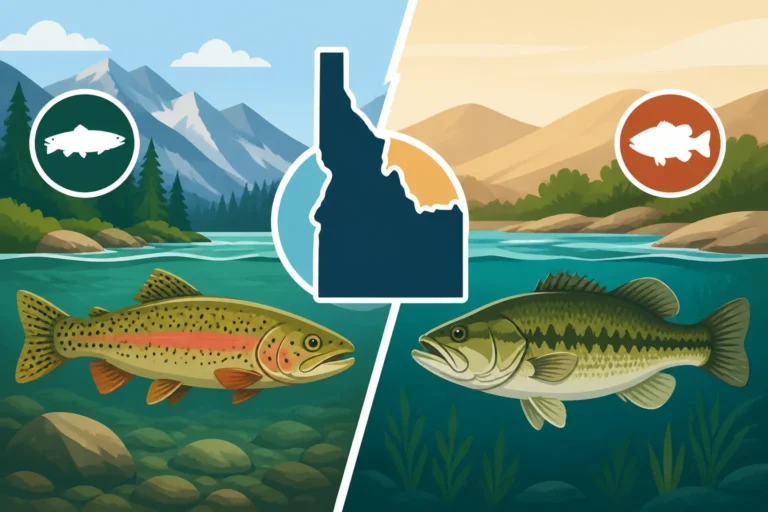
- Larger Bass (Smallmouth and Largemouth)
- Trophy-sized Bull Trout (though these are typically catch-and-release only due to protective regulations)
-
Lower Risk Species (Generally): Smaller, shorter-lived fish, especially those lower on the food chain, often have lower contaminant levels. These are frequently recommended for more frequent consumption:
- Perch (especially smaller ones)
- Crappie
- Bluegill
- Smaller Rainbow Trout or Cutthroat Trout (especially those frequently stocked, as they haven't lived as long in the wild)
- Kokanee Salmon (which primarily feed on plankton)
If you're fishing for species known to be higher risk, consider practicing catch-and-release for the trophy-sized individuals and keeping the smaller, younger fish that are within legal limits. This is a smart approach for both conservation and your health. For more on various fish, check out the Idaho Fish Species Guide.
Preparation and Cooking Tips to Reduce Risk
Even if there's an advisory, or if you simply want to be extra cautious, certain preparation and cooking methods can help reduce your exposure to some contaminants, particularly PCBs. Remember, mercury binds to muscle tissue and cannot be cooked out, but PCBs are fat-soluble.
Here are some tips:
- Trim the Fat: Before cooking, carefully remove the skin, the dark fatty meat along the lateral line, and any belly fat. These are the areas where fat-soluble contaminants like PCBs tend to accumulate. A sharp fillet knife, readily available on Amazon, can make this task much easier.
- Choose Lean Cooking Methods: Methods that allow fat to drain away from the fish are preferable.
- Baking or Broiling: Place fish on a rack so fat can drip off into a pan below.
- Grilling: Grilling also allows fat to escape.
- Steaming: While not directly removing fat, steaming avoids adding extra fats that might re-circulate contaminants.
- Avoid Drippings: Don't use the drippings or fat from cooking, as these can contain concentrated contaminants. Discard them.
- No Deep Frying: While delicious, deep frying allows the fish to reabsorb fat (and any contaminants in it), which defeats the purpose of trimming.
- Skinning: Always skin your fish if PCBs are a concern.
By taking these simple steps, you can significantly reduce your intake of fat-soluble contaminants while still enjoying the delicious flavors of your fresh catch. For general deliciousness, you might want to explore tips for the Best Tasting Fish Caught in Idaho.
Vulnerable Populations and Moderation
It's critical to understand that fish consumption advisories are often tailored with specific "vulnerable populations" in mind. These groups are more susceptible to the potential health effects of contaminants, and their recommendations are typically more conservative.
- Pregnant women and women who might become pregnant: Contaminants like mercury can cross the placenta and affect fetal development, particularly the brain and nervous system.
- Nursing mothers: Some contaminants can pass into breast milk, potentially exposing infants.
- Young children: Their smaller body size and developing organ systems make them more vulnerable to the effects of contaminants.
If you fall into one of these categories, it is especially important to strictly adhere to any advisories and, when in doubt, choose fish known to be low in contaminants or simply opt for store-bought fish that has been commercially tested. For general healthy adults, moderation is still key. Even if a fish from a particular reservoir has no advisory, enjoying it a few times a week rather than every single day is a sensible approach. Diversifying your protein sources and the types of fish you eat, from various locations, naturally minimizes potential exposure to any one contaminant. It's about a balanced diet and enjoying the bounty of Idaho's waters responsibly.
Specific Idaho Reservoirs and Common Concerns
Idaho is blessed with numerous reservoirs, each offering unique fishing opportunities and diverse ecosystems. While it's impossible to list every single reservoir and its specific advisory here (since advisories can change and are best checked directly from official IDHW sources), we can talk about general patterns and types of concerns you might encounter across some of Idaho's well-known impoundments.
Reservoirs with Historical Industrial Influences
Some of Idaho's reservoirs are located in areas with a history of mining or other industrial activities. In these particular instances, there might be legacy concerns, especially regarding PCBs or other heavy metals, that date back decades. For example, some parts of the Coeur d'Alene basin, including areas of Fishing Lake Coeur d'Alene for Kokanee and Chinook, have historical mining impacts, leading to advisories primarily related to lead, cadmium, and mercury, with specific recommendations varying by species and size. These aren't new problems, but rather lingering effects from past practices that continue to be monitored.
In these situations, advisories often focus on reducing exposure to specific contaminants that are known to have accumulated in the sediment and subsequently in the food chain. This is where trimming fish fat and choosing cooking methods that drain fat become particularly relevant if PCBs are a concern. Always refer to the most current IDHW advisories for these areas, as the specifics can be complex, often breaking down recommendations by different sections of a large body of water or by various species.
Larger, Deeper Reservoirs with Predatory Fish
Many of Idaho's larger, deeper reservoirs are home to thriving populations of long-lived predatory fish such as large lake trout, walleye, or various bass species. Think of places like American Falls Reservoir, Brownlee Reservoir, or even parts of Lake Pend Oreille. While these offer fantastic trophy fishing opportunities, these are often the waters where mercury advisories might be in place for the larger specimens of these predatory fish.
The natural accumulation of mercury, coupled with the longer lifespan and higher position in the food chain of these larger predators, means they can build up higher concentrations over time. So, while you might catch an impressive tiger muskie from Cascade Reservoir's Tiger Muskie Fishery, or a hefty smallmouth bass from Fishing American Falls Reservoir for Trout and Perch, the advisory for that particular water might suggest limiting consumption of the biggest individuals. The good news is that smaller, panfish species from these same waters, like perch or crappie, typically have much lower levels of contaminants and are often safe for more frequent consumption. It's all about knowing your target species and its typical contaminant profile.
Smaller, Regularly Stocked Reservoirs and Ponds
On the other end of the spectrum, many smaller reservoirs and community fishing ponds across Idaho are regularly stocked with rainbow trout by the Idaho Department of Fish and Game. These waters, especially those with high turnover of stocked fish, generally present fewer concerns regarding contaminants. The fish are often younger, smaller, and haven't had as much time to accumulate substances from the environment.
These types of waters are often fantastic options for family fishing trips, especially if you plan to keep a few fish for a meal. The advisories for these waters are typically minimal or non-existent, making them a great choice if you're looking for an easier, lower-concern fish meal. That being said, even for these waters, it never hurts to quickly check the IDHW advisories to be absolutely sure. The general guidance for Idaho Fishing Rules for Kids and Families often points to these types of stocked waters for good reason. For specific spots, you might look at Idaho's Most Popular Fishing Destinations or even Family-Friendly Fishing Spots in Idaho.
Remember, the goal isn't to avoid eating fish altogether, but to be a responsible and informed angler. By knowing where to find the latest information, understanding which fish species and sizes carry more risk, and employing smart preparation techniques, you can confidently enjoy the bounty that Idaho's incredible reservoirs have to offer.
| Fish Category | Typical Contaminant Concern | General Risk Level | Who Should Be Most Cautious | Preparation Tip for PCBs (if applicable) |
|---|---|---|---|---|
| Small Panfish | Low (occasional localized) | Low | Generally safe for all populations | N/A (low risk) |
| (Perch, Crappie, Bluegill) | ||||
| Stocked Trout | Low | Low | Generally safe for all populations | N/A (low risk) |
| (Rainbow Trout, Cutthroat) | ||||
| Medium Predatory Fish | Mercury, some PCBs | Moderate | Pregnant/nursing, young children | Trim fat, cook to drain (for PCBs) |
| (Smaller Bass, Walleye) | ||||
| Large/Older Predatory Fish | Mercury, PCBs | Higher | Pregnant/nursing, young children, all anglers in moderation | Trim fat thoroughly, cook to drain (for PCBs) |
| (Large Lake Trout, Pike, Bass) |
Disclaimer
This article is for general informational purposes only and does not constitute professional advice. Laws, prices and regulations vary by location and change over time. Consult a qualified professional for guidance on your specific situation.