Do You Need a License to Fish on Private Property in Idaho?
It's a common question, and frankly, a bit of a tricky one for many anglers: "Do I really need an Idaho fishing license if I'm fishing on someone's private land?" The confusion is totally understandable. You'd think if you're on private property, you're somehow exempt from state regulations, right? Unfortunately, that's rarely the case when it comes to Idaho fishing, and this guide is here to clear up that persistent misunderstanding so you can fish legally and confidently.
The Core Rule: Yes, You Most Likely Need an Idaho Fishing License
Let's cut right to the chase because this is where a lot of people get tripped up: In Idaho, the fish themselves are considered a public resource, owned by the state, regardless of whose land or private pond they might be swimming in. This fundamental principle means that almost any time you’re casting a line in Idaho, even on private property, you're going to need a valid Idaho fishing license. It's not about the land; it's about the fish.
Understanding Idaho's Public Resource Philosophy
Idaho's approach to its wildlife and fish populations is rooted in the public trust doctrine. This doctrine dictates that certain natural resources, like fish and game, are held in trust by the state for the benefit of all its citizens. Think of it this way: even if a deer is walking across someone's pasture, it's still a wild animal managed by the state, and you'd need a hunting license to pursue it. The same goes for fish. They are not the personal property of the landowner, even if they reside entirely within the boundaries of their deeded land.
This philosophy ensures that fish populations are managed sustainably across the entire state, protecting them from overharvesting or unregulated activity, no matter where they are found. It's why rules exist for catch limits, species identification, and gear restrictions—they apply universally to help maintain healthy ecosystems. Trying to navigate these rules without a license can lead to serious legal trouble, undermining the very system designed to protect these precious resources for everyone. If you’re ever curious about the broader framework, a deep dive into the Idaho Fishing Regulations Explained can really illuminate these principles.
Distinguishing Private Land from Private Water
This distinction is absolutely crucial and often the source of most confusion. When we talk about "private property," it usually refers to the land. But when we talk about fishing, we need to consider the water body itself.
- Rivers, Streams, and Connected Lakes: If a river, stream, or lake flows through or is connected to public waters, even if parts of it are entirely surrounded by private land, it's still considered public water for fishing purposes. The fish in it are state property. Imagine the Clearwater River, a prime Steelhead fishing spot; if it runs through a private ranch, you still need your license and appropriate permits (like an Idaho Steelhead Permit) to fish there, provided you have legal access to the water itself. The landowner cannot grant you an exemption from state licensing requirements.
- Truly Isolated Private Ponds: This is the only potential exception, and it's a very narrow one. We're talking about a pond that is entirely man-made, completely contained within private property, has no inlet or outlet from any natural stream or public water, and was stocked privately with fish that were not sourced from public waters or state hatcheries. These are often small, decorative ponds or very specific aquaculture operations. Such ponds are rare and proving their complete isolation can be challenging. If there's any natural connection to Idaho's waterways, even seasonally, it's considered public water. Most ponds are fed by springs, runoff, or small streams that eventually connect to larger systems, making them public in the eyes of the law.
The bottom line here is that the vast majority of water bodies in Idaho, even those surrounded by private land, are interconnected to the broader aquatic ecosystem. This connection means the fish living within them are part of the state's public resource pool, and therefore, state fishing regulations, including the requirement for an Idaho Fishing License Guide, apply.
Navigating the Nuances of Private Water Bodies in Idaho
So, we've established the general rule: assume you need a license. But let's dig into those nuances, because they're important for responsible angling. The legalities can sometimes feel like a maze, especially when you're trying to respect private property rights while also enjoying Idaho's incredible fishing opportunities.
Truly Isolated Private Ponds: The Rare Exception
As mentioned, the only scenario where you might not need an Idaho fishing license to fish on private property is if you are fishing in a truly, completely isolated private pond. This isn't just a pond on private land; it needs to meet very specific criteria:
- No Natural Inlet or Outlet: The pond cannot have any natural connection to a stream, river, lake, or any other public waterway, either year-round or seasonally. This means no spring-fed creeks flowing in or out, and no overflow channels connecting to ditches that eventually reach public waters.
- Man-Made and Self-Contained: It's often a pond excavated purely for aesthetic or specific agricultural purposes, designed to hold water without natural hydrological connections.
- Privately Stocked Fish: The fish in the pond must have been introduced from a private, licensed hatchery, not from public waters or state stocking programs. If the landowner stocked their pond with fish caught from the Snake River or a local trout stream, those fish were originally public resources, and the act of catching them (or introducing them) still falls under state purview.
Even if you believe a pond meets these criteria, it's always best to err on the side of caution. If a Fish and Game officer has any doubt, they'll likely assume it's connected to public waters and require a license. If you're genuinely uncertain, a quick call to the Idaho Department of Fish and Game (IDFG) can clarify the specifics for a particular water body. Given how few ponds actually meet this strict definition, it's a safe bet to purchase a license anyway. Many anglers purchase their licenses directly from the IDFG website, but for quick reference or last-minute needs, you can often find them at sporting goods stores, or even through various online retailers like Amazon, which might offer gift cards for IDFG services or sell related fishing guides that could point to local vendors.
Public Waters Flowing Through Private Land: Access is Key
This is the more common scenario and where most recreational fishing on private land happens. You've got a beautiful stretch of the Salmon River, the Henry's Fork, or even a small, unnamed creek teeming with trout, and it just so happens to flow right through a friend's sprawling property. While you absolutely still need your Idaho Fishing License Guide, the biggest hurdle here isn't the license, but legal access.
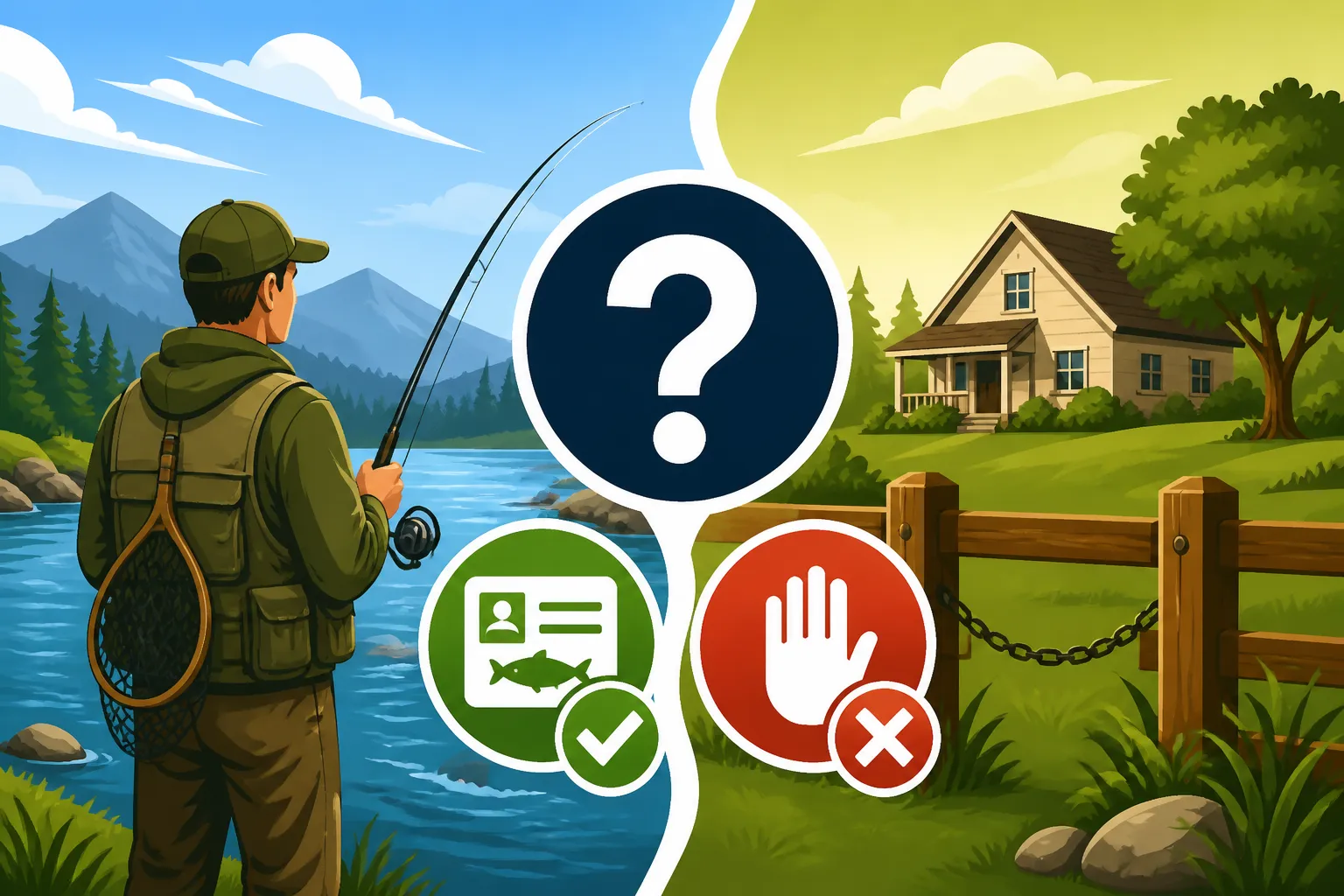
Idaho law protects the public's right to navigate and fish in navigable waters, but accessing those waters across private land is a different story. If you can float in on a river or stream that is legally navigable, you can usually fish that water, even if the banks are private. However, you generally cannot trespass on private land to gain access to the water without explicit permission from the landowner. This means:
- Bank Access: If you want to fish from the bank of a river or stream that passes through private property, you must have the landowner's permission. Without it, you are trespassing, even if you have a valid fishing license.
- Floating Access: For navigable rivers, you can often float through private property and fish, but stepping out of your boat onto private land (unless in an emergency or to portage around an obstruction) without permission is usually considered trespassing. Knowing which rivers are considered "navigable" can be complex and depends on historical usage and legal precedent. For example, popular sections of the Snake River are generally considered navigable.
- Lakes and Reservoirs: If a lake or reservoir has public access points (like a boat ramp or public park), you can typically launch your boat and fish anywhere on the water, even if parts of its shoreline are privately owned. Again, accessing the water across private land without permission is the issue.
It’s a balancing act. You have the right to fish public waters with a license, but not always the right to cross private land to get to them. Always, always respect "No Trespassing" signs and seek permission before venturing onto private land.
Securing Access and Staying Legal on Private Property
So, you're keen to fish a spot you know is on private property, or perhaps you've been invited by a friend to fish their land. Great! Now, let's make sure you do it right and stay entirely within the law. There’s more to it than just having a license; proper etiquette and understanding the law are equally important.
Always Obtain Landowner Permission
This cannot be stressed enough. Even if you hold an Idaho Resident Fishing License Guide or an Idaho Nonresident Fishing License Guide, that license grants you the right to fish public waters, not the right to access them across private land. If you're going to be on private property for fishing, permission from the landowner is paramount.
- Ask Clearly: Don't assume. Politely ask the landowner for permission to fish. Explain where you want to go and what you intend to fish for. Be specific.
- Respect Their Wishes: If they say no, respect it without argument. Their land, their rules.
- Follow Their Guidelines: If they grant permission, ask about any specific rules they might have (e.g., "please stay off the alfalfa field," "close all gates," "no fires"). Adhere to these strictly. This is how you build good relationships and keep access open for future visits for yourself and others.
- Leave No Trace: Always pack out everything you pack in. Leave the property cleaner than you found it. This courtesy goes a long way.
- Be a Good Steward: If you see something amiss (like litter from another angler, or potential damage), politely inform the landowner.
Many landowners are happy to grant access to responsible anglers. Being polite, respectful, and prepared to show your valid How to Buy an Idaho Fishing License can make all the difference.
Where to Get Your Idaho Fishing License
Having your license readily available is a must. You can't just hope for the best. Idaho makes it quite easy to obtain a fishing license, whether you're a resident or an out-of-state visitor.
- Online: The quickest and often easiest way is through the Idaho Department of Fish and Game (IDFG) website. You can purchase your license, print a temporary copy, and even have a digital version on your phone. This is usually my go-to, as I can do it from my couch.
- IDFG Offices: You can visit any IDFG regional office during business hours. Their staff are incredibly helpful and can answer any specific questions you might have about different license types, permits, or regulations.
- Retail Vendors: Numerous sporting goods stores, tackle shops, and even some convenience stores across Idaho are authorized license vendors. Places like Cabela's, Sportsman's Warehouse, and local mom-and-pop shops are great places to pick one up. While you can't buy the license directly on Amazon, you can easily order a new fishing vest or a waterproof license holder from them to keep your physical license safe once you've purchased it from an official vendor. For a complete list of where to buy, check out Where to Buy an Idaho Fishing License.
Remember that your basic fishing license (the Idaho Fishing License Cost Guide will show you options) might not cover everything. If you're targeting specific species like Steelhead or Chinook Salmon, you'll also need special permits or stamps. Always double-check what you need for the species and waters you plan to fish. You can find detailed information on these requirements in the Idaho Fishing Permits and Stamps Explained article. Also, don't forget to review the Idaho Fishing Rules for Kids and Families if you're bringing along younger anglers, as age requirements can vary. For example, kids under 14 usually don't need a license, but it's good to confirm the exact Idaho Fishing License Age Requirements and whether Do Kids Need a Fishing License in Idaho? applies to your situation.
Consequences of Fishing Without a License or Permission
Ignoring the rules in Idaho comes with real consequences, and frankly, it's just not worth the risk. Enforcement officers take these regulations seriously to protect Idaho's fish populations and ensure fair access for all licensed anglers.
- Fines and Penalties: Fishing without a valid license, or fishing without the proper permits for specific species, can result in significant fines. These aren't just slaps on the wrist; they can range from hundreds to thousands of dollars depending on the severity and number of violations.
- Seizure of Gear: In some cases, your fishing gear, including rods, reels, and even your boat, could be seized. Imagine having your prized fly rod confiscated because you neglected a $30 license!
- Loss of Privileges: Beyond fines, you could lose your fishing privileges for a period, meaning you wouldn't be able to purchase a license in Idaho (or potentially other states, due to interstate compacts) for a set number of years.
- Criminal Charges (for Trespassing): If you're fishing on private property without permission, you could face trespassing charges, which are separate from fishing violations. This can lead to additional fines, a criminal record, and even jail time in severe or repeat cases. Nobody wants to deal with that.
The costs associated with getting caught fishing illegally far outweigh the nominal fee for an annual license. It's a small investment for peace of mind and the continued enjoyment of Idaho's incredible fisheries. You can learn more about the specifics of potential repercussions in What Happens If You Fish in Idaho Without a License?. Always ensure you have your current license on you, whether it's a physical copy or readily accessible on your phone, to present to any enforcement officer. You can find the most up-to-date information in the official Idaho Fishing Regulation Brochure and Proclamation which is updated annually. Sometimes, physical copies of these brochures are available at IDFG offices, or you can find them digitally for your tablet, which you might store in a rugged, waterproof case bought from Amazon.
Here’s a quick overview of scenarios regarding fishing on private property in Idaho:
Scenario Do You Need an Idaho Fishing License? Do You Need Landowner Permission? Notes
: The quest for an Idaho fishing license, especially for those with unique situations like owning private property, often stirs up a confusing tangle of questions. Many folks mistakenly believe that if they own the land, they own the water and everything in it, thereby sidestepping the need for a state-issued license. This guide will unravel that misconception, providing clear, actionable information on when and why an Idaho fishing license is almost always required, even on your own private slice of Idaho heaven.
The Fundamental Principle: Fish Belong to the People of Idaho
It's natural to assume that if you own a piece of land, everything on it, above it, or flowing through it belongs to you. However, when it to comes to fish and wildlife in Idaho, the rules are a little different. The state of Idaho holds all fish and wildlife in trust for the public. This means that even if a stream, river, or lake is entirely bordered by your private property, the fish swimming within that water body are still considered a public resource, managed and protected by the Idaho Department of Fish and Game (IDFG).
This foundational principle ensures that these valuable natural resources are managed sustainably for current and future generations of Idahoans and visitors alike. It's why bag limits exist, why certain seasons are in place, and why you need a license. It's not about denying your property rights, but about conserving a shared public heritage. You might own the land, but you don't own the wild fish.
Why State Management Extends to Private Lands
The concept of fish as a public trust is a cornerstone of wildlife management across the United States. In Idaho, this means that the state has a vested interest in the health and sustainability of fish populations, regardless of the specific parcel of land they inhabit. Imagine if every landowner could make their own rules for fishing a river that flows through their property; the inconsistent regulations, potential for overharvesting, and lack of coordinated conservation efforts would quickly decimate fish stocks.
Take, for instance, the majestic Steelhead or Chinook Salmon making their incredible journeys up Idaho's rivers like the Salmon or Clearwater. These fish travel hundreds of miles from the ocean, passing through countless stretches of private land. If each landowner could claim ownership of these migratory fish within their property lines, the entire management system for these anadromous species would collapse. Therefore, a uniform approach is necessary. Whether you're casting a line in a publicly accessible stretch of the Boise River or a secluded bend of the St. Joe River on private acreage, a valid fishing license is your proof of compliance with the state's conservation efforts. For a deeper understanding of the overall regulatory framework, take a look at the Idaho Fishing Regulations Explained.
The Difference Between Land Ownership and Water Rights
It's also important to distinguish between land ownership and water rights. In Idaho, surface water rights are typically governed by an "appropriation" system, meaning whoever first put the water to beneficial use has the primary right to it, regardless of whose land it flows through. However, even if you have water rights that allow you to use water from a stream or river on your property, this doesn't automatically grant you ownership of the fish within that water.
Your land deed gives you rights to the physical land, and often the streambed if it's a non-navigable water body. But the water itself, and certainly the fish swimming in it, operate under different legal frameworks. This distinction is critical because while you control access to your land, the state controls the regulations surrounding the public resource of fish. This is why even when fishing on your own private property, you are still expected to adhere to all state regulations, including having a valid Idaho Fishing License Cost Guide and any necessary permits for specific species.
Understanding the Narrow Exceptions for Private Water Bodies
While the general rule is "yes, you need a license," there are extremely limited and specific scenarios where an Idaho fishing license might not be required on private property. These exceptions are so narrow that most anglers will find they still need a license.
The True "Closed System" Private Pond
The only real exception to the license requirement applies to what Idaho Fish and Game calls a "closed system" private pond. This means a pond that is:
- Completely Contained: The pond must be entirely on private land, with no natural inlet or outlet connecting it to any stream, river, lake, or public water body, either permanently or seasonally. It cannot drain into any public waterway, nor can public waters flow into it. This often means it's fed purely by groundwater or rainfall, or entirely by a private well.
- Privately Stocked: The fish in the pond must have been legally acquired from a private, licensed hatchery, or from another legal private source, and not wild-caught from public waters. Crucially, these fish cannot be from any Idaho Department of Fish and Game stocking program.
These truly isolated, privately-stocked ponds are quite rare. Most ponds, even seemingly small ones, have some form of connection to the broader hydrological network, especially during high water events like spring runoff. If a pond has a culvert that flows into a ditch, which eventually meets a creek, it’s not a closed system. If wild fish could migrate into it, even occasionally, it's not a closed system.
For example, a decorative pond in a backyard, completely lined and filled by a well, and stocked with koi from a pet store, would typically not require a license to fish. However, a pond fed by a seasonal stream that eventually flows into a tributary of the Clearwater River, even if completely on private land, would absolutely require a license, as the fish would be considered public resources. If you have any doubt about whether your private pond truly qualifies as a closed system, your safest bet is always to purchase a license. Even better, contact the IDFG directly for clarification to avoid potential legal issues.
Commercial Aquaculture Operations
Commercial aquaculture operations, where fish are raised for sale and consumption, are another specific area with different rules. These are typically highly regulated facilities and are not considered recreational fishing. If you're visiting such an operation as a consumer, you typically wouldn't need a fishing license to catch fish for purchase within their controlled environment, as the fish are essentially "livestock." However, this is a specialized industry and not generally applicable to recreational anglers.
It’s crucial to understand that merely owning private property and having a pond on it does not automatically exempt you from Idaho’s fishing license requirements. The vast majority of water bodies in Idaho, from tiny mountain streams to sprawling reservoirs, are considered public resources when it comes to the fish they hold.
Ensuring Legal Access and Responsible Angling
Even with a crystal-clear understanding of license requirements, navigating fishing on private land requires more than just a piece of paper. It demands respect, responsibility, and an understanding of how to maintain good relationships with landowners.
The Absolute Necessity of Landowner Permission
While your Idaho Fishing License Guide grants you the legal right to harvest fish from public waters, it does not grant you the right to access those waters by trespassing across private land. This is a critical distinction that many anglers, especially those new to Idaho, often overlook.
- Verbal vs. Written Permission: While verbal permission is often accepted, having written permission can prevent misunderstandings. A simple signed note stating you have permission to fish on specific dates is a good practice, especially if the landowner isn't present during your visit.
- Respecting Boundaries: Understand exactly where the property lines are. Do not stray onto adjacent properties without explicit permission from those landowners as well. Always adhere to any specific requests or limitations the landowner may impose, such as "no fishing past this fence" or "only fish the upper stretch of the creek."
- Leaving No Trace: As a general rule, whether on public or private land, always practice Leave No Trace principles. Pack out all trash, avoid disturbing vegetation or wildlife unnecessarily, and be mindful of noise. This is especially important on private property, as being a responsible guest increases the likelihood of future access for you and other anglers. If you're ever looking for essentials like trash bags or a portable waste container, you can find many options on Amazon to ensure you leave no trace.
- Public Access vs. Private Land: Remember, even if a river is considered "navigable" (meaning you can legally float or boat on it), you generally cannot step onto private banks or streambeds without permission. Accessing public water through private land is usually considered trespassing. Public access points, like designated boat launches or public parks along the water, are your legal gateways to fishing in Idaho's public waters.
Many landowners are incredibly generous with access, especially if anglers demonstrate respect for their property and privacy. A little courtesy goes a very long way in securing and maintaining these valuable opportunities.
Obtaining Your Idaho Fishing License: Easy and Essential
Getting your license is straightforward and quick, removing any excuse for fishing illegally. The Idaho Resident Fishing License Guide and Idaho Nonresident Fishing License Guide outline the various options available.
- Online Purchase: The Idaho Department of Fish and Game website (idfg.idaho.gov) is your go-to resource. It's user-friendly, allows you to purchase various licenses and permits (like the Idaho Salmon and Steelhead Permit), and you can print a temporary license immediately. This convenience means you can literally buy it while sitting in your truck at the fishing spot if you realize you forgot!
- Authorized Vendors: Many sporting goods stores (like Sportsman's Warehouse or Cabela's), tackle shops, and even some grocery and convenience stores across Idaho are authorized IDFG license vendors. This is a great way to support local businesses and often get up-to-date local fishing reports.
- IDFG Offices: For personalized service and to ask any complex questions, visit one of the regional Idaho Fish and Game offices. They can help you navigate the various options, including special tags or permits you might need, such as those for Sturgeon fishing where specific Idaho Sturgeon Fishing Rules apply.
Always have your license on your person while fishing. A waterproof wallet or a dedicated license holder, readily available on Amazon and in most outdoor gear stores, is a smart investment. For specific details on where and how to purchase, the How to Buy an Idaho Fishing License Online article provides a step-by-step guide.
The Consequences of Non-Compliance
Fishing without a valid license or trespassing on private property are serious offenses in Idaho. The repercussions are far more costly and inconvenient than simply purchasing a license.
- Fines: Expect substantial fines, which can easily run into hundreds of dollars for a single offense. These fines increase for repeat offenders or more egregious violations.
- License Revocation: Idaho Fish and Game can revoke your fishing privileges, meaning you could be barred from purchasing a fishing license for a specified period, sometimes for several years. This could also affect your ability to get a license in other states.
- Gear Confiscation: In some instances, your fishing equipment (rods, reels, tackle, even your boat or vehicle) can be confiscated.
- Criminal Charges: Trespassing is a separate offense from fishing without a license and can lead to criminal charges, including additional fines, community service, or even jail time, depending on the circumstances and prior offenses.
The small investment in an annual license is not just a legal requirement; it's a contribution to the conservation and management of Idaho's incredible fisheries. It directly funds stocking programs, habitat restoration, research, and enforcement efforts that ensure fishing opportunities for everyone. Don't risk it. Secure your license, respect private property, and enjoy the phenomenal fishing Idaho has to offer.
Disclaimer
Please note: The information provided in this guide is for general informational purposes only and does not constitute legal advice. Fishing regulations in Idaho can change, and interpretations of laws, especially regarding private property and water access, can be complex. Always consult the most current Idaho Fishing Regulations brochure or contact the Idaho Department of Fish and Game directly for the most accurate and up-to-date information before planning your trip.