Idaho Bass Fishing Guide
When most folks picture fishing in Idaho, their minds instantly conjure images of pristine mountain streams teeming with native cutthroat trout or roaring rivers holding mighty steelhead. And while those iconic fisheries are absolutely incredible, a lot of anglers are missing out on an equally thrilling, and often less crowded, experience: bass fishing. You might be surprised, but Idaho boasts some phenomenal bass waters, offering heart-pounding action for both largemouth and smallmouth enthusiasts. This guide is here to shed light on Idaho's bass potential, helping you discover the best spots, master effective techniques, and equip yourself for success in chasing these hard-fighting fish.
Idaho's Bass Fishing Scene: More Than Just Trout
Let's be honest, Idaho often flies under the radar when it comes to bass fishing. It's a land celebrated for its incredible trout and salmon runs, and for good reason. The clean, cold waters that tumble down from the Sawtooths and flow through vast canyons are legendary among fly anglers and those seeking anadromous species. This focus can sometimes lead to a misconception that bass are either non-existent or merely an afterthought in the Gem State's aquatic landscape. But that couldn't be further from the truth.
The Hidden Gem of Idaho Waters
For those in the know, Idaho's bass fisheries are a vibrant, thriving secret. From the warmer, slower-moving sections of its major rivers to numerous reservoirs and smaller ponds, bass have found ideal homes and flourish. These waters offer diverse habitats, ranging from rocky shorelines and submerged timber to expansive weed beds, providing everything a bass needs to grow big and feisty. Anglers who venture beyond the typical trout streams are often rewarded with explosive strikes and powerful fights that rival any bass fishery in the country. It’s a totally different kind of challenge and thrill, and one that many Idaho anglers have come to deeply appreciate.
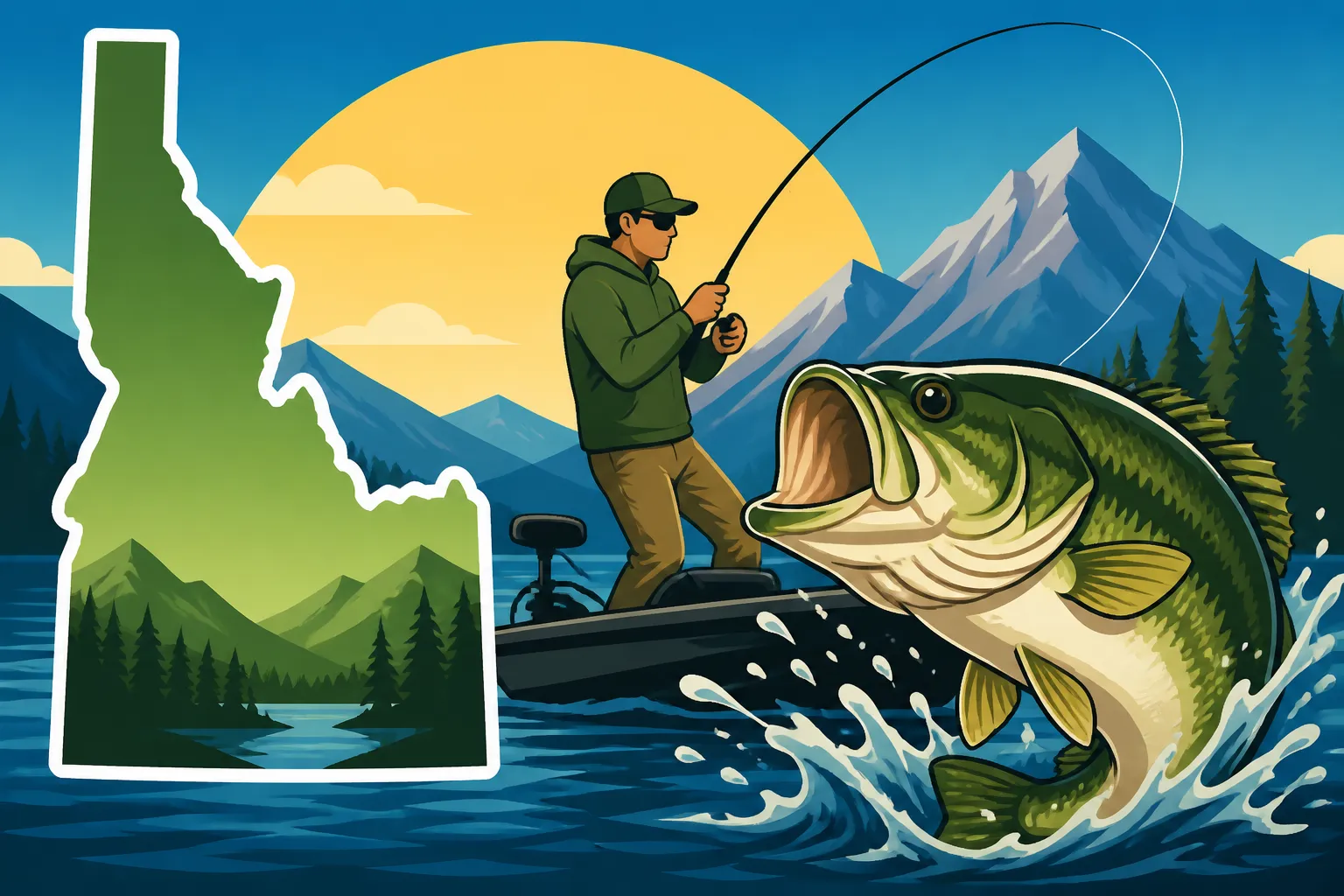
Imagine a calm evening on a sprawling reservoir, the sun dipping low, casting long shadows over the water. You're casting a topwater frog deep into lily pads, and suddenly, the water erupts with a violent splash as a chunky largemouth hammers your lure. Or picture yourself drifting down a rocky river, pitching a jig into swirling eddies, and feeling that distinctive thump as a smallmouth inhales your offering. These aren't isolated incidents; these are common, exhilarating experiences for Idaho bass anglers. The state’s diverse geography means there’s almost always a bass bite happening somewhere, whether you prefer the quiet solitude of a secluded pond or the expansive waters of a major lake.
Dispelling the Trout-Only Myth
The perception that Idaho is solely a trout haven is a pervasive one, and it certainly keeps some of the bass fishing pressure down, which is a silver lining for dedicated bass anglers. However, it also means a lot of potential enthusiasts overlook fantastic opportunities. Many visiting anglers, and even some locals, stick to what they know, focusing on trout species like rainbow, cutthroat, and brook trout. While Idaho's trout fishing is undeniably world-class, it overshadows the equally compelling bass fisheries that thrive in different ecosystems across the state.
Idaho's fishing regulations and stocking programs often highlight trout, steelhead, and salmon, which further entrenches the "trout state" image. But a quick look at the state's fishery reports will confirm healthy populations of both largemouth and smallmouth bass in a multitude of locations. These bass are robust, often reaching impressive sizes, and provide incredible sport fishing. The habitat requirements for bass—warmer water, structure, and abundant forage—are met in many of Idaho's lakes, reservoirs, and slower river sections. So, if you've ever felt intimidated by the technicality of fly fishing for trout or the pursuit of elusive steelhead, remember that Idaho has a whole other world of fishing waiting for you with bass. Just check out the Idaho Fishing Regulations Explained for the full picture on all species.
Understanding Idaho's Bass Species
Idaho is home to two primary bass species that attract anglers: the largemouth bass and the smallmouth bass. While both are members of the black bass family, they have distinct preferences for habitat, diet, and fighting styles, making them unique targets for different fishing strategies. Knowing the difference and understanding their behaviors is key to successful bass fishing in Idaho.
The Elusive Largemouth Bass
The largemouth bass (Micropterus salmoides) is perhaps the most iconic game fish in North America, and Idaho hosts healthy populations, particularly in its warmer, weedier impoundments and slow-moving river backwaters. These fish are ambush predators, preferring to hide in dense cover like lily pads, submerged timber, cattails, and brush. They're built for explosive, short-distance attacks, gulping down prey with their large mouths. Often, catching a big largemouth means patiently dissecting heavy cover and tempting them out of their lair.
Imagine pitching a weedless frog bait onto a mat of thick coontail moss in a quiet cove on Lake Lowell. You work it slowly, teasingly, until suddenly, the water explodes beneath your lure, and your line goes tight. That's classic Idaho largemouth action! They tend to fight with powerful head shakes and often try to bury themselves back into the cover, making for an exciting tug-of-war. For a deeper dive into targeting this specific species, check out Idaho Largemouth Bass Fishing. These fish are masters of camouflage, lurking in the shadows, waiting for an unsuspecting baitfish or amphibian to swim by. This means anglers need to be stealthy, precise with their casts, and often use heavier tackle to extract them from dense vegetation.
The Abundant Smallmouth Bass
The smallmouth bass (Micropterus dolomieu) is often considered the "river bass" or "bronze back" due to its preference for cooler, clearer waters with rocky bottoms, gravel, and current. Idaho's many rivers, especially those with warmer stretches like the Snake River and its tributaries, are prime smallmouth habitat. These fish are known for their incredible fighting spirit, often making acrobatic leaps and long runs once hooked. If you've never hooked into a smallmouth in current, you're in for a treat – they fight significantly harder than their size might suggest.
Picture yourself on the Snake River, casting a tube jig or a small crankbait along a riprap bank or a rocky point. The current pulls your line, and then, a sharp CRACK as a smallmouth inhales your bait, immediately peeling line and leaping clear of the water. That's the typical scenario for Idaho smallmouth. They are less structure-dependent in the way largemouth are, often roaming open rocky areas and drop-offs in search of crayfish, minnows, and insect larvae. Their agility and powerful runs make them a favorite among anglers who enjoy a fast-paced, high-energy fight. For more specialized tips on catching these river gladiators, you might find How to Fish for Smallmouth Bass on the Snake River particularly useful.
Identifying Idaho Bass
Distinguishing between largemouth and smallmouth bass is fairly straightforward once you know what to look for. The most obvious difference is in their mouths. A largemouth bass's jaw extends well past the rear edge of its eye when its mouth is closed, whereas a smallmouth bass's jaw typically doesn't extend beyond the middle of the eye. Coloration also provides clues: largemouth often have a distinct dark, horizontal stripe running down their sides, while smallmouth typically have vertical bars or splotches that look more like tiger stripes, and they tend to be a more bronzy-brown color.
| Feature | Largemouth Bass | Smallmouth Bass |
|---|---|---|
| Jaw Line | Extends beyond the back of the eye | Does not extend beyond the middle of the eye |
| Coloration | Greenish, often with a distinct dark horizontal stripe | Brownish/bronze, often with vertical bars or mottling |
| Dorsal Fin | Deep notch, almost appearing as two separate fins | Shallow notch, appearing more as one continuous fin |
| Preferred Habitat | Warm, shallow, weedy, murky water, submerged timber | Cooler, clear water, rocky bottoms, gravel, current |
| Body Shape | More elongated, somewhat rounder | More compact, football-shaped |
Understanding these differences isn't just for identification; it informs your fishing strategy. If you're targeting largemouth, you'll be looking for weed beds and thick cover. If smallmouth are your quarry, you'll focus on rocky points, current seams, and deeper structure. This foundational knowledge is crucial for any successful Idaho bass angler, ensuring you're presenting the right lure in the right place for the right fish.
Top Idaho Lakes and Rivers for Bass Fishing
Idaho's landscape is incredibly diverse, offering a wide array of fishing environments. When it comes to bass, this means knowing which bodies of water cater best to largemouth and which are smallmouth strongholds. While some waters might hold both, often one species will dominate due to specific habitat conditions. Knowing where to go is half the battle, especially when planning a trip dedicated to chasing these feisty fish.
Prime Largemouth Bass Lakes
For largemouth bass, you're generally looking for warmer, often shallower lakes and reservoirs with abundant aquatic vegetation, submerged timber, and plenty of coves and backwaters. These environments provide the perfect ambush points and cover that largemouth crave.
One of the standout locations for largemouth bass in Idaho is Lake Lowell near Nampa. This reservoir is relatively shallow and warms up nicely in the spring and summer, creating fantastic habitat for largemouth. It's known for its extensive weed beds, standing timber, and abundant shoreline cover, making it a dream for anglers who love to pitch jigs, flip plastics, or throw topwater frogs. Many local tournaments are held here, and anglers frequently report catching multiple bass in a day, often with some real lunkers mixed in. It's a great spot for families or beginners looking to experience consistent bass action. Another excellent choice is Brownlee Reservoir on the Snake River. While also known for smallmouth, its many bays and coves can hold some truly impressive largemouth, especially earlier in the season when they move into the shallows.
Consider also C.J. Strike Reservoir. While often lauded for its crappie and smallmouth, its warmer, shallower arms and coves, particularly those with brush and submerged woody debris, can be exceptional for largemouth. Anglers often find success working soft plastics or spinnerbaits along these edges. The diversity of cover here means you can spend an entire day exploring different tactics and still find new water. For an even more focused search, reading specific tips like How to Fish for Largemouth Bass in Small Ponds can give you an edge, even on larger reservoirs where you're seeking those quiet, pond-like conditions.
Stellar Smallmouth Bass Rivers and Reservoirs
Smallmouth bass are Idaho's undisputed champions of rocky, current-swept waters. If you love a hard-fighting fish that leaps and dives, these are the places you need to explore. The Snake River is hands-down the king of smallmouth fishing in Idaho. From the Hells Canyon section downstream, particularly around the Lewiston area, to stretches further upstream towards C.J. Strike and even beyond, the Snake offers incredible smallmouth action. Its rocky banks, current seams, and abundant crayfish forage create an ideal environment for these bronzebacks. Anglers can float sections, fish from the bank, or navigate by jet boat, all with great success. Fishing the Snake River for Smallmouth Bass and Sturgeon offers a good overview of this prolific fishery.
C.J. Strike Reservoir, mentioned for largemouth, truly shines for its smallmouth population. Its vast rocky points, main lake humps, and current-swept ledges are absolutely crawling with smallmouth. It's a fantastic place to fish with jigs, drop shots, and crankbaits, targeting bass that often school up in deeper water or along prominent structure. Another fantastic option is Dworshak Reservoir in North Central Idaho. While a deep, cold-water fishery famous for its kokanee, the upper arms and shallower portions that receive warmer inflows also harbor an excellent smallmouth fishery. Anglers can find them relating to rocky bluffs and submerged timber here. Don't overlook the tributaries of major rivers either; many smaller rivers and creeks flowing into the Snake or Clearwater can hold impressive numbers of smallmouth in their lower, warmer sections.
Lesser-Known Bass Hotspots
While the major lakes and rivers get most of the attention, Idaho is dotted with numerous smaller lakes, ponds, and even sections of canals that can offer surprisingly good bass fishing. These often receive less pressure, providing a more serene and sometimes more productive experience for the adventurous angler.
Many small municipal or county ponds, particularly around urban centers like Boise, Nampa, and Coeur d'Alene, are stocked with trout but also have self-sustaining populations of largemouth bass. These can be fantastic spots for a quick evening trip, especially for families or beginners. Often, you'll find them holding respectable bass that have grown fat on stocked trout. Look for ponds with lily pads, docks, or submerged brush. These waters might not produce trophy bass every time, but they offer consistent action and are easily accessible. A casual search on a mapping app like Amazon Maps can often reveal these overlooked gems.
Another often-ignored category is the slower sections and oxbows of larger rivers. For instance, certain backwater sloughs and braided channels along the lower Boise River or specific sections of the Payette River can hold good numbers of both largemouth and smallmouth. These areas often have reduced current, more vegetation, and warmer water, creating pockets of prime bass habitat. They require a bit more exploration, often by foot or kayak, but the reward of finding unpressured bass can be immense. Always remember to consult the Idaho Fishing Regulations Explained for any specific rules pertaining to these local waters, as some might have unique catch limits or seasonal restrictions.
Essential Gear and Tackle for Idaho Bass
Getting geared up for Idaho bass fishing doesn't have to be complicated or break the bank, but having the right tools for the job can make a huge difference in your success and enjoyment. Much like hunting for specific game, different bass species and fishing environments call for particular setups. You wouldn't use a fly rod for sturgeon, and similarly, your bass tackle should be tailored to the task at hand.
Rods and Reels for Different Bass Techniques
For largemouth bass, especially when fishing around heavy cover, a medium-heavy to heavy power baitcasting rod, typically 6'6" to 7'6" long, is your best friend. This setup provides the backbone needed to rip fish out of weeds or brush and handle heavier lines. Pair it with a baitcasting reel that has a fast retrieve ratio (7.1:1 or higher) for quick line pickup, crucial for working topwater baits or flipping jigs efficiently. The fast ratio helps you take up slack quickly after a bite and keep tension on the fish.
For smallmouth bass, particularly in rivers or open reservoirs, a medium to medium-heavy power spinning rod, 6'6" to 7' long, is often preferred. Spinning gear offers lighter presentations and is excellent for casting smaller lures like tube jigs, grubs, or small crankbaits that smallmouth often favor. A good quality spinning reel in the 2500-3000 size range, spooled with 8-12 lb fluorocarbon or braided line, will give you the sensitivity and control needed for detecting subtle bites and managing powerful runs in current. Some anglers also use baitcasting gear for smallmouth, especially when throwing larger reaction baits like spinnerbaits or heavier jigs, opting for a medium to medium-heavy rod around 6'6" to 7'. Having a combination of both a baitcasting and spinning setup in your arsenal covers most bass fishing scenarios you'll encounter in Idaho.
Must-Have Lures and Baits
The world of bass lures is vast and sometimes overwhelming, but a few core categories will cover most situations in Idaho.
For largemouth bass, focus on presentations that mimic their preferred prey and excel in cover:
- Soft Plastics: Senkos, creature baits (like Rage Craws or Brush Hogs), and plastic worms are incredibly versatile. Rig them Texas-style for weedless fishing. They are fantastic for flipping into cover or working slowly along edges.
- Jigs: Flipping jigs and football jigs, often paired with a soft plastic trailer, are excellent for probing submerged wood, rock piles, or dense vegetation. They imitate crayfish or baitfish.
- Topwater Lures: Frogs, poppers, and walking baits (like a Heddon Super Spook) are exhilarating to use, especially in low-light conditions or over matted vegetation. Nothing beats an explosive topwater strike!
- Spinnerbaits & Chatterbaits: These flashy, vibrating lures are great for covering water quickly and drawing reaction strikes, particularly around sparse cover or along weed lines.
For smallmouth bass, think lures that excel in current and rocky environments:
- Tube Jigs: These are arguably the most iconic smallmouth lure, mimicking crayfish perfectly. Rig them on an internal jig head and drag them along the bottom or bounce them off rocks.
- Grubs and Swimbaits: Small swimbaits or single-tail grubs rigged on a jig head are deadly when fished along current seams or rocky points. They imitate baitfish.
- Crankbaits: Medium-diving crankbaits that deflect off rocky bottom structure are incredibly effective. Look for ones that imitate crayfish or minnows.
- Drop Shot Rigs: When smallmouth are finicky or holding in deeper water, a drop shot rig with a small soft plastic (like a minnow imitation) can be irresistible. This presentation keeps your bait suspended just off the bottom.
- Spinnerbaits: While often thought of for largemouth, smaller spinnerbaits can be very effective for smallmouth in rivers, especially those with some current. For a more generic look at what works for Idaho fish, Best Lures for Idaho Trout Fishing might offer some crossover insights, especially if you're trying to figure out what type of forage is present.
Beyond the Basics: Accessories and Electronics
Beyond your rod, reel, and lures, a few key accessories can significantly enhance your Idaho bass fishing experience.
- Line: For largemouth in heavy cover, 15-20 lb fluorocarbon or 30-50 lb braided line is a must. Braided line offers superior strength, sensitivity, and cuts through vegetation. For smallmouth, 8-12 lb fluorocarbon is excellent for its invisibility and abrasion resistance, while braided line with a fluorocarbon leader is also a popular choice.
- Pliers/Forceps: Essential for safely removing hooks from toothy fish or deep-hooked bass. Always keep a pair handy.
- Landing Net: A rubber-coated landing net minimizes harm to the fish and makes landing larger bass much easier, especially when fishing solo or from a boat. Many reliable options are available on Amazon that are foldable and easy to store.
- Tackle Box/Bag: A well-organized system for your lures, hooks, weights, and tools. Having everything neatly arranged saves time and frustration on the water.
- Polarized Sunglasses: These are not just for looking cool; they're crucial for spotting fish, submerged structure, and changes in bottom contour, especially in clearer smallmouth waters.
- Boat Electronics (Fish Finder/GPS): For boat anglers, a good fish finder with GPS and mapping capabilities can be a game-changer, helping you locate structure, identify depth changes, and mark productive spots on large reservoirs. Companies like Lowrance and Garmin offer excellent units that provide detailed views of the underwater world.
- Waders and Boots: If you plan on wading rivers for smallmouth, a good pair of waders and wading boots will keep you dry, comfortable, and provide traction on slippery rocks.
- First-Aid Kit: Accidents happen. A small, waterproof first-aid kit with essentials like bandages, antiseptic wipes, and pain relievers is always a smart addition to your gear.
Having these essentials will not only make your trip more comfortable but will also prepare you for various fishing scenarios, allowing you to adapt to the conditions and increase your chances of landing some fantastic Idaho bass.
Effective Techniques for Catching Idaho Bass
Once you've got your gear sorted and you know where to go, the next step is understanding how to present your lures effectively to entice a strike. Bass fishing is an art form, often requiring patience, observation, and adaptability. What works one day might not work the next, and different species demand different approaches.
Mastering Largemouth Techniques
Largemouth bass are typically found in or near cover, making techniques that target these areas highly effective.
- Flipping and Pitching: This is a close-quarters combat technique. You'll use a short, controlled cast to gently drop a jig or a Texas-rigged soft plastic into dense cover like lily pads, submerged trees, or dock pilings. The goal is to make a quiet entry and let the bait fall vertically through the cover. Most bites happen on the initial fall or just after it settles. Imagine a scenario on Lake Lowell: you see a dark mat of weeds stretching out from shore. You silently approach, flip your Texas-rigged creature bait just to the edge of the mat, let it sink into the pockets, and work it slowly. The strike often feels like a gentle "thump" or your line just moving sideways. This technique is incredibly effective for pulling big largemouth out of their hiding spots. Heavy braided line is key here to cut through vegetation and horse fish out of cover.
- Topwater Fishing: There's nothing quite like a topwater strike. Poppers, walking baits, and hollow-bodied frogs are fantastic for largemouth, especially during low light conditions (dawn, dusk) or on overcast days. Cast your topwater bait near cover, like grass lines, fallen trees, or docks, and work it back with erratic pauses and movements. When a largemouth explodes on your lure, resist the urge to set the hook immediately! Wait until you feel the fish or see your line move before swinging. This patience is crucial for a solid hookset. This technique is especially fun on calm mornings on smaller, weed-filled ponds found throughout Idaho.
- Spinnerbaits and Chatterbaits: These lures are excellent for covering water and triggering reaction strikes. They have blades that flash and vibrate, attracting bass from a distance. Fish them along weed edges, over submerged humps, or through sparse cover. A retrieve that keeps the blades just ticking the top of the grass is often deadly. Vary your retrieve speed and depth until you find what the fish prefer. On a windy day, when other lures might be harder to control, a spinnerbait can be incredibly effective at finding active largemouth in reservoirs like C.J. Strike.
Dominating Smallmouth Techniques
Smallmouth bass prefer rocky, clear water with current, so your techniques will focus on these features. They're often more aggressive than largemouth, but can also be finicky.
- Dragging and Bouncing Jigs/Tubes: This is a staple for river smallmouth. Use tube jigs or football jigs rigged on internal heads and cast them upstream or across current, letting them drift and bounce naturally along the bottom. The goal is to imitate a crayfish scurrying along the rocks. The retrieve is slow, with occasional hops and pauses. Many strikes occur as the lure is falling or just sitting motionless. This is a prime tactic for the Snake River's rocky sections; you'll feel the jig ticking off rocks, then a sudden thump as a smallmouth grabs it. The sensitivity of fluorocarbon or braided line is a huge advantage here for feeling those subtle bites.
- Crankbait Fishing: Medium-diving crankbaits are highly effective for smallmouth, particularly those designed to imitate crayfish or small baitfish. Cast them to rocky points, current seams, or along riprap banks. The key is to make the crankbait "deflect" or bounce off the bottom or submerged rocks. This erratic action often triggers strikes. Vary your retrieve speed and incorporate pauses. Smallmouth will often hit a crankbait hard, especially when it unexpectedly changes direction after hitting an obstacle. This is a great way to cover water quickly and find active fish in larger reservoirs like C.J. Strike or Dworshak.
- Drop Shot Rigs: When smallmouth are deeper or highly pressured, a drop shot rig can be a lifesaver. This technique involves tying your hook directly to the main line, with a weight tied to the tag end below the hook. This allows your soft plastic bait (often a minnow imitation or a small worm) to suspend tantalizingly off the bottom, directly in the fish's strike zone, without the weight interfering with the bait's action. It's a subtle presentation, requiring patience and keen line watching. This is an excellent technique for targeting smallmouth holding tight to structure on deep ledges or humps in clear water. Many anglers find the components for effective drop shot rigs on Amazon, often buying hooks and weights in bulk. Idaho Fishing Techniques Guide delves into a broader range of tactics that can often be adapted for bass as well.
Adapting to Seasonal Bass Behavior
Bass, like most fish, are highly influenced by water temperature and seasonal changes. Understanding these patterns is critical for consistent success.
- Spring (Pre-spawn & Spawn): As water temperatures rise into the 50s and 60s, bass move to shallower waters to spawn. This is a prime time for aggressive fishing. During pre-spawn, bass are hungry and feed heavily, often hitting spinnerbaits, crankbaits, and jigs. As the spawn approaches and fish move onto beds, soft plastics (like Senkos or creature baits) pitched directly onto beds can trigger strikes from protective males. Remember that sight fishing for bedding bass requires careful angling and practicing catch and release to protect the fishery. Spring Fishing in Idaho details general spring patterns for all fish, and many apply to bass.
- Summer: In the heat of summer, bass will often move deeper during the day to find cooler water and more stable oxygen levels. Early mornings and late evenings are prime times for topwater action in shallow water, but during the day, focus on deeper structure: drop-offs, humps, ledges, and submerged timber. Crankbaits, jigs, and drop shots are effective for targeting these deeper fish. Look for areas with current or deep weed lines that offer both cover and cooler water. Don't forget night fishing during summer; bass will often move into the shallows after dark to feed aggressively. Best Time of Day to Fish in Idaho During Summer Heat has further insights that can be directly applied to bass.
- Fall: As water temperatures begin to drop, bass enter a "fall feeding frenzy" to bulk up for winter. They often school up and actively chase baitfish. This can be an incredible time for reaction baits like crankbaits, spinnerbaits, and jerkbaits, especially along points and creek channels where baitfish congregate. Smallmouth in rivers can be particularly active, chasing minnows in current. The fish are often shallower than in summer but still relating to structure.
- Winter: Winter fishing for bass is challenging but possible, especially in Idaho's milder regions or on deeper reservoirs where fish congregate in deep, thermal refuges. Jigs, blade baits, and slow-rolled crankbaits are often effective when fished very slowly on deep structure. The bites will be subtle, and patience is key. Focus on vertical presentations directly over schools of deep bass.
Adapting your tactics to these seasonal shifts means you’ll always be fishing smart, rather than just fishing hard. Keep an eye on water temperatures and local conditions, and don't be afraid to experiment to find what the bass are biting on any given day.
Idaho Bass Fishing Regulations and Conservation
Understanding and adhering to Idaho's fishing regulations is not just about staying out of trouble; it's about preserving the incredible bass fisheries for future generations. Idaho Fish and Game carefully manages these resources, and your compliance plays a vital role in their sustainability.
Licensing and Season Basics
First things first: you absolutely need a valid Idaho fishing license to fish for bass, or any other species, in Idaho's public waters. There are different options available, including annual resident and nonresident licenses, as well as shorter-term permits like one-day or three-day licenses for visitors. Make sure you purchase the correct license for your residency status and the duration of your trip. You can easily purchase your license online through the Idaho Fish and Game website, or at authorized vendors like sporting goods stores and bait shops throughout the state. For comprehensive details, check out the Idaho Fishing License Guide or, if you're a visitor, the Idaho Nonresident Fishing License Guide.
Unlike some trout or salmon fisheries that have very specific season opening and closing dates, bass fishing in many Idaho waters is often open year-round. However, it is critical to always check the most current Idaho Fishing Regulations brochure for the specific waterbody you plan to fish. Some lakes or reservoirs may have special regulations, such as catch-and-release only periods, or different bag limits during the spawning season. Ignoring these local variations can lead to fines and harm the fishery. The Idaho Fishing Season Dates and Limits is a great resource to cross-reference before heading out.
Bag Limits and Size Restrictions
Bag limits and size restrictions are put in place to manage fish populations, ensuring there are enough breeding fish to sustain the fishery and enough larger fish for quality angling experiences. For bass in Idaho, these limits can vary significantly by location.
Generally, many statewide regulations allow for a certain number of bass per day, with specific size limits. For example, some waters might allow anglers to keep a certain number of bass, but only a limited number of those can be over a specific length (e.g., 16 inches). Other waters might have slot limits, where you can keep fish below a certain size and above another, but fish within a "slot" (e.g., between 12-16 inches) must be released. And, of course, some special regulation waters might be catch-and-release only for bass. The best practice is to download or pick up a physical copy of the current Idaho Fishing Seasons and Rules brochure and study the section for the specific lake or river you intend to fish. This pamphlet will detail all bag limits, possession limits, and size restrictions for both largemouth and smallmouth bass in all regulated waters. Never assume; always verify. Ignoring these rules directly impacts the health of the bass population in that particular body of water. For a general overview of these rules, the Idaho Catch Limits and Bag Limits Explained will provide foundational knowledge.
Practicing Responsible Bass Angling
Conservation is more than just following the rules; it's about adopting practices that ensure the health and vitality of the bass fishery. Many bass anglers practice catch and release, especially for larger breeding fish, to help maintain strong populations.
Here are some tips for responsible bass angling:
- Minimize Handling: When you land a bass, try to keep it in the water as much as possible. If you need to remove it for a photo, do so quickly and gently. Support the fish horizontally, especially if it's a larger one, to avoid stressing its jaw or internal organs. Avoid dangling a large bass vertically by its jaw.
- Use Barbless Hooks: Crushing the barb on your hooks or using specifically designed barbless hooks makes removal much easier and less damaging to the fish. This is especially important for smaller bass or when practicing catch and release. Many avid conservationists will even purchase specific barbless hooks from a retailer like Amazon to ensure they're doing their part.
- Proper Hook Removal: Use pliers or forceps to remove hooks. If a fish is deep-hooked and you can't easily remove the hook without causing significant damage, it's often best to cut the line as close to the hook as possible. The hook will often corrode and fall out over time, and this causes less trauma than trying to force it out.
- Ventilation (Fizzing): If you're catching bass from deep water (e.g., 20+ feet), they may suffer from barotrauma (swim bladder expansion). Signs include bulging eyes or a distended stomach. Learning how to properly "fizz" a fish (vent its swim bladder) with a specialized tool can significantly increase its survival rate, but this should only be done by experienced anglers who know the correct technique. If you're unsure, it's safer to release the fish quickly.
- Respect Private Property and Other Anglers: Always be mindful of private property signs and avoid trespassing. When fishing popular spots, be courteous to other anglers, maintaining a reasonable distance and respecting their space.
By adhering to regulations and practicing these responsible angling techniques, you contribute to the overall health and future enjoyment of Idaho's fantastic bass fisheries. It’s a shared responsibility that ensures these incredible fish continue to thrive in the Gem State for generations to come.
Disclaimer
This article is for general informational purposes only and does not constitute professional advice. Laws, prices and regulations vary by location and change over time. Consult a qualified professional for guidance on your specific situation.