How Chinook Salmon Control Idaho’s Kokanee Population
It can be incredibly confusing to understand how different fish species interact in a complex ecosystem like Idaho's lakes, especially when it comes to popular game fish. Many anglers wonder why Kokanee populations seem to fluctuate or why they sometimes catch massive Chinook salmon in lakes far from the ocean. This guide is here to untangle the intricate relationship between Chinook salmon and Kokanee in Idaho's waters, explaining exactly how these powerful predators influence the smaller, silver-sided Kokanee populations that so many of us love to target.
The Delicate Balance: Understanding Idaho's Kokanee and Chinook
Idaho's aquatic environments are teeming with life, and among the most sought-after species are the vibrant Kokanee and the formidable Chinook salmon. While both offer fantastic angling opportunities, their existence in the same waters creates a fascinating, and sometimes intense, ecological dynamic. Understanding each species individually is the first step to grasping how one profoundly impacts the other.
The Kokanee: Idaho's Little Silver Dynamite
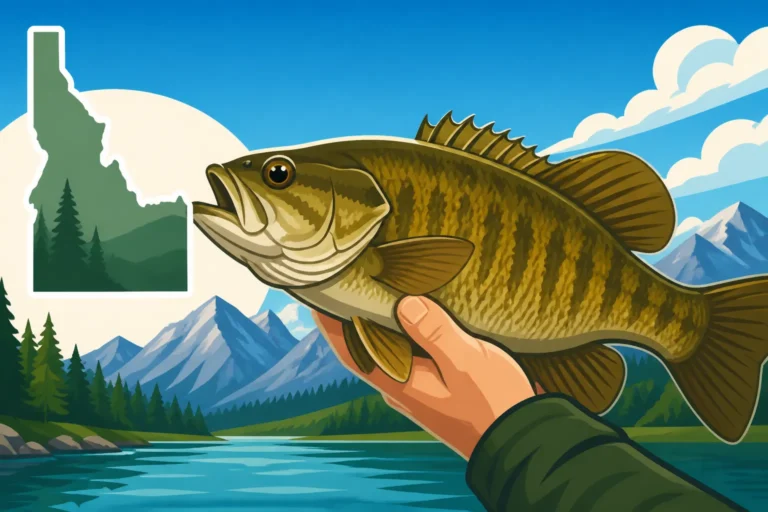
Kokanee are truly Idaho's little silver dynamite – feisty, beautiful, and a joy to catch on light tackle. These are landlocked sockeye salmon, meaning they complete their entire life cycle in freshwater, never migrating to the ocean. They are typically smaller fish, often ranging from 10 to 18 inches, though some Idaho waters can produce larger specimens depending on food availability and population density. Average Kokanee Size on Lake Coeur d'Alene This Year is a good example of how these sizes can vary. They are primarily planktivores, meaning their diet consists almost exclusively of zooplankton, tiny crustaceans floating in the water column.
Kokanee are schooling fish, often found in large aggregations, which makes them efficient feeders on plankton but also unfortunately makes them an attractive target for larger predators. Their silvery sides and bright red flesh when spawning make them a prized catch, and their delicate flavor is highly regarded. They have a relatively short lifespan, typically maturing and spawning after three to four years, and then they die. This fast life cycle means their populations can fluctuate quite dramatically year to year, influenced heavily by food supply, water conditions, and, as we'll dive into, predation. When fishing for them, anglers often use small dodgers and Wedding Rings, or specialized Kokanee rigs, trying to mimic their tiny prey.
The Chinook Salmon: Idaho's King of the Lakes
When most people think of Chinook salmon, they picture the mighty "King Salmon" of Alaskan rivers, battling currents to spawn. However, in several Idaho lakes, particularly some of the larger reservoirs, we have landlocked strains of Chinook salmon. These are fish that were introduced, often to provide a trophy fishery and to help manage other fish populations, including Kokanee. Why Chinook Salmon Were Introduced to Lake Coeur d'Alene is a perfect example of such a management decision. Unlike their ocean-going cousins, these landlocked Chinook don't migrate to saltwater. Instead, they thrive in the deep, cold waters of large lakes, growing to impressive sizes by feeding on smaller fish.
Landlocked Chinook are apex predators in these lake environments. They are known for their strength, powerful runs, and substantial size, often reaching weights that make them true trophy catches. Their diet, especially as they grow, shifts almost entirely to other fish, making them efficient piscivores. They are opportunistic feeders, preying on whatever is available, and in many Idaho lakes, that primary food source is the abundant Kokanee. These salmon are not only powerful swimmers but also possess keen eyesight and an aggressive feeding instinct, making them incredibly effective hunters in the open water columns where Kokanee typically reside.
How Chinook Salmon Exert Population Control on Kokanee
The relationship between Chinook salmon and Kokanee isn't one of peaceful coexistence; it's a classic predator-prey dynamic, often orchestrated by nature, but sometimes carefully managed by fisheries biologists. This interaction is the primary mechanism by which Chinook salmon control Kokanee numbers in shared waters.
Predator-Prey Dynamics in Action
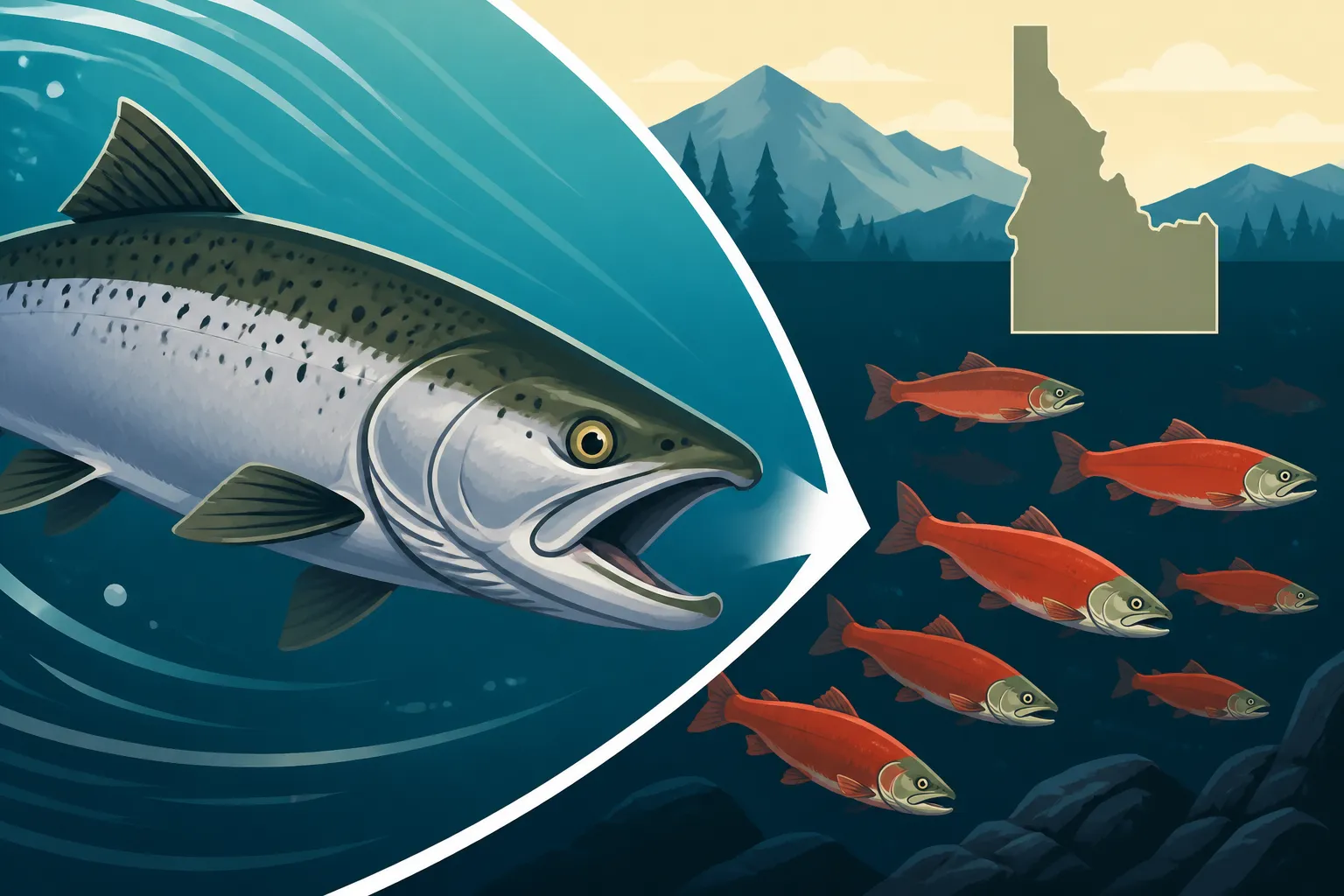
The most direct and significant way Chinook salmon control Kokanee populations is through pure predation. Imagine a school of hundreds or even thousands of Kokanee, silently cruising through the open water, filtering zooplankton. Suddenly, a flash of silver and a surge of power as a large Chinook salmon, perhaps several pounds heavier and many inches longer, darts into the school. It's a scene that plays out constantly beneath the surface of many Idaho lakes. Chinook are highly efficient hunters, equipped with powerful jaws and a drive to consume. A single large Chinook can eat numerous Kokanee in a day, and when you multiply that by dozens or hundreds of Chinook in a lake, the impact on the Kokanee population becomes clear.
The larger the Chinook, the more Kokanee it needs to sustain itself, and the more effective it becomes at hunting them. This isn't just about random encounters; Chinook often patrol areas where Kokanee are known to congregate, such as thermoclines or specific depths where plankton is abundant. The mere presence of these large predators can cause Kokanee schools to scatter, making them less efficient at feeding and potentially exposing them to other dangers. Over time, consistent predation by Chinook can significantly reduce the overall abundance of Kokanee, impacting their reproductive success and the number of fish surviving to spawn. This is a deliberate part of many fisheries management plans, using Chinook to prevent Kokanee from overpopulating and stunting, which can happen if their plankton food source becomes depleted.
Competition for Resources
While direct predation is the primary control, there can also be subtle forms of competition at play, especially at different life stages. Kokanee are specialized planktivores, relying heavily on zooplankton. Young Chinook salmon, especially shortly after stocking or hatching, might also feed on zooplankton or small aquatic insects. If Kokanee populations are severely reduced by predation, it could mean that the remaining Kokanee have a more abundant food supply of zooplankton, potentially leading to faster growth for the survivors.
However, the more impactful "competition" is often an indirect one. By reducing the overall biomass of Kokanee, Chinook essentially limit the total amount of zooplankton being consumed by Kokanee. This might sound counterintuitive, but it’s a form of top-down control in the food web. Fewer Kokanee mean more zooplankton available for other planktivorous species or even for the juvenile stages of other fish. But let's be clear: the fundamental control mechanism isn't Chinook fighting Kokanee over zooplankton. It's Chinook consuming Kokanee, thereby reducing the Kokanee's demand for zooplankton. This distinction is important for understanding the energy flow in the lake ecosystem.
Habitat and Behavioral Changes
The constant threat of predation from Chinook salmon can also lead to observable changes in Kokanee behavior and habitat utilization. Fish, like any prey animal, will seek to avoid predators. This often means Kokanee might spend more time in deeper, darker water where visibility is reduced, or in areas with more complex underwater structure that offers some refuge. While this might provide a modicum of safety, it can also come at a cost. These deeper or less optimal areas might have less abundant food sources, or temperatures that are less ideal for growth.
Consider a scenario where Kokanee typically feed actively in the upper water column during dawn and dusk. If Chinook are consistently hunting in these areas, the Kokanee might alter their feeding times, moving to times when Chinook are less active, or restricting their movements to shallower or deeper zones. These behavioral adjustments, while enhancing immediate survival, can impact the Kokanee's overall growth rate, condition, and even reproductive success over the long term. A Kokanee that is constantly stressed and unable to feed efficiently will be a smaller, less robust fish, and this can have cascading effects on the entire population's health and resilience.
The Role of Fisheries Management and Angler Impact
Managing a fishery is like tending a complex garden, constantly balancing the needs of different species and the desires of those who enjoy them. In Idaho, the presence of both Kokanee and Chinook salmon in the same waters presents a unique challenge and opportunity for fisheries biologists, and anglers play a crucial role in maintaining this delicate balance.
Balancing the Ecosystem Through Stocking and Harvest
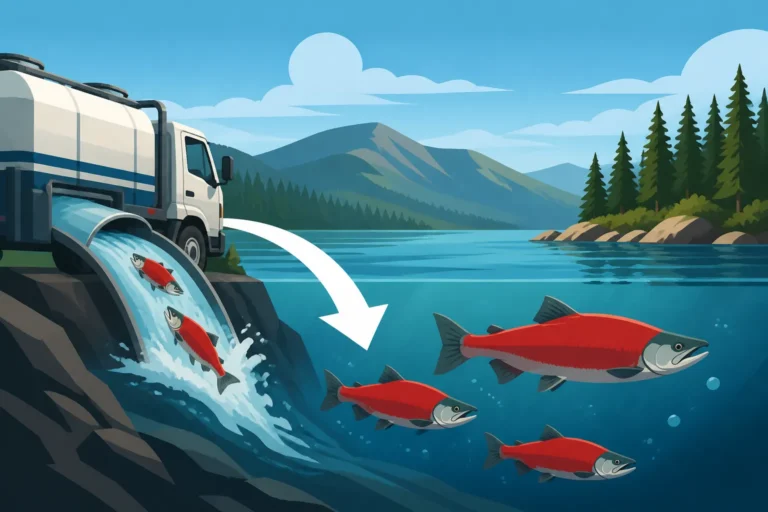
Idaho's fisheries managers, often from the Department of Fish and Game, don't just let nature take its course without intervention. Their goal is to create sustainable, healthy fisheries that provide ample opportunities for anglers while maintaining ecological integrity. When it comes to Chinook and Kokanee, this often involves strategic stocking and careful regulation of harvest limits.
For example, in lakes where Kokanee might be prone to overpopulation and stunting due to limited food resources, managers might introduce or continue stocking Chinook salmon. The Chinook act as a biological control, keeping the Kokanee numbers in check, which in turn allows the remaining Kokanee to grow larger and healthier. It's a calculated move to prevent a boom-and-bust cycle. Conversely, if Chinook populations grow too large and start to depress Kokanee numbers to an unhealthy degree, managers might increase the harvest limits for Chinook, encouraging anglers to remove more of these predators.
Similarly, Kokanee stocking might occur in waters where populations are naturally low or have been depleted. While some lakes might see Does Lake Coeur d'Alene Get Stocked with Kokanee? directly, it's often more about managing the predator to ensure the prey has a chance. These decisions are based on extensive research, fish counts, food web analysis, and angler feedback, all aimed at creating a vibrant and enjoyable fishing experience for everyone. This dynamic management ensures that neither species completely dominates the other and that anglers have a shot at catching both.
Angler's Part in the Balance
As anglers, we're not just passive participants; we're an active component of the fisheries management strategy. Every fish we catch, keep, or release has an impact. When Chinook salmon are stocked to control Kokanee, angler harvest of those Chinook becomes a vital part of the plan. By keeping legally caught Chinook, anglers help reduce the predator pressure on Kokanee, contributing directly to the health and abundance of the prey species. This is often why bag limits for Chinook in these lake environments can be relatively generous.
On the flip side, responsible angling for Kokanee is equally important. While it might seem counterintuitive to limit Kokanee catch if they're being predated, it's crucial to ensure enough Kokanee survive to reproduce and sustain the population against Chinook pressure. Understanding and adhering to Idaho's fishing regulations – including bag limits, size restrictions, and season dates – is not just about legality, it's about being a good steward of the resource. If you're out Fishing Lake Coeur d'Alene for Kokanee and Chinook, knowing the local rules for each species is paramount. Our collective actions, when aligned with management goals, help maintain the balance in these interconnected fisheries for future generations.
Real-World Example: Lake Coeur d'Alene
One of the best places to witness the intricate dance between Chinook salmon and Kokanee is Lake Coeur d'Alene. This stunning North Idaho lake provides a textbook example of how these species interact and how fisheries management strives to maintain a productive balance.
A Case Study in Management
Lake Coeur d'Alene is famous for its robust Kokanee fishery, which has historically been a huge draw for anglers. However, without a significant predator, Kokanee populations can sometimes explode, leading to fierce competition for their zooplankton food source. This can result in stunting, where many Kokanee grow slowly and remain small, which isn't ideal for anglers or the ecosystem's health.
To address this, Chinook salmon were introduced into Lake Coeur d'Alene. The idea was that these large, predatory salmon would feed on the abundant Kokanee, keeping their numbers in check and allowing the remaining Kokanee to grow larger. It was a successful strategy, creating a dual-species trophy fishery. Anglers could target large, hard-fighting Chinook, and also enjoy catching the plump, flavorful Kokanee that benefited from reduced competition.
However, it's not a set-it-and-forget-it situation. The populations are constantly monitored. Fisheries biologists use various methods, including gillnet surveys, creel surveys (talking to anglers at boat ramps), and studying Average Kokanee Size on Lake Coeur d'Alene This Year and Chinook growth rates. If Chinook predation gets too high, they might adjust Chinook stocking numbers or liberalize Chinook harvest limits. If Kokanee numbers dip too low, protective measures or supplemental stocking might be considered. It's a dynamic system requiring continuous attention to keep both species healthy and productive for anglers.
The Angler's Perspective
For the angler, this Chinook-Kokanee dynamic on Lake Coeur d'Alene (and similar lakes) means a diverse and exciting fishing experience, but one that often requires adaptation. If it's a year where Chinook numbers are high and active, you might find Kokanee schools are a bit more scattered or holding deeper, making them tougher to locate. Conversely, if Kokanee numbers are booming, it can be an incredible bite, but the average size might be smaller.
Understanding this relationship can influence your fishing strategy. For instance, if you're primarily after Kokanee, knowing that Chinook are present might prompt you to use your fish finder more diligently to locate tight schools, or to fish during periods when Chinook might be less active. If you're targeting Chinook, knowing they're keying in on Kokanee means using lures that imitate their prey – small spoons, plugs, or even dodger-and-hoochie rigs that mimic baitfish.
The balance also shifts throughout the seasons. In the spring, both fish might be actively feeding in shallower waters as the lake warms, while in the heat of summer, they'll often retreat to the cooler, deeper parts of the lake. Knowing these patterns, and how they relate to the predator-prey interaction, helps anglers make informed decisions, increasing their chances of success whether they're after the silver flash of a Kokanee or the powerful pull of a King Chinook. It’s a fascinating ecological chess game, and as anglers, we get a front-row seat to the action.
Chinook Salmon and Kokanee: A Comparative Look
Here's a quick comparison of some key characteristics of Idaho's landlocked Chinook salmon and Kokanee, highlighting their ecological roles.
| Feature | Kokanee Salmon | Chinook Salmon (Landlocked) |
|---|---|---|
| Scientific Name | Oncorhynchus nerka (landlocked Sockeye) | Oncorhynchus tshawytscha (landlocked King Salmon) |
| Typical Size | 10-18 inches, 0.5-2 lbs | 15-30+ inches, 3-20+ lbs (trophies much larger) |
| Primary Diet | Zooplankton (tiny crustaceans) | Primarily fish (piscivorous), especially Kokanee |
| Ecological Role | Primary consumer (planktivore), prey species | Apex predator, secondary consumer (piscivore) |
| Lifespan | 3-4 years, die after spawning | 3-5 years, die after spawning |
| Angling Method | Trolling with dodgers/squid, jigging | Trolling with spoons/plugs, still fishing with bait |
| Flesh Color | Bright orange-red | Pink to deep red |
| Reproduction | Spawns in freshwater streams or lake shoals | Spawns in freshwater streams or gravel beds in lakes |
| Management Purpose | Food source, sport fish, ecosystem balance | Sport fish, biological control for Kokanee |
This table clearly illustrates their distinct ecological niches, with Kokanee occupying the role of primary prey and Chinook acting as the dominant predator in the lacustrine environment.
The Broader Impact and Future of Idaho's Fisheries
The dynamic between Chinook salmon and Kokanee isn't just a biological curiosity; it has broader implications for the health of Idaho's aquatic ecosystems and the recreational opportunities available to anglers. Maintaining this balance is crucial for a thriving fishery into the future.
Ecosystem Health and Biodiversity
When Chinook salmon effectively manage Kokanee populations, it contributes to overall ecosystem health. Unchecked Kokanee numbers could lead to a severe depletion of zooplankton, impacting other species that rely on this food source at various life stages. By keeping Kokanee populations within sustainable limits, Chinook help prevent resource crashes and promote a more balanced food web. This also benefits other fish species that might compete for food or benefit from a stable prey base. A healthy predator-prey relationship is a hallmark of a resilient ecosystem, even if that relationship is, in part, facilitated by human management. It shows how interconnected every part of the aquatic environment truly is, from the smallest plankton to the largest salmon.
Sustaining Angling Traditions
Idaho's fishing traditions are deeply rooted, and targeting both Kokanee and Chinook salmon is a cherished activity for countless residents and visitors. From the specialized gear and techniques used for Kokanee to the sheer power required to land a trophy Chinook, both species offer unique and rewarding experiences. The thoughtful management of their interaction ensures that these opportunities continue for generations to come. Anglers eagerly anticipate when Idaho Salmon and Steelhead Permit seasons open, and the excitement around a thriving Chinook run or a hot Kokanee bite is palpable across the state. Without management, the boom-and-bust cycles could decimate either fishery, leading to lost traditions and economic impact on communities that rely on fishing tourism.
Adapting to Change
The future of these fisheries will undoubtedly involve continuous adaptation. Climate change, evolving land use, and new invasive species can all alter the delicate balance. Fisheries managers must remain vigilant, constantly monitoring populations, conducting research, and adjusting strategies. As anglers, our responsibility extends to staying informed about current regulations, providing feedback to wildlife agencies, and practicing ethical fishing techniques to support sustainable populations. The success of Idaho's Chinook and Kokanee fisheries is a testament to both the resilience of nature and the dedicated efforts of those who work to protect and enhance our precious aquatic resources. So next time you're out on an Idaho lake, whether you're chasing that silver flash or battling a lake king, take a moment to appreciate the intricate ecological dance playing out beneath your boat.
Disclaimer
This article is for general informational purposes only and does not constitute professional advice. Laws, prices and regulations vary by location and change over time. Consult a qualified professional for guidance on your specific situation.