How to Fish for Largemouth Bass in Small Ponds
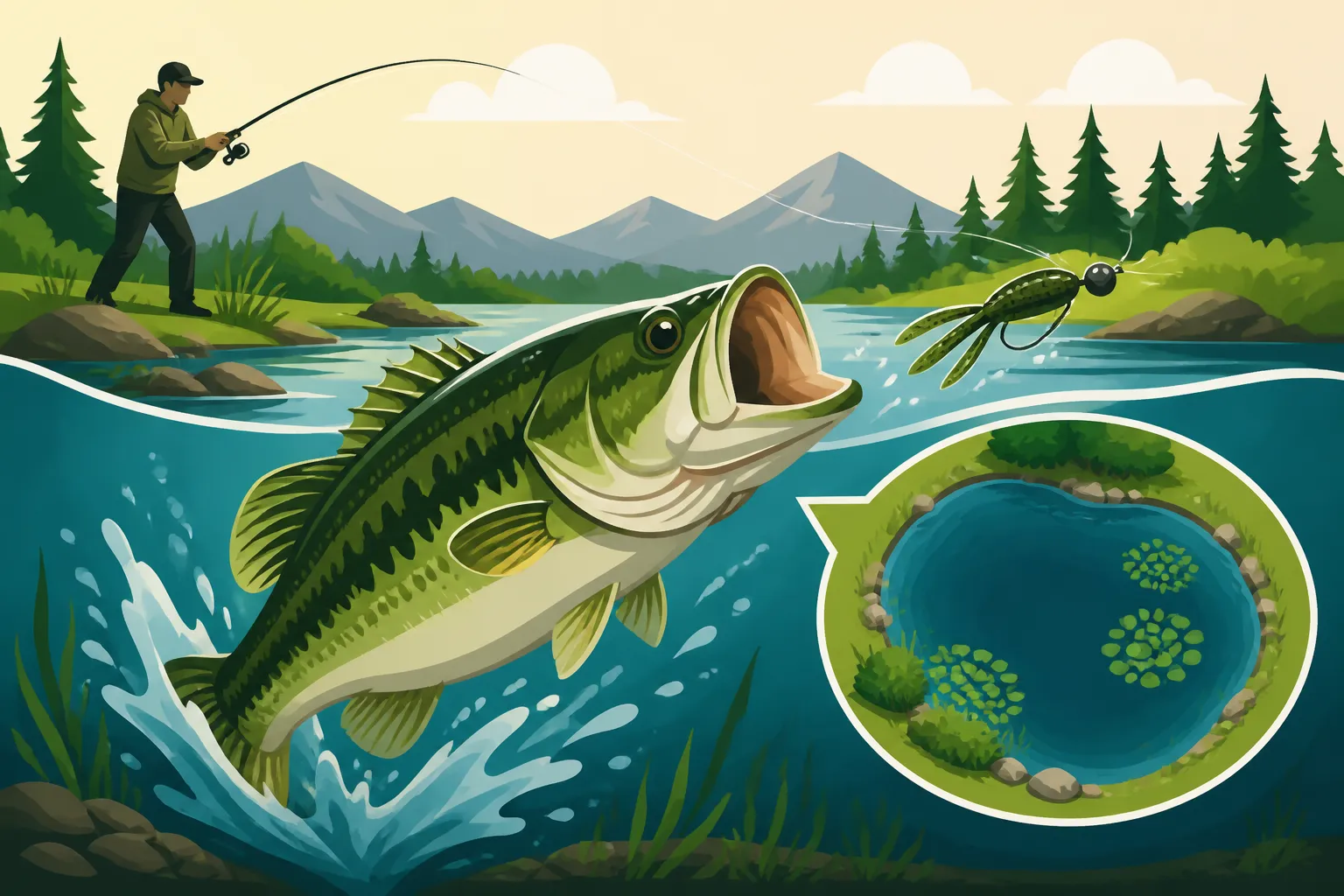
There's a special kind of frustration that hits us anglers when we feel like we've fished every major lake and river in Idaho, only to come up short on bass. We pour over maps, check stocking reports, and drive for hours, sometimes overlooking the hidden gems right under our noses: the countless small ponds scattered across the Gem State. If you're ready to unlock the secret world of chunky largemouth bass in these often-forgotten waters, you've come to the right place. This guide is all about simplifying your approach and showing you how to find and land those elusive pond dwellers.
Why Small Ponds Are Largemouth Bass Havens in Idaho
It's easy to get caught up in the allure of Idaho's massive reservoirs and renowned rivers. Places like Lake Coeur d'Alene or the Snake River command attention, but the truth is, some of the most consistent and exciting largemouth bass fishing can be found in water bodies you might drive past every day. These smaller, often more intimate, environments offer unique advantages that favor the angler who knows how to approach them.
The Underrated Advantage: Less Pressure, More Fish
Think about it: when everyone flocks to the big, well-known spots, those smaller, out-of-the-way ponds often see far less angling pressure. This isn't just a minor detail; it's a game-changer. Bass in heavily fished waters become "educated" – they learn what lures look suspicious, they get spooked by boat noise, and they become incredibly wary. In contrast, largemouth bass in a quiet farm pond, a suburban retention pond, or a smaller community lake haven't seen every trick in the book. They're often less cautious, more aggressive, and generally easier to entice. This means you might find bigger fish that have had more time to grow, or simply more active fish willing to strike. It’s a fantastic feeling to pull a hefty bass out of a pond that many others pass by, thinking it holds nothing but tiny panfish. If you want to refine your general strategy for various waters, checking out our comprehensive guide on Idaho Fishing Techniques Guide can provide a solid foundation.
Beyond the reduced pressure, small ponds are often ecological hotspots for bass. They tend to have abundant cover – lily pads, cattail reeds, fallen timber, docks, and submerged brush. This cover provides vital ambush points for bass, protecting them from predators and offering shade from the hot Idaho sun. Many small ponds also boast a rich ecosystem of baitfish, frogs, crawfish, and insects, providing a consistent food source that helps bass grow large and healthy.
Identifying Productive Pond Features
Not all small ponds are created equal, of course. To maximize your chances, you need to develop an eye for what makes a pond a good bass habitat. It's like being a detective, looking for clues that point to where the bass are hiding and feeding.
First and foremost, look for cover. Bass are ambush predators, and they love to hide and wait for prey. This could be anything from thick mats of lily pads, submerged logs, brush piles, or even artificial structures like old tires or concrete blocks that have found their way into the water. Reeds and cattails along the banks are also prime real estate, especially in shallower water. If you see a patch of weeds or structure, assume a bass is there, or at least nearby.
Next, consider depth changes. Even in a small pond, bass will seek out deeper water when the sun is high or when water temperatures fluctuate. A sharp drop-off, a creek channel winding through the pond, or simply a deeper hole can concentrate fish. Look for areas where a shallow flat suddenly gives way to deeper water; this transition zone is often a highway for bass moving between feeding grounds and resting areas. Inlets and outlets, even small ones, are also crucial. A little stream flowing into a pond brings in fresh oxygen and food, while an outlet can create current, attracting baitfish and, in turn, bass. Even a small culvert pipe can be a bass magnet. These features aren't just theoretical; they are observable in many community ponds around places like Boise, Meridian, or Nampa.
Essential Gear and Techniques for Pond Bass
You don't need a boatload of expensive gear to catch largemouth bass in small ponds. In fact, a minimalist approach often works best, allowing you to be mobile and adaptable. The key is to have versatile tackle that can handle various situations you'll encounter in these intimate settings.
Rods, Reels, and Line: Keeping It Simple and Effective
For pond largemouth, a medium-heavy power, fast-action casting rod, around 6'6" to 7' in length, is your best friend. This combination gives you enough backbone to pull a feisty bass out of cover, yet enough tip sensitivity to detect subtle bites. While baitcasters offer more control for heavy cover and accurate pitching, a good spinning rod and reel combo can be just as effective, especially for beginners or when throwing lighter lures. You can find excellent, affordable options for both on platforms like Amazon.
When it comes to line, you have a few choices, each with its advantages:
- Monofilament (Mono): Great all-around line. It has good knot strength, is easy to cast, and has some stretch, which can be forgiving when a bass makes a sudden run. Use 10-17 lb test.
- Fluorocarbon (Fluoro): Nearly invisible underwater, making it ideal for clear ponds or when bass are finicky. It's less stretchy than mono and more sensitive, but can be a bit stiffer. 10-15 lb test is usually sufficient.
- Braided Line (Braid): Excellent for heavy cover due to its incredible strength and no-stretch properties. You can really wrench a fish out of thick weeds with braid. Its visibility can be an issue in clear water, so many anglers tie a fluorocarbon leader (15-20 lb) to their braided main line (20-40 lb).
The choice often comes down to the density of the cover you're fishing. If you're punching through thick lily pads, braid is king. For more open water or sparse cover, mono or fluoro will serve you well. Our guide on Idaho Fishing Gear Guide by Season might offer additional insights into general tackle recommendations.
Top Lures and Baits for Pond Largemouth
The beauty of pond fishing is that bass often aren't super picky, especially with less pressure. Focus on versatile lures that mimic their natural prey and can be worked effectively around cover. Here's a breakdown of some go-to options:
- Soft Plastics: These are arguably the most versatile and effective pond bass lures.
- Plastic Worms (e.g., Senkos, ribbon-tail worms): Rig them Texas-style (weedless) with a small bullet weight for cover, or wacky-style (hooked through the middle) for a tantalizing, slow fall in open pockets.
- Creature Baits/Jigs with Trailers: These mimic crawfish or baitfish and are fantastic for pitching into dense cover or working slowly along the bottom. Pair them with a weedless jig head.
- You can buy a whole array of colors and shapes from Amazon to experiment with.
- Topwater Lures: Nothing beats the explosive strike of a bass on a topwater bait!
- Frogs: Essential for fishing over thick mats of vegetation. Walk them slowly over the pads, pausing at openings.
- Poppers/Walk-the-Dog baits: Great for open water or around sparse cover, especially during low-light conditions (dawn, dusk).
- Spinnerbaits and Chatterbaits: These flashy, vibrating lures are excellent search baits and can provoke reaction strikes. They're surprisingly weedless and can be retrieved through moderate cover. Use them to cover water quickly and find active fish.
- Jigs (Football, Flipping, Swim Jigs): Jigs are incredibly effective for working deeper water, heavy brush, or submerged timber. The key is to feel the bottom structure and impart subtle movements.
- Live Bait: Don't overlook the effectiveness of live bait, especially if you're introducing kids to fishing or just want to guarantee a bite. Nightcrawlers or small minnows suspended under a bobber can be irresistible to pond bass.
For a broader selection of effective lures, delve into our article on Best Bait and Lures for Idaho Fishing, which covers a wider range of species and situations.
| Lure Type | Best Use | Retrieval Style | Pros | Cons |
|---|---|---|---|---|
| Soft Plastics | Heavy cover, bottom fishing, finicky bass | Texas Rig: twitch & drag; Wacky Rig: slow fall | Highly versatile, weedless, natural look | Can be time-consuming to rig, easily lost |
| Topwater Frogs | Dense mats, lily pads | Walk-the-dog, short hops with pauses | Exciting strikes, weedless | Only effective over heavy cover, visible |
| Poppers/Walkers | Open water, low light, sparse cover | Pop & pause, continuous walk-the-dog | Explosive bites, covers water | Less effective in thick weeds |
| Spinnerbaits | Searching, moderate cover, windy conditions | Steady retrieve, stop-and-go | Covers water quickly, good vibration | Can get snagged in very thick cover |
| Jigs | Deeper water, heavy timber, crawfish imitation | Hop, drag, swim; subtle twitches | Excellent for big bass, various patterns | Can be prone to snags, requires feel |
Mastering Pond Bass Tactics: From Cast to Catch
Catching largemouth bass in small ponds isn't just about having the right gear; it's about understanding how bass behave in these environments and adapting your approach. A thoughtful cast and a patient retrieve often trump power fishing.
Strategic Casting and Presentation
Accuracy is paramount when pond fishing. Bass in small waters are often tightly associated with cover, and putting your lure right in their living room is key. Practice pitching and flipping your lures precisely into small openings in lily pads, under overhanging branches, or right next to a dock post. The quieter your lure lands, the better. A loud splash can spook wary fish.
Once your lure is in the strike zone, slow down. Bass in ponds are often less aggressive than their river counterparts due to fewer currents to contend with. Work soft plastics with long pauses, letting them slowly sink. When using a frog, let it sit for a few seconds after it lands before starting your retrieve. Many strikes happen on the pause. Experiment with retrieve speeds and actions until you find what the fish prefer on that particular day. Sometimes a subtle twitch is all it takes; other times, a more aggressive retrieve will trigger a reaction.
Seasonal Considerations for Small Pond Bass
Just like in larger bodies of water, bass behavior in small ponds is heavily influenced by the seasons. Understanding these patterns will help you predict where the fish will be and what they'll be willing to bite. You can learn more about this in our general Idaho Fishing Season Calendar.
- Spring: This is prime time! As water temperatures rise into the 50s and 60s Fahrenheit, bass move shallow for the pre-spawn and spawn. Look for them around emerging weeds, hard bottoms, and any available cover in 1-5 feet of water. Topwater lures, spinnerbaits, and Texas-rigged worms are excellent choices. This closely aligns with patterns described in our article on Spring Fishing in Idaho.
- Summer: When the Idaho summer sun gets intense and water temperatures climb into the 70s and 80s, bass seek refuge. They'll often move to the deepest parts of the pond or bury themselves in the densest, shadiest cover (thick lily pad mats, submerged timber). Early morning and late evening topwater action can be fantastic, but during the day, focus on working jigs or Texas-rigged plastics slowly into heavy cover. Night fishing can also be surprisingly productive. For a broader overview, check out Summer Fishing in Idaho.
- Fall: As water temperatures drop, bass go on a feeding frenzy, trying to pack on weight for winter. They become more active and will chase down bait. This is a great time for spinnerbaits, crankbaits, and even larger soft plastics. Look for them around weed edges, rocky points, and any remaining green vegetation. This period is a fantastic time to be out, much like the general advice in Fall Fishing in Idaho.
- Winter: Many small ponds in Idaho can freeze over, making open-water fishing impossible. However, in ponds that remain ice-free, bass will be lethargic and hold tight to deep cover. Focus on extremely slow presentations with jigs or small soft plastics fished directly on the bottom.
Reading the Water and Adjusting Your Approach
Being observant is one of the most crucial skills for pond fishing. Look for signs of life: a ripple from a foraging fish, jumping baitfish, dragonflies hovering over the water, or even a frog leaping from the bank. These are all clues that the ecosystem is active, and bass are likely nearby.
Don't be afraid to experiment. If one lure isn't producing, switch to another. If you're not getting bites on a fast retrieve, slow it down. Try different depths. Sometimes, moving just a few feet along the bank can put you on a whole new school of fish. Pay attention to what's working and try to replicate those conditions elsewhere in the pond. Bass fishing in small ponds is often about breaking down the water into manageable sections and systematically fishing each piece of cover and structure. A good resource for understanding species behavior across Idaho is our comprehensive Idaho Fish Species Guide.
Responsible Pond Fishing Practices
As anglers, we have a responsibility to protect the waters we fish, especially smaller, more vulnerable ecosystems like ponds. Our actions directly impact the health of the fish populations and the enjoyment of others.
Catch and Release for Healthy Populations
In many small ponds, largemouth bass populations can be quite isolated and sensitive to over-harvesting. Regularly removing large numbers of fish, especially the bigger, older breeders, can quickly diminish the quality of the fishing. While keeping a few for a meal now and then is often fine, practicing catch and release, especially for trophy-sized fish, helps maintain a healthy, self-sustaining fishery for years to come.
When practicing catch and release:
- Wet Your Hands: Always wet your hands before handling a bass to protect its slime coat, which is vital for disease prevention.
- Lip Grip Firmly: Use a lip grip to control the fish, keeping your fingers away from its gills.
- Minimize Air Time: Get a quick photo if you like, but return the fish to the water as quickly as possible.
- Revive If Necessary: If the fish seems sluggish, hold it gently in the water, facing into any current, until it swims away under its own power.
Responsible handling ensures that the fish you release has the best chance of survival, contributing to a vibrant bass population in that small pond.
Respecting Private Property and Public Access
Many of Idaho's small ponds are on private property, whether it's a farmer's irrigation pond or a pond in a private housing development. It is absolutely crucial to always ask for permission before fishing on private land. Trespassing can lead to legal trouble and gives anglers a bad reputation. A polite request, sometimes accompanied by an offer to share your catch or help with cleanup, can often open up incredible fishing opportunities.
For public ponds, whether managed by Idaho Fish and Game (IDFG) or local municipalities, always be a good steward of the land. Pack out all your trash, including discarded fishing line and bait containers. Avoid damaging vegetation or disturbing wildlife. Leave the area cleaner than you found it. This ensures that these public access points remain open and enjoyable for everyone. Remember to always be familiar with Idaho Fishing Regulations Explained for any water body you plan to fish, public or private. You'll often find excellent small pond opportunities listed in the IDFG's weekly fishing reports or through local community groups.
Disclaimer
The information provided in this guide is for general informational purposes only. Fishing regulations in Idaho can change, and specific rules may apply to individual waters. Always consult the latest Idaho Fish and Game regulations brochure before heading out to fish. The author and publisher are not responsible for any incidents, accidents, or regulatory violations incurred by readers.