Easiest Fish to Catch for Beginners
Starting a new hobby like fishing can feel incredibly overwhelming, can't it? You walk into a sporting goods store, and there are aisles of rods, reels, lures, and lines, each promising something different. Then you look at the regulations, and it feels like you need a law degree just to understand what you can and can't keep. Many new anglers get discouraged before they even cast a line because they don't know where to begin or what fish will offer them that crucial first taste of success. This guide is all about cutting through that confusion, focusing on the easiest fish to catch in Idaho, ensuring your first few trips are enjoyable, productive, and build confidence for many more adventures to come.
Stocked Rainbow Trout: Idaho's Friendly First Catch
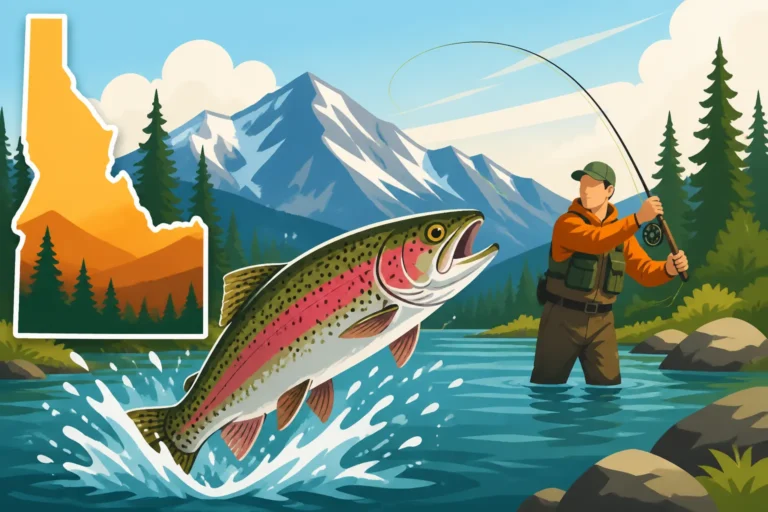
If you're dipping your toes into Idaho's incredible fishing scene, stocked rainbow trout are hands down your best bet for consistent action and that satisfying bend in your rod. These fish are literally put into various waters across the state by Idaho Fish and Game with the intention of being caught, making them incredibly cooperative targets for beginners. It's a fantastic way to experience the thrill of a bite without needing years of angling experience.
Why Stocked Rainbows Are Perfect for Beginners
Stocked rainbow trout are often quite hungry and less wary than their wild counterparts. They're typically raised in hatchery environments and are accustomed to being fed, which translates to a less selective bite once they're released into lakes and ponds. This means they're not too picky about what they eat, making them highly responsive to common, easy-to-use baits and lures. You won't need to spend hours perfecting a complicated cast or tying intricate knots; simple presentations usually do the trick. Plus, they're often found in easily accessible locations, which takes a lot of the guesswork out of finding them. This accessibility and eagerness make them the ultimate confidence-builder for anyone new to fishing.
Imagine heading out to a local pond, perhaps one near Boise, with just a basic rod and reel. You bait your hook with a piece of PowerBait, cast it out, and within minutes, your bobber dips, or you feel that distinctive tug. That immediate success is what hooks so many people on fishing, and stocked rainbows deliver it reliably. They're also a great size for beginners – big enough to feel like a real catch, but not so large that they're difficult to handle. It's truly a low-stress, high-reward fishing experience that proves you don't need fancy gear or deep knowledge to have a great time on the water.
Simple Techniques and Tackle for Rainbows
When it comes to catching stocked rainbow trout, simplicity is your friend. You don't need a tackle box overflowing with expensive gadgets. A basic spinning rod and reel combo, which you can easily find on Amazon or at any local sporting goods store, will work perfectly. For bait, think colorful and smelly. PowerBait in bright colors like chartreuse or rainbow, corn, or even a classic nightcrawler under a bobber are incredibly effective. These baits appeal to the trout's strong sense of smell and curiosity.
A common setup involves a small hook, a few split shot weights to get your bait down, and a bobber to indicate bites. Cast your bait out, let it sit, and watch that bobber like a hawk! Another easy technique is using small inline spinners or spoons, like a Panther Martin or a Kastmaster. Just cast them out and retrieve them at a steady pace. The flash and vibration mimic small prey, often triggering an aggressive strike from a hungry trout. Learning just these couple of techniques will give you plenty of success, and you can practice them in many Idaho Year-Round Fishing Waters.
Where to Find Stocked Rainbow Trout in Idaho
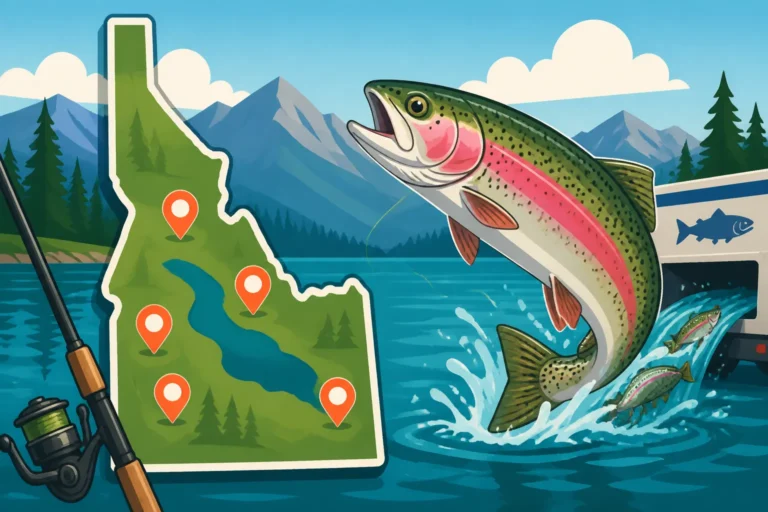
Idaho Fish and Game does an incredible job of regularly stocking hundreds of lakes, ponds, and even some river sections across the entire state. These stocking efforts are often aimed at creating family-friendly fishing opportunities in easily accessible locations, sometimes even within city limits. You'll find these spots designated specifically for high catch rates, usually with good shore access, making them ideal for beginners who might not have a boat.
For example, many smaller community ponds around cities like Boise, Nampa, Twin Falls, and Pocatello are frequently stocked. Larger reservoirs, especially in their shallower areas, also receive regular plant-outs. Checking the Idaho Fish and Game stocking reports is one of the best ways to pinpoint exactly where and when trout have been stocked recently. You'll often find these reports updated weekly, giving you fresh information on where the action is hot. These managed fisheries are designed for your success, making them a fantastic starting point for your Idaho fishing journey.
Panfish Galore: Yellow Perch, Crappie, and Bluegill
Beyond trout, the world of panfish offers another fantastic avenue for beginner anglers. "Panfish" is a general term referring to smaller, broad-bodied fish that are, quite literally, perfect for fitting into a frying pan. In Idaho, the most common and accessible panfish for beginners are yellow perch, crappie, and bluegill. These species are prolific, often found in large schools, and notoriously aggressive eaters, which translates to almost non-stop action on the right day.
The Abundance and Eagerness of Panfish
What makes panfish so appealing for beginners is their sheer numbers and their willingness to bite. When you find a school of perch, crappie, or bluegill, you can often catch fish after fish, sometimes on almost every cast. This rapid succession of bites keeps engagement high, preventing the boredom that can sometimes set in during slower fishing trips, especially for kids or those with short attention spans. They don't require super-sensitive bites or intricate presentations; a subtle movement or a flash of color is often enough to entice a strike.
Imagine a warm summer afternoon at a local reservoir like Lake Lowell near Nampa or a quiet cove on Lake Coeur d'Alene. You drop a small jig or a worm under a bobber near some submerged brush, and almost immediately, that bobber starts dancing. The excitement of reeling in a feisty perch or a colorful bluegill, knowing there are probably dozens more just like it, is incredibly satisfying. Panfish are also a great way to learn fish handling and removal techniques, as their smaller size makes them less intimidating than larger species, building your confidence in the process.
Gear and Methods for Panfish Success
Fishing for panfish requires very light tackle, which adds to the fun and makes even a small fish feel like a prize fight. A lightweight spinning rod and reel, perhaps a 5 to 6-foot ultralight or light action rod, is perfect. This setup allows for precise casts with small lures and provides an exciting fight. You'll want to use light line, typically 4 to 6-pound test, which is less visible to these sharp-eyed fish. Again, you can find great, affordable options for this type of gear on Amazon.
For baits, small pieces of nightcrawler, mealworms, or wax worms are panfish magnets. You can thread them onto a small hook (size 8 or 10) under a bobber, or try tipping a small jig with them. Jigs, especially those in bright colors like chartreuse, pink, or white, ranging from 1/32 to 1/16 ounce, are also incredibly effective. Just cast them out and give them a slow, jigging retrieve. Panfish often hang around structure like docks, submerged trees, weed beds, or rock piles, so casting near these features is a good strategy. Keep an eye out for areas that have good Idaho Waters You Can Fish Well from Shore access, as panfish are often close enough to the bank.
Top Idaho Waters for Panfish
Idaho boasts numerous lakes and reservoirs that are teeming with panfish, offering fantastic opportunities for beginners. Lake Coeur d'Alene is renowned for its yellow perch fishing, particularly in its shallower bays and around docks. You can often find great schools of them there, providing consistent action. Fishing Lake Coeur d'Alene for Kokanee and Chinook can be a bit more challenging, but the perch are usually more than willing. C.J. Strike Reservoir in southwestern Idaho is another panfish paradise, famous for its crappie and perch, especially around brushy coves and points.
Other great spots include Lake Lowell, where bluegill and crappie are plentiful, and Cascade Reservoir, known for its perch. Even smaller, unnamed farm ponds across the state can hold incredible populations of panfish. The key is to look for still or slow-moving water bodies with plenty of underwater structure for the fish to hide in. Many of these locations offer excellent public access, with boat ramps and designated fishing areas, making them easy to get to and start fishing without much fuss.
Agile and Accessible: Smallmouth Bass for Active Anglers
While perhaps not as universally "easy" as stocked trout or panfish, smallmouth bass offer a thrilling and accessible fishing experience for beginners looking for a more active approach. These feisty fish are known for their hard fights, acrobatic jumps, and willingness to strike at a variety of lures, providing an exciting challenge that's still well within a novice's grasp. Plus, they're incredibly common in many of Idaho's major rivers.
The Excitement of Smallmouth on Light Tackle
Smallmouth bass are pound-for-pound one of the hardest-fighting freshwater fish. Even a modest 12-inch smallmouth can feel like a monster on light spinning tackle, pulling hard and often leaping clear of the water. This aggressive nature means they're not shy about hitting lures, which is a huge bonus for beginners. You don't need to be an expert at detecting subtle bites; when a smallmouth hits, you'll know it! The visual thrill of seeing your rod bend and a fish battling on the end of your line is a huge part of the appeal.
Imagine you're casting a small crankbait or a soft plastic jig along the rocky banks of the Snake River. You feel a solid thump, set the hook, and suddenly your reel is screaming as a bass takes off, then breaks the surface in a splashy jump. That adrenaline rush is what makes smallmouth fishing so addictive. It's a great step up from panfish, offering a bit more of a challenge without requiring highly specialized techniques or gear. You're learning to "fish" rather than just "catch," understanding how to present a lure and retrieve it effectively.
Beginner-Friendly Bass Fishing Strategies
The beauty of smallmouth bass fishing for beginners is that many effective techniques are straightforward. They often relate to rocky structure, current breaks, and drop-offs in rivers and lakes. Small crankbaits, spinnerbaits, and soft plastic grubs or worms rigged on a jig head are all excellent starting points. You can find a huge variety of these lure types, often sold in beginner-friendly assortments, when browsing fishing gear on Amazon. The key is often to simply cast near likely looking structure and retrieve your lure steadily, varying your speed until you find what the fish prefer that day.
Another simple yet effective method is casting and retrieving a plain jig or a plastic worm rigged weightless. The trick is to let the lure sink and then work it back with subtle twitches and pauses, mimicking a crawfish or small baitfish. You'll quickly learn to feel the difference between your lure hitting a rock and a fish hitting your lure. This active style of fishing keeps you engaged and moving, exploring different parts of the water, which is a fantastic way to learn the nuances of reading a river or lake. Exploring areas like Fishing the Snake River for Smallmouth Bass and Sturgeon offers abundant opportunities to practice these skills.
Where Idaho's Smallmouth Bass Thrive
Smallmouth bass are particularly prevalent in Idaho's larger, rocky river systems and some of its reservoirs. The Snake River, from its eastern stretches to the Hell's Canyon area, is an absolute smallmouth paradise. You'll find them holding in eddy lines, behind large boulders, and along riprap banks. The Clearwater River, while famous for steelhead, also holds a healthy population of smallmouth bass in its warmer sections. Many of the larger reservoirs, especially those with rocky shorelines and ample submerged structure, also provide excellent smallmouth habitat.
Look for areas with current, clean water, and plenty of rocks or gravel. Smallmouth love to ambush prey from cover, so any structure, whether natural or man-made, is a potential hotspot. These fish are also often found in groups, so if you catch one, it's a good idea to thoroughly fish the immediate area, as there are likely more around. Many public access points along rivers and reservoirs offer great bank fishing opportunities for smallmouth, making them accessible even without a boat.
Catfish: The Low-Effort, High-Reward Option
For those who prioritize relaxation and consistency over casting constantly, catfish are an absolutely fantastic option for beginner anglers in Idaho. They are incredibly hardy, widely distributed, and often very willing to bite, especially in warmer months. The beauty of catfishing lies in its simplicity: cast out a bait, set your rod in a holder, and wait for that unmistakable, rod-bending bite.
Why Catfish are a Great Choice for Patience and Simplicity
Catfish are bottom feeders with an incredible sense of smell, which means you don't need to worry about complex lure presentations or perfect retrieves. Their strategy is often to cruise the bottom, sniffing out easy meals. This makes them highly susceptible to strong-smelling baits that can be left stationary on the bottom, allowing you to relax, enjoy the scenery, and chat with friends or family while you wait for a bite. It's the ultimate "set it and forget it" fishing style that still yields impressive results, sometimes even landing surprisingly large fish.
Imagine a peaceful evening by the Snake River or a quiet lake shore, a camping chair set up, and a few rods staked out with bells on their tips. The sun is setting, and suddenly, one of those bells starts ringing wildly as a catfish takes the bait. Reeling in a big channel cat or even a bullhead can be a genuinely exciting battle, and the anticipation built while waiting for that bite is part of the fun. Catfishing teaches patience and observation, essential skills for any angler, without the pressure of constant casting.
Baits and Rigs for Idaho Catfish
When it comes to catfish, forget the shiny lures; it's all about scent. Stinky baits are king! Chicken livers, cut bait (pieces of anchovy, sardine, or even another fish), shrimp, and commercial stink baits are all incredibly effective. You can easily stock up on these and other basic tackle items like circle hooks and sinkers on Amazon. Catfish don't care if your bait looks pretty; they just want it to smell delicious (to them, anyway).
A simple bottom rig is all you need. This typically involves a heavy sinker (like an egg sinker or a pyramid sinker) that slides freely on your main line, tied to a swivel. Below the swivel, you'll have a leader (about 12-18 inches of monofilament) with a stout hook (size 2 to 4/0, depending on the target catfish size). The sliding sinker allows the fish to pick up the bait without feeling the weight, which increases your chances of a solid hookset. Cast your rig out, let it sink to the bottom, tighten your line just enough to feel any subtle tugs, and wait. This setup is straightforward and highly effective for tempting catfish.
| Fish Species | Best For Beginner? | Typical Location (Idaho) | Simple Bait/Lure Options | Special Considerations |
|---|---|---|---|---|
| Stocked Rainbow Trout | Absolutely! | Community ponds, small lakes, reservoirs, some river sections | PowerBait, corn, nightcrawlers, small inline spinners, spoons | Regularly stocked, easy shore access, often less wary |
| Yellow Perch | Excellent | Lake Coeur d'Alene, C.J. Strike, Cascade, smaller lakes | Small pieces of worm, mealworms, wax worms, small jigs | Often found in schools, frequent bites, good for kids |
| Crappie | Excellent | C.J. Strike, Lake Lowell, reservoirs with structure | Small jigs, live minnows (where legal), pieces of worm | Structure-oriented (docks, brush), can be very prolific |
| Bluegill | Excellent | Most warm water lakes and ponds, slow river sections | Pieces of worm, crickets, small flies, small jigs | Highly abundant, aggressive, great for ultralight gear |
| Smallmouth Bass | Very Good | Snake River, Clearwater River, rocky reservoirs | Small crankbaits, spinnerbaits, soft plastic grubs/worms | More active fishing, strong fighters, found near rocks/current |
| Catfish | Very Good | Snake River, C.J. Strike, Brownlee Reservoir, slower rivers | Chicken liver, cut bait, shrimp, stink baits | Best fished on the bottom, relies on scent, can be large |
Prime Locations for Catfish in Idaho
Idaho has some fantastic catfishing opportunities, especially for species like channel catfish and bullheads. The mighty Snake River is a prime catfish destination throughout much of its length, particularly in slower-moving pools and backwaters. Reservoirs like C.J. Strike and Brownlee Reservoir are also renowned for their catfish populations, often yielding impressive numbers of channel cats. You might also find them in deeper sections of the Boise River or in various warm water sloughs and ponds.
When scouting for catfish, look for areas with muddy or sandy bottoms, often near deeper holes, submerged timber, or slow current. They tend to be more active during warmer months and often feed most aggressively from late evening through the night, making them a popular target for night fishing. Many public access points along rivers and reservoirs will offer suitable bank fishing spots where you can set up your gear and enjoy a relaxed, patient approach to fishing. Fishing for them can be a fun way to explore Idaho Fishing Spots Worth a Camping Trip.
Remember, regardless of which "easy" fish you choose to target first, the most important thing is to get out there and enjoy the experience. The fresh air, the natural beauty of Idaho, and the simple thrill of a tug on your line are what make fishing such a rewarding pastime. Don't be afraid to experiment, ask questions at your local tackle shop, and most importantly, have fun!
Disclaimer
This article is for general informational purposes only and does not constitute professional advice. Laws, prices and regulations vary by location and change over time. Consult a qualified professional for guidance on your specific situation.