How Kokanee Ended Up in Lake Coeur d’Alene
It's a question many anglers ponder while cruising the pristine waters of Lake Coeur d'Alene: how did those feisty, silvery Kokanee salmon, known for their thrilling fights and delicious meat, become such an integral part of this iconic Idaho fishery? The answer isn't that they just magically appeared one day. Instead, it's a fascinating tale of deliberate human intervention, ecological adaptation, and ongoing management efforts designed to enhance fishing opportunities in the Gem State. This guide will take you through the journey of how Kokanee made their home in Lake Coeur d'Alene, unraveling the history, the science, and the enduring legacy of these beloved fish.
The Kokanee Story: A Native's Journey to New Waters
Before we dive into the "how" of their arrival in Lake Coeur d'Alene, it's crucial to understand what Kokanee salmon are and where they naturally come from. These aren't just any fish; they're a unique and fascinating species with a compelling backstory.
Understanding Kokanee Salmon: Landlocked Sockeye
Kokanee salmon (Oncorhynchus nerka) are essentially landlocked sockeye salmon. Think of them as sockeye salmon that, over generations, lost their migratory urge to go to the ocean and instead completed their entire life cycle within freshwater lakes and rivers. This genetic divergence allowed them to thrive in deep, cold, oxygen-rich lakes, becoming an entirely freshwater species. They retain the vibrant red spawning colors of their ocean-going cousins, transforming from their silvery, spotted appearance to a brilliant crimson as their spawning season approaches.
Their natural range, before human intervention, was primarily in the Pacific Northwest, extending into British Columbia, Alaska, and parts of the northern U.S., including some native populations in Idaho's larger, deeper lakes that historically had sockeye runs. They are pelagic fish, meaning they live in the open water column of lakes, feeding primarily on zooplankton. This diet is a critical factor in their growth and the flavor profile that anglers often praise. Their specialized diet and habitat needs make them particularly sensitive to water quality and ecosystem changes, which is why their management is so closely observed. For more on these unique fish, check out our Difference Between Kokanee and Sockeye Salmon guide.
Why Introduce Non-Native Species? The Historical Context
The idea of introducing fish species from one body of water to another might seem strange or even irresponsible by today's ecological standards, but it was a widespread practice in the late 19th and early 20th centuries. Fisheries managers and even private citizens often sought to "improve" or "diversify" local fisheries. This was largely driven by a combination of factors: the desire to create new sport fishing opportunities, to provide a food source, or to fill an perceived "empty niche" in an existing ecosystem.
Many of Idaho's most popular sport fish, including several trout species like rainbow and brown trout, were introduced from other regions or even continents. The prevailing philosophy at the time was often one of augmentation and resource enhancement, with less emphasis placed on potential ecological disruptions that such introductions might cause. It was a period of trial and error, where fish were moved with the best of intentions, often leading to mixed results, but sometimes creating the beloved fisheries we know today. The goal was simple: provide more fish for more people to catch.
The Deliberate Introduction to Lake Coeur d'Alene
Lake Coeur d'Alene is a natural gem, but even its rich waters were seen as ripe for enhancement in the early days of fisheries management. The introduction of Kokanee was a strategic decision, aimed at capitalizing on the lake's ecological characteristics.
Early Stocking Efforts and Their Intentions
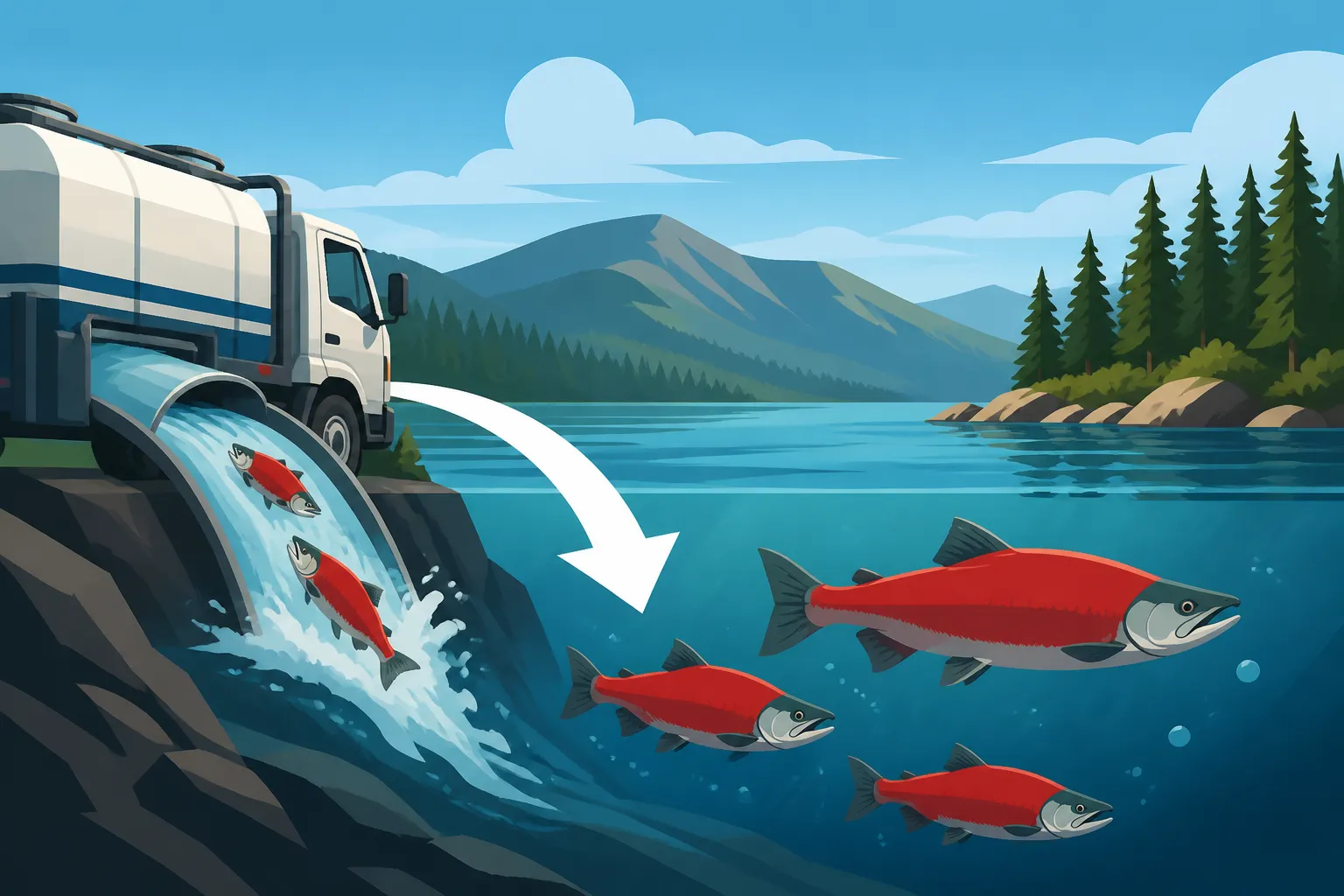
Kokanee salmon were first introduced to Lake Coeur d'Alene in the 1930s. The initial stocking efforts were undertaken by fisheries management agencies, likely with the Idaho Department of Fish and Game (IDFG) playing a significant role, or its predecessors. The lake was identified as an ideal candidate due to its depth, cold water, and ample zooplankton, which is the primary food source for Kokanee. These conditions mirrored the environments where Kokanee naturally thrived, leading managers to believe the introduction would be successful.
The aim was clear: establish a robust population of a new sport fish that could provide excellent angling opportunities. Anglers at the time were looking for more diverse fishing experiences, and Kokanee offered a unique challenge with their schooling behavior and vigorous fights. These early stockings essentially laid the groundwork for what would become one of Idaho's most popular fisheries. Imagine the excitement of those early anglers as they discovered this new, abundant fish populating the lake!
The Ecosystem Before Kokanee: What Was Already There?
Before Kokanee arrived, Lake Coeur d'Alene supported a variety of native fish species. The most prominent native game fish included the Westslope Cutthroat Trout and Bull Trout. Whitefish species were also abundant, and a diverse array of smaller forage fish and invertebrates formed the base of the food web. The lake was a functioning ecosystem, with predators and prey in a delicate balance.
The introduction of Kokanee introduced a new element into this established system. While the lake possessed ample zooplankton for Kokanee to feed on, their presence also meant potential competition with native species that might also rely on similar food sources at certain life stages. However, because Kokanee are primarily pelagic (open water) feeders, and native cutthroat and bull trout often occupy more nearshore or riverine habitats, the direct competition was perhaps less severe than with other types of introductions. The lake's vastness and depth provided the necessary spatial separation and resources for Kokanee to find their niche without immediately overwhelming the native populations.
Life After Introduction: Kokanee's Impact and Management
The introduction of Kokanee to Lake Coeur d'Alene was largely a success, leading to a flourishing fishery and becoming a cultural touchstone for many local anglers. But maintaining that success requires continuous effort and adaptation.
The Flourishing Fishery and Its Popularity
Once established, Kokanee absolutely thrived in Lake Coeur d'Alene. Their populations exploded, offering fantastic fishing for decades. They quickly became a favorite target for anglers, celebrated for their consistent action and the challenge of locating their schools in the vast open waters. The annual pilgrimage of anglers to catch these silver beauties became a tradition, with boats dotting the lake, especially during peak seasons.
The popularity of Kokanee fishing also had a significant economic impact on the surrounding communities, boosting tackle shops, guide services, and hospitality businesses. Many locals grew up with Kokanee fishing as a rite of passage, creating lasting memories on the water. Today, the fishery continues to draw anglers from all over, eager to experience the thrill of a Kokanee strike. If you're planning a trip, consider reading our Fishing Lake Coeur d'Alene for Kokanee and Chinook guide to get started. Finding the right gear is also key, and many anglers source their downriggers, specialized lures, and terminal tackle from reputable online retailers like Amazon, ensuring they have everything they need for a successful day.
Managing the Kokanee Population in a Changing Lake
Even successful introductions require ongoing management, and Lake Coeur d'Alene's Kokanee are no exception. For many years, the Kokanee population was self-sustaining, naturally reproducing in the lake's tributaries. However, like any ecosystem, Lake Coeur d'Alene is dynamic, and challenges arose. Over time, environmental factors, predation, and competition led to fluctuations in Kokanee numbers. This led to periods where supplemental stocking became necessary to maintain a healthy and robust fishery. You might wonder, Does Lake Coeur d'Alene Get Stocked with Kokanee? The answer often depends on current population trends and management goals.
One of the most significant management interventions came with the introduction of Chinook salmon to Lake Coeur d'Alene in the 1980s. Chinook were introduced, in part, as a biological control to help manage the abundant Kokanee population. While Kokanee are a popular target, too many small Kokanee can lead to stunted growth due to limited food resources. Chinook, being apex predators, feed heavily on Kokanee, thereby thinning their numbers and theoretically allowing the remaining Kokanee to grow larger. This complex predator-prey relationship means that managing one species directly impacts the other, requiring careful balancing acts by fisheries biologists.
How Anglers Can Best Experience Lake Coeur d'Alene Kokanee
For those looking to experience the thrill of catching Kokanee in Lake Coeur d'Alene, understanding their behavior and preferred techniques is crucial. Kokanee are pelagic, schooling fish, meaning they live in the open water and often hang out in large groups. This makes trolling a highly effective method. Anglers typically use downriggers to get small lures or bait, often tipped with corn, down to the depths where Kokanee are feeding. Popular lures include small hoochies, wedding rings, and mini-squids, often in bright colors like pink, orange, or chartreuse.
Knowing the right depth is paramount, as Kokanee will follow their food source, the zooplankton, which moves up and down the water column throughout the day and across seasons. A good fish finder can be an invaluable tool for locating schools and determining their feeding depth. Many guides and experienced anglers swear by specific types of dodgers or flashers to attract Kokanee to their offerings. For a deeper dive into techniques and gear, explore our Idaho Kokanee Fishing Guide or Best Lures for Idaho Kokanee Fishing. You can find a vast selection of these specialized kokanee lures and tackle on platforms like Amazon, making it easy to prepare for your next outing.
| Aspect | Kokanee Salmon in Lake Coeur d'Alene | Pre-Introduction Ecosystem |
|---|---|---|
| Origin | Introduced (from other regions) | Native fish (Cutthroat, Bull Trout, Whitefish) |
| Introduction Time | First stocked in the 1930s | Indigenous populations since time immemorial |
| Primary Diet | Zooplankton (open water) | Diverse, insect larvae, smaller fish, riverine forage |
| Habitat Focus | Pelagic (open lake water) | Nearshore, riverine, bottom structure |
| Management Goal | Sport fishery enhancement, predator-prey balance | Native species conservation, ecosystem health |
| Current Status | Sustained by natural reproduction and stocking efforts, influenced by Chinook salmon | Still present, but face competition and habitat changes |
The Broader Picture: Lessons Learned from Introductions
The story of Kokanee in Lake Coeur d'Alene isn't just about one fish; it's a microcosm of broader trends in fisheries management and ecological understanding. What started as an effort to improve fishing has evolved into a complex balancing act.
Ecological Considerations and Long-Term Effects
While the Kokanee introduction created a beloved fishery, it also highlights the intricate web of ecological relationships that must be considered. Any introduction of a non-native species, no matter how well-intentioned, can have ripple effects throughout the ecosystem. For Kokanee, these effects included potential competition with native species for food resources, and eventually, the need to introduce another predator, the Chinook salmon, to manage the Kokanee population itself.
Fisheries biologists continually study these interactions, monitoring population health, growth rates, and reproductive success of all species in the lake. The goal is to maintain a healthy, balanced ecosystem that supports both native fish populations and sustainable sport fisheries. It's a testament to the idea that nature is always finding its own way, even when humans try to steer it. Understanding these dynamics is crucial for long-term health, and you can find many academic texts and field guides on aquatic ecology on Amazon that delve deeper into these complex topics.
The Evolving Role of Fishery Management
The journey of Kokanee in Lake Coeur d'Alene is a prime example of how fisheries management has evolved over time. Early efforts were often focused simply on putting more fish in the water. Today, the approach is much more holistic, considering the entire ecosystem, the intricate food web, and the potential impacts on native species. Modern management involves rigorous scientific study, public input, and adaptive strategies that can change as the lake's conditions and fish populations shift.
This means that regulations around catch limits, seasons, and even specific gear might change from year to year, all with the aim of ensuring the long-term health and sustainability of the fishery. Anglers play a crucial role in this process by adhering to regulations, practicing responsible angling, and providing valuable feedback to management agencies. The story of Kokanee in Lake Coeur d'Alene is a continuous narrative, reflecting our ongoing efforts to understand, manage, and appreciate the incredible aquatic resources Idaho has to offer.
Disclaimer
This article is for general informational purposes only and does not constitute professional advice. Laws, prices and regulations vary by location and change over time. Consult a qualified professional for guidance on your specific situation.