How to Tell a Brown Trout from a Rainbow Trout
It’s a tale as old as time on Idaho’s rivers and lakes: you hook into a beautiful trout, and for a split second, you’re not entirely sure if it’s a brown or a rainbow. This common dilemma plagues even seasoned anglers, especially when fish coloration can vary wildly based on habitat, diet, and even age. This comprehensive guide will arm you with the distinct visual cues and behavioral insights needed to confidently tell a brown trout from a rainbow trout, ensuring you’re always in the know about your catch and adhering to local regulations.
The Basics: Why the Confusion Exists
Believe me, you're not alone in sometimes scratching your head over a trout's identity. The initial confusion between brown trout and rainbow trout is incredibly common, and for good reason. These two magnificent species, while distinct, share enough commonalities in their appearance and preferred hangouts to make a quick identification tricky without knowing what specific features to scrutinize.
Shared Habitats and Similar Shapes
One of the primary reasons for the mix-up is that brown trout and rainbow trout often coexist in the same waters across Idaho. You might be fishing a picturesque stretch of the South Fork of the Snake River and pull out both a rainbow and a brown from seemingly identical pools. Their general torpedo-shaped bodies, streamlined for life in moving water, can look quite similar at first glance. They both have fins in roughly the same places, and both can grow to impressive sizes, making initial comparisons based purely on silhouette quite challenging. Imagine yourself wading into a prime trout stream near Sun Valley; you cast into a riffle and feel that telltale tug. As you bring the fish closer, your mind races. Is it a flashy rainbow or a more subtly colored brown? This immediate uncertainty is a testament to their shared aquatic real estate and similar evolutionary designs. It’s not until you get a closer look that the subtle differences begin to emerge.
Hatchery vs. Wild Appearance Variations
Adding another layer to the identification challenge is the difference between hatchery-raised fish and their wild counterparts. Idaho, like many states, stocks various waters with trout, primarily rainbows, to enhance fishing opportunities. These hatchery fish, often raised in crowded raceways and fed a consistent diet, can sometimes have less vibrant coloration or slightly blunter fins compared to wild trout that have to fend for themselves in natural environments. A hatchery rainbow might lack the brilliant, vibrant stripe of a wild one, or its spots might appear less defined. Similarly, a brown trout that has spent its life in a pristine, cold mountain stream might display much more vivid red spots and a richer golden hue than a brown living in a warmer, slower moving agricultural canal. These environmental factors and genetic influences mean that no two trout, even of the same species, will look exactly alike. It’s a spectrum of appearances, making a universal "this is always what a brown trout looks like" statement difficult. This variability is why focusing on multiple key identifiers, rather than just one, becomes crucial for accurate identification. Sometimes, even the "experts" have to pause and double-check, especially if they're used to seeing fish from a particular river or lake.
Key Visual Identifiers: What to Look For
When you've got a trout in hand, or even just within good sight, there are specific visual cues that act as clear giveaways for whether it’s a brown or a rainbow. Think of it like a checklist – the more boxes you can tick for one species, the more confident you can be in your identification. These are the details that separate the two, often quite distinctly.
Spot Patterns and Coloration
This is often the first place experienced anglers look, and it provides some of the most reliable clues.
Brown Trout: Distinctive Spotting and Earthy Tones
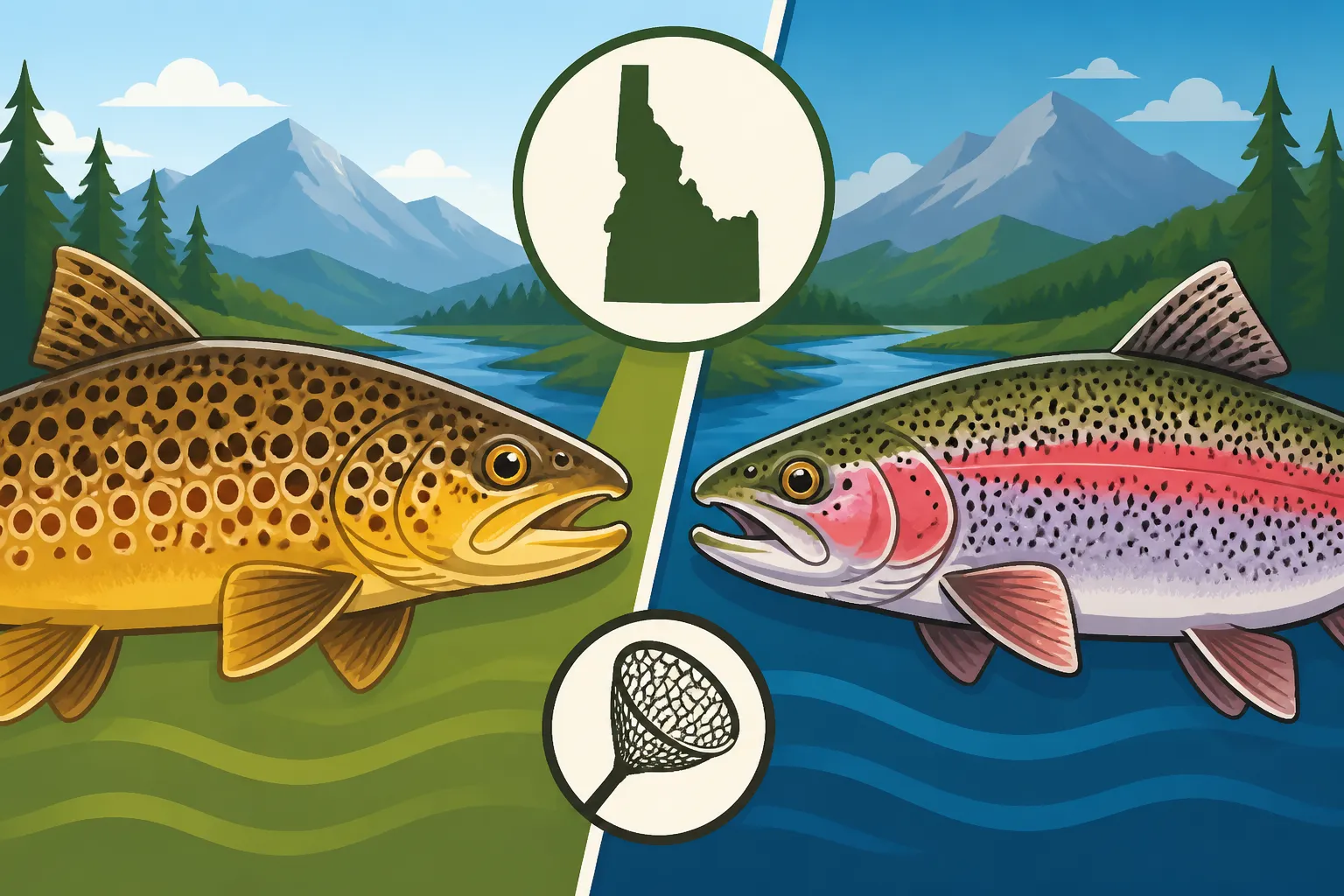
Brown trout, true to their name, generally boast an earthy palette. Their bodies are typically shades of brownish-gold, olive-brown, or sometimes even a darker, almost bronzy hue on their backs, fading into a creamy or yellowish belly. What truly sets them apart, however, are their spots. Brown trout display a mix of dark spots—black or dark brown—that often have distinct light halos around them, almost like tiny eclipses. Interspersed among these dark spots, particularly along their lateral line and sides, you'll frequently find reddish or orange spots, sometimes quite vibrant, which often lack the halo effect. These spots tend to be larger and more scattered than those on a rainbow. Imagine a mosaic of dark and rusty red on a canvas of gold – that's a classic brown. A prime example would be a chunky brown trout from the Henry's Fork, often sporting these deep, rich colors and defined spots, a testament to their healthy environment.
Rainbow Trout: The Iridescent Stripe and Solid Spots
Rainbow trout, on the other hand, typically present a more silvery-green to olive-green body color. Their backs might be a darker olive or blue-green, gradually lightening to a silvery-white belly. The most iconic feature, and the one that gives them their name, is the iridescent pink or red band (the "rainbow stripe") that runs horizontally along their lateral line from gill plate to tail. This stripe can be incredibly vibrant and prominent, especially on larger, wilder fish caught from cold, clear rivers like the Clearwater River or the South Fork of the Snake. While not all rainbows display a brilliant stripe—some hatchery fish or those from less ideal conditions might have a fainter one—it’s usually present to some degree. Their spots are also a key differentiator: rainbow trout have numerous, smaller black spots. These spots are typically solid, without the halos seen on browns, and are more uniformly distributed over their back, sides, and even their tails and dorsal fin. It looks almost like a peppering of fine dots rather than the bolder splotches of a brown.
Tail and Mouth Differences
Beyond the spots and colors, the shape and features of a trout's tail and mouth offer additional, often undeniable, clues.
Brown Trout: Square Tail and Large Mouth
The tail of a brown trout is typically square or only very slightly forked. It often has some spotting, but generally not as heavily covered in spots as a rainbow's tail. Turn your attention to its mouth, and you'll notice a distinct difference. Brown trout generally have a larger mouth that extends quite far back, often past the rear edge of the eye. In older, mature male brown trout, especially during spawning season, you might even observe a prominent hooked jaw, known as a "kype." This powerful mouth is indicative of their more predatory nature. When you're trying to land one of these, you'll certainly appreciate the strength behind that jaw.
Rainbow Trout: Forked Tail and Smaller Mouth
Rainbow trout possess a noticeably more forked tail, and it’s almost always heavily spotted. The spots on the tail are usually consistent with the smaller, more numerous black spots found on their body. Their mouth, in contrast to a brown’s, is generally smaller. It usually does not extend beyond the rear edge of the eye. While male rainbows can develop a slight kype, it’s typically less pronounced than what you’d see on a large male brown. These subtle yet consistent differences in their caudal fin and oral structure are excellent secondary identifiers.
Fin Coloration and Markings
The fins might seem like minor details, but they can be surprisingly helpful.
Brown Trout: Matching Fins with Subtle Spots
For brown trout, their fins tend to blend in with their overall body coloration. They often mirror the olive-brown or yellowish tones of the body and may feature subtle, sparse spotting. There isn't usually a stark contrast in color or any distinctive leading edges on their fins. Think of a natural camouflage; their fins are part of the overall earthy appearance.
Rainbow Trout: The White Fin Edge
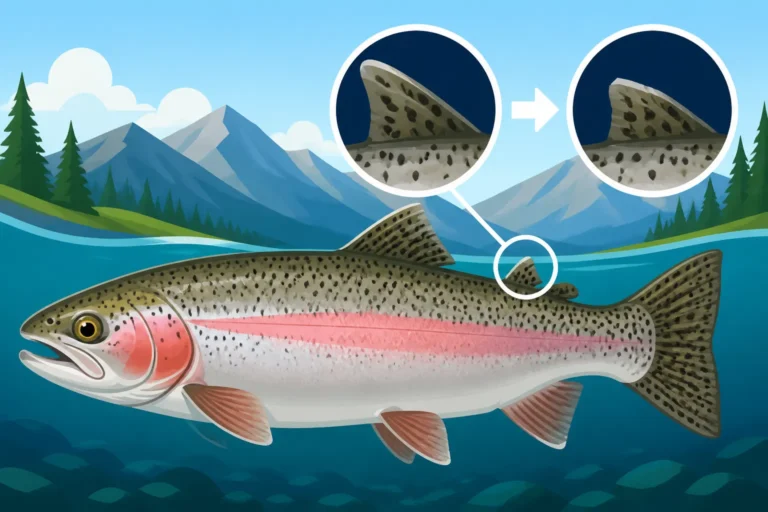
This is a fantastic, often overlooked, identifier for rainbow trout. Many rainbow trout, particularly the wilder specimens, will display a distinct white or light-colored leading edge on their dorsal fin, anal fin, and sometimes their pelvic fins. This bright margin creates a noticeable contrast against the darker fin membrane and the rest of their body. If you see that crisp white edge, it's a very strong indicator you've got a rainbow. This feature can be quite striking and is one of the most reliable visual cues, especially when other colorations might be ambiguous due to water conditions or lighting.
Here's a quick comparison table to help you keep these distinctions straight:
| Feature | Brown Trout | Rainbow Trout |
|---|---|---|
| Body Color | Brown, gold, olive, bronze; yellowish belly | Silvery-green, olive-green; silvery-white belly |
| Lateral Stripe | Absent | Iridescent pink/red band (the "rainbow") |
| Spots | Larger, sparse dark spots with light halos; red/orange spots often present | Numerous, smaller solid black spots (no halos) |
| Tail Shape | Square or slightly forked; sometimes spotted | Noticeably more forked; heavily spotted |
| Mouth Size | Larger, extends past eye; kype in males | Smaller, usually doesn't extend past eye |
| Fin Edges | Generally blend with body color, subtle spots | Often distinct white leading edge on dorsal, anal, pelvic fins |
Behavioral Cues and Habitat Preferences (Subtler Clues)
While visual identification is your primary tool, understanding the typical behaviors and preferred habitats of brown and rainbow trout can offer valuable supplementary clues. These aren't foolproof, as individual fish can deviate, but they often align with what you're seeing on the end of your line.
Feeding Habits and Diets
Different appetites often lead these two species to different areas, or at least different times of activity. Knowing this can help you predict which fish you're likely to encounter.
Brown Trout: The Predatory Night Hunter
Brown trout are renowned for their more predatory nature. As they grow, their diet shifts significantly from insects to larger prey, including crayfish, sculpins, and even smaller fish. This means they often favor lies where they can ambush their meals. Larger brown trout are also famous for being nocturnal feeders, especially during warmer months. If you're fishing a deep pool with heavy cover near dusk or even after dark, casting a streamer or a larger bait, and you hook into something strong and sluggish that stays deep, there's a good chance it's a brown. They are excellent at hiding under undercut banks or submerged logs, patiently waiting for an unsuspecting meal to drift by. You might find specialized large streamers or heavy-duty minnow imitations for targeting these bigger browns on Amazon.
Rainbow Trout: Active Insect Eaters
Rainbow trout, particularly those under 20 inches, are typically more insectivorous. They actively feed on a wide variety of aquatic insects (nymphs, emergers, adults), as well as terrestrial insects that fall into the water. They are often more aggressive surface feeders and will readily rise to a well-presented dry fly during a hatch. While they will certainly eat small fish, their primary focus is usually on the invertebrate buffet. If you're fishing a riffle or a fast-moving run in the middle of the day and you're getting consistent hits on a smaller nymph or a dry fly, it's frequently a rainbow. They tend to be more active throughout the day, constantly looking for opportunities to feed in oxygen-rich waters.
Preferred Water Conditions and Hiding Spots
Where you find a fish can tell you a lot about what kind of fish it is. Both browns and rainbows have their preferred "neighborhoods."
Brown Trout: Structure-Oriented and Temperature Tolerant
Brown trout are masters of structure. They love cover – think deep, dark pools, complex log jams, root wads, and especially undercut banks. These spots offer both protection from predators and excellent ambush points for prey. They are generally more tolerant of warmer water temperatures than rainbows, which means you might find them active in sections of rivers or lakes that are a bit too warm for rainbows to thrive during the height of summer. This tolerance allows them to occupy a broader range of habitats, including some of Idaho's lower-elevation, slower-moving streams that might warm up considerably. They tend to be more solitary and territorial, often holding in prime spots and defending them. Reading Water on Idaho's Rivers can give you a deeper understanding of where these fish might be hiding.
Rainbow Trout: Cold, Fast Water Lovers
Rainbow trout, by contrast, generally prefer colder, cleaner, and faster-flowing water with high oxygen content. They are often found in riffles, runs, and the heads of pools where the current is moving briskly, bringing food directly to them. While larger rainbows will also seek out deeper lies and cover, their overall preference leans towards more aerobic environments. If you’re fishing a high-country lake in the Sawtooths, known for its icy cold, clear water, the chances are high you’ll primarily be catching rainbows. Their metabolism is geared for these conditions, making them more energetic and often more willing to chase a lure or fly in a strong current.
How Their Fight Differs
When you hook a fish, how it fights can sometimes be a final, subtle clue to its identity, assuming you’ve had experience with both species.
Brown Trout: The Deep, Dogged Fighter
Brown trout are known for their powerful, deep fights. When hooked, they tend to hug the bottom, making strong, determined runs, and often trying to dive for cover such as submerged logs or rocks. They are excellent at using the current to their advantage, turning their broad sides to the flow and making themselves incredibly difficult to reel in. They don't typically jump as frequently or as dramatically as rainbows, preferring to stay in the water and slug it out. It's a heavy, head-shaking fight that tests your tackle and your patience.
Rainbow Trout: The Acrobatic Jumper
Rainbow trout, on the other hand, are famous for their acrobatic displays. When hooked, especially in rivers, they often respond with explosive, high-leaping jumps and blistering, fast runs. They are incredibly energetic and will use the entire water column to try and throw the hook, making for a thrilling and often chaotic battle. Their fighting style is why many anglers consider them such a fun catch. If your rod is bending like crazy and your reel is screaming as a fish rockets into the air, it’s highly probable you’ve got a rainbow on the line.
Why Accurate Identification Matters
Understanding the difference between a brown trout and a rainbow trout isn't just about showing off your fish knowledge. It has practical implications that can greatly enhance your fishing experience and ensure you're fishing responsibly within Idaho's diverse aquatic ecosystems.
Following Idaho's Fishing Regulations
This is, without a doubt, the most critical reason for accurate identification. Idaho's fishing regulations are complex and often vary not just by water body, but also by fish species. You might find a river where the daily bag limit for rainbow trout is significantly different from that of brown trout, or where certain size restrictions apply only to one species. For example, some stretches of water might be catch-and-release only for specific trout, while others allow harvest. Imagine you're fishing a popular trout stream and you're unknowingly keeping brown trout when the regulations stipulate a lower limit for them compared to rainbows. Without proper identification, you could inadvertently violate fishing laws, which could lead to fines or loss of fishing privileges. Always consult the current Idaho Fishing Regulations Explained brochure or website before you head out, and pay close attention to the species-specific rules. The Idaho Catch Limits and Bag Limits Explained will provide even more detail on this. A quick check of your regulations, perhaps even marked up in a waterproof fishing notebook from Amazon, can save you a lot of headache.
Conservation and Species Management
Beyond legal compliance, accurate identification plays a vital role in conservation and effective fisheries management. When anglers can correctly identify their catch, it contributes to more accurate data collection. State wildlife agencies, like Idaho Fish and Game, rely on angler reports and creel surveys to understand fish populations, health, and distribution. If everyone is misidentifying fish, the data becomes skewed, making it harder for biologists to make informed decisions about stocking programs, habitat restoration, and future regulation changes. For instance, knowing the health and numbers of Idaho Brown Trout Fishing versus Idaho Rainbow Trout Fishing Guide populations in a given area helps biologists understand ecological balances and address any potential issues. Your ability to distinguish between these species contributes directly to the long-term sustainability of Idaho's incredible fisheries.
Enhancing Your Angling Experience
Finally, knowing your trout truly elevates your entire fishing experience. When you can confidently identify what you're catching, you start to understand the nuances of the water you're fishing, the effectiveness of your techniques, and the habits of the fish you're targeting. Are you consistently catching rainbows in that fast riffle? Great! You know that small nymphs and dry flies are likely to be effective there. Are you pulling big brown trout out of those deep, dark pools? Time to try larger streamers or even switch to night fishing for an even bigger trophy. This knowledge allows you to refine your approach, choose the Best Lures for Idaho Trout Fishing more effectively, and become a more skilled and successful angler. It turns fishing from a simple catch-and-release activity into a fascinating intellectual pursuit. For instance, if you're trying to How to Fly Fish Henry's Fork, knowing which species you're most likely to encounter in different sections of that famous river will significantly improve your chances of success with the right fly choice and presentation. Understanding the subtle behaviors and preferences of each species makes every outing a richer, more rewarding adventure. You can even find specialized field guides on Amazon to further your knowledge of Idaho Fish Species Guide before your next trip to one of Idaho's Most Popular Fishing Destinations.
Disclaimer
This article is for general informational purposes only and does not constitute professional advice. Laws, prices and regulations vary by location and change over time. Consult a qualified professional for guidance on your specific situation.