Idaho Tiger Muskie Fishing
There’s something uniquely thrilling about chasing a truly massive, predatory fish, and in Idaho, that often means setting your sights on the tiger muskie. If you've ever heard whispers of these striped giants lurking in the depths and felt that undeniable tug of curiosity, you're not alone. Many anglers feel intimidated by the reputation of muskie fishing, but this guide is here to demystify the process, helping you understand this formidable species and how to successfully target them in the Gem State, particularly in their primary Idaho stronghold.
Understanding Idaho's Elusive Tiger Muskie
The tiger muskie holds a special, almost mythical place in the hearts of anglers who pursue them. They're not just big fish; they're intelligent, elusive, and notorious for their explosive strikes and formidable fights. For those new to their pursuit, it's essential to understand what makes these fish so unique, especially in Idaho.
What Exactly is a Tiger Muskie?
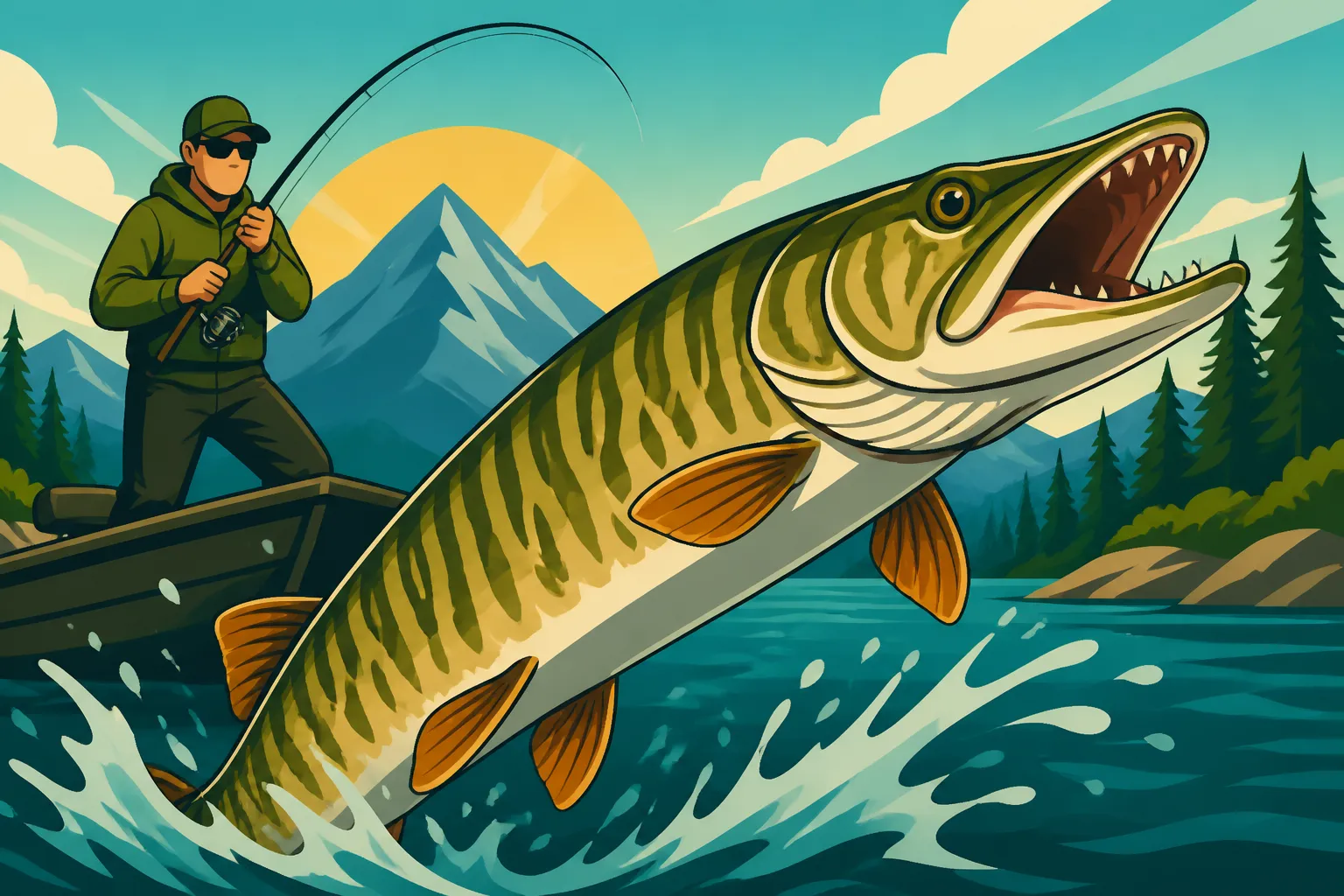
Let's clear up some common misconceptions right off the bat. A tiger muskie isn't a separate species of fish that reproduces on its own in the wild. Instead, it's a sterile, hybrid cross between a muskellunge (often called a "muskie") and a northern pike. Think of it like a mule: a strong, distinct animal that comes from two different parents, but can't have babies of its own. This hybrid vigor gives them some fantastic qualities for sport fishing, including rapid growth, a fierce predatory nature, and an impressive fighting spirit. Their distinctive appearance, with dark, wavy, vertical bars or spots over a lighter background (hence the "tiger" name), makes them quite striking and easily identifiable once you know what to look for. They also tend to have a longer, more slender body shape than a pure northern pike, with a larger, duckbill-like mouth full of needle-sharp teeth.
Because tiger muskies are sterile, populations are maintained through stocking programs rather than natural reproduction. This means that if you're fishing for tiger muskies, you're targeting a managed fishery. In Idaho, this management is key to providing opportunities for anglers to chase these incredible fish. Their growth rates can be quite impressive, making them a true trophy fish for those dedicated enough to pursue them.
The Idaho Connection: How They Arrived
So, how did these fascinating hybrids end up in the landlocked waters of Idaho? The story of tiger muskies in Idaho is a testament to thoughtful fisheries management aimed at creating unique angling opportunities and, in some cases, controlling burgeoning populations of nuisance fish. They weren't always here, but rather, they were intentionally introduced decades ago by fisheries biologists. The primary reason for their introduction was often two-fold: to provide a challenging, large-game fish experience for anglers and, crucially, to act as a biological control for overpopulated species like squawfish (now known as northern pikeminnow) or stunted perch.
The idea was that these voracious predators would thin out less desirable fish populations, thereby improving the overall health and balance of the ecosystem, while simultaneously offering an exciting new target for sport fishermen. It was a calculated risk that paid off, establishing a fantastic trophy fishery. This means that when you're out there casting for tiger muskies, you're not just fishing; you're participating in a unique part of Idaho's angling history, benefiting from decades of careful planning and stocking efforts.
Identifying a Tiger Muskie: Key Features
When you finally get that powerful strike and bring a large, toothy fish to the boat, it's important to know exactly what you've got. Differentiating a tiger muskie from its parent species, especially a northern pike, is crucial for adhering to regulations and appreciating your catch. The most obvious distinguishing feature is the pattern on their sides. Northern pike typically have lighter, oval-shaped spots on a darker background, often described as "bean-shaped" markings. Tiger muskies, on the other hand, exhibit broken, wavy vertical bars, often appearing as irregular stripes or blotches against a lighter, usually greenish-gray or yellowish-gray body. This "tiger stripe" pattern is quite distinct and gives them their name.
Beyond the pattern, look at the sensory pores on the underside of the lower jaw. Northern pike usually have five or fewer pores on each side, while muskellunge and thus tiger muskies, typically have six or more. Another subtle difference can be the shape of the tail fin, which is often more pointed in pike and more rounded in muskie. Recognizing these characteristics quickly and accurately is part of becoming a responsible and knowledgeable angler. Knowing what you've caught allows you to follow specific regulations for that species, ensuring the health of the fishery for future generations.
| Feature | Northern Pike | Tiger Muskie | Muskellunge |
|---|---|---|---|
| Body Pattern | Light oval spots on a dark background | Dark wavy bars/stripes on a light background | Dark spots/bars on a lighter background |
| Body Shape | Generally stockier | Elongated, torpedo-like | Elongated, torpedo-like |
| Cheek/Operculum | Scaled completely | Scaled on upper half (often) | Scaled on upper half (often) |
| Jaw Pores | 5 or fewer on each side of lower jaw | 6 or more on each side of lower jaw | 6 or more on each side of lower jaw |
| Reproduction | Reproduces naturally | Sterile hybrid, stocked | Reproduces naturally |
Top Tiger Muskie Hotspots in Idaho
When the conversation turns to tiger muskie fishing in Idaho, one name inevitably dominates the discussion: Cascade Reservoir. While there might be other whispers or historical stockings in smaller, more obscure waters, Cascade is unequivocally the crown jewel of tiger muskie fishing in the state. If you're serious about hooking into one of these magnificent predators, this is where you need to focus your efforts.
Cascade Reservoir: The Prime Destination
Cascade Reservoir, located in Valley County just north of the city of Cascade, is the place to go for tiger muskies in Idaho. This large, sprawling reservoir, formed by a dam on the North Fork of the Payette River, has been meticulously managed to support a thriving population of these hybrid giants. The landscape surrounding Cascade is stunning, with the West Mountains rising to the west and the Long Valley stretching out, making the fishing experience as much about the scenery as it is about the catch. The reservoir's diverse underwater structure – ranging from submerged timber, old river channels, weed beds, and rocky points – creates ideal ambush points and foraging grounds for tiger muskies. This extensive and varied habitat is precisely why Cascade has become so renowned for its tiger muskie fishery.
Anglers specifically targeting Cascade Reservoir's Tiger Muskie Fishery often spend their time methodically working these different structures. The sheer size of the reservoir, covering over 30,000 acres, means there's a lot of water to explore, and dedication is key. While the muskie are present throughout the reservoir, certain areas tend to be more productive during specific times of the year, depending on water temperature, baitfish movements, and their spawning patterns (or lack thereof, since they are sterile). Learning the nuances of this vast body of water is a journey in itself, but a highly rewarding one for those seeking a true trophy.
Other Potential Waters
While Cascade Reservoir is the undeniable heavyweight for tiger muskie in Idaho, it's worth noting that other waters have historically seen stockings or might hold a very limited, relict population. However, it's crucial for anglers to check the latest regulations from the Idaho Department of Fish and Game (IDFG) before heading out, as stocking programs can change, and special regulations apply to these unique fisheries. Generally speaking, if a water body isn't explicitly mentioned as having a tiger muskie fishery by the IDFG, it's highly unlikely to hold a viable population you can target. The focus of Idaho's tiger muskie management is overwhelmingly centered on Cascade due to its success and the resources required to maintain such a specialized fishery.
This means that for all intents and purposes, if you're planning an Idaho tiger muskie trip, your destination is Cascade. Don't let rumors of forgotten stockings in obscure ponds distract you; the most consistent action and the best chance at a truly impressive fish will be found in the well-managed waters of Cascade Reservoir. Focusing your time and effort there will yield the greatest returns and prevent frustration in waters that simply don't have the fish you're looking for.
Locating Muskie Habitat within Lakes
Once you're on Cascade Reservoir, the next challenge is finding where these elusive fish might be hiding. Tiger muskies are ambush predators, meaning they prefer to lie in wait for unsuspecting prey rather than actively chasing them down over long distances. This behavioral trait dictates their preferred habitat. Look for areas with a combination of cover and access to open water, where baitfish are likely to congregate. Prime locations include expansive weed beds, especially those with deeper edges or pockets within them. The thick vegetation provides excellent camouflage and a perfect spot for muskie to launch an attack.
Submerged timber, particularly old log piles or standing trees in deeper water, also acts as fantastic cover. Rock piles, ledges, and transition areas where different types of bottom structure meet (e.g., mud to rock, sand to weeds) are also high-percentage spots. Pay close attention to points and humps that rise out of deeper water, as these can act as natural highways for baitfish and thus, prime feeding stations for muskie. Using good electronics, like a reliable fish finder, can be invaluable for identifying these subtle underwater features and understanding the topography of the lakebed. Learning to How to Use a Fish Finder on an Idaho Reservoir effectively can drastically improve your success rate in pinpointing muskie territory.
Timing Your Idaho Tiger Muskie Hunt
Chasing tiger muskies isn't just about where you fish; it's also profoundly about when you fish. These intelligent predators are highly influenced by environmental factors such as water temperature, light conditions, and time of year. Understanding these patterns can significantly increase your chances of success and help you avoid fruitless trips.
Best Seasons for Success
Idaho's fishing seasons offer different windows of opportunity for tiger muskies. Generally, the most productive times tend to be during the cooler water periods of spring and fall. In the spring, after ice-out, as water temperatures begin to rise into the 40s and 50s Fahrenheit, muskies become more active, moving into shallower areas in search of food. This pre-spawn (for pike, which influences the hybrid's behavior) and early post-spawn period can be excellent as they shake off winter lethargy and feed aggressively. However, spring weather can be unpredictable, with sudden cold fronts potentially shutting down the bite.
Fall is often considered the prime season by many dedicated muskie anglers. As water temperatures drop from their summer highs, muskies enter a "feeding frenzy" phase, bulking up for the lean winter months. This period, especially from late September through November, can produce some of the largest fish of the year. The cooler water means higher oxygen levels and more comfortable conditions for these cool-water predators. While summer fishing can be good, especially during low-light conditions, the heat often pushes muskies deeper and can make them more sluggish during the brightest parts of the day. Winter ice fishing for muskie can also be productive for specialized anglers, particularly targeting deeper structure.
Daily Patterns and Prime Windows
Just like with seasons, tiger muskies exhibit daily patterns of activity. They are often most active during periods of low light, which means dawn and dusk are consistently excellent times to be on the water. The first few hours after sunrise and the last few hours before sunset offer prime feeding windows. During these times, their camouflage is most effective, and baitfish are often moving more freely, making them easier targets. Overcast days, especially those with a light drizzle, can also extend these productive low-light periods throughout the day, as the reduced light penetration makes muskies feel more comfortable moving and feeding in shallower water.
On bright, sunny days, particularly in summer, muskies will often retreat to deeper, shadier areas or bury themselves in dense cover. Fishing during midday on such days can be challenging, but not impossible. In these conditions, focusing on deep weed lines, submerged timber, or shaded points can still yield results. Many experienced muskie anglers adhere to the "moon phase" theory, suggesting that specific lunar periods can trigger increased activity, regardless of the time of day. While not scientifically proven, many swear by it, planning their trips around specific new or full moon phases.
Impact of Weather and Water Conditions
Weather and water conditions play an immense role in tiger muskie activity. Stable weather patterns, even if consistently hot or cold, are generally better than rapidly changing conditions. A sudden cold front, especially one that brings a significant drop in air temperature and a rise in barometric pressure, can often put muskies in a funk, making them notoriously difficult to entice. Conversely, a stable period of warmer, milder weather in fall can trigger intense feeding. Wind can also be your friend or foe. A steady, moderate chop on the water can break up the surface, providing cover for muskies and stirring up baitfish, often leading to a good bite. However, extremely strong winds can make boat control and casting difficult, detracting from the experience.
Water clarity is another important factor. While muskies can tolerate some murkiness, extremely turbid water (like after heavy rain or spring runoff) can shut down their sight-hunting ability. Clearer water is generally preferred, but not crystal clear, which can make them skittish. Understanding these environmental cues and adapting your approach accordingly is part of the art of Best Time of Year to Fish in Idaho for these incredible creatures. Paying attention to barometric pressure changes, local weather forecasts, and historical fishing reports for Cascade Reservoir will give you a significant advantage.
Essential Techniques and Gear for Tiger Muskie
So, you've pinpointed the right location and timed your trip perfectly. Now comes the exciting part: how do you actually catch one of these elusive beasts? Tiger muskie fishing requires specialized gear and techniques, a blend of patience, persistence, and explosive action. It’s definitely not your average trout fishing setup!
Lures of Choice for Muskie Anglers
Tiger muskies are drawn to large, flashy, and often noisy lures that mimic their natural prey like trout, kokanee, or perch. Their aggressive nature means they respond well to a variety of presentations. Bucktails are arguably the most iconic muskie lure, consisting of a heavy wire shaft with a weighted head, often adorned with a skirt of deer hair (bucktail) and large spinner blades. These lures create significant flash and vibration, especially when retrieved quickly. Larger sizes are key here, often in the 8-12 inch range. Brands like Musky Mania and Mepps offer popular options, and you can find a huge selection on platforms like Amazon.
Crankbaits and jerkbaits, particularly those with a large profile and realistic finishes, are also highly effective. These can be retrieved to dive to various depths, mimicking wounded baitfish. Topwater lures, such as walk-the-dog baits or large prop baits, provide some of the most exhilarating strikes, especially during low light, as a muskie explodes from beneath the surface. Soft plastics, like large swimbaits or glide baits, can be worked slowly and deliberately, often enticing strikes from more finicky fish. Carrying a diverse selection, as detailed in guides like Best Bait and Lures for Idaho Fishing, will help you adapt to changing conditions and muskie moods.
Rods, Reels, and Line: The Heavy-Duty Setup
Forget your ultralight trout rod; muskie fishing demands heavy-duty tackle built to withstand immense stress and powerful fish. Your rod should be a stout, fast-action baitcasting rod, typically 7 to 9 feet long, with a heavy or extra-heavy power rating. This length provides leverage for casting large lures and fighting big fish, while the fast action gives you the sensitivity to feel strikes and the backbone to drive hooks home. A good quality muskie rod will feel stiff and powerful, designed for brute force rather than finesse.
Pair this with a high-quality baitcasting reel, specifically designed for heavy lines and large lures. Look for reels with a strong drag system, a high line capacity, and a robust gear ratio for quickly retrieving line and fighting powerful runs. A strong, braided line is essential, usually in the 65-100 lb test range. Braid offers incredible strength, minimal stretch (which helps with hook sets), and resistance to abrasion. Crucially, you must use a heavy-duty leader, typically 80-150 lb test fluorocarbon or steel wire, to prevent the muskie's razor-sharp teeth from cutting your main line. Investing in reliable gear, much of which can be researched and purchased from Amazon, is not just about catching fish, it's about being prepared for the fight of a lifetime. For a deeper dive into what kind of gear you'll need, check out Idaho Fishing Gear Guide by Season.
Mastering the Figure-Eight and Other Retrieves
Muskie fishing isn't just about casting and reeling; it's about presentation and enticing a strike, often right at the boat. One of the most critical techniques to master is the "figure-eight." Many muskie strikes occur within a few feet of the boat, as the fish follows the lure all the way in before deciding to strike. When your lure approaches the boat, instead of simply pulling it out of the water, quickly sweep your rod tip into a figure-eight pattern, keeping the lure in the water and moving. This sudden change in direction and speed can often trigger a follow-up strike from a hesitant muskie. It's a high-adrenaline maneuver that can turn a "follow" into a "catch."
Beyond the figure-eight, vary your retrieve speeds. Sometimes a fast, erratic retrieve will trigger a reaction strike; other times, a slower, more methodical presentation is needed. Experiment with pauses, jerks, and twitches to impart different actions to your lure. Remember, you're trying to make your lure look like an injured or panicked baitfish. Don't be afraid to try different lures and techniques until you find what the fish are responding to on a particular day. Persistence is paramount in muskie fishing, and even a slight change in retrieve can be the difference between a blank day and a trophy catch. Mastering these nuances can dramatically improve your success rate for How to Catch Tiger Muskie at Cascade Reservoir.
Idaho Tiger Muskie Regulations and Responsible Angling
Chasing tiger muskies is a privilege, and with that comes a responsibility to understand and adhere to Idaho's fishing regulations. These rules are in place to protect the fishery, ensure its sustainability, and maintain the unique angling experience. Ignoring them can lead to fines and harm the very resource we cherish.
Understanding Idaho's Muskie Rules
Idaho's fishing regulations are carefully crafted, and for a species like the tiger muskie, they are particularly specific. Because these fish are stocked and represent a specialized trophy fishery, the rules often include strict size limits and low bag limits, or even catch-and-release only requirements, depending on the specific water body. For Cascade Reservoir, which is the primary tiger muskie fishery, you will typically find a very generous minimum size limit to protect juvenile fish and allow them to grow to trophy potential. Often, the bag limit is extremely restrictive, perhaps only one fish per day, or even catch-and-release only. This is done to ensure that these large, sought-after fish remain in the system for other anglers to enjoy and to serve their biological control purpose for as long as possible.
Before you even launch your boat, you must consult the latest Idaho Fishing Regulations Explained brochure or the Idaho Department of Fish and Game website. Regulations can change annually, and what was permissible last year might not be this year. Pay close attention to specific rules for Cascade Reservoir, including the minimum length, daily bag limit, and any special tackle restrictions. Don't assume; verify. A valid Idaho Fishing License Guide is, of course, a fundamental requirement for all anglers in Idaho, and any special permits, like an Access/Depredation Fee, may also apply, depending on your residency and the specific regulations that year.
Catch and Release Best Practices
Given the trophy nature and managed status of Idaho's tiger muskies, catch and release is not just encouraged, but often mandated. Properly handling these large, powerful, and toothy fish is crucial for their survival. First and foremost, you need the right tools: a large, rubberized landing net (not knotless nylon, which can strip slime) to minimize scale and slime damage, long-nosed pliers or jaw spreaders for hook removal, and a sturdy pair of bolt cutters or wire cutters in case a hook is too deeply embedded to remove safely. Never boat a muskie by grabbing its eye sockets or gills; this can cause severe damage. Support the fish horizontally with both hands, one under the head and one under the tail, if you must lift it for a quick photo.
Minimize the time the fish is out of the water. Every second counts, especially in warmer water. Work quickly and efficiently to remove the hook, snap your photo, and get the fish back into the water. If the fish appears stressed, hold it gently in the water, facing into the current, until it regains its strength and can swim away on its own. Often, gently moving it back and forth a few times, while supporting it, can help water flow over its gills. Understanding and practicing these techniques is not just good sportsmanship; it's essential for the health of Idaho's unique tiger muskie fishery. This is particularly important for species like sturgeon, where catch-and-release rules are very strict, as explained in Idaho Sturgeon Fishing Rules.
Conservation Efforts for This Unique Fishery
The very existence of Idaho's tiger muskie fishery is a direct result of conservation and management efforts by the Idaho Department of Fish and Game. Since these fish don't naturally reproduce, the IDFG undertakes annual or periodic stocking programs to maintain the population. This involves careful planning, sourcing fingerlings from hatcheries, and releasing them into specific waters like Cascade Reservoir. These stocking events are not cheap or simple; they require significant resources, funding, and expertise. The goal is to provide a sustainable trophy fishery while balancing the needs of the ecosystem.
Beyond stocking, IDFG conducts surveys and research to monitor the health of the muskie population, assess growth rates, and understand their impact on other species within the reservoir. Angler reports and adherence to regulations play a vital role in providing data for these studies. By respecting size and bag limits, practicing proper catch and release, and supporting fishing license sales, anglers directly contribute to the ongoing success and conservation of this fantastic resource. The continuous dialogue between anglers and fisheries managers ensures that future generations can also experience the thrill of Idaho Tiger Muskie Fishing. This dedication to conservation is mirrored in efforts across other popular species, such as those detailed in the Idaho Steelhead Fishing Guide.
Disclaimer
This article is for general informational purposes only and does not constitute professional advice. Laws, prices and regulations vary by location and change over time. Consult a qualified professional for guidance on your specific situation.