Best Rod Setup for Trout Fishing
It can feel overwhelming to walk into a tackle shop or browse online, faced with a dizzying array of rods and reels, all promising to be the "best" for trout. How do you pick the right one for Idaho's diverse waters, from tiny high-mountain creeks to vast reservoirs and powerful rivers? This guide is here to cut through the confusion and help you assemble the ideal rod setup, ensuring you’re perfectly equipped for your next trout fishing adventure, whether you're chasing elusive cutthroat in a backcountry stream or casting for trophy rainbows in a big lake.
Understanding Trout Fishing Rod Basics for Idaho Waters
Before you even think about pairing a rod with a reel, it's crucial to understand the fundamental characteristics of the rod itself. These elements dictate how well it will perform in different fishing scenarios and for different sizes of trout you might encounter across Idaho.
Rod Length and Its Impact on Idaho Trout Fishing
The length of your fishing rod is perhaps one of the most immediate choices you'll make, and it profoundly affects your casting distance, accuracy, and control.
- Shorter Rods (Under 6 feet): These are fantastic for tight, brushy streams and small creeks, which you'll find aplenty in the mountains and foothills of Idaho. Imagine trying to cast a long rod under a canopy of willows or between dense alders – it’s just not practical. A shorter rod allows for quick, accurate casts in close quarters, often a necessity when targeting smaller brook trout or eager cutthroat in confined pools. They also offer excellent sensitivity for detecting subtle bites from smaller fish, making them a joy to use when precision is key. However, their shorter length limits casting distance significantly, so they aren't ideal for wide-open spaces.
- Medium Rods (6 to 7.5 feet): This is often considered the "sweet spot" for all-around trout fishing in Idaho. A 6.5 to 7-foot rod strikes a great balance, offering enough length for decent casting distance on larger rivers like the South Fork of the Snake or the St. Joe, while still being manageable enough for many medium-sized streams. These rods provide good leverage for fighting larger fish and can handle a wider range of lures and baits. If you're looking for one rod to do a little bit of everything in Idaho, a medium-length rod is a solid choice. You'll find a huge variety of options in this length on platforms like Amazon.
- Longer Rods (Over 7.5 feet): When you're fishing expansive waters like Lake Coeur d'Alene, Lake Pend Oreille, or large sections of the Snake River from shore, a longer rod becomes incredibly advantageous. The extra length translates directly to increased casting distance, allowing you to reach those deeper drop-offs or cover more water. They also offer greater line control, which can be beneficial when mending line in river currents or achieving better hooksets over long distances. Trolling on large reservoirs also often benefits from longer, more forgiving rods that absorb the shock of a strike. However, they can be cumbersome in tight spaces and less sensitive for detecting light bites from very small trout.
Rod Action and Power: What They Mean for Trout
Beyond length, a rod's "action" and "power" are critical descriptors that tell you how it will bend and how much force it can exert. Understanding these will prevent you from bringing a noodle to a steelhead fight or a broomstick to a brook trout creek.
- Rod Action: This describes where the rod bends when pressure is applied.
- Fast Action: These rods bend primarily in the upper third or quarter of the blank. They are highly sensitive, transmitting even the lightest tap from a fish straight to your hand. Fast action rods provide powerful hooksets and are excellent for casting heavier lures or jigs that require a sharp snap. They also offer maximum control when fighting larger, feisty fish, as the backbone of the rod remains stiff. For trout fishing, a fast action is great when you're using single hooks and need a quick, solid set, or when casting heavier spoons or spinners on larger waters.
- Moderate (Medium) Action: A moderate action rod bends from the middle to the tip. This makes them more forgiving than fast action rods, reducing the chance of tearing a hook out of a trout's mouth, especially with smaller, treble-hooked lures. They offer a good balance of casting distance and sensitivity and are versatile for many techniques, including bait fishing and lighter lure presentations. Many anglers consider a moderate action a good all-around choice for various Idaho trout scenarios.
- Slow Action: These rods bend significantly throughout the entire blank, almost parabolic. They excel at casting small, lightweight baits or flies with a gentle, looping motion. While not common for traditional lure fishing for trout, slow action rods are the backbone of many fly fishing setups, particularly for delicate presentations. They are also very forgiving when fighting fish, acting like a shock absorber, but offer less power for heavy lifting or long, accurate casts.
- Rod Power (or Weight): This refers to the rod's strength or its ability to handle different line weights and lure sizes.
- Ultralight (UL): The go-to for small trout, panfish, and delicate presentations. These rods are incredibly sensitive, allowing you to feel the faintest nibble. They pair perfectly with light lines (2-4 lb test) and tiny lures or baits, making them ideal for the Easiest Fish to Catch for Beginners or those targeting smaller trout in clear, calm waters. While thrilling to catch a larger trout on an ultralight, they can be easily overpowered by bigger fish.
- Light (L): A step up from ultralight, light power rods handle slightly heavier lines (4-6 lb test) and lures. They offer a good balance of sensitivity and fighting power, making them very popular for general trout fishing in Idaho, especially for rainbows and cutthroat in many streams and medium-sized rivers.
- Medium-Light (ML): This power range is excellent for larger trout, such as Kamloops rainbows in Lake Pend Oreille or bigger browns in the Henry's Fork. They can cast a wider range of lures, handle 6-8 lb test line, and provide enough backbone to turn a determined fish away from snags. Many versatile Idaho anglers will find a medium-light rod to be a fantastic workhorse.
- Medium (M) and Heavy (H): While not typically chosen for primary trout setups, medium power rods might be used for targeting larger species like tiger muskie in Cascade Reservoir or for heavier applications where trout might be incidental catches. Heavy power rods are generally overkill for trout and are reserved for species like salmon, steelhead, or sturgeon.
Choosing the Right Reel to Complement Your Trout Rod
Once you've got a handle on rod characteristics, it's time to think about the other half of the equation: the reel. The reel is more than just a line holder; it's a critical component that impacts your casting, retrieve, and ability to battle a fish.
Spin Reels vs. Fly Reels: Matching Your Fishing Style
Your choice of reel will largely depend on your preferred fishing technique. For trout in Idaho, you'll generally be looking at either a spin reel or a fly reel.
- Spin Reels (Spinning Reels): These are the most common and versatile reels for trout fishing, especially if you plan to use bait, lures, or jigs. The design, with its open-faced spool and bail arm, makes them incredibly easy to cast, even for beginners. They're excellent for throwing lightweight lures long distances and offer a smooth drag system that is crucial for fighting trout on lighter lines. A good spinning reel allows for quick line retrieval and precise lure manipulation, which can make all the difference when How to Cast to Selective Trout on a Spring Creek. Whether you're tossing small spinners in the Boise River or jigging for kokanee in Lake Coeur d'Alene, a spin reel is often the top choice for conventional angling.
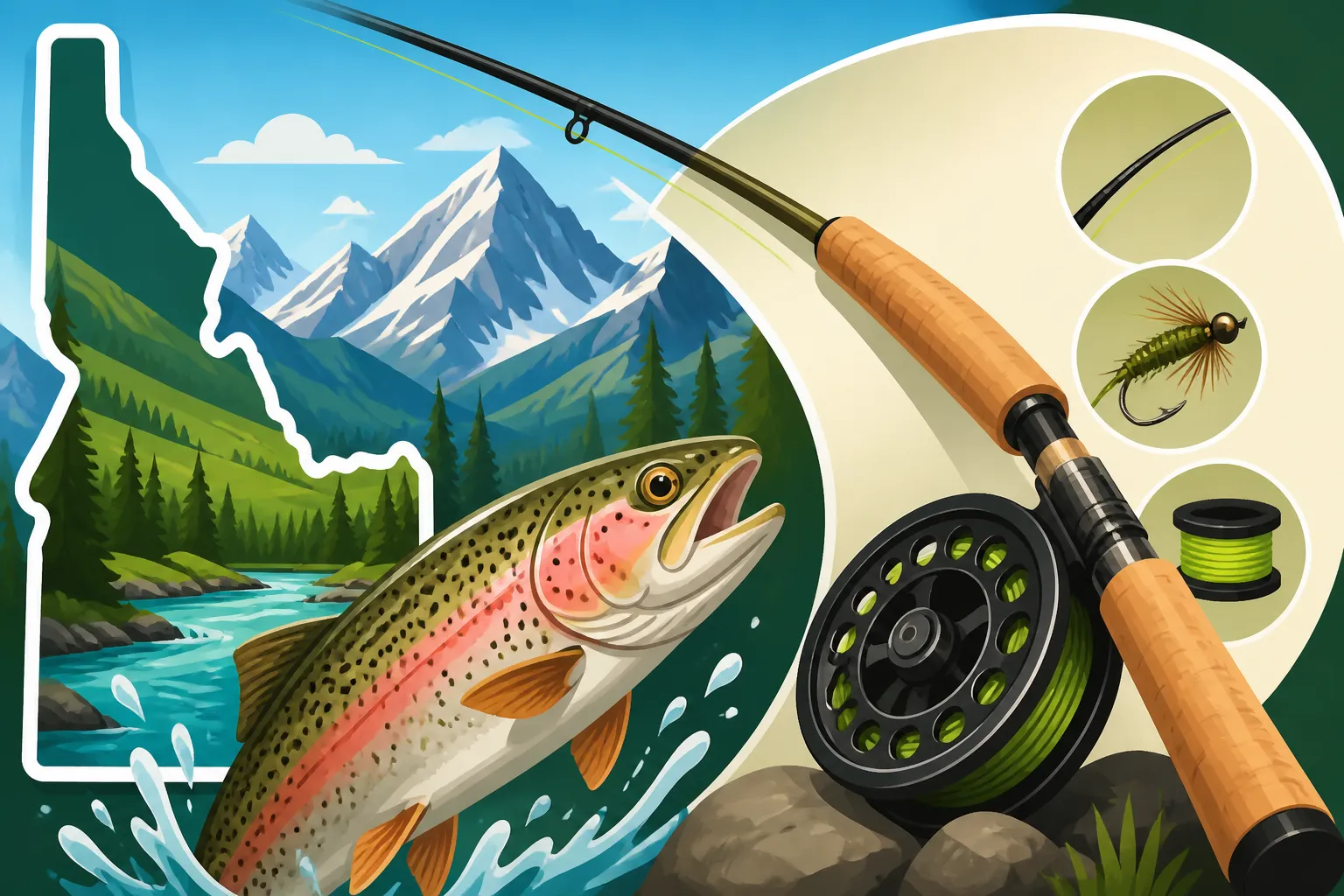
- Fly Reels: If your passion lies in fly fishing, then a fly reel is what you'll need. However, unlike spinning or baitcasting reels, a fly reel's primary purpose is not to cast the line or fight the fish using its drag in the same way. Instead, its main function is to store fly line, backing, and leader. When fighting a fish on a fly rod, most of the action and leverage comes from the rod itself and the angler's hand-lining. The drag on a fly reel is used for larger, stronger fish that will strip line, preventing them from running away with your entire setup. If you're looking into How to Fly Fish in Idaho, a quality fly reel designed for trout sizes is essential, typically matching your fly rod's weight.
Reel Size and Line Capacity for Idaho Trout
Spinning reels come in various sizes, often indicated by numbers like 1000, 2000, 2500, and so on. Matching the reel size to your rod's power and the line you intend to use is key for a balanced setup.
- Small Reels (1000-2000 Series): These are perfect for ultralight and light power rods. They are lightweight, which helps maintain the delicate balance of smaller rods, and they hold enough 2-6 lb test line for most trout applications. A 1000-series reel is a fantastic pairing for a 5-6 foot ultralight rod used on small creeks for brook trout. It keeps the overall setup light, reducing fatigue, and its smaller spool still allows for surprisingly good casting performance with light lures.
- Medium Reels (2500-3000 Series): These reels are versatile and pair well with light to medium-light power rods. They offer increased line capacity, typically holding ample amounts of 6-8 lb test line, which is great for larger rivers or lakes where you might need to cast further or handle a bigger rainbow or cutthroat. The drag systems on these reels are generally more robust, giving you more control over stronger fish. If you’re targeting the Idaho Rainbow Trout Fishing Guide in a larger setting, a 2500-series reel is a popular choice. Many reliable options are readily available on Amazon for these popular sizes.
- Larger Reels (4000+ Series): While not typically necessary for dedicated trout fishing, a 4000-series reel might be considered if you're using a medium or medium-heavy rod for multi-species fishing in larger Idaho waters, where you might accidentally hook into a larger bass or even a smaller steelhead. They offer significant line capacity and a powerful drag but can be overkill and heavy for standard trout setups.
Selecting the Ideal Line and Terminal Tackle for Trout Success
The line connecting you to the fish, and the small components at its end, are often overlooked but are absolutely critical for trout fishing success. Trout are often line-shy and possess excellent eyesight, especially in clear Idaho waters.
Monofilament, Fluorocarbon, or Braided: The Line Debate
Choosing the right fishing line can significantly impact your catch rate. Each type has its unique advantages and disadvantages when chasing trout.
- Monofilament (Mono): This is the traditional, all-purpose fishing line, and for good reason. Mono is affordable, has excellent knot strength, and offers a good amount of stretch. This stretch acts as a shock absorber, which can be a huge benefit when a trout strikes hard, preventing hooks from tearing out of their soft mouths. It's also quite forgiving for beginners. However, mono is more visible in water than fluorocarbon and has less sensitivity due to its stretch. It’s a great choice for general-purpose trout fishing, especially with bait or small lures where stealth isn’t the absolute top priority. Many anglers still rely on 4-6 lb test monofilament for its versatility.
- Fluorocarbon (Fluoro): If stealth is your game, fluorocarbon is your champion. It has a refractive index very similar to water, making it virtually invisible underwater – a massive advantage when fishing for wary trout in crystal-clear Idaho streams. Fluoro also has less stretch than mono, providing increased sensitivity to detect subtle bites. It's more abrasion-resistant, which is handy when fishing around rocks or submerged timber. The main downsides are that it's typically more expensive than mono and can be a bit stiffer, making it harder to cast small, lightweight lures as effectively. Many experienced trout anglers will use a main line of braided or monofilament, then tie a several-foot long fluorocarbon leader to the end to capitalize on its invisibility. For an Idaho Trout Limits by Water trip on a technical stream, fluorocarbon leaders are almost a must.
- Braided Line (Braid): Braided line boasts incredible strength-to-diameter ratio, has virtually no stretch (offering maximum sensitivity), and casts exceptionally far. It's fantastic for feeling every bump and bite and for powerful hooksets. However, braid is highly visible underwater, which can spook wary trout, and its lack of stretch offers no shock absorption. For trout fishing, braid is usually used as a main line with a long fluorocarbon or monofilament leader tied to it. This setup gives you the casting distance and sensitivity of braid, combined with the invisibility of a leader. If you plan on fishing clear lakes where long casts are needed, or if you want to feel every little bump, a 6-10 lb test braid with a 4-6 lb test fluorocarbon leader is a fantastic combination. You can find durable braided lines from various brands on Amazon.
Essential Terminal Tackle: Leaders, Tippet, and Hooks
The final components in your setup are just as important as the rod, reel, and main line. These are the bits that directly interact with the fish and your presentation.
- Leaders: As mentioned, leaders are crucial, especially with braided main lines. A leader is a section of line tied to your main line, designed to be less visible or more abrasion-resistant. For trout, a 3-6 foot fluorocarbon leader in 4-6 lb test is usually ideal. It helps create a stealthy presentation and provides the necessary stretch or abrasion resistance the main line might lack. When you're Reading Water on Idaho's Rivers and fishing clear sections, a long, thin leader can be the key to getting bites.
- Tippet: In fly fishing, tippet is the final, thinnest section of your leader, to which you tie your fly. It’s designed to be nearly invisible and allow for delicate presentations. For spin fishing, you don't typically use "tippet" in the same way, but the concept of using the thinnest, most invisible line at the very end still applies.
- Hooks: The size and type of hook should match your bait and the size of the trout you expect to catch. For small worms, PowerBait, or corn, a small, light-wire bait hook (sizes 8-12) is often best. For larger baits or live minnows, you might go up to a size 6 or 4. Many anglers prefer barbless hooks for trout, especially in waters with catch-and-release regulations or for certain species like sturgeon, as they minimize harm to the fish. You can also crimp down the barb on standard hooks. This makes releasing fish much easier and quicker, increasing their survival rate.
Assembling Your Perfect Idaho Trout Fishing Setup: Scenarios and Recommendations
Let's put it all together. Idaho's diverse trout fisheries demand different approaches. Here are a few common scenarios and the rod setups that excel in them.
Setup for Small Stream & Brook Trout
Imagine hiking into a pristine, high-mountain creek in the Sawtooths, where the water is gin-clear, and the native brook trout are eager but small. Or perhaps you're exploring one of the Hidden Fishing Spots Idaho Locals Don't Talk About that are overgrown with vegetation.
- Rod: An ultralight power rod, typically 4.5 to 5.5 feet long, with a moderate-fast action. This combination allows for precise flick casts under overhanging branches and delivers maximum sensitivity for detecting the subtle takes of smaller fish. It's a blast to catch even a modest trout on such a nimble rod.
- Reel: A small 1000-series spinning reel. This reel is lightweight and perfectly balances the ultralight rod, making the entire setup feel like an extension of your arm.
- Line: 4 lb test monofilament or a 4 lb test braided main line with a 2-4 foot 4 lb fluorocarbon leader. The mono offers some stretch for delicate hooksets, while the braid/fluoro combo maximizes feel and stealth.
- Terminal Tackle: Use small split shot (if needed), tiny swivels, and small bait hooks (size 10-14) for worms or PowerBait, or small inline spinners (size 0 or 1) and micro jigs. Stealth is paramount; don't use heavy hardware.
Setup for Larger Rivers & Rainbow/Cutthroat Trout
Now, picture yourself on a wider Idaho river like the Salmon or the Clearwater (though for Steelhead, you'd need a different setup entirely, as covered in How to Fish for Steelhead in Idaho), or a larger branch of the Boise River, where you might encounter feisty rainbow or cutthroat trout. You need casting distance, power, and versatility.
- Rod: A light to medium-light power rod, 6.5 to 7 feet in length, with a fast or moderate-fast action. This provides the backbone to fight larger fish in current, while still maintaining sensitivity for varying presentations. A good rod setup for rivers must handle both casting and fighting effectively.
- Reel: A 2000 to 2500-series spinning reel. This size offers enough line capacity for longer casts and battling stronger trout, along with a reliable drag system.
- Line: 6 lb test fluorocarbon or 8-10 lb test braided main line with a 4-6 foot 6 lb fluorocarbon leader. The fluoro helps with invisibility in often clear river water, while the braid offers superior sensitivity for drift fishing techniques.
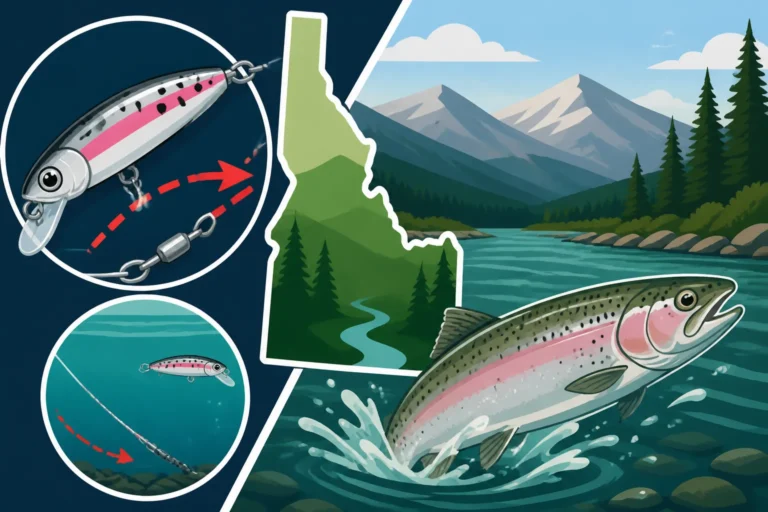
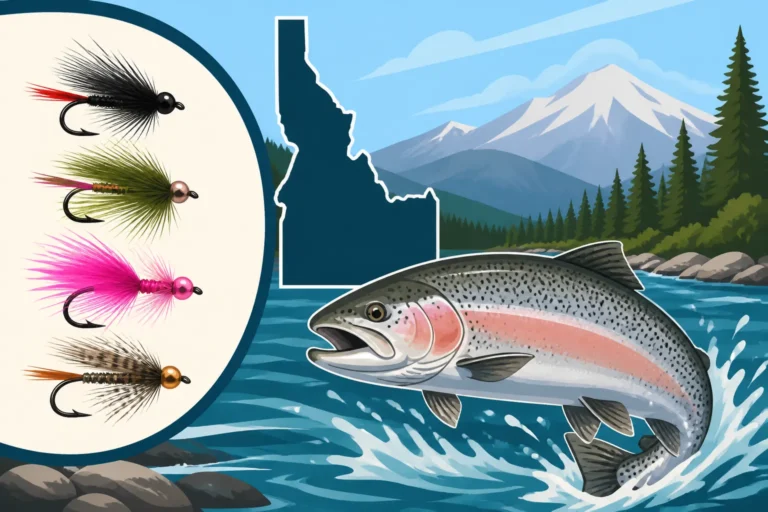
- Terminal Tackle: Use heavier inline spinners (size 2-3), spoons, small crankbaits, or a drift rig with split shot and a bait hook (size 8-6) for worms, roe, or PowerBait. For fly anglers, understanding the best flies for Idaho trout would be key here.
Setup for Lake & Reservoir Trout
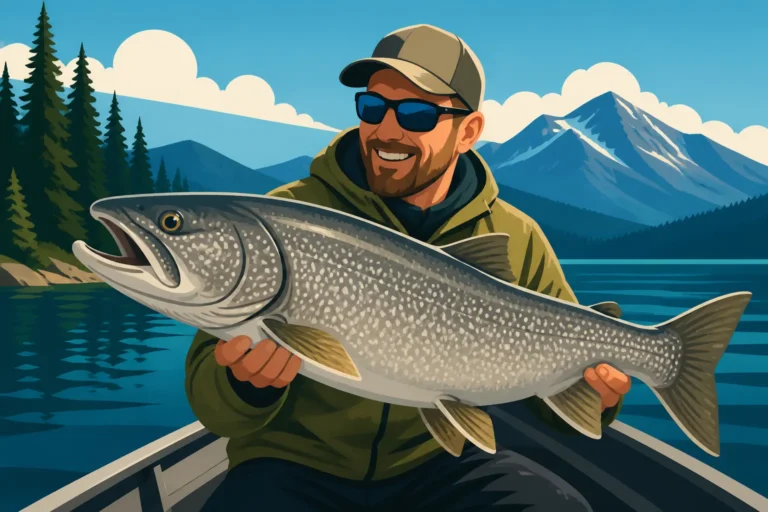
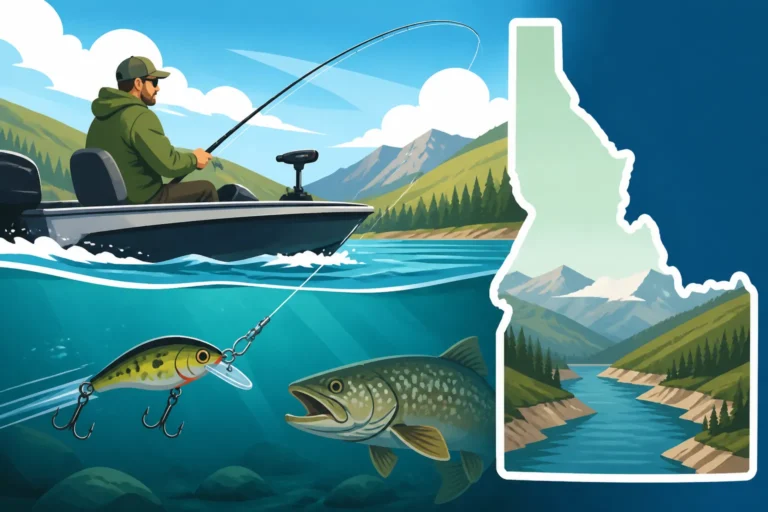
Idaho is home to numerous stunning lakes and reservoirs, from Payette Lake to American Falls Reservoir, where you can chase a variety of trout, including large rainbow, cutthroat, and even lake trout. This environment often calls for longer casts, trolling, or deeper presentations.
- Rod: A medium-light to medium power rod, 7 to 8.5 feet in length, with a moderate to fast action. If you're mainly shore casting, a longer rod is beneficial for distance. For trolling from a boat, a slightly softer moderate action can be more forgiving for light bites and keep a constant tension on the lure.
- Reel: A 2500 to 3000-series spinning reel. This provides ample line capacity for long casts or letting out line for trolling, and a robust drag for handling larger, potentially deeper-dwelling fish.
- Line: 8-10 lb test monofilament or 10-15 lb test braided main line with a 6-10 foot 6-8 lb fluorocarbon leader. Mono is often favored for trolling due to its stretch, which helps absorb strikes. Braid to fluorocarbon is excellent for casting lures a long distance or jigging. Consider using specialized line like that found for sale on Amazon for specific applications such as low-stretch trolling line.
- Terminal Tackle: Spoons, diving crankbaits, jigging spoons, or bait rigs (slip sinkers, swivels, and bait hooks size 8-4) are common. If trolling, consider using dodgers or flashers ahead of your lure. When Fishing Lake Coeur d'Alene for Kokanee and Chinook, these types of setups are paramount.
Trout Rod Setup Comparison Chart
To help you visualize the choices, here's a quick comparison of suggested rod setups for common Idaho trout fishing scenarios:
| Scenario | Rod Length (ft) | Rod Power | Rod Action | Reel Size (Spinning) | Main Line (lb test) | Leader (lb test) | Primary Technique |
|---|---|---|---|---|---|---|---|
| Small Brushy Streams | 4.5 – 5.5 | Ultralight | Moderate-Fast | 1000 | 4 Mono / 6 Braid | 2-4 Fluoro | Casting small lures, bait |
| Medium Rivers / General Use | 6.0 – 7.0 | Light – ML | Moderate-Fast | 2000 | 6 Mono / 8 Braid | 4-6 Fluoro | Lure casting, drift bait |
| Large Rivers / Shore Casting | 7.0 – 7.5 | ML – Medium | Fast | 2500 | 8 Mono / 10 Braid | 6-8 Fluoro | Long casts with lures, heavy bait |
| Lakes / Trolling | 7.5 – 8.5 | ML – Medium | Moderate | 3000 | 8-10 Mono / 15 Braid | 6-10 Fluoro | Trolling, casting spoons |
| Fly Fishing (General Trout) | 8.0 – 9.0 | 4wt – 6wt | Moderate-Fast | Fly Reel (matching wt) | Fly Line (matching wt) | Tapered Leader/Tippet | Dry fly, nymphing, streamer |
Remember, these are general guidelines, and personal preference always plays a role. The most important thing is that the setup feels balanced and comfortable to you. With the right rod, reel, and line, you’ll be well on your way to enjoying the fantastic trout fishing opportunities Idaho has to offer. Don't forget to check the latest Idaho Fishing Season Dates and Limits before you head out!
Disclaimer
This article is for general informational purposes only and does not constitute professional advice. Laws, prices and regulations vary by location and change over time. Consult a qualified professional for guidance on your specific situation.