Trolling vs Jigging for Idaho Kokanee, Which Works Better
The pursuit of Idaho Kokanee salmon can be incredibly rewarding, but it often leaves anglers scratching their heads about the best approach. You've heard whispers on the docks and seen boats doing different things out on the water, leaving you to wonder: is it better to drag lures behind the boat or drop them straight down? This guide is going to dive deep into the age-old debate of trolling versus jigging for Idaho Kokanee, helping you understand which technique might just unlock your next limit.
Understanding Kokanee Behavior in Idaho Waters
Before we even talk about rods and reels, it's crucial to understand the fish itself. Kokanee are fascinating creatures, landlocked sockeye salmon that spend their entire lives in freshwater. Their behavior, particularly their schooling and feeding habits, directly dictates which fishing technique will be most effective on any given day. If you can get inside their little fishy heads, you're halfway to success.
Seasonal Movements and Depth Preferences
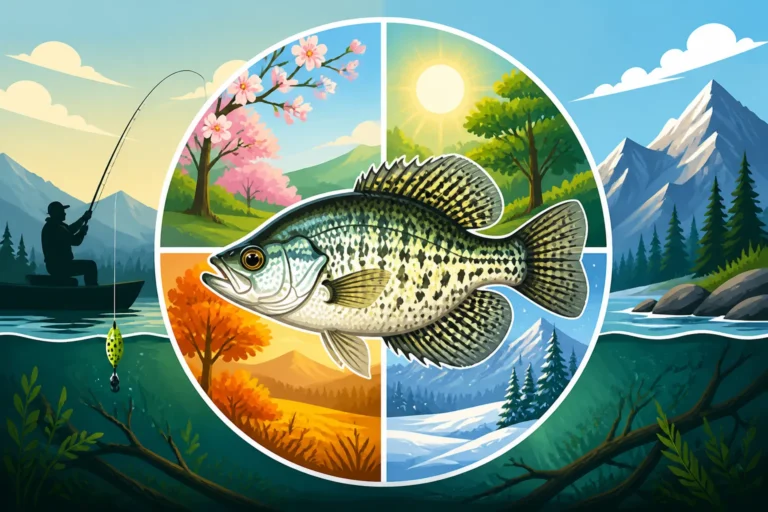
Kokanee are highly migratory within their lake or reservoir environments, and their depth preferences shift dramatically with the seasons and even the time of day. In the early spring, after ice-out, they might be found relatively shallow, chasing newly hatched insects or small crustaceans. As summer heats up, the thermocline forms, and Kokanee will retreat to cooler, oxygen-rich waters, often suspending in deep columns. This can mean depths anywhere from 30 to over 100 feet in places like Lake Coeur d'Alene or Lake Pend Oreille. In the fall, they begin their spawning run, moving towards inflowing rivers and tributaries, and their focus shifts from feeding to reproduction. Knowing roughly where they're likely to be hanging out is the first step in deciding how to present your offering. Understanding these patterns is key to successful fishing throughout the year, as detailed in our comprehensive guide, Idaho Fishing Season Dates and Limits.
Their sensitivity to light also plays a huge role. On bright, sunny days, Kokanee often go deeper to avoid the intense sunlight, whereas on cloudy days or during low light periods like dawn and dusk, they might come up a bit higher in the water column. This constant vertical movement means you need a strategy that can adapt, or at least one that effectively targets their current comfort zone. You might be targeting the same fish on the same lake, but their preferred depth can change by dozens of feet from one hour to the next.
Forage and Feeding Habits
Kokanee are primarily plankton eaters, sifting microscopic organisms from the water column. This fact profoundly influences what lures and baits they respond to. While they don't "strike" a large minnow lure like a bass would, they are attracted to small, flashy, or scented offerings that mimic their food or pique their curiosity. This is why small spoons, wedding rings, and squids are so popular. These lures, often paired with bait like Shoepeg corn marinated in scent, are designed to appeal to their subtle feeding instincts or trigger an aggressive, territorial reaction.
Their schooling nature also means that when you find one Kokanee, you've likely found a hundred, or even a thousand. This is where a good fish finder becomes invaluable, helping you pinpoint those dense schools. The challenge then becomes presenting your lure in a way that stands out without being too aggressive, matching the size and general movement of their natural prey. You're trying to fool a fish that sifts plankton, not chase down a meal, so subtlety and consistent presentation are critical. For a deeper dive into their identification and habits, check out our Idaho Kokanee Identification Guide.
Trolling for Idaho Kokanee: The Steady Pursuit
Trolling is perhaps the most iconic method for catching Kokanee across Idaho's big lakes and reservoirs. It's a technique that allows you to cover vast amounts of water and present your lure at a consistent depth, making it incredibly effective when fish are scattered or suspended.
The Mechanics of Trolling
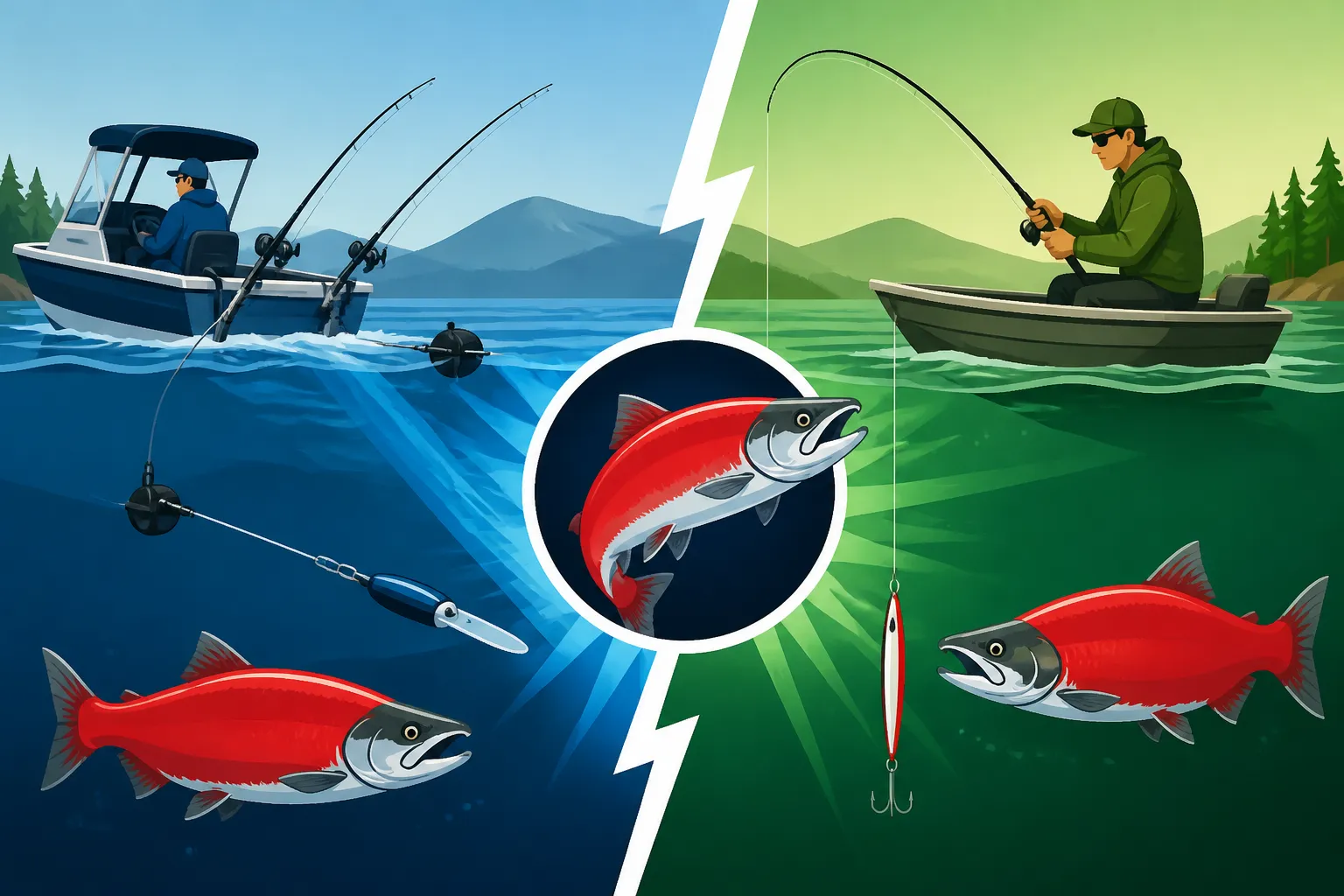
At its core, trolling for Kokanee involves dragging one or more lines behind a moving boat, usually at slow speeds. The critical component for depth control is often a downrigger, which allows you to send your lure down to a precise depth using a heavy weight and a release clip. Your line, with the lure and bait, is attached to this clip. When a fish strikes, the line releases from the downrigger weight, and you fight the fish directly. Without a downrigger, lead core line or snap weights can be used to get lures deeper, but precision becomes a bit more challenging.
Beyond depth control, dodgers or flashers are almost universally used in Kokanee trolling rigs. These are attractors that wobble and flash, mimicking a larger baitfish or creating a disturbance that draws Kokanee in from a distance. The actual lure, often a small spoon, squidding tube, or wedding ring, is then tied a short distance behind the dodger. Scented corn, typically Shoepeg, is almost always added to the hook to provide an irresistible aroma. Many anglers find quality dodgers and Kokanee lures on sites like Amazon, ensuring they have a good selection of colors and sizes for different conditions. For more detailed insights into specific gear, our Idaho Fishing Gear Guide by Season offers valuable advice.
When and Where Trolling Excels
Trolling truly shines when Kokanee are widely dispersed throughout the water column, perhaps spread out at a consistent depth over a large area, or when their exact depth preference is unknown. It's a fantastic search pattern because you can cover a lot of real estate, literally putting your lure in front of more fish. On expansive waters like Lake Coeur d'Alene, Lake Pend Oreille, or Anderson Ranch Reservoir, covering miles of water to locate scattered schools is often necessary, especially during the summer months when Kokanee are deep and suspended. This technique also excels when the fish are actively feeding and willing to chase a moving lure. You can adjust your speed, depth, and lure color until you find what triggers bites, which is often a process of patient experimentation. A Trolling Depth Chart for Idaho Kokanee by Month can also be a game-changer for hitting the right zone.
Consider a sunny afternoon on Cascade Reservoir. You're marking fish sporadically at 60-80 feet, but no dense schools. Trolling with multiple rods set at varying depths with dodgers and scented wedding rings allows you to systematically explore that depth range and cover the most water efficiently. As you cruise, you might suddenly hit a pocket of active fish, leading to a flurry of bites across several rods. This ability to search and adapt makes trolling a highly productive method for Kokanee. For those heading to the region, learning How to Troll for Kokanee on Lake Coeur d'Alene is a great starting point.
Pros and Cons of Trolling for Kokanee
Let's break down the good and the not-so-good about trolling for Kokanee.
Pros:
- Covers More Water: Hands down, this is trolling's biggest advantage. You can effectively search large areas and locate scattered fish or moving schools, which is crucial on big Idaho lakes.
- Consistent Depth Presentation: With downriggers, you can hit and maintain precise depths, even when making turns or dealing with current. This is invaluable when Kokanee are holding in a tight thermocline.
- Multiple Rods: Most jurisdictions allow multiple rods per angler when trolling, meaning you can run a spread of different lures and depths simultaneously, increasing your chances of finding the hot ticket. This is particularly helpful when figuring out What Depth Kokanee Hold at in Summer on Idaho Lakes.
- Relaxed Fishing: Once your lines are set, trolling can be a fairly laid-back experience, allowing you to enjoy the scenery, chat with companions, and simply wait for the rod to go off.
Cons:
- Requires Specialized Gear: Downriggers, specialized rods, electronics, and a boat capable of slow trolling speeds (often with a kicker motor) represent a significant investment. Getting equipped for this can be quite an outlay.
- Less Active/Engaging: For anglers who love the feel of the bite and the active nature of fishing, trolling can sometimes feel passive. You're often waiting for the fish to come to you.
- More Complex Setup: Rigging up multiple rods with dodgers, leaders, lures, and then attaching them to downriggers can take time and practice, especially for beginners.
Jigging for Idaho Kokanee: The Vertical Attack
While trolling often gets the spotlight for Kokanee, jigging is a potent and often overlooked technique, especially when fish are concentrated in specific areas. It’s a more active, hands-on approach that can be incredibly rewarding.
The Mechanics of Jigging
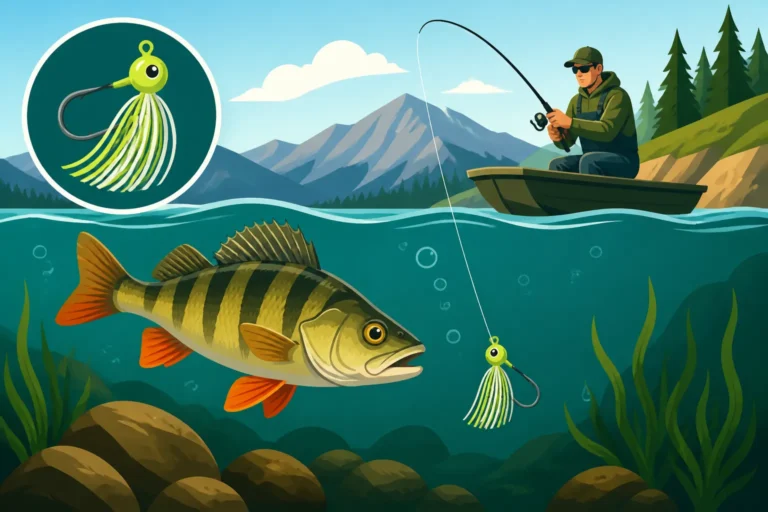
Jigging involves dropping a weighted lure, called a jig, directly down into the water column and imparting an enticing up-and-down motion. The key here is presenting the lure vertically to fish that are often schooled tightly or holding near structure. Unlike trolling, where the boat's movement gives the lure action, with jigging, you are the one providing the action with your rod tip. This means a more sensitive rod and good line feel are crucial.
Sonar, specifically a good fish finder with down-imaging or side-imaging capabilities, is absolutely essential for effective Kokanee jigging. You need to be able to see the schools of fish below your boat, determine their depth, and ideally, watch your jig as it descends and moves among them. Jigs for Kokanee are typically small, slender spoons or lead-bodied baits, often with glow-in-the-dark features or bright colors. These are usually tipped with a piece of scented corn, just like trolling lures. Some anglers even use mini-tube jigs or small tungsten jigs. Brands like Mack's Lure, Kokanee Killer, and P-Line all offer excellent Kokanee jigs, many of which can be found conveniently on Amazon. For understanding how to utilize your electronics, our guide on How to Find Kokanee on a Fish Finder is highly recommended.
When and Where Jigging Shines
Jigging truly excels when Kokanee are tightly schooled and concentrated in a specific area, perhaps over a deep point, a submerged timber pile, or in a bottleneck where current might concentrate plankton. Reservoirs with distinct underwater features like C.J. Strike Reservoir or Lucky Peak Reservoir, where Kokanee might stack up in channels or near dam structures, are prime jigging locations. It's also incredibly effective when you've located a dense school of fish that are reluctant to chase a trolled offering but might strike at a jig danced in front of their faces. This can happen when fish are less active, or when they are in a "neutral" mood.
Imagine you're on the Snake River, marking a massive school of Kokanee at 40 feet near a deep eddy. Instead of making endless trolling passes, you can anchor directly over them or use your trolling motor to hold position, then drop your jigs right into the heart of the school. The ability to vertically present your lure directly to a visible target is a massive advantage. Jigging is also fantastic when you're fishing smaller boats, kayaks, or even from shore on specific deep access points, where covering vast distances isn't practical. It demands a more active engagement from the angler, requiring constant attention to your rod tip and sonar screen, but the rewards can be incredible. While typically associated with perch, some principles from How to Jig for Perch in Idaho can be adapted.
Pros and Cons of Jigging for Kokanee
Let's look at the advantages and disadvantages of jigging for these silver beauties.
Pros:
- Precision Targeting: When you mark a school of Kokanee, you can drop your jig directly into them, minimizing wasted effort. This is highly efficient for concentrated fish.
- Active and Engaging: Jigging requires constant interaction with your rod, imparting action, feeling for subtle bites, and watching your sonar. Many anglers find this more exciting than passive trolling.
- Less Gear Intensive (for some setups): While a good fish finder is critical, you don't necessarily need downriggers, multiple specialized rods, or kicker motors, making it more accessible for smaller boats or budget-conscious anglers.
- Effective for Less Active Fish: The subtle, vertical presentation of a jig can often entice strikes from fish that are not actively chasing trolled lures.
Cons:
- Limited Water Coverage: Jigging is a very localized technique. If the fish are scattered, you'll spend a lot of time searching or moving the boat to find them, making it less efficient for covering large areas.
- Requires Constant Attention: You need to be actively working your jig and constantly monitoring your electronics. This can be tiring over a long day and might not be suitable for those who prefer a more relaxed fishing style.
- Steep Learning Curve: Interpreting your fish finder, understanding jigging cadence, and distinguishing bites from current or bottom can take practice, especially for beginners.
- Weather Dependent: Maintaining position over a school in windy conditions can be challenging without a strong trolling motor with spot-lock capabilities or a well-set anchor.
Making the Choice: Trolling vs. Jigging for Your Trip
So, you've heard the arguments for both sides. Now, how do you decide which technique is the hero of your next Kokanee adventure? The truth is, there's no single "better" answer; it all depends on the day, the conditions, and your personal preferences.
Factors to Consider
Several factors should weigh into your decision when planning your Kokanee trip:
- Water Body and Size: On huge, expansive lakes like Lake Pend Oreille, where Kokanee might be spread out over hundreds of acres, trolling becomes almost a necessity to cover enough water. On smaller reservoirs or specific bays with known deep structures, jigging can be incredibly effective.
- Time of Year and Water Temperature: Early in the season or late in the fall, when Kokanee might be shallower or less active, jigging can often be productive. In the heat of summer, when fish are deep and suspended in the thermocline, trolling often dominates as it can consistently present lures at those specific depths.
- Boat Type and Gear Availability: If you have a fully rigged boat with downriggers, a powerful main engine, and a kicker motor, trolling is probably your go-to. If you're in a smaller fishing boat, a kayak, or even fishing from a dock with deep water access, jigging might be your only or best option. Ensure you have the Best Lures for Idaho Kokanee Fishing for your chosen method.
- Angler Skill and Preference: Some anglers love the active, technical challenge of jigging, while others prefer the more relaxed, cruising pace of trolling. Don't underestimate the importance of enjoying your time on the water, regardless of the technique.
- Fish Activity and Location: This is paramount. If your sonar shows scattered fish at 60 feet across a flat, troll. If it shows a dense ball of fish holding tight to a drop-off, try jigging. Adaptability is your best friend.
Combining Techniques for Ultimate Success
Here's the real secret: the most successful Kokanee anglers in Idaho often don't pick one or the other. They combine both trolling and jigging, often on the same trip! Imagine this scenario: You start the morning trolling, covering miles of Lake Cascade, searching for schools. You get a few sporadic bites, confirming fish are in a certain depth range. Then, you hit a specific area where your fish finder lights up with a massive school of Kokanee. Instead of just making another trolling pass, you quickly transition. You might mark a waypoint, kill the main engine, and then deploy your jigging rods, dropping baits directly into that concentrated school.
This hybrid approach allows you to leverage the strengths of both methods. Trolling acts as your wide-area search tool, and once fish are located, jigging becomes your surgical strike weapon. It's about being versatile and willing to switch gears based on what the fish are telling you. Always keep a jigging rod rigged and ready, even when you're primarily trolling, because you never know when you'll stumble upon that perfect jigging opportunity.
Here’s a quick overview to help you compare:
| Feature | Trolling for Kokanee | Jigging for Kokanee |
|---|---|---|
| Primary Goal | Search for scattered fish, cover large areas | Target concentrated schools, vertical presentation |
| Boat Movement | Required (slow speed) | Stationary (anchored or spot-locked) |
| Depth Control | Downriggers, lead core, snap weights (precise) | Sonar, line counter reels (direct observation) |
| Gear Investment | Higher (downriggers, kicker motors) | Lower (sensitive rod, good sonar) |
| Angler Engagement | Passive once set, active monitoring of rod tips | Active, constant rod work and sonar monitoring |
| Ideal Conditions | Scattered fish, unknown depth, covering vast lakes | Tightly schooled fish, known locations, smaller areas |
| Typical Lures | Dodgers/flashers with mini-squids, wedding rings, spoons | Small spoons, tungsten jigs, tube jigs, blades |
| Bait (often used) | Scented Shoepeg corn | Scented Shoepeg corn |
Ultimately, the best way to determine which works better for you is to get out on the water and try both. Pay attention to the conditions, the lake you're on, and how the fish are behaving. Idaho's diverse waters offer incredible Kokanee fishing, and mastering both trolling and jigging will make you a much more successful and adaptable angler.
Disclaimer
This article is for general informational purposes only and does not constitute professional advice. Laws, prices and regulations vary by location and change over time. Consult a qualified professional for guidance on your specific situation.