How to Catch Rainbow Trout at Lake Pend Oreille
Lake Pend Oreille, a true jewel of North Idaho, holds a special place in the hearts of anglers, and for good reason. But let's be honest, standing on its massive shores or staring out over its deep, mysterious waters, you can feel a little overwhelmed. It's not just another lake; it's a vast inland sea, and its legendary rainbow trout are known for being both gargantuan and incredibly elusive. If you've ever dreamt of battling one of these freshwater titans and bringing home a story that’ll last a lifetime, this guide is for you. We’re going to dive deep into how to successfully target and catch rainbow trout at Lake Pend Oreille, breaking down the strategies that actually work on this unique body of water.
Understanding Lake Pend Oreille's Unique Rainbow Trout Fishery
Fishing Lake Pend Oreille for rainbow trout isn't just about dropping a line; it's about understanding a truly exceptional ecosystem. This lake isn't like many other trout fisheries you might encounter. Its sheer size, incredible depth, and the specific strain of rainbow trout that call it home all contribute to its legendary status, and also to the challenge of hooking into one of its giants.
The Legacy of Trophy Rainbows
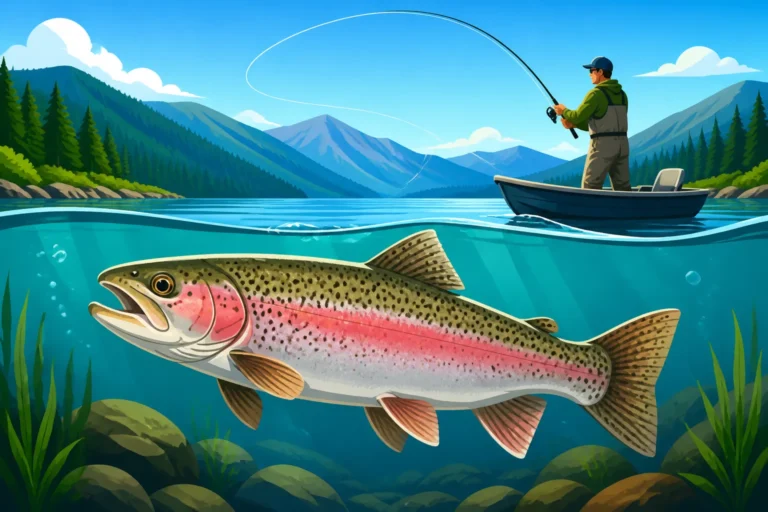
The story of Lake Pend Oreille's trophy rainbow trout is one of intentional stocking and incredible environmental synergy. For decades, the lake has been famous for its colossal Kamloops rainbow trout, a strain originally from British Columbia that was introduced here. These aren't your average stream trout; these are hard-fighting, often acrobatic fish that grow to truly staggering sizes. In fact, Lake Pend Oreille once held the world record for rainbow trout, with a massive fish weighing in at 37 pounds caught back in 1947. While those days of regularly catching 30+ pounders are largely in the past, thanks to changes in the lake's ecosystem, the potential for a double-digit fish still absolutely exists. Anglers come from all over just to experience the thrill of potentially hooking into one of these magnificent creatures. If you want to dive deeper into the history and characteristics of these fish, check out our guide on What Idaho's Kamloops Rainbow Trout Strain Is. For those curious about the big ones, our article on How Big Was the World-Record Rainbow Trout from Lake Pend Oreille? offers a fascinating look back at the lake's incredible past.
Lake Characteristics and Their Impact
Lake Pend Oreille isn't just big; it's deep. With depths plunging over 1,150 feet, it's one of the deepest lakes in the United States. This profound depth means the water stays incredibly cold, even during the peak of summer, which is crucial for the trout. They thrive in these cold, oxygen-rich environments. The lake also boasts an abundant food source, primarily Kokanee salmon. These smaller salmon serve as the primary forage fish for the giant rainbows, essentially fueling their incredible growth. Understanding this predator-prey relationship is key to finding the trout, as they will often be concentrated wherever the Kokanee are schooling. The vastness of the lake also means that wind and weather can change conditions dramatically, quickly turning calm waters into formidable chop. This necessitates robust boat setups and keen attention to weather forecasts, adding another layer of challenge to the pursuit.
Essential Gear for Lake Pend Oreille Rainbow Trout
You wouldn't bring a butter knife to a steak dinner, and you certainly wouldn't bring ultralight gear to Lake Pend Oreille for trophy rainbows. The size of these fish and the expansive water they inhabit demand specialized tackle. Investing in the right equipment isn't just about comfort; it's about increasing your chances of success and ensuring you can actually land one of these powerful fish.
Rods, Reels, and Line Considerations
For these powerful trout, you're going to need a stout trolling setup. Think medium-heavy to heavy action rods, typically 8 to 10 feet long, designed to handle the pull of a heavy fish and the strain of trolling with downriggers. Many anglers prefer fiberglass or composite rods for their parabolic bend, which helps absorb the shock of a strike and prevent hooks from pulling out. Pair these with robust conventional or large spinning reels capable of holding a significant amount of line. For line, a braided main line of 30-50 lb test is common for its strength and minimal stretch, which helps detect subtle bites. A fluorocarbon leader of 12-25 lb test, depending on water clarity and fish activity, is then tied to the braid. Fluorocarbon is nearly invisible underwater and offers excellent abrasion resistance, which is critical when battling a fish that might dive into structure. You can often find a great selection of these specialized lines and heavy-duty reels on platforms like Amazon. Our comprehensive Idaho Fishing Gear Guide by Season offers more general advice on what to pack for fishing trips across the Gem State.
Lures and Baits of Choice
When it comes to tempting Lake Pend Oreille rainbows, spoons are kings. Large, flashy spoons in silver, gold, chartreuse, or even a combination of colors are incredibly effective, mimicking the Kokanee that the trout prey on. Brands like Luhr Jensen, Silver Horde, and Mack's Lures are popular choices, often in sizes ranging from 3 to 6 inches. Plugs, especially those designed for trolling, like Flatfish or Kwikfish, can also be highly productive, offering a different action and profile. Don't overlook soft plastic swimbaits, particularly those that closely imitate Kokanee; these can be deadly when retrieved at the right depth and speed. While fly fishing on the main lake is less common for these deep-dwelling fish, fly patterns like large streamers can be effective if you're targeting fish closer to shore during specific times. Natural baits, such as chunks of herring or even a whole dead Kokanee, can also be rigged for trolling, particularly when the trout are being finicky. The key is to experiment with different sizes, colors, and actions until you find what the fish are hitting on any given day.
Navigation and Fishfinding Electronics
Trying to find rainbow trout on Lake Pend Oreille without proper electronics is like looking for a needle in a haystack – a very, very big haystack. A reliable fish finder with a good sonar transducer is absolutely essential for locating schools of Kokanee, which in turn will lead you to the predatory rainbows. Look for models with side-imaging or down-imaging capabilities to get a clearer picture of the underwater terrain and fish concentrations. GPS navigation is equally critical, allowing you to mark productive spots, troll precise paths, and safely navigate the vast lake, especially in changing weather conditions. But perhaps the most vital piece of equipment for deepwater trolling here are downriggers. These devices allow you to precisely present your lures at specific depths, which is paramount when trout might be holding anywhere from 50 to 200 feet down. Without downriggers, effectively targeting these deep fish would be nearly impossible. Learning How to Use a Fish Finder on an Idaho Reservoir will give you a leg up on mastering these essential tools.
Proven Techniques for Catching Trophy Rainbows
Catching a trophy rainbow on Lake Pend Oreille isn't usually a matter of luck; it's a testament to patience, persistence, and a solid understanding of trolling techniques. These fish are often spread out across the enormous lake, and you need to be able to cover water effectively and present your lure at the exact right depth.
Trolling Strategies and Depths
Trolling is, without a doubt, the most effective method for targeting large rainbow trout on Lake Pend Oreille. You’ll typically be trolling at speeds ranging from 2.0 to 3.5 miles per hour, but the optimal speed can vary greatly depending on the day, the lure, and what the fish are feeding on. The real game-changer here is precise depth control using downriggers. In spring, when Kokanee are often closer to the surface, you might find rainbows in the top 50 feet. As summer progresses, and the thermocline forms, these fish will dive much deeper, often holding between 80 and 200 feet, sometimes even deeper in the central parts of the lake. Varying your depths, running multiple lines at different levels, and paying close attention to your fish finder to see where bait balls (Kokanee) are congregating is paramount. Often, trout will be just below or on the edges of these bait schools. Experiment with S-turns and speed changes; sometimes a sudden drop or increase in speed can trigger a strike. For more general insights into trolling, our guide on Trolling Techniques for Idaho Reservoirs offers useful information that can be adapted to Lake Pend Oreille.
Here's a quick guide to general trolling depths and lure types by season on Lake Pend Oreille:
| Season | Typical Depth Range (Feet) | Preferred Lures | Notes |
|---|---|---|---|
| Spring | 20-80 | Large spoons (silver, gold, chartreuse), plugs | As ice-out occurs, fish are more active and often higher in the water column, following surfacing Kokanee. Target areas near inlets and shallower shelves. |
| Summer | 80-200+ | Large spoons (blue/silver, green/silver), deep-diving plugs, soft plastic swimbaits | Fish go deep to find colder water and abundant Kokanee. Downriggers are essential. Look for bait balls on your electronics. Early mornings and late evenings can bring fish higher. |
| Fall | 40-150 | Large spoons (brighter colors), plugs, natural bait | Fish begin to move shallower as water temperatures drop, often chasing Kokanee that are staging for their spawn. Still requires downriggers but can find fish at more varied depths. Experiment with larger bait presentations. |
| Winter | 50-150 | Heavy spoons, vertical jigs, natural bait | Ice fishing is possible in shallower bays, but open-water trolling continues in main lake. Slow presentations are key. Fish are less active, so patience is paramount. |
Seasonal Approaches
The massive size and diverse nature of Lake Pend Oreille mean that your approach needs to change with the seasons.
Spring Fishing
As the ice retreats and water temperatures begin to rise (even slightly), the trout become more active. Spring is a fantastic time to target them, especially from April through June. During this period, Kokanee often move into shallower areas, congregating near river inlets or along the edges of bays. This brings the predatory rainbows with them, making them more accessible than in the dead of summer. Focus your trolling efforts in the top 20 to 80 feet of the water column. Areas like the Clark Fork River delta or the shallower shelves around Hope and Denton can be particularly productive. Look for schools of baitfish on your sonar, and deploy large spoons or plugs that mimic Kokanee. The fish are often aggressive after a long winter, so a faster trolling speed can sometimes be effective.
Summer Fishing
Summer on Lake Pend Oreille, typically July through September, brings its own set of challenges and rewards. With warmer surface temperatures, the big rainbows push deep, seeking out the colder, oxygenated water where the Kokanee also reside. This is where your downriggers will work overtime. You'll likely be targeting depths from 80 to 200 feet, or even more, in the main body of the lake. Early mornings and late evenings often provide the best bite, as these massive trout may venture slightly shallower during low-light conditions. Focus on the central basin, particularly around the areas known as the "Green Monarchs" or the "Hope Peninsula," where deep structure and bait concentrations are common. Trolling large, metallic spoons or deep-diving plugs is the go-to strategy. Remember, patience is a virtue when you're covering such vast depths and distances.
Fall Fishing
Fall, from October through December, offers some of the most exciting fishing of the year. As the lake's surface temperatures cool significantly, the Kokanee begin their spawning run, often moving into the shallow bays and river mouths. The trophy rainbows follow them with a vengeance, feasting to bulk up for winter. This can make them more aggressive and, potentially, more catchable. You might find fish at more varied depths during the fall, from 40 to 150 feet, depending on how close they are to staging Kokanee. This is a great time to experiment with larger lures and even natural bait. Keep an eye on local fishing reports, as the timing of the Kokanee spawn can dictate where the best action is.
Advanced Tactics for Elusive Fish
For those truly elusive fish, sometimes you need to get a little creative. Planer boards can be a valuable tool, allowing you to run your lures far out to the side of the boat, away from the boat's noise and shadow. This can be particularly effective on bright, sunny days when the fish might be boat-shy. Varying your trolling pattern from straight lines to subtle S-curves can also induce strikes, as the lure's action changes with the turn. Pay close attention to your electronics, not just for fish, but for thermoclines, sudden changes in bottom contour, or submerged structure where bait and predators might be holding. Sometimes, a slight reduction in speed, or even a momentary pause, can be just enough to trigger a bite from a following fish. And remember, the lake’s massive size means you need to be constantly reading the water – observing bird activity, looking for surface disturbances, or even talking to other anglers can provide valuable clues. For additional regulations and rules, ensure you've checked the Idaho Fishing Regulations Explained.
Navigating Regulations and Conservation Efforts
Fishing Lake Pend Oreille for its legendary rainbow trout is an incredible experience, but it comes with a responsibility. Adhering to Idaho's fishing regulations isn't just about avoiding a fine; it's about doing your part to ensure this unique fishery thrives for generations to come. The Idaho Department of Fish and Game (IDFG) works tirelessly to manage these resources, and our cooperation is vital. If you haven't already, make sure you have your Idaho Fishing License Guide sorted out before you head out.
Understanding Limits and Special Rules
Idaho's fishing regulations, especially for trophy fisheries like Lake Pend Oreille, are often designed to protect the very resource we love. It's crucial to consult the most current Idaho fishing proclamation before each season, as rules can change. For Lake Pend Oreille rainbow trout, there are specific bag and possession limits, and often size restrictions or slot limits. For instance, there might be a rule that says you can only keep one fish over a certain size, or that all fish within a particular size range must be released. These rules are put in place to manage the population, allow fish to reach spawning maturity, and sustain the trophy potential of the lake. Always verify the current Idaho Catch Limits and Bag Limits Explained for rainbow trout on Lake Pend Oreille. Penalties for violating these regulations can be severe, so ignorance is not an excuse. Many sporting goods stores carry the physical brochure, or you can find it easily on the IDFG website.
Supporting the Fishery for Future Generations
Catching a magnificent rainbow trout from Lake Pend Oreille is a thrill, but it's important to think about the future of the fishery. Even if you're allowed to keep a fish, practicing catch and release, particularly for the largest spawning-size fish, is a fantastic way to contribute to the health of the population. If you do intend to release a fish, handle it with extreme care. Keep it in the water as much as possible, use wet hands, and support its body fully. Unhook it quickly with pliers or a dehooking tool. If you plan to take a photo, do so rapidly and get the fish back into the water without delay. Proper handling greatly increases a fish's survival chances. It's also vital to be mindful of introducing invasive species. Clean, drain, and dry your boat and gear thoroughly before moving between different bodies of water. These small actions collectively make a huge difference in preserving the magic of Lake Pend Oreille for everyone who cherishes it. Remember, we're all stewards of this incredible natural resource.
Disclaimer
Please note that fishing regulations, seasons, and conditions can change rapidly. Always consult the latest Idaho Fish and Game regulations and local advisories before planning any fishing trip. The information provided in this guide is for general informational purposes only and should not be considered a substitute for official regulations.